Deep cleaning a heavily soiled carpet requires the Restorative Extraction Process, a systematic method that breaks down oily traffic lanes and extracts embedded grit. You will dry-vacuum, apply an alkaline pre-spray, physically agitate the fibers, extract with an acidic rinse at 60°C (140°F), and force-dry the room. This process takes 1.5 to 3 hours of active work, requires intermediate DIY skills, and succeeds purely on correct chemical dwell time rather than aggressive scrubbing.
Before You Start
- Active Time: 1.5 to 3 hours per medium room.
- Drying Time: 6 to 12 hours.
- Difficulty: Intermediate.
- Estimated Cost: $80–$150 (machine rental + professional chemicals).
- Prerequisites: Clear the room of all furniture, or place plastic/foil tabs under the legs of heavy furniture to prevent rust and wood stain transfer to wet carpet.
Required Tools and Materials Checklist:
- [ ] Heavy-Duty Vacuum: Must have an adjustable beater bar.
- [ ] Pump-Up Garden Sprayer: 1- or 2-gallon capacity with a coarse-mist nozzle.
- [ ] Carpet Extraction Machine: Rental or high-end consumer model capable of hot water use.
- [ ] Stiff Carpet Brush or Carpet Rake: Manual long-handled rake or a drill-brush attachment.
- [ ] Alkaline Carpet Pre-Spray: Emulsifier for heavy oils (diluted 1:16 with hot water).
- [ ] Acidic Carpet Rinse Agent: Neutralizer (diluted 1:32, or per manufacturer specs).
- [ ] High-Velocity Floor Fans: 1 or 2 box or blower fans per room.
Step 1: Colorfastness Testing and Preparation
Test your chemical solutions in an inconspicuous area (like inside a closet) before treating the entire room. Mix a small amount of your 1:16 alkaline pre-spray, apply it to a 2-inch patch of carpet, and press a damp, clean white towel against it for 30 seconds.
- Success Checkpoint: You’ll know it is safe to proceed when the white towel shows absolutely no dye transfer from the carpet fibers.
- Common Mistake: Skipping this test on wool or dyed natural fibers. If dye transfers, you must switch to a neutral pH carpet shampoo instead of an alkaline pre-spray.
Step 2: Deep Dry Dry Vacuuming
Extract all dry, loose particulate soil before introducing any water to the carpet. Lower your vacuum’s beater bar to the lowest pile setting to maximize suction and agitation. Vacuum the entire room horizontally in slow, overlapping passes, then vacuum the room again vertically.
- Success Checkpoint: You’ll know it worked when the vacuum canister stops filling with sand, hair, and fine white dust after your final pass.
- Common Mistake: Rushing this step. Heavily soiled carpets hold pounds of hidden grit. If you wet this grit, it turns into mud and wicks to the surface during drying.
Step 3: Traffic-Lane Pre-Treatment
Mix your alkaline pre-spray with hot water in the pump sprayer at a 1:16 ratio and apply it to all heavily soiled zones. Generously coat high-traffic lanes, entryways, and visible spots holding the sprayer nozzle 12 inches above the carpet. Let the solution sit (dwell) for exactly 10 to 15 minutes.
- Success Checkpoint: You’ll know the application is correct when the fibers feel damp to the touch, but the backing underneath remains completely dry.
- Common Mistake: Letting the pre-spray dry. If it begins to dry before 10 minutes, lightly mist it with plain hot water. Dry chemicals bond the dirt back to the fibers.
Step 4: Mechanical Agitation
Scrub the pre-treated areas aggressively using a stiff carpet brush, rake, or drill-brush attachment. Work in multi-directional, circular patterns across all damp, pre-sprayed zones. This physical friction separates matted fibers and pushes the alkaline emulsifier deep into the pile to break oily binder bonds.
- Success Checkpoint: You’ll know it worked when the matted, flattened traffic lanes stand upright and the soil appears loose on the surface.
- Common Mistake: Using a brush with bristles that are too soft. You need stiff nylon bristles to effectively agitate synthetic carpets.
Step 5: Hot Water Extraction (The Rinse)
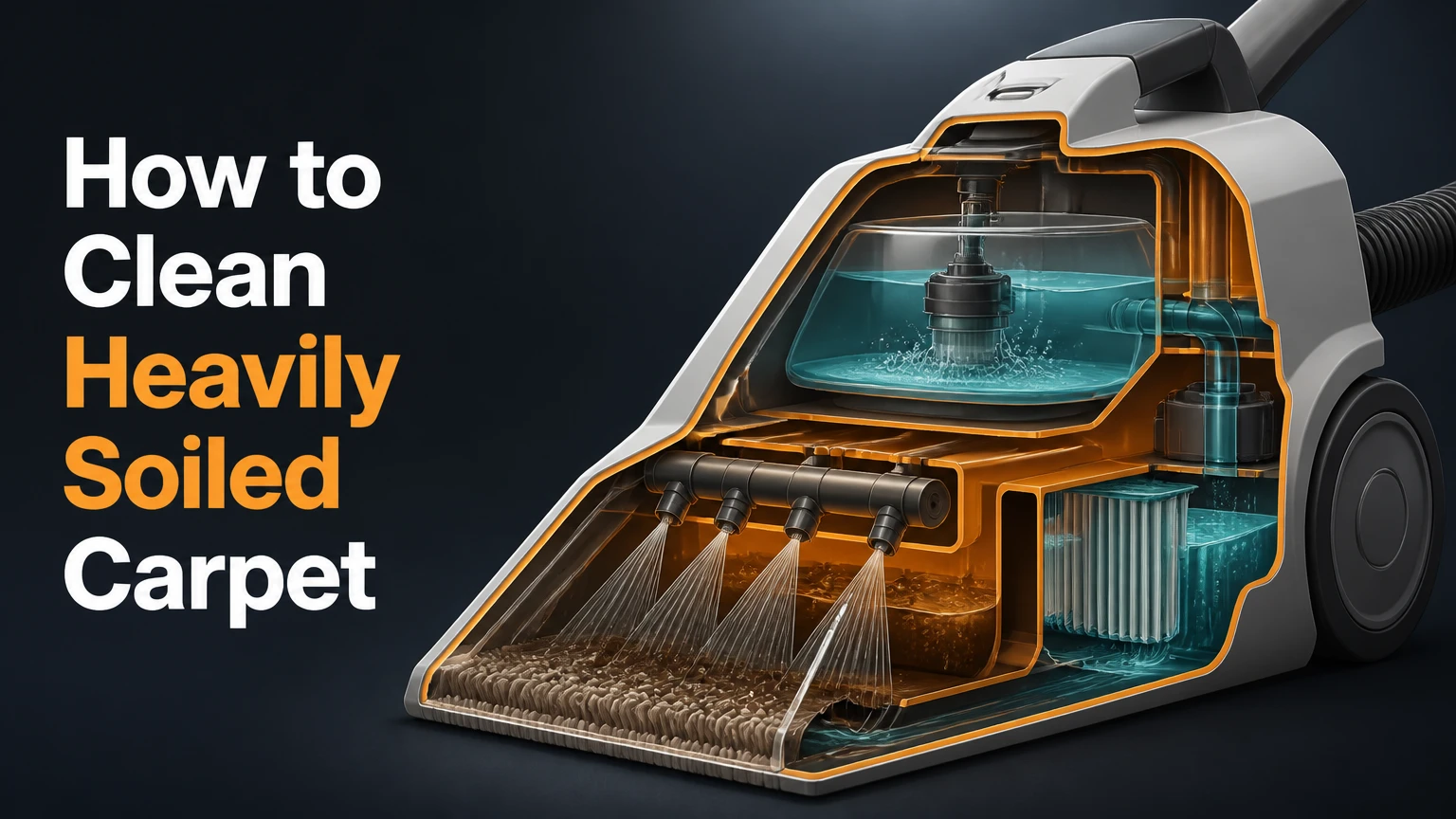
Fill the extraction machine’s clean water tank with hot tap water (maximum 60°C / 140°F) and the precise amount of acidic rinse agent (usually 1:32). Pull the machine trigger to spray the solution while moving backward slowly over a 4-foot section (the Wet Pass). Release the trigger and push/pull the machine over that exact same section two more times (the Dry Passes).
- Success Checkpoint: You’ll know it worked when you watch the clear plastic extraction nozzle and see the recovered water transition from dark brown to mostly clear, and the suction stops pulling visible liquid on the final dry pass.
- Common Mistake: Putting alkaline detergent directly into the machine tank. This guarantees soapy residue is left behind, which acts as a dirt magnet and ruins the carpet within weeks.
Step 6: Accelerated Drying
Set up high-velocity floor fans immediately, aiming them directly across the wettest zones. Turn your home HVAC system to “ON” (continuous fan, not Auto) and set the thermostat to 21°C (70°F). Use your carpet rake one final time to pull all fibers uniformly in one direction, standing them straight up to maximize airflow down to the base.
- Success Checkpoint: You’ll know it worked when the carpet is completely dry to the touch within 6 to 12 hours.
- Common Mistake: Leaving the windows closed in a humid environment without running the AC or a dehumidifier, which halts evaporation and traps moisture in the pad.
Troubleshooting Common Failures
Wicking (Stains Reappear After Drying)
- The Cause: The original stain was deep in the pad. As the carpet dried, moisture migrated upward, carrying buried dirt to the fiber tips.
- The Fix: Lightly mist the stained area with a 50/50 mix of water and white vinegar. Place a stack of clean, white terrycloth towels over the spot, place heavy books on top, and leave for 12 hours. The towels will absorb the wicking moisture.
Musty or Sour Odors
- The Cause: The carpet backing remained wet for over 24 hours, initiating mild mildew growth.
- The Fix: Maximize air circulation with dehumidifiers and fans immediately. Lightly mist the carpet with an enzyme-based odor neutralizer, or generously sprinkle baking soda, let it sit for 4 hours, and vacuum dry.
Crunchy or Stiff Fibers
- The Cause: High pH alkaline cleaner residue was left behind due to an improper or skipped acidic rinse.
- The Fix: Run your extraction machine over the stiff areas using only warm water mixed with 1 cup of white vinegar per gallon of water. This neutralizes the sticky alkaline salts and restores softness.
Carpet Shrinkage or Wrinkling (Delamination)
- The Cause: Severe over-wetting during extraction broke down the latex adhesive holding the primary and secondary carpet backings together.
- The Fix: Minor wrinkling may resolve once completely dry. Permanent delamination requires a professional carpet stretcher to re-install the room. Avoid this by strictly adhering to the “one wet pass, two dry passes” rule.
Process Variations
Natural Wool Carpets
Wool fibers are highly sensitive to heat and high pH chemistry. When cleaning natural wool, never use water hotter than 40°C (104°F). Swap the 1:16 alkaline pre-spray for a wool-safe, neutral pH cleaner (pH 7.0–8.0). Alkaline solutions will permanently burn wool, leaving a yellow tint and brittle texture.
Extreme Pet Urine Contamination
Standard alkaline pre-sprays do not break down uric acid crystals. Before beginning Step 3, you must saturate the urine spots with a specialized enzyme-based pet treatment. Cover the spots with damp towels, let them dwell for 30 to 45 minutes to allow the bacteria to eat the urine proteins, extract with plain water, and then proceed with the standard cleaning process.
Cost and Time Breakdown
- Machine Rental: $30–$50 per day (e.g., Rug Doctor or Bissell Big Green).
- Professional Chemicals: $40–$80 total for a gallon of high-quality alkaline pre-spray and acidic rinse (enough for a whole house).
- Active Labor: 15–20 minutes dry vacuuming, 15 minutes pre-spray/dwell, 10 minutes agitation, 30–45 minutes extraction (Total: ~90 minutes per 200 sq. ft. room).
Frequently Asked Questions
Can I just use the detergent sold with the rental machine? You can, but it is highly discouraged for heavily soiled carpets. Machine-branded detergents are often applied directly through the tank, meaning you never rinse the soap out. This leaves a sticky residue that attracts new dirt rapidly.
How do I know if my carpet is synthetic or wool? Cut a tiny, unnoticeable fiber from a corner and carefully burn it with a lighter. Synthetic fibers (nylon, polyester) will melt into a hard, plastic-like bead. Wool will burn slowly, smell like burning hair, and turn into a soft, crumbling ash.
Why shouldn’t I use boiling water in the extractor? Water exceeding 60°C (140°F) can melt the plastic components inside consumer extraction machines. More importantly, excessive heat unravels the manufacturer’s heat-set twists in synthetic carpet yarns, leaving the carpet looking fuzzy and permanently worn.
Is a pump sprayer strictly necessary? Yes. Relying on the extraction machine to lay down the pre-treatment means the chemical gets sucked up immediately. The pump sprayer ensures the chemical has the mandatory 10 to 15 minutes of dwell time required to dissolve heavy grease.