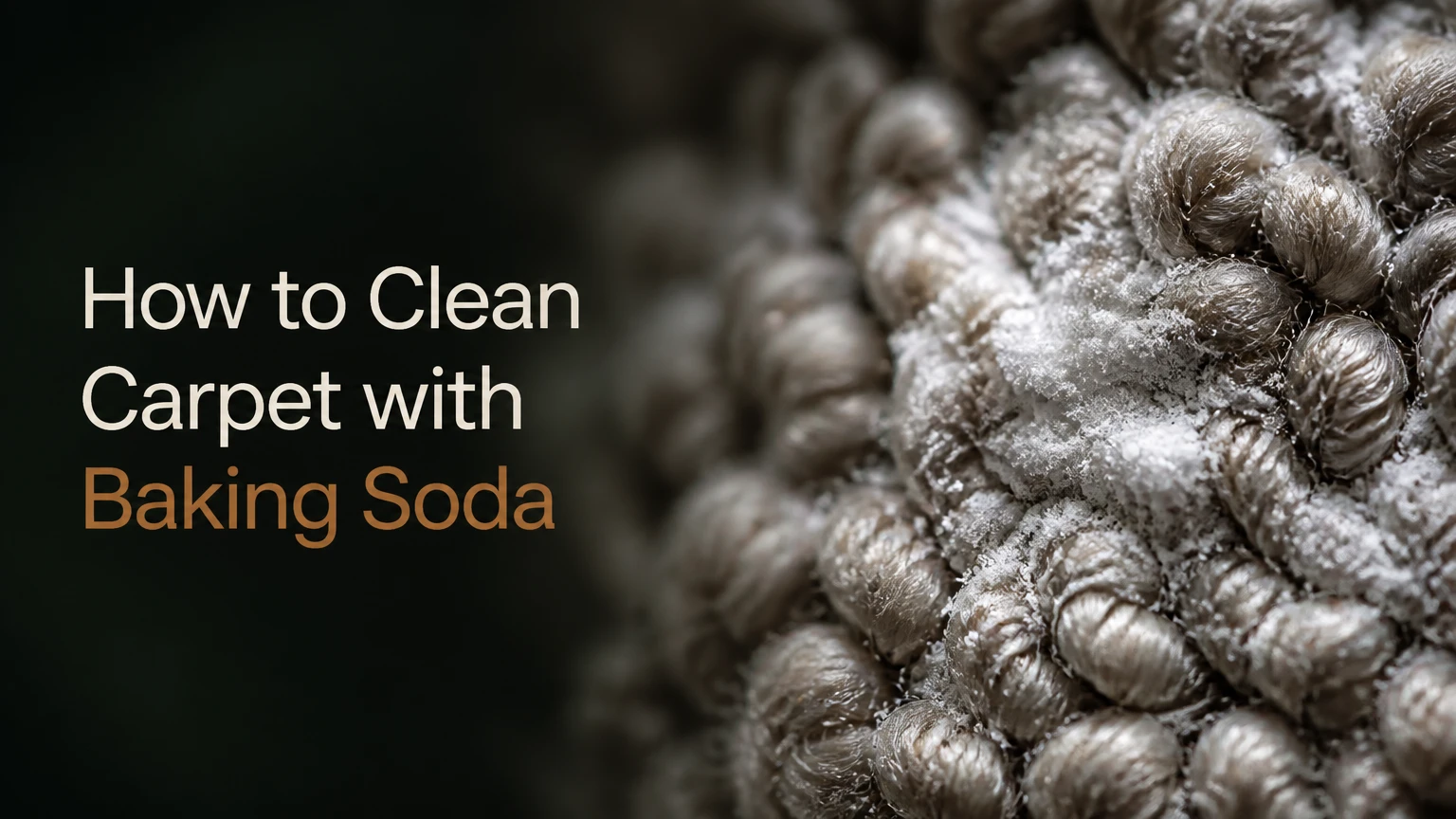
Cleaning your carpet with baking soda is an affordable, non-toxic method to eliminate persistent odors and lift light surface stains. This complete six-step process restores freshness to your flooring in roughly three to four hours of active and passive time, requiring only basic household tools and sodium bicarbonate. Success depends entirely on applying an even layer, working the powder deep into the base of the fibers, and allowing adequate dwell time before extraction.
Before You Start
Review the required tools, materials, and estimated parameters before beginning your carpet cleaning project.
| Item | Quantity or Spec | Typical Cost | Purpose |
| Baking Soda | 1 to 2 cups | $2 – $4 | Absorbs odors and breaks down grease |
| Warm Water | 2 cups | Free | Softens active organic stains |
| Scrub Brush | Stiff-bristled | $5 – $8 | Works powder deep into carpet pile |
| Vacuum Cleaner | Standard upright | Owned | Extracts powder and loosened debris |
| Spray Bottle | 16 oz fine mist | $3 – $5 | Applies water evenly to stains |
| Microfiber Cloths | 2 to 3 clean cloths | $4 – $6 | Blots moisture and spills |
- Time Required: 15 minutes of active work plus 3 to 24 hours of dwell time.
- Difficulty Level: Beginner.
- Prerequisite Conditions: The carpet must be completely dry before powder application. Perform a small patch test in an inconspicuous closet corner to ensure colorfastness.
Step 1: Prep and Clear the Area
Move all movable furniture off the target carpeted zone and perform a thorough initial vacuuming. Clear the entire floor completely so you can access every square inch without obstruction. Run your standard upright vacuum over the area in overlapping passes to pick up hair, grit, and loose surface dirt.
- Success Check: You will know this step worked when the floor is entirely free of large debris and visible objects, and the vacuum no longer pulls up loose particles.
- Common Mistake: Skipping the initial vacuuming creates a muddy mixture when the baking soda meets underlying dirt. Always vacuum first.
Step 2: Pre-Treat Existing Stains
Blot wet spills with a clean microfiber cloth and mist the affected zone lightly with warm water using your spray bottle. Press firmly on fresh spills to absorb liquid without rubbing, which frays carpet fibers. Adjust your spray nozzle to a fine mist setting and apply just enough water to dampen the surface fibers.
- Success Check: You will know this step worked when the stain is damp to the touch without any standing water pooling on the backing.
- Common Mistake: Soaking the carpet backing leads to trapped moisture and mildew growth. Use a fine mist rather than a heavy stream.
Step 3: Apply the Baking Soda
Sprinkle plain sodium bicarbonate generously over the entire carpet until a thin, uniform white layer covers the area. Use a glass jar with holes punched in the lid or your clean hands to distribute the powder evenly across the room. Avoid dumping piles in isolated spots because heavy clumps are difficult to vacuum later.
- Success Check: You will know this step worked when the carpet color is muted by a consistent, translucent white dusting of powder across all treated zones.
- Common Mistake: Using scented or commercial deodorizing powders leaves chemical residues that attract dirt faster. Stick to pure, unadulterated baking soda.
Step 4: Brush It In
Work the baking soda deep into the base of the carpet fibers using a stiff-bristled scrub brush. Move the brush in gentle circular motions across the surface to push the powder past the upper yarn layer and down toward the primary backing where trapped odors live.
- Success Check: You will know this step worked when the top layer of powder disappears into the pile and the carpet fibers feel coated rather than crusty.
- Common Mistake: Scrubbing too aggressively frays looped or cut-pile fibers. Maintain light pressure and let the bristles do the work.
Step 5: Let It Sit
Allow the baking soda to rest undisturbed on the carpet for a minimum of three hours to absorb embedded oils and volatile odor compounds. Extend the dwell time to 12 or 24 hours if you are treating severe pet odors or heavy smoke smells. Keep children and pets away from the treated zone during this period to prevent tracking powder through the house.
- Success Check: You will know this step worked when the powder feels completely dry and slightly powdery when touched lightly with a fingertip.
- Common Mistake: Vacuuming too early prevents the chemical absorption process from neutralizing deep-seated odors. Respect the minimum dwell time.
Step 6: Vacuum the Carpet
Extract the baking soda and trapped debris completely by vacuuming the entire room slowly in multiple directions. Adjust your vacuum height setting so the beater bar makes light contact with the carpet surface without stalling. Make north-south and east-west passes over every section to pull out every trace of powder.
- Success Check: You will know this step worked when walking barefoot on the carpet leaves no white powder residue on your skin.
- Common Mistake: Moving the vacuum too fast leaves microscopic alkaline particles behind, which can irritate skin and attract new soil. Vacuum slowly.
Common Mistakes and How to Fix Them
Review these realistic failure modes to recover quickly if your cleaning process encounters an unexpected issue.
- Over-wetting the carpet: Excess water creates mold under the backing. Fix this by placing portable box fans facing the damp zone to accelerate drying within 4 hours.
- Powder turning into a paste: Too much water during pre-treatment turns baking soda into a thick crust. Allow the paste to dry completely, scrape it gently with a spoon, and vacuum the remaining flakes.
- White residue left behind: A full vacuum bag or dirty filter reduces suction power. Empty your vacuum canister, wash or replace the filter, and repeat the extraction passes.
- Odor persists after vacuuming: The odor source reached the carpet padding below. Reapply a heavier layer of baking soda, brush it in thoroughly, and leave it for a full 24 hours.
Variations for Different Carpets
Adjust your technique based on your specific carpet construction and fiber type.
- High-Pile and Shag Carpets: Shag fibers trap massive amounts of powder. Use a rubber carpet rake instead of a stiff-bristled brush to work the baking soda into the deep pile without tangling the yarn.
- Wool and Natural Fibers: Natural fibers are sensitive to high alkalinity. Perform a spot test, limit dwell time to two hours maximum, and ensure your vacuum has smooth settings without aggressive beater bars.
- Stair Carpets: Stairs collect high amounts of foot traffic and pet hair. Apply baking soda in small handheld sections, work it in with a small nylon brush, and use a handheld vacuum attachment for extraction.
How Long Does It Take and What Does It Cost
The entire process requires 15 to 20 minutes of active labor divided between preparation, brushing, and vacuuming. Passive dwell time adds 3 to 24 hours depending on the severity of the odors. Material costs range from $2 to $5 for a standard box of baking soda, making this one of the most cost-effective deep cleaning methods available.
Frequently Asked Questions
Can I mix essential oils with baking soda for fragrance?
Adding 10 to 15 drops of essential oil to your baking soda creates a pleasant scent, but you must mix the oil thoroughly in a bowl first. Clumps of wet oil will stain carpet fibers and attract dirt, so ensure the mixture is completely dry and uniform before application.
Will baking soda ruin my vacuum cleaner?
Fine baking soda particles can bypass cheap vacuum bags and clog motor filters or damage bagless cyclone seals. Empty your vacuum canister frequently, check your exhaust filter, and consider using a vacuum equipped with a HEPA bag to protect the motor.
Is baking soda safe for pet hair and dander removal?
Baking soda safely neutralizes organic odors tied to pet dander and urine without toxic fumes. Keep pets out of the room while the powder sits on the floor to prevent them from inhaling fine dust or ingesting large quantities of sodium bicarbonate.
How often can I use baking soda on my carpets?
You can safely deodorize your carpets with baking soda every one to three months. Frequent vacuuming combined with periodic baking soda treatments extends carpet lifespan by removing abrasive grit that cuts fibers from the inside out.
What should I do if baking soda clogs my vacuum?
If your vacuum loses suction or smells like burning dust, turn it off immediately. Empty the dust cup, wash the primary foam filter, and let it dry for 24 hours before resuming vacuum extraction to prevent permanent motor burnout.