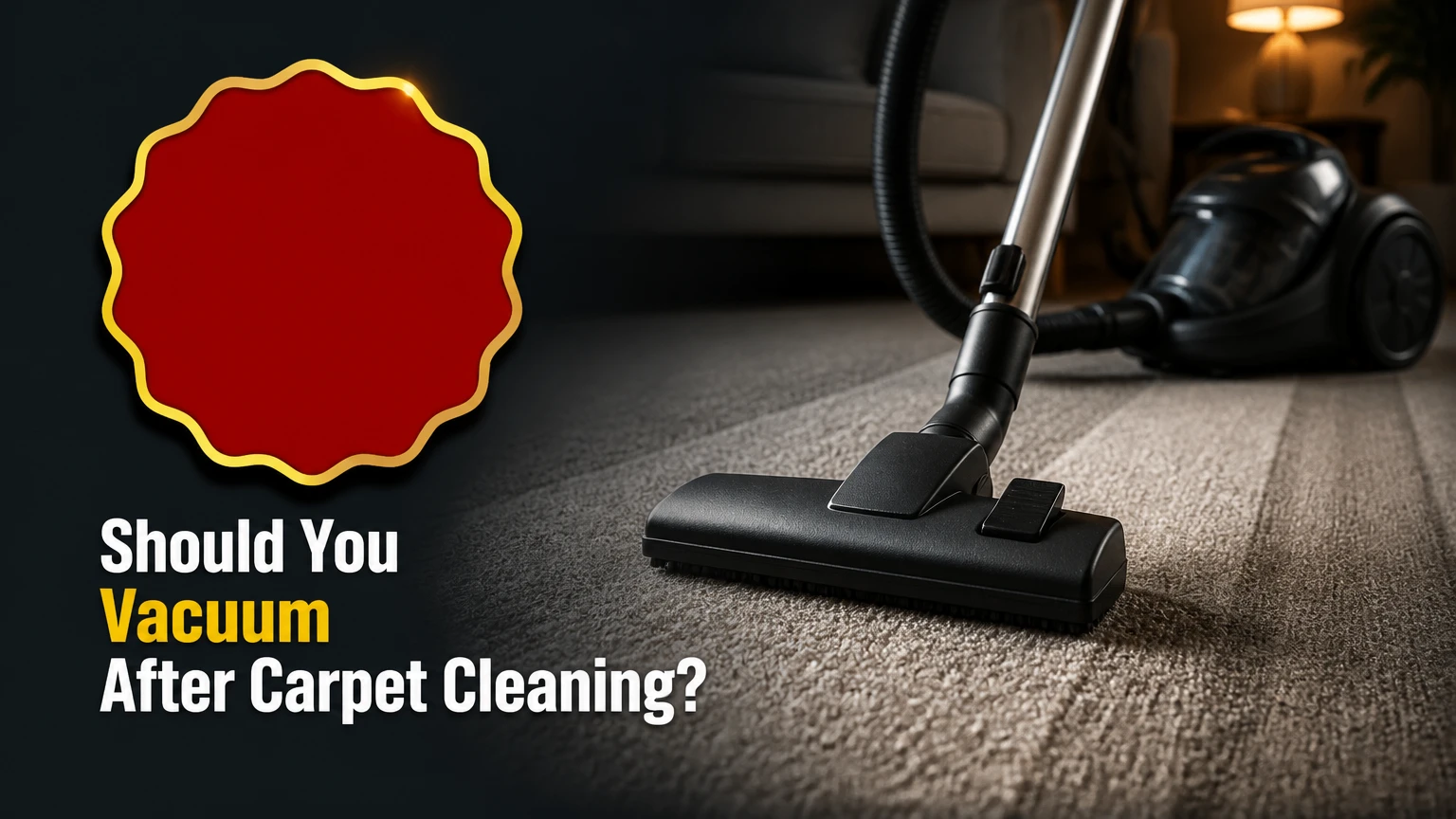
Yes, you absolutely should vacuum after carpet cleaning, but only once the carpet fibers are 100 percent completely dry. Vacuuming removes the crystallized detergent residues and microscopic grit that the cleaning process pushed to the surface. Attempting to vacuum while the carpet remains damp will permanently damage the fibers, track dirt back into the wet pile, and potentially ruin your vacuum cleaner.
Key Facts / At a Glance
- Minimum Drying Time: 6 to 12 hours with commercial air movers, or 12 to 24 hours under standard household conditions.
- Primary Objective: To remove brittle, encapsulated polymers and dissolved soils brought to the surface by capillary action.
- Humidity Target: Maintain indoor relative humidity below 50 percent to accelerate evaporation and prevent mildew.
- Optimal Timing: Execute the first thorough vacuuming within 48 hours of the carpet achieving total dryness.
- Equipment Rule: Avoid robotic vacuums for this specific task; they lack the necessary suction and mechanical agitation to break up dried detergent crystals.
Why is Post-Cleaning Vacuuming Necessary?
Post-cleaning vacuuming serves as the mandatory final extraction phase of the carpet restoration cycle. When professional technicians or rental machines apply hot water and chemical detergents, they loosen dirt trapped deep near the carpet backing. As the carpet dries, a physical process called capillary action occurs. Moisture wicks upward toward the tips of the carpet fibers to evaporate into the room.
This upward moisture movement carries dissolved detergents, emulsified body oils, and tiny grit particles along with it. Modern professional cleaning solutions rely on encapsulating polymers. As the water evaporates, these polymers trap the remaining soil and dry into brittle, non-sticky crystals at the top of the carpet pile.
If you skip this final dry-vacuuming step, those microscopic crystals remain in the carpet. Normal foot traffic will eventually crush them, releasing the trapped dirt back into the fibers and causing rapid re-soiling. Mechanical agitation from a rotating vacuum brush shatters these crystals away from the fiber walls, allowing the suction motor to lift them out of the home entirely.
How Long Should You Wait Before Vacuuming?
You must wait exactly as long as it takes for the deepest part of the carpet pile to reach absolute dryness, which typically ranges from 12 to 24 hours. The surface of the carpet often feels dry to the touch within four hours, but the padding and the base of the fibers retain moisture much longer. Vacuuming based on surface feel alone is a frequent mistake that compromises the entire cleaning effort.
Several environmental factors dictate your specific waiting period. Rooms with poor ventilation, thick plush carpets, or high ambient humidity will push the drying time closer to the 24-hour mark. If your professional cleaner deployed high-velocity axial air movers, you can reduce this timeframe to between 6 and 12 hours.
To verify absolute dryness without specialized moisture meters, perform the tissue test. Press a single ply of facial tissue firmly into the thickest part of the carpet pile, applying heavy body weight for ten seconds. If the tissue absorbs any moisture or feels clammy, you must wait longer. Set your home thermostat between 70 and 72 degrees Fahrenheit and activate your air conditioning or a standalone dehumidifier to pull moisture from the indoor air.
What Happens If You Vacuum Wet Carpet?
Vacuuming wet carpet guarantees fiber distortion, promotes mold growth, and creates a severe electrical hazard. The structural integrity of carpet fibers weakens significantly when saturated. Subjecting damp yarn to the aggressive pulling force of a vacuum beater bar permanently stretches the synthetic twists, leading to a condition known as “blooming” or “fuzzing.”
Beyond physical damage to the flooring, standard household vacuums are not designed to ingest water. Moisture pulled into the intake port will mix with the existing dust inside the machine, creating a thick mud that clogs HEPA filters and chokes airflow. If water reaches the electrical components of the suction motor, it can cause an immediate short circuit, potentially sparking a fire and instantly voiding the manufacturer warranty.
The heavy wheels of a vacuum cleaner also compress damp fibers under immense localized pressure. This compression leaves permanent physical tracks and crushes the carpet nap before it has a chance to set properly.
| Timing of Vacuuming | Immediate Physical Effect | Long-Term Consequence | Recommended Action |
| While Fibers are Damp | Stretches and frays weakened yarn loops | Motor failure, permanent wheel tracks, mold growth | Never do this. Wait for absolute dryness. |
| Immediately After Dry | Shatters and extracts brittle detergent crystals | Extends lifespan of the professional clean by 3-6 months | Highly Recommended. This is the optimal window. |
| 3 to 4 Days Later | Removes standard surface dust | Encapsulated dirt is crushed back into the base fibers | Acceptable. Better than skipping, but loses maximum benefit. |
| 1+ Weeks Later | Minimal benefit to the specific cleaning event | Rapid re-soiling, abrasive grit slices fiber structures | Not Recommended. Destroys the value of the cleaning. |
Step-by-Step: How to Vacuum After Professional Cleaning
Proper execution requires adjusting your equipment and slowing down your normal cleaning pace. The goal is maximum extraction of heavy residues, which demands methodical, structured movements rather than a quick surface sweep. Ensure you have 30 to 45 minutes dedicated to completing this process correctly.
Step 1: Clear the Work Area Completely
Before turning on the machine, remove any lightweight furniture you moved back into the room. Professional carpet cleaners typically place small foam blocks or rigid plastic tabs under the legs of heavy furniture (like sofas or wooden tables) to prevent wood stains or rust from transferring to the wet carpet. Once the carpet is entirely dry, lift the furniture legs slightly and remove these protective barriers. Vacuuming around them leaves chemical residues trapped beneath the legs.
Step 2: Set the Optimal Vacuum Deck Height
Adjusting your vacuum pile height incorrectly renders the entire process useless. Set the deck too low, and the vacuum seals itself to the floor, choking the airflow required to carry debris to the dustbin. Set it too high, and the brush roll will fail to strike the fibers and shatter the crystallized dirt.
Use the practitioner rule of thumb known as the “Coin Test.” Place a standard quarter on the carpet. Lower your vacuum deck until the machine pushes the coin forward rather than sliding directly over it. You want the bristles to gently sweep the top half of the yarn, not grind aggressively into the backing.
Step 3: Execute Slow, Deliberate Passes
Standard maintenance vacuuming happens at roughly five to six feet per second. Post-cleaning extraction requires you to cut that speed in half. Push the vacuum forward at a deliberate pace of about three feet per second. The mechanical brush needs sustained contact time to agitate the stiff residues, and the suction motor requires time to pull those heavy particles upward against gravity.
Step 4: Implement a Cross-Hatch Pattern
Carpet fibers twist and lean in multiple directions. Vacuuming in only one direction will miss soils trapped on the trailing side of the yarn. Start by vacuuming the entire room moving north-to-south. Once complete, vacuum the exact same area moving east-to-west. This cross-hatch pattern stands the nap up vertically, opening the fiber bundles to release deeply trapped, pulverized soap crystals.
Step 5: Empty the Dustbin Immediately
Check your vacuum bag or bagless canister immediately after finishing the first room. You will likely see a fine, powdery residue mixed with standard dust. This powder consists of encapsulated dirt and dried detergent. Because this material is exceptionally fine, it will coat the interior pores of your vacuum filters rapidly. Empty the canister or replace the bag much sooner than you would during standard weekly maintenance to preserve maximum cubic feet per minute (CFM) of airflow.
Which Vacuum Cleaner is Best for Freshly Cleaned Carpets?
Choosing the right machine directly dictates how well your carpet recovers post-treatment. Different carpet styles require entirely different agitation methods, and using the wrong vacuum can undo the visual benefits of hot water extraction.
Upright vacuums with aggressive beater bars represent the best choice for traditional cut-pile and synthetic nylon carpets. The mechanical brush aggressively shakes loose the encapsulated crystals. However, applying that same upright machine to a delicate natural fiber will cause irreversible damage. High-suction canister vacuums with smooth floor tools are mandatory for wool, silk, or loop-pile (Berber) carpets to prevent fraying.
Filtration matters just as much as suction. Extracting dried chemical polymers introduces microscopic dust into your indoor air. A vacuum equipped with a completely sealed HEPA filtration system captures 99.97 percent of particles down to 0.3 microns, trapping the chemical dust rather than exhausting it back into your breathing zone.
| Vacuum Type | Ideal Carpet Material | Typical Agitation Level | Primary Extraction Benefit |
| Upright with Beater Bar | Synthetic Nylon, Polyester cut-pile | High (Motorized rotating brush) | Shatters heavy encapsulation crystals effectively |
| Canister (Suction Only) | Wool, Silk, Berber loop-pile | Zero (Airflow suction only) | Protects delicate loops from unspooling and shedding |
| Dual-Motor Commercial | High-traffic commercial, thick plush | Very High (Independent brush motor) | Maintains extreme RPMs regardless of carpet density |
| Sealed System HEPA | All materials (Allergy environments) | Variable based on attachment head | Prevents evaporated chemical dust from recycling indoors |
Expert Strategies for Specific Situations
Certain household environments present unique challenges that standard vacuuming advice fails to address. Tailor your post-cleaning approach based on your specific occupants and fiber types.
Managing Pet Hair and Dander
Pet hair softens significantly when exposed to the extreme heat and moisture of professional steam cleaning. As it dries, this softened hair wraps tightly around the synthetic carpet yarns, becoming deeply entangled. A standard vacuum pass will simply glide over it.
To combat this, utilize a vacuum equipped with a rubber-bristled brush roll rather than traditional nylon bristles. Rubber generates static electricity that pulls the dried hair away from the synthetic fibers. You must also execute three to four overlapping passes over heavy pet traffic areas, rather than the standard two passes, to fully dislodge the bound dander.
Protecting Wool and Berber Fibers
Luxury homeowners with natural wool or looped Berber carpets face a strict operational constraint. You must disable the rotating brush roll entirely. Aggressive beater bars will catch the closed loops of a Berber carpet and pull them, creating long, unraveling runs in the flooring. For wool, the spinning brushes tear the staple fibers, causing the carpet to shed excessively and fill your dustbin with expensive wool yarn rather than dirt. Rely entirely on raw suction, pulling the floor tool backward toward your body to lift the pile naturally.
Defending Allergy Sufferers
If you suffer from severe indoor allergies or asthma, the post-cleaning vacuuming phase represents a period of high respiratory risk. The extraction process aerosolizes biological particulates and cleaning chemistry. Wear an N95 dust mask during your first post-clean vacuuming session. Ensure your vacuum utilizes a bagged system rather than a bagless canister. Bagless systems release a cloud of fine chemical dust back into the air the moment you empty them into the trash bin, completely defeating the purpose of the cleaning.
Troubleshooting Common Post-Cleaning Issues
Even with professional extraction and proper drying, the physical state of the carpet may present unexpected textures or visual flaws. Most of these issues are easily resolved with targeted vacuuming techniques.
| Visual or Physical Symptom | Texture Assessment | Most Likely Root Cause | Required Action & Timeframe |
| Stiff or Crunchy Patches | Fibers feel hard, brittle | Detergent residue wicked to surface | Dry-vacuum thoroughly 3 times (Immediate) |
| Dark Lines at Walls | Soft, but visually stained | Filtration soiling from drying air currents | Crevice tool along baseboards (Immediate) |
| Furry or Fuzzed Appearance | Yarn tips look exploded/frayed | Vacuum deck height set too low | Raise deck height, snip loose loops (Next 48 hrs) |
| Musty, Sour Odor | Base feels slightly damp | Padding remains wet, bacterial growth | Deploy commercial dehumidifiers (Immediate) |
If you encounter stiff, crunchy carpet, the technician likely applied an excess of pre-spray detergent. Execute three slow, deliberate vacuum passes over the crunchy area. The mechanical action should shatter the soap crystals and restore softness. If the carpet remains stiff after extensive vacuuming, the chemical bond is too heavy. You will need to contact the cleaning company and request a pure water rinse extraction to remove the overloaded soap.
Filtration lines appearing as dark shadows near baseboards occur because the high-velocity air movers push fine atmospheric dust toward the walls as the room dries. Your standard wide vacuum head cannot reach this debris. Detach the wand, affix the narrow crevice tool, and apply direct high-suction exactly where the carpet meets the wooden baseboard.
Common Mistakes to Avoid
Understanding what not to do is just as critical as mastering the correct techniques. Avoid these frequent missteps that practitioners see homeowners make consistently.
Relying on Robotic Vacuums:
Robotic vacuums excel at daily maintenance sweeping, but they fail completely at post-cleaning extraction. They lack the raw CFM airflow, the heavy physical weight required for deep agitation, and the battery power necessary to pull heavy, crystallized polymers from the base of the carpet. Turn off your automated schedules until you have performed the initial deep extraction with a full-sized machine.
Using Worn-Out Brush Rolls:
A vacuum is only as effective as its physical contact points. If your brush roll features soft, rounded bristles that have worn down over years of use, it will gently glide over the dried cleaning crystals rather than shattering them. Inspect your brush roll before beginning. The bristles should feel stiff and extend past the edge of the vacuum housing.
Pulling Loose Snags:
The cleaning process occasionally lifts buried snags or broken yarn loops to the surface. Never pull these loose strings. Pulling will unravel the row, leaving a permanent bald line in the carpet backing. Instead, use sharp fabric scissors to carefully snip the loose yarn perfectly level with the surrounding carpet pile.
Frequently Asked Questions
Can I walk on the carpet before vacuuming it?
You should avoid walking on the carpet while it remains damp. Walking on wet carpet crushes the pile flat, transfers oils from your socks or bare feet into the open fibers, and extends the overall drying time significantly. Wait until it is dry to walk and vacuum.
Should I vacuum if the professional used a dry cleaning method?
Yes, vacuuming is actually more critical after a dry chemical compound method than after hot water extraction. The dry method relies entirely on absorbent powder polymers grabbing dirt. The technician vacuums most of it up, but you must vacuum again to remove the residual powder that settles later.
How often should I vacuum after the initial post-cleaning extraction?
After the mandatory first vacuuming, transition to a schedule of vacuuming high-traffic lanes twice a week and low-traffic areas once a week. Frequent maintenance prevents abrasive grit from settling near the backing, extending the life of your professional cleaning by months.
Does post-cleaning vacuuming remove carpet protectants like Scotchgard?
No, routine dry vacuuming does not remove professionally applied fluorochemical protectants. These protectants bind directly to the molecular structure of the carpet fiber during the damp application phase. Vacuuming only removes the loose, unattached soils sitting on top of that protective barrier.
Why does my vacuum bin fill up faster right after a professional clean?
Hot water extraction loosens deeply embedded particulate matter that your standard vacuum could never reach previously. As the carpet dries, capillary action pushes this loosened soil to the surface. Your first vacuum session is capturing years of accumulated, heavy grit finally brought within reach of the suction motor.