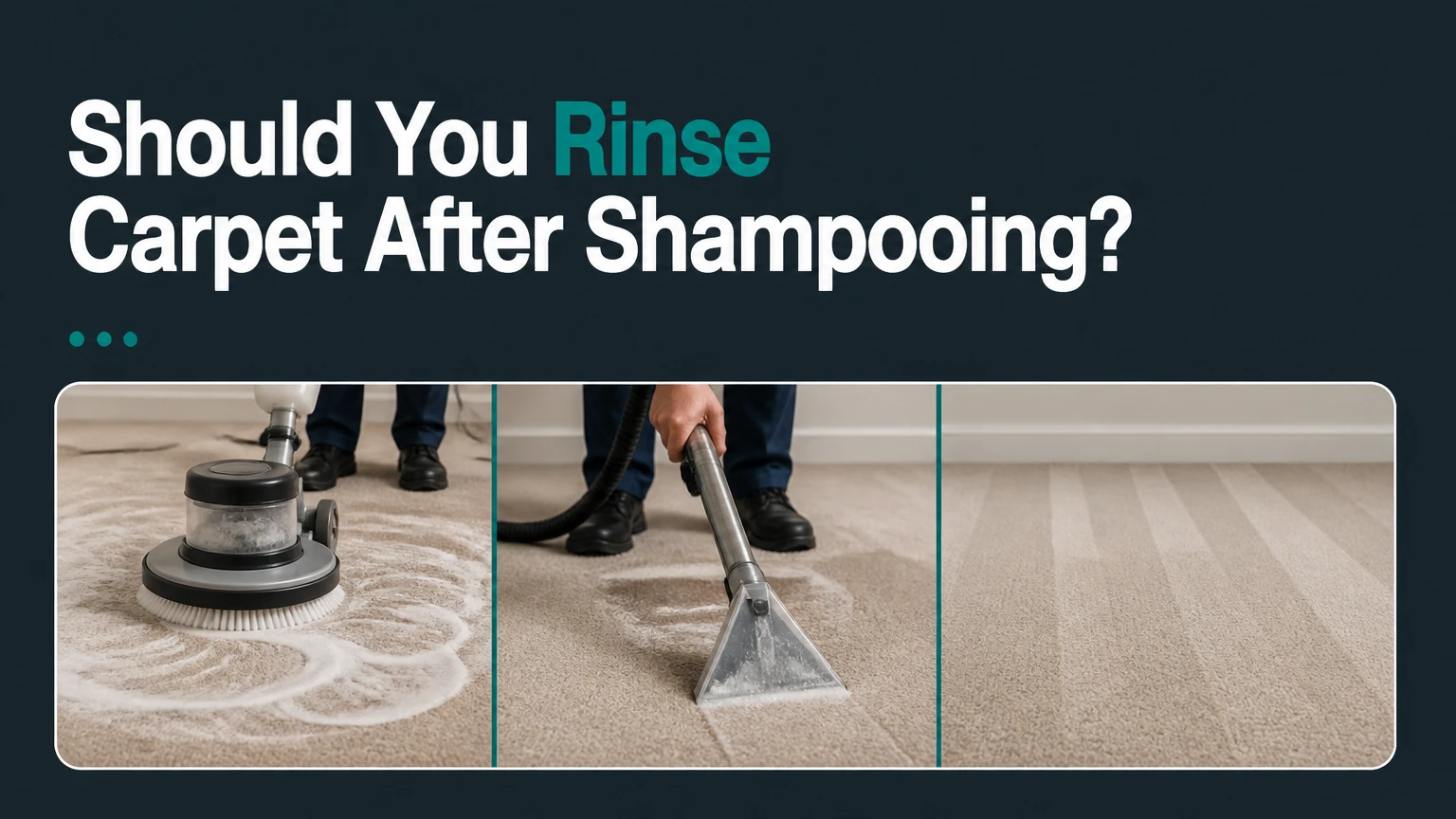
Yes, you must always rinse carpet after shampooing to remove alkaline soap residue and prevent the fibers from becoming a dirt magnet. Cleaning solutions bind to dirt during the wash phase, and leaving those chemicals in the pile creates a sticky film that accelerates re-soiling, stiffens the texture, and degrades the material over time.
Key Facts / At a Glance
- Unrinsed shampoo leaves a high-alkaline residue (pH 9 to 11) that chemically attracts new soil.
- A proper rinse neutralizes the carpet back to a safe, slightly acidic state (pH 6.5 to 7.5).
- Executing a separate clear-water or acid-rinse extraction extends the lifespan of the carpet fibers.
- Skipping the rinse phase increases drying times by up to 12 hours because detergent retains moisture.
- Water temperatures exceeding 70°C (158°F) during the rinse can melt synthetic backing glue.
Why Is Rinsing Carpet After Shampooing Mandatory?
Carpet shampooing is a two-part chemical and mechanical process. The first part breaks the bond between the soil and the fiber. The second part removes both the soil and the cleaning agent. Skipping the second part leaves the job exactly half finished.
Most carpet detergents utilize highly alkaline surfactants to dissolve grease, oils, and embedded organic matter. These chemicals work exceptionally well as soil suspenders. However, surfactants do not evaporate. If you only perform the shampoo pass, the water evaporates into the air, but the chemical solids remain locked around the carpet yarns.
The Chemistry of Soap Residue and Re-Soiling
Surfactants are designed to act as dirt magnets. When dry detergent residue sits in a carpet, it continues performing its primary function: grabbing onto dirt. Every time someone walks across an unrinsed floor with shoes or bare feet, the microscopic soap flakes latch onto the oils and soils from their soles.
This mechanism explains why a freshly cleaned carpet often looks filthy just three weeks later. The industry refers to this phenomenon as rapid re-soiling. According to the Institute of Inspection, Cleaning and Restoration Certification (IICRC) S100 Standard, incomplete chemical extraction remains the leading cause of premature carpet degradation in residential settings.
pH Neutralization and Fiber Protection
Healthy carpet fibers, particularly wool and advanced stain-resistant nylons, thrive in a neutral to slightly acidic environment. Shampooing spikes the fiber environment to an alkaline state of pH 9 or higher.
Leaving fibers in an alkaline state causes the yarn to swell, lose its factory-applied stain resistance, and become stiff. Rinsing the carpet with pure water or an acidic agent drops the pH back down to the target zone of 6.5 to 7.5. This chemical neutralization relaxes the yarns, restores their soft texture, and ensures the factory dyes remain stable.
What Happens If You Do Not Rinse Carpet?
Failing to flush out the cleaning solution triggers a cascade of physical and chemical failures within the flooring system. The most immediate symptom is a crunchy, stiff texture. Unrinsed soap hardens into an abrasive, crystalline film as the moisture evaporates. When foot traffic grinds against this crystallized soap, the friction physically cuts and frays the carpet strands.
Beyond physical wear, leaving soap in the carpet drastically alters the drying timeline. Detergent molecules hold onto water. While a properly rinsed carpet dries in 4 to 12 hours, a carpet saturated with leftover shampoo can hold moisture for over 24 hours. Prolonged dampness at the base of the carpet pile creates an ideal breeding ground for mold, mildew, and anaerobic bacteria.
Finally, unrinsed high-alkaline chemicals react poorly with the jute backing found in many carpets. This reaction often triggers cellulosic browning, a chemical process that forces unsightly yellow or brown stains to wick up to the tips of the fibers during the extended drying phase.
What Are the Best Rinsing Agents for Carpets?
Choosing the correct rinsing agent depends on your carpet material, the type of detergent used, and the specific needs of the household.
Pure Warm Water
Standard tap water heated to roughly 50°C to 60°C (120°F to 140°F) acts as a highly effective mechanical rinse. Hot water lowers the surface tension, allowing it to dissolve and flush out standard detergent loads. This method leaves zero chemical footprint, making it the safest option for households with severe chemical sensitivities or toddlers who crawl directly on the floor.
White Vinegar Solution
A mixture of standard household white vinegar and hot water provides an inexpensive, mildly acidic rinse. Acetic acid directly neutralizes alkaline shampoo residue, breaks down hard water mineral deposits, and destroys residual odor-causing bacteria.
Commercial Acidic Rinse Agents
Professional carpet technicians rely on formulated acidic rinse agents. These liquids typically feature citric acid or sulfamic acid bases. They offer precise pH control without the temporary sour smell associated with vinegar. Commercial rinses frequently include conditioning agents that leave the carpet feeling exceptionally soft.
Rinsing Agents Comparison
| Rinsing Option | Average pH Level | Cost per Liter of Solution | Best Use Case Scenario |
| Pure Warm Water | 7.0 (Neutral) | $0.00 | Mild cleaning, allergy-prone households, delicate wools. |
| White Vinegar (1:4 Ratio) | 3.0 to 4.0 | $0.25 | Pet owners, hard water regions, neutralizing minor odors. |
| Commercial Acid Rinse | 2.5 to 4.5 | $1.50 to $3.00 | Heavy commercial traffic, high detergent usage, professional setups. |
| Fabric Softener (Warning) | Varies | $1.00 | Never use. Leaves a waxy, dirt-attracting film on fibers. |
How to Properly Rinse Carpet After Shampooing
Executing a thorough rinse requires treating it as a distinct, mandatory phase of the cleaning project, not an afterthought.
Equipment and Material Requirements
- A carpet extraction machine (rental or purchased)
- Hot tap water (Do not boil the water)
- White vinegar or commercial rinse agent (optional)
- Clean microfiber towels
- Oscillating fans or a specialized carpet blower
Step 1: Complete the Shampoo Extraction
Finish dispensing the soap solution and extract as much dirty, soapy water as your machine can pull. Empty the machine’s dirty water recovery tank entirely. Rinse the recovery tank in a sink to remove all sludge and foam.
Step 2: Flush the Clean Water Tank
Remove the clean solution tank and rinse it thoroughly to ensure absolutely no concentrated shampoo remains inside. Fill the clean tank with hot tap water. If your local water is hard, the minerals will interfere with the soap removal. Add exactly 30 milliliters of white vinegar per liter of hot water to combat the minerals and neutralize the soap.
Step 3: Execute the Wet Rinse Passes
Position the machine at the furthest corner of the room. Pull the trigger to spray the clean rinse water deep into the pile while pushing the machine forward. Release the trigger and pull the machine backward over the exact same path at a slow rate of roughly one foot per second. This slow backward pull is where the actual mechanical extraction of the soap happens.
Step 4: Execute the Dry Extraction Passes
This step separates amateur results from professional outcomes. Move the machine over the freshly rinsed area two or three more times without pressing the spray trigger. Press the extraction nozzle firmly into the carpet. You will see residual soapy water pulling up through the clear plastic nozzle. Continue these dry passes until no more water pulls through the window.
Step 5: Implement Forced Air Drying
Rinsing adds a second round of moisture to the floor, making rapid drying essential. Turn on all ceiling fans. Place box fans or dedicated carpet blowers directly on the floor, aiming the air current parallel to the carpet surface. Open windows slightly if the outdoor humidity is below 50 percent to allow the evaporated moisture to escape the room.
How Long Does Rinsed Carpet Take to Dry?
A properly extracted and rinsed carpet should feel completely dry to the touch within 4 to 12 hours. The exact timeline depends heavily on the ambient environment and the power of the extraction equipment used.
Using a professional truck-mounted system reduces drying time to roughly 4 to 6 hours because these machines generate massive vacuum lift, pulling over 90 percent of the moisture out of the padding. Consumer-grade machines, such as a standard Bissell or Rug Doctor, leave more water behind, pushing the drying time closer to the 8 to 12-hour mark.
Drying Time Variables and Expectations
| Environmental Condition | Ambient Temp / Humidity | Expected Drying Time | Required Airflow Equipment |
| Optimal Climate | 21°C (70°F) / 40% Humidity | 4 to 6 Hours | Ceiling fans on medium speed. |
| Humid Summer Day | 26°C (80°F) / 75% Humidity | 12 to 16 Hours | Box fans plus air conditioning. |
| Cold Winter Day | 18°C (65°F) / 30% Humidity | 6 to 8 Hours | Central heating system active. |
| Poor Extraction | Varies | 24+ Hours | Industrial carpet blowers required. |
Common Carpet Rinsing Mistakes to Avoid
Many homeowners accidentally damage their flooring by mishandling the final extraction phase. Knowing what not to do prevents costly permanent damage.
Over-Saturating the Carpet Padding
Spraying too much rinse water forces moisture past the carpet backing and deep into the polyurethane foam pad. Most consumer vacuum motors cannot generate enough lift to pull water out of the pad. This trapped moisture breeds mold and can cause severe wood floor rot on the subfloor beneath.
Using Dangerously Hot Water
While warm water cleans better, water exceeding 70°C (158°F) poses a severe structural risk. Extreme heat melts the latex glue holding the primary and secondary backings together. When this glue fails, the carpet delaminates, resulting in permanent ripples and wrinkles that require physical restretching or replacement to fix.
Walking on Damp Fibers
Walking on freshly rinsed carpet with street shoes transfers dirt instantly. The damp fibers act like a sponge, pulling soils off the rubber soles and pulling them deep into the yarn twists. If you must walk on the damp floor, wear clean white socks or dedicated waterproof shoe covers.
Skipping the Dry Passes
Failing to run multiple extraction-only passes leaves the carpet heavily saturated. The rinse water only works if it is physically removed from the environment, taking the suspended soap molecules with it.
Troubleshooting Post-Wash Carpet Issues
Even with careful execution, some floors behave unpredictably during the drying phase. Most post-cleaning problems relate directly to extraction failures or underlying soil issues.
Troubleshooting Post-Rinse Issues
| Symptom | Root Cause Analysis | Corrective Action Steps | Recovery Time |
| Crunchy, Stiff Fibers | Failed rinse: Alkaline detergent dried onto the yarn. | Execute an immediate pure hot water rinse with extra dry passes. | 6 to 8 Hours |
| Sour or Musty Smell | Microbial growth from extended moisture exposure. | Apply a commercial antimicrobial spray, increase room heat, add fans. | 12 to 24 Hours |
| Brown Spots (Browning) | Cellulosic wicking from the jute backing due to over-wetting. | Mist lightly with an acidic browning treatment, blot with dry white towels. | 2 to 4 Hours |
| Dark Traffic Lanes | Resoiling due to sticky residue grabbing new dirt. | Re-clean area with an acidic rinse agent to break the chemical bond. | 8 to 12 Hours |
If you encounter heavy browning that does not respond to a mild acidic mist, the soil likely wicked up from the pad itself. In this scenario, applying more water will only restart the wicking cycle. You must allow the spot to dry completely, then use a low-moisture encapsulation cleaner to shear the brown tips off the fibers.
Equipment and Cost Analysis
Choosing the right equipment dictates how effectively you can remove the shampoo residue.
Equipment Cost and Efficiency Breakdown
| Extraction Method | Typical Cost (USD) | Water Lift Capability | Ideal Scenario |
| Consumer Purchase (Bissell/Hoover) | $200 to $400 | Low to Moderate | Spot cleaning, small rooms, routine light maintenance. |
| Hardware Store Rental (Rug Doctor) | $30 to $50 / Day | Moderate | Annual deep cleaning for apartments or single rooms. |
| Professional Truck-Mount Service | $150 to $300 / 3 Rooms | Extremely High | Heavy residue buildup, deep stains, whole-house extraction. |
Professional services include the rinse phase in their pricing structure. A qualified technician automatically meters an acidic rinse agent into their high-pressure water line, ensuring complete neutralization without relying on the homeowner to mix chemicals manually.
Frequently Asked Questions
Does professional carpet cleaning leave a sticky residue?
A reputable professional using a truck-mounted hot water extraction system will not leave a sticky residue. They utilize high-heat water mixed with an acidic rinse agent to neutralize and extract all pre-spray detergents, leaving the fibers soft and residue-free.
Can I use fabric softener to make my carpet soft after washing?
You should never use laundry fabric softener on carpets. Fabric softeners coat fibers in a waxy, silicone-based layer that instantly attracts dirt. This waxy layer turns the carpet into a soil magnet and voids the manufacturer warranty on stain-resistant floorings.
How do I test my carpet for leftover soap residue?
Pour two ounces of warm water onto a small, inconspicuous section of the carpet. Press a clean white terrycloth towel firmly into the wet spot with your shoe. If the towel pulls up excessive dirt or feels slippery and soapy to the touch, your carpet contains heavy detergent residue.
Should I use hot or cold water to rinse the carpet?
Always use hot water (between 50°C and 60°C) to rinse the carpet. Hot water lowers the surface tension of the fluid, allowing it to dissolve hardened soap flakes faster and flush them out of the tightly twisted yarns far more effectively than cold water.
Why does my carpet look worse after it dries?
Carpets look worse after drying when embedded soil wicks to the surface or when leftover soap residue grabs new dirt. Wicking happens when the carpet pad gets too wet, forcing dirty water up the fibers as it evaporates. Residue issues happen when the rinse phase is skipped or rushed.
The Bottom Line
You must always rinse carpet after shampooing to protect your investment. The chemical detergents required to break down heavy soils will ruin the floor if left behind. Implementing a dedicated rinse cycle using pure hot water or an acidic neutralizing agent drops the fiber pH back to a safe level, guarantees a soft texture, and completely eliminates the sticky residue that causes rapid re-soiling. Take the time to perform multiple dry extraction passes, manage your drying environment, and your carpet will remain clean for months rather than weeks.