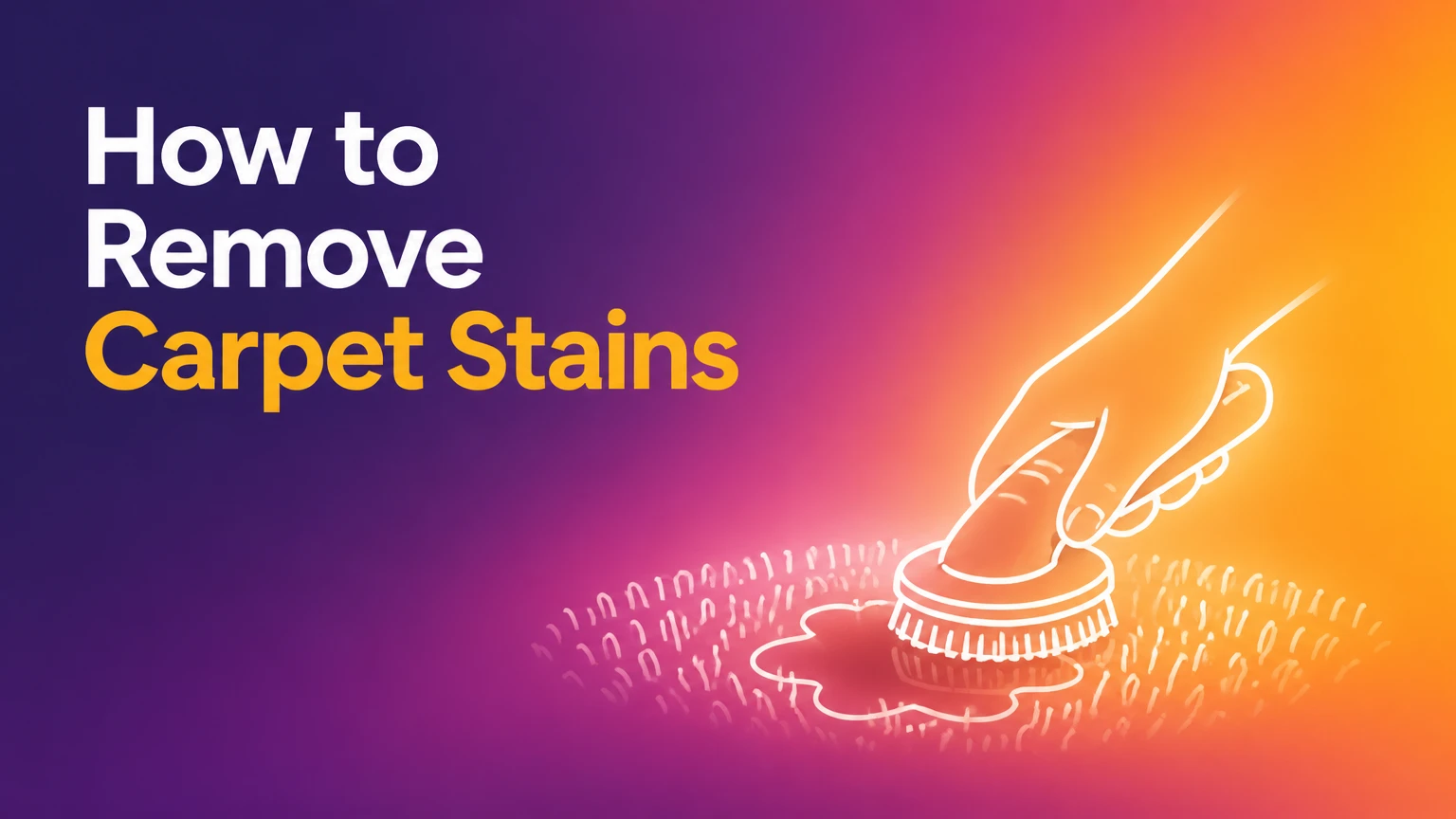
Removing carpet stains requires quick action and precise chemistry. This guide walks you through a proven six-step extraction method to lift spills without ruining your fibers. The process takes about thirty minutes of active effort. Your absolute key to success is blotting the spill instead of rubbing it.
Before You Start
Successfully extracting a spill depends entirely on using the correct supplies. Gathering these items beforehand prevents the stain from drying while you search your cabinets.
Time Required: 15 to 20 minutes of active work, followed by 8 to 12 hours of passive drying time.
Difficulty Level: Beginner.
Typical Cost: $5 to $15 (utilizing common household supplies).
| Material or Tool | Specification and Quantity | Estimated Cost | Purpose in Process |
| White Cloths | 3 to 5 microfiber cloths or thick paper towels | $4.00 | Absorbs liquid without transferring dye to the carpet. |
| Distilled Water | 1 to 2 cups | $1.50 | Prevents hard mineral deposits from leaving rings. |
| Clear Dish Soap | 1/4 teaspoon (bleach-free, scent-free) | $3.00 | Acts as a surfactant to break down oils and soil. |
| White Vinegar | 1 tablespoon (standard 5% acidity) | $2.00 | Neutralizes alkaline stains and stabilizes carpet dyes. |
| Spray Bottle | 1 standard bottle with an adjustable nozzle | $4.00 | Mists the solution evenly to prevent over-saturation. |
| Heavy Weight | 5 to 10 pounds (a large textbook or dumbbell) | $0.00 | Applies downward pressure to extract deep moisture. |
| Vacuum Cleaner | Standard model with a brush-roll toggle | $0.00 | Restores the crushed pile after the drying phase. |
Prerequisite condition: Identify your carpet fiber type if possible. The guidelines below apply broadly to synthetic carpets like nylon and polyester. For natural wool, strict temperature limits apply.
Process Summary
For quick reference, the table below outlines the basic sequence of events.
| Step Number | Primary Action | Time Required | Most Common Mistake to Avoid |
| Step 1 | Blot the spill immediately. | 2 to 5 minutes | Scrubbing the fibers side to side. |
| Step 2 | Mix and test the solution. | 2 minutes | Skipping the colorfast test in a closet. |
| Step 3 | Apply the cleaning solution. | 5 to 10 minutes | Soaking the carpet backing heavily. |
| Step 4 | Blot and rinse the area. | 5 minutes | Leaving soapy residue in the fibers. |
| Step 5 | Extract deep moisture. | 8 to 12 hours | Removing the weight prematurely. |
| Step 6 | Vacuum the dried pile. | 1 minute | Using attachments without a brush roll. |
The 6-Step Carpet Stain Removal Process
Step 1: Blot the Excess Liquid Immediately
Press a clean, white cloth or paper towel firmly down onto the fresh spill. Begin at the outer edges of the puddle and work your way toward the center. Moving from the outside inward stops the liquid from bleeding outward and expanding the stain diameter.
Apply steady, firm downward pressure using your body weight. Never rub, scrub, or twist the towel. Friction permanently frays carpet yarns and drives the liquid deeper into the underlying pad. Fold your cloth in half, and then in half again. As one section becomes saturated, flip to a dry quadrant to avoid pressing the spilled liquid back into the floor.
You will know this step worked when you press a fresh white towel into the carpet and no liquid transfers onto it. The most common mistake at this stage is giving up too early. Spend the full 2 to 5 minutes required to extract every possible drop of unabsorbed liquid.
Step 2: Mix and Test Your Cleaning Solution
Mix 1/4 teaspoon of clear dish soap into 1 cup of warm distilled water inside your spray bottle. For coffee, tea, wine, or pet accidents, add 1 tablespoon of white vinegar to the mixture.
Using clear, bleach-free soap like Dawn Free & Clear prevents artificial dyes from depositing into your floor. Distilled water is highly recommended. Tap water contains minerals that can leave a stiff, crusty ring once the area dries. The Carpet and Rug Institute establishes that residential carpet cleaning solutions should maintain a pH below 10. This mild soap and vinegar mixture falls safely within that range, neutralizing the spill without stripping the factory stain protectant from the fibers.
Before applying the mixture to the stain, spray a tiny amount in an inconspicuous area like a back closet corner. Press a white towel against the damp spot for thirty seconds.
You will know this step worked if the towel remains completely white. The most common mistake is skipping this colorfast test. If carpet dye bleeds onto your towel during the test, stop immediately and call a professional.
Step 3: Apply the Solution to the Affected Area
Mist the cleaning solution lightly over the stained fibers. Hold the spray bottle roughly six inches above the floor and apply just enough product to dampen the surface.
Allow the solution to sit undisturbed for 5 to 10 minutes. This dwell time allows the surfactants in the dish soap to break the surface tension of the stain particles, lifting them away from the synthetic yarns.
Do not flood the area. Over-saturating the carpet forces liquid down through the primary backing and into the sponge-like polyurethane pad below. Once liquid reaches the pad, it becomes incredibly difficult to extract.
You will know this step worked when the stain visually begins to loosen and separate from the fibers. The most common mistake is spraying heavily instead of misting. Less is always more when applying soap to textiles.
Step 4: Blot and Rinse the Fibers Thoroughly
Press a dry, clean white cloth into the treated area to absorb the soapy liquid and the suspended stain particles. Once you lift the majority of the solution, spray the area lightly with 2 to 3 tablespoons of pure, warm distilled water.
Take a fresh white cloth and blot the area again. Rinsing is mandatory. Any dish soap left behind in the carpet will dry into a sticky film. Every time someone walks over that spot, dirt from their shoes will stick to the residue, causing a dark brown smudge to appear within a few weeks.
You will know this step worked when the rinse water comes up clear on your towel and the carpet feels merely damp, not slick or sudsy. The frequent failure mode here is rushing the rinse phase. Take your time to extract all the soap.
Step 5: Extract Deep Moisture Under Weight
Place a thick stack of dry paper towels directly over the damp spot. Set a heavy object on top of the towels to apply continuous downward pressure.
A heavy textbook wrapped in a plastic grocery bag works perfectly. The plastic bag prevents the book cover from absorbing moisture and transferring ink to your floor. Leave this weighted stack in place overnight, or for a minimum of 8 to 12 hours.
This technique utilizes capillary action. As the surface dries, the weighted paper towels actively suck hidden moisture up from the base of the fibers before it can settle.
You will know this step worked when you remove the weight the next morning to find the paper towels damp and the carpet underneath almost completely dry to the touch. The biggest mistake is removing the weight after an hour. Patience is required.
Step 6: Vacuum to Restore the Carpet Pile
Run your vacuum cleaner directly over the treated spot to fluff the flattened fibers. Ensure your vacuum is set to the standard carpet setting with the mechanical brush roll turned on.
The weighted extraction process leaves the carpet yarns crushed and matted against the floor. The stiff bristles of a vacuum brush roll will catch the synthetic fibers and pull them back into an upright position, blending the cleaned area seamlessly with the rest of the room.
You will know this step worked when the texture of the cleaned spot matches the surrounding floor. Avoid using hard manual brushes to scrub the pile upright, as manual brushing can distort the yarn twist.
Common Mistakes and How to Fix Them
Even when following directions, chemical reactions or environmental factors can cause unexpected results. Understanding how to recover from these errors separates an amateur approach from professional extraction.
The Stain Keeps Reappearing (Wicking)
You clean the spot perfectly, but three days later, the exact same stain reappears. This phenomenon is called wicking. The liquid soaked deep into the underlying carpet pad during the initial spill. As the surface fibers dry, capillary action pulls the trapped liquid from the pad back up to the visible surface.
The Fix: Dampen the surface slightly with pure water. Place a thick, folded white towel over the spot, stack 10 pounds of weight on top, and leave it for a full 24 hours. The towel will draw the moisture out of the pad permanently.
The Carpet Feels Crunchy or Stiff
After the floor dries, the treated area feels stiff, crusty, or crunchy under bare feet. This indicates that dried soap residue or hard water minerals were left behind.
The Fix: Mix a solution of equal parts white vinegar and warm distilled water. Mist the crunchy area lightly. The mild acid in the vinegar will dissolve the hardened alkaline soap. Blot the area thoroughly with a dry towel to remove the dissolved residue.
The Spot Attracts Dirt Rapidly
The stain is gone, but the exact spot has turned into a dark, dirty shadow over a few weeks. Leftover sticky soap residue is acting as an adhesive for household dust and shoe dirt.
The Fix: You must perform a deep rinse. Spray the area thoroughly with warm water (no soap), blot aggressively with a microfiber cloth, and extract the moisture with weights. Repeat this purely water-based rinse until the stickiness is gone.
The Stain Will Not Budge
You completed the six steps, but the discoloration remains entirely unaffected. The stain is likely oil-based (like makeup or grease) or chemically set (like artificial red dye).
The Fix: Cover the dry stain with a thin layer of standard baking soda. Mist the baking soda with your vinegar and water solution until it fizzes. Allow this paste to sit and dry completely for 4 hours. The bubbling action lifts oily particles. Vacuum the dried paste away.
Stain Variations: Adapting the Method for Specific Spills
The universal steps above handle most basic spills. However, altering your approach based on the specific chemistry of the stain or the fiber type yields much higher success rates.
Removing Red Wine and Fruit Juices
Red wine and juices contain tannins, which are acidic plant compounds. Tannins require immediate neutralization.
When treating red wine, never use hot water. High heat bakes the organic matter into the synthetic dye sites of the carpet. Instead, flush the area heavily with cold water during Step 1. Some practitioners apply a thick layer of plain table salt immediately after the spill occurs. The salt granules absorb the wine rapidly, acting as a physical sponge before the liquid can penetrate the fibers. Vacuum the salt after 15 minutes, then proceed to Step 2.
Removing Pet Urine and Feces
Pet accidents present a dual threat: biological protein stains and harsh ammonia odors.
Do not use standard dish soap alone. You must incorporate an enzyme-based pet cleaner. Enzymes are biological proteins that physically consume the odor-causing bacteria left behind in the carpet backing. Spray the enzyme cleaner heavily enough to reach the pad, let it dwell for 15 to 20 minutes, and then proceed directly to the weighted extraction in Step 5. Never use a steam cleaner on pet urine. The heat will permanently bind the protein to the carpet backing.
Removing Grease and Oil
Motor oil, butter, and makeup are hydrophobic, meaning they repel water.
The standard vinegar and water solution will simply bead up and roll off the oil. To break the bond, increase the concentration of dish soap in Step 2 from 1/4 teaspoon to a full teaspoon. Apply the suds directly to the grease spot with a soft sponge, dabbing gently. The concentrated surfactants will dissolve the lipid layer. You will need to rinse the area three or four times (Step 4) to remove the excess soap required for this variation.
Working with Natural Wool Carpets
Wool is an animal fiber, behaving much like human hair. It is highly susceptible to heat and alkaline damage.
The WoolSafe organization notes that cleaning water used on natural wool should never exceed 40C (104F). Furthermore, you must never use ammonia or heavy alkaline soaps on wool, as these chemicals will dissolve the outer cuticle of the fiber, causing permanent yellowing and shedding. Always use a dedicated wool-safe detergent, and halve the recommended dwell time in Step 3 to prevent structural damage.
Time and Cost Estimates for Spot Treatment
Understanding the required investment helps determine whether to tackle the job yourself or hire an extraction service.
For a DIY approach using household items, expect to spend zero dollars if your pantry is stocked, or roughly $10 to $15 to purchase spray bottles, clear soap, and distilled water. The active labor requires 15 to 20 minutes of constant blotting and mixing.
If the stain covers an area larger than two square feet, or if dealing with deep-set oil stains, a professional hot water extraction (commonly called steam cleaning) becomes necessary. Professional carpet cleaning companies typically charge a minimum call-out fee ranging from $100 to $150, which usually covers the spot treatment and the cleaning of one standard-sized room. The professional process takes about an hour, utilizing truck-mounted suction that dries in 4 to 6 hours.
Frequently Asked Questions
Does baking soda actually remove carpet stains?
Baking soda is highly effective at absorbing liquid spills and lifting greasy residue. When sprinkled over a damp stain, it acts as a mechanical abrasive and a desiccant. However, it cannot dissolve artificial food dyes or tannin stains on its own.
Is it safe to use hydrogen peroxide on carpets?
Hydrogen peroxide is a mild bleaching agent. While a 3% solution can magically erase blood and wine stains from white or light beige carpets, it will permanently bleach the color out of dark or patterned carpets. Always test it in a closet first.
How do I get old, dried stains out of my carpet?
Dried stains require rehydration before extraction. Spray the old stain with a mixture of warm water and dish soap, cover it with a damp towel, and let it sit for 30 minutes. Once the crust softens, proceed with the standard blotting and rinsing steps.
Will rubbing alcohol damage my carpet fibers?
Rubbing alcohol (isopropyl) is safe for most synthetic carpets and is excellent for dissolving ink or adhesive residue. However, apply it sparingly with a cotton ball rather than pouring it directly. Excessive alcohol can dissolve the latex glue holding the carpet backing together.
Why did my carpet turn brown after cleaning it?
Cellulosic browning occurs when the carpet backing gets too wet and takes too long to dry. As the deep moisture evaporates slowly, it pulls naturally occurring plant dyes from the jute backing up into the surface fibers. Correct this by misting the tips with a mild vinegar solution.
Removing carpet stains does not require expensive chemicals or specialized machines. By understanding the interaction between mild household surfactants and your specific fiber type, you can tackle almost any spill. Follow these steps methodically, prioritize patience over aggressive scrubbing, and you will restore your floors effectively.