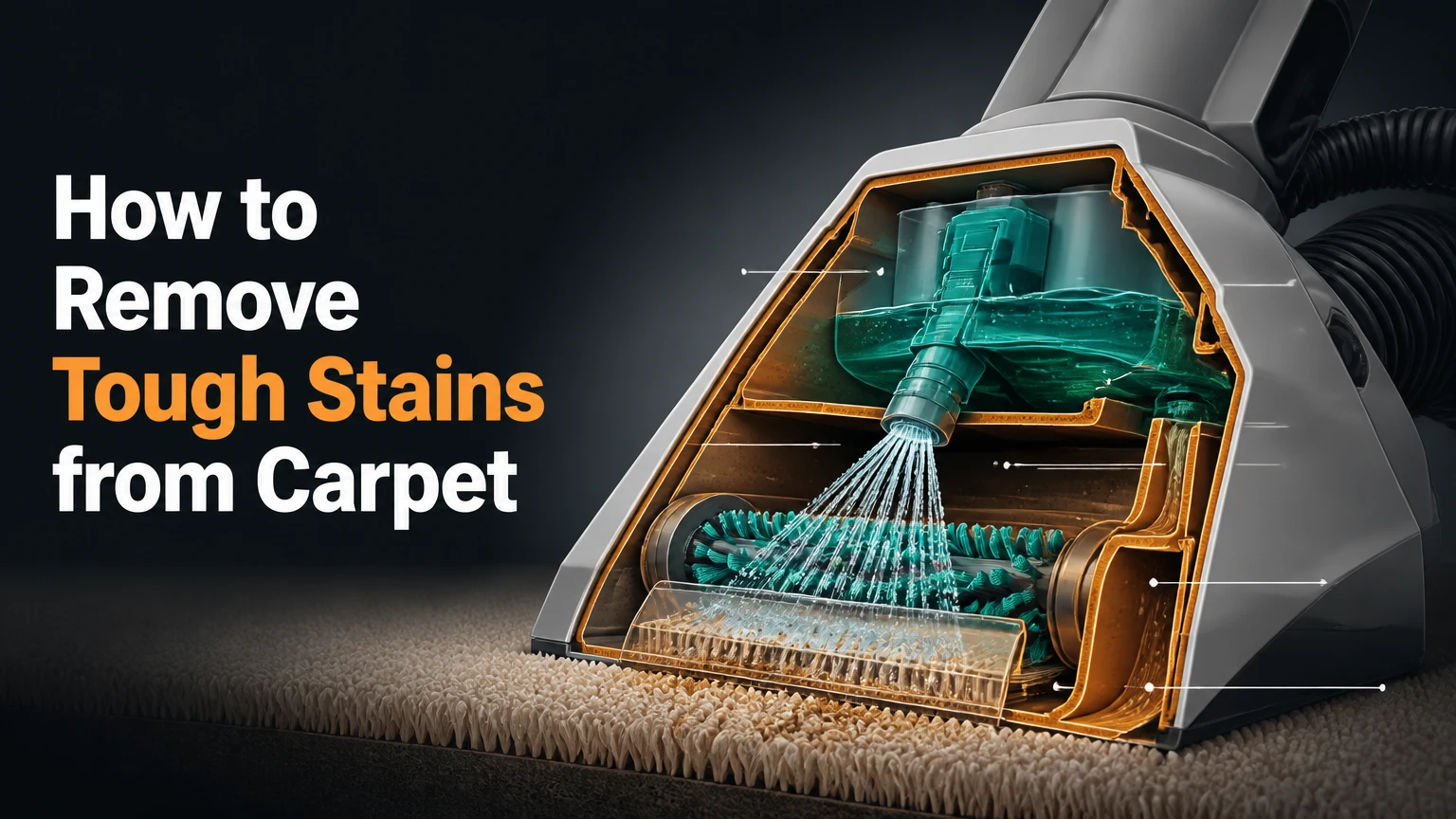
Knowing exactly how to remove tough stains from carpet saves your flooring and your security deposit. You will accomplish complete extraction across eight steps by scraping, blotting, mixing, testing, applying, agitating, rinsing, and pressing. This beginner-friendly process takes 45 minutes. Success depends entirely on vertical blotting rather than scrubbing.
Before You Start
Review these requirements before mixing any liquids. You need a completely dry subfloor and good ventilation in the room.
Difficulty Level: Beginner
Active Time Required: 45 minutes
Drying Time: 8 to 12 hours
| Item Required | Quantity or Specification | Typical Cost | Purpose in Process |
| White vinegar | 60 ml (1/4 cup) | $2.00 / bottle | Breaks down the chemical bonds of water-soluble stains. |
| Liquid dish soap | 1 ml (4 to 5 drops) | $3.00 / bottle | Acts as a surfactant to lift grease. Do not use bleach. |
| Warm water | 240 ml (1 cup) at roughly 40°C | Free | Dilutes the active cleaning agents safely. |
| Isopropyl alcohol | 30 ml (2 tablespoons) at 70% | $4.00 / bottle | Dissolves oil-based blemishes like ink or cosmetics. |
| Microfiber cloths | 4 to 5 clean white towels | $10.00 / pack | Absorbs moisture without transferring foreign dyes. |
| Heavy weight | 1 unit (approx. 5 kilograms) | Free | Applies downward pressure during the drying phase. |
| Spray bottle | 1 empty 500-ml container | $3.00 / unit | Distributes the chemical solution evenly over the fibers. |
| Soft brush | 1 unit with flexible bristles | $5.00 / unit | Agitates the pile without fraying the manufactured yarns. |
Step-by-Step Removal Process
This standardized method works for 90% of household spills. Follow the exact order to prevent structural damage to your flooring.
| Step | Action Summary | Active Time | Most Common Mistake |
| 1 | Scrape and vacuum solids | 5 minutes | Pushing debris into the pad |
| 2 | Blot the liquid excess | 2 minutes | Rubbing the fibers |
| 3 | Mix the cleaning solution | 2 minutes | Adding too much soap |
| 4 | Perform a hidden patch test | 5 minutes | Skipping this safety check |
| 5 | Apply solution and let dwell | 10 minutes | Over-saturating the floor |
| 6 | Agitate and blot the fibers | 5 minutes | Brushing outward |
| 7 | Rinse with pure water | 3 minutes | Leaving soapy residue |
| 8 | Dry under weighted towels | 8 hours | Applying direct heat |
Step 1: Scrape Away Solid Matter
Remove heavy surface debris using a dull edge before addressing the liquid spill.
Slide a plastic putty knife or the back of a spoon across the carpet fibers at a 45-degree angle. This exact angle lifts the debris without shearing the yarn twists. Scoop up mud, food matter, or solid waste carefully. Never press downward during this phase. Pressing down drives the particles past the primary backing into the porous pad below. Work sequentially from the outside edge toward the exact center. Finally, vacuum the loose, dry flakes using a narrow crevice hose attachment. Ensure your vacuum beater bar remains turned off.
Checkpoint: You will know it worked when only flat discoloration remains in the fibers.
Mistake to Avoid: Pressing a vacuum head directly onto a wet clump forces the matter permanently into the latex backing.
Step 2: Blot the Liquid Excess
Press a clean, dry white microfiber cloth firmly into the fresh stain.
Apply heavy downward hand pressure using your full upper body weight. Hold the folded cloth in place for at least five seconds. This pause allows capillary action to draw the moisture upward from the base of the tufts into the towel. Lift the towel straight up. Rotate the fabric to a completely dry section. Repeat this vertical pressing motion until the cloth comes away entirely dry. Never rub or scrub the fibers side to side under any circumstances.
Checkpoint: You will know it worked when no more liquid transfers to a fresh section of your towel.
Mistake to Avoid: Aggressive rubbing untwists the manufactured carpet yarns, which distorts the pile texture and creates a fuzzy patch.
Step 3: Mix the Cleaning Solution
Combine white vinegar, liquid dish soap, and warm water in a spray bottle.
Pour 240 ml of warm water into an empty 500-ml spray bottle. The water should sit at roughly 40°C. According to the Carpet and Rug Institute (2023), water temperatures above 49°C can melt synthetic latex backings. Add 60 ml of white vinegar and exactly 1 milliliter (about 4 to 5 drops) of liquid dish soap. Swirl the bottle gently in a circular motion for 10 seconds. Do not shake the bottle vigorously.
Checkpoint: You will know it worked when the liquid appears uniform with minimal foam at the top of the bottle.
Mistake to Avoid: Adding extra soap leaves a sticky residue that rapidly attracts new dirt to the spot.
Step 4: Perform a Hidden Patch Test
Apply the mixed solution to an inconspicuous area to verify carpet colorfastness.
Spray the cleaning solution onto a small section of carpet inside a closet or under a heavy piece of furniture. Wait exactly three minutes for the chemicals to react. Press a dry white cloth into the damp spot using your thumb. Look closely at the towel under bright lighting.
Checkpoint: You will know it worked when the white towel shows absolutely no carpet dye transfer.
Mistake to Avoid: Skipping this safety check on natural fibers often causes irreversible chemical bleaching.
Step 5: Apply Solution and Let It Dwell
Spray the target area evenly and let the solution sit for ten minutes.
Coat the stained fibers until they feel damp to the touch. Do not soak the area down to the backing. Leave the solution completely undisturbed for exactly 10 minutes. This dwell time allows the mild acetic acid in the vinegar to break the chemical bonds of the discoloration. The IICRC S100 Standard for Textile Floor Covering Cleaning recommends moisture dwell times strictly under 15 minutes to prevent backing delamination.
Checkpoint: You will know it worked when the stain edges begin to look slightly blurred or lighter in color.
Mistake to Avoid: Rushing the dwell time forces you to rely on mechanical friction, which ruins the carpet surface.
Step 6: Agitate and Blot the Fibers
Work the solution inward gently with a brush and absorb the lifted pigments.
Take a soft-bristled brush in your dominant hand. Sweep the bristles using short, inward strokes from the outside edge of the stain toward the center. This specific motion prevents the spot from spreading outward. Immediately press a fresh white microfiber towel into the agitated area. Use firm downward pressure. Repeat the agitation and blotting sequence until the carpet runs clear.
Checkpoint: You will know it worked when the stain color transfers clearly onto your white towel.
Mistake to Avoid: Using colored cloths can bleed foreign dye directly into your carpet fibers under heavy pressure.
Step 7: Rinse with Pure Water
Flush the treated area with pure, cold water to remove all chemical residues.
Empty your spray bottle and refill it with cold tap water. Lightly mist the entire cleaned area. Press a clean, dry towel into the damp fibers to pull up the diluted soap and vinegar. Repeat this misting and blotting cycle two full times.
Checkpoint: You will know it worked when the carpet feels wet but no longer slippery to the touch.
Mistake to Avoid: Leaving dish soap in the fibers creates a tacky film that guarantees the spot will turn black within a month.
Step 8: Dry Under Weighted Towels
Compress the damp spot overnight under a heavy weight to draw out moisture.
Fold a large, dry white towel in half. Place it directly over the wet floor. Stack a heavy book or a 5-kilogram weight centrally on the towel. Leave this setup in place for 8 to 12 hours. A typical nylon carpet fiber absorbs up to 4% of its weight in water. The heavy weight forces the dry towel to wick this internal moisture outward into the cotton.
Checkpoint: You will know it worked when the carpet feels completely dry to the touch the next morning.
Mistake to Avoid: Using a hairdryer applies direct heat, which can permanently bake residual proteins into synthetic strands.
Common Mistakes and How to Fix Them
Beginners frequently damage their floors during the extraction process. Review these common failures and their corresponding repair strategies.
Scrubbing the Pile Aggressively
Mechanism of Damage
Scrubbing side-to-side creates extreme friction. This friction untwists the tightly wound yarns that make up your carpet pile. Once the yarns untwist, they blossom outward, creating a permanently frayed and fuzzy texture that catches shadows and looks like a stain.
Repair Strategy
You cannot mathematically re-twist carpet fibers. You can carefully trim the frayed tips using sharp sewing scissors to level the pile. Hold the scissors perfectly parallel to the floor and snip only the topmost fuzz.
Over-Saturating the Carpet Pad
Mechanism of Damage
Dumping liquids directly from a cup overwhelms the primary backing. The liquid seeps into the dense polyurethane foam pad beneath the carpet. This trapped moisture breeds mold within 48 hours and can warp hardwood subfloors.
Repair Strategy
Extract the excess water immediately using a wet-dry shop vacuum. Remove the vacuum filter first. Press the nozzle firmly into the carpet and drag it slowly across the wet area. Point a high-velocity floor fan directly at the spot for 24 hours.
Applying Direct Heat Sources
Mechanism of Damage
Many people point a hot hairdryer at a wet spot to speed up drying. Heat acts as a catalyst for chemical reactions. If any proteins or synthetic dyes remain in the fibers, temperatures above 60°C will fuse them permanently to the plastic polymers of nylon or polyester carpets.
Repair Strategy
Keep all heat tools away from your floors. Rely entirely on air circulation and heavy, dry towels for moisture extraction.
Troubleshooting Process Failures
Sometimes a spot behaves unexpectedly. Use these technical adjustments when the standard eight steps fall short.
The Stain Reappeared After Drying
Scientific Cause of Wicking
Wicking occurs when a large spill penetrates deep into the backing. You clean the surface successfully, but as the top fibers dry, capillary action pulls the deep, hidden liquid back up the yarn shafts. The moisture evaporates at the top, leaving the colored pigments behind.
Immediate Correction Steps
Rewet the surface very lightly with pure water. Place a thick layer of dry paper towels over the area. Place a heavy weight on top and leave it for exactly 24 hours. The new moisture establishes a capillary bridge, and the weight forces the deep liquid to travel all the way up into the disposable paper towels.
The Carpet Stays Sticky
Scientific Cause of Residue
Dish soap is a highly concentrated surfactant designed to trap greases. If you use too much soap or skip the rinse phase, the surfactant dries onto the fibers. This sticky residue acts as a magnet for atmospheric dust and dirt from the bottom of shoes.
Immediate Correction Steps
Spray the sticky area thoroughly with a mixture of equal parts warm water and white vinegar. Do not add any soap. Blot the area repeatedly with a dry towel. The mild acid in the vinegar cuts through the alkaline soap film and releases the trapped dirt.
The Stain Did Not Move at All
Identifying Oil-Based Bonds
Water-based solutions physically cannot dissolve lipid-based stains like mechanical grease, heavy cosmetics, or ballpoint ink. Water and oil repel each other at a molecular level, so the vinegar solution simply washes over the top of the grease.
Using Isopropyl Alcohol
Apply a small amount of 70% isopropyl rubbing alcohol directly to a clean white cloth. Never pour alcohol directly onto the floor. Alcohol dissolves latex adhesive instantly, which will detach the carpet fibers from the backing. Press the alcohol-dampened cloth firmly into the stain to break down the heavy oils safely.
Process Variations for Different Situations
You must adjust your chemistry and technique based on the specific environment and the materials involved.
Treating Natural Wool Carpets
Vulnerabilities of Organic Yarns
Wool is a natural animal protein. It dissolves rapidly in high-alkaline environments. Heavy detergents, bleach, or ammonia will chemically burn the fibers and turn them yellow or brown.
Adjusted Cleaning Approach
Use strictly pH-neutral or mildly acidic solutions on wool. Swap the warm water for cold water to prevent shrinking. Limit your moisture dwell time to three minutes. Blot with extreme care, as wet wool stretches easily and loses its structural shape.
Handling Old and Set-In Stains
The Hydration Challenge
Fresh spills are liquid and easy to transfer. Old stains have crystallized over months or years. The chemical bonds have oxidized and locked firmly onto the synthetic dye sites of the yarn.
Reconstitution Technique
You must rehydrate the crystallized material before cleaning it. Lay a warm, wet towel over the old spot for 30 minutes before beginning the standard eight steps. If the spot is biological (like old pet urine), substitute the vinegar solution with a commercial enzymatic cleaner to digest the organic proteins.
Time and Cost Estimates
Understanding the financial and temporal commitment helps you choose the correct extraction strategy.
Financial Comparison of Approaches
Assess the severity of your floor damage against these common remediation paths.
| Cleaning Method | Typical Time Required | Estimated Cost Range | Best Used For |
| DIY Spot Cleaning | 45 minutes | $5 to $15 | Fresh spills and minor daily accidents. |
| Machine Rental | 4 to 6 hours | $40 to $80 | Annual whole-room maintenance cleaning. |
| Professional Service | 2 to 3 hours | $150 to $300 | Heavy soil buildup or delicate natural wool. |
| Carpet Replacement | 1 to 2 days | $800 to $2000 | Severe mold, tearing, or structural pad damage. |
Frequently Asked Questions
Does vinegar discolor synthetic carpet fibers?
White vinegar is a mild acetic acid with a pH of roughly 2.5. It safely neutralizes alkaline residues without removing synthetic dyes from nylon or polyester carpets. You must always dilute it with water to prevent the acid from weakening the structural integrity of the latex backing over time.
How do you extract old smells after cleaning?
Odors often indicate moisture trapped in the pad below the surface. Spraying a commercial enzymatic cleaner directly into the subfloor digests the odor-causing bacteria. Avoid using baking soda on wet floors. Baking soda crystallizes inside the wet carpet tufts and ruins vacuum cleaner internal filters.
Can steam cleaners remove set-in oil spots?
Steam cleaning applies direct heat to the flooring material. Heat permanently bakes oil-based and protein-based compounds into the porous structure of the yarn. You must extract all heavy grease using a cold solvent like isopropyl alcohol before running any heated extraction machines over the affected area.
Why does dish soap attract more dirt?
Standard dish soap is highly concentrated and leaves a sticky surfactant residue behind if left unrinsed. This sticky film grabs dust from the ambient air and dirt from passing shoes. Using pure water to rinse the fibers completely eliminates this common chemical trap.
Mastering how to remove tough stains from carpet requires patience, precise measurements, and the correct chemical balance. By properly identifying your fiber type and following rigid blotting protocols, you can maintain pristine flooring for years to come.