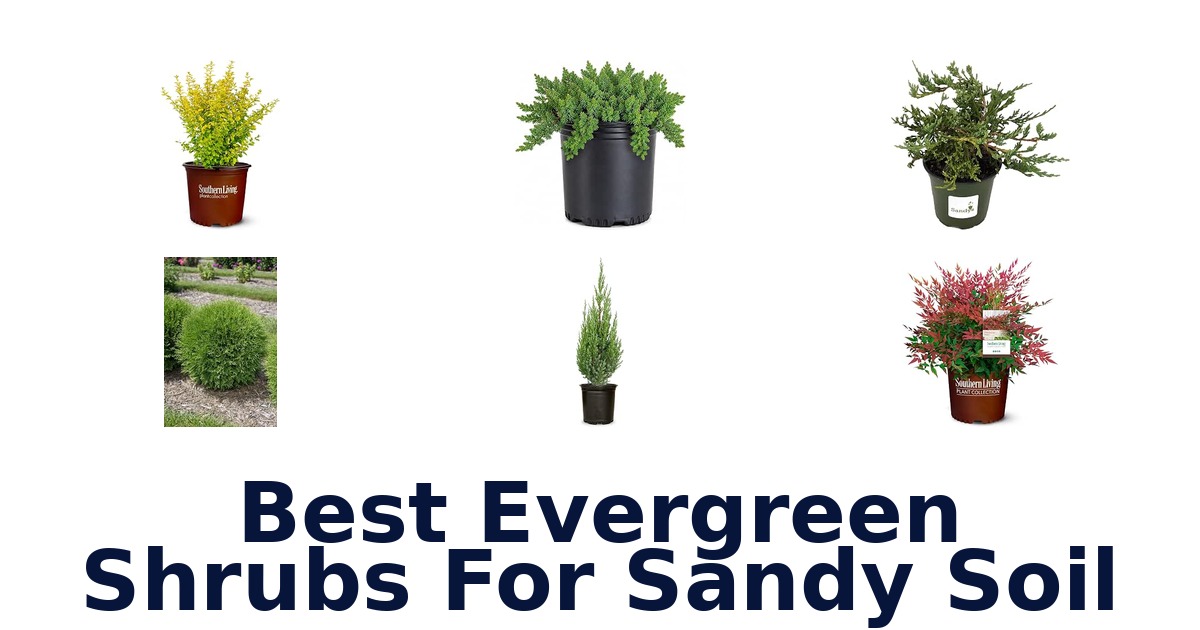
A strong choice for sandy soil combines a spreading or upright form with the ability to handle dry conditions once established; that makes these junipers useful for sunny slopes, groundcover, and low-water landscapes. The products here range from mats only 4 to 6 inches tall to upright shrubs reaching 8 to 12 feet, so match the plant to the space as well as the soil. Several listings specifically describe drought tolerance or adaptability to varied soil types, but none provides a detailed soil pH or drainage range.
Treat those claims as useful starting points, not guarantees for every sandy site. Our leading options emphasize junipers with spreading habits, erosion-control uses, or stated tolerance for varied soils, while the remaining picks offer color or screening where conditions suit them.
Florida Foliage Blue Rug Juniper leads because its listing combines drought tolerance, a dense spreading groundcover habit, and adaptability to a variety of soil types. Those traits make it the clearest fit here for a sunny sandy-soil site, particularly a slope or bank where ground coverage is useful. For a more compact low groundcover, consider Procumbens Nana Juniper; for a taller vertical accent, Blue Point Juniper offers a stated drought-tolerant, conical form.
Our Top Picks
 Best Overall
Florida Foliage Blue Rug Juniper
Its listing states drought tolerance and adaptability to a variety of soil types, with a dense spreading habit suited to covering slopes and banks.
View on Amazon Most Compact
This low groundcover grows about 1 foot tall and spreads 4 to 6 feet, tolerating heat and drought once established in full sun.
View on Amazon Best Slope Cover
Beyond The Ridges Blue Rug Juniper
The listing describes drought tolerance and erosion control, with a 4-to-6-inch height and potential spread of 6 to 8 feet.
View on Amazon- Golden Groundcover Garden Debut Golden Pacific Juniper
- Best Upright Form Plants by Mail Blue Point Juniper
Compare these evergreen shrubs by form and planting role
| # | Product | Weight | Buy |
|---|---|---|---|
| 1 | 1. Florida Foliage Blue Rug JuniperBest Overall | 5 lb | View on Amazon |
| 2 | 2. Procumbens Nana JuniperMost Compact | 6 lb | View on Amazon |
| 3 | 3. Beyond The Ridges Blue Rug JuniperBest Slope Cover | 16 oz | View on Amazon |
| 4 |  4. Sandys Nursery Blue Rug JuniperFast-spreading blue groundcover | — | View on Amazon |
| 5 |  5. Garden Debut Golden Pacific JuniperGolden Groundcover | 13 lb | View on Amazon |
| 6 |  6. Plants by Mail Blue Point JuniperBest Upright Form | 6 lb | View on Amazon |
| 7 |  7. First Editions Planet Earth ArborvitaeRounded, low-pruning foundations | — | View on Amazon |
| 8 |  8. Perfect Plants Podocarpus MakiNarrow privacy screens | 4 lb | View on Amazon |
| 9 |  9. Southern Living Obsession NandinaRed foliage containers | 8.8 lb | View on Amazon |
| 10 |  10. Perfect Plants Sunshine LigustrumGolden borders and containers | — | View on Amazon |
Detailed Reviews: Best Evergreen Shrubs For Sandy Soil
#1 · Best Overall
1. Florida Foliage Blue Rug Juniper
- Weight: 5 lb
Best for: Three-plant erosion-control set.
Why it ranks #1: Its listing states drought tolerance and adaptability to a variety of soil types, with a dense spreading habit suited to covering slopes and banks.
A set of three Blue Rug Junipers offers a starting group for covering slopes and banks with dense, spreading evergreen foliage. The listing highlights silvery-blue color, drought tolerance, and erosion control, making this low-maintenance groundcover a possible fit for sunny sites where soil stabilization is a priority.
The three-plant quantity supports starting a small groundcover grouping, while the dense, spreading habit is specifically described as stabilizing soil on slopes and banks. Silvery-blue foliage adds color and texture, and the listing says the juniper thrives in sunny locations. Drought tolerance and low-maintenance care are also named features, but the supplied details do not give a mature height, spread, or USDA zone. Use those limits when planning spacing and deciding whether it fits the site.
- Set includes 3 live plants
- Dense spreading habit is listed for slope and bank erosion control
- Silvery-blue evergreen foliage
- Drought tolerant and low maintenance
- The supplied details do not state mature dimensions or a USDA hardiness zone.
Skip it if you need exact mature dimensions or a stated USDA zone to plan spacing; the listing does not supply those specifications.
This set suits gardeners beginning a sunny slope or bank groundcover planting who value drought tolerance and erosion control. The three-plant quantity gives a starting group, but confirm site planning needs against the missing size and zone information.
Full product details
| Brand | Florida Foliage |
|---|---|
| Color | Green |
| Item Weight | 5 pounds |
| Manufacturer | Florida Foliage |
| Special Features | Drought Tolerant, Low Maintenance |
| Special Feature | Drought Tolerant, Low Maintenance |
| Style Name | 3 Plants |
Listed on Amazon as: Blue Rug Juniper Wiltonii | 3 Live Plants | Juniperus Horizontalis | Creeping Ground Cover, Low Maintenance Shrub, Drought Tolerant, Evergreen Foliage, Fast Growing, Erosion Control
View on Amazon#2 · Most Compact
2. Procumbens Nana Juniper
- Weight: 6 lb
Best for: Sunny slopes and rock gardens.
Why it ranks #2: This low groundcover grows about 1 foot tall and spreads 4 to 6 feet, tolerating heat and drought once established in full sun.
A spreading habit reaching 4–6 feet wide while staying about 1 foot tall gives Procumbens Nana Juniper a useful profile for covering broad, low areas. Its dense blue-green needle-like foliage stays evergreen, and established plants tolerate heat and drought, making it a candidate for sunny slopes and rock gardens.
Full sun is its stated preference, so place it where the site receives plenty of direct light rather than treating it as a shade shrub. At maturity, its low 1-foot height and 4–6-foot spread suit groundcover roles along retaining walls or across slopes without adding much vertical bulk. The listing says it tolerates heat and drought once established; that distinction means watering needs change over time, so plan for establishment before relying on its drought tolerance.
- Low, spreading form reaches 4–6 feet wide
- Dense blue-green needle-like evergreen foliage
- Tolerates heat and drought once established
- Hardy in USDA Zones 4–9
- Full sun is its stated best exposure, limiting its fit for shaded sites.
Skip it if you need an upright screen; PERFECT PLANTS Podocarpus Maki is listed for narrow hedges and privacy screens.
Choose this juniper for sunny, low-growing coverage on slopes, rock gardens, or retaining-wall edges, especially where established drought tolerance is useful. Allow room for a 4–6-foot spread, and note its preference for full sun.
Full product details
| Brand | Plants by Mail |
|---|---|
| Color | Green |
| Item Weight | 6 pounds |
| Manufacturer | Plants by Mail |
| Manufacturer Warranty Description | We guarantee the delivery of only live, healthy plants to your doorstep. If, for some reason, you believe the plant you receive is not a live and healthy specimen, please take a photo immediately, and email to [email protected]. Plants found to not be healthy or alive, or plants found to be dama |
| Special Features | Compact, Deer Resistant, Drought Tolerant, Groundcover, Rabbit Resistant |
| Care Instructions | Water 2-3 times per week during the first growing season. During its second season, water 1-2 times per week depending on the weather. Afterward, it only needs supplementary water during times of extreme heat and drought. See more |
| Special Feature | Compact, Deer Resistant, Drought Tolerant, Groundcover, Rabbit Resistant |
Listed on Amazon as: Procumbens Nana Juniper (2.5 Quart) Low-Growing Evergreen Groundcover Shrub – Bonsai Tree Live/Desk Plants Live Houseplants – Zen Garden Ecosphere
View on Amazon#3 · Best Slope Cover
3. Beyond The Ridges Blue Rug Juniper
- Weight: 16 oz
Best for: Slope-covering starter plants.
Why it ranks #3: The listing describes drought tolerance and erosion control, with a 4-to-6-inch height and potential spread of 6 to 8 feet.
A mature height of just 4–6 inches paired with a spread of 6–8 feet gives Blue Rug Juniper a carpet-like profile for broad groundcover areas. This listing supplies 10 live plants, and its silvery-blue foliage shifts toward purplish blue in winter for seasonal color across a slope.
The low height and wide spread make this juniper suited to covering ground rather than creating a screen; the listing also identifies erosion control and slope stabilization as uses. Dense foliage is described as weed-suppressing, which can help the planting form a continuous carpet as it spreads. Its color changes from silvery blue in spring and summer to purplish blue in winter. After arrival, the care instructions say to soak plants in water for 30 minutes before planting.
- Pack includes 10 live plants
- Mature height is 4–6 inches with a 6–8-foot spread
- Dense groundcover is described as weed-suppressing
- Drought tolerant and low maintenance
- Plants require a 30-minute soak in water after arrival before planting.
Skip it if you need an upright hedge or screen; this juniper stays 4–6 inches tall and spreads along the ground.
Choose this 10-plant set for a low, spreading slope or broad groundcover area where silvery-blue foliage and erosion control are priorities. Its footprint expands widely, so it is not suited to a narrow upright hedge.
Full product details
| Brand | Beyond The Ridges |
|---|---|
| Color | Green |
| Item Weight | 16 ounces |
| Manufacturer | Beyond The Ridges |
| Material Feature | Easy to Grow |
| Material Features | Easy to Grow |
| Special Features | Drought Tolerant, Low Maintenance |
| Care Instructions | Soak in water for 30 mintues after arrival before planting. |
| Special Feature | Drought Tolerant, Low Maintenance |
| Style Name | Blue Ground Cover |
Listed on Amazon as: 10 Blue Rug Juniper Wiltonii Live Plants | Juniperus Horizontalis |
View on Amazon#4
4. Sandys Nursery Blue Rug Juniper
Best for: Fast-spreading blue groundcover.
Why it ranks #4: This Wiltonii groundcover is listed at 4 to 6 inches tall and 6 to 8 feet wide, with needle-like evergreen foliage and stated growth rates.
Growth listed at 0.5–1.5 feet per year gives this Blue Rug Juniper a defined pace for filling out a low groundcover planting. Its mature profile is 4–6 inches tall and 6–8 feet wide, with evergreen blue-green needle-like leaves suited to broad, low coverage.
The stated 6–8-foot spread and 4–6-foot planting spacing help plan a mass planting or line of groundcover, while the low mature height keeps it close to the soil. Moderate-to-rapid growth of 0.5–1.5 feet per year gives buyers a listed rate for anticipating coverage. The plant ships in a 4-inch pot with soil, and its evergreen needle-like foliage supplies blue-green color. Arizona is excluded from shipping, so location matters before ordering.
- Low mature height of 4–6 inches
- Spreads 6–8 feet wide
- Listed growth rate is 0.5–1.5 feet per year
- Evergreen blue-green needle-like foliage
- The seller does not ship this plant to Arizona.
Skip it if you live in Arizona; this seller excludes the state, while other listed groundcovers may suit your location.
Pick this Blue Rug Juniper for mass plantings or groundcover where its listed growth rate and wide mature spread help with spacing plans. Its low profile is not an upright screen, and it cannot ship to Arizona.
Full product details
| Brand | Sandys Nursery Online |
|---|---|
| Color | Blue |
| Manufacturer | Sandys Nursery Online® |
| Additional Information | Important information |
Listed on Amazon as: Juniper Blue Rug, Wilton Ground Cover, 4 Inch Pot
View on Amazon#5 · Golden Groundcover
5. Garden Debut Golden Pacific Juniper
- Weight: 13 lb
Best for: Golden cascading groundcover.
Why it ranks #5: Its description says it grows in a wide range of soil and climate conditions, spreading 6 to 8 feet; shipping exclusions apply in many states.
Golden-yellow foliage in a spreading, carpet-forming habit gives Golden Pacific Juniper a low, colorful role for landscape coverage. Its stated mature size of 10–18 inches tall and 6–8 feet wide sets expectations for a broad footprint, while flexible, pliable branches add a cascading quality.
The low, wide mature form suits groundcover use rather than a vertical screen, and the 6–8-foot spread calls for space around the planting. Golden-yellow foliage supplies color, while the carpet-forming habit can cover a broader area as it grows. The description says it handles a wide range of soil and climate conditions, and care information specifies well-drained conditions. Shipping is unavailable to AK, AZ, CA, CO, HI, ID, MT, NM, NV, OR, UT, WA, and WY.
- Golden-yellow evergreen foliage
- Carpet-forming, cascading growth habit
- Mature size listed as 10–18 inches tall and 6–8 feet wide
- Description states it handles a wide range of soils and climates
- Shipping is unavailable to 13 listed states.
Skip it if you live in AK, AZ, CA, CO, HI, ID, MT, NM, NV, OR, UT, WA, or WY; orders to those states are cancelled.
Consider Golden Pacific for a broad, low planting where golden foliage and a cascading carpet form suit the landscape. Provide well-drained conditions, reserve space for its 6–8-foot spread, and check the extensive shipping-state exclusions.
Full product details
| Brand | Blooming & Beautiful |
|---|---|
| Color | Golden |
| Item Weight | 13 pounds |
| Manufacturer | Garden Debut |
| Care Instructions | Well-drained |
| Style Name | Modern |
Listed on Amazon as: Garden Debut Golden Pacific Juniper, Live Evergreen Shrub, 3 Gallon
View on Amazon#6 · Best Upright Form
6. Plants by Mail Blue Point Juniper
- Weight: 6 lb
Best for: Vertical evergreen accents.
Why it ranks #6: This drought-tolerant juniper grows 8 to 12 feet tall and 4 to 6 feet wide, offering a vertical option for sunny landscapes.
A naturally pyramidal form reaching 8–12 feet tall gives Blue Point Juniper a clear vertical role in a garden, hedge, or privacy screen. Its silvery-blue needles stay consistent year-round, and its 4–6-foot spread helps define the space it needs compared with low, trailing groundcovers.
The tightly conical outline and 8–12-foot height can add an upright element to a planting, while the 4–6-foot spread indicates room to reserve around it. Dense branching supports its listed use for privacy screens, hedges, and topiary. Watering instructions are more intensive during establishment: 2–3 times weekly in the first growing season, then 1–2 times weekly in the second depending on weather. Once established, supplementary water is specified during extreme heat and drought.
- Tightly conical, pyramidal growth habit
- Mature size listed as 8–12 feet tall and 4–6 feet wide
- Silvery-blue foliage remains consistent year-round
- Drought tolerant and deer resistant
- Watering is specified 2–3 times weekly during the first growing season.
Skip it if you need a low carpet rather than an upright shrub; Beyond The Ridges Blue Rug Juniper is listed at only 4–6 inches tall.
Choose Blue Point for an upright evergreen accent, hedge, or privacy screen where its conical shape and year-round blue-green foliage fit. Allow for its 8–12-foot height and follow the staged watering schedule while it establishes.
Full product details
| Brand | Plants by Mail |
|---|---|
| Color | Green |
| Item Weight | 6 pounds |
| Manufacturer | Plants by Mail |
| Special Features | Compact, Deer Resistant, Disease Resistant, Drought Tolerant, Low Maintenance |
| Care Instructions | Water 2-3 times per week during the first growing season. During its second season, water 1-2 times per week depending on the weather. Afterward, it only needs supplementary water during times of extreme heat and drought. Fertilize your plant with variety specific fertilizer 2-3 times during the gro |
| Special Feature | Compact, Deer Resistant, Disease Resistant, Drought Tolerant, Low Maintenance |
Listed on Amazon as: Plants by Mail Blue Point Juniper (Tree, Bush, Evergreen, Fragrant), 2.5 Quart
View on Amazon#7
7. First Editions Planet Earth Arborvitae
Best for: Rounded, low-pruning foundations.
Why it ranks #7: The listing highlights a naturally rounded, dense form and cold hardiness, but does not specify sandy-soil adaptability or drought tolerance.
A naturally rounded, dense habit that maintains its shape without shearing gives Planet Earth Arborvitae a tidy foundation-planting option with less shaping work. Its green foliage shifts to bronze tones in winter, while its listed resistance to Passalora/Cercospora needle blight adds a specific foliage-health consideration.
The naturally spherical form is stated to maintain its shape without shearing, so it can suit informal hedges or foundation plantings where regular shaping is not the goal. Dense growth gives the shrub a compact visual presence, while winter bronze tones add a seasonal change from its rich green foliage. Its resistance to Passalora/Cercospora needle blight is a listed disease trait, not a guarantee against all problems. The provided facts do not specify mature dimensions or a hardiness zone.
- Naturally rounded, dense growth
- Maintains shape without shearing
- Green foliage develops bronze winter tones
- Listed resistance to Passalora/Cercospora needle blight
- The supplied product details do not state mature dimensions or a USDA hardiness zone.
Skip it if you need confirmed mature dimensions or a stated USDA zone before planting; the listing does not provide either detail.
Consider this arborvitae for a rounded foundation planting or informal hedge if avoiding shearing is a priority. Its winter bronze color is a useful seasonal shift, but obtain missing size and zone details before assigning it a specific site.
Full product details
| Brand | First Editions |
|---|---|
| Color | green |
Listed on Amazon as: Planet Earth Arborvitae, 1 Gallon, Round Dense Evergreen Shrub, Cold Hardy Foundation Plant
View on Amazon#8
8. Perfect Plants Podocarpus Maki
- Weight: 4 lb
Best for: Narrow privacy screens.
Why it ranks #8: Its 8-to-10-foot upright growth suits narrow hedges, but the supplied facts do not establish sandy-soil or drought suitability.
An upright mature profile of 8–10 feet tall and 3–4 feet wide makes Podocarpus Maki useful where an evergreen screen must stay relatively narrow. Its dense growth and glossy dark green foliage provide year-round coverage, while the listed hedge and foundation uses help clarify where this Japanese Yew can fit.
For a narrow hedge or privacy screen, the stated 3–4-foot width takes less lateral room than a broadly spreading groundcover, while its 8–10-foot height offers a vertical role. Dense, glossy foliage provides evergreen screening character without relying on seasonal leaf color. The shrub is listed for USDA Zones 7–11 and is described as low maintenance, deer resistant, and pest resistant. It cannot ship to California or Arizona, an important location restriction before ordering.
- Dense, upright evergreen growth
- Mature size listed as 8–10 feet tall and 3–4 feet wide
- Glossy dark green foliage
- Listed as deer resistant, pest resistant, and low maintenance
- Not available for shipment to California or Arizona.
Skip it if you garden in California or Arizona; shipping is restricted, while other listed shrubs have no stated restriction for those states.
This suits gardeners in Zones 7–11 seeking an upright evergreen hedge, privacy screen, or foundation planting with a relatively narrow footprint. Check the stated shipping restriction first, and allow for its eventual 8–10-foot height.
Full product details
| Brand | PERFECT PLANTS |
|---|---|
| Color | Green |
| Item Weight | 4 pounds |
| Manufacturer | Perfect Plants |
| Part Number | PL-PODO-MAKI-1GL |
| Model Number | PL-PODO-MAKI-1GL |
| Special Features | Deer Resistant, Low Maintenance, Pest Resistant, Rabbit Resistant |
| Special Feature | Deer Resistant, Low Maintenance, Pest Resistant, Rabbit Resistant |
Listed on Amazon as: Perfect Plants Podocarpus Maki Live Plant, 1 Gallon, Japanese Yew
View on Amazon#9
9. Southern Living Obsession Nandina
- Weight: 8.8 lb
Best for: Red foliage containers.
Why it ranks #9: This evergreen suits zones 6 to 10 and sun to part shade, but its care listing calls for regular watering after establishment.
Bright red foliage through the seasons gives Obsession Nandina a color-forward evergreen option for landscapes and container gardens. Its stated sun-to-part-shade exposure offers placement flexibility, while the watering guidance distinguishes establishment care—twice weekly—from the once-weekly schedule listed afterward.
The bright red foliage provides a strong color feature for a container or landscape planting, and the listing identifies the shrub as evergreen. It grows in USDA Zones 6–10 and can be planted in sun to part shade, giving a choice of exposure within that range. Water twice per week until established, then once per week according to the supplied care instructions. This is a more explicit ongoing watering schedule than the product details provide for some other shrubs.
- Bright red foliage stated to persist through all seasons
- Suitable for sun to part shade
- Listed for USDA Zones 6–10
- Landscape and container garden use is specified
- The listing calls for weekly watering even after establishment.
Skip it if you want a stated drought-tolerant shrub with no weekly watering schedule; this nandina lists weekly watering after establishment.
This is a fit for gardeners wanting red evergreen foliage in a container or landscape bed in Zones 6–10. Its sun-to-part-shade range is flexible, but plan on the listed weekly watering after the establishment period.
Full product details
| Brand | Southern Living |
|---|---|
| Color | Bright Red Foliage |
| Item Weight | 8.8 pounds |
| Manufacturer | Southern Living |
| Part Number | Obsession |
| Material Feature | Organic |
| Material Features | Organic |
| Model Number | Obsession |
| Special Features | Deer Resistant |
| Care Instructions | Water,Well-drained |
| Special Feature | Deer Resistant |
| Style Name | Shrub |
Listed on Amazon as: Southern Living 2 Gal. Obsession Nandina Shrub
View on Amazon#10
10. Perfect Plants Sunshine Ligustrum
Best for: Golden borders and containers.
Why it ranks #10: Its golden evergreen foliage and zones 6 to 10 are useful landscape traits, but the listing provides no sandy-soil or drought-tolerance claim.
Bright golden-yellow foliage that holds its color through every season makes Sunshine Ligustrum an option for gardeners seeking evergreen color rather than a plain green backdrop. Its non-flowering, non-seed-spreading description also suits tidy borders, hedges, and container plantings where that stated growth behavior matters.
The year-round golden foliage gives borders and containers a consistent color feature, while the listed non-flowering, non-invasive description means this variety does not spread by seed. It is listed for Zones 6–10 and is cold hardy to about -10°F once established, with suitability for southern summer heat also noted. The establishment guidance calls for deep watering every 1–2 days during the first phase, so plan for frequent early attention rather than assuming mature care begins immediately.
- Golden-yellow foliage retains color year-round
- Non-flowering and does not spread by seed
- Listed for USDA Zones 6–10
- Suitable for hedges, borders, and containers
- Establishment guidance calls for deep watering every 1–2 days.
Skip it if you cannot provide deep watering every 1–2 days while it establishes; the listing specifies that early care schedule.
This suits a gardener who wants golden evergreen color in a hedge, border, or container across Zones 6–10. Its non-seed-spreading trait is useful for tidy planting, but account for frequent deep watering during establishment.
Full product details
| Brand | PERFECT PLANTS |
|---|---|
| Color | Yellow |
| Manufacturer | Perfect Plants |
Listed on Amazon as: Perfect Plants Sunshine Ligustrum Shrub, 1 Gallon, Golden Evergreen
View on AmazonAvoid the dry-rootball trap after planting
A drought-tolerant label does not mean a newly planted shrub can go without water. Blue Point Juniper’s care instructions call for watering 2 to 3 times weekly during its first growing season, then 1 to 2 times weekly in the second season, with supplemental water later during extreme heat and drought. Obsession Nandina likewise calls for twice-weekly watering until established, then once weekly.
These details matter in sandy soil because the listings themselves distinguish establishment care from established-plant tolerance. Check each plant’s instructions and your local conditions rather than assuming the mature plant’s drought tolerance applies on arrival.
The Blue Rug listings promote spreading coverage, but they do not specify a watering schedule. Plan to monitor moisture while roots establish, especially across exposed slopes, and do not treat a groundcover’s eventual wide spread as evidence that it will fill gaps immediately.
Plan for spread before planting a juniper mat
Spreading junipers need substantially more horizontal room than their low height suggests. Blue Rug Juniper listings give a mature spread of 6 to 8 feet; one recommends spacing plants 4 to 6 feet apart, while the multi-plant listing describes a low, wide carpet. Procumbens Nana is taller at about 1 foot but still spreads 4 to 6 feet.
That creates a practical sizing trap: a plant that looks small in its pot can eventually reach paths, neighboring beds, or retaining-wall edges. Confirm the mature width against the area you want covered, and use the listed spacing only as a starting point rather than a promise of instant coverage.
The 4-inch pot listing ships one plant, while other Blue Rug listings offer multiple live plants, so the number of plants and their starting size also affect how quickly a space might fill.
How to Choose Shrubs for Sandy Soil
Drought and soil adaptability
Look for a stated ability to handle dry conditions or varied soils, while remembering that the listings do not guarantee performance in every sandy site. Florida Foliage Blue Rug Juniper is described as drought tolerant and adaptable to a variety of soil types. Procumbens Nana Juniper tolerates heat and drought once established, and Blue Point Juniper is also labeled drought tolerant.
Golden Pacific Juniper is described as growing in a wide range of soil and climate conditions, but its listing does not specifically say drought tolerant. These choices favor sunny, exposed areas where water can be limited after establishment.
If your site is irrigated or has different light conditions, compare the product’s other stated requirements too; the supplied facts do not provide a full soil or moisture profile for every shrub.
Mature height and spread
Choose by mature dimensions first, especially when a low groundcover could expand into paths or beds. The Blue Rug Juniper listings reach just 4 to 6 inches tall but spread 6 to 8 feet. Procumbens Nana reaches about 1 foot tall and 4 to 6 feet wide, while Blue Point Juniper grows 8 to 12 feet tall and 4 to 6 feet wide.
Podocarpus Maki is another tall option at 8 to 10 feet, but only 3 to 4 feet wide. Buyers covering broad banks may favor the spreading end of this range; those needing a vertical screen should consider the taller upright forms.
These figures are listed mature sizes, not dimensions on delivery.
Foliage color and landscape role
Match foliage color and form to the job, since this set ranges from blue-green mats to golden and red-toned shrubs. Blue Rug Juniper offers silvery-blue foliage in a low, spreading form; Procumbens Nana has dense blue-green foliage. Blue Point Juniper supplies a silvery-blue, tightly conical shape, while Golden Pacific Juniper forms a golden carpet.
Sunshine Ligustrum is described with golden-yellow foliage, and Obsession Nandina with bright red foliage. Groundcover buyers who want erosion control may prefer the low, spreading junipers; gardeners seeking an upright accent or hedge can look at Blue Point or Podocarpus Maki.
Color preference should not override site fit: the listings do not establish that every colorful option tolerates sandy soil or drought.
Which Evergreen Shrub Fits Your Sandy-Site Plan?
For a sunny sandy slope or bank, choose Florida Foliage Blue Rug Juniper: it combines stated drought tolerance with adaptability to varied soil types and a spreading groundcover habit. If you want a compact, low-growing form with stated heat and drought tolerance after establishment, Procumbens Nana Juniper is a strong alternative. For broader Blue Rug coverage, Beyond The Ridges Blue Rug Juniper is listed for erosion control and reaches 6 to 8 feet wide; check the quantity and spacing before ordering.
Need a taller accent instead of a mat? Plants by Mail Blue Point Juniper reaches 8 to 12 feet and is described as drought tolerant.
Golden Pacific Juniper is another spreading option with a stated wide range of soil and climate conditions, but check its extensive shipping exclusions first.
Frequently Asked Questions
How often should newly planted shrubs be watered in sandy soil?
Water thoroughly at planting, then check the root zone frequently because sandy soil can dry quickly. Water when the soil around the roots begins to dry rather than relying on a fixed calendar. Keep newly planted shrubs consistently moist, not waterlogged, while they establish; adjust watering for rainfall, temperature, and the plant’s condition.
Should sandy soil be amended before planting evergreen shrubs?
Amendment is not automatically necessary, but incorporating organic matter can help sandy soil retain moisture and nutrients. Before planting, assess the site and follow the selected shrub’s planting guidance. Avoid creating a sharply different pocket of soil around the roots; blend any amendment into the surrounding planting area.
How far apart should spreading junipers be planted for continuous coverage?
Space plants according to their expected mature spread and how quickly you want coverage, rather than assuming one spacing fits every cultivar. The Beyond The Ridges Blue Rug listing gives a mature width of 6 to 8 feet; check the specific plant’s listing and quantity before planning a continuous mat.
Which option suits a taller accent rather than a low groundcover?
Plants by Mail Blue Point Juniper is the taller-accent choice in this group: its listing describes a drought-tolerant conical form that reaches 8 to 12 feet. By contrast, Blue Rug and Procumbens Nana are lower, spreading or compact groundcover options, so choose based on the shape needed at the planting site.
What should I check before ordering Golden Pacific Juniper?
Check the listing’s shipping exclusions before ordering, since they are described as extensive. Also confirm that the plant’s spreading habit fits the space and that the site conditions suit your plan. Golden Pacific is listed as a spreading option with a stated wide range of soil and climate conditions.
Final Words
For a sunny sandy slope or bank, choose Florida Foliage Blue Rug Juniper: its stated drought tolerance, adaptability to varied soil types, and spreading habit make it the clearest fit. Procumbens Nana is the compact, low-growing alternative, while Blue Point suits a taller accent. For wider Blue Rug coverage, verify plant quantity and spacing; before choosing Golden Pacific, check its shipping exclusions.