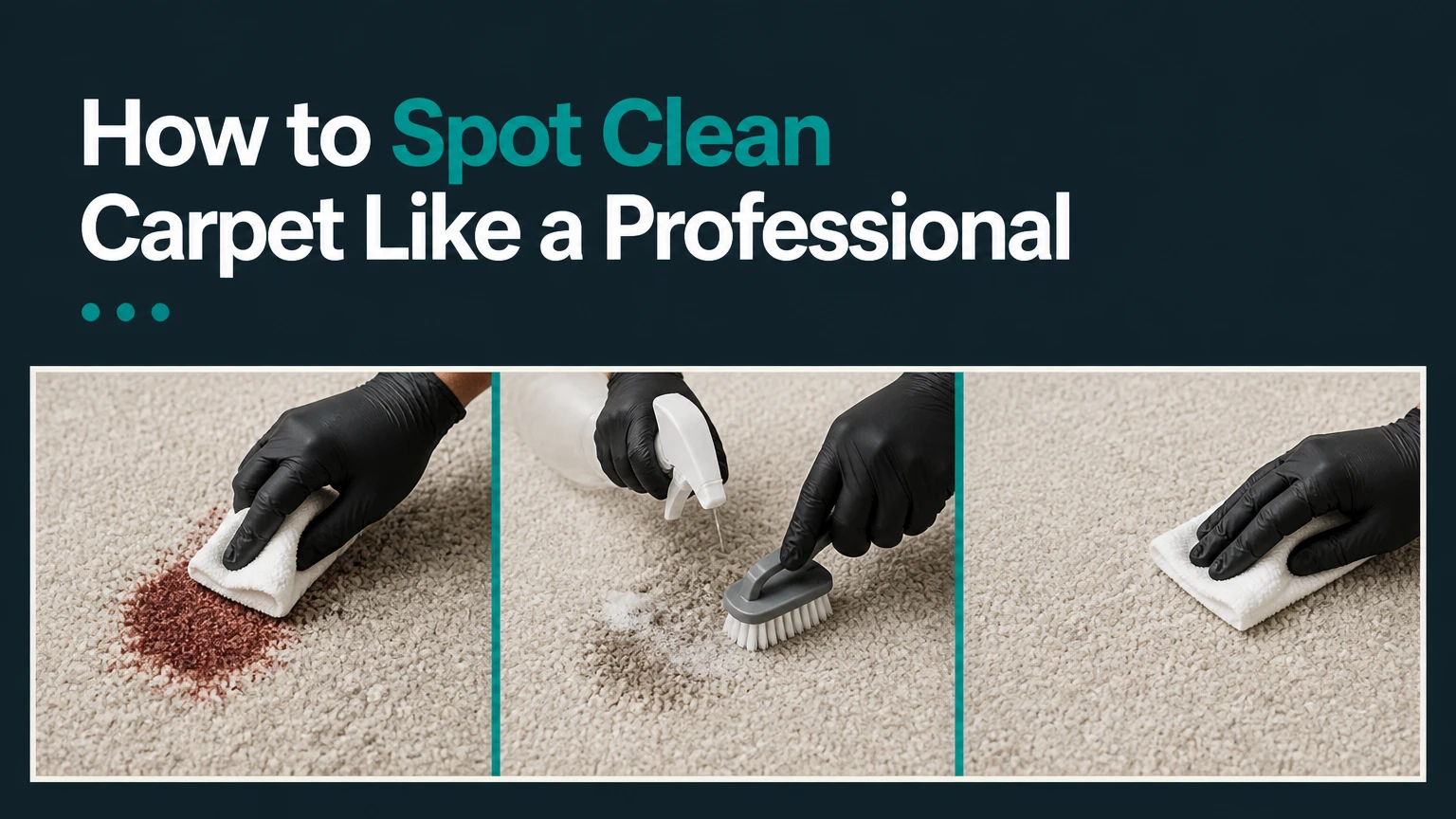
Learning how to spot clean carpet effectively requires balancing precise chemical ratios with controlled physical pressure. You will execute a seven-step sequence of dry extraction, alkaline washing, and acidic neutralizing to lift stains permanently without damaging the fibers. The entire process requires 45 minutes of active effort and 12 hours of passive drying time. The single factor that most determines your success is patience during the blotting phase, as aggressive scrubbing permanently destroys carpet texture.
Before You Start
This method applies to synthetic carpets including nylon, polyester, and olefin. If you have natural wool carpets, refer to the variations section below before proceeding.
- Time Required: 45 minutes active, 12 hours passive.
- Difficulty Level: Beginner.
- Typical Cost: $5 to $15.
- Prerequisite Skills: Basic familiarity with mixing household cleaning solutions.
Essential Tools and Materials
| Item | Quantity or Specification | Typical Cost | Purpose |
| White Microfiber Cloths | 4 to 6 clean towels | $8 | Absorbs liquid without transferring dye. |
| Vacuum Cleaner | Machine with high-pile setting | N/A | Removes dry soil and baking soda. |
| Baking Soda | 1 cup | $2 | Deodorizes and absorbs surface oils. |
| Liquid Dish Soap | 1/4 teaspoon (clear, unscented) | $4 | Acts as a surfactant to break down soil. |
| Distilled Water | 1 cup (warm) | $2 | Prevents mineral deposits from hard water. |
| White Distilled Vinegar | 1 cup (5% acidity) | $3 | Neutralizes alkaline soap residue. |
| Cold Tap Water | 1 cup | Free | Dilutes the vinegar rinse. |
| Spray Bottle | 1 clean, empty bottle | $3 | Applies solutions evenly. |
| Heavy Weights | 2 to 3 large books (5-10 lbs) | N/A | Compresses towels for forced wicking. |
The Step-by-Step Spot Cleaning Process
To ensure predictable results, follow these exact steps in order. Skipping the dry extraction or the acidic rinse will result in a sticky residue that attracts dirt rapidly.
Step Summary Table
| Step | Action | Time Required | Most Common Mistake |
| 1. Dry Soil Removal | Vacuum in a cross-hatch pattern. | 10 minutes | Skipping this step creates mud later. |
| 2. Colorfast Test | Test solutions on a hidden area. | 5 minutes | Using colored cloths that bleed dye. |
| 3. Deodorizing Pre-Treat | Apply baking soda to absorb oils. | 35 minutes | Failing to vacuum up all powder. |
| 4. Mix Detergent Solution | Combine water and clear dish soap. | 3 minutes | Using too much soap or warm water. |
| 5. Targeted Extraction | Blot the stain from outside to inside. | 10 minutes | Scrubbing the fibers aggressively. |
| 6. Acidic Rinse | Mist with vinegar and cold water. | 5 minutes | Oversaturating the carpet backing. |
| 7. Forced Blot Drying | Weigh down dry towels over the spot. | 12 hours | Removing the weights prematurely. |
Step 1: Execute Dry Soil Removal
Vacuum the entire stained area slowly in a cross-hatch pattern, moving north to south, then east to west. Set your vacuum to the high-pile height adjustment to avoid crushing the yarn. According to the Carpet and Rug Institute (CRI), approximately 79% of all carpet soil is dry particulate matter. If you apply liquids before removing this dry dirt, you will instantly create mud that sinks into the carpet backing.
You will know this step worked when the carpet pile stands upright and no loose debris is visible. The most common mistake at this stage is using a vacuum with a highly aggressive beater bar on a low setting, which can permanently fuzz the tips of the carpet fibers.
Step 2: Perform a Colorfast Test
Apply a few drops of your intended cleaning solution to a hidden patch of carpet, such as inside a closet or behind a heavy piece of furniture. Press a damp, white microfiber cloth firmly against the test spot for 30 seconds. Look closely at the cloth to see if any carpet dye has transferred to the white fabric. Wait two minutes to ensure the carpet itself does not change color.
You will know this step worked when the white cloth remains perfectly clean and the test patch retains its original hue. The primary mistake here is skipping the test entirely, which risks permanent bleaching on sensitive or cheaply dyed carpets.
Step 3: Apply the Deodorizing Pre-Treat
Sprinkle one cup of baking soda evenly across the stained section, spreading it out slightly beyond the visible edges of the spot. Let the powder sit entirely undisturbed for 30 minutes. Baking soda is naturally alkaline and highly absorbent, allowing it to trap odorous gasses and draw up surface oils before you apply water. After 30 minutes, vacuum the area thoroughly until no white powder remains.
You will know this step worked when the immediate area smells neutral and the surface of the stain looks slightly faded. A frequent error during this step is using a wet/dry shop vacuum that is not fully dry inside, causing the baking soda to cake inside the machine hose.
Step 4: Mix the Detergent Solution
Combine one cup of warm distilled water with exactly 1/4 teaspoon of clear, bleach-free liquid dish soap in a small bowl. Stir the mixture gently with a spoon. Do not shake the solution vigorously. You want to minimize suds to prevent a sticky residue from forming later. Keep the water temperature around 100°F (38°C). The Institute of Inspection, Cleaning and Restoration Certification (IICRC) notes that water temperatures exceeding 140°F can permanently set protein-based stains into carpet fibers.
You will know this step worked when the liquid is clear with only a very thin layer of bubbles on the surface. The most devastating mistake here is eyeballing the soap measurement. Using even a full teaspoon of soap will leave an impossible-to-rinse residue that acts as a dirt magnet over the next month.
Step 5: Perform Targeted Spot Extraction
Dip a clean, white microfiber cloth into your soap solution and wring it out until it is damp but not dripping. Press the damp cloth firmly onto the outer edge of the stain, applying steady downward pressure for five seconds. Lift the cloth straight up, rotate it to a clean section, and press again slightly closer to the center of the stain. Work from the outside edge inward to prevent the spot from spreading.
You will know this step worked when you clearly see the stain transferring from the carpet to your white cloth. Never scrub, rub, scrape, or agitate the fibers back and forth. Friction untwists the carpet yarn, creating permanently fuzzy patches that reflect light differently and look like stains even when perfectly clean.
Step 6: Apply the Acidic Neutralizing Rinse
Pour one cup of white distilled vinegar (5% acidity) and one cup of cold tap water into a clean spray bottle. Shake the bottle lightly to mix. Mist the cleaned area lightly, applying approximately three to four sprays per spot. Liquid dish soap is highly alkaline. The mildly acidic vinegar lowers the pH back to a neutral state, which stops the carpet from feeling sticky and prevents a chemical reaction known as alkaline browning.
You will know this step worked when the faint smell of vinegar is present and the carpet fibers feel clean rather than slippery. The common mistake here is pouring the vinegar directly from a cup onto the floor, which oversaturates the carpet backing, risks rusting the metal floor tacks beneath, and encourages mold growth.
Step 7: Execute Forced Blot Drying
Layer two clean, entirely dry white microfiber towels flat over the damp areas. Place two or three heavy books (totaling roughly 5 to 10 pounds) directly on top of the towels to compress them against the carpet fibers. Leave this setup entirely alone overnight, or for a minimum of 12 hours. Capillary action will naturally draw the remaining moisture and any suspended dirt upward into the dry towels.
You will know this step worked when you remove the books the next morning to find the towels damp and the carpet beneath them nearly completely dry. Removing the weights after only an hour is a common failure, as the deep moisture will remain trapped in the carpet pad.
Common Mistakes and How to Fix Them
Even careful practitioners occasionally encounter issues when cleaning floor textiles. Identifying the visual symptoms quickly allows you to correct the chemistry or moisture balance before permanent damage occurs.
Fix Wicking and Reappearing Stains
If the stain completely vanished while wet but reappeared 24 hours later, you have experienced wicking. Deeply embedded dirt moved upward from the carpet backing to the fiber tips as the moisture evaporated.
The Fix: Rewet the surface very lightly with your vinegar rinse spray. Apply a thick, solid layer of baking soda directly over the moisture. Cover this with a dry white towel, weigh it down with heavy books, and let it dry completely over 24 to 48 hours. The baking soda acts as a poultice to absorb the wicking dirt. Vacuum up the hard crust of powder once it is totally dry.
Fix Stiff and Crunchy Carpet Fibers
When the carpet feels stiff or crunchy to the touch after fully drying, too much dish soap was used in Step 4. The alkaline residue will attract dirt rapidly from passing shoes.
The Fix: Empty your spray bottle and fill it with pure, warm distilled water (no soap). Spray the stiff area until it is damp. Blot aggressively with dry white cloths, pressing your body weight into the floor. Repeat this pure-water rinsing process until the fibers feel soft and pliable again.
Fix Alkaline Yellowing
If a clean spot develops a distinct yellow or brown tinge as it dries, the high alkaline levels from the soap combined with slow drying times created a chemical shift in the dyes.
The Fix: Mist the affected area evenly with a 50/50 mixture of white distilled vinegar and cold water. The acid will rebalance the pH and usually reverse the color shift immediately. Dry the area rapidly by pointing a box fan or oscillating floor fan directly at the wet spot.
Fix Texture Fraying and Fuzzing
If the carpet fibers look untwisted, fuzzy, or frayed compared to the surrounding area, you applied horizontal friction during the extraction phase instead of vertical pressure.
The Fix: Texture damage is physical and permanent. You cannot reverse it with chemicals. You can carefully trim the frayed fiber tips with small scissors to make the damage less noticeable, blending the height into the surrounding yarn.
Process Variations for Different Situations
The standard liquid dish soap method works exceptionally well for dirt, mud, and basic food spills on synthetic fibers. However, specific fiber types and biological stains require altered chemistry to prevent permanent damage.
Spot Cleaning Wool Carpets
Natural wool fibers are highly sensitive to high pH levels and heavy moisture. Standard alkaline soaps can strip the natural oils from the wool, leaving it brittle.
The Variation: Replace the dish soap with a dedicated wool-safe, pH-neutral carpet shampoo. Never use warm or hot water, as heat causes wool to shrink and distort. Use cold water exclusively. Wool holds significantly more water than nylon and takes three times as long to dry. Increase the number of dry towels during Step 7 and leave the heavy books in place for a full 24 hours.
Spot Cleaning Pet Accidents
Urine, vomit, and feces contain biological proteins and uric acid crystals. Standard surfactants (dish soap) will clean the visible stain but cannot break down the uric acid, meaning the odor will return on humid days.
The Variation: Skip the dish soap entirely. Purchase an enzymatic carpet cleaner. Enzymes biologically digest the proteins and uric acid. Apply the enzymatic cleaner heavily, cover it with a damp white towel to keep the enzymes wet and active, and let it sit for the manufacturer’s recommended time (typically 12 to 24 hours) before blotting dry.
Spot Cleaning Tannin Stains
Coffee, tea, and red wine contain tannins, which are acidic natural dyes. Applying alkaline dish soap directly to a tannin stain can permanently set the color into the synthetic fiber.
The Variation: Reverse the chemical order. Treat the stain first with the acidic mixture (vinegar and water) to stabilize the tannin dye. Blot heavily to extract as much liquid as possible. Only apply the dish soap solution if a sticky residue from cream or sugar remains after the tannin color is removed.
Time and Cost Breakdown
Understanding the resource commitment prevents mid-process frustration. Most of the required time is passive, but the active steps require precision.
| Phase | Duration | Materials Used | Estimated Cost |
| Preparation | 15 mins | Vacuum, baking soda | $0.50 |
| Active Cleaning | 30 mins | Soap, vinegar, distilled water | $1.50 |
| Wicking / Drying | 12 to 24 hours | Towels, heavy weights | N/A |
| Total Investment | 12+ hours | Household staples | Under $5.00 |
If you must purchase the microfiber cloths and a spray bottle specifically for this task, your initial total cost will range between $10 and $15. Hiring a professional extraction service for a single room typically ranges from $100 to $150.
Frequently Asked Questions
Can I use hydrogen peroxide to spot clean a carpet?
You can use 3% hydrogen peroxide on light-colored synthetic carpets for organic stains like blood or wine. However, peroxide is a mild bleaching agent. You must perform a rigorous colorfast test first, and never use it on dark carpets or natural wool fibers.
Should I use a steam mop on carpet stains?
No. Applying direct, intense heat from a steam mop or iron to a fresh stain will permanently bake protein and tannin stains into the fiber structure. Heat should only be applied by professionals using specialized extraction machines that recover the water instantly.
What is the best way to remove old, dried stains?
Old stains require rehydration. Apply the warm detergent solution and place a warm, damp towel over the spot for 15 minutes to loosen the hardened soil. Once the crust softens, proceed with the standard blotting and extraction process from the outside in.
Why does my carpet smell worse after cleaning?
If the carpet smells like a wet dog or mildew after cleaning, the carpet backing was oversaturated and dried too slowly. To fix this, spray the area lightly with vinegar, place a floor fan directly over the spot, and run a dehumidifier in the room to force rapid drying.
Can I use colored towels if they have been washed?
Avoid colored towels entirely. Even heavily washed colored rags can release microscopic amounts of dye when exposed to the specific chemical mix of dish soap and vinegar, instantly transferring pastel rings onto damp white carpet fibers.
Whether dealing with a sudden spill or tackling older blemishes, knowing how to spot clean carpet effectively protects your flooring investment. By respecting the chemical balance, utilizing vertical blotting pressure, and enforcing a long, weighted drying period, you can remove nearly any household stain without leaving a dirt-attracting residue behind.