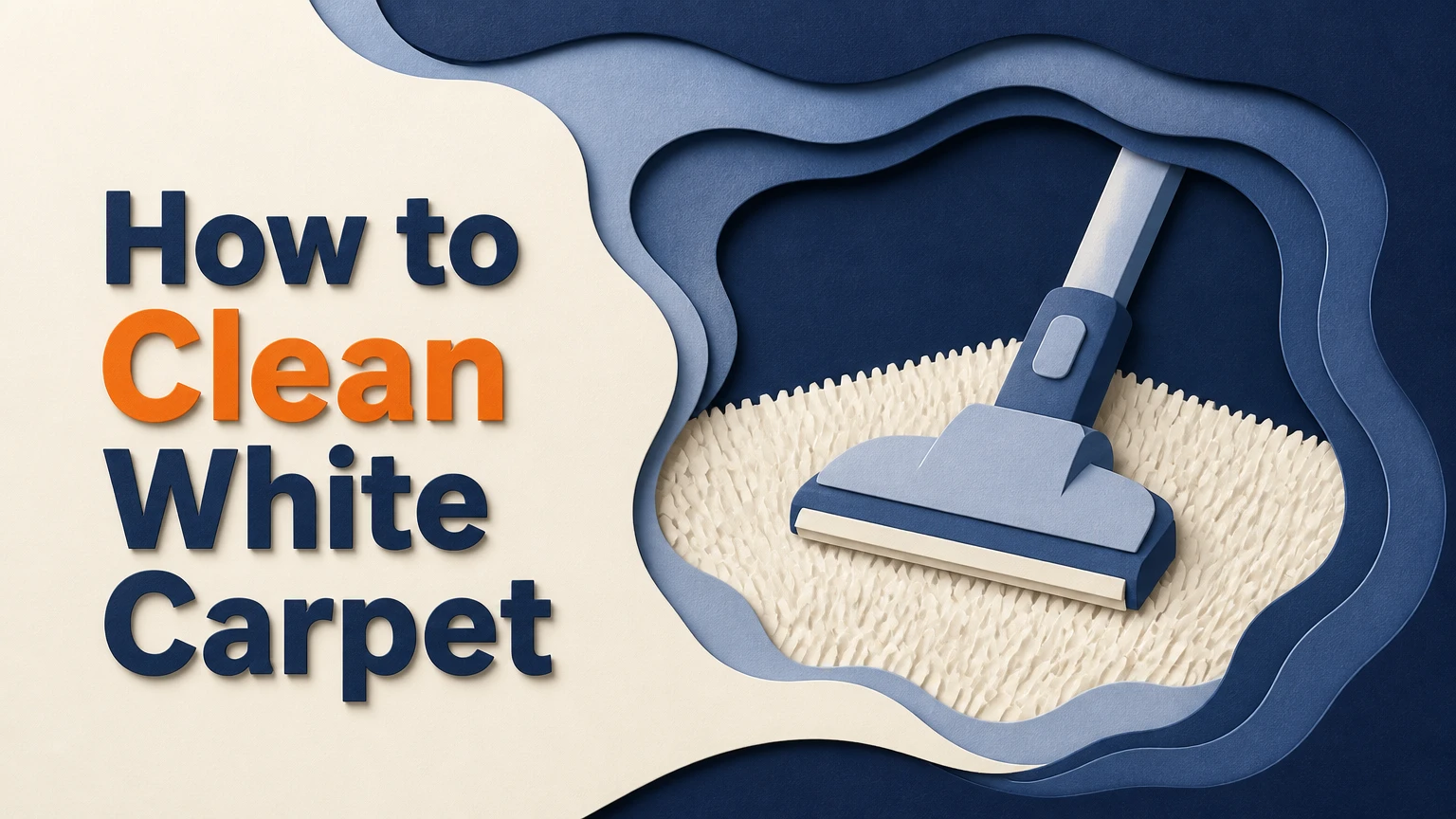
Knowing how to clean white carpet safely prevents permanent yellowing and crunchy fibers. This six-step process takes 45 minutes of active work and requires household items like clear dish soap and white vinegar. The single most important factor for success is controlling moisture to prevent dirt from wicking upward.
Before You Start
This method applies to targeted spot cleaning and standard room maintenance. You must complete this task in a well-ventilated room to ensure proper drying times.
- Time Required: 45 minutes active, 12 hours passive drying.
- Difficulty: Beginner.
- Cost Range: $5 to $15 (DIY).
| Item / Material | Quantity and Specification | Typical Cost | Purpose |
| Vacuum Cleaner | 1 unit (set to high-pile height) | Owned | Removes dry particulate soil. |
| White Microfiber Cloths | 4 to 6 clean towels (dye-free) | $5.00 | Extracts moisture and traps dirt. |
| Baking Soda | 1 cup per 100 square feet | $1.50 | Absorbs oils and neutralizes odors. |
| Liquid Dish Soap | 1/4 teaspoon (clear, bleach-free) | $1.00 | Suspends dirt and breaks down grease. |
| Distilled Water | 1 cup warm, 1 cup cold | $2.00 | Prevents hard mineral deposits. |
| White Distilled Vinegar | 1 cup (standard 5% acidity) | $1.50 | Lowers pH to prevent yellowing. |
| Empty Spray Bottle | 1 clean unit (16 oz capacity) | $3.00 | Applies the neutralizing rinse evenly. |
| Heavy Books | 2 to 3 units (or 10-15 lbs weight) | Owned | Applies pressure for forced drying. |
The Step-by-Step Cleaning Process
Following these steps in exact order guarantees a clean finish without damaging the yarn structure.
| Step | Action Summary | Active Time | Most Common Mistake |
| 1. Prep and Dry Removal | Cross-hatch vacuum the room. | 10 mins | Moving the vacuum too quickly. |
| 2. Deodorizing Pre-Treat | Dwell baking soda for 30 mins. | 5 mins | Using damp baking soda. |
| 3. Mix Solution | Blend distilled water and soap. | 3 mins | Adding too much dish detergent. |
| 4. Spot Extraction | Blot outside edges inward. | 10 mins | Scrubbing side to side. |
| 5. Acidic Rinse | Mist with vinegar and water. | 5 mins | Skipping this step entirely. |
| 6. Forced Blot Drying | Weigh down dry towels overnight. | 12 hours | Using colored towels that bleed. |
Step 1: Prep and Dry Soil Removal
Clear the room of all furniture and vacuum the entire carpet slowly in a cross-hatch pattern.
According to the Institute of Inspection, Cleaning and Restoration Certification (IICRC) S100 standard, dry vacuuming removes up to 79% of total soil before any liquid touches the floor. Set your vacuum height to the highest pile setting to avoid crushing the delicate white fibers. Push the vacuum north to south across the entire room. You must overlap each pass by 50%. Once complete, repeat the exact same process moving east to west. Move the vacuum head at half your normal walking speed. This gives the beater bar enough time to agitate the fibers and lift heavy particulate matter.
You’ll know it worked when the carpet pile looks uniformly lifted and no loose grit remains against your palm when you brush the floor.
The most common mistake at this step is rushing the vacuum passes, which leaves microscopic dirt in the backing that will turn into mud the moment you apply your wet cleaning solution.
Step 2: The Deodorizing Pre-Treat
Sprinkle one cup of dry baking soda evenly across a 10 by 10 foot area and let it sit for exactly 30 minutes.
Baking soda acts as a dry sponge for oils and microscopic lipids that bind dirt to white fibers. Apply the powder using a fine mesh sieve to prevent large clumps from settling in one spot. Walk away and allow the powder a full 30 minutes of dwell time. The alkaline nature of the baking soda will naturally break down the weak acidic bonds of everyday foot oils. After the dwell time expires, vacuum the carpet thoroughly. Make at least three passes over the treated area to extract every particle of the powder.
You’ll know it worked when the room smells completely neutral and the carpet feels slightly less slick to the touch.
The most common mistake here is applying baking soda to a damp carpet. Moisture turns the powder into a hard paste that permanently cements itself to the carpet backing and ruins the underlying pad.
Step 3: Mix the Cleaning Solution
Combine one cup of warm distilled water with one quarter teaspoon of clear dish soap in a clean bowl.
The Carpet and Rug Institute (CRI) 2021 guidelines state that cleaning solutions should maintain a pH below 10 to protect fiber integrity. Your clear dish soap acts as a perfectly mild surfactant. Measure exactly 1/4 teaspoon. Pour it into the warm distilled water. The water temperature should sit between 100 and 110 degrees Fahrenheit (38 to 43 degrees Celsius). Gently stir the mixture with a spoon. Do not shake or whisk the liquid. You want to avoid creating suds. Suds are mostly trapped air and provide zero cleaning power, but they do leave behind a sticky film that attracts new dirt.
You’ll know it worked when the solution looks slightly cloudy but features fewer than a dozen bubbles resting on the surface.
The most common mistake is eye-balling the soap measurement. Overdosing the soap leaves a permanent sticky residue that turns white carpet gray within two weeks.
Step 4: Targeted Spot Extraction
Press a damp white microfiber cloth firmly onto the stained area and pull the soil from the outside edge toward the center.
Fold your clean white microfiber cloth into exact quadrants. This gives you eight distinct clean surfaces to work with. Dip one corner of the folded cloth into your soap solution and wring it out until it is barely damp. Press the cloth directly onto the stain using about five pounds of downward pressure. Hold it there for three seconds. Lift the cloth and rotate to a clean quadrant. Always blot from the outer perimeter of the stain moving toward the middle. This physical barrier prevents the stain from expanding outward into the surrounding white fibers.
You’ll know it worked when the stain visibly transfers from the carpet onto the white microfiber cloth and the carpet pile remains upright.
The most common mistake is scrubbing the fibers side to side. Lateral friction untwists the carpet yarn permanently, creating a fuzzy texture that looks like a dark shadow even after the stain is gone.
Step 5: Acidic Neutralizing Rinse
Mist the cleaned areas lightly with a blend of white vinegar and cold water to neutralize all remaining soap alkalinity.
Mix one cup of standard 5% acidity white distilled vinegar with one cup of cold distilled water in a clean spray bottle. Spray this mixture directly onto the spots you just cleaned. Apply exactly three to four mists per spot. You are not trying to soak the carpet. You are applying just enough acid to drop the pH level of the carpet fibers back to neutral. High alkaline environments trigger a chemical reaction in white synthetic fibers called “alkaline browning.” The vinegar completely halts this reaction and guarantees the carpet dries bright white.
You’ll know it worked when the carpet feels slightly damp but you cannot squeeze any liquid out of the fibers with your fingers.
The most common mistake is skipping this step completely. Leftover soap residue practically guarantees the carpet will look dirty again within a month.
Step 6: Forced Blot Drying
Layer two dry white towels over the damp areas and compress them using heavy weights overnight.
Standard air drying takes too long and allows deeply buried dirt to migrate to the surface. Lay one folded white microfiber towel directly over the treated spot. Place a second dry towel on top of it. Rest a heavy object (like a stack of thick books or a 10-pound dumbbell) directly onto the towels. Leave this setup entirely alone for 12 hours. The pressure forces the dry towels to act like a wick. As the water evaporates, the heavy towels physically pull the remaining moisture upward, trapping any leftover microscopic dirt inside the cloth rather than the carpet tips.
You’ll know it worked when you remove the weights the next morning and the carpet feels bone dry to the touch all the way down to the backing.
The most common mistake is using colored towels for this step. The damp environment will cause cheap dye to bleed directly into your white carpet, creating an entirely new stain.
Common Mistakes and How to Fix Them
Even careful homeowners run into trouble when maintaining light flooring. If your cleaning attempt failed, identify your specific issue below and execute the fix immediately.
Issue: The Stain Reappeared (Wicking)
Wicking happens when deeply embedded dirt moves from the carpet backing up to the tips during the drying process. The surface looked clean when wet, but the stain returned hours later.
The Fix: Rewet the specific spot very lightly with your 50/50 vinegar and water rinse. Apply a thick, generous layer of dry baking soda directly over the damp spot. Cover it with a dry white towel and apply a 10-pound weight. Let it sit for 24 hours. The baking soda will absorb the rising soil. Vacuum the hardened powder up the next day.
Issue: The Carpet Feels Stiff or Crunchy
Crunchy carpet means you used too much dish soap. The surfactant dried onto the fibers, creating a microscopic crust that will attract shoe dirt instantly.
The Fix: Empty your spray bottle and fill it with pure, warm distilled water (absolutely no soap). Mist the crunchy area until it is moderately damp. Take a dry white microfiber cloth and blot aggressively with downward pressure. You are rinsing the fibers manually. Repeat this exact process two or three times until the carpet feels soft and flexible while damp. Follow up with the forced blot drying method.
Issue: The Carpet Developed a Yellow Tinge
Yellowing occurs when the pH level of the carpet stays too high for too long. Slow drying times combined with heavy soap residues cause the optical brighteners in white carpet to oxidize and turn yellow.
The Fix: You must rebalance the pH immediately. Mix a strong batch of neutralizer (60% white vinegar to 40% cold water). Mist the yellowed area evenly. Immediately point a high-velocity floor fan directly at the spot. Fast evaporation is mandatory here. The acid will reverse the oxidation, and the rapid airflow will stop the chemical shift.
Issue: The Carpet Tips Look Fuzzy and Frayed
Frayed yarn tips happen when you scrub a stain laterally with a stiff brush or an abrasive rag. You have permanently untwisted the heat-set yarn.
The Fix: You cannot chemically fix physical damage. However, you can mask it. Take a pair of small, sharp sewing scissors. Very carefully trim the microscopic fuzzy tips off the top of the damaged yarn. Snip off no more than one millimeter. Brush the area with your fingers to blend it back into the surrounding pile.
Process Variations for Different Situations
Your specific carpet material and stain type dictate how you must adjust the core cleaning rules. Using the wrong chemistry on the wrong fiber leads to permanent ruin.
Synthetic Fibers (Nylon and Polyester)
Most modern white carpets utilize synthetic plastics. Nylon is highly durable but absorbs liquids quickly. Polyester resists liquid stains but traps oils. When cleaning synthetics, you can use warmer water (up to 120 degrees Fahrenheit). Synthetics respond exceptionally well to the dish soap method because the soap easily breaks down the oils clinging to the plastic fibers.
Natural Fibers (Wool)
White wool carpet is a luxury material that requires extreme caution. The Woolsafe Organization guidelines restrict water temperatures on wool to a maximum of 100 degrees Fahrenheit (38 degrees Celsius) to prevent shrinkage. You must never use high-alkaline soaps or harsh scrubbing on wool. Cut the dish soap measurement in half (1/8 teaspoon per cup of water). Double the drying time. Wool holds moisture deep in its core, making it highly susceptible to mold if you over-wet the backing.
Oil-Based Stains versus Water-Based Stains
For water-based stains (mud, tea, juice), the standard soap and vinegar method works perfectly. For oil-based stains (makeup, grease, butter), water will actually set the stain deeper. Before applying step 3, you must apply a dry solvent. Put a few drops of rubbing alcohol (isopropyl 90% or higher) onto a white cloth and dab the oil stain. The alcohol dissolves the lipid bonds without using water. Once the grease lifts, proceed to step 3 to wash out the alcohol residue.
How Long Does It Take and What Does It Cost?
Understanding the time investment and cost helps you decide between handling a spill yourself or calling a professional extraction crew.
| Factor | DIY Spot Cleaning | Professional Hot Water Extraction |
| Active Time | 45 minutes | 1 to 2 hours |
| Drying Time | 6 to 12 hours | 4 to 8 hours |
| Material Cost | $5 to $15 | $150 to $300 per room |
| Best Used For | Fresh spills, small footprints, daily upkeep | Deep restorative cleaning, heavy traffic lanes |
Handling spot treatments immediately at home costs almost nothing. However, if your white carpet has turned uniformly gray across the entire room, DIY manual extraction will take days of exhausting labor. In those instances, professional truck-mounted equipment is the only logical choice.
Frequently Asked Questions
How often should you vacuum a white carpet?
You should vacuum high-traffic white carpets at least twice a week. Frequent vacuuming extracts dry abrasive soil before foot traffic grinds it down into the base of the fibers where it becomes permanently trapped.
Can I use bleach on a white carpet?
Never use chlorine bleach on any carpet. Most white carpets are actually dyed white using optical brighteners. Bleach strips these brighteners away, leaving an ugly, permanent yellow or brown chemical burn on the fibers.
Will a steam mop clean my carpet safely?
No. Hard floor steam mops push dirt deeper into the carpet backing. They also generate excessive heat that can melt synthetic fibers or permanently bake protein stains into the yarn structure.
Do automated carpet cleaning machines work better than manual blotting?
Home carpet machines work well for general maintenance, but they frequently leave behind excessive moisture. For isolated stains, manual extraction with heavy downward pressure removes more soil and prevents wicking better than cheap home machines.
How do I prevent my white carpet from getting dirty so fast?
Implement a strict no-shoes policy. Place high-quality entry mats inside and outside all exterior doors. Skin oils and asphalt driveway sealants tracked in on the bottom of shoes cause 80% of dark stains on light carpets.
By following these precise instructions on how to clean white carpet, you will successfully lift stubborn dirt without compromising the color or texture of your flooring. Master the forced drying technique, strictly control your detergent usage, and your floors will remain pristine for years.