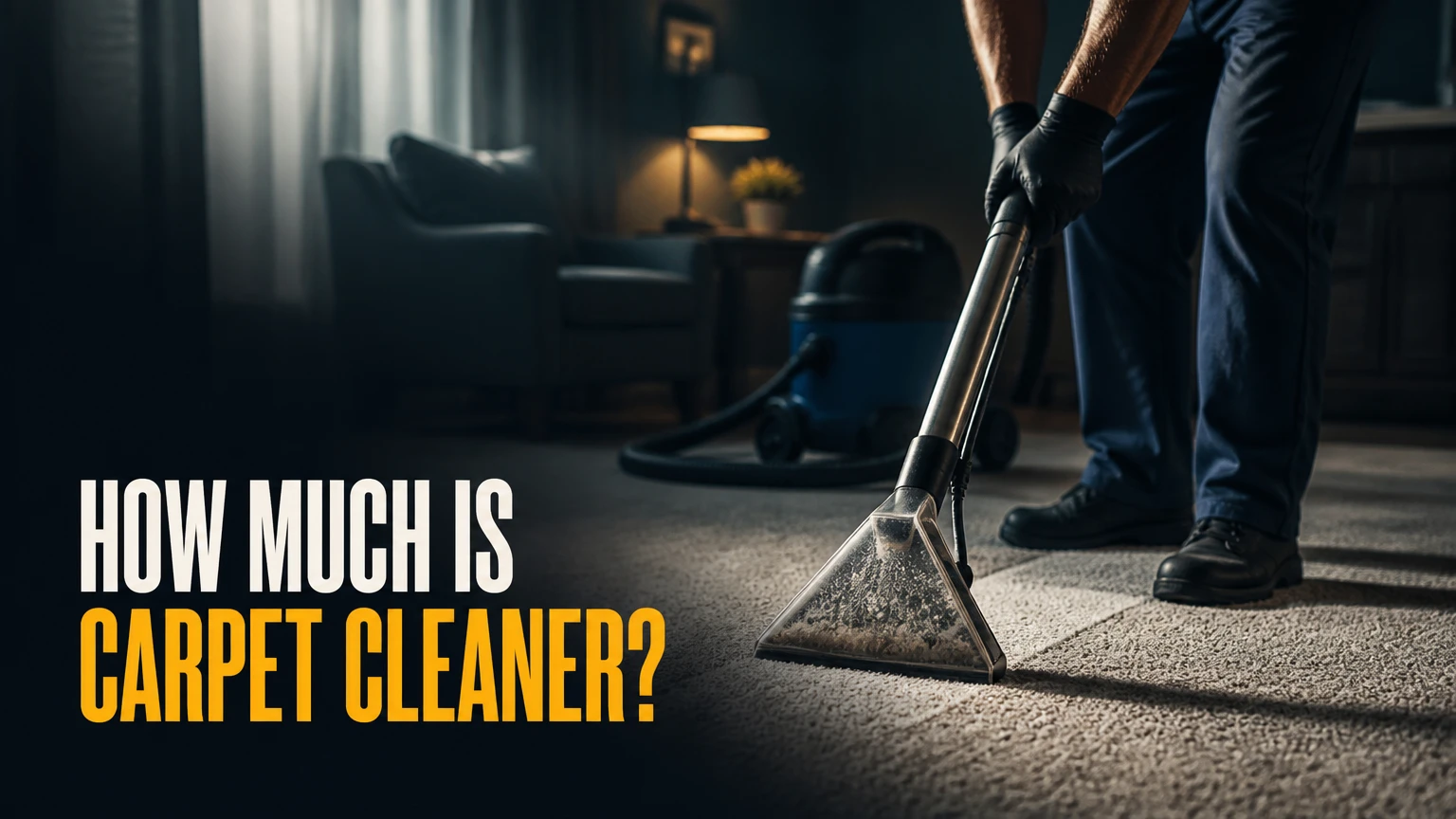
The cost of a carpet cleaner depends entirely on the chosen method. Professional carpet cleaning services average $123 to $242 per visit. Renting a commercial-grade machine costs $30 to $50 per day. Purchasing a standard residential carpet cleaning machine ranges from $100 to $300 for permanent ownership.
At a Glance:
- Professional per-room rates range from $40 to $125 depending on room size.
- Machine rentals require a daily fee plus $10 to $20 for specialized detergent.
- Buying a spot cleaner costs $50 to $100 for localized pet accidents.
- Steam cleaning outperforms traditional shampooing by extracting deep soil without leaving residue.
- Carpets should dry completely within 6 hours to prevent mold growth in the padding.
How much does a professional carpet cleaning service cost?
A professional residential carpet cleaning service costs between $123 and $242 on average for a standard visit. Service companies typically calculate this final price using either a per-room flat rate or a square-footage measurement. Homeowners with exceptionally large rooms or heavily soiled carpets often pay rates at the higher end of the pricing spectrum.
Companies charging by the room typically request $40 to $125 per space. Small bedrooms and short hallways fall into the lower end of this range at $35 to $60. Expansive living rooms or master suites demand more labor and usually cost $75 to $125. When cleaning professionals charge by square footage, the rate normally falls between $0.20 and $0.50 per square foot. Cleaning a full 1,500-square-foot home generally yields a final bill of $150 to $300.
Most established professional companies enforce a mandatory minimum trip charge. This baseline fee ensures the company covers fuel and labor costs for small jobs. Expect a minimum service charge of $75 to $109 regardless of how little carpet actually needs cleaning.
| Pricing Model | Typical Price Range | Best Application |
| Per Room | $40 – $125 per room | Standard homes with defined, separated spaces |
| Square Footage | $0.20 – $0.50 per sq. ft. | Open-concept homes or massive continuous areas |
| Flat Rate Minimum | $75 – $109 per visit | Single rooms, small apartments, or spot treatments |
What hidden fees apply to professional carpet cleaning?
Hidden fees for professional carpet cleaning include stair surcharges, furniture moving costs, and premium material handling rates. Standard per-room pricing rarely includes interior staircases. Technicians charge a dedicated fee of $2 to $5 per individual step or apply a flat rate of $70 to $120 for an entire flight of stairs.
Furniture moving adds another layer of cost. Basic technicians will navigate around stationary heavy items like beds and large dressers at no extra charge. Requesting the crew to physically move heavy furniture out of the room adds a labor fee of $20 to $50 per room. Finally, the material of the flooring dictates the chemical approach. Standard pricing applies to synthetic carpets made of nylon or polyester. Natural fibers like wool, cotton, or silk rugs require specialty low-moisture or pH-neutral handling. These delicate materials drive the cleaning price up to $100 to $300 or more per room.
What are the typical costs to remove severe pet urine odor?
Removing severe pet urine odor costs an additional $20 to $50 per localized stain. Standard hot water extraction only cleans the top fibers of the carpet and does not penetrate the backing or the foam pad underneath. Urine saturates deep into the padding, requiring a completely different chemical approach.
Professionals handle severe odors by injecting powerful enzymatic cleaners directly into the carpet pad. The enzymes physically digest the odor-causing bacteria left behind by the pet. Technicians then use a specialized sub-surface extraction tool to pull the liquid up through the pad and out of the carpet. This specialized treatment represents a distinct add-on service. Homeowners dealing with widespread pet saturation across an entire room should expect the overall cleaning bill to double compared to standard surface soil removal.
What is the price to rent a carpet cleaning machine?
Renting a standard commercial carpet extractor from a local supermarket or hardware store costs $30 to $50 per 24-hour period. Heavy-duty industrial steam extractors command a higher daily premium, usually running $70 to $125 per day. The rental approach offers high cost-effectiveness for homeowners willing to perform the physical labor themselves.
Rental machines require an upfront deposit. Stores normally place a temporary hold of $50 to $100 on a credit card to cover potential damages or late returns. Standard models available at big-box retailers drop to $22 to $25 for a half-day rental, but rushing the cleaning process often leads to poor results. Renting a machine requires transporting a heavy piece of equipment in a personal vehicle. Users must factor in the physical effort required to load, unload, and operate a water-logged machine that can weigh over 50 pounds when full.
How much does cleaning solution cost for rental machines?
Specially formulated carpet cleaning shampoo adds an extra $10 to $20 per bottle to the rental cost. A standard 32-ounce bottle of cleaning concentrate typically covers two to three average-sized rooms. Homeowners cleaning an entire house usually need to purchase two or three bottles to complete the job.
Using unauthorized third-party soaps in a rental machine poses significant risks. Retailers explicitly require customers to use their proprietary branded solutions. Substituting dish soap or cheap laundry detergent creates excessive foam that physically breaks the machine’s vacuum pump. Repairing a damaged pump results in the forfeiture of the entire rental deposit. Furthermore, approved solutions contain built-in defoaming agents that protect the equipment and ensure maximum water extraction from the carpet fibers.
How much does it cost to buy a carpet cleaner?
Buying a residential carpet cleaning machine costs between $50 and $300 depending on the size and capability of the unit. Portable spot cleaners sit at the lowest end of the pricing spectrum. Upright residential machines represent the middle tier. Commercial-grade equipment demands the highest financial investment.
Portable spot cleaners cost $50 to $100. These small, handheld units are engineered specifically for rapid response to pet accidents, spilled drinks, and localized stains. Standard upright consumer models range from $100 to $300. These machines resemble traditional vacuum cleaners and feature rotating brush rolls designed to maintain high-traffic areas across full rooms. True industrial or truck-mounted extractors used by professional businesses start at $2,000 and frequently exceed $5,000. Purchasing a machine pays for itself quickly for households managing children, pets, or constant foot traffic.
| Machine Category | Price Range | Lifespan | Primary Use Case |
| Portable Spot Cleaner | $50 – $100 | 3 – 5 years | Pet accidents, small spills, auto interiors |
| Upright Residential | $100 – $300 | 4 – 7 years | Routine maintenance of living rooms and bedrooms |
| Industrial Extractor | $2,000 – $5,000+ | 10+ years | Professional services, large commercial properties |
How do I choose between renting, buying, or hiring?
Choosing between renting, buying, or hiring depends entirely on the frequency of your cleaning needs, your budget, and the severity of the stains. Homeowners dealing with weekly pet accidents benefit most from purchasing an upright machine. Renters vacating an apartment rely on professional services to secure their deposit.
Purchasing a $200 machine achieves a full return on investment after just two uses compared to hiring a professional company. However, residential machines lack the vacuum power of commercial units. Renting a machine strikes a middle ground, offering stronger motors than consumer models at a fraction of the professional price. Hiring a professional service removes all physical labor and guarantees the highest level of sanitization. Professionals also carry the insurance and training necessary to handle delicate fabrics without causing shrinkage or color bleeding.
| Approach | Initial Cost | Physical Effort | Stain Removal Efficacy |
| Buying a Machine | $100 – $300 | High | Moderate (Best for fresh stains) |
| Renting Equipment | $50 – $80 total | Very High | Strong (Requires careful operation) |
| Hiring Professionals | $150 – $300+ | Zero | Excellent (Deepest extraction) |
Is steam cleaning better than carpet shampooing?
Yes, steam cleaning is significantly better than traditional carpet shampooing. Steam cleaning, technically known as hot water extraction, injects high-pressure hot water into the carpet and simultaneously vacuums it away. This process removes the deepest allergens, dirt, and dust cleanly without leaving a chemical residue.
Carpet shampooing relies on thick detergents spread across the surface with rotary brushes. The brushes generate a foam that supposedly encapsulates the dirt. Unfortunately, shampooing systems lack an extraction phase. The user must wait for the foam to dry and then attempt to vacuum the brittle residue away with a standard dry vacuum. This older method inevitably leaves a sticky residue deep in the fibers that masks existing dirt and attracts new soil rapidly.
How much does truck-mounted extraction cost compared to portable units?
Truck-mounted extraction costs roughly 15 to 20 percent more per room than cleaning with a portable professional unit. A company utilizing a truck-mounted system might charge $60 per room, whereas a technician using a portable extractor might charge $50. The performance difference between the two systems justifies the price gap.
Truck-mounted systems draw power directly from the vehicle engine. They heat water to over 200 degrees Fahrenheit and generate massive vacuum lift. Portable units must plug into a standard 110-volt wall outlet inside the home. A wall outlet severely limits the electrical draw, meaning portable units produce less heat and weaker suction. Truck mounts leave carpets dryer and cleaner. Portable units remain necessary only for high-rise apartment buildings where hoses cannot reach from the street.
What happens if you leave too much soap in the carpet?
Leaving too much soap in the carpet creates a sticky residue that acts like a dirt magnet. DIY operators frequently pour extra detergent into the machine under the false belief that more soap equals cleaner floors. If the machine does not completely flush this soap out with clean water, the invisible residue remains permanently attached to the fibers.
This soap residue causes the carpet to re-soil twice as fast as before it was cleaned. Every time someone walks across the room, the sticky fibers grab dirt and oils straight off their shoes. Within a month, the carpet looks noticeably darker and dirtier than it did prior to the cleaning. Professionals avoid this problem by using precisely metered alkaline pre-sprays followed by an acidic neutralizing rinse. The acid rinse strips away all soap molecules and leaves the fibers completely soft and chemically balanced.
How long does a carpet take to dry after a professional clean?
A carpet generally takes 2 to 6 hours to dry completely after a professional hot water extraction. The exact drying timeframe depends on the ambient humidity of the home, the ventilation present, and the skill of the technician. Efficient vacuum extraction removes up to 95 percent of the moisture before the technician leaves the property.
Homeowners can drastically accelerate the drying process by optimizing indoor airflow. Turning on ceiling fans, opening windows on a breezy day, and running the HVAC system helps pull moisture out of the air. Keeping the interior temperature between 70 and 74 degrees Fahrenheit creates the ideal environment for rapid evaporation. If the home has high humidity or the technician applied excessive water during the rinse phase, the drying time can extend up to 24 hours.
What goes wrong if a carpet takes too long to dry?
If a carpet takes longer than 24 hours to dry, the prolonged moisture triggers permanent mold and mildew growth in the padding. This scenario, known in the industry as the over-wetting trap, represents the most common failure of DIY carpet cleaning. Consumer and rental units lack the vacuum lift power required to pull water out of the dense foam pad beneath the carpet.
Once mold spores germinate in the dark, damp environment of the padding, the homeowner will notice a distinct sour or musty smell. Surface cleaning cannot remove mold from the pad. Over-wetting also causes a physical defect called cellulose browning. As excess water slowly evaporates upward, it pulls natural lignin and tannins from the jute backing of the carpet to the surface, leaving large, ugly brown watermarks across the room. Fixing these issues often requires replacing the entire carpet and pad.
Can professional cleaning remove every type of stain?
No, professional cleaning cannot remove every type of stain from a carpet. While hot water extraction easily lifts mud, grease, food spills, and surface dirt, certain chemicals permanently alter the carpet fibers. Stains that physically bleach or re-dye the synthetic material cannot be washed away with water and detergent.
Common permanent stains include household bleach, acne medication containing benzoyl peroxide, permanent hair dye, and long-neglected pet urine. Bleach and benzoyl peroxide strip the original color out of the carpet, leaving a lighter yellow or white spot. Hair dye chemically bonds to the fiber exactly as it bonds to human hair. Cleaning these spots is impossible because the dirt is not resting on the fiber; the fiber itself has changed color. Restoring the appearance requires a professional to physically cut out the damaged section and patch it with donor carpet from a closet, or carefully apply targeted fabric dyes.
Will DIY carpet cleaning void a landlord lease agreement?
Yes, performing a DIY carpet cleaning can void the specific move-out clauses of a landlord lease agreement. Property management companies frequently include explicit lease clauses requiring professional truck-mount steam cleaning upon tenancy termination. The tenant must provide a printed receipt from a legitimate, registered business to prove compliance.
Executing a stellar DIY clean with a rental machine still results in an automatic deposit deduction. Landlords enforce these rules because DIY machines routinely leave soap residue and excess water behind, which damages the subfloor over time. Handing the landlord a receipt for a $40 grocery store machine rental does not fulfill the legal requirement of the lease. Tenants should always read their rental contracts carefully before deciding to skip the professional service to save money.
How often should you clean your carpets?
Homeowners should clean their carpets every 12 to 18 months under normal residential conditions. This baseline frequency removes the abrasive dry soils that settle at the base of the fibers and cause physical wear patterns. Waiting five years between cleanings allows grit to act like sandpaper against the carpet yarn, permanently destroying the texture.
Household dynamics shift this timeline significantly. According to data from the carpet manufacturing industry, homes with indoor pets or multiple young children require hot water extraction every 6 to 9 months to maintain a sanitary environment. Households containing residents with severe dust mite allergies or asthma often benefit from a professional cleaning every 3 to 4 months. Regular vacuuming removes loose surface hair, but only deep extraction pulls out the embedded oils and dander that degrade indoor air quality.
The Bottom Line
The true price of a carpet cleaner relies on your willingness to trade time and effort for financial savings. Renting a machine costs around $50 per day but carries the risk of over-wetting the fibers and leaving sticky soap residue behind. Purchasing a $200 residential machine makes perfect economic sense for pet owners who need instant access to stain removal on a weekly basis. For deep restorative sanitization, paying a professional company $150 to $300 ensures the job utilizes powerful truck-mounted equipment without risking water damage to your home.