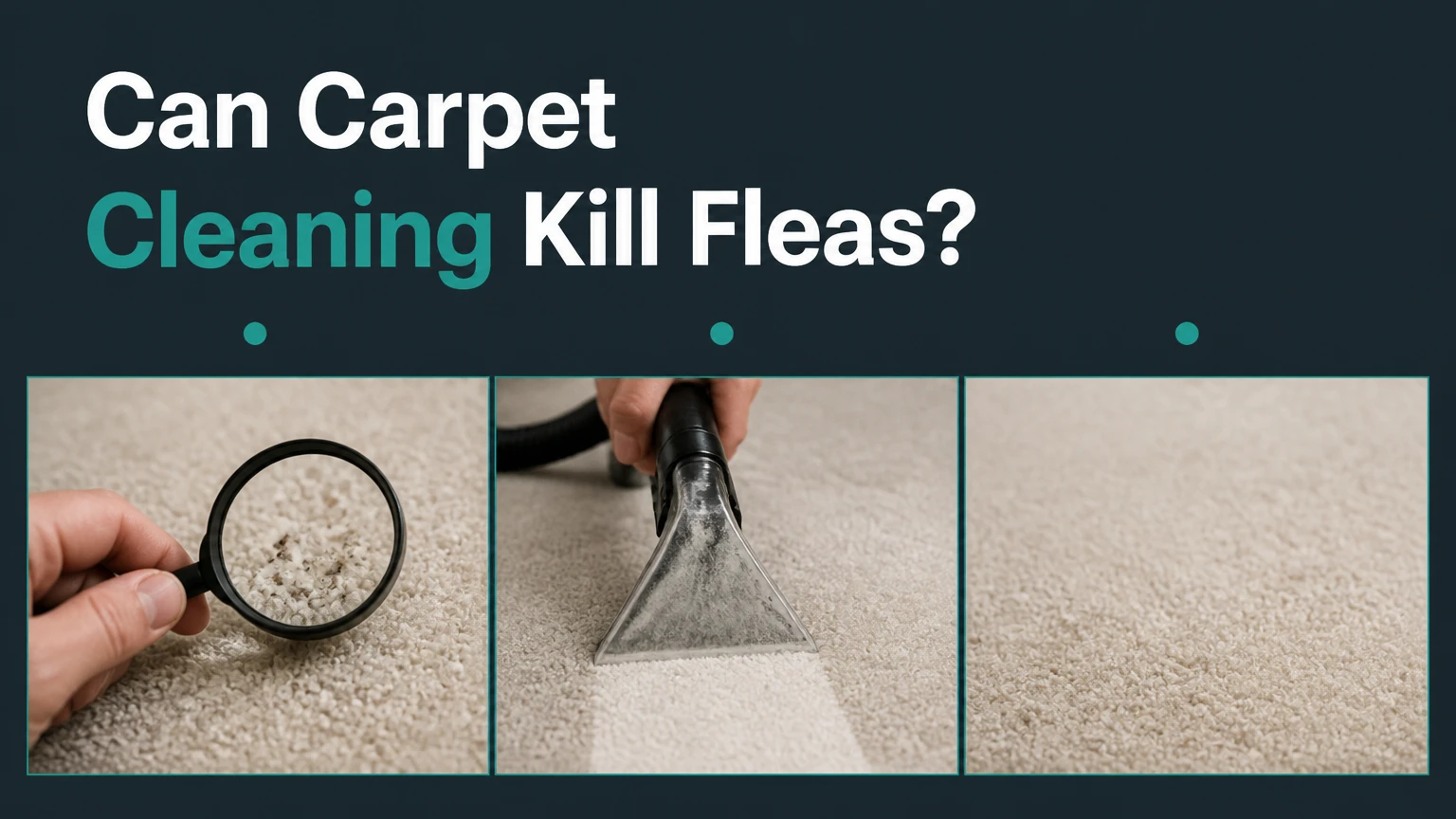
Carpet cleaning can kill or remove some fleas, eggs, and larvae, especially through thorough vacuuming and hot-water extraction, but it rarely eliminates an infestation alone. Flea pupae can remain protected in cocoons, while untreated pets and upholstery reintroduce adults. Effective control combines pet treatment, environmental cleaning, and follow-up for at least 2-4 weeks.
Key facts at a glance
- Hot-water extraction removes many fleas and immature stages, but water temperature at the carpet fibers matters more than the machine’s advertised boiler temperature.
- Flea pupae are the hardest stage to eliminate because their cocoons protect them from drying, insecticides, and brief heat exposure.
- Vacuuming is a treatment step, not housekeeping: daily passes remove adults and larvae and stimulate emerging pupae.
- Treat every pet through a veterinarian-approved product at the same time as the home, because adult fleas spend most of their feeding life on animals.
- Typical professional carpet cleaning costs $120-$250 for an average home, while pest-control treatment often adds $150-$350, depending on region and infestation severity.
- A single cleaning is insufficient when fleas are actively emerging. Continue vacuuming and follow the pest-control product label for repeat treatment.
Can carpet cleaning kill fleas?
Carpet cleaning kills exposed adult fleas and removes flea eggs, larvae, feces, shed skin, and other debris from carpet fibers. The result depends on the method, equipment, carpet construction, and flea life stage. Cleaning is highly useful for reducing environmental contamination, but it is not a complete flea-control program.
Fleas develop through four stages: egg, larva, pupa, and adult. Adult fleas usually feed on a host, while eggs and larvae accumulate in places where pets rest. Pupae remain inside silk-like cocoons and can wait for vibration, heat, carbon dioxide, or pressure to signal that a host is nearby.
The common claim that every flea stage dies when carpet reaches 60°C or 140°F needs qualification. A professional machine may heat water to a high temperature internally, but the temperature delivered at the backing and retained long enough to kill insects is lower and variable. Carpet cleaning should therefore be treated as mechanical removal plus partial contact mortality, not guaranteed thermal sterilization.
Which flea stages are found in carpet?
Flea eggs and larvae are the stages most commonly found in carpet, whereas adult fleas are usually on pets or people. Pupae may be hidden in carpet seams, under furniture, along baseboards, or in pet bedding, where their cocoons offer substantial protection.
| Flea stage | Typical location | Environmental role | Cleaning response |
|---|---|---|---|
| Egg | Carpet, pet bedding, floor cracks | Falls from the host within hours | Vacuuming and extraction remove many eggs |
| Larva | Dark carpet base, furniture gaps | Eats flea feces and organic debris | Vacuuming removes larvae and food |
| Pupa | Carpet pile, seams, protected edges | Waits inside a resistant cocoon | Brief cleaning often leaves pupae alive |
| Adult | Dog, cat, wildlife, people | Feeds and reproduces on a host | Carpet cleaning has limited effect unless adults are exposed |
A female flea can lay dozens of eggs per day under favorable conditions, so a small number of surviving adults can rebuild the household population. That reproductive cycle explains why dead insects after cleaning do not prove the infestation has ended.
How does carpet cleaning affect fleas?
Carpet cleaning affects fleas through suction, agitation, heat, water, detergent, and removal of organic material. Vacuuming is especially important because it physically removes larvae and eggs and encourages some pupae to emerge, while extraction flushes contaminated material from the carpet pile.
Vacuuming removes more than visible fleas
A slow vacuum pass can remove adults, eggs, larvae, flea feces, hair, and skin flakes. Larvae depend on organic debris and adult flea feces, so removing that food source makes the carpet less suitable even when some cocoons remain.
Use a crevice tool along baseboards and under furniture. Empty a bagless canister outdoors into a sealed bag, or discard a vacuum bag immediately in an outdoor bin. Do not leave collected debris in an indoor trash can.
Heat is useful, but machine specifications mislead
Hot-water extraction can kill exposed insects through heat and contact with hot water, especially near the surface. However, a machine rated at 90°C or 100°C does not mean the carpet backing reaches that temperature. Water cools as it travels through hoses, mixes with cleaning solution, contacts fibers, and is pulled into the recovery system.
Professional operators should follow the carpet manufacturer’s cleaning specification. Excessive heat or moisture can cause browning, shrinkage, delamination, dye bleeding, or mold growth in natural-fiber and poorly installed carpets.
Detergent does not equal insecticide
Carpet detergent helps suspend oils and soil so extraction can remove them. Ordinary detergent is not automatically a registered flea treatment, and adding an insecticide or insect growth regulator to a carpet machine can create an unsafe, off-label mixture.
Use only products labeled for the intended surface and pest. The U.S. Environmental Protection Agency requires pesticide products to carry directions governing dilution, application, ventilation, pets, and re-entry.
Which cleaning method is best for fleas?
Hot-water extraction is generally the strongest carpet-cleaning option for an active flea problem because it combines agitation, flushing, and recovery. No cleaning method reliably destroys every pupa, so the best choice is the method that reduces contamination without damaging the carpet and fits a broader treatment plan.
| Method | Typical moisture and time | Flea benefit | Main limitation |
|---|---|---|---|
| Hot-water extraction | 6-24 hours drying | High removal of eggs, larvae, debris, and exposed adults | Does not reliably penetrate every cocoon |
| Carpet shampooing | 12-24 hours drying | Agitation and detergent remove surface contamination | Residue and incomplete extraction can leave larvae or food |
| Encapsulation cleaning | 1-3 hours drying | Removes surface soil and some flea material | Low moisture provides limited contact mortality |
| Dry compound cleaning | 30-90 minutes drying | Powder agitation can remove some debris | Little heat and inconsistent deep-pile penetration |
| Consumer steam mop | 1-6 hours drying | May kill exposed insects on hard surfaces | Usually unsuitable for deep carpet and natural fibers |
A professional truck-mounted extractor usually provides more vacuum recovery than a small rental unit, but equipment quality does not replace correct technique. Slow overlapping passes and complete drying matter more than simply applying hotter water.
Is steam cleaning better than shampooing?
Steam or hot-water extraction is usually better than shampooing for flea-contaminated carpet because it removes suspended debris instead of leaving much of it in the pile. Shampooing can still reduce adults and larvae when brushes reach the carpet base, but residue may provide food for surviving larvae and attract soil.
Do not schedule carpet extraction immediately after a pest-control company applies a residual insecticide unless the applicator confirms the sequence. Extraction can remove or dilute a surface pesticide barrier. In many cases, cleaning first and applying the labeled residual product afterward is more logical, but the pesticide label and professional instructions control.
How should you clean carpet during a flea infestation?
Treat the pet and prepare the home before cleaning, then vacuum systematically, clean washable fabrics, use an appropriate carpet method, and continue follow-up vacuuming. The initial work commonly takes 2-5 hours, with 6-24 hours of carpet drying and 14-28 days of monitoring.
Before cleaning
- Have each dog and cat assessed by a veterinarian or treated with a veterinarian-approved flea product.
- Remove toys, food bowls, pet crates, and loose objects from the floor.
- Wash pet bedding, blankets, and washable covers at the hottest temperature the care label permits.
- Identify delicate rugs, jute, sisal, wool, viscose, and carpet with loose backing.
- Read the pesticide label before using any spray, powder, fogger, or growth regulator.
Step 1: Vacuum slowly and completely
Vacuum every carpeted room in overlapping strips, then repeat along edges, beneath furniture, and around pet resting areas. Spend extra time in dark, protected locations because flea larvae avoid light.
Success checkpoint: The carpet shows consistent vacuum coverage, and edges, seams, and furniture undersides have been addressed.
Common mistake: Vacuuming only the open center of the room leaves the highest-risk hiding places untreated.
Step 2: Dispose of collected material outdoors
Seal a disposable vacuum bag before removal. For a bagless machine, empty the canister into a plastic bag outdoors, seal it, and wash the canister according to the manufacturer’s instructions.
Success checkpoint: No collected debris remains in an indoor bin.
Common mistake: Leaving a full canister beside the vacuum allows live fleas to escape.
Step 3: Use suitable hot-water extraction
Ask a professional or rental provider whether the machine is appropriate for the carpet fiber and backing. Make slow, overlapping wet passes followed by additional dry passes; do not flood the carpet or add unapproved pesticide concentrates.
Success checkpoint: The carpet feels damp, not saturated, and the recovery tank contains visibly dirty water.
Common mistake: Moving too quickly leaves soil, eggs, and larvae deep in the pile.
Step 4: Dry the carpet rapidly
Open windows when outdoor humidity permits, run air-conditioning or a dehumidifier, and position fans to move air across the carpet. Keep pets and children off treated areas until the carpet is completely dry and any pesticide label permits re-entry.
Success checkpoint: No cool, damp patches remain near padding, walls, or furniture.
Common mistake: Replacing heavy furniture before drying traps moisture and blocks treatment access.
Step 5: Continue vacuuming
Vacuum daily for at least 7-14 days after the initial cleaning, then several times per week while adult fleas continue to appear. Vacuuming removes new hatchlings before they mature and helps expose emerging adults to any correctly applied residual treatment.
Success checkpoint: Flea sightings and bites decline over successive checks rather than disappearing for one day and returning.
Common mistake: Stopping after the first cleaning allows pupae to complete development.
What do flea treatment and carpet cleaning cost?
Typical U.S. pricing is about $120-$250 for professional carpet cleaning, $22-$50 per day for a rental machine and cleaning solution, and $150-$350 for a basic professional flea treatment. Local labor rates, room count, furniture movement, stairs, rug construction, and repeat visits can change the total substantially.
| Service or supply | Typical price | Typical duration | Cost driver |
|---|---|---|---|
| Professional carpet cleaning | $120-$250 | 2-5 hours | Square footage and number of rooms |
| Rental extraction machine | $22-$50 per day | 4-8 hours active use | Retailer, machine size, solution |
| Flea-control visit | $150-$350 | 30-90 minutes | Home size and treatment scope |
| Follow-up pest visit | $75-$200 | 20-60 minutes | Contract and infestation severity |
| Washable bedding treatment | $0-$30 | 1-3 hours | Existing washer, laundromat, volume |
Angi’s published carpet-cleaning figures have placed average residential service near $183, although such averages are not flea-specific and vary by market. HomeGuide and similar cost databases commonly list flea extermination in the low hundreds, but a severe infestation, inaccessible crawl spaces, or multiple visits can raise the total.
What mistakes make carpet flea treatment fail?
Carpet treatment fails most often when residents clean the floor but leave the host animal, bedding, upholstery, or outdoor wildlife exposure untreated. Another frequent failure is expecting one visit to kill pupae that were already protected inside cocoons.
| Failure | Why it fails | Corrective action |
|---|---|---|
| Cleaning carpet without treating pets | Adults continue feeding and laying eggs | Treat every household pet on a veterinary schedule |
| Using a clothing steamer | Heat rarely reaches the carpet base evenly | Use extraction or a labeled pest-control method |
| Fogging one room | Aerosol may not reach protected cracks or cocoons | Follow label directions or use a licensed operator |
| Applying insecticide before extraction | Cleaning can remove the residual product | Confirm treatment order with the applicator |
| Ignoring sofas and rugs | Fleas persist in alternative resting areas | Vacuum and clean compatible soft surfaces |
| Stopping after seven days | Pupae may hatch later | Continue the label-directed follow-up cycle |
A counterintuitive practitioner rule is that seeing a few fleas after treatment does not always mean the cleaning failed. Vibrations from vacuuming and household activity can trigger pupae to emerge, making them visible during the period when environmental control is still working.
Can carpet cleaning spread fleas?
Carpet cleaning does not normally spread fleas when technicians use controlled extraction and residents remove vacuum debris correctly. Moving infested furniture, transporting untreated rugs, or using a shared machine without cleaning it can transfer insects or eggs to another area.
Keep infested pet bedding contained in sealed bags until it reaches the washer. Tell the carpet cleaner about the infestation before service so the company can decide whether to accept the job, isolate equipment, or require pest treatment first.
What should pet owners do first?
Pet owners should arrange treatment for every dog and cat first or in coordination with environmental cleaning, because untreated animals continually replenish the carpet with eggs. A veterinarian can account for species, age, weight, pregnancy, illness, and interactions between flea products.
The Centers for Disease Control and Prevention advises, “Treat all pets in the household at the same time.” Never apply a dog-only permethrin product to a cat, and never combine topical, oral, collar, or environmental products unless a veterinarian or label explicitly permits the combination.
After pet treatment, wash bedding and vacuum floors. Carpet extraction can follow when the carpet needs soil removal, but extraction alone is not a substitute for a veterinary adulticide or insect growth regulator program.
What about rugs, upholstery, and hard floors?
Fleas can persist in rugs, upholstered furniture, pet carriers, cracks, and shaded hard-floor edges, so carpet cleaning alone can leave a functioning infestation. Treatment must match the material: launder washable items, vacuum upholstery with a crevice tool, and use only manufacturer-approved methods on delicate rugs.
| Surface | Recommended first action | Avoid | Follow-up |
|---|---|---|---|
| Wool rug | Vacuum both sides if safe; use a rug specialist | High heat and excess water | Inspect seams weekly |
| Jute or sisal | Dry vacuum and isolate if heavily infested | Steam saturation | Consider replacement if backing is damaged |
| Upholstered sofa | Vacuum seams, underside, and cushions | Unlabeled pesticide soaking | Wash removable covers |
| Hardwood or vinyl | Vacuum cracks, then mop as appropriate | Flooding floor gaps | Treat pet resting zones |
| Pet bedding | Machine wash and dry per label | Reusing untreated bedding | Repeat weekly during infestation |
Natural fibers require particular caution. A carpet cleaner who can treat synthetic nylon safely may not be equipped to clean viscose, silk, jute, or antique wool without shrinkage or dye damage.
How long does flea control take?
Visible flea activity often declines within several days after coordinated treatment, but complete control commonly takes 2-4 weeks because pupae emerge in waves. Severe infestations can require a labeled repeat application or professional follow-up after 10-14 days.
| Situation | Expected observation | Recommended duration |
|---|---|---|
| Light contamination | Few adults, no pet symptoms | Vacuum 7-14 days |
| Active pet infestation | New fleas appearing daily | Treat pets and vacuum 14-28 days |
| Heavy household infestation | Fleas in several rooms and furniture | Professional program, often 2 visits |
| Post-treatment emergence | Fleas appear after initial reduction | Follow label, do not automatically reapply |
| No improvement | Activity unchanged after 10-14 days | Inspect pets, wildlife exposure, and application |
Flea pupae can remain dormant for extended periods when conditions are unfavorable. That is why a clean carpet can still produce adult fleas later, particularly after residents return, heat the room, or move furniture.
When is professional treatment necessary?
Professional pest control is appropriate when fleas remain active after 10-14 days of correct pet treatment and vacuuming, when multiple rooms and upholstered surfaces are affected, or when residents cannot safely apply labeled products. Professional help is also sensible for homes with infants, cats sensitive to pesticides, medically fragile occupants, or extensive natural-fiber flooring.
Ask the company which product it will use, whether the product includes an insect growth regulator, how long occupants must leave, and when a follow-up is expected. A reputable operator should not promise that one spray or one carpet cleaning will eliminate every flea immediately.
Professional cleaning is most valuable when carpet contains heavy soil, flea feces, allergens, or odor, or when deep extraction is needed after pest treatment. Pest control is the primary intervention for a reproducing infestation; carpet cleaning is the environmental support that removes contamination and improves treatment conditions.
FAQ
Can vacuuming alone get rid of fleas?
Vacuuming alone can greatly reduce fleas but rarely guarantees eradication. Daily vacuuming removes eggs, larvae, adults, and organic debris, while vibration encourages some pupae to emerge. Vacuum every room, edge, seam, and pet resting area for at least 7-14 days, dispose of debris outdoors, and treat all pets concurrently.
Will carpet powder kill flea eggs?
Some labeled flea powders can kill or desiccate exposed stages, but ordinary deodorizing powder will not control an infestation. Powders may remain inaccessible beneath carpet fibers, create inhalation risks, and be unsafe for pets. Use only an EPA-registered product labeled for carpet and follow its application, ventilation, and removal instructions.
Do fleas die in the washing machine?
Washing and, when permitted by the fabric label, hot tumble-drying can kill fleas and remove eggs from bedding and clothing. The dryer’s sustained heat is often more reliable than a brief wash alone. Seal infested textiles during transport and do not return them until they are fully cleaned and dry.
Can fleas live in carpet without pets?
Fleas can remain in carpet without a pet for a limited or extended period, depending on the stage and conditions. Pupae can wait in cocoons, while adults may emerge when they detect warmth, vibration, or carbon dioxide. A vacant home can therefore produce fleas when occupants return.
Should I replace carpet after a flea infestation?
Replacing carpet is rarely the first solution because fleas also occupy pets, bedding, upholstery, cracks, and outdoor areas. Consider replacement only when carpet is severely damaged, permanently contaminated, impossible to clean safely, or attached to a padding system that remains infested after coordinated treatment.
Can carpet cleaning kill fleas completely?
Carpet cleaning can kill exposed fleas and remove much of the environmental flea load, but can carpet cleaning kill fleas completely is usually answered no when an active infestation is present. Combine thorough cleaning with veterinary pet treatment, labeled environmental control, bedding care, and follow-up vacuuming for 2-4 weeks.