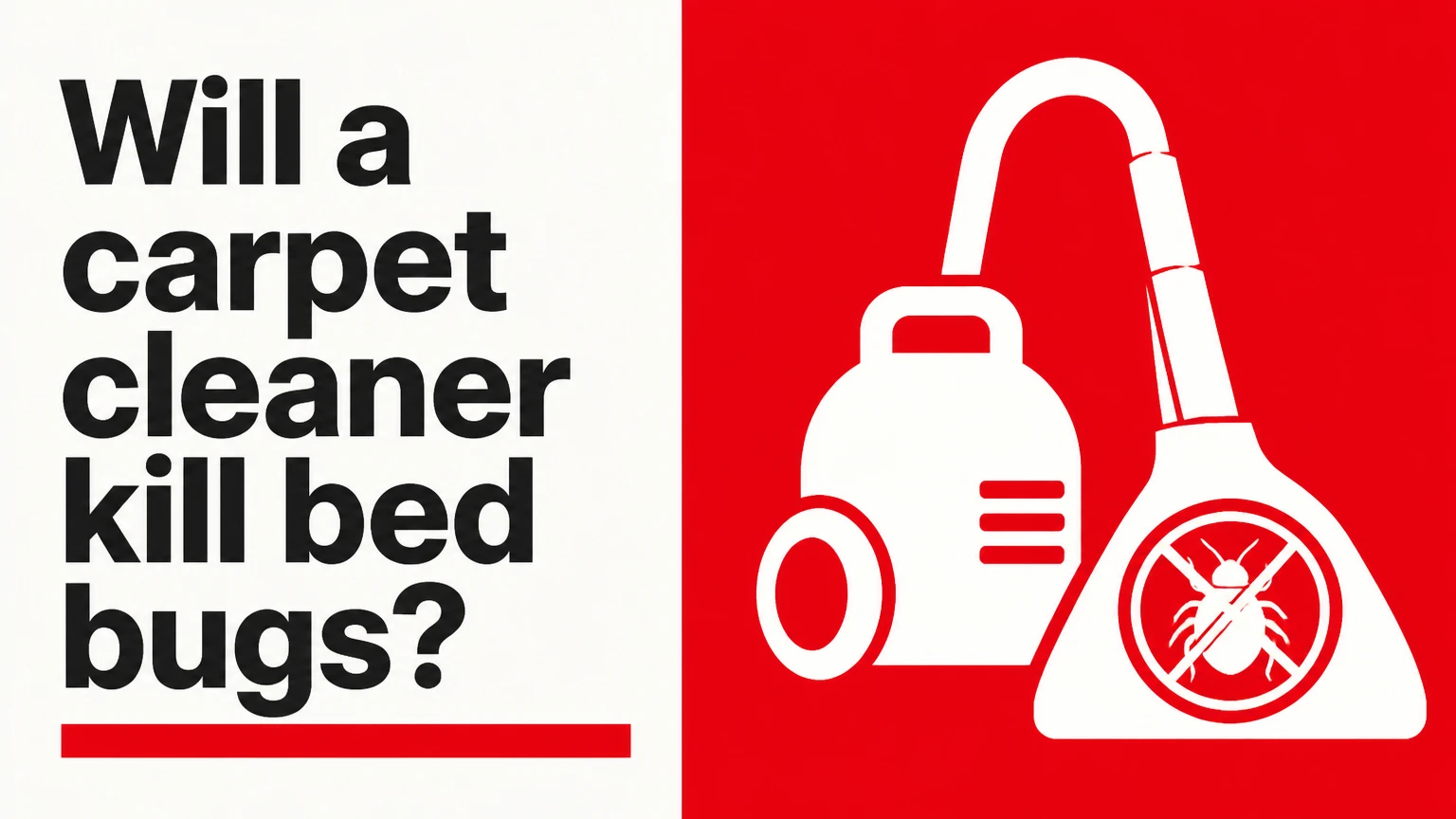
A standard water-extraction carpet cleaner will not reliably kill or eliminate a bed bug infestation because its heated water cools during application and misses hidden harborages. A steam cleaner that delivers sufficient heat directly to exposed seams, cracks, and carpet edges can kill bed bugs and eggs on contact, but steam alone rarely controls an established infestation.
Key Facts at a Glance
- A carpet shampooer or hot-water extractor is a cleaning device, not a validated bed bug treatment.
- Steam kills bed bugs only when lethal heat reaches the insect or egg for sufficient time.
- Bed bug eggs are harder to kill than adults because they tolerate brief heat exposure better.
- Laundry dryers, mattress encasements, vacuuming, monitoring, and targeted treatment work together better than carpet cleaning alone.
- Steam has no residual effect, so surviving bugs can reinfest treated surfaces after they cool.
- A licensed pest professional is usually the safer choice when bugs occur in multiple rooms, apartments, or upholstered furniture.
Will a carpet cleaner kill bed bugs?
A standard carpet cleaner may kill a few bed bugs that are directly sprayed or physically removed, but it should not be counted on to kill an infestation. Extraction machines apply water and detergent, agitate fibers, then vacuum liquid away; they do not maintain a lethal temperature across carpet, tack strips, padding, edges, and furniture joints.
The distinction between extraction and steam matters. A water tank temperature does not equal the temperature touching the carpet, because heat falls as water travels through tubing, mixes with cleaning solution, and contacts a large, cool surface. The machine also has no reliable way to expose every bed bug hiding under a baseboard, inside a bed frame, or beneath carpet edging.
A steam cleaner can be useful because bed bugs and eggs die from direct thermal exposure. However, a steam pass treats only the area reached by the hot vapor. A carpet cleaner can therefore improve sanitation after pest treatment while failing as the primary extermination method.
What does each machine actually do?
| Machine type | Typical purchase or rental cost | Primary action | Bed bug value |
|---|---|---|---|
| Consumer shampooer | $100-$300 purchase | Sprays and extracts detergent water | Cleans residue, unreliable insect control |
| Professional extractor | $75-$250 daily rental | High-volume water extraction | Removes soil, may disturb bugs |
| Handheld steamer | $40-$150 purchase | Produces moist vapor at a small nozzle | Spot treatment on accessible surfaces |
| Low-moisture vapor steamer | $600-$2,500 purchase or rental | Delivers controlled heat with less water | More suitable for seams and cracks |
| Whole-room heat system | $1,500-$5,000 or more per treatment | Heats the room and contents | Professional structural treatment |
The prices are typical United States consumer and service ranges, not fixed national prices. Rental availability, region, room count, and equipment capacity change the total substantially.
How does steam kill bed bugs?
Steam kills bed bugs by transferring heat into the insect’s body or egg until vital tissues fail. The effect is contact-dependent: vapor must reach the hiding place, maintain enough heat at the surface, and move slowly enough for heat to penetrate the fabric or crevice.
The United States Environmental Protection Agency recommends steam as one option in an integrated bed bug program and warns that treatment must reach cracks and crevices where bed bugs hide. Virginia Cooperative Extension guidance commonly specifies steam at the nozzle of about 200°F or higher, while also emphasizing that the temperature falls rapidly away from the tip.
Temperature alone is not a guarantee. A nozzle reading of 200°F does not mean a bed bug several inches inside carpet padding receives 200°F. Surface type, airflow, distance, nozzle design, and movement speed determine the actual exposure.
What temperature and exposure time matter?
Published guidance often presents approximate lethal combinations rather than one universal threshold. Adult bed bugs generally die at lower or shorter heat exposures than eggs, and both life stages require direct exposure for reliable control.
| Target | Approximate thermal condition | Practical meaning |
|---|---|---|
| Adult bed bug | About 113°F for 90 minutes | Sustained exposure, impractical for a quick surface pass |
| Adult bed bug | About 118-120°F for minutes or less | Direct exposure can be lethal |
| Bed bug egg | About 118-125°F for extended exposure | Brief warming may not kill every egg |
| Steam at nozzle | About 200°F or higher | Provides a heat margin before cooling |
| Treated surface | At least about 160-180°F during contact | Better indicator than tank temperature |
These figures are operational benchmarks, not permission to assume every bug is dead. The National Pest Management Association and university extension programs stress thorough coverage because missed harborages are the common reason localized steam treatments fail.
Can steam reach bed bugs inside carpet?
Steam can kill bed bugs on carpet edges, seams, exposed folds, and shallow cracks, but carpet is a poor medium for guaranteeing deep treatment. Dense pile, underlay, tack strips, baseboards, and floor gaps can shield insects from the heat delivered at the nozzle.
The most productive carpet targets are usually perimeter edges, transitions, folds, and the junction between carpet and wall. Bed bugs often remain close to sleeping areas, so carpet treatment should follow inspection of the bed frame, mattress seams, box spring, nearby furniture, and wall-side cracks.
Where should steam be applied?
Use a controlled, broad attachment when possible. A narrow jet can blow insects away before enough heat reaches them, while a cloth-covered floor tool distributes heat and reduces the chance of scattering debris.
Treat these locations in sequence:
- Carpet borders and the carpet-to-baseboard junction.
- Door thresholds and transitions between flooring materials.
- Upholstered furniture seams and underside edges.
- Bed-frame joints, screw holes, and slats.
- Mattress piping and box-spring folds.
- Cracks around baseboards, but only where moisture will not damage the wall.
- Curtain hems and accessible folds.
Steam does not reliably penetrate a mattress core, wall cavity, sealed furniture void, or thick carpet pad. Do not remove carpet or open walls merely to steam them unless a professional directs the work.
What is the correct way to use steam for bed bugs?
A careful steam treatment requires preparation, low-to-moderate pressure, slow movement, and immediate containment of displaced insects. Plan about 2-4 hours for one bedroom, including preparation and drying, although large rooms and heavy furniture can take longer.
Before you start
| Requirement | Typical specification |
|---|---|
| Equipment | Low-moisture steamer rated for fabric and flooring |
| Nozzle temperature | About 200°F or higher at the tip |
| Cloth attachment | Clean microfiber cover, replaced when saturated |
| Vacuum | HEPA or sealed system with crevice tool |
| Bags | 2 heavy plastic bags for vacuum contents and laundry |
| Drying | 2 fans or ventilation capable of drying surfaces within 12-24 hours |
| Personal protection | Closed shoes, gloves, and eye protection when appropriate |
| Room condition | Children and pets removed during treatment |
Manufacturer instructions control. Some steamers can damage laminate, varnished wood, leather, adhesives, wallpaper, or electrical components.
Step 1: Contain bedding and clothing
Place sheets, blankets, sleepwear, and clothing from the affected room directly into sealed bags. Carry bags without shaking them, then use a dryer on high heat for at least 30 minutes when the fabric label permits.
The dryer is often more dependable than washing because heat exposure is easier to control. EPA bed bug guidance recommends placing washable items in a dryer and keeping cleaned articles sealed until the room has been treated.
Success checkpoint: treated laundry remains sealed until it returns to a clean, inspected area.
Common mistake: carrying loose bedding through hallways and spreading bugs to another room.
Step 2: Inspect and vacuum
Inspect mattress seams, box-spring fabric, bed-frame joints, baseboards, carpet edges, and furniture near the bed. Vacuum slowly with a crevice tool, concentrating on harborages rather than repeatedly vacuuming open carpet.
Seal the vacuum contents immediately. For a bagged vacuum, remove the bag outdoors and place it in a sealed plastic bag. For a bagless unit, empty the canister outdoors into a sealed bag, then wash removable parts according to the manufacturer’s instructions.
Success checkpoint: no visible insects or cast skins remain in accessible seams.
Common mistake: treating vacuuming as complete eradication. Vacuuming reduces numbers but does not reliably remove eggs or hidden adults.
Step 3: Prepare and test the steamer
Allow the machine to reach operating temperature. Test a hidden section of carpet, upholstery, or wood for dye bleeding, warping, adhesive failure, and excess moisture.
Use the attachment recommended for the surface. A clean cloth over a broad head can reduce airflow and spread heat, but it must not block the machine’s safety vents.
Success checkpoint: the test area remains intact and the cloth becomes warm without becoming saturated.
Common mistake: using a high-pressure pinpoint nozzle that scatters insects and wets the substrate.
Step 4: Steam edges and harborages slowly
Move the head slowly enough to heat the surface, commonly around 1-2 inches per second for a broad attachment. Work in overlapping passes from curtains and upper furniture toward the bed frame, baseboards, and carpet perimeter.
Do not hold a hot nozzle stationary on delicate fabric or finished wood. Keep the head close to the surface, but follow the steamer manufacturer’s distance instructions.
Success checkpoint: the treated strip is evenly warm, not soaked, and no live insects remain visible after the pass.
Common mistake: moving quickly across the entire floor, which creates a warm bath rather than lethal exposure.
Step 5: Dry, isolate, and monitor
Use fans to dry carpet and upholstery completely, generally within 12-24 hours. Once the mattress is dry, install a bed bug-proof encasement with a fully closed zipper and inspect it regularly for tears.
Keep the bed separated from walls, place interceptor cups beneath each leg, and avoid storing items under the bed. These changes make new activity easier to detect.
Success checkpoint: surfaces are dry and interceptors can be inspected weekly.
Common mistake: returning clutter to the room before inspection and creating new hiding places.
Which equipment works best?
A low-moisture vapor steamer with a controllable flow and fabric-safe attachments is usually the best steam option for localized bed bug treatment. A standard extractor is preferable for post-treatment cleaning, not for killing insects.
| Decision factor | Extractor shampooer | Handheld steamer | Low-moisture vapor steamer | Professional heat treatment |
|---|---|---|---|---|
| Typical cost | $100-$300 | $40-$150 | $600-$2,500 | $1,500-$5,000+ |
| Moisture level | High | Medium to high | Low to medium | Room-dependent |
| Edge and crack control | Poor | Moderate | High | High with trained setup |
| Whole-room coverage | Cleaning only | Slow | Localized | Yes, when properly monitored |
| Egg control | Unreliable | Surface-dependent | Surface-dependent | Strong when all zones reach target |
| Residual protection | None | None | None | None after cooling |
“Dry steam” is a marketing term used inconsistently. Check the operating manual for vapor flow, attachments, surface warnings, and temperature measurement rather than relying on the product label alone.
Is a carpet cleaner or steamer better for each situation?
| Situation | More suitable option | Typical first action | Escalation point |
|---|---|---|---|
| One confirmed bug on washable clothing | High-heat dryer | Dry 30 minutes on permitted high setting | Inspect sleeping area |
| Small bedroom, limited visible activity | Vacuum plus controlled steam | Treat bed and perimeter | Reinspect after 7 days |
| Bugs in sofa and bed | Professional inspection plus targeted steam | Isolate furniture and reduce clutter | Hire licensed operator if activity continues |
| Multiple rooms | Licensed pest professional | Stop moving belongings between rooms | Coordinated building treatment |
| Apartment or townhouse | Landlord and licensed professional | Report promptly and avoid DIY dispersal | Inspect adjacent units |
| Heavily infested room | Integrated professional treatment | Bag, isolate, and document evidence | Whole-room or combined treatment |
Can carpet cleaning make bed bugs worse?
Carpet cleaning can worsen control when it moves contaminated items, scatters insects, or creates damp hiding places. The machine itself does not usually cause a colony to migrate across a building, but unplanned movement of furniture, bedding, hoses, and stored belongings can spread live bugs.
Water extraction also creates a practical problem: wet carpet can hide evidence and delay inspection. Damp padding may take more than 24 hours to dry, particularly over concrete or in poorly ventilated rooms, increasing odor and mold risk.
Common failure modes
| Failure mode | Why it fails | Better correction |
|---|---|---|
| Shampooing the whole carpet first | Misses harborages and removes inspection clues | Inspect, vacuum, then use targeted steam |
| Using a jet nozzle at full pressure | Blows bugs into gaps | Use controlled flow and a broad attachment |
| Treating only open floor | Bed bugs favor seams and furniture | Prioritize bed structure and perimeter |
| Assuming one pass kills eggs | Eggs may be shielded by fabric | Repeat inspection and use a complete plan |
| Applying pesticide after wet cleaning | Moisture can alter labels and exposure | Wait until dry and follow the product label |
| Moving infested furniture outdoors | Can spread bugs through hallways and vehicles | Wrap, isolate, or obtain professional guidance |
A practitioner rule of thumb is simple: treat the bed first, then the one-meter perimeter around it, before spending time on the room’s open carpet. Bed bugs commonly remain near a host, and open-floor cleaning has lower value than precise work at sleeping and resting sites.
What alternatives work better than carpet cleaning?
High-heat drying, mattress encasements, monitoring interceptors, careful vacuuming, and professional integrated pest management provide better control than carpet extraction alone. Whole-room heat treatment can work across furniture and cracks, but it requires calibrated equipment, continuous monitoring, and careful preparation.
How do the main alternatives compare?
| Method | What it reaches | Egg performance | Residual effect | Main limitation |
|---|---|---|---|---|
| High-heat dryer | Clothing and small washable items | Strong when exposure is adequate | None | Items must fit and tolerate heat |
| Vacuuming | Exposed bugs and debris | Low for attached eggs | None | Misses deep harborages |
| Steam | Exposed seams and cracks | Good on direct contact | None | Requires precise coverage |
| Mattress encasement | Mattress and box spring interior | Containment, not immediate kill | Long-term isolation | Must remain intact for about 12 months |
| Silica gel dust | Dry cracks and voids | Slow contact effect | Yes, if undisturbed | Requires label-compliant application |
| Residual insecticide | Labeled surfaces and harborages | Product-dependent | Yes | Resistance, exposure, and label limits |
| Whole-room heat | Room contents and structure | Strong with verified temperatures | None | Expensive and technically demanding |
The Canadian government’s bed bug guidance recommends combining methods rather than relying on one product or procedure. The EPA similarly describes bed bug control as an integrated process involving inspection, heat, vacuuming, encasements, monitoring, and carefully selected pesticides.
When should you hire a professional?
Hire a licensed pest professional when bed bugs appear in multiple rooms, activity continues after one carefully executed treatment, the infestation involves a shared building, or residents cannot safely move and treat belongings. Professional treatment is also the better choice when wall voids, extensive upholstery, or severe clutter prevent complete inspection.
A professional should explain the treatment sequence, preparation duties, follow-up schedule, pesticide registration where relevant, and the limits of any guarantee. Ask whether the operator will inspect adjacent rooms and units rather than treating only the room where a bug was found.
What can renters and apartment residents do?
Notify the landlord or property manager promptly and document live bugs, shed skins, fecal spotting, and treatment dates. Do not discard mattresses in shared hallways, move furniture between rooms, or use bug bombs, because these actions can spread insects and create safety hazards.
In multi-unit housing, control depends on inspection beyond one apartment. Bed bugs can move through cracks, utility routes, and shared furnishings, so untreated neighboring units may reintroduce activity even after a successful local treatment.
How do you know whether the problem is really bed bugs?
A confirmed bed bug requires physical identification, not only itchy bites. Bites overlap with reactions from fleas, mosquitoes, mites, dermatitis, and other causes, while carpet beetle larvae and cockroaches can produce misleading household evidence.
Look for an apple-seed-shaped adult approximately 4-7 millimeters long, pale nymphs, pearly eggs about 1 millimeter long, shed skins, dark fecal spots, and live insects near sleeping areas. Capture a specimen in clear tape or a sealed container for identification.
Do not steam or spray an unconfirmed pest problem before collecting evidence. Misidentification can lead to unnecessary pesticide exposure and wasted treatment costs.
How should you monitor after treatment?
Inspect interceptors, mattress seams, bed-frame joints, and nearby baseboards every 7 days for at least four weeks. Continue monitoring for longer when the original infestation was substantial or when neighboring units remain untreated.
A new live bug does not prove that steam failed, because eggs or hidden adults may have survived outside the treated zone. Repeated evidence, fresh fecal marks, or nymphs indicate ongoing activity and justify reassessment.
Steam offers no residual barrier. Once the surface cools, an untreated insect can cross it without being affected.
FAQ
Will washing carpet kill bed bug eggs?
Washing carpet is not a dependable way to kill bed bug eggs. Water, detergent, and brief heat exposure may remove soil or dislodge some insects, but eggs attached in seams or protected beneath carpet fibers can survive. Use high-heat drying for removable textiles and targeted, controlled steam for suitable exposed surfaces.
Can bed bugs live under carpet?
Bed bugs can hide beneath loose carpet edges, tack strips, thresholds, and nearby floor cracks, although they more often occupy locations close to sleeping hosts. Treating open carpet without inspecting the bed, furniture, baseboards, and floor perimeter leaves important harborages untouched.
Does a Bissell carpet cleaner kill bed bugs?
A Bissell carpet cleaner, like other consumer extraction machines, should not be treated as a bed bug extermination device. Its spray-and-recovery cycle does not verify lethal temperature and exposure throughout carpet layers. It may clean after treatment, while a suitable steamer or professional program addresses exposed insects.
How long should I steam one spot for bed bugs?
Move a broad steam attachment slowly, often around 1-2 inches per second, while following the machine and surface manufacturer’s instructions. A narrow nozzle should not be held stationary on fabric or wood because it can damage materials. Heat the area evenly rather than flooding it with moisture.
Can I sleep in the room after steaming?
Sleep in the room only after treated surfaces are completely dry, ventilation is adequate, and no pesticide label requires a longer re-entry interval. Keep the mattress encased, separate the bed from the wall, and use interceptors so renewed activity can be detected.
Does steam kill bed bugs instantly?
Steam can kill a bed bug or egg rapidly when the hot vapor directly contacts it, but “instant” is not guaranteed across carpet, furniture, or fabric. Heat falls away from the nozzle, and a shielded insect may receive an inadequate dose. Coverage and follow-up determine whether treatment succeeds.
The Bottom Line
A standard water-extraction carpet cleaner will not reliably kill bed bugs or eliminate an infestation. A properly operated low-moisture steam cleaner can kill exposed bed bugs and eggs, especially along carpet edges, seams, cracks, and bed-frame joints, but it provides no residual protection and cannot guarantee deep coverage.
Use the carpet cleaner for sanitation after pest control, not as the control method itself. For a confirmed infestation, combine heat-treated laundry, inspection, vacuuming, encasements, monitoring, and targeted steam, and involve a licensed professional when activity extends beyond one manageable area. That is the reliable answer to “will a carpet cleaner kill bed bugs?”