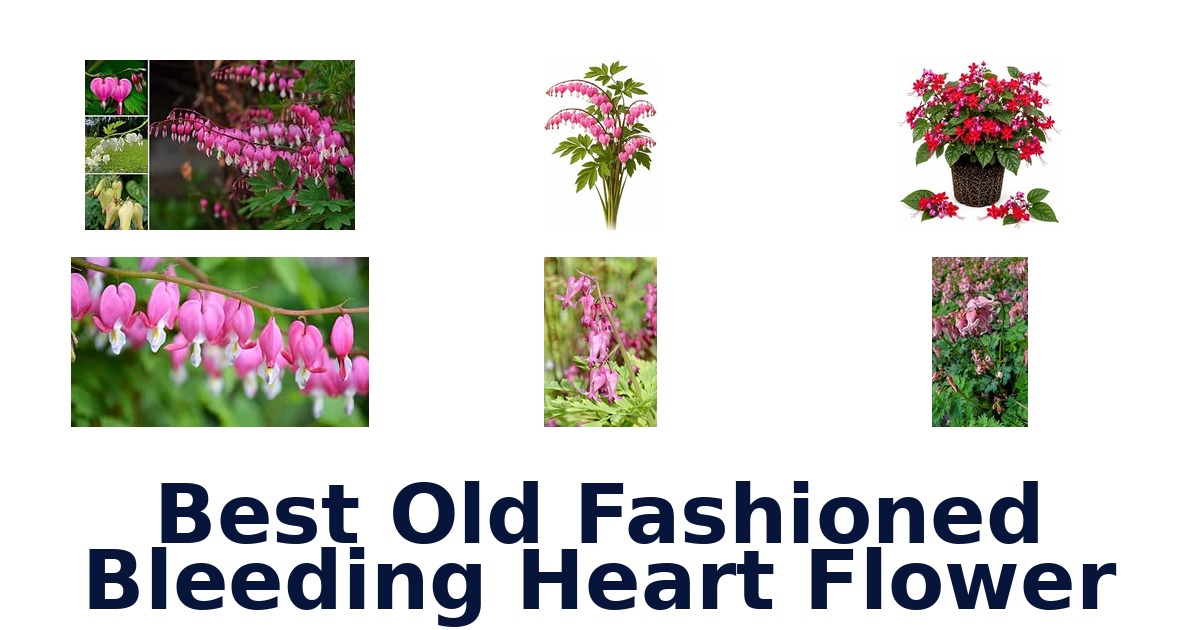
A strong choice for an old-fashioned bleeding heart garden has the familiar dangling, heart-shaped blooms and growing requirements suited to your space; choose a live plant for a ready-to-plant start or seeds if you want to grow from the beginning. Votaniki’s Pink Bleeding Heart leads this selection because it is a live Dicentra spectabilis with care instructions for partial to full shade and moist, well-drained soil. The list also includes classic pink and white forms, mixed seed packets, and fern-leaved or fringed relatives that differ from the traditional plant.
Compare plant format, light needs, hardiness information, and mature size before ordering. In particular, check the botanical name and whether the listing describes a seed packet, root, bulb, or rooted container plant.
Votaniki Pink Bleeding Heart is the best overall choice for a traditional old-fashioned bleeding heart because it is listed as a live Dicentra spectabilis with soft pink, heart-shaped blooms. Its care instructions specify partial to full shade, moist, well-drained soil, and spacing of 18–24 inches. Those details make it a clear fit for a shaded border or woodland garden.
If you prefer seeds, SPROUTARAQ Mix Bleeding Heart Seeds is a classic spectabilis option with late-spring to early-summer bloom information.
Our Top Picks
 Best Overall
Live Dicentra spectabilis with soft pink flowers; instructions specify partial to full shade, moist soil, and 18–24-inch spacing.
View on Amazon Best Seed Pick
SPROUTARAQ Mix Bleeding Heart Seeds
Dicentra spectabilis seed listing describes arching pink blooms in late spring to early summer and recommends partial to full shade.
View on Amazon Best White Blooms
The Alba form offers white, arching flowers and a stated 24–36-inch height, with instructions for partial to full shade.
View on Amazon- Best Zone Range Seedville Pink Old Fashioned Seeds
Compare the Bleeding Heart Options
| # | Product | Care Instructions | Buy |
|---|---|---|---|
| 1 | 1. Votaniki Pink Bleeding HeartBest Overall | Plant with the crown about 1 inch below soil… | View on Amazon |
| 2 | 2. SPROUTARAQ Mix Bleeding Heart SeedsBest Seed Pick | — | View on Amazon |
| 3 | 3. Votaniki White Bleeding HeartBest White Blooms | White Bleeding Hearts prefer partial to full… | View on Amazon |
| 4 |  4. CarpetC Bleeding Heart SeedsLarge-batch shade garden seeds | water | View on Amazon |
| 5 |  5. Seedville Pink Old Fashioned SeedsBest Zone Range | Water | View on Amazon |
| 6 |  6. Generic Mix Bleeding Heart SeedsCool-climate shade-landscape seeds | — | View on Amazon |
| 7 |  7. Seeds Of Strength Red SeedsPatient seed-starting project | — | View on Amazon |
| 8 |  8. Green Promise Pink DiamondsRooted compact sun-flexible plant | This is an alpine type of bleeding heart and… | View on Amazon |
| 9 |  9. Dicentra Eximia Fringed SeedsFringed-species shade seed packet | — | View on Amazon |
| 10 |  10. Urban Meadow Red Purple PlantRed-purple live-plant color choice | — | View on Amazon |
Detailed Reviews: Best Old Fashioned Bleeding Heart Flower
#1 · Best Overall
1. Votaniki Pink Bleeding Heart
- Care Instructions: Plant with the crown about 1 inch below soil…
Best for: Soft-pink shade-root planting.
Why it ranks #1: Live Dicentra spectabilis with soft pink flowers; instructions specify partial to full shade, moist soil, and 18–24-inch spacing.
A live pink bleeding-heart root offers a direct route to a classic shaded-garden planting, with rows of pendant, heart-shaped blooms on graceful arching stems. Votaniki specifies partial to full shade and moist, well-drained soil, giving buyers clear site and watering guidance for establishing it.
The planting directions call for setting the crown about an inch below the soil surface and spacing plants 18–24 inches apart, which helps with placement in borders or woodland beds. Regular watering without overwatering and mulch to retain moisture guide ongoing care. The listing also advises allowing foliage to die back naturally after blooming for seasonal dormancy. Its described late-spring bloom and soft-pink flowers suit a traditional shade planting, while the spacing guidance leaves room between plants.
- Live pink bleeding-heart root
- Partial-to-full-shade guidance
- Crown depth and 18–24-inch spacing specified
- Care notes cover mulch and natural foliage dieback
- The plant enters seasonal dormancy, with foliage meant to die back after blooming.
Skip it if you prefer a white-flowered variety for a shaded border; Votaniki's White Bleeding Heart 'Alba' offers white blooms.
Choose Votaniki's pink root for a shaded border or woodland garden if you can provide moist, well-drained soil and accept seasonal foliage dieback. Follow its crown-depth and spacing directions when setting the planting.
Full product details
| Brand | Votaniki |
|---|---|
| Color | Soft Pink |
| Manufacturer | Beel Yohn |
| Care Instructions | Plant with the crown about 1 inch below soil surface, spacing 18–24 inches apart. Grow in partial to full shade with moist, well-drained soil. Water regularly without overwatering. Mulch to retain moisture. Allow foliage to die back naturally after blooming for seasonal dormancy See more |
#2 · Best Seed Pick
2. SPROUTARAQ Mix Bleeding Heart Seeds
Best for: Arching-stem woodland garden seed.
Why it ranks #2: Dicentra spectabilis seed listing describes arching pink blooms in late spring to early summer and recommends partial to full shade.
Arching stems lined with pink, heart-shaped flowers give SPROUTARAQ’s Hanging Heart seeds their old-fashioned look and help create a layered display in shaded borders. The listing places flowering in late spring to early summer, making this a seasonal choice for woodland gardens or planting beneath trees.
The product is identified as a mix of 10+ seeds, a useful starting quantity for a small patch, while its described mature height of 24–36 inches can add a taller flowering layer among lower plants. Planting guidance calls for partial to full shade and rich, well-draining soil; consistent moisture and mulch are also recommended to help keep roots cool. The listing says the plant spreads over time, so allow room for an expanding planting.
- Mix listing of 10+ seeds
- Pink, heart-shaped flowers on arching stems
- Partial-to-full-shade planting guidance
- Listed height of 24–36 inches
- The listing gives no specific hardiness-zone range for this seed mix.
Skip it if you need a stated hardiness range before choosing seeds; Seedville's pink old-fashioned packet lists zones 2–9.
This mix suits gardeners planning a shaded woodland or under-tree planting who can provide rich, moist, well-draining soil. Its 24–36-inch height and spreading habit call for space, and no zone range is supplied.
Full product details
| Brand | SPROUTARAQ |
|---|---|
| Color | Mix |
| Item Weight | 9.07 g |
| Manufacturer | GraceBee |
Listed on Amazon as: 10+ Mix Bleeding Heart Seeds Hanging Heart Dicentra spectabilis Seed Flowers Garden Planting
View on Amazon#3 · Best White Blooms
3. Votaniki White Bleeding Heart
- Care Instructions: White Bleeding Hearts prefer partial to full…
Best for: White mid-border bulb planting.
Why it ranks #3: The Alba form offers white, arching flowers and a stated 24–36-inch height, with instructions for partial to full shade.
White, heart-shaped flowers above fresh-green fern-like foliage make Votaniki’s 'Alba' a color-specific alternative to the familiar pink bleeding heart. The listing gives a 24–36-inch height, placing it at a useful mid-level in a garden, and describes blooms lasting several weeks once flowering begins.
Partial-to-full-shade guidance makes this white variety relevant beneath deciduous trees or in shaded garden areas, while its preference for moist, well-drained soil rich in organic matter helps inform site preparation. The product information recommends fall planting 6–8 weeks before the relevant planting timing stated in its care notes. Its moderate 24–36-inch height can create a middle layer without overshadowing smaller plants, according to the listing’s garden-use description.
- White 'Alba' flowers
- Listed height of 24–36 inches
- Partial-to-full-shade guidance
- Moist, well-drained, organic-rich soil specified
- The care information calls for fall planting 6–8 weeks before the stated seasonal timing.
Skip it if you want pink flowers rather than white; Votaniki's Pink Bleeding Heart live root supplies the pink variety.
This Votaniki 'Alba' option suits gardeners seeking white blooms in a shaded mid-border or beneath deciduous trees. Check that the recommended fall planting window and moist, well-drained soil fit your garden schedule and site.
Full product details
| Brand | Votaniki |
|---|---|
| Color | White |
| Manufacturer | Beel Yohn |
| Care Instructions | White Bleeding Hearts prefer partial to full shade. They thrive under the canopy of deciduous trees or in shaded garden areas. Opt for well-drained, moist soil rich in organic matter. Avoid heavy clay or sandy soils. The best time to plant White Bleeding Heart bulbs is in the fall, 6-8 weeks before |
| Style Name | 1 Pack |
Listed on Amazon as: White Bleeding Heart – Hardy Perennial, Dicentra Spectabilis ‘Alba’ (Bleeding Heart) | Spring & Summer Flower Bulbs, Easy to Grow (1 Pack)
View on Amazon#4
4. CarpetC Bleeding Heart Seeds
- Care Instructions: water
Best for: Large-batch shade garden seeds.
Why it ranks #4: Dicentra spectabilis seeds suit a classic shade garden; listed hardiness is zones 3–9, with pink-and-white late-spring flowers.
A listing of 100+ seeds makes CarpetC a substantial starting batch for gardeners filling a shaded border with old-fashioned heart-shaped blooms. The flowers are described on arching stems, with contrasting inner petals and a late-spring display, and the listing also identifies them as suitable for cut arrangements.
The partial-to-full-shade guidance, including morning sun with afternoon shade, helps narrow placement for this perennial, while the listed zones 3–9 provide a range for checking regional fit. Flowers are described as attracting bees and hummingbirds, adding a pollinator consideration to border planning. The 100+ quantity supports a broader sowing plan than a small packet, but the supplied details do not give plant spacing or mature dimensions for calculating the final layout.
- 100+ seeds listed
- Partial-to-full-shade guidance, including morning sun
- Listed for zones 3–9
- Flowers described as suitable for cut arrangements
- No plant spacing or mature-size figures are supplied for planning a full planting.
Skip it if you want mature-height and spacing figures before sowing; Seedville's pink old-fashioned listing supplies both measurements.
Pick this CarpetC listing for a larger seed batch, shaded borders, or flowers intended for cutting, provided you can plan without stated dimensions. Its shade guidance and zone range help with site selection, but not exact spacing.
Full product details
| Brand | Carpet Creeping |
|---|---|
| Color | bleeding heart seeds |
| Manufacturer | Carpet Creeping |
| Part Number | bleeding heart seeds100 |
| Material Feature | GMO Free, Heirloom |
| Material Features | GMO Free, Heirloom |
| Special Features | Attracts Pollinators, Shade Resistant |
| Care Instructions | water |
| Special Feature | Attracts Pollinators, Shade Resistant |
Listed on Amazon as: CarpetC 100+ Bleeding Heart Seeds for Planting, Dicentra Spectabilis Shade-Loving Perennial, Non-GMO Heirloom Heart-Shaped Rare Flowers for Home Gardens and Borders
View on Amazon#5 · Best Zone Range
5. Seedville Pink Old Fashioned Seeds
- Care Instructions: Water
Best for: Classic shaded-border seed starter.
Why it ranks #5: Explicitly sold as old-fashioned pink bleeding heart seeds, with a broad stated hardiness range of zones 2–9.
Pink-and-white heart-shaped flowers on a shade-tolerant heirloom perennial give this Seedville packet a classic garden profile. Its stated 24–36-inch height suits the middle of a border, while the part-shade-to-full-shade guidance makes it relevant for garden spots that receive limited direct light.
The listed late-spring-to-early-summer bloom window helps place this perennial among other seasonal plantings, and its 12–24-inch spacing guidance gives gardeners a practical starting point for laying out a border. Seedville lists hardiness zones 2–9, which broadens its stated climate range, and notes that the flowers attract bees, birds, and butterflies. The packet is identified as 10 seeds, so it suits a modest planting rather than a large-scale border filled in one go.
- Pink-and-white, heart-shaped flowers
- Part shade to full shade guidance
- Listed for hardiness zones 2–9
- Flowers noted to attract bees, birds, and butterflies
- The listed 10 seeds limit how many plants can be started from this packet.
Skip it if you need seed quantities for a broad planting; Carpet Creeping's 100+ seed listing offers a larger starting batch.
Choose this Seedville packet for a small, classic pink bleeding-heart planting in a shaded border, especially if its stated zone range fits your garden. Its 10-seed quantity is a boundary for larger planting plans.
Full product details
| Brand | Seedville |
|---|---|
| Color | Pink & White |
| Manufacturer | Seedville USA |
| Care Instructions | Water |
Listed on Amazon as: 10 Bleeding Heart – Pink Old Fashioned Dicentra Formosa Shade Flower Seeds
View on Amazon#6
6. Generic Mix Bleeding Heart Seeds
Best for: Cool-climate shade-landscape seeds.
Why it ranks #6: The mixed heirloom seed listing targets shaded borders and woodland gardens and specifies suitability for USDA zones 3–9.
A 90-piece mixed seed listing gives this heirloom option a larger stated quantity for filling a shaded landscape than a small packet. Its described dangling heart flowers and arching stems bring the classic bleeding-heart form to woodland gardens, north-facing home areas, and perennial borders.
The product is positioned for USDA zones 3–9 and specifically notes cooler climates, giving gardeners a stated range to compare with their local conditions. Its shade-oriented landscape use supports placement in woodland settings, on the north side of a home, or in a perennial border. The listing also calls it low maintenance, though it does not supply detailed sowing, spacing, or mature-size directions; buyers will need to plan those aspects without product-specific guidance.
- 90-piece mixed seed listing
- Heirloom material feature
- Listed for USDA zones 3–9
- Shade-oriented use for borders and woodland landscapes
- The listing does not provide plant spacing or mature-size guidance.
Skip it if you need explicit spacing and mature-size figures for layout; Seedville's pink packet lists both height and spacing.
This is a fit for gardeners seeking a larger listed seed quantity for a cool-climate shaded landscape. Its zone range and garden uses are specified, but the missing spacing and mature-size details leave layout planning to the grower.
Full product details
| Brand | Generic |
|---|---|
| Manufacturer | Generic |
| Material Feature | Heirloom |
| Material Features | Heirloom |
| Special Features | Low Maintenance |
| Special Feature | Low Maintenance |
Listed on Amazon as: 90Pcs Mix Bleeding Heart Seeds for Planting – Heirloom Variety Flower, Shade Tolerant, Ideal for Gardens, Borders, and Landscapes
View on Amazon#7
7. Seeds Of Strength Red Seeds
Best for: Patient seed-starting project.
Why it ranks #7: A perennial seed option for partial shade, with rich organic soil guidance and a stated 18-inch planting spacing.
A specified cold-treatment sequence sets these Seeds Of Strength bleeding-heart seeds apart for gardeners prepared to manage a deliberate germination process. The listing calls for 2–4 weeks at 64–72 degrees followed by 4–6 weeks at 25–39°F, and gives an average germination time of 56–70 days.
The germination directions call for light, moist conditions and covering the seed with vermiculite, sand, or another substrate after sowing, giving a grower a concrete setup to follow. A sowing rate of 4–6 seeds per cell and 18-inch plant spacing inform tray and eventual garden planning. The listing specifies rich, organic soil at pH 5.8–6.2 and partial shade. It describes pink blooms from early summer to fall, a longer stated window than a spring-only display.
- Detailed warm-then-cold temperature sequence
- Average germination time of 56–70 days stated
- Sowing rate of 4–6 seeds per cell
- Rich organic soil and pH guidance supplied
- The specified germination process takes 6–10 weeks of temperature treatment before the stated average germination period.
Skip it if you want to plant an established root immediately; Green Promise Farms' 'Pink Diamonds' arrives fully rooted and can be planted when weather permits.
This packet suits patient seed growers who can provide the stated temperature sequence, light, moisture, and soil conditions. Its detailed sowing information is useful, but the treatment and germination timelines require planning ahead.
Full product details
| Brand | Seeds Of Strength |
|---|---|
| Color | Bleeding Heart |
| Manufacturer | Seeds Of Strength |
| Material Feature | Organic |
| Material Features | Organic |
| Special Features | Attracts Pollinators |
| Special Feature | Attracts Pollinators |
Listed on Amazon as: 20 pcs Red Bleeding Heart Seeds – Rare Dicentra Spectabilis Flower Seeds
View on Amazon#8
8. Green Promise Pink Diamonds
- Care Instructions: This is an alpine type of bleeding heart and…
Best for: Rooted compact sun-flexible plant.
Why it ranks #8: This rooted fern-leaved hybrid has pink spring flowers and a 12–24-inch mature height, but it is not the classic old-fashioned type.
A fully rooted, one-gallon 'Pink Diamonds' plant can go into the garden upon arrival when weather permits, avoiding a seed-starting stage. Its fern-like blue-green foliage and pink spring flowers offer a compact bleeding-heart option, with the listing giving a mature size of 12–24 inches tall.
The stated 12–18-inch width and 12–24-inch height help gardeners plan a smaller planting footprint than a tall border specimen. Although the flower description suits a shaded-border look, the care information identifies this as an alpine type and recommends full sun, while another feature says it prefers partial shade; check the site conditions against both notes. Moist, well-drained soil is specified, and flowering is described as extending through the season.
- Fully rooted live plant
- Listed mature size of 12–24 inches high and 12–18 inches wide
- Fern-like foliage with pink flowers
- Moist, well-drained soil guidance
- The care notes conflict on light, describing partial shade and recommending full sun.
Skip it if you want unambiguous shade-only guidance; Seedville's pink old-fashioned seeds list part shade to full shade.
Consider 'Pink Diamonds' if you want a rooted, compact pink plant and can assess its conflicting light guidance before planting. Its alpine-type care note and full-sun recommendation distinguish it from a straightforward shade-garden choice.
Full product details
| Brand | Green Promise Farms |
|---|---|
| Color | Pink Flowers |
| Item Weight | 8 pounds |
| Manufacturer | Proven Winners |
| Material Feature | Live Plant, Perennial, Pink Flowers, pollinator-friendly |
| Material Features | Live Plant, Perennial, Pink Flowers, pollinator-friendly |
| Special Features | Attracts Pollinators, Compact, Low Maintenance, Pink Flowers |
| Care Instructions | This is an alpine type of bleeding heart and is not a shade plant. For best results, plant in full sun in soil with good drainage. Do not overwater or plant in an area that gets waterlogged. |
| Special Feature | Attracts Pollinators, Compact, Low Maintenance, Pink Flowers |
Listed on Amazon as: Live Plant from Green Promise Farms – Proven Winners, Dicentra x 'Pink Diamonds' Fern leaved Bleeding Heart, Pink Flowers – #1 Gallon Size Container
View on Amazon#9
9. Dicentra Eximia Fringed Seeds
Best for: Fringed-species shade seed packet.
Why it ranks #9: Fringed Dicentra eximia seeds are intended for shaded areas, but this is a different species from the traditional spectabilis form.
The species name Dicentra eximia distinguishes this 30-seed listing from the many spectabilis varieties in the roundup. It is presented as a fringed bleeding heart for shaded areas, making it a seed-packet option for gardeners interested in that named type rather than the familiar old-fashioned form.
The product title identifies 30 seeds and the model as Dicentra eximia, while its supplied feature text points to use in shaded areas. Those details help buyers identify both the plant type and intended garden setting before choosing a sowing spot. However, the listing supplies no zone range, mature height, bloom timing, or germination directions. That leaves climate matching and practical seed-starting decisions to the gardener rather than offering a full growing plan.
- 30 seeds listed
- Identified as Dicentra eximia
- Named as fringed bleeding heart
- Shaded-area use is stated
- No hardiness range, bloom timing, or germination guidance is supplied.
Skip it if you need zone and sowing directions before buying; Seeds Of Strength's red bleeding-heart packet lists detailed germination conditions.
Consider this packet if the fringed Dicentra eximia identity and 30-seed quantity suit your shaded planting plan. It is a less guided choice: the supplied details do not establish zones, mature size, bloom timing, or sowing steps.
Full product details
| Brand | Dicentra |
|---|---|
| Manufacturer | Unbranded |
| Part Number | mx1_261691398504_d00_D |
| Style | 30 Seeds |
| Style Name | 30 Seeds |
Listed on Amazon as: Fringed Bleeding Heart – Dicentra Eximia Seeds – Great Flowers for Shaded Area !(30 Seeds)
View on Amazon#10
10. Urban Meadow Red Purple Plant
Best for: Red-purple live-plant color choice.
Why it ranks #10: The live plant listing specifies full sun, unlike the shade-oriented traditional bleeding hearts, and gives limited botanical identification.
A live red-purple bleeding-heart plant is listed at 4–6 inches tall, offering a young plant rather than a seed packet for an outdoor garden. Its stated spring-to-fall blooming season and zones 3–9 give buyers concrete timing and climate details to consider before planting.
The listing recommends full sun and well-draining soil, with regular watering, so buyers can assess whether those conditions suit their intended outdoor site. Its stated ideal temperature range of 55–75°F adds another factor for planning placement and care. At 4–6 inches tall and supplied without a pot, it is a small young plant; the listing notes that photos show mature plants for reference, so the pictured size should not be mistaken for its delivered height.
- Live plant listed at 4–6 inches tall
- Red-purple flower color identified
- Zones 3–9 stated
- Full-sun and well-draining-soil guidance supplied
- It arrives without a pot and is listed at only 4–6 inches tall.
Skip it if you need a potted plant for immediate placement; Green Promise Farms' 'Pink Diamonds' is listed fully rooted in a one-gallon container.
This young plant suits buyers seeking a red-purple outdoor option who can provide full sun, drainage, and regular water. Its 4–6-inch listed height and no-pot format are important considerations for planting and display.
Full product details
| Brand | Urban Meadow Nursery |
|---|---|
| Color | Green |
| Item Weight | 8 ounces |
| Manufacturer | Urban Meadow Nursery |
Listed on Amazon as: Red Purple Bleeding Heart Plant Live Plant for Planting, Perennial Flowering Plant for Outdoor Garden, 4-6 Inch Tall, No Pot
View on AmazonAvoid confusing classic and related bleeding hearts
Check the botanical name before choosing: several plants sold under the bleeding-heart name are related forms rather than the traditional garden type. Votaniki Pink Bleeding Heart and SPROUTARAQ Mix Bleeding Heart Seeds identify Dicentra spectabilis, while Dicentra Eximia Fringed Seeds are for D. eximia and Green Promise Pink Diamonds is a fern-leaved hybrid.
Seedville Pink Old Fashioned Seeds is described as Dicentra formosa, so its old-fashioned wording does not establish that it is the same species as spectabilis. This distinction matters if you are trying to match a familiar garden plant, rather than simply add a heart-shaped flower.
Also check what arrives: the listings include seeds, a live rooted container plant, a plant root, and a product described as bulbs. Do not assume these formats are interchangeable or arrive at the same stage of growth.
Plan for seasonal dormancy and shade
Allow for seasonal dieback when placing a classic bleeding heart: it is a spring-flowering perennial, not a plant that necessarily stays leafy through the whole growing season. The Votaniki Pink Bleeding Heart care notes say to let foliage die back naturally after blooming, while other classic listings emphasize late-spring or early-summer flowers. A gap later in the season may therefore be a placement issue to plan around, rather than a reason to crowd the plant into a sunnier spot.
Shade guidance also varies by product: several spectabilis listings recommend partial to full shade, but Green Promise Pink Diamonds is described as an alpine type and its care says it is not a shade plant. Urban Meadow Red Purple Plant lists full sun despite its bleeding-heart title.
Match the actual plant’s instructions to the site instead of relying on the common name alone.
How to Choose an Old-Fashioned Bleeding Heart
Seeds or a live plant
Choose the format that fits how you want to establish the garden. Votaniki Pink Bleeding Heart is a live plant, and Green Promise Pink Diamonds is listed as a fully rooted plant in a #1 gallon container; several other options are seed packets. Seedville Pink Old Fashioned Seeds lists a pack, while Seeds Of Strength Red Seeds describes a germination process averaging 56–70 days.
Buyers wanting a plant that can be planted upon arrival may prefer the rooted options, subject to weather and the seller’s planting instructions. Gardeners comfortable starting from seed can compare packets, but should account for the listed germination information and follow the individual sowing directions.
Botanical type and flower color
Look for the botanical name and bloom color that match your intended planting. Votaniki Pink Bleeding Heart and SPROUTARAQ Mix Bleeding Heart Seeds name Dicentra spectabilis, while Votaniki White Bleeding Heart is listed as D. spectabilis ‘Alba.’ The Seedville listing calls its product Dicentra formosa, and the fringed seed listing is D.
eximia, so those are not identical choices. Pink options suit a traditional color scheme; the white Alba form offers a different look, and mixed packets may vary.
Choose spectabilis when the classic old-fashioned type is the priority, and consider the related forms when you specifically want their distinct foliage or flower presentation.
Light, hardiness, and mature size
Match light and space requirements to the planting site rather than assuming every bleeding heart has the same needs. Seedville Pink Old Fashioned Seeds lists zones 2–9 and a height of 24–36 inches; Votaniki Pink Bleeding Heart recommends partial to full shade and spacing of 18–24 inches. Green Promise Pink Diamonds is smaller at 12–24 inches tall and is described as an alpine type that is not a shade plant.
Several other classic options specify zones 3–9, but not every listing supplies a hardiness range. Buyers with a shaded woodland bed should favour products that expressly recommend shade, while those with sunnier sites should verify the specific plant’s instructions before purchase.
Which Old-Fashioned Bleeding Heart Should You Choose?
For a traditional live pink plant in a shaded garden, choose Votaniki Pink Bleeding Heart: it is identified as Dicentra spectabilis and includes shade, soil, and spacing guidance. If you want to start with seeds, SPROUTARAQ Mix Bleeding Heart Seeds is the strongest classic-species fit and notes spring-to-early-summer bloom timing. Choose Votaniki White Bleeding Heart for the Alba form and white flowers, or CarpetC Bleeding Heart Seeds for a spectabilis seed option with stated zones 3–9.
Seedville Pink Old Fashioned Seeds is worth considering when its zones 2–9 range is useful, while checking its listed D. formosa identity.
Avoid treating the fern-leaved, fringed, and full-sun listings as interchangeable with a classic shade-growing spectabilis.
Frequently Asked Questions
When should bleeding heart seeds or roots be planted?
The product details do not give one planting date that applies to every option. They include both seeds and live roots or plants, so check the specific package or seller instructions for planting timing. The SPROUTARAQ listing notes late-spring to early-summer flowering, which is bloom information, not a planting date.
How long do old-fashioned bleeding heart flowers bloom?
The supplied product information does not state a bloom duration. SPROUTARAQ gives a late-spring to early-summer bloom window, but that describes the season rather than the number of weeks flowers last. Bloom timing can vary by plant and conditions, so use the individual listing for its stated details.
Do bleeding hearts die back after flowering?
The supplied listings do not specify whether each plant dies back after flowering. They identify several options as perennial, but do not describe their post-bloom foliage cycle. Check the growing instructions for the exact plant you choose, especially since these listings include different Dicentra forms and seed products.
Which option is the closest match to a classic old-fashioned bleeding heart?
Votaniki Pink Bleeding Heart is the clearest live-plant match: it is listed as Dicentra spectabilis, with soft pink, heart-shaped blooms and shade guidance. For seeds, SPROUTARAQ Mix is also identified as D. spectabilis.
Other listings include different forms, such as formosa, eximia, fern-leaved, or Alba.
What growing conditions should I look for?
For Votaniki Pink Bleeding Heart, the listed care guidance specifies partial to full shade, moist, well-drained soil, and spacing of 18–24 inches. These details suit a shaded border or woodland garden. Check each other listing separately, since the products vary in plant form and the supplied details are not identical.
Final Words
For a traditional live pink bleeding heart in a shaded garden, choose Votaniki Pink Bleeding Heart: its listing identifies Dicentra spectabilis and gives shade, soil, and spacing guidance. If you prefer seeds, SPROUTARAQ Mix is the strongest classic-species fit and notes late-spring to early-summer bloom timing. Choose Votaniki White for the Alba form, or compare the other listings carefully because several are different Dicentra forms.