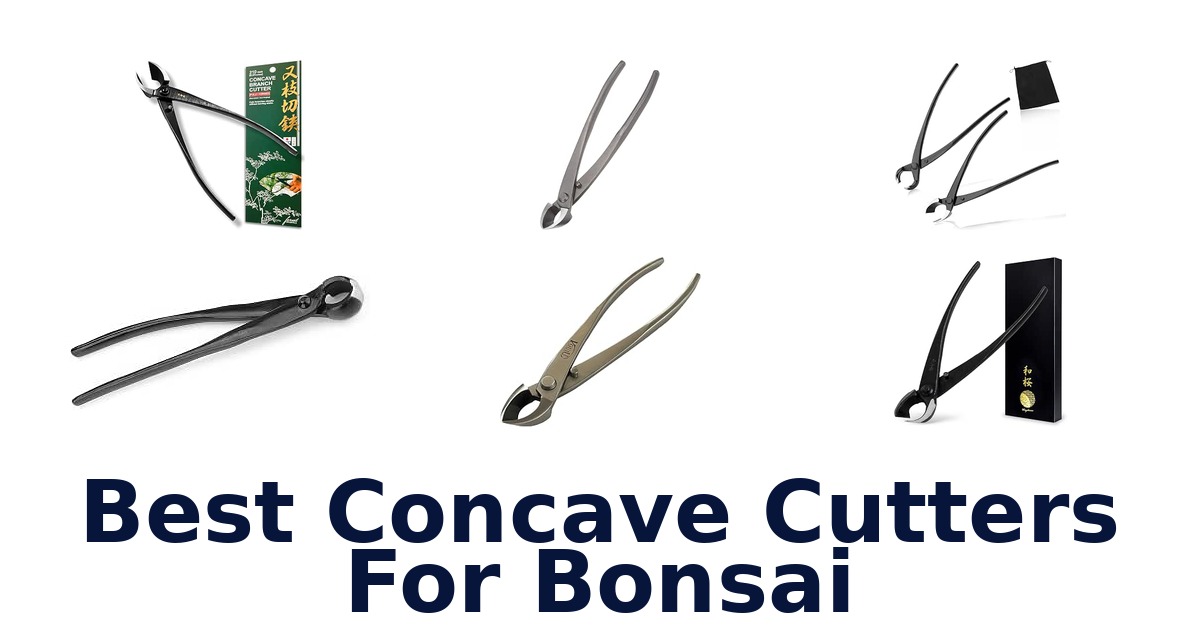
A strong bonsai concave cutter makes a slightly hollow cut close to the trunk, and the right choice depends on branch size, steel preference, and whether you need a dedicated cutter or a tool set. The Wazakura Bonsai Concave Branch Cutter 8in pairs a stated 8–13 mm branch range with hand-forged S55C carbon steel, making it a clear fit for routine branch removal. This roundup also compares stainless-steel options, other carbon and manganese steel tools, and sets that include a knob cutter.
Most listed cutters are around 8 to 8.3 inches, but their materials, included components, and detail vary. Check those differences before choosing: a second cutter can broaden your toolkit, while a single-purpose tool may better suit a focused pruning task.
The Wazakura Bonsai Concave Branch Cutter 8in leads because it is specifically described for removing branches flush with the trunk, identifies a useful 8–13 mm branch range, and uses hand-forged S55C carbon steel. Its 200 mm size and Japanese manufacture make its intended bonsai use clear. Choose it for a dedicated branch cutter; if you also need a knob cutter, the Wazakura Bonsai Branch Cutter Set adds one as a separate tool.
Our Top Picks
 Best Overall
Wazakura Concave Branch Cutter
Hand-forged S55C carbon steel and a stated 8–13 mm branch range suit flush trunk cuts; the 200 mm dedicated cutter is made in Sanjo, Japan.
View on Amazon Japanese Forged
This 210 mm Japanese cutlery steel cutter is described as hand-forged in Japan, with concave jaws intended to remove branches flush without leaving a stub.
View on Amazon Manganese Steel
Its 8.27-inch manganese steel design has a self-healing concave jaw and specifies clean cuts on branches from 5/16 to 1/2 inch.
View on Amazon- Best Two-Tool Set Wazakura Branch Cutter Set
Compare the concave cutters and bonsai tool sets
| # | Product | Dimensions | Weight | Blade Material | Buy |
|---|---|---|---|---|---|
| 1 | 1. Wazakura Concave Branch CutterBest Overall | 7.87"L x 1.96"W | 190 g | Carbon Steel | View on Amazon |
| 2 | 2. Senkichi Concave CutterJapanese Forged | 8.3"L x 8.3"W | 220 g | Japanese Cutlery Steel | View on Amazon |
| 3 | 3. Bonfino Concave CutterManganese Steel | 8.27"L x 2.36"W | 8 oz | Alloy Steel | View on Amazon |
| 4 |  4. Wazakura Branch Cutter SetBest Two-Tool Set | 1.96"L x 3.92"W | 0.52 kg | Carbon Steel | View on Amazon |
| 5 |  5. ZPSHYD Concave CutterDefined ten-millimeter branch limit | 0.39 x 0.39 x 0.39 in | 6.9 oz | — | View on Amazon |
| 6 |  6. M METERXITY Concave CutterRubber-grip high-carbon pruning | 8.3"L x 2.2"W | 0.27 kg | High Carbon Steel | View on Amazon |
| 7 |  7. LEONTOOL Bonsai Tool SetBagged two-cutter starter kit | 8.27"L x 1.77"W | 0.45 kg | Stainless Steel | View on Amazon |
| 8 |  8. VOUIU Concave CutterOffset-edge fork-branch pruning | 8.27"L x 8.27"W | 230 g | Stainless Steel | View on Amazon |
| 9 |  9. Jevie Concave CutterLong-handle general pruning | — | 0.26 kg | Stainless Steel | View on Amazon |
| 10 |  10. Haosie Concave CutterManganese-alloy scar-conscious cuts | 0.39 x 0.39 x 1 in | 3.52 oz | — | View on Amazon |
Detailed Reviews: Best Concave Cutters For Bonsai
#1 · Best Overall
1. Wazakura Concave Branch Cutter
- Dimensions: 7.87"L x 1.96"W
- Weight: 190 g
- Blade Material: Carbon Steel
Best for: Specified-size Japanese branch cuts.
Why it ranks #1: Hand-forged S55C carbon steel and a stated 8–13 mm branch range suit flush trunk cuts; the 200 mm dedicated cutter is made in Sanjo, Japan.
A stated 8–13 mm branch range gives the Wazakura a concrete pruning target: it removes branches flush to the trunk with a slightly hollow cut intended to close cleanly with minimal scarring. The 8-inch, hand-forged S55C carbon-steel cutter is made in Sanjo, Japan, for buyers who value a defined use and traditional manufacture.
The specified 8–13 mm capacity helps buyers match the cutter to branch work instead of guessing from its 200 mm overall length. Its hollow bypass blade makes a slightly concave, flush cut, a practical choice when removing a branch close to the trunk and limiting a protruding stub. Hand-forged S55C carbon steel and alloy-steel handles identify its materials and construction; buyers should account for the carbon-steel blade when considering care and storage, though the listing gives no maintenance instructions.
- Stated branch range of about 8–13 mm
- Hollow cut removes branches flush to the trunk
- Hand-forged S55C carbon steel
- Made in Sanjo, Japan
- The carbon-steel blade requires buyers to consider care and storage; no care instructions are listed.
Skip it if you need a two-cutter set for both branches and knobs; Wazakura’s Bonsai Branch Cutter Set includes a concave cutter and a knob cutter.
This Wazakura suits bonsai keepers pruning branches in its stated 8–13 mm range who want a hollow, flush cut and Japanese hand-forged construction. Its defined capacity is useful, but branches outside that range are not specified.
Full product details
| Brand | Wazakura |
|---|---|
| Blade Edge | Hollow |
| Blade Length | 25 millimeters |
| Blade Material | Carbon Steel |
| Blade Type | Bypass |
| Color | Black |
| Handle Material | Alloy Steel |
| Included Components | Concave Cutter |
| Item Dimensions L x W | 7.87"L x 1.96"W |
| Item Weight | 190 g |
| Manufacturer | Wazakura |
| Part Number | B0DY148373 |
| Material | S55C Carbon steel |
| Model Number | B0849MY5GH |
| Point Style | Round point |
| Dimensions | 7.87"L x 1.96"W |
| Product Style | Japanese |
| Size | 8inch (200mm) |
| Style | Japanese |
Listed on Amazon as: Wazakura Bonsai Concave Branch Cutter 8in, Hand Forged Japanese Steel
View on Amazon#2 · Japanese Forged
2. Senkichi Concave Cutter
- Dimensions: 8.3"L x 8.3"W
- Weight: 220 g
- Blade Material: Japanese Cutlery Steel
Best for: Japanese flush-cut shaping.
Why it ranks #2: This 210 mm Japanese cutlery steel cutter is described as hand-forged in Japan, with concave jaws intended to remove branches flush without leaving a stub.
Concave jaws that cut branches flush to the trunk are the Senkichi’s key advantage, helping bonsai growers avoid a protruding stub while shaping a tree’s silhouette. This 210 mm Japanese cutter is described as hand-forged from blade steel, with a specialized curved blade for close, clean pruning work.
The curved concave jaws are intended to leave a flush cut without a stub, connecting the blade shape directly to trunk-side branch removal and a cleaner silhouette. At 210 mm and about 200 g in the verified description, the cutter is presented as light enough for controlled shaping while retaining a full-size length. Japanese manufacture and forged blade steel are specified, but no branch-diameter capacity is provided, so buyers cannot use the listing to confirm a size limit.
- Concave jaws cut branches flush to the trunk
- Curved blade is intended to leave no stub
- 210 mm length for shaping work
- Hand-forged in Japan from blade steel
- No maximum branch diameter is stated.
Skip it if you need a stated branch capacity before buying; Wazakura’s 8-inch Concave Branch Cutter lists a range of about 8–13 mm.
The Senkichi fits bonsai growers focused on flush branch removal and controlled silhouette shaping with a Japanese-made, 210 mm cutter. Choose it when its no-stub cutting description matters more than having a listed diameter limit.
Full product details
| Brand | forest Originals |
|---|---|
| Blade Material | Japanese Cutlery Steel |
| Blade Type | Concave Cutter |
| Included Components | Concave Cutters |
| Item Dimensions L x W | 8.3"L x 8.3"W |
| Item Weight | 220 g |
| Manufacturer | forest Originals |
| Part Number | fst090060401 |
| Model Number | Senkichi-Kin Bonsai Concave Cutter 210mm |
| Dimensions | 8.3"L x 8.3"W |
| Product Style | Japanese |
| Size | 8.3" |
| Style | Japanese |
Listed on Amazon as: Senkichi 8.3" Japanese Bonsai Concave Cutter – Professional Branch Cutter for Clean Flush Cuts, Leaves No Stub – High-Carbon Forged Steel Pruning Shears, Made in Japan – forest Originals
View on Amazon#3 · Manganese Steel
3. Bonfino Concave Cutter
- Dimensions: 8.27"L x 2.36"W
- Weight: 8 oz
- Blade Material: Alloy Steel
Best for: Manganese-steel routine pruning.
Why it ranks #3: Its 8.27-inch manganese steel design has a self-healing concave jaw and specifies clean cuts on branches from 5/16 to 1/2 inch.
A self-healing concave jaw gives the Bonfino its clearest use case: making slightly recessed branch cuts intended to seal quickly and heal with minimal scarring. Its 8.27-inch body and manganese-steel blade material suit routine bonsai maintenance, while the stated 5/16–1/2-inch branch range helps buyers judge whether their pruning falls within its remit.
The listed 5/16–1/2-inch branch range makes this cutter easier to match to a specific pruning job than a tool with no stated capacity. Its concave jaw creates a slightly recessed cut, which the listing connects with quick sealing, minimal scarring, and a cleaner silhouette. Manganese steel is described as rust-resistant and edge-holding for regular maintenance, although the specifications separately identify the blade as alloy steel; the listed materials support buyers weighing its intended durability and upkeep.
- Listed for branches 5/16–1/2 inch
- Concave jaw makes a slightly recessed cut
- Manganese steel described as rust-resistant
- 8.27-inch length for bonsai pruning
- The material details differ: features say manganese steel, while blade specifications say alloy steel.
Skip it if you need Japanese hand-forged manufacture and S55C steel; Wazakura’s 8-inch Concave Branch Cutter lists both and specifies its branch range.
Bonfino is a fit for routine bonsai pruning when the branches fall within its stated 5/16–1/2-inch range and a recessed cut is the goal. Consider the differing material descriptions when choosing based on blade composition.
Full product details
| Brand | Bonfino |
|---|---|
| Blade Material | Alloy Steel |
| Blade Type | Anvil |
| Color | Black |
| Handle Material | Manganese Steel |
| Included Components | Blade |
| Item Dimensions L x W | 8.27"L x 2.36"W |
| Item Weight | 8 ounces |
| Manufacturer | Bonfino |
| Material | Manganese Steel |
| Model Number | Bonsai-Tools-003 |
| Dimensions | 8.27"L x 2.36"W |
| Product Style | Classic |
| Size | 8.27 inches (L) x 2.36 inches (W) |
| Style | Classic |
Listed on Amazon as: 8.3" Bonsai Concave Cutter, Manganese Steel Branch Pruning Tool
View on Amazon#4 · Best Two-Tool Set
4. Wazakura Branch Cutter Set
- Dimensions: 1.96"L x 3.92"W
- Weight: 0.52 kg
- Blade Material: Carbon Steel
Best for: Two-tool branch and knob work.
Why it ranks #4: The Japan-made carbon steel set includes both a concave branch cutter and a knob cutter, covering two distinct pruning tasks in one purchase.
The included concave branch cutter and knob cutter give this Wazakura set two distinct jobs: flush, slightly hollow branch removal and rounded cutting of trunk knobs, roots, and thick limbs. Its Sanjo, Japan craftsmanship and carbon-steel blades make it a broader bonsai-care choice than a single-purpose concave cutter.
Using the concave cutter for branches and the knob cutter for trunk knobs, roots, or thick limbs lets a buyer choose a tool according to the cut, rather than asking one cutter to do both jobs. The listed high-carbon steel blades are described as keeping a keen edge, supporting repeated bonsai work. Both tools are handcrafted by local artisans in Sanjo, Niigata; the set weighs 0.52 kg, a factor to consider when storing or carrying both cutters together.
- Includes concave branch cutter and knob cutter
- Concave cutter makes a slightly hollow flush cut
- Knob cutter is listed for knobs, roots, and thick limbs
- Handcrafted in Sanjo, Japan, with carbon-steel blades
- The two-tool set weighs 0.52 kg, more than carrying a single cutter.
Skip it if you want only a single 8-inch cutter and a stated branch range; Wazakura’s Concave Branch Cutter lists about 8–13 mm.
Choose this Wazakura set if your bonsai routine includes both branch removal and separate knob, root, or thick-limb work. The two specialized cutters add useful task coverage, while their combined 0.52 kg weight may not suit a minimalist kit.
Full product details
| Brand | Wazakura |
|---|---|
| Blade Edge | Straight |
| Blade Length | 25 millimeters |
| Blade Material | Carbon Steel |
| Blade Type | Bypass |
| Color | Concave + Knob Branch Cutters Black |
| Handle Material | Alloy Steel |
| Included Components | Concave Branch Cutter, Knob Cutter |
| Item Dimensions L x W | 1.96"L x 3.92"W |
| Item Weight | 0.52 kg |
| Manufacturer | Wazakura |
| Material | Carbon Steel |
| Point Style | Round point |
| Dimensions | 1.96"L x 3.92"W |
| Product Style | Japanese |
| Size | 8 inch |
| Style | Japanese |
Listed on Amazon as: Wazakura Bonsai Branch Cutter Set, Concave Cutter and Knob Cutter, Japan
View on Amazon#5
5. ZPSHYD Concave Cutter
- Dimensions: 0.39 x 0.39 x 0.39 in
- Weight: 6.9 oz
Best for: Defined ten-millimeter branch limit.
Why it ranks #5: The 210 mm manganese steel cutter lists an approximate maximum cutting diameter of 10 mm, a concrete sizing reference for branch pruning.
A stated maximum cutting diameter of about 10 mm gives the ZPSHYD a clear boundary for bonsai branch work. Its 210 mm, or 8.27-inch, manganese-steel cutter makes hollow concave cuts intended to leave minimal visible scarring, combining a defined capacity with a cut shape suited to trunk-side pruning.
The approximate 10 mm maximum diameter helps buyers decide whether their branches fall within the tool’s listed cutting capacity before pruning. Its hollow concave cut is described as leaving minimal visible scarring, connecting the jaw shape to a cleaner-looking wound. The 210 mm length gives it an 8.27-inch overall format, and manganese-steel alloy is specified for strength, toughness, and wearability. No handle material or care instructions are supplied, so those details cannot guide storage or maintenance decisions.
- Maximum cutting diameter listed at about 10 mm
- Hollow concave cut intended to minimize visible scarring
- 210 mm, or 8.27-inch, overall length
- Manganese-steel alloy described as strong and wear-resistant
- The stated cutting capacity tops out at approximately 10 mm.
Skip it if you regularly prune branches larger than 10 mm; Wazakura’s 8-inch Concave Branch Cutter lists a range up to about 13 mm.
The ZPSHYD suits bonsai keepers whose branch work stays within its approximate 10 mm limit and who want a hollow cut with minimal visible scarring. That stated capacity is useful, but sets a firm boundary for larger branches.
Full product details
| Brand | ZPSHYD |
|---|---|
| Item Weight | 6.9 ounces |
| Item model number | ZPSHYD4z298o6y5i-02 |
| Manufacturer | ZPSHYD |
| Dimensions | 0.39 x 0.39 x 0.39 inches |
Listed on Amazon as: ZPSHYD Bonsai Concave Cutter, 8.27'' Manganese Steel Branch Tool
View on Amazon#6
6. M METERXITY Concave Cutter
- Dimensions: 8.3"L x 2.2"W
- Weight: 0.27 kg
- Blade Material: High Carbon Steel
Best for: Rubber-grip high-carbon pruning.
Why it ranks #6: This 8.3-inch high-carbon steel cutter lists plastic and rubber handles and a hollow edge, offering a distinct grip and material combination.
A hollow cutting edge paired with a plastic-and-rubber handle gives the M METERXITY a practical combination for bonsai trimming: a concave-style cut and a grip material identified separately from its high-carbon-steel blade. At 8.3 inches, it is listed for pruning knobs and branches and is pitched to beginner and experienced users.
The hollow edge is intended to make clean, natural-looking cuts that reduce or avoid scarring, making it relevant for shaping and pruning bonsai branches. High-carbon steel forms the blade, while plastic and rubber make up the handle; that material split gives buyers a clear picture of the cutting and gripping components. Its 8.3-inch length and round-point, anvil-style specifications identify its format, but no branch-diameter range is supplied for matching it to a particular limb size.
- Hollow edge for concave-style pruning cuts
- High-carbon-steel blade
- Plastic-and-rubber handle
- Listed for knobs and branches at 8.3 inches
- No branch-diameter capacity is stated.
Skip it if you want a stated branch-size range for flush trunk cuts; Wazakura’s 8-inch Concave Branch Cutter lists about 8–13 mm.
This M METERXITY suits beginners or experienced bonsai enthusiasts seeking a hollow-edge tool with a rubber-and-plastic handle for knobs and branches. Its 8.3-inch format is clear, but the listing leaves capacity by branch diameter open.
Full product details
| Brand | M METERXITY |
|---|---|
| Blade Edge | Hollow |
| Blade Material | High Carbon Steel |
| Blade Type | Anvil |
| Color | Silver |
| Handle Material | Plastic, Rubber |
| Item Dimensions L x W | 8.3"L x 2.2"W |
| Item Weight | 0.27 kg |
| Manufacturer | M METERXITY |
| Part Number | mma240620ty001053jp |
| Material | High Carbon Steel |
| Model Number | mma240620ty001053jp |
| Point Style | Round point |
| Dimensions | 8.3"L x 2.2"W |
| Product Style | Classic |
| Size | 8.3 inches |
| Style | Classic |
Listed on Amazon as: M METERXITY Bonsai Tool – 8.3 Inch High Carbon Steel Concave Cutter, Bonsai Tree Plants Modeling Tools, Applying to Gardening Pruning Knobs/Branches (210mm, Gray)
View on Amazon#7
7. LEONTOOL Bonsai Tool Set
- Dimensions: 8.27"L x 1.77"W
- Weight: 0.45 kg
- Blade Material: Stainless Steel
Best for: Bagged two-cutter starter kit.
Why it ranks #7: The 8.27-inch stainless steel set includes concave and spherical knob cutters plus a flannel storage bag for a broader starter toolkit.
A concave cutter, spherical knob cutter, and flannel storage bag arrive together in the LEONTOOL set, covering branch trimming and knob work while keeping both tools together. Its 8-inch-class cutters and stainless-steel blade specifications make it a practical kit format for beginners seeking more than one bonsai pruning tool.
The concave cutter handles branch pruning, while the spherical knob cutter adds a separate tool for rounded knob cuts; together, they support more than one common shaping task. The included flannel bag gives the pair a stated storage place and helps keep the tools together between sessions. Both blade and handle are specified as stainless steel. The listing mentions leaf buds, tender branches, and twigs, but provides no maximum branch diameter, so capacity should not be inferred from the 8.27-inch dimensions.
- Includes concave cutter and spherical knob cutter
- Flannel bag for storing and maintaining the tools
- Stainless-steel blade and handle specifications
- Listed for buds, tender branches, and twigs
- No maximum branch diameter is provided.
Skip it if you want Japanese-made carbon-steel tools rather than a stainless-steel kit; Wazakura’s Bonsai Branch Cutter Set includes concave and knob cutters.
This LEONTOOL kit suits beginners or bonsai keepers who want both concave and spherical knob cutters plus a storage bag. Its stated uses include tender growth and twigs, but a branch-diameter limit is not listed.
Full product details
| Brand | LEONTOOL |
|---|---|
| Blade Edge | Hollow |
| Blade Material | Stainless Steel |
| Blade Type | Anvil |
| Color | Black |
| Handle Material | Stainless Steel |
| Included Components | Spherical Knob Cutters x 1 pcs;Concave Cutters x 1 pcs;Flannel Storage Bag x 1 pcs |
| Item Dimensions L x W | 8.27"L x 1.77"W |
| Item Weight | 0.45 kg |
| Manufacturer | LEONTOOL |
| Part Number | 1GD1585-FBA |
| Model Number | Bonsai Tool Set |
| Point Style | Round point |
| Dimensions | 8.27"L x 1.77"W |
| Product Style | Classic |
| Size | 8.27 x 1.77 x 0.63 inches |
| Style | Classic |
Listed on Amazon as: Bonsai Tool Set – 8" Concave Cutters and 8" Spherical Knob Cutters Carbon Steel Gardening Bonsai Pruning & Care Kit with Storage Bag Heavy Duty Bonsai Tree Kit Tools for Beginners
View on Amazon#8
8. VOUIU Concave Cutter
- Dimensions: 8.27"L x 8.27"W
- Weight: 230 g
- Blade Material: Stainless Steel
Best for: Offset-edge fork-branch pruning.
Why it ranks #8: Its 210 mm stainless steel construction and offset cutting-edge design provide a straightforward single-tool option, though no branch capacity is listed.
The offset cutting edge is the VOUIU’s defining feature, giving bonsai keepers a cutter specifically listed for pruning fork branches. Its 210 mm stainless-steel construction makes it a full-size hand tool for targeted branch work, while the round-point style suits users looking for a conventional bonsai cutter profile.
At 210 mm, or about 8 inches, the VOUIU provides a standard-length tool for reaching and controlling fork-branch pruning tasks. Stainless steel is specified for both blade and handle, so the listed construction is consistent across the tool rather than combining different handle and blade materials. The offset edge is the functional distinction: it is explicitly identified in the features, but the listing gives no branch-diameter range or cut-healing claim, so buyers should select it for the stated fork-branch use.
- Offset cutting edge is a named design feature
- Listed for pruning bonsai fork branches
- Stainless-steel blade material
- 210 mm length with round-point style
- The listing provides no maximum branch diameter or specific cut-healing claim.
Skip it if you need a stated branch-size range or flush-cut guidance; Wazakura’s 8-inch Concave Branch Cutter specifies branches about 8–13 mm.
Choose the VOUIU if your bonsai work centers on fork branches and you want an 8-inch stainless-steel cutter with an offset edge. Its listed use is specific, so it is a less certain match when branch capacity or wound behavior is central.
Full product details
| Brand | VOUIU |
|---|---|
| Blade Edge | उततल |
| Blade Material | Stainless Steel |
| Blade Type | Anvil |
| Color | Steel |
| Handle Material | Stainless Steel |
| Item Dimensions L x W | 8.27"L x 8.27"W |
| Item Weight | 230 g |
| Manufacturer | vouiu |
| Material | stainless steel |
| Point Style | Round point |
| Dimensions | 8.27"L x 8.27"W |
| Product Style | Modern |
| Size | 8 inch |
| Style | Modern |
Listed on Amazon as: VOUIU 8inch Concave Cutter Bonsai tools
View on Amazon#9
9. Jevie Concave Cutter
- Weight: 0.26 kg
- Blade Material: Stainless Steel
Best for: Long-handle general pruning.
Why it ranks #9: The 8-inch stainless steel cutter has a rubber handle and long-handle leverage, but its listing gives no specific branch capacity.
A long handle is the Jevie’s practical distinction, with the supplied description connecting leverage to reduced hand fatigue during prolonged use. Its concave blade is listed for bonsai pruning and broader garden tasks such as shrubs and flowers, while the rubber handle and stainless-steel construction identify its working materials.
The concave design is intended to leave concave-shaped cuts after trimming branches, making the tool relevant for bonsai branch work. A long handle provides leverage, which the product description says can reduce hand fatigue during extended use; the rubber handle is also specified as anti-slip. Stainless steel is listed for the blade, and the 8-inch size makes it a full-size cutter. No maximum branch diameter is supplied, so buyers should not assume a particular capacity from length alone.
- Concave blade design for branch trimming
- Long handle provides leverage
- Rubber handle described as anti-slip
- Stainless-steel blade and 8-inch size
- No maximum branch diameter is listed.
Skip it if you need a stated branch capacity before choosing; Wazakura’s 8-inch Concave Branch Cutter specifies about 8–13 mm.
Jevie fits bonsai keepers who value a long-handled cutter for repeated pruning and also trim shrubs or flowers. Its leverage and rubber grip are relevant to extended work, but the listing does not define branch-size limits.
Full product details
| Brand | Jevie |
|---|---|
| Blade Material | Stainless Steel |
| Blade Type | Anvil |
| Color | Diagonal |
| Handle Material | Rubber |
| Included Components | Concave Cutter |
| Item Weight | 0.26 kg |
| Manufacturer | Jevie |
| Part Number | Concave Cutter |
| Material | Stainless Steel |
| Model Number | Concave Cutter |
| Product Style | Anvil |
| Size | 8 inches |
| Style | Anvil |
Listed on Amazon as: 8 inch Concave Cutter, Stainless Steel Cutter for Bonsai & Gardening Pruning, Supplied By Jevie (Diagonal)
View on Amazon#10
10. Haosie Concave Cutter
- Dimensions: 0.39 x 0.39 x 1 in
- Weight: 3.52 oz
Best for: Manganese-alloy scar-conscious cuts.
Why it ranks #10: Its description identifies manganese steel and bonsai branch pruning, but the supplied specifications omit a usable cutter size and detailed capacity.
A circular cutting end is the Haosie’s defining feature, described as helping remove branches while reducing scars and leaving a cut for healing resin to cover. The 8.4-inch title and manganese-steel alloy description position it as a branch-pruning tool for bonsai keepers focused on the appearance of wounds.
The circular end is linked in the product description to removing branches while reducing scars, and the listed healing resin is said to cover the incision and heal smoothly. Those claims make cut appearance the central reason to consider this tool. Its manganese-steel alloy is described as wear-resistant, rust-proof, hard, and tough, while the title gives an 8.4-inch length. The supplied specifications do not state a branch-diameter range or provide further handle details, so buyers have limited fit information.
- Circular end for branch removal
- Description connects cuts with reduced scarring
- Manganese-steel alloy construction
- 8.4-inch length in the title
- No branch-diameter range or handle material is specified.
Skip it if you need a stated branch-size range and Japanese hand-forged construction; Wazakura’s 8-inch Concave Branch Cutter lists both.
Haosie suits bonsai keepers prioritizing a circular cutting end and scar-conscious branch removal, with an 8.4-inch tool described in manganese-steel alloy. Its limited specifications make it a weaker fit when capacity or handle construction guides selection.
Full product details
| Brand | Haosie |
|---|---|
| Item Weight | 3.52 ounces |
| Manufacturer | Haosie |
| Dimensions | 0.39 x 0.39 x 1 inches |
Listed on Amazon as: Bonsai Concave Cutter Tools, 8.4in Gardening Scissors Shears Pruning
View on AmazonWhy a concave cut can still leave a visible scar
A concave cutter can help keep a branch cut close to the trunk, but it does not guarantee an invisible or fast-healing wound. Cut placement and branch size matter: the Wazakura Concave Branch Cutter specifies branches about 8–13 mm, while the ZPSHYD Concave Cutter lists an approximate maximum cutting diameter of 10 mm. Those are useful boundaries, not proof that every cut within them will heal the same way.
Forcing a branch beyond a tool’s stated range can make the cut difficult to control; a cut that is too deep can also remove more trunk tissue than intended. Work within the cutter’s stated capacity, position the jaws carefully, and avoid treating the concave shape as a substitute for accurate pruning.
The listings describe cuts that may reduce scarring, but none supplies healing-time results or guarantees a particular outcome.
A two-tool set is not the same as a second concave cutter
A set that includes a knob cutter adds a different tool for a different cut; it does not provide a backup concave cutter. The Wazakura Branch Cutter Set combines a concave branch cutter with a knob cutter described for trunk knobs, roots, and thick limbs. The LEONTOOL Bonsai Tool Set likewise includes a concave cutter and a spherical knob cutter, plus a flannel storage bag.
These extras can be useful if your pruning involves both flush branch removal and rounded knob cleanup, but they do not replace a second dedicated branch cutter. The listings also do not provide the branch capacity for either set’s concave tool, so compare their supplied details with the clearer 8–13 mm range stated for the standalone Wazakura Concave Branch Cutter.
Pick a set for the task coverage you need, not just the number of pieces in its package.
How to Choose a Bonsai Concave Cutter
Branch capacity and cutter size
Look for a stated branch range if you want to match the cutter to the work. The Wazakura Concave Branch Cutter lists branches about 8–13 mm, while the ZPSHYD Concave Cutter gives an approximate maximum cutting diameter of 10 mm. Most of the listed tools measure around 8 to 8.3 inches or 200 to 210 mm, but overall length alone does not establish cutting capacity.
Several listings provide no branch-size limit, so avoid assuming that similarly sized handles can cut the same diameter. Buyers doing routine, measured branch pruning may prefer the clearer range on the Wazakura; those considering another tool should verify its capacity before tackling thicker branches.
Choose based on the branches you actually need to remove, not the cutter’s length alone.
Steel and maintenance preference
Choose a blade material that fits your preference and maintenance habits, while remembering that the listings do not provide comparative durability tests. Options include the Wazakura’s hand-forged S55C carbon steel, the Senkichi’s Japanese cutlery steel, the M METERXITY’s high-carbon steel, and stainless steel in the VOUIU and Jevie cutters. Bonfino and ZPSHYD list manganese steel.
The Wazakura Branch Cutter Set specifies carbon steel, while LEONTOOL lists stainless steel. If you specifically want a Japan-made, hand-forged tool, the Wazakura standalone cutter and Senkichi are the clearest matches.
If stainless construction is a priority, compare VOUIU, Jevie, and LEONTOOL. The supplied data does not establish that one material holds an edge longer, so factor in your willingness to clean and care for the tool.
Single cutter or a complementary tool set
Decide whether you need a dedicated branch cutter or tools for more than one pruning task. The Wazakura Concave Branch Cutter and most other listed options are presented as individual cutters. The Wazakura Branch Cutter Set includes a concave cutter and a knob cutter; its listing describes the latter for knobs, roots, and thick limbs.
LEONTOOL bundles concave and spherical knob cutters with a flannel storage bag. These sets suit buyers who want both types of cutter on hand, while a standalone tool is the more direct match if the job is specifically branch removal.
Note that an included knob cutter is not a second concave cutter, and the supplied data does not state the concave cutter’s cutting capacity in either set. Choose the set when task coverage matters more than a clearly specified branch range.
Which Bonsai Concave Cutter Should You Choose?
For a dedicated cutter with a stated branch range and Japanese hand-forged carbon steel, choose the Wazakura Concave Branch Cutter. If you prioritize a hand-forged Japanese cutter with 210 mm length and flush-cut jaws, the Senkichi Concave Cutter is a strong alternative. The Bonfino Concave Cutter suits buyers who want manganese steel and a listed 5/16–1/2-inch branch range.
Choose the Wazakura Branch Cutter Set if you also need a separate knob cutter for knobs, roots, or thick limbs; choose the LEONTOOL Bonsai Tool Set if a storage bag is useful. For stainless steel, consider the VOUIU Concave Cutter or Jevie Concave Cutter.
If you need a specified maximum diameter, the ZPSHYD Concave Cutter lists approximately 10 mm. Compare capacity before cutting thicker branches.
Frequently Asked Questions
How do I keep a concave cutter sharp and prevent rust?
Wipe the blades clean after use, dry them thoroughly, and store the cutter in a dry place. Remove sap or residue before it hardens. Carbon steel needs particular attention to moisture because it can rust; a light protective oil on clean, dry blades can help.
Follow any care instructions supplied with the tool.
When should I use a concave cutter instead of a knob cutter?
Use a concave cutter for removing a branch close to the trunk, where its cut can leave a shallow hollow that helps the wound blend as it heals. A knob cutter is intended for knobs and can also suit roots or thick limbs. A set provides both tools for their separate tasks.
How should I choose a branch size that my cutter can handle?
Check the cutter’s stated capacity and compare it with the branch before cutting. For example, the Wazakura dedicated cutter lists an 8–13 mm range, while the ZPSHYD lists approximately 10 mm. If the branch exceeds the stated limit, do not force the jaws; choose a suitable tool instead.
Does stainless steel or carbon steel better suit bonsai work?
Choose based on the material you prefer and the care you can provide. The VOUIU and Jevie options are described as stainless steel, while other listed cutters specify carbon or manganese steel. Regardless of material, clean and dry the blades after use, and check the product details for its particular care guidance.
Should I buy a dedicated cutter or a bonsai tool set?
Choose a dedicated concave cutter if your main need is removing branches near the trunk. A set makes sense if you also want a separate knob cutter for knobs, roots, or thick limbs; the LEONTOOL set additionally lists a storage bag. Compare the individual tools and their stated capacities before deciding.
Final Words
For a dedicated branch cutter, the Wazakura is the clearest choice: its listed 8–13 mm range and hand-forged Japanese carbon steel suit the stated task of cutting branches flush with the trunk. Consider the Senkichi for its hand-forged Japanese construction and flush-cut jaws, or the Bonfino for its listed range. If you also need a knob cutter, choose a set.
Check capacity before cutting thicker branches.