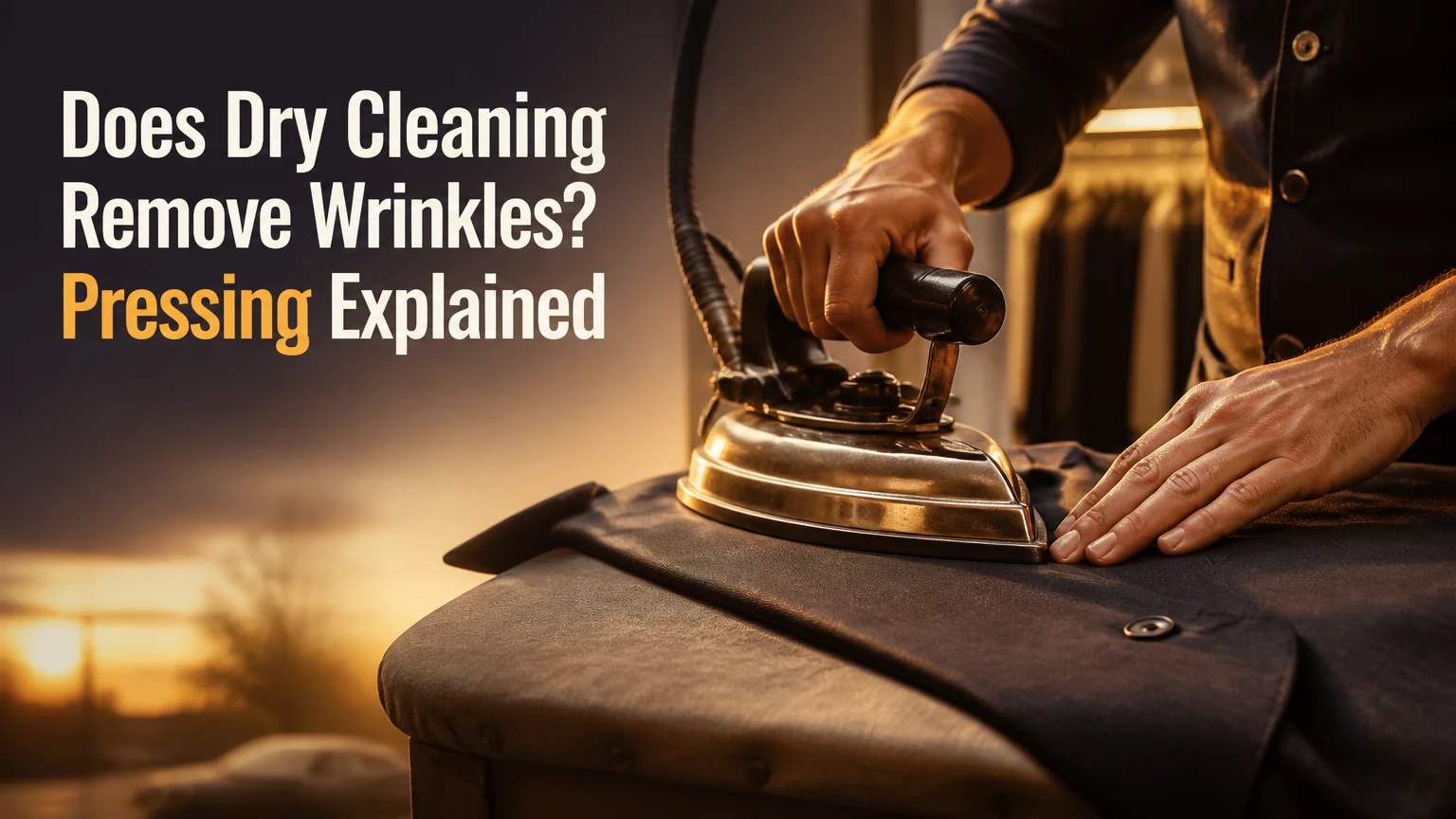
Professional dry cleaning can remove many wrinkles, but the solvent wash alone does not iron clothing. Wrinkle removal usually occurs during the finishing stage, when a cleaner combines steam, controlled heat, pressure, tension, and cooling to reshape the garment. Deep creases, heat damage, fabric distortion, and poor finishing can prevent a perfectly smooth result.
Key Facts at a Glance
- Dry cleaning removes oil-soluble soil without using a conventional water wash.
- Professional pressing, steaming, and tension do most of the wrinkle removal.
- A press-only service is usually better than full cleaning when the garment is clean but creased.
- Wool suits often respond well to steam finishing, while linen can wrinkle again quickly.
- Silk, sequins, pleats, fused interfacing, and vintage garments require lower-risk hand finishing.
- A cleaner cannot always remove a crease that has become a permanent fiber or fabric-set distortion.
Does Dry Cleaning Remove Wrinkles Completely?
Dry cleaning removes ordinary surface wrinkles effectively when the garment receives proper professional finishing, but “completely” is too absolute. A cleaner may leave a crease if the wrinkle is deeply set, the fabric has heat damage, the garment has shrunk, or the finishing equipment cannot safely reach a structured area.
The cleaning solvent primarily removes soil. During tumbling, the garment may leave the machine clean but still somewhat rumpled. The pressing department then uses equipment selected for the garment’s construction. A shirt may be placed over a form that expands inside the garment, while a trouser leg may receive steam and pressure between shaped press heads.
The result depends on more than the solvent. Fiber type, weave, lining, interfacing, moisture content, seam construction, and technician skill all affect the outcome. A pressed wool jacket can look smooth and shaped, but a linen shirt may develop new creases after minutes of sitting or movement.
A useful distinction is temporary wrinkling versus permanent distortion. Temporary wrinkles are bends that can usually be relaxed with moisture, heat, and tension. Permanent distortion can include melted synthetic fibers, flattened wool nap, stretched fabric, or a crease created by incorrect storage while damp. Cleaning and pressing may improve those defects, but neither process can reliably restore the original structure.
Where Do Wrinkles Actually Disappear?
Wrinkles usually disappear during professional finishing, not during the solvent wash. Steam relaxes the fibers, mechanical pressure flattens the fabric, and controlled cooling helps the material retain the intended shape.
A typical commercial workflow contains these stages:
| Stage | Typical action | Wrinkle relevance |
|---|---|---|
| Inspection | Tagging, fiber review, damage check | Identifies existing creases and weak areas |
| Pre-spotting | Treating oil, protein, or water-based stains | Prevents pressing stains deeper into fibers |
| Solvent cleaning | Low-friction tumbling in liquid solvent | Removes soil without a conventional water soak |
| Extraction and drying | Solvent recovery and controlled warm air | Reduces moisture and solvent residue |
| Post-spotting | Reviewing remaining marks under strong light | Prevents ironing over untreated stains |
| Pressing and finishing | Steam, pressure, hand ironing, and garment shaping | Performs most wrinkle removal |
| Inspection and packaging | Final check and hanging | Protects the finished shape during transport |
The process is not identical at every facility. Some cleaners outsource specialty work, use hand finishing for delicate pieces, or provide wet cleaning rather than solvent cleaning when the care label and fabric permit it.
The Federal Trade Commission requires clothing manufacturers to provide “regular care information” on care labels in the United States. The label is a starting point, not a guarantee that every cleaner will use the same process, because a garment may contain several fibers, coatings, linings, or decorative components.
How Do Steam and Pressure Reshape Fabric?
Steam adds moisture and heat that temporarily loosen the bonds holding a crease. Tension pulls the fabric back toward its intended dimensions, while pressure flattens the surface. As the garment cools and dries, the fibers retain more of that adjusted geometry.
Finishing equipment differs by garment:
- Dress shirts: A body form can inflate inside the shirt while steam and air smooth the front, back, sleeves, and side seams.
- Trousers: A press aligns the legs and restores the intended crease, but incorrect alignment can create a second crease.
- Tailored jackets: Specialized bucks and hand irons shape lapels, shoulders, cuffs, vents, and pockets without crushing the structure.
- Dresses: A form finisher or hand iron manages drape, pleats, lining, and uneven panels.
- Silk and synthetics: Lower heat, a pressing cloth, and careful testing reduce shine, water marks, and melting.
Steam is not automatically harmless. Excessive moisture can create rings on some silk fabrics, and excess heat can glaze polyester or flatten the surface of wool.
Can Dry Cleaning Remove Deep or Set-In Wrinkles?
Dry cleaning and professional pressing can remove many deep wrinkles, but a crease may remain when the fabric or garment structure has been permanently altered. A long-folded trouser leg, compressed jacket, or badly packed dress generally needs more than a solvent cycle.
Set-in wrinkles commonly result from:
- Extended compression: A garment stored under books, luggage, or other clothing can hold a crease for weeks.
- Heat exposure: A hot dryer, radiator, or vehicle interior can fix a fold in some fibers.
- Moisture drying in the wrong position: Fabric can dry while twisted, causing a stronger shape memory.
- Construction problems: A shifted lining or fused interfacing can pull the outer fabric into ridges.
- Fiber damage: Melted synthetic fibers and heavily glazed wool may no longer respond normally to steam.
Tell the cleaner about the history of the crease. “Please remove wrinkles” does not tell the technician whether the garment was packed, exposed to heat, or previously ironed. That information helps the cleaner choose hand finishing, a form, or a lower-temperature treatment.
What Happens When a Garment Has Double Creases?
A double crease usually indicates inaccurate alignment during pressing, especially on trousers. Return the garment promptly and ask the cleaner to re-steam and reset the entire leg rather than pressing only the visible line.
Spot pressing one line can leave moisture and tension differences across the panel. A complete reset gives the technician a better chance of relaxing both creases before establishing one correct edge. Do not attempt to fix a tailored trouser leg with a hot household iron first, because heat can make the incorrect line more permanent.
Which Fabrics Respond Best to Professional Pressing?
Wool, cotton, and many durable blended fabrics usually respond well to professional steam and pressure, while linen often smooths temporarily and silk requires controlled handling. Fabric construction matters as much as fiber content.
| Fabric or garment | Typical response | Main risk | Recommended finish |
|---|---|---|---|
| Worsted wool suit | Holds a smooth shape well | Shiny patches from hard pressing | Steam, shaped press, light hand finishing |
| Cotton dress shirt | Smooths readily | Collar or cuff scorching | Form finishing or moderate iron heat |
| Linen shirt | Relaxes quickly but re-creases | Rapid wrinkling after wear | Steam press, then immediate hanging |
| Silk blouse | Can smooth well with gentle heat | Water marks, shine, scorching | Hand iron with cloth and low heat |
| Polyester dress | Usually releases light wrinkles | Melting or glazing at high heat | Low-temperature steam and pressure |
| Pleated skirt | Wrinkles can reduce, but pleats must align | Permanent loss of pleat shape | Specialist hand finishing |
| Sequined gown | Surface may remain uneven | Melting, snagging, or crushing trim | Specialist cleaner and padded hand work |
Is Dry Cleaning Safe for Wool and Tailored Suits?
Dry cleaning is commonly suitable for wool suits when the care label permits it, but repeated full cleaning can remove natural oils and stress the garment’s internal structure. Brushing, airing, and occasional pressing usually extend the interval between solvent cleanings.
A tailored jacket contains more than its visible shell. Canvas or fusible interfacings, shoulder pads, sleeve heads, linings, buttons, and adhesives can react differently to heat and moisture. A good finisher shapes the jacket instead of flattening it on a generic board.
For routine maintenance, brush surface dust with a garment brush, hang the suit on a broad contoured hanger, and allow roughly 24-48 hours of airing after wear. A press-only appointment every few weeks may restore presentation without subjecting the entire garment to another cleaning cycle.
How Much Does Wrinkle-Removal Service Cost?
Typical US prices range from about $5-$12 for a dress shirt, $8-$18 for trousers, and $15-$40 for a two-piece suit. Press-only service often costs less than full cleaning, although local prices vary by garment construction, rush timing, and region.
| Service | Typical US price | Typical turnaround | Best use |
|---|---|---|---|
| Dress shirt cleaning and pressing | $4-$12 | 24-48 hours | Soil plus routine wrinkles |
| Trouser cleaning and pressing | $8-$18 | 24-48 hours | Creased or lightly soiled trousers |
| Two-piece suit | $15-$40 | 24-72 hours | Full suit cleaning and shaping |
| Press-only suit service | $10-$25 | Same day to 48 hours | Clean suit with travel wrinkles |
| Evening dress | $35-$75 or more | 3-10 days | Delicate construction or embellishment |
| Same-day rush service | Base price plus 20%-50% | Several hours | Events, travel, and urgent wear |
These are typical practitioner ranges, not a universal price schedule. A wedding dress, leather-trimmed coat, hand-beaded gown, or vintage jacket may require inspection and a custom quote.
Ask whether the quoted price includes finishing. Some businesses advertise cleaning prices separately from shirt pressing, hand finishing, or alterations. Confirm the turnaround time before leaving an event garment, because specialty work may be sent to another facility.
Is Press-Only Service Better Than Full Dry Cleaning?
Press-only service is usually the better choice when the garment is clean, has no odor or visible soil, and only needs wrinkle removal. Full dry cleaning makes more sense when body oils, food, perspiration, smoke, or other contamination require removal before pressing.
| Situation | Press only | Full dry cleaning | Better choice |
|---|---|---|---|
| Suit worn twice indoors | Removes light packing wrinkles | Removes soil and odor | Press only if visibly clean |
| Shirt with collar oils | Smooths fabric but leaves soil | Cleans and presses | Full cleaning |
| Linen dress after luggage travel | Restores shape temporarily | Cleans and presses | Press only unless soiled |
| Wool coat exposed to smoke | May mask the problem briefly | Removes more odor and soil | Full cleaning or specialist treatment |
| Wedding gown with beads | May reduce wrinkles carefully | Requires specialty cleaning | Specialist consultation |
| Trouser with a wrong second crease | Repressing can reset it | Cleaning may be unnecessary | Press only |
Over-cleaning can shorten garment life. Solvent exposure, mechanical action, heat, and repeated pressing may affect dyes, coatings, adhesives, and natural fibers. A clean garment does not become cleaner in a useful way merely because it is wrinkled.
How Does Dry Cleaning Compare With Steaming and Ironing?
A garment steamer is the fastest low-risk option for light wrinkles, while an iron gives sharper control on flat, washable fabrics. Professional cleaning and pressing provide the strongest result for tailored garments, but they cost more and require handling by a business.
| Method | Typical time | Typical cost | Strongest use | Main limitation |
|---|---|---|---|---|
| Home garment steamer | 5-15 minutes | $25-$150 equipment | Travel wrinkles and light creases | Weak on sharp trouser creases |
| Household iron | 5-20 minutes | $20-$200 equipment | Cotton shirts and flat panels | Scorch, shine, and flattening risk |
| Hotel laundry press | 2-24 hours | $10-$30 per item | Urgent travel needs | Variable equipment and skill |
| Press-only cleaner service | Same day to 48 hours | $10-$25 for many suits | Tailored clothing | Requires drop-off or pickup |
| Full dry cleaning | 24-72 hours | $4-$75 or more | Soil plus wrinkle removal | Unnecessary for clean garments |
Steam a jacket vertically without forcing the nozzle against the cloth. Move from the lining side only when the care instructions and garment construction allow it, and let the jacket dry on a shaped hanger before wearing.
Ironing is riskier when the garment contains wool, silk, acetate, viscose, heat-sensitive synthetics, fusible interfacing, or dark polished fabric. A pressing cloth reduces direct heat, but it cannot correct a wrong temperature setting or a distorted lining.
Can a Garment Steamer Replace Dry Cleaning?
A garment steamer can replace pressing between cleanings, but it cannot replace cleaning when the garment contains soil, body oil, smoke odor, or stains. Steam changes the garment’s shape temporarily; it does not dissolve or extract contamination.
Home steaming also has limits. Heavy linen, thick wool, and tightly compressed luggage folds may need several passes, and water droplets can mark silk or rayon. Steaming a stained area can make later stain removal harder if heat sets the residue.
How Long Does Professional Wrinkle Removal Take?
Standard cleaning and pressing commonly take 24-48 hours, while press-only service may be completed the same day or within 24 hours. Eveningwear, wedding garments, leather details, severe stains, and outsourced specialty work can require 3-10 days.
Turnaround depends on the shop’s production schedule, not only on the physical pressing time. A shirt may take minutes to finish but wait for tagging, quality control, route pickup, or packaging. Ask for a firm completion time if the garment is needed for a flight, interview, funeral, or wedding.
Same-day service often requires a morning drop-off and may add 20%-50% to the standard fee. Local policies differ, so confirm the cutoff time and whether rush finishing is performed on-site.
Why Did the Cleaner Return a Wrinkled Garment?
A cleaner may return a wrinkled garment because the fabric re-creased in packaging, the item was not fully finished, or the wrinkle is caused by permanent distortion rather than temporary bending. Inspect the garment before removing its packaging and contact the cleaner quickly if the result is unacceptable.
Common failure modes require different responses:
| Problem | Likely cause | Immediate action | Likely outcome |
|---|---|---|---|
| Wrinkles across folded shirt | Packed before fully cooling | Hang immediately and call cleaner | Often correctable |
| Two trouser creases | Leg misalignment on press | Request complete re-steaming | Usually correctable |
| Glossy dark patch | Excess heat or pressure | Stop ironing and report it | Mild cases may improve |
| Rippled jacket front | Fused interfacing distortion | Request inspection, not more heat | May be permanent |
| Water ring on silk | Uneven moisture | Do not rub or steam repeatedly | Specialist treatment needed |
| Wrinkles after leaving plastic bag | Humidity and compression | Remove bag, use breathable cover | Often preventable next time |
Poly garment bags are useful for short transport but poor for long-term storage. Remove the bag when the garment reaches home, allow residual moisture to dissipate, and use a breathable cover with enough space between garments.
Can Pressing Remove Fabric Shine?
Pressing can sometimes reduce mild surface shine on wool, but shine caused by melted synthetic fibers or permanently flattened fibers may not be reversible. A cleaner should identify whether the mark is residue, nap compression, or heat damage before applying more heat.
Do not place a hot iron directly on a shiny wool trouser seat or jacket lapel. A professional may use gentle steam, a soft nap brush, and controlled handling, but the original texture cannot always be restored.
What Should Travelers Do With Wrinkled Clothes?
Travelers should unpack garments immediately, hang structured pieces on shaped hangers, and use a steamer or press-only service before applying an iron. A hotel laundry department is often the fastest solution for a suit needed within hours.
For packing, fold along existing seams, place tissue or a thin clean layer between bulky panels, and avoid filling the suitcase until clothing is compressed tightly. A jacket should travel in a garment bag when possible, especially if it contains canvassing or a delicate lining.
At the destination, hang the garment in a ventilated bathroom or room, but do not rely on shower steam alone for heavy wrinkles. Direct, controlled steaming provides more predictable moisture and tension. Keep the steamer moving to prevent droplets and localized heat.
What Is Dry Cleaning Not Good For?
Dry cleaning is not a guaranteed cure for permanent creases, melted fibers, fabric shrinkage, stretched seams, or damaged fusible interfacing. It also does not automatically protect every delicate item from color bleeding, trim damage, or shape change.
A care label marked “dry clean” does not mean the garment is indestructible. It indicates the manufacturer’s intended care method under reasonable professional conditions. Be especially cautious with:
- Antique or vintage clothing with unknown dyes and weakened seams.
- Garments containing glued decorations, vinyl, rubber, or foam.
- Pleated pieces whose shape depends on heat-sensitive construction.
- Silk with unstable dyes or water-sensitive finishes.
- Multi-layer garments where the shell and lining react differently.
Tell the cleaner about previous alterations, repairs, stains, adhesive decorations, and heat exposure. Hidden construction problems often explain why one panel remains wrinkled after the rest of the garment is smooth.
How Should You Choose a Wrinkle-Removal Method?
Choose based on cleanliness, fiber, construction, severity, and deadline. Use press-only service for a clean tailored item, home steaming for light travel wrinkles, and full professional cleaning when soil or odor must be removed before finishing.
A practical decision sequence is:
- Check the care label. Identify dry-clean-only, washable, low-heat, or specialist instructions.
- Inspect for contamination. Look for underarm odor, collar oil, food, makeup, smoke, and visible stains.
- Identify construction. Note linings, pleats, interfacing, padding, beads, sequins, and leather trim.
- Assess the crease. Light folds respond differently from heat-set or compressed distortions.
- Set the deadline. Choose home steaming, same-day pressing, or standard service.
- Describe the problem. Tell the cleaner whether the item was packed, damp, overheated, or previously ironed.
- Inspect before leaving. Check trouser creases, lapels, cuffs, hems, and reflective marks.
A professional cleaner should be able to explain whether the recommendation is solvent cleaning, professional wet cleaning, steam finishing, hand pressing, or a combination. The best method is the one that removes the specific problem with the least unnecessary stress.
Frequently Asked Questions
Does dry cleaning remove wrinkles from a wedding dress?
Dry cleaning may reduce wrinkles in a wedding dress, but a specialist should inspect the fabric, lining, lace, beads, sequins, adhesive trim, and boning first. Many wedding dresses require hand steaming or form finishing rather than ordinary automated pressing. Ask about preservation, packaging, and testing before authorizing any cleaning.
Does dry cleaning shrink clothes?
Dry cleaning usually causes less water-related shrinkage than a conventional wash, but shrinkage and shape change remain possible. Heat, agitation, unstable fibers, poor construction, and prior damage can affect dimensions. Wool, viscose, silk, and blended garments deserve particular care, and “dry clean” is not a zero-risk guarantee.
Can dry cleaning remove wrinkles from jeans?
Dry cleaning can smooth jeans, but ordinary laundering followed by proper drying is more common and usually more economical. Pressing may create unwanted shine or a formal crease on denim. For packed jeans, hanging and light steaming normally solve temporary wrinkles without a full cleaning cycle.
How often should a suit be dry-cleaned?
A suit should usually be dry-cleaned only when it is visibly soiled, odorous, or stained, rather than after every wear. Brushing, airing for 24-48 hours, and using a press-only service between cleanings can reduce solvent exposure and preserve the jacket’s internal structure.
Will a cleaner remove wrinkles without cleaning the garment?
Many cleaners offer press-only service, although the name and price vary by location. Tell the staff that the garment is clean and needs finishing only, then ask whether the item will receive steam, hand pressing, or machine pressing. Press-only service commonly costs less than full cleaning.
Should you iron clothes before dry cleaning?
Do not iron over stains, oils, perspiration, or food residue before dry cleaning because heat can set some contaminants into the fibers. If the garment is dirty and wrinkled, take it directly to the cleaner and identify the stained areas. If the garment is clean, use the appropriate home pressing method instead.
The Bottom Line
Does dry cleaning remove wrinkles? Usually, yes, when professional pressing follows the cleaning cycle, but the solvent itself is not the main wrinkle-removal mechanism. Steam, controlled heat, pressure, tension, and cooling create the finished appearance. Choose press-only service for clean wrinkled clothing, full cleaning for contaminated garments, and specialist handling for silk, embellishments, pleats, vintage pieces, and permanent fabric damage.