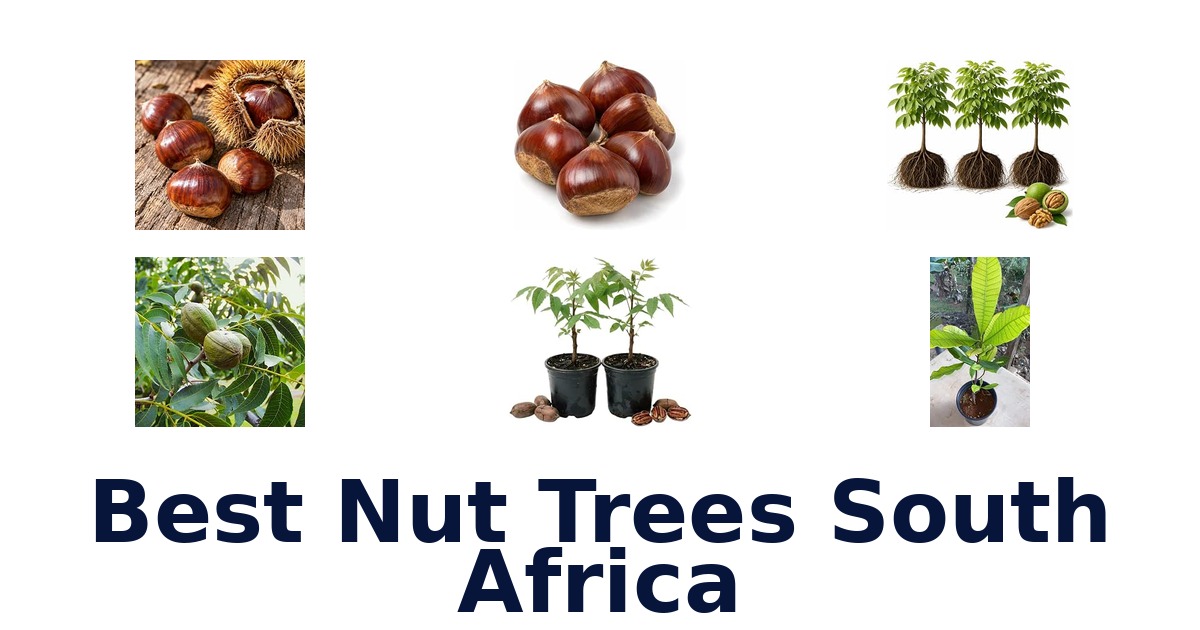
A strong choice for South African growers should match the local climate and the space available, while making clear whether it arrives as seed or a live plant. The African Marula Tree Seeds lead this selection because marula is an African tree and the listing specifies heat and drought tolerance and USDA zones 10–A live cashew plant is another option to consider, but the product information gives less cultivation guidance.
Most other listings are seeds or seedlings of chestnut, pecan, walnut, or almond, with limited evidence about suitability for South African conditions. This roundup compares those formats and the growing details actually provided.
Before ordering, check local climate, planting space, and whether you are prepared to germinate seeds or establish a young plant.
The African Marula Seeds are the strongest match in this set for a South Africa-focused search: the listing identifies an African species and says it thrives in USDA zones 10–12, with heat and drought tolerance once established. They are seeds rather than a ready-grown tree, and the packet contains two. If you prefer a live plant, the Cashew Plant is the alternative, though its listing supplies little growing guidance.
Verify local suitability before planting either option.
Our Top Picks
 Best Overall
African marula seeds suit the regional search best; the listing specifies heat and drought tolerance, USDA zones 10–12, and two seeds per packet.
View on Amazon Live Plant Option
This is a live cashew plant, not just seed, making it the clearest ready-grown alternative; the listing gives a 10–24-inch size range.
View on Amazon Detailed Seed Prep
Five almond seeds come with explicit preparation guidance: soak 24–48 hours, then refrigerate in moist material for 6–8 weeks before planting.
View on Amazon- Two-Plant Set Generic Pecan Seedlings
- Three-Tree Set CZ Grain Butternut Trees
Compare these nut-tree seeds and live plants
| # | Product | Buy |
|---|---|---|
| 1 | 1. Palm Beach Marula SeedsBest Overall | View on Amazon |
| 2 | 2. Generic Cashew PlantLive Plant Option | View on Amazon |
| 3 | 3. PIPA PAPA Almond SeedsDetailed Seed Prep | View on Amazon |
| 4 |  4. Generic Pecan SeedlingsTwo-Plant Set | View on Amazon |
| 5 |  5. CZ Grain Butternut TreesThree-Tree Set | View on Amazon |
| 6 |  6. HTNURSERY Sweet ChestnutsTwo bare-root chestnut trees | View on Amazon |
| 7 |  7. Beyond The Ridges Chinese ChestnutsChinese chestnut orchard seeds | View on Amazon |
| 8 |  8. Beyond The Ridges Dunstan ChestnutsChestnut wildlife-plot seeds | View on Amazon |
| 9 |  9. TomorrowSeeds Pecan SeedsPecan seeds for home orchards | View on Amazon |
| 10 |  10. CZ Grain Black Walnut SeedsLarge-landscape walnut seeds | View on Amazon |
Detailed Reviews: Best Nut Trees South Africa
#1 · Best Overall
1. Palm Beach Marula Seeds
Best for: Warm-patio Marula starter.
Why it ranks #1: African marula seeds suit the regional search best; the listing specifies heat and drought tolerance, USDA zones 10–12, and two seeds per packet.
Two African marula seeds offer a route to growing Sclerocarya birrea, a savanna fruit tree with creamy-white blooms and aromatic golden-yellow fruit. The packet includes growing instructions, while the listing specifies full sun and light, infrequent watering once established for warm-climate planting.
The seeds suit a gardener who wants to begin with a tropical tree rather than receive an established plant. Included packet instructions support the germination workflow, and the stated USDA zones 10–12 identify the listed climate range. Full sun and light, infrequent watering after establishment suit a warm patio container or a xeriscape setting. The tree’s blooms and aromatic fruit add seasonal interest, but growing from seed means this is a longer-term project, not an immediate harvest.
- Two Sclerocarya birrea seeds per packet
- Growing instructions included on each packet
- Listed for USDA zones 10–12
- Heat- and drought-tolerant once established
- Only two seeds are included, so the starting quantity is small.
Skip it if you need a live tree rather than seeds; the cashew listing offers a plant, though its listing says fruit is not included.
Choose this for a warm-climate gardener who wants to raise marula from seed, with blooms and fruit as future rewards. Its listed zone range and need for full sun make climate and placement key considerations.
Full product details
| Brand | Palm Beach Medicinal Herbs |
|---|---|
| Color | multicolor |
| Manufacturer | Palm Beach Medicinal Herbs |
| Part Number | African Marula Tree |
| Special Features | Attracts Pollinators |
| Special Feature | Attracts Pollinators |
| Additional Information | Important information |
Listed on Amazon as: African Marula Tree Seeds (Sclerocarya birrea) Packet of 2 Seeds
View on Amazon#2 · Live Plant Option
2. Generic Cashew Plant
Best for: Live cashew plant starter.
Why it ranks #2: This is a live cashew plant, not just seed, making it the clearest ready-grown alternative; the listing gives a 10–24-inch size range.
A live cashew plant, listed at 10–24 inches, gives buyers a growing tree rather than a packet of seeds. Its listing identifies it as Anacardium occidentale, also called pajuil or marañon, and explicitly cautions that the shipped item is the plant, not fruit.
Because this is a live plant, it skips the initial seed-starting stage; the listed 10–24-inch size gives a starting point for planning its placement. The seller notes that shape and growth rate vary because each tree is a living plant, so buyers should expect an individual specimen rather than a uniform form. No planting or climate guidance is supplied in the listing, making the provided information limited for growers who need detailed establishment instructions.
- Live cashew plant rather than seeds
- Listed as Anacardium occidentale
- Also identified as pajuil or marañon
- Listed height range is 10–24 inches
- The supplied listing provides no planting or climate guidance.
Skip it if you want seeds or detailed growing instructions; the marula seed packet includes instructions and lists its growing conditions.
Consider this for someone seeking a live cashew plant identified by its botanical name and common alternatives. The listing does not provide care guidance, and the plant arrives without fruit, so neither should be assumed.
Full product details
| Brand | Generic |
|---|---|
| Color | Green |
| Manufacturer | Growimgspot |
Listed on Amazon as: Cashew Nut Plant (Anacardiumoccidentale) Pajuil (marañon) Live Fruit Tree (10in-24in)
View on Amazon#3 · Detailed Seed Prep
3. PIPA PAPA Almond Seeds
Best for: Almond seeds for patient starters.
Why it ranks #3: Five almond seeds come with explicit preparation guidance: soak 24–48 hours, then refrigerate in moist material for 6–8 weeks before planting.
Five almond seeds come with a clearly specified preparation sequence: soak for 24–48 hours, then refrigerate in a moist towel for 6–8 weeks. That guidance gives seed starters a defined workflow before planting in well-drained soil in a sunny location.
The preparation steps make this listing particularly specific for a buyer comfortable with staged germination: soak first, stratify in a sealed bag in the refrigerator, then plant 1–2 inches deep. The option to start in a pot or directly in the ground gives flexibility for the initial setup. Nutrient-rich, well-drained soil and a sunny location are listed planting conditions. This process takes advance planning, so it is less suited to someone seeking a ready-to-plant live tree.
- Five almond seeds included
- Soaking time of 24–48 hours specified
- Stratification period of 6–8 weeks specified
- Pot or direct-ground planting options listed
- The listed preparation requires 6–8 weeks of refrigerator stratification.
Skip it if you want live seedlings without a seed-preparation phase; the pecan set includes two live plants listed at 8–10 inches.
This suits a hands-on seed grower who can follow the soak and refrigeration schedule before planting. Choose it for a pot or sunny outdoor site with well-drained soil, and plan ahead for stratification.
Full product details
| Brand | PIPA PAPA |
|---|---|
| Color | Green |
| Item Weight | 27.22 g |
| Manufacturer | PIPA PAPA |
| Material Feature | GMO Free |
| Material Features | GMO Free |
| Special Features | Attracts Pollinators, Extended Bloom Time, High Germination Rate, Low Maintenance |
| Care Instructions | Water the plant regularly |
| Special Feature | Attracts Pollinators, Extended Bloom Time, High Germination Rate, Low Maintenance |
Listed on Amazon as: 5pcs Fresh Almond Tree Seeds, Premium Heirloom Variety for Planting, Fast-Growing Nut Tree for Home Garden, Orchard, Backyard Farming, Easy to Grow Edible Tree Seeds for Outdoor Cultivation
View on Amazon#4 · Two-Plant Set
4. Generic Pecan Seedlings
Best for: Two-seedling pecan planting.
Why it ranks #4: The set supplies two live pecan seedlings, each 8–10 inches tall, and specifies full sun and deep, well-draining soil.
A set of two live pecan seedlings, each listed at 8–10 inches, provides young trees for a backyard, garden, or home orchard. The listing describes their tall, upright growth habit and compound green leaves, with full sun and deep, well-draining soil preferred.
Starting with two live seedlings avoids germinating pecan seed, and the stated height helps buyers plan for their initial planting. Their upright habit and compound leaves suit an outdoor orchard setting, while the listing’s full-sun and deep, well-draining soil guidance helps determine placement. These are deciduous trees that go dormant in winter, so seasonal leaf loss is part of the described growth cycle; the listing does not promise an immediate nut harvest.
- Two live pecan seedlings included
- Each listed at 8–10 inches tall
- Full sun and deep, well-draining soil specified
- Deciduous trees described as dormant in winter
- The listing gives no specific climate range for growing them.
Skip it if you need a stated growing-zone range; the marula seed listing identifies USDA zones 10–12.
Pick this set for a buyer planting two young pecans in full sun with deep, well-draining soil. It fits a backyard or home-orchard plan, but the listing supplies no climate range to guide regional suitability.
Full product details
| Brand | Generic |
|---|---|
| Color | Green |
| Manufacturer | Generic |
Listed on Amazon as: Set of 2 Live Pecan Seedlings, 8-10 Inches Tall
View on Amazon#5 · Three-Tree Set
5. CZ Grain Butternut Trees
Best for: Three live butternut saplings.
Why it ranks #5: Three live butternut saplings offer a multi-plant start; the listing identifies Juglans cinerea and bare-root shipping for outdoor planting.
Three live white walnut, or butternut, saplings give this listing a ready-to-plant starting point for a backyard orchard or edible landscape. The bare-root Juglans cinerea trees are described as native hardwoods that produce rich, edible nuts once mature.
The three-tree quantity can support a small planting plan, while bare roots are described as promoting establishment and adaptation after planting. Their edible walnuts are listed for cooking, baking, or wildlife attraction once the trees mature, connecting the planting to both harvest and habitat uses. Because these arrive with exposed roots, buyers should be prepared to plant them in soil rather than treat them as a packaged seed-starting project. The listing does not specify a climate range.
- Three live Juglans cinerea saplings included
- Bare-root format is specified
- Edible nuts listed for cooking and baking once mature
- Positioned for backyard orchards and edible landscapes
- No climate range or planting-care schedule is supplied in the listing.
Skip it if you need detailed care instructions and a listed growing zone; the marula packet specifies USDA zones 10–12 and includes instructions.
Choose these three butternuts for a buyer ready to plant live bare-root trees in an outdoor orchard or edible landscape. Their eventual nuts suit cooking or wildlife use, but the listing leaves climate and care details unspecified.
Full product details
| Brand | CZ Grain |
|---|---|
| Color | green brown |
| Manufacturer | CZ Grain |
| Style | 3 Trees to Plant |
| Style Name | 3 Trees to Plant |
#6
6. HTNURSERY Sweet Chestnuts
Best for: Two bare-root chestnut trees.
Why it ranks #6: Two one-year-old bare-root sweet chestnut plants arrive 9–14 inches tall; the listing recommends a sunny site with well-drained soil.
Two one-year-old bare-root sweet chestnuts arrive at a listed height of 9–14 inches, giving an orchard or garden a pair of live starters. Their deciduous habit brings seasonal foliage, while the listing calls for a sunny location with well-drained soil.
The two-plant quantity makes this a practical choice for buyers establishing more than one chestnut in an edible landscape or tree collection. Bare roots can be planted directly into suitable garden, orchard, or landscape soil, and the supplied guidance specifies sun and well-drained soil for establishment. At 9–14 inches and one year old, these are young plants rather than mature trees; plan for a growing project, not immediate nuts or shade.
- Two live sweet chestnut plants included
- One-year-old bare-root trees
- Listed height of 9–14 inches
- Suitable for gardens, orchards, and landscapes
- These are young, bare-root plants rather than established potted trees.
Skip it if you want seeds for a larger starting batch; the Chinese chestnut listing supplies ten seeds rather than two live plants.
Choose these for a buyer ready to plant two young sweet chestnuts in sunny, well-drained soil. Their bare-root format and small listed height suit a patient garden or orchard project, not an instant canopy.
Full product details
| Brand | HTNURSERY |
|---|---|
| Color | Green |
Listed on Amazon as: 2 Sweet Chestnut Trees Live Plants Medium-Sized Deciduous Hardy Nut Trees 9-14" Tall, 1 Year Old Bare Roots
View on Amazon#7
7. Beyond The Ridges Chinese Chestnuts
Best for: Chinese chestnut orchard seeds.
Why it ranks #7: The 10-pack is identified as Chinese chestnut, Castanea mollissima, and includes a 30-minute soak instruction, but it is seed rather than live stock.
Ten Chinese chestnut seeds offer a larger seed-starting batch of Castanea mollissima, which the listing describes as naturally resistant to chestnut blight. Mature trees produce edible chestnuts in spiny burrs, making this a future-harvest option for orchard-minded growers.
The ten-seed quantity supports starting more than one tree, while the listed blight resistance is relevant to buyers considering a long-lived chestnut planting. The description connects mature trees with clusters of glossy brown nuts inside protective burrs, so harvest planning should account for the spiny coverings. As seeds, these require growing time before yields; the supplied care instruction is to soak them in water for 30 minutes after arrival before planting.
- Ten Castanea mollissima seeds included
- Described as naturally blight-resistant
- Mature trees produce edible chestnuts
- Seeds require a specified 30-minute soak before planting
- The listed harvest comes only from mature trees, not the supplied seeds.
Skip it if you prefer a named hybrid chestnut seed; the Dunstan listing identifies its seeds as a Chinese-American hybrid.
Choose these seeds for a grower aiming to establish Chinese chestnuts and willing to wait for mature trees and harvests. The stated blight resistance is a selling point, while burrs and seed preparation matter in planning.
Full product details
| Brand | Beyond The Ridges |
|---|---|
| Color | Green |
| Item Weight | 16 ounces |
| Manufacturer | Beyond The Ridges |
| Material Feature | Heirloom |
| Material Features | Heirloom |
| Special Features | Attracts Pollinators |
| Care Instructions | Soak in water for 30 mintues after arrival before planting. |
| Special Feature | Attracts Pollinators |
| Style Name | Chinese |
Listed on Amazon as: 10 Chestnut Tree Seeds (Castanea mollissima) Chinese Chestnut (10 Pack)
View on Amazon#8
8. Beyond The Ridges Dunstan Chestnuts
Best for: Chestnut wildlife-plot seeds.
Why it ranks #8: This 20-pack of Dunstan hybrid chestnut seeds is a larger seed quantity, with instructions to soak for 30 minutes after arrival before planting.
Twenty Dunstan hybrid chestnut seeds provide a larger starting batch of a Chinese-American hybrid described as blight-resistant. The listing positions the chestnuts for wildlife food plots and notes their earlier drop than acorns, a detail relevant to landowners planning seasonal forage.
The 20-seed pack supports a broader planting effort than a small starter quantity, while the named Dunstan hybrid gives buyers a specific chestnut type to raise. Its stated blight resistance and earlier-than-acorn drop connect to the listing’s wildlife-plot use, where seasonal food timing matters. The care instruction says to soak seeds in water for 30 minutes after arrival before planting. This is seed stock, so it requires preparation and growing time rather than providing live trees.
- Twenty Dunstan chestnut seeds included
- Identified as a Chinese-American hybrid
- Described as blight-resistant
- Listed for wildlife food plots and earlier drop than acorns
- Seeds require a 30-minute water soak before planting.
Skip it if you want live trees ready for planting; the HTNURSERY sweet chestnuts arrive as two bare-root plants.
Choose this for a landowner starting a chestnut planting or wildlife plot from seed, especially where the listed early drop matters. Allow for the required soak and the time needed to raise seedlings.
Full product details
| Brand | Beyond The Ridges |
|---|---|
| Color | Green |
| Item Weight | 16 ounces |
| Manufacturer | Beyond The Ridges |
| Material Feature | Heirloom |
| Material Features | Heirloom |
| Special Features | Attracts Pollinators |
| Care Instructions | Soak in water for 30 mintues after arrival before planting. |
| Special Feature | Attracts Pollinators |
| Style Name | Dunstan |
Listed on Amazon as: 20 Dunstan Chestnut Seeds American Chestnut Hybrid (20 Pack)
View on Amazon#9
9. TomorrowSeeds Pecan Seeds
Best for: Pecan seeds for home orchards.
Why it ranks #9: The listing offers six or more pecan seeds and describes a large tree, but gives less concrete preparation guidance than several higher-ranked options.
More than six pecan seeds give this Carya illinoensis listing a substantial seed-starting quantity for a home farm, garden, or orchard. The product describes edible pecans and a large, wide-canopied tree that can provide shade as it grows.
A multi-seed pack suits a grower who wants several starting opportunities rather than a single live sapling. The listed wide canopy and height of up to 70 feet explain why a permanent outdoor site is more appropriate than a small container. The description says the tree tolerates a variety of soil types and climates, but does not give a specific regional range. Pecans are intended as a future harvest for cooking, baking, or snacking, not an immediate yield.
- More than six seeds listed
- Pecans described for cooking, baking, or snacking
- Wide canopy provides shade as the tree grows
- Description notes varied soil types and climates
- The listed tree can reach 70 feet, requiring substantial space.
Skip it if you want young trees instead of seeds; the two live pecan seedlings arrive at a listed 8–10 inches tall.
This fits a patient grower seeking multiple pecan starts for a large outdoor site or home orchard. Plan around the listed potential height and wide canopy, and note that no specific climate zone is provided.
Full product details
| Brand | TomorrowSeeds |
|---|---|
| Manufacturer | TomorrowSeeds |
Listed on Amazon as: Pecan Tree Seeds – 6+ Count – for 2026 Planting Carya Illinoensis Pawnee Giant Nut Buttery Pecans Edible Texas American Hickory Native Perennial Trees Grow Your Own Home Farm
View on Amazon#10
10. CZ Grain Black Walnut Seeds
Best for: Large-landscape walnut seeds.
Why it ranks #10: Five black walnut seeds are intended for large landscapes, and the listing describes mature trees reaching about 50–75 feet, a substantial space commitment.
Five black walnut seeds offer a seed-starting route to Juglans nigra, a large deciduous tree valued for edible nuts and a spreading shade canopy. The listing specifically points to orchards, wildlife plantings, and landscapes with plenty of permanent growing space.
The five-seed quantity gives a grower multiple starts, while the care instructions call for well-draining soil, regular watering, and full sun. Those requirements help plan the seed bed or planting area, but the mature tree’s stated scale—commonly about 50–75 feet—makes site choice especially important. This is a long-term landscape tree, not a compact patio nut plant; allow for its canopy and permanent space before starting it.
- Five Juglans nigra seeds included
- Edible nuts and shade canopy are listed features
- Care instructions specify sun and well-drained soil
- Intended for orchards, wildlife plantings, and large landscapes
- Its mature size requires substantial permanent growing space.
Skip it if you lack room for a large tree; the almond seeds can be started in a pot before planting outdoors, per their listing.
This suits a grower with permanent room for a large walnut and patience to raise it from seed. Choose a sunny planting site with well-drained soil, and account for the listed mature scale before sowing.
Full product details
| Brand | CZ Grain |
|---|---|
| Color | green |
| Item Weight | 4.16 ounces |
| Manufacturer | CZ Grain, LLC |
| Material Feature | Heirloom, Non GMO, Premium seeds |
| Material Features | Heirloom, Non GMO, Premium seeds |
| Special Features | Edible Nuts, High Germination Rate |
| Care Instructions | Plant In Well-draining Soil, Water Regularly, And Provide Full Sun Exposure |
| Special Feature | Edible Nuts, High Germination Rate |
| Style Name | Premium Seeds |
Listed on Amazon as: 5 Black Walnut Tree Seeds | Juglans Nigra Native Nut Tree Seeds to Grow
View on AmazonSeed packets are not interchangeable with live trees
A seed listing and a live-plant listing create different establishment tasks, so compare the format before choosing a species. The Marula Seeds, almond seeds, pecan seeds, walnut seeds, and chestnut seed packs require germination; only the cashew, pecan seedlings, butternut trees, and sweet chestnut trees are described as live plants. Even among seeds, preparation differs: the almond listing calls for a 24–48-hour soak followed by 6–8 weeks of refrigeration, while both chestnut seed listings call for a 30-minute soak.
These are product-specific directions, not proof that every seed will germinate in every location. A common failure mode is ordering seeds while expecting an established tree, or overlooking a required preparation step.
Confirm what arrives and follow the individual listing rather than assuming all nut-tree seeds can be planted directly.
Large-tree space needs can change the best choice
The size of the mature tree can make a seedling unsuitable for a small garden even when its species appeals. The black walnut listing gives a mature height of about 50–75 feet and describes a large spreading canopy, while the pecan seed description says the tree can reach up to 70 feet with a wide canopy. Those figures make long-term space planning especially important for these choices.
By contrast, the product information supplied for marula and cashew does not provide mature dimensions, so the absence of a stated size should not be taken as evidence that either stays small. Consider nearby buildings, boundaries, and other planting before choosing a tree, and seek locally relevant guidance on eventual size.
The trade-off is clear in this selection: some listings provide useful mature-tree details, while others leave that planning question unanswered.
How to Choose Nut Trees for South Africa
Regional climate evidence
Look for a listing that gives a climate clue relevant to your planting location, rather than assuming a species will thrive across South Africa. The Marula Seeds listing specifies USDA zones 10–12 and says the tree tolerates heat and drought once established. The Cashew Plant listing identifies the species but supplies no comparable zone or climate range.
Several other products are described as North American or East Asian species, but the supplied details do not establish their suitability for a South African site. If your location is warm and dry, the marula listing provides the clearest stated fit; if you are considering another species, verify local suitability independently before buying.
Seeds or live planting stock
Choose between the germination process of seeds and the more immediate start of a live plant. The selection ranges from a two-seed marula packet and five almond seeds to six or more pecan seeds and 10- or 20-seed chestnut packs. Live options include a cashew plant listed at 10–24 inches, pecan seedlings at 8–10 inches, sweet chestnuts at 9–14 inches, and three bare-root butternuts.
Seed buyers should check preparation instructions: almond seeds require soaking and 6–8 weeks of refrigeration, while chestnut seeds call for a 30-minute soak. Seed packs suit growers prepared to germinate; live plants suit those wanting to establish a sapling.
Space and planting conditions
Check the stated planting requirements and mature size before committing to a tree. The black walnut listing describes a mature height of about 50–75 feet and a spreading canopy, while the pecan listing describes a tree reaching up to 70 feet. For planting conditions, sweet chestnut guidance calls for sun and well-drained soil; the pecan seedlings listing specifies full sun and deep, well-draining soil.
Marula is described as suitable for full sun and light, infrequent watering once established. These details favor different situations: a grower with ample permanent space can consider the large walnut or pecan, while someone prioritizing drought tolerance has the clearest listed claim with marula.
Check local soil and space rather than inferring that unlisted requirements do not matter.
Which nut tree should I choose?
Choose Palm Beach Marula Seeds if your priority is the strongest documented regional fit: the listing identifies an African tree, heat and drought tolerance, and USDA zones 10–Choose Generic Cashew Plant if you prefer a live plant over germinating seeds, while recognizing that its listing provides little growing guidance. For a live multi-tree option, CZ Grain Butternut Trees supplies three bare-root saplings; Generic Pecan Seedlings supplies two 8–10-inch plants.
If you want to grow from seed and can follow preparation steps, PIPA PAPA Almond Seeds includes detailed soaking and refrigeration instructions. Buyers considering black walnut or pecan should plan for substantial eventual size based on the listed mature dimensions.
For any species, confirm that it suits your specific South African location before planting.
Related Buying Guides
- Best Bird Control South Africa
- Best Diatomaceous Earth In South Africa
- Best Weed Killer For Paving South Africa
Frequently Asked Questions
Which nut trees are suitable for the climate in my part of South Africa?
Suitability depends on your exact location and local growing conditions, and the listings do not establish suitability across South Africa. The marula listing identifies an African species and notes heat and drought tolerance once established, as well as USDA zones 10–Verify local suitability for any option before planting.
How long can a nut tree take to produce its first harvest?
The listings do not give a reliable time to first harvest. It can depend on the species, whether you start with seeds or a live plant, and growing conditions. Check the seller’s growing guidance for the specific item, and treat any harvest timeline as uncertain unless it is clearly documented.
Do nut trees need a second compatible tree for pollination?
The listings do not specify pollination requirements for these trees, so they cannot confirm whether a second compatible tree is needed. Check guidance for the exact species and variety before planting, especially if you are choosing a single tree. Do not assume that buying multiple trees guarantees compatibility.
Should I choose seeds or a live plant?
Choose seeds if you are prepared to germinate them and follow any required preparation; the listed marula packet contains two seeds. Choose a live plant if you prefer to skip germination, such as the cashew plant, or want a multi-tree option like the three butternut saplings. Check each listing’s growing guidance.
What should I check before ordering a nut tree?
Confirm that the species suits your specific South African location, then check whether the listing is for seeds or live plants and how many are included. Review any stated dimensions and growing instructions. The listings provide different levels of guidance, so verify important planting and care details before you buy.
Final Words
For a South Africa-focused choice, the African marula seeds are the strongest documented regional fit here, but they are seeds, not a ready-grown tree. If you prefer a live plant, consider the cashew while noting its limited growing guidance. The butternut and pecan listings offer multiple live plants.
Before deciding, verify local suitability, planting requirements, and pollination needs for your location and chosen species.