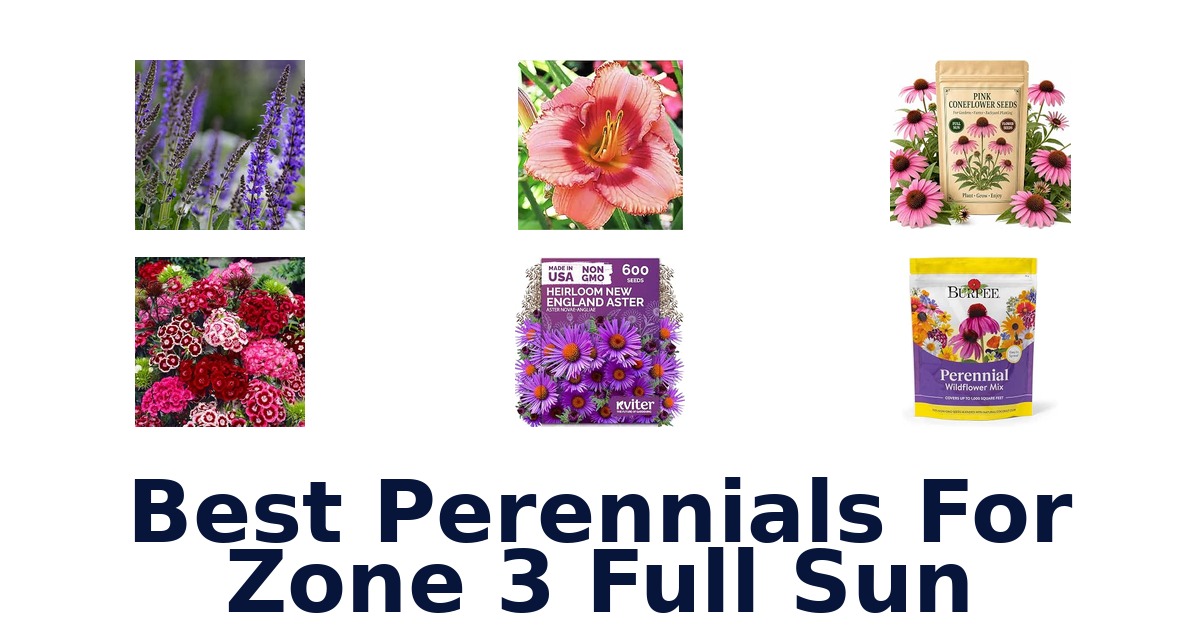
A strong choice for a zone 3 full-sun garden should state cold-hardiness and sun needs clearly, then match the form and upkeep you can manage. Marde Ross & Company Strawberry Candy Daylily leads because its listing names zone 3, full sun or partial shade, and pink-red flowers; the Melinda Daylily offers a softer color in the same stated conditions. Mountain Valley Seed Company Pacific Giant Delphinium is another direct fit, with full-sun guidance and zones 3–8, but it needs staking and blooms in its second year.
Other options are less fully specified: some list zone ranges without sun requirements, while others mention sun but omit a hardiness zone. Check these distinctions before treating every perennial seed packet as a guaranteed match.
Marde Ross & Company Strawberry Candy Daylily is the strongest match because its listing explicitly states USDA zone 3 and full sun or partial shade, with pink petals and a red center. It is a bare-root plant rather than a seed packet, and the listing describes it as low maintenance and reblooming. Choose Marde Ross & Company Melinda Daylily for soft pink flowers with the same stated zone and light fit, or Mountain Valley Seed Company Pacific Giant Delphinium for tall, full-sun spikes.
Our Top Picks
 Best Overall
Marde Ross Strawberry Candy Daylily
Its listing explicitly identifies USDA zone 3 and full sun or partial shade, and describes pink-red blooms, low maintenance, and reblooming.
View on Amazon Best Soft Pink
This bare-root daylily is specifically described as hardy in zone 3 and suitable for full sun or partial shade, with soft pink flowers.
View on Amazon Tallest Blooms
Mountain Valley Pacific Giant Delphinium
The listing specifies full sun and USDA zones 3–8, with 48–60-inch flower spikes; it blooms in its second year and requires staking.
View on Amazon- Broadest Mix Eden Brothers Perennial Wildflower Mix
- Sun-Loving Mix Burpee Perennial Wildflower Mix
Compare These Zone 3 Full-Sun Perennial Picks
| # | Product | Material Feature | Care Instructions | Material Features | Buy |
|---|---|---|---|---|---|
| 1 | 1. Marde Ross Strawberry Candy DaylilyBest Overall | GMO Free | water | GMO Free | View on Amazon |
| 2 | 2. Marde Ross Melinda DaylilyBest Soft Pink | GMO Free | water well | GMO Free | View on Amazon |
| 3 | 3. Mountain Valley Pacific Giant DelphiniumTallest Blooms | GMO Free | — | GMO Free | View on Amazon |
| 4 |  4. Eden Brothers Perennial Wildflower MixBroadest Mix | — | — | — | View on Amazon |
| 5 |  5. Burpee Perennial Wildflower MixSun-Loving Mix | GMO Free | Do not allow the soil to dry out during the… | GMO Free | View on Amazon |
| 6 |  6. KVITER New England AsterCold-stratified aster seed grower | GMO Free, Heirloom | Detailed Step-By-Step Growing Guide on every… | GMO Free, Heirloom | View on Amazon |
| 7 |  7. KVITER Purple AubrietaSunny rock-garden groundcover | GMO Free, Heirloom | Detailed Step-By-Step Growing Guide on every… | GMO Free, Heirloom | View on Amazon |
| 8 |  8. Mountain Valley Queen Series SalviaCompact sunny-bed salvia | GMO Free | — | GMO Free | View on Amazon |
| 9 |  9. Mixrug Sweet WilliamFragrant border seed starter | GMO Free | — | GMO Free | View on Amazon |
| 10 |  10. NYGardenia Pink ConeflowerPink coneflower seed packet | — | Keep soil evenly moist without waterlogging… | — | View on Amazon |
Detailed Reviews: Best Perennials For Zone 3 Full Sun
#1 · Best Overall
1. Marde Ross Strawberry Candy Daylily
- Material Feature: GMO Free
- Care Instructions: water
- Material Features: GMO Free
Best for: Reblooming Zone 3 daylily.
Why it ranks #1: Its listing explicitly identifies USDA zone 3 and full sun or partial shade, and describes pink-red blooms, low maintenance, and reblooming.
Pink petals with a red center give the Strawberry Candy Daylily a more vivid look than a single-color bloom. This bare-root perennial is listed as hardy to Zone 3 and suitable for full sun or partial shade, with reblooming named in its title.
The bare-root format provides a plant rather than seeds to start, which changes the first step for gardeners planning a border or landscape. Its stated Zone 3 hardiness suits cold-climate planting, and the choice of full sun or partial shade allows more flexible placement. The pink-and-red flower pattern offers a distinct color accent, while the listing also identifies it as low maintenance and pollinator-attracting. Water is included in its care instructions, so plan to follow the stated watering direction.
- Bare-root perennial plant
- Listed hardy for Zone 3
- Pink blooms with red centers
- Suitable for full sun or partial shade
- Care instructions specify watering, so it is not a no-water plant.
Skip it if you want to grow a daylily from seed, or prefer flowers without the listed pink-and-red color pattern.
Strawberry Candy suits Zone 3 gardeners seeking a bare-root daylily for a sunny border or landscape, with partial shade also listed as suitable. Its color is distinctive; follow the product’s watering guidance.
Full product details
| Brand | Marde Ross & Company |
|---|---|
| Color | Coral |
| Item Weight | 1.6 ounces |
| Manufacturer | Rising Phoenix |
| Material Feature | GMO Free |
| Material Features | GMO Free |
| Special Features | Attracts Pollinators |
| Care Instructions | water |
| Special Feature | Attracts Pollinators |
| Style Name | Flower |
#2 · Best Soft Pink
2. Marde Ross Melinda Daylily
- Material Feature: GMO Free
- Care Instructions: water well
- Material Features: GMO Free
Best for: Zone 3 daylily border plant.
Why it ranks #2: This bare-root daylily is specifically described as hardy in zone 3 and suitable for full sun or partial shade, with soft pink flowers.
Soft coral-pink blooms distinguish the Melinda Daylily, a bare-root perennial listed as hardy to USDA Zone 3. Its stated fit for full sun or partial shade gives gardeners flexibility when placing it in a border or landscape, while the listing describes it as low maintenance.
As a bare-root plant rather than seed, it is a different starting format from the seed offerings in this roundup. The Zone 3 hardiness claim makes it relevant to cold-climate gardens, and the option of full sun or partial shade allows placement across more than one light condition. Its soft pink flowers can provide a subtle accent in borders or landscaping. The care information says to water well, so plan to provide water as directed rather than treating it as maintenance-free.
- Bare-root perennial plant
- Listed hardy for USDA Zone 3
- Soft coral-pink flowers
- Suitable for full sun or partial shade
- Care instructions specify watering well.
Skip it if you want a seed packet rather than a bare-root plant, or need a flower color other than soft coral pink.
Choose Melinda for a Zone 3 border or landscape where soft pink flowers and a bare-root start suit your plans. It can take full sun or partial shade, but follow the listed instruction to water well.
Full product details
| Brand | Marde Ross & Company |
|---|---|
| Color | Coral Pink |
| Item Weight | 1.6 ounces |
| Material Feature | GMO Free |
| Material Features | GMO Free |
| Special Features | Attracts Pollinators |
| Care Instructions | water well |
| Special Feature | Attracts Pollinators |
| Style Name | lily |
#3 · Tallest Blooms
3. Mountain Valley Pacific Giant Delphinium
- Material Feature: GMO Free
- Material Features: GMO Free
Best for: Tall sunny-bed flower spikes.
Why it ranks #3: The listing specifies full sun and USDA zones 3–8, with 48–60-inch flower spikes; it blooms in its second year and requires staking.
Flower spikes reaching up to 60 inches give Mountain Valley Seed Company’s King Arthur Delphinium a distinctly vertical role in a sunny garden. The listing calls it a Zone 3–8 perennial that blooms in its second year, with staking required for optimal performance.
The listed 48–60-inch height can add a tall focal point, while dense double blooms in colors including Astolat, Black Knight, and Guinevere create the stated floral display. Full sun and rich soil are specified, and staking is required, so placement should allow access for support and avoid treating this as a no-maintenance edging plant. Starting indoors 10–12 weeks before frost is recommended for best germination and transplanting, making advance planning part of the seed-growing workflow.
- Perennial listed for USDA Zones 3–8
- Tall 48–60-inch floral spikes
- Dense double blooms in multiple named colors
- Indoor start recommended 10–12 weeks before frost
- Staking is required for optimal performance.
Skip it if you need a low-growing plant that needs no support; this delphinium reaches up to 60 inches and requires staking.
King Arthur suits gardeners seeking tall, showy spikes for a full-sun site and willing to start seeds indoors ahead of frost. Allow space for its height and staking, and note that flowering is listed for the second year.
Full product details
| Brand | Mountain Valley Seed Company |
|---|---|
| Color | King Arthur |
| Manufacturer | Mountain Valley Seed Company |
| Material Feature | GMO Free |
| Material Features | GMO Free |
| Special Features | High Germination Rate |
| Special Feature | High Germination Rate |
Listed on Amazon as: Mountain Valley Seed Co Pacific Giant Delphinium King Arthur Flower Seeds
View on Amazon#4 · Broadest Mix
4. Eden Brothers Perennial Wildflower Mix
Best for: Multi-species Zone 3 wildflower mix.
Why it ranks #4: This non-GMO mix lists zones 3–10 and includes 19 perennial species, but its provided details do not specify a full-sun requirement.
Nineteen perennial species, including lupine and Shasta daisy, give the Eden Brothers mix a broad range of flowers in a single seed blend. It is listed for Zones 3–10 and as pollinator-attracting, making it a Zone 3 option for gardeners seeking a varied perennial planting.
The species list includes Siberian Wallflower, Lance Leaf Coreopsis, Sweet William, Purple Coneflower, Blanket Flower, and Black Eyed Susan among others, so this is a mixed planting rather than a uniform flower bed. Its stated Zone 3–10 range directly includes cold-climate gardens. The listing says it attracts pollinators and allows spring or fall planting, giving buyers two stated seasonal windows. The supplied facts do not specify a full-sun requirement, so assess the light fit before choosing it for a strictly full-sun site.
- Nineteen listed perennial species
- Listed for Zones 3–10
- Includes lupine and Shasta daisy
- Spring or fall planting; pollinator-attracting
- Full-sun suitability is not specified in the supplied details.
Skip it if you need an explicitly full-sun-rated mix; the supplied listing does not state its sun requirement.
Choose this blend if you want a multispecies perennial mix with a stated Zone 3 range and spring or fall planting options. Its light requirements are not supplied, so it is not a confirmed match for full sun.
Full product details
| Brand | Eden Brothers |
|---|---|
| Color | Mixed |
| Manufacturer | Eden Brothers |
| Style | All Perennial |
| Style Name | All Perennial |
Listed on Amazon as: Eden Brothers All Perennial Wildflower Mixed Seeds for Planting, 1 oz, Seeds with Lupine, Shasta Daisy | Attracts Pollinators, Plant in Spring or Fall, for Zones 3, 4, 5, 6, 7, 8, 9, 10
View on Amazon#5 · Sun-Loving Mix
5. Burpee Perennial Wildflower Mix
- Material Feature: GMO Free
- Care Instructions: Do not allow the soil to dry out during the…
- Material Features: GMO Free
Best for: Broad pollinator-mix planting.
Why it ranks #5: Burpee describes this bulk perennial mix as sun-loving and pollinator-friendly, though its provided details do not give a USDA hardiness range.
A 25,000-seed blend containing 18 varieties gives Burpee’s perennial wildflower mix broad planting potential in one bag. The listing describes a sun-loving mix with flowers that supply pollen and nectar, and says bees and butterflies are drawn to its varied colors, scents, forms, and bloom times.
The mix includes named varieties such as cornflower and Zinnia elegans, along with more than a dozen wildflower favorites, so it offers a varied planting rather than a single-species display. Its described diversity of flower forms and bloom times can provide changing visual interest and pollen and nectar sources. The product is presented as a bulk seed bag, suitable for gardeners planning a broad area. Early seedlings need attention: the care instructions say not to let soil dry during the first few weeks.
- 25,000 seeds in a bulk bag
- 18 varieties in the listed mix
- Sun-loving wildflower mix
- Pollen- and nectar-producing flowers attract bees and butterflies
- Soil must stay moist during the vulnerable first few weeks.
Skip it if you cannot keep seedbed soil moist during establishment; the listing cautions that young seedlings need attention.
This mix suits gardeners planting a broad, sunny pollinator area and wanting variety rather than one flower type. Plan to monitor moisture closely during the first few weeks, when the listed seedlings are vulnerable.
Full product details
| Brand | Burpee |
|---|---|
| Color | Perennial Mix |
| Included Components | seeds |
| Manufacturer | Burpee |
| Part Number | 13220D |
| Material Feature | GMO Free |
| Material Features | GMO Free |
| Model Number | Perennial Wildflower Seeds Mix | |
| Special Features | Heirloom Seeds, Non-GMO, Organic Seeds |
| Care Instructions | Do not allow the soil to dry out during the first few weeks. Seedlings are vulnerable and need plenty of attention. A light covering of peat moss could be used to mulch and hold water. See more |
| Special Feature | Heirloom Seeds, Non-GMO, Organic Seeds |
| Style Name | Perennial Mix |
Listed on Amazon as: Burpee Wildflower 25,000 Bulk, 1 Bag | 18 Varieties of Non-GMO Flower Seeds Pollinator Garden, Perennial Mix
View on Amazon#6
6. KVITER New England Aster
- Material Feature: GMO Free, Heirloom
- Care Instructions: Detailed Step-By-Step Growing Guide on every…
- Material Features: GMO Free, Heirloom
Best for: Cold-stratified aster seed grower.
Why it ranks #6: The listing gives a USDA range of 2–8 and mentions bee and butterfly appeal, but does not specify full sun in the supplied details.
An eight-week cold-stratification step is the key preparation for KVITER’s New England Aster seeds, which are listed for USDA Zones 2–8. Their purple starry blossoms and bee- and butterfly-attracting feature suit a sunny perennial planting, while the prep requirement shapes the sowing schedule.
The listing supports fall or spring sowing, with seeds placed just under 1/8 inch deep in moist soil; that shallow sowing instruction offers a clear starting method for beds, containers, or pods. Cold stratification is stated as necessary before sprouting, so gardeners should account for the eight-week preparation period. The packet includes a step-by-step growing guide, which can support the sowing process. Although Zone 3 falls within the listed range, full-sun suitability is not specified in the supplied details.
- Listed for USDA Zones 2–8
- Purple, starry blossoms
- Attracts bees and butterflies
- Growing guide included with seed packet
- Requires eight weeks of cold stratification before sprouting.
Skip it if you need a confirmed full-sun recommendation; the supplied listing gives no specific sun requirement for these asters.
This seed packet fits gardeners who can plan around cold stratification and want purple aster flowers in a Zone 3 garden. It supports fall or spring sowing, but the supplied facts do not confirm a full-sun requirement.
Full product details
| Brand | KVITER |
|---|---|
| Color | Purple |
| Manufacturer | KVITER |
| Material Feature | GMO Free, Heirloom |
| Material Features | GMO Free, Heirloom |
| Special Features | Attracts Pollinators, Compact, Growing Guide Included, Low Maintenance, Made in the USA |
| Care Instructions | Detailed Step-By-Step Growing Guide on every seed packet — plant with confidence and watch it thrive. See more |
| Special Feature | Attracts Pollinators, Compact, Growing Guide Included, Low Maintenance, Made in the USA |
| Style Name | New England Aster |
Listed on Amazon as: 600 New England Aster Heirloom Flower Seeds, Aster Novae-Angliae
View on Amazon#7
7. KVITER Purple Aubrieta
- Material Feature: GMO Free, Heirloom
- Care Instructions: Detailed Step-By-Step Growing Guide on every…
- Material Features: GMO Free, Heirloom
Best for: Sunny rock-garden groundcover.
Why it ranks #7: Aubrieta is described as a full-sun, drought-resistant ground cover, but the supplied listing does not establish its hardiness in zone 3.
Aubrieta seeds that sprout in 10–14 days at 60–65°F soil temperatures give KVITER’s Rock Cress a defined starting window. The purple perennial is listed for sunny, heat-tolerant planting and for borders, walls, rock gardens, and slopes, pointing to a low-growing groundcover use.
The stated soil temperature and sprouting window help gardeners time sowing, while the listed slope and wall uses suggest places where a spreading groundcover may be useful. Full-sun and drought-resistance claims support consideration for exposed, dry areas, and deer resistance is another specified trait. The packet includes a step-by-step growing guide. The supplied details do not give a USDA hardiness range, however, so they do not establish whether this perennial is suitable for Zone 3 winters.
- Sprouting listed in 10–14 days at 60–65°F soil
- Purple perennial for sunny sites
- Listed as drought tolerant and deer resistant
- Use noted for slopes, walls, and rock gardens
- No USDA hardiness range is supplied for Zone 3 assessment.
Skip it if you require a stated Zone 3 hardiness range; the supplied product details do not specify one.
Consider these seeds for sunny walls, slopes, or rock gardens where heat and drought tolerance matter. They have a specific germination window, but confirm their suitability for your Zone 3 conditions because no hardiness range is listed.
Full product details
| Brand | KVITER |
|---|---|
| Color | Purple |
| Manufacturer | KVITER |
| Material Feature | GMO Free, Heirloom |
| Material Features | GMO Free, Heirloom |
| Special Features | Attracts Pollinators, Deer Resistant, Drought Tolerant, Growing Guide Included, Made in the USA |
| Care Instructions | Detailed Step-By-Step Growing Guide on every seed packet — plant with confidence and watch it thrive. See more |
| Special Feature | Attracts Pollinators, Deer Resistant, Drought Tolerant, Growing Guide Included, Made in the USA |
Listed on Amazon as: 2,000 Purple Aubrieta / Rock Cress Flower Seeds, Aubrieta Deltoidea
View on Amazon#8
8. Mountain Valley Queen Series Salvia
- Material Feature: GMO Free
- Material Features: GMO Free
Best for: Compact sunny-bed salvia.
Why it ranks #8: This compact salvia thrives in full sun and well-drained soil, but the supplied product details do not state a USDA hardiness zone.
Upright lavender flower spikes on 12–20-inch plants make Mountain Valley Seed Company’s Queen Series Salvia a compact choice for sunny spaces. The listing specifies full sun and well-drained soil, and says the perennial matures in its second season, setting expectations for both placement and flowering time.
The 9–12-inch spread and upright habit help gardeners plan the plant’s footprint in a bed, border, or container; the listing also names cut-flower use. Heat and drought tolerance are noted, which may suit sites that experience dry conditions, though the soil still needs good drainage. With proper deadheading, it reblooms through summer, providing an ongoing maintenance task in exchange for a longer bloom season. These are seeds, and the stated perennial bloom begins in year two.
- Lavender spikes with leafy green foliage
- Compact 12–20-inch height and 9–12-inch spread
- Listed for beds, borders, containers, and cutting
- Heat- and drought-tolerant; summer rebloom with deadheading
- Flowers mature in the second season, not the first.
Skip it if you want flowers in the first season; this salvia is listed to mature and bloom in its second year.
This seed suits gardeners seeking compact lavender spikes for a sunny bed, container, or cutting patch, especially where heat or dry conditions occur. Allow for second-year flowering, and expect to deadhead for the stated summer rebloom.
Full product details
| Brand | Mountain Valley Seed Company |
|---|---|
| Color | Blue |
| Manufacturer | Mountain Valley Seed Company |
| Material Feature | GMO Free |
| Material Features | GMO Free |
| Special Features | High Germination Rate |
| Special Feature | High Germination Rate |
Listed on Amazon as: Mountain Valley Seed Co Queen Series Salvia Blue Seeds ~100 Seeds Perennial
View on Amazon#9
9. Mixrug Sweet William
- Material Feature: GMO Free
- Material Features: GMO Free
Best for: Fragrant border seed starter.
Why it ranks #9: The title says zones 3–9 and the item needs full sun, but its details conflict with a zone 4–10 feature and describe it as biennial.
Clusters of fragrant flowers in white, pink, purple, red, and violet give Mixrug Sweet William a varied spring-to-summer display. The listing identifies it as suitable for full sun and well-drained soil, with a height of 12–24 inches, making it a colorful option for sunny beds and borders.
This is seed, not a live plant, and the stated bloom timing is the year after planting, so plan for a wait rather than immediate flowers. Its 12–24-inch height and 6–12-inch width offer a sizing guide for placing it in beds or borders, while the listing also names cut flowers as a use. The pollinator-attracting feature may suit a garden intended to welcome butterflies and bumblebees. The hardiness information differs: the title says Zones 3–9, while key features say Zones 4–10.
- Fragrant flower clusters in five listed colors
- Listed for full sun and good drainage
- Stated height of 12–24 inches
- Pollinator-attracting feature
- Hardiness range conflicts between the title and key features.
Skip it if you need a live plant or same-season flowers; these seeds are listed to bloom the year after planting.
Choose these seeds if you want fragrant, multi-colored flowers for a sunny border and can wait until the following year for blooms. Check the conflicting hardiness ranges carefully before relying on them for Zone 3.
Full product details
| Brand | Mixrug |
|---|---|
| Color | Gazania |
| Manufacturer | Mixrug |
| Part Number | LYJ-1021-GS03905-02 |
| Material Feature | GMO Free |
| Material Features | GMO Free |
| Special Features | Attracts Pollinators |
| Special Feature | Attracts Pollinators |
Listed on Amazon as: 5000+ Sweet William Seeds Perennial for Planting-Dianthus Seeds Sweetness Flower Non-GMO Heirloom for Outdoor Garden Hardy to USDA Zones 3-9
View on Amazon#10
10. NYGardenia Pink Coneflower
- Care Instructions: Keep soil evenly moist without waterlogging…
Best for: Pink coneflower seed packet.
Why it ranks #10: This listing supplies 100 perennial seeds and describes the flower form, but provides no hardiness zone or full-sun requirement.
Raised central cones framed by pink ray petals define the flower form of NYGardenia’s 100 pink coneflower seeds. The listing describes an upright herbaceous perennial with basal foliage and multiple flowering stems, while noting that final flower size, shade, and bloom count vary with growing conditions.
This packet contains 100 seeds, not live plants, so it requires growing the plants from seed rather than placing an established perennial in the garden. The upright habit and multiple flowering stems mean clumps need room to develop, as the listing advises. Care guidance calls for evenly moist soil without waterlogging, suitable drainage, and airflow, with watering adjusted to local weather. The supplied facts do not specify a hardiness zone or sun requirement, so they cannot confirm a Zone 3 full-sun fit.
- 100 seeds in the packet
- Pink ray petals with raised central cones
- Upright perennial habit with multiple flowering stems
- Care guidance covers moisture, drainage, and airflow
- No hardiness zone or sun requirement is supplied.
Skip it if you need verified Zone 3 hardiness and full-sun guidance; neither is stated in the supplied details.
This packet suits gardeners who want to raise pink coneflowers from seed and can give developing clumps room. Flower appearance varies, and the listing does not establish Zone 3 hardiness or a full-sun requirement.
Full product details
| Brand | NYGardenia |
|---|---|
| Color | Pink |
| Manufacturer | NYGARDENIA INNOVATIONS INC |
| Special Features | Pink Ray Petals, Raised Central Cones, Upright Perennial Habit |
| Care Instructions | Keep soil evenly moist without waterlogging, provide suitable drainage and airflow, and adjust watering to local weather. See more |
| Special Feature | Pink Ray Petals, Raised Central Cones, Upright Perennial Habit |
| Style Name | Pink Coneflower |
Listed on Amazon as: 100 Pink Coneflower Seeds for Planting, Perennial Echinacea
View on AmazonAvoid treating every zone claim as a full-sun match
A stated hardiness range does not by itself confirm that a plant suits full sun, so check both details separately. The two Marde Ross & Company daylilies explicitly list zone 3 and full sun or partial shade, while Mountain Valley Seed Company Pacific Giant Delphinium specifies full sun and zones 3–Eden Brothers Perennial Wildflower Mix lists zones 3–10 but does not state sun exposure in the supplied information.
Conversely, KVITER Purple Aubrieta is described as a full-sun plant but has no supplied zone range. Do not fill either gap by assuming a familiar plant type will behave as expected in your garden.
The Sweet William listing also needs extra caution: the title says zones 3–9, but its feature text says zones 4–10 and calls it biennial. If zone 3 survival is essential, favor listings that explicitly provide both the zone and light fit.
Plan for the difference between seeds and bare roots
Seed packets and bare-root daylilies ask for different planting decisions, so compare the product form before ordering. Marde Ross & Company Strawberry Candy Daylily and Marde Ross & Company Melinda Daylily are bare-root plants, while the other listed options are seeds or seed mixes. Seeds give you choices such as growing a broad mix or starting tall delphinium indoors 10–12 weeks before frost, as its listing recommends.
They may also involve added steps: KVITER New England Aster calls for eight weeks of cold stratification, and Mountain Valley Seed Company Pacific Giant Delphinium blooms in its second year. A mixed packet can also produce a varied planting rather than a uniform border.
If you want a specifically named flower and a stated zone 3 fit, the bare-root daylilies are the clearest match here; if you enjoy raising plants from seed, account for the directions and waiting time.
How to Choose Zone 3 Full-Sun Perennials
Confirm both hardiness and sun exposure
Look for a product that names zone 3 and full sun, rather than relying on only one claim. Both Marde Ross & Company Strawberry Candy Daylily and Marde Ross & Company Melinda Daylily are listed for zone 3 and full sun or partial shade. Mountain Valley Seed Company Pacific Giant Delphinium names full sun and zones 3–8.
Eden Brothers Perennial Wildflower Mix covers zones 3–10 but leaves sun exposure unspecified in the supplied details; KVITER Purple Aubrieta gives full-sun guidance but no zone range. For a colder garden where placement and winter survival are priorities, favor the daylilies or delphinium.
If you are willing to verify missing suitability information before planting, the less completely specified options may still merit consideration.
Choose seeds or a bare-root plant
Choose the product form that fits your patience and the amount of growing work you want to take on. The two Marde Ross & Company daylilies are bare-root plants, while the other entries are seed products. Seed instructions range from starting Mountain Valley Seed Company Pacific Giant Delphinium indoors 10–12 weeks before frost to giving KVITER New England Aster eight weeks of cold stratification.
Sweet William is described as blooming the year after planting, and the delphinium listing says it blooms in its second year. Buyers who want a specific named daylily should favor the bare-root options; gardeners who want to raise plants from seed, or try a varied mix, have more choices among the packets.
Match height and garden role
Compare mature size and the job you want each perennial to do before choosing a planting spot. Mountain Valley Seed Company Pacific Giant Delphinium reaches 48–60 inches and needs staking, making it a fit for a tall display where supports are practical. Mountain Valley Seed Company Queen Series Salvia grows 12–20 inches tall with a 9–12-inch spread, while Sweet William is listed at 12–24 inches tall and 6–12 inches wide.
KVITER Purple Aubrieta is presented as ground cover for slopes, walls, and rock gardens. For a dramatic vertical accent, consider the tall delphinium; for a compact border, consider salvia or Sweet William, while checking the latter’s conflicting hardiness details first.
Which Perennial Should You Choose for Zone 3?
Choose Marde Ross & Company Strawberry Candy Daylily if you want the clearest all-around fit: its listing names zone 3, full sun or partial shade, and pink-red reblooming flowers. For soft pink blooms under the same stated light and hardiness conditions, pick Marde Ross & Company Melinda Daylily. If a tall flower spike suits your space and you can provide staking, Mountain Valley Seed Company Pacific Giant Delphinium offers full-sun guidance and a zone 3–8 range, with blooms in its second year.
For a diverse seed mix, Eden Brothers Perennial Wildflower Mix lists zones 3–10, but confirm its sun needs before planting. Treat Mixrug Sweet William cautiously because its zone details conflict, and verify hardiness before choosing products whose supplied information omits a zone.
Related Buying Guides
Frequently Asked Questions
When should I plant perennial seeds or bare-root plants in zone 3?
Use each product’s planting directions and your local conditions to choose timing. The Eden Brothers mix specifically says to plant in spring or fall; other listings here do not provide a planting window. For bare-root daylilies, follow the seller’s instructions, and avoid assuming seed and bare-root products share the same schedule.
How should I prepare full-sun soil for these perennials?
Start by checking the selected listing for its soil directions, since the supplied product details do not specify a single soil type for all ten choices. Clear the planting area and make sure it receives the stated light. For mixed seeds, confirm sun suitability before planting, as the Eden Brothers listing does not specify sun needs.
How much water do newly planted zone 3 perennials need?
The supplied listings do not give a shared watering amount, so follow the directions for the specific seed or bare-root plant rather than applying one schedule to every pick. Check the planting instructions and your site conditions, and monitor new plantings so they do not dry out while establishing.
Which choice may need staking?
Mountain Valley Seed Company Pacific Giant Delphinium is the tall-spike option identified in the article’s verdict, and it may suit a space where staking is practical. Its listing gives a zone 3–8 range and says blooms arrive in the second year. Consider its height and support needs before placing it.
What should I check before choosing a perennial seed mix?
Check the listed hardiness range and confirm the mix’s sun requirements before planting. Eden Brothers lists zones 3–10, but its supplied details do not state sun needs. The Mixrug Sweet William listing has conflicting zone details, so verify its hardiness; also check any product listing that omits a zone.
Final Words
For the clearest match to zone 3 and full sun, choose Strawberry Candy Daylily: its listing names those conditions and describes pink-red reblooming flowers. Melinda Daylily is the soft-pink alternative with the same stated zone and light fit. Choose Pacific Giant Delphinium if tall spikes suit your space and you can stake it.
For seed mixes, verify sun needs and hardiness before planting.