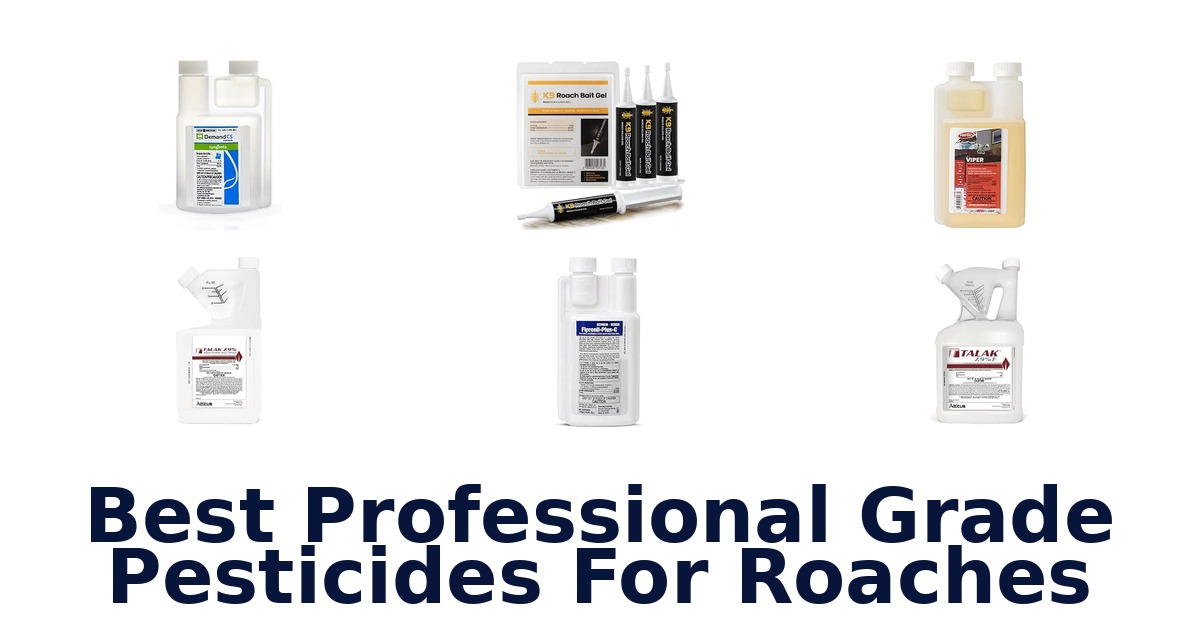
A strong professional-grade roach pesticide should match where roaches hide: bait gel suits targeted crack-and-crevice placement, while concentrates are designed for mixed-and-sprayed treatments on labeled surfaces. For a home infestation, KB Roach Bait Gel stands out because its 0.05% fipronil bait is supplied in four syringes, with placement guidance and a 3-to-4-week inspection schedule. Buyers who need perimeter or broader insect control can compare Suspend SC, Fipronil Plus-C, and Viper, each with a different active ingredient and application format.
Concentrate size alone does not establish roach performance, and label directions, approved sites, and local registration matter. This roundup ranks the ten listed products by their stated roach relevance, formulation, and practical treatment details—not by unprovided field-test results.
KB Roach Bait Gel is the leading pick because it is specifically formulated as 0.05% fipronil roach-bait gel, rather than a general-purpose spray. Its four syringes support targeted placement in cracks and crevices, with guidance to inspect placements every three to four weeks and refresh depleted bait. For a sprayed perimeter treatment instead, Suspend SC explicitly lists cockroaches among its targets.
Always confirm the product label permits your intended site and follow its safety directions.
Our Top Picks
 Best Overall
Its 0.05% fipronil gel is expressly for roaches, arrives in four syringes, and includes crack-and-crevice placement and 3-to-4-week inspection guidance.
View on Amazon Best Perimeter Spray
This deltamethrin concentrate explicitly controls cockroaches and is intended for indoor and outdoor perimeter treatments with residual control.
View on Amazon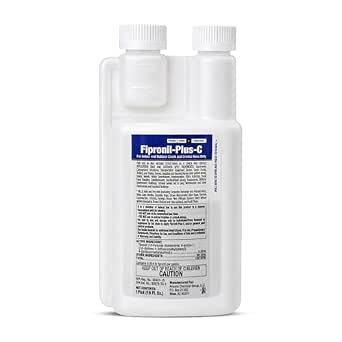 Colony-Transfer Formula
Its 0.65% fipronil formula is described as undetectable to insects, with roaches carrying it to nestmates and colony effects within days.
View on Amazon- Best Crack-and-Crevice Control Solutions Viper
- Largest Talak Bottle Atticus Talak 96 oz
Compare these professional-grade roach pesticides
| # | Product | Weight | Form | Buy |
|---|---|---|---|---|
| 1 | 1. KB Roach Bait GelBest Overall | 6.4 oz | Gel | View on Amazon |
| 2 | 2. Envu Suspend SCBest Perimeter Spray | 16 oz | Spray | View on Amazon |
| 3 | 3. Fipronil Plus-CColony-Transfer Formula | — | Spray | View on Amazon |
| 4 |  4. Control Solutions ViperBest Crack-and-Crevice | 1.3 oz | Spray | View on Amazon |
| 5 |  5. Envu Talstar OneLarge-area perimeter protection | 8 lb | Aerosol | View on Amazon |
| 6 |  6. Atticus Talak 32 ozIndoor-outdoor perimeter treaters | 2 lb | Liquid | View on Amazon |
| 7 |  7. Atticus Talak 96 ozLargest Talak Bottle | 6 lb | Liquid | View on Amazon |
| 8 |  8. Syngenta Demand CSMicrocapsule residual applications | 10 oz | Liquid | View on Amazon |
| 9 |  9. Demon MaxBroad-site residual treatment | 16 oz | Liquid | View on Amazon |
| 10 |  10. Quali-Pro Bifenthrin I/TLow-odor broad-site concentrate | 1 kg | Spray | View on Amazon |
Detailed Reviews: Best Professional Grade Pesticides For Roaches
#1 · Best Overall
1. KB Roach Bait Gel
- Weight: 6.4 oz
- Form: Gel
Best for: Scheduled indoor gel baiting.
Why it ranks #1: Its 0.05% fipronil gel is expressly for roaches, arrives in four syringes, and includes crack-and-crevice placement and 3-to-4-week inspection guidance.
Four gel-bait syringes support a planned 90-day indoor protocol, with an initial placement followed by inspection and refresh every three to four weeks. The 0.05% fipronil bait is applied in small spots to cracks and crevices where roaches hide, rather than sprayed across surfaces.
The syringe format lets users place 1–3 pea-sized spots per 10 linear feet for light to moderate infestations, targeting hard-to-reach hiding places. The product's instructions then call for checking placements every three to four weeks and reapplying when bait is visibly depleted; placements should remain even when no roaches are seen. Four syringes support that repeated schedule. This is a deliberate bait-placement workflow, so it suits buyers willing to inspect and maintain spots rather than seeking broadcast liquid treatment.
- 0.05% fipronil roach-bait gel
- Four syringes for an ongoing protocol
- Small-spot placement in cracks and crevices
- Scheduled rechecks every 3–4 weeks
- Requires periodic inspection and reapplication when bait is visibly depleted.
Skip it if you want a diluted perimeter spray rather than maintained bait spots; Envu Suspend SC is listed for indoor and outdoor perimeter treatments.
A fit for residential, commercial, or industrial users managing an indoor infestation with targeted bait placements and scheduled follow-up. It is less suited to anyone unwilling to inspect the gel every few weeks.
Full product details
| Brand | KB Roach Bait Gel |
|---|---|
| Included Components | Syringy |
| Item Form | Gel |
| Item Weight | 6.4 ounces |
| Manufacturer | KB Roach Bait Gel |
Listed on Amazon as: German Roach Killer Indoor Infestation for Home | 97~99% Lab-Tested Mortality in 14 Days – 0.05% Fipronil | 90-Day Whole-Home Protocol, 4 Syringes
View on Amazon#2 · Best Perimeter Spray
2. Envu Suspend SC
- Weight: 16 oz
- Form: Spray
Best for: Entry-point residual barriers.
Why it ranks #2: This deltamethrin concentrate explicitly controls cockroaches and is intended for indoor and outdoor perimeter treatments with residual control.
Deltamethrin concentrate for indoor and outdoor perimeter treatments gives Suspend SC a clear role around foundations, doors, windows, and other entry points. Its suspension-concentrate formulation is described as providing fast knockdown alongside long residual control on treated surfaces.
The perimeter-focused application supports treating structural entry points as a preventive barrier, while the listed long residual is intended for ongoing control rather than a short-term knockdown alone. Suspend SC is also described as controlling more than 50 pests, including cockroaches, and its flexible label includes mattresses, box springs, carpet, upholstery, and food-service areas. That range broadens possible treatment locations, but applications must follow the label for each surface and setting. The 16-ounce concentrate requires preparation according to its directions.
- Deltamethrin suspension concentrate
- Indoor and outdoor perimeter use
- Fast knockdown with long residual control
- Flexible label includes several furnishings and food-service areas
- The supplied details do not state a dilution rate.
Skip it if you need a listed dilution rate before selecting a concentrate; Demand CS gives a 0.2–0.8-ounce-per-gallon range.
Consider Suspend SC for buyers planning residual barriers at structural entry points and needing the listed range of treatment settings. Check its label for dilution and surface-specific directions before application.
Full product details
| Brand | Envu |
|---|---|
| Included Components | 1 bottle |
| Item Form | Spray |
| Item Weight | 16 ounces |
| Manufacturer | Envu |
| Model Number | D00000993 |
#3 · Colony-Transfer Formula
3. Fipronil Plus-C
- Form: Spray
Best for: Colony-targeting crack treatments.
Why it ranks #3: Its 0.65% fipronil formula is described as undetectable to insects, with roaches carrying it to nestmates and colony effects within days.
Undetectable-to-insects fipronil treatment lets roaches pick up product in treated cracks and carry it to nestmates, including the queen. Fipronil Plus-C is presented as a concentrate that kills in 24–36 hours, with colony collapse described as occurring within days.
The product's 0.65% fipronil formula and Cellulose Entrapment Technology are paired with a transfer-to-nest workflow: insects encounter treated cracks and carry it to other colony members. That makes it a different approach from simply spraying exposed pests. The listing says a single application reaches deep cracks indoors and describes outdoor use as a shield, while its 16-ounce size is stated to make 21 gallons. Its safety information warns of toxicity to birds, fish, and aquatic invertebrates; avoid water and follow directions.
- 0.65% fipronil concentrate
- Treated cracks support transfer to nestmates
- Claims kill in 24–36 hours
- 16-ounce size makes 21 gallons
- Toxic to birds, fish, and aquatic invertebrates; keep applications away from water.
Skip it if you want a gel bait placed as small spots; KB Roach Bait Gel offers syringe-applied placements and scheduled rechecks.
Consider it if your roach plan targets cracks and aims to reach nestmates through transfer. It requires mixing and careful attention to the aquatic-toxicity warning, so it is not a casual near-water application.
Full product details
| Brand | Fipronil-Plus-C |
|---|---|
| Item Form | Spray |
| Manufacturer | Arizona Chemical Group, LLC |
| Special Features | Colony Elimination Technology, Extreme Coverage, Long-Lasting Protection, Multi-Pest Control, Professional-Grade Formulation |
Listed on Amazon as: Fipronil Plus-C Insecticide Concentrate, 16 oz, Makes 21 Gallons
View on Amazon#4 · Best Crack-and-Crevice
4. Control Solutions Viper
- Weight: 1.3 oz
- Form: Spray
Best for: Commercial-site spray users.
Why it ranks #4: Viper lists residual roach control and indoor crack-and-crevice use in nonfood areas, with a stated mix rate of 1.3 ounces per gallon.
A 25.3% cypermethrin concentrate supports crack-and-crevice treatment indoors and broadcast spraying outdoors, giving users options across listed sites such as warehouses, hotels, and garages. Viper also covers roaches and other insects, but its stated odor makes an outdoor test advisable before indoor application.
For indoor use, Viper's listed locations include cabinets, windows, doors, closets, shelves, baseboards, and garages, with the application specified as a crack-and-crevice spray in nonfood areas. Outdoors, it may be applied as a broadcast spray, which suits broader treatment areas. The stated mixing rate is 1.3 ounces per gallon of water, so application involves measuring and preparing a spray rather than using it straight from the container. The product has some odor; the listing recommends testing outdoors before indoor use.
- 25.3% cypermethrin
- Indoor crack-and-crevice use in nonfood areas
- Outdoor broadcast application
- Listed for warehouses, hotels, and garages
- The listing notes an odor and recommends testing outdoors before indoor use.
Skip it if you need an odor-free formula; Atticus Talak 7.9 F is listed as odor-free and dries without visible residue.
A practical candidate for users treating listed commercial sites and defined indoor cracks or outdoor areas. Its odor and nonfood-area indoor restriction matter when choosing application locations and planning the work.
Full product details
| Brand | Control Solutions |
|---|---|
| Included Components | Viper – Insecticide – 16oz |
| Item Form | Spray |
| Item Weight | 1.3 ounces |
| Manufacturer | Control Solutions |
| Model Number | 82005007 |
| Additional Information | Important information Ingredients Cypermethrin |
Listed on Amazon as: CSI – 82005007 – Viper – Insecticide – 16oz
View on Amazon#5
5. Envu Talstar One
- Weight: 8 lb
- Form: Aerosol
Best for: Large-area perimeter protection.
Why it ranks #5: Its 7.9% bifenthrin concentrate specifically includes roaches among its targets and is intended for indoor, outdoor, and perimeter applications.
A one-gallon, 7.9% bifenthrin concentrate offers substantial supply for repeated perimeter and structure treatments against roaches and other listed pests. Talstar One is positioned for barriers around foundations, doors, windows, and exterior surfaces, with indoor and outdoor treatment areas also stated.
The gallon size suits buyers who need more concentrate on hand for ongoing perimeter work, while the listed barrier locations—foundations, doors, windows, and exterior surfaces—help define where applications fit into an entry-prevention plan. The water-based formulation and 7.9% bifenthrin identify the concentrate, and the product is also described for indoor and outdoor areas. It is a concentrate, so the buyer's workflow includes preparing it according to its label; the supplied facts do not specify a dilution rate.
- One-gallon concentrate
- 7.9% bifenthrin
- Listed for roaches and broad-spectrum insect control
- Perimeter applications around foundations, doors, and windows
- The supplied product details do not state a dilution rate.
Skip it if you need a stated mixing rate before choosing a concentrate; Atticus Talak 7.9 F lists teaspoon-per-gallon directions.
Consider it for buyers planning repeated structure and perimeter applications who value a gallon-size supply. Check the product label for mixing and application directions before use, since the supplied details provide no dilution rate.
Full product details
| Brand | Envu |
|---|---|
| Included Components | Plastic bottle |
| Item Form | Aerosol |
| Item Weight | 8 pounds |
| Manufacturer | Envu |
| Part Number | 11016526 |
| Material Features | Water-Based |
| Size | 128 Fl Oz (Pack of 1) |
| Additional Information | Important information Ingredients Bifenthrin 7.9%, Other Ingredients 92.1% |
Listed on Amazon as: Talstar One Insecticide 1 Gallon | Powerful Bifenthrin Bug Spray Concentrate | Spider Control, Ants, Mosquitoes, Fleas and Perimeter Use | Control for Over 75 pests
View on Amazon#6
6. Atticus Talak 32 oz
- Weight: 2 lb
- Form: Liquid
Best for: Indoor-outdoor perimeter treaters.
Why it ranks #6: This 7.9% bifenthrin concentrate supports indoor and outdoor use, and its stated perimeter mix is 2 to 6 teaspoons per gallon.
A 7.9% bifenthrin concentrate that can be used indoors and outdoors gives buyers one mix for lawn, landscape, and living-area treatments. The water-based formula dries clear, leaves no residue, and is odor-free, while its listed mixing directions include perimeter barrier applications.
Talak's directions call for 1–6 teaspoons per gallon for lawn and landscape use, with one gallon of mixed solution treating 1,000 square feet; that gives buyers a defined coverage basis for larger areas. For surface-perimeter barrier treatment, the listed rate is 2–6 teaspoons per gallon. The 32-ounce concentrate supports mixing as needed rather than storing ready-to-use spray, and the clear-drying, odor-free formula is a practical fit where residue and odor matter. Follow the label, including state sale restrictions.
- 7.9% bifenthrin concentrate
- Indoor and outdoor use
- Water-based, dries clear with no residue
- Listed rates cover lawn treatment and perimeter barriers
- Not available for sale in Connecticut, New York, or Vermont.
Skip it if you need a ready-to-use product rather than a concentrate that must be diluted before application.
A fit for buyers treating both exterior grounds and indoor areas who can measure and mix concentrate. Consider the listed state restrictions and use the label's distinct rates for lawn coverage versus perimeter barriers.
Full product details
| Brand | Atticus |
|---|---|
| Included Components | One 32-oz bottle of Talak 7.9 F Insecticide Concentrate |
| Item Form | Liquid |
| Item Weight | 2 pounds |
| Manufacturer | Atticus |
Listed on Amazon as: Atticus Talak 7.9% Indoor/Outdoor Bifenthrin Insecticide Concentrate (32oz)
View on Amazon#7 · Largest Talak Bottle
7. Atticus Talak 96 oz
- Weight: 6 lb
- Form: Liquid
Best for: High-volume bifenthrin users.
Why it ranks #7: It shares the 7.9% bifenthrin indoor/outdoor formulation and specified perimeter mix with the 32-ounce version, in a 96-ounce bottle.
The 96-ounce size of Atticus Talak 7.9 F gives frequent applicators more concentrate in one bottle, while its water-based 7.9% bifenthrin formula is listed for indoor and outdoor use. It dries clear, leaves no residue, and is odor-free.
Talak's supplied directions specify 1–6 teaspoons per gallon for lawns and landscapes, with one gallon of mixed solution treating 1,000 square feet; that helps users plan coverage across larger grounds. For surface-perimeter barriers, the listed rate is 2–6 teaspoons per gallon. The 96-ounce bottle suits buyers who expect repeated mixing, while the same concentrate spans living areas, lawns, and landscapes. State availability is restricted, and the label should guide each application and re-entry after sprays dry completely.
- 96-ounce concentrate
- 7.9% bifenthrin for indoor and outdoor use
- Odor-free and dries clear without residue
- Directions include lawn coverage and perimeter barriers
- Not available for sale in Connecticut, New York, or Vermont.
Skip it if you only need a smaller supply; Atticus Talak 7.9% in the 32-ounce bottle offers the same stated active ingredient concentration.
A fit for frequent applicators who want one concentrate for indoor, lawn, landscape, and perimeter work. Its large bottle and state restrictions are worth weighing, and the listed treatment rates differ by application.
Full product details
| Brand | Atticus |
|---|---|
| Included Components | 96 Ounces of Talak 7.9% Bifenthrin Concentrate |
| Item Form | Liquid |
| Item Weight | 6 pounds |
| Manufacturer | Atticus |
| Model Number | 530306 |
Listed on Amazon as: Atticus Talak 7.9 F Bifenthrin Insecticide Concentrate (96oz)
View on Amazon#8
8. Syngenta Demand CS
- Weight: 10 oz
- Form: Liquid
Best for: Microcapsule residual applications.
Why it ranks #8: Its water-based concentrate controls more than 30 common insects and uses transferable microcapsules, but the supplied facts do not specifically name roaches.
Demand CS uses multiple-sized microcapsules that release active ingredient at different speeds, pairing quicker release with capsules that protect contents from environmental conditions. Its water-based concentrate is listed for indoor and outdoor control, with each 8-ounce bottle making 8–40 gallons.
The smaller microcaps are described as releasing active ingredient quickly, while larger ones provide controlled release; together, they connect immediate control with continued availability on treated surfaces. Insects pick up capsules as they crawl across those surfaces, supporting contact control. The listing also says the capsule shell withstands heat and pressure and protects against sunlight and pH extremes. Buyers must dilute the concentrate at 0.2–0.8 ounces per gallon and wear the specified protective clothing, gloves, footwear, and eye protection during mixing and application.
- Multiple-sized microcapsules with differing release rates
- Capsules transfer as insects crawl over treated surfaces
- Water-based indoor and outdoor concentrate
- 8 ounces makes 8–40 gallons
- Mixing and application require specified protective clothing, gloves, footwear, and eye protection.
Skip it if you prefer a ready-to-use bait without liquid mixing; KB Roach Bait Gel is placed directly in small spots.
Suitable for buyers seeking a water-based residual concentrate and prepared to mix it with protective equipment. Its variable dilution rate and specified PPE make careful label-following part of the application workflow.
Full product details
| Brand | Syngenta |
|---|---|
| Item Form | Liquid |
| Item Weight | 10 ounces |
| Manufacturer | SYNGENTA |
| Model Number | 73654 |
Listed on Amazon as: Syngenta 73654 Demand CS Insecticide, 8oz, Beige
View on Amazon#9
9. Demon Max
- Weight: 16 oz
- Form: Liquid
Best for: Broad-site residual treatment.
Why it ranks #9: Demon Max offers crack-and-crevice and spot treatments with control of over 30 insect pests, but the supplied details do not name roaches.
Quick knockdown paired with long-lasting residual control gives Demon Max a role in both immediate pest treatment and continued control. Its listed uses include crack-and-crevice and spot applications, plus treatment around buildings, lawns, turf, vegetation, soil, and foundations.
Demon Max is described as controlling more than 30 insect pests, with application options spanning cracks and crevices, spots, structures, and outdoor grounds. That range can support a treatment plan that moves from building details to surrounding turf or soil without changing product. Mixing directions give a range of 1.3–5.1 ounces per gallon of water, while the broader application rate is also given as 1–4 gallons per 100 gallons. Measure the treatment area and follow the label directions for the specific application.
- Quick knockdown and long-lasting residual control
- Controls more than 30 insect pests
- Crack-and-crevice and spot treatment uses
- Listed for structures, lawns, turf, and soil
- The listed dilution range is broad at 1.3–5.1 ounces per gallon of water.
Skip it if you need an explicitly stated active ingredient percentage; this listing supplies application rates but no percentage in the provided facts.
Consider Demon Max when you need a product listed for both structural spot work and surrounding grounds. Its multiple dilution directions make careful measuring and following the application-specific label essential.
Full product details
| Brand | Demon Max |
|---|---|
| Included Components | Demon Max – 070294125000 |
| Item Form | Liquid |
| Item Weight | 16 ounces |
| Manufacturer | Demon Max |
| Model Number | Demon Max – 070294125000 |
| Additional Information | Important information Safety Information Keep out of reach of children. Directions Determine how much Demon Max Insecticide to use by measuring the square footage of the treatment area. To mix using a hand pump sprayer, fill your sprayer halfway with water. Apply Demon Max outdoors around your yard and ornamentals where you have seen pest activity. |
Listed on Amazon as: Syngenta 070294125000 Demon Max Insecticide, Yellowish
View on Amazon#10
10. Quali-Pro Bifenthrin I/T
- Weight: 1 kg
- Form: Spray
Best for: Low-odor broad-site concentrate.
Why it ranks #10: This 7.9 F bifenthrin product offers residual insect control, but the listed examples do not identify roaches or provide roach-specific directions.
A non-irritating, no-odor formula that dries without visible residue makes Quali-Pro Bifenthrin I/T a consideration where treated surfaces and odor are concerns. This one-gallon flowable pyrethroid is described for long-lasting control and is compatible with several other treatment inputs.
The gallon bottle provides a larger-format concentrate for buyers treating multiple areas, while its flowable formulation is identified as a pyrethroid for prevention and control of pest infestations. The listed no-odor, non-irritating formula dries with no visible residue, which can matter when choosing where to treat. Compatibility is stated with herbicides, fungicides, insecticides, and liquid fertilizers, supporting use alongside those inputs. The supplied facts do not provide a roach-specific rate, so consult the product label for target-pest directions and dilution.
- One-gallon flowable pyrethroid concentrate
- No-odor formulation
- Dries without visible residue
- Compatible with herbicides, fungicides, insecticides, and liquid fertilizers
- The supplied details do not state a roach-specific dilution rate.
Skip it if you need roach-targeted mixing directions in the supplied facts; Atticus Talak 7.9 F provides teaspoon-per-gallon rates.
A match for buyers prioritizing a no-odor formula and broad compatibility while managing pest treatments. Verify the label's roach-specific application and dilution directions before making it part of an indoor treatment plan.
Full product details
| Brand | Quali-Pro |
|---|---|
| Included Components | 1 gallon bottle of QP Bifenthrin I/T 7.9F |
| Item Form | Spray |
| Item Weight | 1 kg |
| Manufacturer | Quali-Pro |
| Model Number | 000087 |
Listed on Amazon as: Bifenthrin I/T 7.9 F for Insects, (1 Gallon)
View on AmazonWhy a residual spray may not solve a roach infestation alone
A residual spray may miss roaches if it does not reach the cracks, crevices, and other harborages where they hide. The products here offer different approaches: KB Roach Bait Gel supplies small gel placements for those concealed locations, while Viper is described for crack-and-crevice treatment in nonfood areas and Suspend SC is positioned for perimeter use. A perimeter barrier and an interior bait placement therefore address different treatment locations, rather than being interchangeable formats.
Avoid assuming that a broad insect list or a large concentrate bottle proves suitability for every indoor surface. The available product details do not establish a complete integrated pest-management plan, nor do they say that combining these products is safe or appropriate.
Check each pesticide label for the permitted pest, site, application method, and restrictions before use; do not mix or layer products unless their labels allow it.
Concentrate size is not the same as ready-to-use coverage
A larger bottle does not by itself tell you how much usable roach treatment it makes or where it may be applied. Atticus Talak is listed in both 32- and 96-ounce sizes, with the same 7.9% bifenthrin formulation and a stated mix of 1 to 6 teaspoons per gallon for lawns and landscapes; its perimeter directions specify 2 to 6 teaspoons per gallon. Demand CS gives a different stated yield, 8 to 40 gallons from an 8-ounce bottle, depending on the mix rate.
These figures cannot be compared as equal roach coverage: their labels describe differing formulations, uses, and rates. Bait gel avoids dilution calculations, but its placement is measured in small spots and requires inspection.
Select by the labeled treatment site and application directions, not bottle volume alone, and follow the exact label for your intended roach treatment.
How to Choose a Roach Pesticide
Bait gel or spray concentrate
Look first at whether your target treatment calls for a placed bait or a diluted spray. KB Roach Bait Gel is a 0.05% fipronil gel supplied in four syringes for small placements in cracks and crevices. The listed concentrates instead include Suspend SC with deltamethrin, Viper with 25.3% cypermethrin, and bifenthrin products such as Talak at 7.9%.
Those active ingredients and formats are not interchangeable directions. Gel suits buyers seeking targeted placement where roaches hide; a concentrate suits someone whose label-approved treatment calls for spraying a perimeter or other listed surface.
Confirm the product label specifically permits roach treatment at the intended site before choosing.
Treatment target and placement
Choose a product whose stated target and application site match the problem, rather than relying on broad-spectrum language. Suspend SC explicitly lists cockroaches and indoor/outdoor perimeter treatment; Viper specifies roach residual control and crack-and-crevice use in nonfood areas. KB Roach Bait Gel gives targeted placement instructions, while Fipronil Plus-C describes roaches carrying bait to nestmates.
The Talstar One listing also names roaches and perimeter use. If activity is in concealed indoor harborage, gel or a label-approved crack-and-crevice approach may fit better than a perimeter-only strategy.
If the concern is pest entry around a structure, compare the products whose stated directions include perimeter treatment. Check local label permissions and restrictions.
Dilution and package quantity
For concentrates, compare both bottle quantity and the stated mixing directions; neither alone establishes the number of roach treatments. Talak comes in 32- and 96-ounce bottles and lists 1 to 6 teaspoons per gallon for lawns and landscapes, plus a 2-to-6-teaspoon-per-gallon perimeter mix. Demand CS lists 8 to 40 gallons from its 8-ounce bottle at 0.2 to 0.8 ounces per gallon.
Viper specifies 1.3 ounces per gallon, while Demon Max lists 1.3 to 5.1 ounces per gallon. These rates serve differing product labels and uses, so do not substitute one for another.
Buyers treating a small, defined area may prefer a targeted gel; repeated or broad labeled treatment may make concentrate quantity more relevant.
Which Roach Pesticide Should You Choose?
For targeted indoor roach bait placement, choose KB Roach Bait Gel: its 0.05% fipronil formulation, four syringes, and inspection schedule are the most directly roach-specific combination in this list. For a sprayed indoor/outdoor perimeter treatment, Envu Suspend SC explicitly names cockroaches and residual control. Choose Fipronil Plus-C if its described colony-transfer approach and label-approved application fit your situation.
Control Solutions Viper is a more specific fit for crack-and-crevice spraying in nonfood areas and lists roach residual control. If you want a bifenthrin product that names roaches and supports perimeter use, Envu Talstar One is the clearer fit than the two Talak sizes.
Whichever you select, verify local registration, intended-site permissions, mixing directions, and safety requirements on the product label before application.
Related Buying Guides
Frequently Asked Questions
Should I use roach bait gel or a residual spray for an infestation?
Choose bait gel for targeted placement in cracks and crevices; choose a residual spray when you need a sprayed perimeter treatment and the label allows it. KB Roach Bait Gel is specifically formulated with 0.05% fipronil, while Suspend SC explicitly lists cockroaches among its targets. Follow each product’s label for permitted sites and use.
Where should roach bait and perimeter pesticide be applied?
Place bait only in label-approved cracks and crevices where roaches may travel, keeping it away from children, pets, and food-contact areas. Apply perimeter pesticide only to sites the label permits, following its directions for preparation and placement. Do not assume a product is approved for a particular indoor, outdoor, or food-area use.
How do I keep pets and children safe during roach pesticide treatment?
Follow the product label’s precautions before, during, and after treatment. Keep children and pets away from treated areas as directed, prevent access to bait placements, and store products securely in their original containers. Avoid applying pesticides to surfaces or locations not permitted by the label, and follow any re-entry instructions.
How often should I check and refresh roach bait?
Inspect bait placements every three to four weeks and refresh bait that has been depleted, following the product label. This schedule is specified for KB Roach Bait Gel in the article’s verdict. Check that placements remain in permitted locations and inaccessible to children and pets; do not add more than the label directs.
What should I check on the label before choosing a pesticide?
Confirm that the product is locally registered and that its label permits your intended site and application method. Check the target pests, mixing directions, and safety requirements before use. For example, Suspend SC explicitly lists cockroaches, while Viper is a specific fit for crack-and-crevice spraying in nonfood areas; verify those details on the label.
Final Words
For targeted indoor bait placement, KB Roach Bait Gel is the clearest choice in this lineup: it is roach-specific, comes in four syringes, and has a stated inspection schedule. For a sprayed perimeter treatment, consider Suspend SC, which explicitly lists cockroaches. Other options may suit particular application needs, but verify local registration, site permissions, mixing directions, and safety requirements on the label before applying any product.