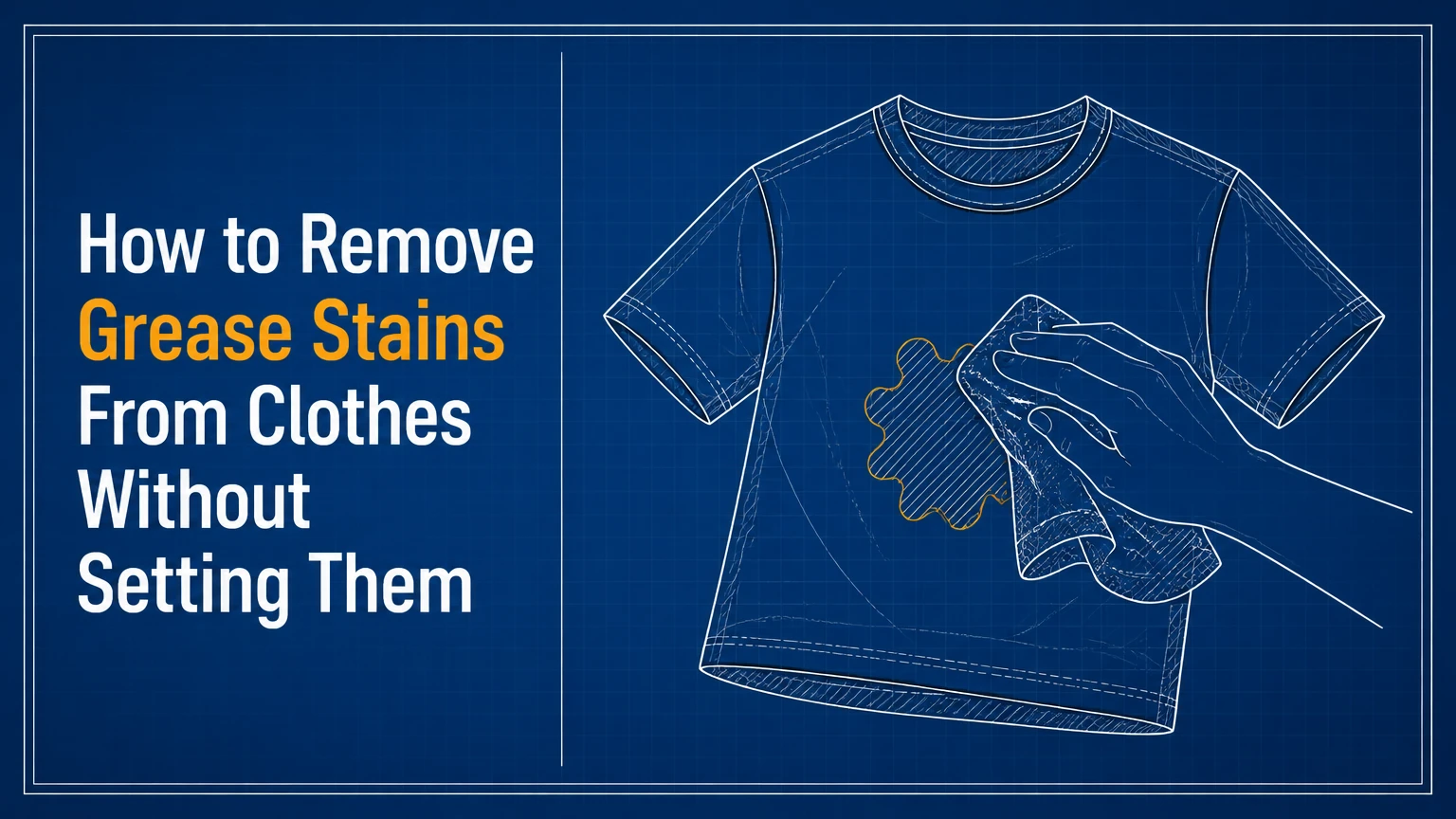
To remove grease stains from clothes, blot excess oil, apply clear dish soap or liquid laundry detergent, wait 10-15 minutes, then wash at the warmest temperature allowed by the care label. Air-dry and inspect before using a dryer. Fresh stains usually respond fastest because the oil has not oxidized or spread deeply through the fibers.
Key Facts
- Clear dish soap works best for fresh food grease on washable cotton, denim, and many synthetic garments.
- Blotting removes surface oil; rubbing usually pushes grease farther into the fabric.
- The care label controls the maximum safe wash temperature and whether home treatment is appropriate.
- Never machine-dry a garment until the grease mark has disappeared completely.
- Baking soda or cornstarch can absorb fresh liquid oil, but powders rarely remove an old, oxidized stain alone.
- Dry-clean-only silk, wool, suits, and structured garments should usually go to a professional cleaner.
Before You Start
The treatment takes about 20-35 minutes of active and waiting time, followed by a normal wash cycle. Difficulty is low for washable clothing, while silk, wool, leather, rayon, and dry-clean-only garments require more caution.
Prepare these materials:
| Material | Typical amount | Purpose |
|---|---|---|
| White paper towel or cloth | 2-4 pieces | Blot surface grease |
| Clear dish soap | 1 teaspoon for a small mark | Emulsify food oil |
| Liquid laundry detergent | 1 teaspoon for a small mark | Pretreat and wash residue |
| Soft toothbrush | 1 | Agitate fibers gently |
| Cardboard or folded towel | 1 piece | Prevent grease transfer through fabric |
| Baking soda or cornstarch | 1-2 tablespoons | Absorb fresh liquid oil |
Read the care label before wetting the garment. Test any treatment on an inside seam, hem, or pocket edge, especially on dark garments, printed fabric, rayon, and older clothing with unstable dye.
Do not use a solvent near an open flame, hot dryer, pilot light, or cigarette. Products such as mineral spirits, some degreasers, and petroleum-based sprays can leave flammable residue until the garment has been thoroughly washed and fully aired.
Why Is Grease So Difficult to Remove?
Grease is a water-repellent mixture of lipids, oils, waxes, and sometimes petroleum compounds, so plain water cannot carry it away from clothing fibers. Polyester presents an additional challenge because its relatively nonpolar surface readily retains oily substances, while cotton can trap grease between cellulose fibers and in the weave.
Three mechanisms remove grease:
- Absorption: Cornstarch, baking soda, or talc draws some liquid oil away from the surface before it spreads.
- Emulsification: Surfactants in dish soap and laundry detergent surround oil droplets, allowing rinse water to suspend and remove them.
- Solvent dissolution: A compatible solvent loosens petroleum-based grease that water-based cleaners cannot readily disperse.
Heat can improve surfactant performance by reducing the viscosity of fats, but heat also increases the chance of permanently setting residue during drying. The useful rule is warm washing when the label permits it, followed by inspection before any heated drying.
Grease type changes the best treatment. Butter and bacon fat contain animal fats that may solidify as they cool, olive oil remains liquid, and motor oil can include additives, soot, metal particles, and petroleum-based compounds that need stronger pretreatment.
How Do You Remove a Fresh Grease Stain?
Remove a fresh grease stain with six controlled actions: blot, isolate, pretreat, gently agitate, wait, and wash. A teaspoon of clear dish soap usually covers a small coin-sized mark, while a tablespoon may be needed for a dinner-plate-sized area on heavy denim or workwear.
Step 1: Blot the Excess Grease
Place a white paper towel beneath and above the stain, then press from the outside toward the center. Lift vertically and repeat with clean towel sections until little or no oil transfers.
Do not scrub the mark at this stage. Scrubbing increases the stained area and drives liquid oil between yarns.
Success checkpoint: The mark looks duller, and the towel shows less translucent oil after each press.
Common mistake: Using a colored napkin can transfer dye or lint to a wet, light-colored garment.
Step 2: Apply Clear Dish Soap or Liquid Detergent
Put cardboard or a folded white towel inside the garment. Apply enough clear dish soap or concentrated liquid laundry detergent to cover the entire mark, extending about 0.5 inch beyond its visible edge.
Clear dish soap is designed to disperse cooking oils, but it must be rinsed well because excess suds can interfere with a washing machine’s normal operation. Liquid laundry detergent is often the better choice for dark clothes, large stains, or garments that will go straight into the wash.
Success checkpoint: The treatment forms a thin, even film over the stain without soaking the entire garment.
Common mistake: Applying detergent only to the darkest center leaves an oily perimeter that may reappear after drying.
Step 3: Agitate Gently
Use your fingertips or a soft toothbrush to work the cleaner into the fabric for 30-60 seconds. Move from the outside edge toward the center, using short strokes rather than forceful circular scrubbing.
Turn the garment inside out and inspect the reverse side if grease has penetrated the weave. Treat both sides when necessary, placing clean cardboard between layers to prevent transfer.
Success checkpoint: The stain begins to look lighter or more diffuse without spreading outward.
Common mistake: A stiff brush can roughen cotton, pill knits, pull loops in performance fabric, or damage a printed surface.
Step 4: Let the Pretreatment Work
Leave the cleaner on the stain for 10-15 minutes. A large, old, or heavily saturated mark may need 20-30 minutes, but do not allow detergent to dry hard on the garment.
For a mixed food stain containing gravy, cheese, egg, or meat juices, a detergent with enzyme activity can help with the protein component after the grease has been emulsified. Enzymes do not replace a surfactant for pure oil.
Success checkpoint: The treated area remains moist, and the original glossy oil ring is less visible.
Common mistake: Leaving a strong cleaner on colored fabric for hours can increase dye fading without providing proportional cleaning benefit.
Step 5: Wash at the Warmest Safe Temperature
Wash with the regular amount of heavy-duty laundry detergent at the warmest temperature permitted by the care label. Many cotton towels and work shirts tolerate warm or hot water, while athletic synthetics, elastane blends, dark denim, and printed garments may require cold or warm settings.
Water temperature is a garment-safety decision, not a universal stain-removal rule. The Federal Trade Commission explains that care labels provide cleaning instructions manufacturers have a reasonable basis to support, so the label takes priority over a generic “wash hot” recommendation.
Success checkpoint: The garment comes out with no dark, translucent, or stiff patch when viewed under bright light.
Common mistake: Adding extra detergent to compensate for a poor pretreatment can leave residue that attracts dirt and makes the fabric feel greasy.
Step 6: Air-Dry and Inspect
Hang or lay the garment flat until completely dry, then inspect both sides in natural or bright white light. If any shadow, slickness, odor, or darker halo remains, repeat pretreatment and washing before using a dryer.
A dryer does not reliably remove residual oil. Its heat can bake remaining grease into fibers and make later treatment more difficult.
Success checkpoint: The fabric has its normal color, texture, and odor after drying.
Common mistake: Checking only the front can miss oil that migrated through to the back or lining.
Which Grease Treatment Should You Choose?
Clear dish soap is the strongest first choice for fresh cooking oil on washable clothing, while liquid detergent is more practical for large stains and routine workwear. Absorbent powder is a low-moisture first step, commercial pretreatment helps mixed food stains, and solvents belong to carefully controlled escalation rather than ordinary laundry.
| Treatment | Best use | Typical time | Typical cost | Main limitation |
|---|---|---|---|---|
| Clear dish soap | Fresh olive oil, butter, bacon fat | 10-15 minutes | $2-$5 | Must rinse thoroughly |
| Liquid laundry detergent | Large food stains, cotton, denim | 15-20 minutes | $10-$20 per jug | Less effective when applied too sparingly |
| Cornstarch or baking soda | Fresh liquid oil before washing | 30-60 minutes | $1-$4 | Cannot dissolve set-in grease |
| Enzyme pretreatment | Gravy, pizza, meat, dairy mixtures | 5-10 minutes | $4-$8 | Enzymes do little for pure motor oil |
| Mechanics’ hand cleaner | Heavy workwear and petroleum residue | 5-10 minutes | $5-$15 | May affect dye and requires thorough washing |
| Professional dry cleaning | Silk, wool, suits, old delicate stains | 1-3 days typical | $8-$30 per garment | Costs more and is not immediate |
When Should You Use Baking Soda or Cornstarch?
Use baking soda or cornstarch when the grease is fresh, liquid, and sitting on the surface, especially when the garment cannot be wet immediately. Sprinkle a thick layer over the mark, wait 30-60 minutes, brush off the powder, and follow with dish soap or detergent if the care label permits washing.
Powder works through absorption, not chemical breakdown. It can reduce the amount of oil available to spread, but it will not reliably remove a dried motor-oil patch or an old cooking stain that has already passed through a dryer.
Talcum powder can absorb oil, but unscented cornstarch is often easier to rinse from clothing. Avoid inhaling loose powder and avoid putting a heavily powdered garment directly into a high-heat dryer.
When Is a Commercial Stain Remover Better?
Choose a commercial pretreatment when food grease is mixed with tomato, egg, dairy, meat, starch, or coloring compounds. Apply the product according to its label, observe the stated dwell time, and wash before the treatment dries.
Commercial formulas vary considerably. Some rely mainly on surfactants, while others include enzymes, oxygen bleach, solvents, or optical brighteners. Check colorfastness on an inconspicuous area, and never combine a stain remover with chlorine bleach, ammonia, or another cleaner unless the product label specifically permits that combination.
How Do Fabric and Stain Type Change the Method?
Fabric construction and stain chemistry determine whether home treatment is sensible. Washable cotton, linen, polyester, and denim generally tolerate the basic method, while silk, wool, leather, suede, rayon, and structured garments need a label-specific approach.
| Fabric or garment | First response | Wash guidance | Escalation point |
|---|---|---|---|
| Cotton T-shirt | Dish soap, 10-15 minutes | Warmest labeled setting | Repeat once before drying |
| Denim jeans | Liquid detergent, gentle brush | Warm setting if label permits | Treat both sides of thick denim |
| Polyester shirt | Detergent, 15 minutes | Warm, not automatically hot | Repeat rather than increase heat |
| Nylon or athletic wear | Liquid detergent only | Cold or warm per label | Avoid harsh solvents and fabric softener |
| Silk or cashmere | Blot, cornstarch, brush off | Do not improvise wet cleaning | Professional cleaner |
| Wool sweater | Blot, absorbent powder | Wool cycle only if labeled washable | Stop if dye transfers |
| Suit or lined jacket | Blot and identify stain | Follow dry-cleaning label | Professional cleaner |
Can You Remove Grease From Polyester?
You can remove many grease stains from polyester with liquid laundry detergent and a warm, label-approved wash, but polyester may retain oily residue more stubbornly than cotton. Pretreat both sides, wait 15-20 minutes, and repeat the process rather than using a hotter temperature than the care label allows.
Polyester is synthetic and relatively oil-compatible, so a faint translucent patch can remain after the first wash. Avoid chlorine bleach, aggressive brushing, and petroleum sprays on performance clothing because they may damage finishes, stretch fibers, or alter color.
Can You Remove Grease From Silk or Wool?
Silk and wool can sometimes be saved when treated immediately with gentle blotting and an absorbent powder, but home dish-soap treatment is risky unless the care label specifically permits washing. Brush off cornstarch or talc after 30-60 minutes, then take valuable, dark, tailored, or dry-clean-only garments to a professional.
Water can create rings, shrinkage, felting, dye bleed, or changes in surface sheen. Tell the cleaner whether the stain came from butter, salad oil, cosmetics, or machinery because solvent selection depends on the contaminant.
How Do You Remove Dried or Dryer-Set Grease?
Remove a dried grease mark by reapplying a compatible detergent or commercial degreasing pretreatment, allowing longer dwell time, and repeating a safe wash cycle. Do not assume WD-40 or mineral oil is safe: petroleum products can create a larger stain, damage dyes, and leave flammable residue.
For washable cotton or denim, use this lower-risk escalation sequence:
- Place cardboard behind the stain.
- Apply liquid laundry detergent or a laundry-safe degreasing pretreatment to both sides.
- Gently work it into the fibers for 60 seconds.
- Wait 20-30 minutes.
- Wash at the warmest label-approved setting.
- Air-dry and inspect.
- Repeat once if the mark is lighter but still visible.
For a heavy petroleum stain on disposable or rugged workwear, a product specifically labeled for clothing can be used according to its instructions. Do not pour gasoline, kerosene, paint thinner, or brake cleaner onto clothing. These products create serious fire and inhalation hazards and may dissolve dyes or synthetic fibers.
A professional cleaner is the safer option for a dryer-set stain on a valuable garment, a lined jacket, wool, silk, rayon, or fabric with uncertain colorfastness.
What Are the Most Common Failure Modes?
Grease removal fails most often because the stain is heated too early, spread during rubbing, or treated with a product that does not match the contaminant. Recovery depends on stopping before drying and changing one variable at a time.
| Failure mode | Why it happens | Recovery |
|---|---|---|
| Dryer used before inspection | Residual oil is heat-set | Pretreat again, then air-dry |
| Vigorous rubbing | Oil spreads through the weave | Treat the larger area from edge inward |
| Cold water assumed to be best | Some fats remain viscous or solid | Use the warmest safe label setting |
| Colored dish soap used | Soap dye transfers to pale fabric | Rinse, then use color-safe detergent |
| Powder left in fabric | Absorbent residue was not brushed away | Shake out and wash normally |
| Solvent applied casually | Dye loss or flammable residue results | Stop, ventilate, and use a cleaner |
Two practitioner rules prevent many repeat failures. First, a stain that looks gone while wet may reappear when dry, so inspection must happen after air-drying. Second, repeated mild treatments are usually safer than one aggressive solvent application, particularly on polyester, elastane, and dyed cotton.
Grease can also hide beneath a patch, embroidery, pocket, or lining. Check the reverse side and the fabric around the original mark before deciding that a treatment failed.
How Much Time and Money Should You Expect?
Fresh washable stains generally cost less than $1 to treat at home and require 20-35 minutes before washing. Old, large, petroleum-based, or delicate-fabric stains can take 1-3 treatment cycles or require professional cleaning at a typical cost of $8-$30 per garment.
| Situation | Home-treatment time | Typical home cost | Likely next step |
|---|---|---|---|
| Small fresh food spot | 20-35 minutes | Under $1 | Wash and air-dry |
| Large cooking-oil stain | 35-60 minutes | $1-$2 | Repeat if halo remains |
| Mixed gravy or pizza stain | 20-40 minutes | $1-$3 | Use enzyme pretreatment |
| Dried cotton stain | 45-90 minutes | $1-$4 | Repeat once before escalation |
| Motor oil on workwear | 30-60 minutes | $2-$8 | Use labeled workwear degreaser |
| Silk, wool, or tailored garment | 30-60 minutes at home | $8-$30 professional | Stop home experimentation |
Do not judge success by the first wash alone. A faint oily halo often means the treatment partially worked, and a second controlled cycle can remove it without the damage caused by stronger chemicals or excessive heat.
Variations for Common Situations
How Do You Remove Butter or Bacon Grease?
Scrape away cooled solids with a spoon, blot liquid residue, apply clear dish soap for 10-15 minutes, and wash at the warmest safe setting. Butter and bacon fat can contain solid fats that need gentle warming during laundering, but the garment should still be air-dried until the mark is gone.
How Do You Remove Olive Oil or Salad Dressing?
Blot the dressing, apply liquid detergent or clear dish soap, and treat the entire visible ring rather than only the center. Salad dressing may also contain vinegar, mustard, sugar, or herbs, so an enzyme or oxygen-based color-safe product may be useful after the oil has been emulsified.
How Do You Remove Motor Oil From Work Clothes?
Scrape away thick deposits, place cardboard behind the mark, and use a clothing-safe heavy-duty degreaser or mechanic’s hand cleaner according to its label. Wash workwear separately with heavy-duty detergent, inspect before drying, and repeat rather than mixing multiple solvents.
Motor oil can contain soot and metal particles. Wear gloves, ventilate the area, and do not wash heavily saturated clothing with household towels or children’s clothing.
How Do You Remove Grease From White Clothes?
Pretreat with clear dish soap or liquid detergent, wash according to the care label, and inspect before using oxygen bleach. Oxygen bleach can help with a remaining shadow on colorfast white fabric, but it does not replace the surfactant step that removes oil.
Avoid chlorine bleach on an untreated grease stain. Bleach can discolor some residues and will not dissolve the oily component effectively.
FAQ
Does vinegar remove grease stains from clothes?
Vinegar is not a strong grease solvent and should not replace dish soap or liquid laundry detergent. Use a surfactant first, rinse thoroughly, and wash according to the care label. Adding vinegar to a grease treatment may provide odor control in some laundry loads, but it does not supply the oil-emulsifying action needed for the stain itself.
Should I use hot or cold water on an oil stain?
Use the warmest water temperature allowed by the garment care label, not automatically the hottest available setting. Warm water can improve the movement of softened fats and detergent, while excessive heat can damage synthetics, fade dyes, or set remaining residue during drying.
Can laundry detergent alone remove grease?
Laundry detergent can remove fresh or mild grease when applied directly and left for 15-20 minutes before washing. A concentrated spot treatment works better than adding extra detergent to the washer because the cleaner contacts the stain at full strength before dilution.
Why did the grease stain reappear after washing?
A grease stain reappears when oil remains below the fabric surface or at the edge of the original mark. Pretreat the full halo, agitate gently, wash again, and air-dry. Dryer heat can make the residue harder to remove, so avoid heated drying until the fabric looks and feels normal.
Can hand sanitizer remove oil from clothing?
Hand sanitizer is not a dependable grease treatment. Alcohol may dissolve some cosmetic or ink components, but many sanitizers contain gels, fragrances, and moisturizers that can leave another residue or affect dye. Use dish soap or liquid laundry detergent for food grease and a labeled textile product for industrial oil.
When should I stop treating the stain at home?
Stop home treatment when the garment is dry-clean-only, valuable, tailored, visibly colorfastness-sensitive, or stained with an unknown petroleum chemical. Also stop if dye transfers to a white cloth, the fabric develops a ring, or repeated mild treatment has not improved the mark after two cycles.
The Bottom Line
The most reliable way to remove grease stains from clothes is to blot immediately, emulsify the oil with clear dish soap or liquid laundry detergent, wait 10-15 minutes, wash at the warmest safe temperature, and air-dry before inspection. Fresh food grease is usually manageable at home; dryer-set petroleum stains and delicate garments deserve professional care.