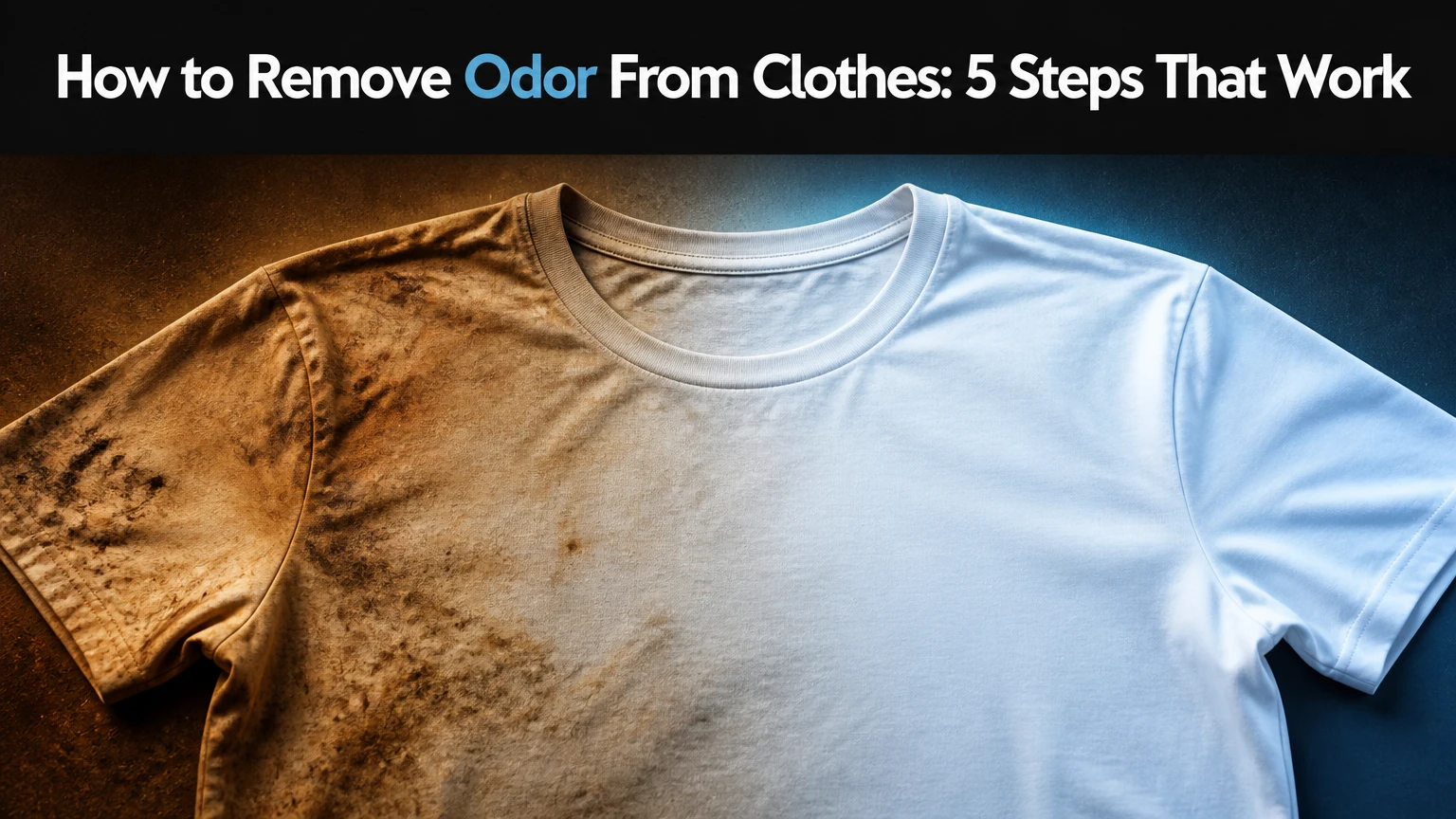
To remove odor from clothes, remove the sweat, oil, bacteria, mold residue, or smoke compounds causing the smell rather than covering them with fragrance. Check the care label, pretreat the affected fibers, wash with detergent at the warmest permitted setting, inspect while wet, and dry completely with strong airflow.
Key Facts at a Glance
- Detergent removes oily odor compounds; fragrance mainly masks them.
- Never dry a garment while it still smells, because heat can make some residues harder to remove.
- White vinegar and chlorine bleach must never enter the same wash or container.
- Polyester and nylon often retain body oils more strongly than cotton.
- Gasoline-soaked clothing presents a fire hazard and should not enter a washer or dryer until thoroughly aired and assessed.
- A musty smell that returns after washing may originate in the washing machine, not the clothing.
Why Do Clothes Smell Even After Washing?
Clothes smell after washing when odor-producing residue remains inside fibers, seams, elastic, or the washing machine. Sweat itself contains relatively little odor, but skin oils, sebum, deodorant, bacteria, food compounds, smoke particles, and dampness can create persistent volatile compounds as the garment warms.
Polyester, nylon, and elastane are especially difficult because their less water-absorbent surfaces can hold oily body soil. Cotton absorbs more water and usually releases soil more readily, although thick cotton towels can retain moisture long enough to develop mildew odor.
A fragrance booster does not solve the source. True odor removal requires one or more of four actions:
- Surfactant cleaning: detergent surrounds oils and allows water to carry them away.
- Enzymatic breakdown: protease and amylase ingredients break down protein- or starch-based residue.
- Oxidation: oxygen bleach changes many organic color and odor compounds.
- Drying and ventilation: airflow removes moisture that supports microbial growth.
White vinegar can reduce some alkaline residues and detergent buildup, but household vinegar is not a universal disinfectant. Baking soda can absorb and buffer some odors, yet it is usually weaker against embedded synthetic-fiber body oil than a suitable detergent or enzyme product.
What Should You Check Before Treating Odor?
Before treating clothing odor, identify the fabric, odor source, and safety category. Read the care label for maximum temperature, bleach restrictions, dry-cleaning instructions, and drying limits; the American Cleaning Institute’s laundry guidance summarizes the basic rule as, “Always check the care label.”
Before You Start
| Item | Typical requirement | Why it matters |
|---|---|---|
| Treatment time | 45 minutes to 24 hours | Light sweat needs less contact time than smoke or mildew |
| Washing cost | About $0.25-$1.50 per load | Depends on detergent and oxygen bleach |
| Water temperature | Cold to 60°C, label permitting | Heat improves soil removal but may damage fibers |
| Materials | Detergent, basin, towels, gloves | Supports pretreatment and safe handling |
| Drying time | 2-8 hours air-drying | Complete dryness prevents odor recurrence |
| Difficulty | Low for washable clothing | Hazardous oil contamination requires extra caution |
Separate garments by odor source. A shirt with perspiration can be washed with similar items, but gasoline, solvent, or heavy mold contamination should not be combined with ordinary laundry. Test vinegar, oxygen bleach, enzyme products, and alcohol on an inside seam before treating a visible area.
How to Remove Odor From Clothes in Five Steps
The following process usually takes 45-90 minutes of active or soaking time, followed by normal drying. The factor that most determines success is matching the treatment to the residue: detergent for oil, enzymes for organic matter, oxygen bleach for washable colorfast fabrics, and ventilation for light smoke or storage odor.
Step 1: Remove Loose Residue and Expose the Smelly Areas
Take the garment outdoors or into a well-ventilated room, shake out loose particles, and turn the garment inside out. Scrape off dried food, mud, or other solids with a dull spoon before adding water.
Apply a small amount of liquid laundry detergent directly to underarms, collars, cuffs, waistbands, and visible residue. Work it gently into the fabric with your fingers or a soft toothbrush, then wait 10-15 minutes.
You’ll know it worked when: the treated areas feel evenly damp and no solid residue remains.
Common mistake: rubbing aggressively before wetting a delicate fabric. Friction can fuzz wool, weaken silk, or spread oily stains.
Step 2: Pretreat or Soak for 30-60 Minutes
Fill a clean basin with enough lukewarm water to cover the garment. Add either the product’s labeled amount of enzyme prewash or approximately 60-120 milliliters of white vinegar for a standard 4-5 liter basin, but do not use vinegar on a garment whose care label prohibits it.
For sweat, urine, food, or pet odors, an enzyme product is usually the more targeted choice. For light storage odor or detergent residue, diluted vinegar may help. Do not combine vinegar with baking soda in the same solution, because the acid and alkaline powder largely neutralize each other.
Soak for 30-60 minutes. Avoid soaking silk, wool, leather, suede, or color-sensitive garments unless the care label or a professional cleaner permits it.
You’ll know it worked when: the odor becomes noticeably weaker before machine washing.
Common mistake: using undiluted vinegar or leaving colored clothing in a strong solution overnight. Either practice can affect dyes, finishes, or fiber strength.
Step 3: Wash at the Warmest Permitted Setting
Place the garment in the washer without overloading the drum. Add a heavy-duty liquid or powder detergent according to the package directions and load size, then add oxygen bleach only if the product and care label allow it.
Use the warmest temperature permitted by the label. A typical cotton load may tolerate 40-60°C, while technical sportswear commonly requires 30-40°C. Choose a normal or heavy-soil cycle with sufficient water and an extra rinse when detergent or softener buildup is suspected.
Do not add fabric softener to activewear, towels, or garments with persistent odor. Softener leaves a lubricating coating that can reduce water absorption and trap oily residue.
You’ll know it worked when: the garment smells neutral or only faintly detergent-scented at the end of the cycle.
Common mistake: adding extra detergent. Excess detergent can remain in fibers, attract soil, and create a sour smell when the garment becomes damp again.
Step 4: Inspect Before Drying
Remove the clothing and smell the underarms, collar, seams, and waistband while the fabric is still wet. Wet fabric can temporarily suppress or change an odor, so check several areas rather than relying on one quick sniff.
If the smell remains, repeat the targeted pretreatment and wash before using a dryer. One additional cycle is often more effective than increasing detergent concentration or temperature beyond the care label.
You’ll know it worked when: the garment has no concentrated odor at the original problem areas.
Common mistake: assuming fragrance proves cleanliness. A strongly perfumed garment can still contain sweat oil, mildew residue, or smoke compounds.
Step 5: Dry Completely With Airflow
Hang the garment in moving air, preferably outdoors in indirect or limited direct sunlight, or use a dryer at the care-label setting. Leave space between garments so air reaches both sides, and dry thick seams, pockets, waistbands, and cuffs fully.
Sunlight can help reduce odor through drying and limited ultraviolet exposure, but sunlight is not a guaranteed disinfectant. Prolonged direct exposure can fade dyes and weaken some fibers, especially elastane.
You’ll know it worked when: the garment is fully dry in the thickest section and remains neutral after warming to room temperature.
Common mistake: leaving damp laundry in a closed washer. Move it promptly, ideally within one hour, because warm stagnant moisture encourages mildew odor.
Which Odor-Removal Method Works Best?
The best method depends on the residue and the garment. Enzyme detergent is usually the strongest first choice for sweat, urine, food, and pet accidents; oxygen bleach suits many washable cotton and colorfast synthetic garments; ventilation helps light smoke and storage odor but cannot replace washing when oil is embedded.
| Method | Best target | Typical time | Fabric limitation |
|---|---|---|---|
| Enzyme prewash | Sweat, urine, food, pet residue | 15-60 minutes | Avoid prolonged use on wool and silk |
| Oxygen bleach | Organic odor on colorfast washable items | 1-6 hours | Check dye and label compatibility |
| White vinegar solution | Light residue, storage odor | 30-60 minutes | Never mix with chlorine bleach |
| Baking soda | Mild dry odor and detergent residue | 1-8 hours | Limited effect on oily polyester |
| Sports detergent | Synthetic activewear and body oil | 30-90 minutes | Follow product dose exactly |
| Outdoor airing | Light smoke or closed-storage smell | 4-24 hours | Does not remove heavy oil or mold |
| Vodka or alcohol spray | Temporary refresh of light odor | 10-30 minutes | Flammable, not a substitute for cleaning |
Is Vinegar Better Than Baking Soda?
Vinegar is generally more useful for light alkaline residue and detergent buildup, while baking soda is more useful as a mild dry deodorizer. Neither household product reliably replaces detergent for oily sweat, and neither should be treated as a universal antimicrobial laundry sanitizer.
Use one method at a time. Vinegar and baking soda fizz when combined, but the visible reaction does not mean stronger cleaning. Never mix either product with chlorine bleach, ammonia, or another chemical cleaner.
When Should You Use Enzymes or Oxygen Bleach?
Use an enzyme product when the odor comes from proteins, urine, sweat, food, or pet accidents. Use oxygen bleach when a washable, colorfast garment has organic staining or odor that detergent alone did not remove.
Enzymes work best during a label-compatible warm or lukewarm pretreatment. Oxygen bleach requires the product’s stated concentration and contact time; stronger is not automatically safer or more effective. Chlorine bleach is a poor default for odor because it can damage fibers, strip dyes, and produce dangerous fumes when mixed with acids or ammonia.
How Do You Remove Specific Odors?
How Do You Remove Sweat Smell From Shirts?
For sweat odor, turn the shirt inside out, apply liquid detergent to the underarms and collar for 10-15 minutes, soak it in an enzyme solution for 30-60 minutes, and wash at the warmest permitted setting. Polyester shirts may need two treatments because body oil can remain after the first wash.
Avoid fabric softener and dryer sheets on sportswear. Wash workout clothing soon after use, and do not leave it compressed in a gym bag, hamper, or car.
How Do You Remove Odor From Activewear?
Activewear odor requires oil removal, not fragrance. Use a sports detergent or enzyme-compatible laundry product, wash synthetic garments inside out at 30-40°C if permitted, select an extra rinse, and air-dry immediately.
Do not use vinegar as the sole long-term solution for “permastink.” Repeated acidic soaks may reduce some residue, but they cannot reliably remove all hydrophobic body oils from polyester. If odor returns as soon as the garment warms, repeat the pretreatment or replace heavily degraded fabric.
How Do You Remove Musty or Mildew Smell?
For washable clothing with musty odor, air it outdoors for several hours, then soak it in an oxygen-bleach solution if the label permits and wash normally. Dry it completely in strong airflow, because residual dampness allows the smell to return.
Do not seal visibly moldy clothing in a closet or mix it with clean laundry. White or colorfast cotton often tolerates oxygen bleach better than dark dyed fabric, wool, silk, leather, and garments with delicate trims.
How Do You Remove Smoke or Thrift-Store Odor?
Airing for 12-24 hours can reduce light smoke or storage odor before washing. Follow with detergent and an extra rinse; use oxygen bleach only after confirming colorfastness.
A diluted vodka spray may temporarily reduce light odor because alcohol evaporates quickly, but it does not remove tar, soot, or oily smoke residue. Do not spray alcohol near flames, heaters, or a running dryer, and never use it as a substitute for professional cleaning on heavily smoke-damaged clothing.
How Do You Remove Gasoline or Oil Odor Safely?
Gasoline- or solvent-contaminated clothing should be aired outdoors away from flames, sparks, children, and living areas. Do not place it in a dryer, and do not immediately wash a heavily saturated item in a household machine because vapors can remain in the appliance.
For a small, localized oil spot, absorb excess liquid with an inert absorbent, apply a small amount of grease-cutting dish detergent, and follow the garment and product safety instructions. A professional cleaner or hazardous-waste service is safer for strong odor, widespread saturation, or visible fuel wetness.
What If Clothes Still Smell After Washing?
Persistent odor usually indicates one of four problems: embedded body oil, detergent or softener buildup, an unclean washing machine, or incomplete drying. Diagnose the location first. If every garment smells musty, inspect the washer; if only polyester shirts smell, target synthetic-fiber oil; if the smell appears only after drying, inspect the dryer and drying conditions.
| Symptom | Likely cause | Corrective action | Typical recovery |
|---|---|---|---|
| All laundry smells sour | Washer residue or stagnant water | Clean gasket, dispenser, filter, and approved washer cycle | 1-2 cleaning cycles |
| Polyester smells when warm | Embedded sebum and deodorant | Enzyme or sports detergent pretreatment | 1-3 washes |
| Towels smell after drying | Incomplete drying or softener coating | Rewash without softener, add airflow | 1 wash plus full drying |
| Smoke smell remains | Tar and oily particles | Air, detergent wash, oxygen bleach if allowed | 1-3 treatments |
| Odor returns in closet | Damp storage or poor ventilation | Dry fully, clean storage area, reduce humidity | 24-72 hours |
| Sharp chemical odor remains | Solvent, fuel, or cleaner residue | Isolate outdoors and seek professional advice | Variable, do not machine-dry |
How Do You Clean a Smelly Washing Machine?
Clean the door gasket, detergent drawer, and accessible filter with the washer manufacturer’s method, then run the approved machine-cleaning cycle. Use either a commercial washer cleaner or the manufacturer-approved bleach procedure, never both together and never with vinegar.
Leave the door and detergent drawer open after cycles so internal surfaces can dry. Use the correct detergent dose and avoid routinely washing every load on a cold, short cycle when the machine accumulates visible residue.
Which Fabrics Need Different Treatment?
Cotton is usually the most forgiving washable fiber, while wool, silk, leather, suede, and embellished garments require much more conservative treatment. The care label controls temperature, agitation, bleach, and drying decisions, even when a home remedy appears mild.
| Fabric or garment | Safer first approach | Avoid | Professional-cleaning threshold |
|---|---|---|---|
| Cotton | Detergent, enzyme prewash, oxygen bleach if allowed | Excessive detergent | Persistent smoke or mold |
| Polyester | Sports detergent, inside-out wash, extra rinse | Fabric softener, high heat | Odor persists after 2-3 targeted washes |
| Wool | Airing, spot treatment, wool detergent | Enzymes, hot soaking, agitation | Any widespread odor |
| Silk | Airing, label-approved cleaning | Vinegar soak, oxygen bleach, hot water | Any persistent odor |
| Leather or suede | Outdoor airing, specialist cleaner | Water soaking, home bleach | Always for embedded odor |
| Dry-clean-only suit | Ventilation, professional cleaner | Machine washing and soaking | Persistent or strong odor |
What Common Mistakes Make Odor Worse?
- Drying too early: Heat can set oily or smoke-related residue. Rewash while wet if odor remains.
- Using fabric softener: Coatings can reduce absorbency and retain body soil. Stop using it, then wash with the correct detergent dose.
- Overloading the drum: Restricted water movement and friction leave odor compounds behind. Fill the drum loosely enough for items to circulate.
- Using too much detergent: Residue can trap soil and create sour dampness. Measure the dose for water hardness and load size.
- Mixing cleaners: Vinegar, chlorine bleach, ammonia, and oxygen products require separate use. Rinse between different treatments.
- Leaving clothing in a hamper wet: Spread sweaty garments to dry before laundering. A closed, damp pile can develop mildew odor within hours.
Can You Remove Odor Without Washing?
You can reduce light odor without washing by airing the garment for 4-24 hours, turning it inside out, using a garment steamer where the care label allows, or spot-treating the odor source. These methods do not remove substantial sweat oil, gasoline, mold, or smoke tar.
For a no-wash refresh, hang the garment in moving air, keep it away from direct heat, and inspect the underarms and collar afterward. Steam can relax fibers and help release volatile compounds, but it does not guarantee microbial removal. Dry-clean-only garments with persistent odor should go to a cleaner rather than receive repeated home sprays.
How Can You Prevent Clothing Odor?
Prevention begins before washing. Remove workout clothes from bags promptly, let damp garments dry before placing them in a hamper, and wash towels and synthetic sportswear before odor compounds accumulate.
Use these practitioner rules:
- Wash activewear inside out to expose underarm and waistband residue.
- Keep the washer below its maximum load level so water can circulate.
- Clean the gasket and dispenser monthly when the machine is used frequently.
- Measure detergent instead of filling the dispenser by guesswork.
- Dry thick garments completely before folding or storing.
- Keep closets ventilated and avoid packing clothing against damp walls.
- Reserve fabric softener for items where reduced absorbency is not a concern.
One counterintuitive point matters: a stronger laundry fragrance can make odor diagnosis harder. Neutral-smelling clothing is a better success test than heavily perfumed clothing.
FAQ
Will Freezing Clothes Remove Odor?
Freezing may temporarily slow odor-producing microbes, but it does not reliably remove body oil, smoke tar, or embedded organic residue. Airing and washing remain more dependable. Freezing a garment in a bag can also preserve moisture, so the item must be completely dry before storage.
How Long Should Smelly Clothes Soak?
Most washable garments need 30-60 minutes in a compatible pretreatment. Oxygen bleach products may specify 1-6 hours, while baking soda treatments can take 1-8 hours. Follow the product label and avoid long soaking for wool, silk, unstable dyes, leather, and garments with metal trims.
Does Sunlight Kill Odor on Clothes?
Sunlight helps by drying fabric and exposing it to ultraviolet radiation, but outdoor sun is not a controlled disinfecting process. Direct exposure can fade dyes and weaken elastane. Use airflow and moderate sunlight for light odor, then wash garments carrying sweat, mildew, smoke, or biological residue.
Can I Put Vinegar and Baking Soda in the Washer Together?
Do not combine vinegar and baking soda as one treatment. Their acid-base reaction consumes much of each ingredient before either can work effectively. Use a properly diluted vinegar treatment or a separate baking soda treatment, and never combine either with chlorine bleach.
Why Do Clothes Smell Fine Until I Wear Them?
Body heat and moisture can release odor compounds that remained in the fibers after washing. This pattern is common with polyester activewear carrying sebum or deodorant residue. Pretreat the inside-out garment with enzyme or sports detergent, wash without softener, and dry it promptly.
When Should I Throw Away Odorous Clothing?
Replace clothing when strong odor remains after two or three correctly performed treatments, when fabric has a greasy permanent finish, or when mildew has damaged fibers. Dispose of gasoline-saturated clothing according to local hazardous-waste guidance rather than placing it in household laundry.
The Bottom Line
The reliable answer to how to remove odor from clothes is to identify the residue, pretreat the affected areas, wash with measured detergent at the warmest safe setting, inspect before drying, and dry the garment completely. Use enzymes for biological residue, oxygen bleach for compatible washable items, ventilation for light odor, and professional cleaning for hazardous contamination or delicate fabrics.