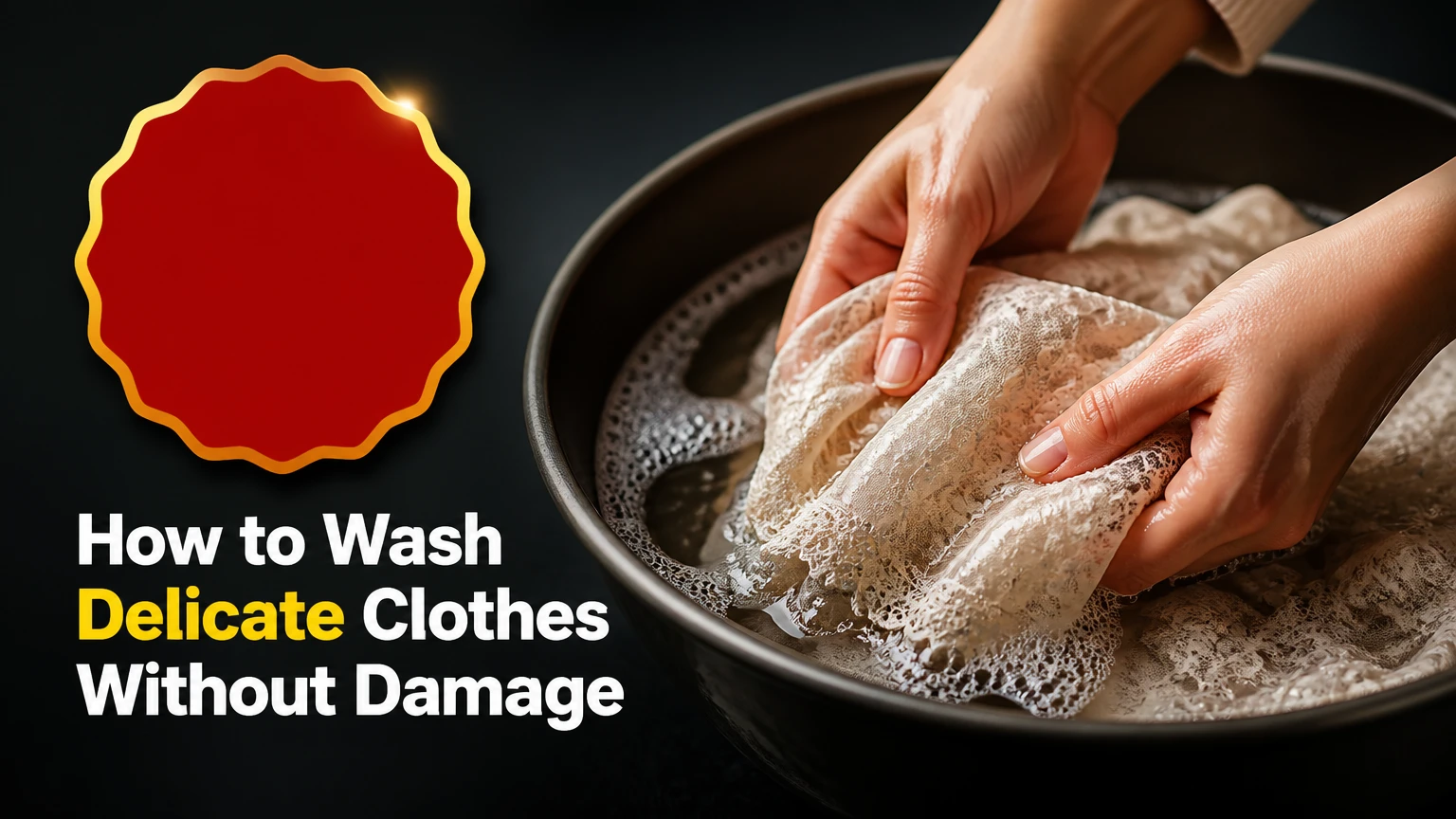
To wash delicate clothes safely, check the care label, sort by color and fiber, use cold water and a small amount of mild detergent, minimize friction, and remove water without wringing. Hand washing gives the most control, while a cold, low-spin machine cycle works for washable synthetics and sturdy labeled garments.
Key Facts at a Glance
- Cold water, low friction, and low heat protect most delicate textiles better than standard laundry settings.
- A care label takes priority over general fabric advice, especially for dry-clean-only garments and embellished clothing.
- Hand washing usually takes 15-25 minutes, while a gentle machine cycle commonly takes 30-50 minutes.
- Wet rayon and viscose are especially vulnerable because their strength and shape can change during handling.
- Knits, wool, and cashmere should dry flat; woven silk and many nylon garments can dry on a padded hanger if the label permits.
- A mesh bag reduces snags and tangling, but it does not make every garment machine-safe.
What Counts as Delicate Clothing?
Delicate clothing includes garments that can be harmed by friction, temperature, water, detergent chemistry, or loss of shape. Common examples include silk blouses, wool sweaters, cashmere, lace, tulle, hosiery, bras, beaded dresses, rayon tops, viscose skirts, and garments containing elastane.
Fiber alone does not determine washing risk. A tightly woven polyester blouse may tolerate a gentle machine cycle, while a polyester dress with glued sequins may require professional cleaning. Construction matters because seams, boning, adhesive, embroidery, underwire, and surface treatments can fail before the base fabric does.
The U.S. Federal Trade Commission explains that care labels provide laundering instructions and warnings for a garment. Treat the label as the first decision point, then use the gentlest method that still removes the soil.
Inspect the Garment Before Washing
Check four areas before adding water:
- Label: Identify washing, temperature, bleach, drying, ironing, and professional-cleaning symbols.
- Construction: Look for underwire, padded cups, hooks, metal trims, sequins, glued stones, pleats, and loose threads.
- Colorfastness: Dab an inside seam with cool water and a white cloth. Transfer means the garment needs separate washing.
- Condition: Photograph or note existing pulls, stains, fading, and stretched elastic so washing does not get blamed for earlier damage.
Do not wash a garment at home simply because the label says “delicate.” “Dry clean,” “dry clean only,” and “do not wash” carry different risk implications, and a delicate machine cycle cannot override those instructions.
Why Does Delicate Washing Prevent Damage?
Delicate washing reduces three mechanisms of textile damage: abrasion, thermal stress, and chemical attack. Fewer drum movements reduce yarn-to-yarn rubbing, cold water limits shrinkage and elastane stress, and a suitable detergent avoids unnecessary alkalinity or aggressive enzymes.
A standard cotton cycle combines prolonged agitation, high-speed spinning, warm or hot water, and contact with heavier garments. That combination can create pilling, snagging, dye transfer, felting, distorted seams, and broken elastic. Delicate care separates the garment from those forces rather than relying on detergent alone.
Protease enzymes target protein soils, so a protease-containing formula may be unsuitable for silk and wool unless the product specifically identifies those fibers as safe. Detergent chemistry varies by product, however; never assume every “regular” liquid detergent contains the same enzyme package.
Which Risks Matter Most?
| Risk | Typical cause | Visible result | Best control |
|---|---|---|---|
| Abrasion | Denim, towels, rough drum action | Pilling, fuzz, thinning | Separate load, mesh bag, gentle cycle |
| Heat | Hot wash, radiator, tumble dryer | Shrinkage, warped elastic, color loss | Cold wash, air dry |
| Felting | Warm water plus agitation in wool | Dense, smaller knit | Wool cycle, minimal movement |
| Snagging | Hooks, zippers, jewelry, agitator | Pulled loops, holes | Fasten closures, bag item |
| Compression | High spin or heavy wet load | Creases, stretched seams | Low spin, small load |
| Chemical attack | Bleach, strong alkali, unsuitable enzymes | Fading, weakness, yellowing | Fiber-safe detergent, no chlorine bleach |
How to Wash Delicate Clothes by Hand
Hand washing is the safest general method for silk, lace, cashmere, underwire bras, fragile hosiery, and garments with loose embellishment. Allow 15-25 minutes for washing, plus drying time, and use a clean basin rather than a sink that may contain bleach or cleaning-product residue.
Before You Start
| Requirement | Typical specification |
|---|---|
| Water | Cool water, approximately 15-25°C |
| Detergent | 1-2 teaspoons liquid delicate detergent per 4-8 liters |
| Basin | Clean sink, tub, or dedicated plastic basin |
| Tools | White towel, white cloth, padded hanger or mesh rack |
| Cost | Usually less than $0.50 per load in detergent |
| Difficulty | Low, but shape control requires attention |
Use less detergent than intuition suggests. Excess soap increases rinsing time and leaves residue, while concentrated detergent can mark silk or dark colors if it touches the dry fabric directly.
Step 1: Sort and Prepare the Garment
Separate lights, darks, and items that have failed a colorfastness test. Close hooks, zippers, and snaps, turn printed or dark garments inside out, and place detachable belts or removable pads aside.
Brush off loose dust before wetting the item. A dry stain is easier to identify before water spreads it across the surrounding fabric.
Step 2: Fill a Clean Basin With Cool Water
Fill the basin with enough water for the garment to move freely without being packed down. Dissolve the detergent completely before adding silk, wool, or dyed fabric.
You will know the water is ready when no concentrated detergent streaks remain. Avoid temperature changes between wash and rinse, because sudden changes can encourage shrinkage in animal fibers.
Step 3: Submerge and Move the Garment Gently
Place the garment in the water and press it below the surface. Slowly move it from side to side for about 2-3 minutes, concentrating on collars, cuffs, underarms, and other soiled areas.
Do not scrub, brush, rub fabric against itself, or twist sleeves. You will know the wash is sufficient when visible soil has loosened and the water is lightly cloudy, even if it is not perfectly clear.
Step 4: Treat Stains Before Longer Soaking
Apply a small amount of diluted detergent to an inconspicuous area, then press the stain from the reverse side with a clean cloth. Wait 5 minutes and check for color change before continuing.
Limit soaking to about 5 minutes for silk, 10 minutes for wool or cashmere, and 10-15 minutes for washable synthetics. Long soaking can swell fibers, release unstable dye, loosen adhesive trims, and spread oily residue.
Step 5: Rinse Until the Water Runs Clear
Drain the wash water and refill the basin with cool water. Press and release the garment several times, then drain and repeat until no slippery detergent residue remains.
Do not hold a heavy wet garment by one shoulder or neckline. Support the full garment with both hands, because wet fabric weighs more and can stretch at its weakest seam.
Step 6: Remove Water Without Wringing
Press the garment against the basin wall, then lay it on a clean white towel. Roll the towel around it and press along the roll for 10-20 seconds.
The towel-roll method removes water without applying the twisting force that distorts knitwear and breaks delicate yarns. Unroll immediately, reshape seams and hems, and move to the correct drying position.
Can Delicate Clothes Go in a Washing Machine?
Delicate clothing can go in a washing machine only when the care label permits washing and the garment has no construction feature likely to fail under movement. Use a small load, a mesh bag, cold water, a gentle or wool cycle, and the lowest effective spin speed.
A machine is usually suitable for washable nylon, polyester, microfiber, acrylic, sturdy cotton lace, and some wool garments labeled machine washable. It is a poorer choice for vintage silk, heavily beaded clothing, structured bras, glued decorations, pleated fabrics, and rayon garments with an unstable shape.
Step 1: Build a Low-Risk Load
Wash delicate items with similar lightweight pieces. Keep out towels, denim, canvas, clothing with exposed zippers, and garments carrying hooks that can catch lace.
Fill a front-loader to about one-third to one-half of its normal capacity. In a top-loader with a central agitator, use extra caution because the agitator can pull loops and straps; a front-loader or hand wash is safer for fragile items.
Step 2: Secure the Garments
Fasten bra hooks, zip zippers, turn garments inside out, and place each item in a suitably sized mesh bag. Do not cram a sweater into a small bag, because compression prevents rinsing and increases creasing.
Use a rigid or padded lingerie bag for bras when available. Remove coins, jewelry, and sharp objects from pockets before loading.
Step 3: Select Settings and Detergent
Choose “Delicate,” “Hand Wash,” or “Wool,” then select cold water and low spin. A typical low-spin range is 400-800 revolutions per minute, but the machine’s wool program may use intermittent movement and a lower extraction speed.
Add the detergent according to the product label, usually 1-2 teaspoons for a small load. Powder can leave residue in cold, short cycles, so a low-foam liquid designed for delicates is often easier to rinse.
Step 4: Remove the Load Promptly
Take garments out as soon as the cycle ends. Shake each item once, smooth seams, and reshape cuffs, shoulders, waistbands, and pleats while damp.
You will know the machine process worked when the garment is clean without stretched openings, pulled threads, excessive suds, or a strong detergent odor. A wet garment that looks misshapen may recover during reshaping, but avoid stretching it aggressively.
Which Washing Method Should You Choose?
Hand washing offers the most control, machine washing offers efficient cleaning and extraction, and professional cleaning suits garments whose shape, finish, or decoration cannot tolerate water. The label, construction, soil type, and replacement cost should decide the method.
| Method | Best candidates | Typical time | Typical cost per item | Main limitation |
|---|---|---|---|---|
| Hand wash | Silk, lace, cashmere, underwire bras | 15-25 minutes | $0.10-$0.50 | Requires careful reshaping |
| Gentle machine | Nylon, polyester, washable acrylic, labeled wool | 30-50 minutes | $0.10-$0.75 | More mechanical movement |
| Home dry-cleaning kit | Lightly soiled labeled items | 30-60 minutes | $2-$6 | Limited stain and shape correction |
| Professional cleaner | Suits, coats, acetate, beading, pleats | 1-3 days | $8-$35+ | Cost and solvent limitations |
Professional cleaning is not automatically gentler. It is useful when water would damage a finish or structure, but a cleaner still needs to assess dyes, adhesives, trims, and previous treatments.
When Should You Use a Professional Cleaner?
Use a professional cleaner for structured jackets, tailored wool coats, heavily embellished dresses, acetate linings, sharply pleated garments, vintage pieces, and items marked “dry clean only.” Tell the cleaner about stains, prior spot treatments, color bleeding, and any attached decorations.
Do not send a garment to dry cleaning solely to remove a washable water-based stain if the label permits home washing. Professional cleaning can remove soil efficiently, but repeated solvent exposure, pressing, and handling may still affect texture or surface finish.
How Should Delicate Clothes Be Dried?
Dry delicate clothes by removing excess water with a towel, restoring their original shape, and providing airflow away from strong heat and direct sunlight. Lay wool, cashmere, heavy knits, rayon, and viscose flat; hang lightweight woven silk, nylon, and some lace only when the label permits.
| Garment or fiber | Drying position | Typical drying time | Avoid |
|---|---|---|---|
| Cashmere sweater | Flat on mesh rack | 12-24 hours | Hanger, radiator, tumble dryer |
| Wool cardigan | Flat, reshaped | 12-24 hours | Hot room, direct sun |
| Lightweight silk blouse | Padded hanger or flat | 2-6 hours | Sharp hanger, strong sunlight |
| Rayon or viscose top | Flat until nearly dry | 4-12 hours | Pulling while saturated |
| Lace lingerie | Flat or padded hanger | 2-6 hours | High heat, metal clips |
| Nylon hosiery | Flat or smooth hanger | 1-4 hours | Twisting, rough pegs |
Drying times vary with humidity, airflow, garment thickness, and fabric construction. A bathroom with poor ventilation can take several times longer than a room with a fan and open airflow.
Do not treat “never tumble dry” as a universal rule for every delicate synthetic. A label may permit low-temperature tumble drying for a particular nylon or polyester garment, but air drying remains the lower-risk option for elastane, wool, rayon, silk, and decorated items.
What Are the Rules for Different Delicate Fibers?
Fiber-specific care depends on how the material responds to water, agitation, heat, and drying tension. Silk and wool are protein fibers, rayon and viscose become vulnerable when wet, and elastane loses performance under repeated heat and chemical stress.
| Fiber or garment | Safest home method | Water and movement | Drying rule |
|---|---|---|---|
| Silk satin | Hand wash if labeled washable | Cool water, 5-minute soak maximum | Flat or padded hanger |
| Wool and cashmere | Wool cycle or hand wash | Cool water, minimal agitation | Flat, reshape wet |
| Rayon and viscose | Hand wash preferred | Cool water, no wringing | Flat, support fully |
| Lace and tulle | Hand wash or individual mesh bag | No rubbing or hooks | Flat or padded hanger |
| Bras and lingerie | Hand wash preferred | Cool water, low compression | Hang by center gore or lay flat |
| Polyester lace | Cold gentle machine cycle | Mesh bag, low spin | Air dry |
| Acetate | Professional cleaning unless label permits washing | Avoid home experimentation | Follow label exactly |
Silk and Satin
Use a pH-mild detergent intended for silk or washable delicates. Silk can develop water marks, color migration, or surface distortion, so test an unseen area and avoid prolonged soaking.
Never use chlorine bleach on silk. Press water out with a towel, keep the garment away from direct sun, and iron only at the label-approved low temperature with a pressing cloth.
Wool, Cashmere, and Mohair
Wool fibers can felt when heat, moisture, and agitation combine. Use a wool-specific cycle or hand wash, maintain a stable cool temperature, and avoid lifting the garment from one end while saturated.
Lay the item to its original measurements on a dry towel or mesh rack. Hanging a wet sweater can lengthen the body and produce shoulder points that may not reverse.
Rayon, Viscose, and Modal
Rayon and viscose require special handling because many versions become weaker and less dimensionally stable when wet. Do not wring, stretch, or carry the garment by one strap, and avoid washing if the care label specifies dry cleaning.
Lay the item flat immediately after towel extraction. If the fabric becomes misshapen, reshape gently while damp rather than pulling it to force a larger size.
Lingerie and Elastane
Close hooks and place bras in a structured lingerie bag. Hand washing reduces underwire distortion and protects elastic, but machine washing can work for labeled sports bras and synthetic underwear on a cold, low-spin cycle.
Never use fabric softener on performance elastics unless the manufacturer permits it. Softener residue can reduce moisture-wicking performance and coat fibers that need to absorb or transport perspiration.
What Should You Never Do to Delicate Clothing?
Avoid heat, twisting, prolonged soaking, abrasive companions, and untested chemicals. The most damaging mistake is often a drying mistake, because a garment can survive a careful wash and then shrink or distort in a hot dryer.
- Do not wring silk, wool, lace, rayon, or lingerie.
- Do not wash delicates with towels, denim, or garments with open zippers.
- Do not pour concentrated detergent directly onto dry silk or dark fabric.
- Do not use chlorine bleach on silk, wool, elastane, or unknown fibers.
- Do not hang a saturated sweater from the shoulders.
- Do not leave wet clothing in the machine for hours, since odor and dye transfer can develop.
- Do not soak embellished garments unless the label and decoration manufacturer allow it.
- Do not scrub a stain aggressively, because local abrasion can create a pale patch.
A practitioner rule of thumb is simple: if a garment is expensive to replace, structurally shaped, or impossible to lay flat, test the method on an inside seam or use a professional cleaner first.
How Do You Fix Shrinkage, Color Bleeding, and Odors?
Treat laundry damage according to its cause, and stop home treatment when the fabric, dye, or decoration is unstable. Mild stretching may improve while a garment is damp, but heat-set shrinkage, dissolved adhesive, and broken fibers usually cannot be restored completely.
| Problem | First response | Avoid | Likely outcome |
|---|---|---|---|
| Mild knit shrinkage | Cool-water rewet and gentle reshaping | Heat and forceful stretching | Partial recovery possible |
| Dye transfer | Rinse separately in cool water | Dryer, chlorine bleach | Some transfer may remain |
| Musty odor | Rewash per label, dry with airflow | Perfume masking, long damp storage | Usually recoverable |
| Pulled thread | Ease loop to reverse side | Cutting the thread | Often repairable |
| Broken elastic | Replace elastic or garment component | Hot rewashing | Washing cannot restore it |
| Glue or sequin loss | Stop washing, isolate item | Scraping or hot ironing | Professional repair may help |
The often-recommended vinegar rinse does not reliably “set” dye in finished clothing. It may reduce some alkaline residue or odor, but it cannot guarantee colorfastness; a cool-water test and separate washing are more dependable.
For yellowed white silk or wool, do not improvise with chlorine bleach or oxygen bleach. Oxygen products vary in suitability, and protein fibers can suffer damage. Follow the product label, garment label, and cleaner guidance before applying any whitening agent.
How Can You Remove Stains From Delicate Fabrics?
Remove stains by identifying the substance, blotting instead of rubbing, and testing a diluted treatment on an hidden seam. Home treatment is most appropriate for small, fresh stains on washable garments; set-in oil, ink, dye, and unknown stains belong with a cleaner.
- Water-based drink or food stain: Blot from the reverse side with cool water, then use diluted delicate detergent.
- Body oil or makeup: Apply a small amount of liquid detergent to the back of the stain for 5 minutes, then rinse.
- Blood: Use cold water only, because heat can set protein residue.
- Wax or adhesive: Do not scrape aggressively or heat silk; ask a cleaner.
- Ink or hair dye: Isolate the garment and seek professional treatment before washing.
- Mildew: Do not seal the damp garment in a bag; a cleaner should assess fibers and dye stability.
A stain remover labeled “oxygen,” “enzyme,” or “bleach-free” is not automatically safe for silk, wool, rayon, or elastane. Read the fiber restrictions, and never mix cleaning products.
How Often Should Delicate Clothes Be Washed?
Wash delicate clothing according to soil, skin contact, sweat, and odor rather than after every wear. A silk blouse worn over a camisole may need airing after one use, while lingerie and base layers generally need washing after each wear.
Air garments in shade before storing them. Do not use airing as a substitute for washing items exposed to perspiration, body oils, sunscreen, food, or smoke, because residue attracts odor and can weaken fibers over time.
The Best Low-Effort Routine
Use a cold delicate machine cycle for washable synthetics, individual mesh bags, a one-third-to-one-half-full load, and prompt air drying. This routine saves time without applying the high friction and heat associated with a standard cotton cycle.
For a budget routine, a clean basin and a small amount of fiber-safe liquid detergent are sufficient. Baby shampoo may work for an occasional hand wash when its ingredients are mild, but it is not a universal substitute for a detergent formulated to rinse clean from textiles.
A salad spinner can remove water from small, lightweight items if the basket is clean and the garment is supported without compression. It is unsuitable for wool sweaters, structured bras, silk dresses, or anything with metal hardware that could catch.
When Is Home Washing the Wrong Choice?
Home washing is the wrong choice when the care label forbids it, the garment has unstable dye, the item is heavily embellished, or the construction depends on permanent pleats, interfacing, padding, or adhesive. Professional care is also sensible when a stain is valuable, old, oily, or chemically complex.
The garment label cannot predict every failure. Vintage textiles, handmade lace, non colorfast dyes, and garments damaged by previous washing need an experienced cleaner or textile conservator rather than repeated home experiments.
Frequently Asked Questions
Can I Wash Delicate Clothes With Regular Laundry Detergent?
Use regular detergent only when its label specifically identifies the garment’s fiber as compatible. Many standard formulas contain enzymes, optical brighteners, fragrances, or stronger alkalinity that can be unsuitable for silk, wool, dark dyes, or sensitive skin. A mild liquid detergent designed for delicates is the safer default.
Should I Wash Delicates in Cold or Lukewarm Water?
Cold or cool water is the safest default for most delicate clothes. Lukewarm water may be allowed for some washable wool or synthetic garments, but the care label controls the maximum temperature. Keep wash and rinse temperatures similar to reduce fiber movement and shrinkage risk.
Can I Iron Silk After Washing?
Iron silk only when the care label permits it, using the lowest suitable temperature and a pressing cloth between the iron and fabric. Iron the garment inside out while it is slightly damp, and avoid pressing directly over prints, sequins, beads, or shiny satin surfaces.
Why Did My Delicate Garment Stretch After Washing?
Stretching usually results from carrying, hanging, or reshaping the garment while it is saturated. Rayon, viscose, wool, cashmere, and heavy knits are especially vulnerable. Rewet the item if necessary, support its full weight, restore its measurements on a flat surface, and dry it there.
Can I Wash a Dry-Clean-Only Garment at Home?
Do not home-wash a dry-clean-only garment unless a qualified textile professional has assessed it. Water can shrink, distort, bleed, or dissolve finishes in garments designed for solvent cleaning. A cold delicate cycle reduces movement, but it cannot prevent water-related damage or restore tailored structure.
How Do I Store Delicate Clothes After Washing?
Store delicate clothing completely dry, clean, and away from direct light. Fold knits, rayon, viscose, and embellished items rather than hanging them; use padded hangers for stable woven garments, leave ventilation around stored pieces, and avoid airtight plastic for long-term storage.
The Bottom Line
To wash delicate clothes safely, follow the care label, choose hand washing when the garment has fragile construction, and use cold water with minimal movement. Use a mesh bag for permitted machine washing, remove water with a towel instead of twisting, dry knits flat, and stop home treatment when dye, structure, or decoration appears unstable.