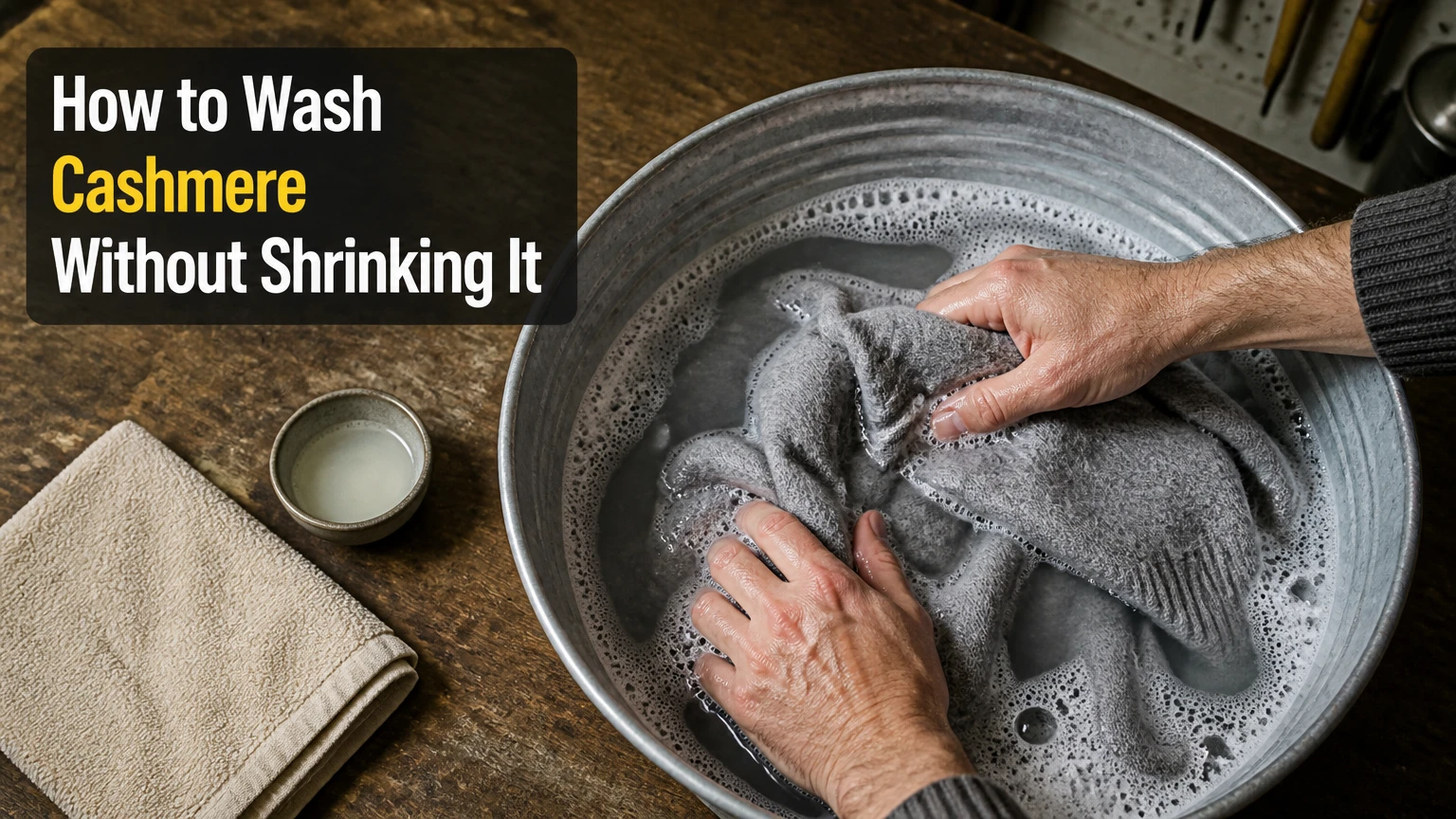
To wash cashmere safely, use cool water at 20-30°C, a liquid wool detergent, and minimal agitation, then press out water and dry the garment flat. Hand washing is the safest method for most cashmere sweaters and scarves; machine washing is acceptable only when the care label permits a wool or delicate cycle.
Key Facts at a Glance
- Cashmere should be washed below 30°C, or 86°F, to reduce shrinkage and felting risk.
- A pH-balanced liquid wool wash without bleach, enzymes, or fabric softener is the safest detergent choice.
- Cashmere must be pressed, never wrung, because wet fibers stretch and distort easily.
- Flat drying usually takes 24-48 hours, depending on garment thickness, airflow, and humidity.
- A care label overrides general advice, especially for cashmere coats, embellished garments, and blended fabrics.
- Cashmere usually needs airing, brushing, or spot cleaning between full washes.
Before You Start
Prepare the garment and washing area before adding water. The safest process takes about 10 minutes of active work, 15-30 minutes of soaking, and 24-48 hours of flat drying.
| Requirement | Typical specification | Why it matters |
|---|---|---|
| Water temperature | 20-30°C, 68-86°F | Limits thermal shock and felting |
| Wool detergent | 5 mL, about 1 teaspoon | Cleans one lightweight garment without excess residue |
| Soak duration | 15-30 minutes | Loosens oils without prolonged exposure |
| Active handling time | 5-10 minutes | Reduces friction and stretching |
| Drying surface | Garment rack or clean towels | Keeps the wet garment supported |
You need a clean basin, a mesh laundry bag if using a machine, two clean towels, a measuring spoon, and a flat drying surface. Check the care label first. “Dry clean only,” leather trim, structured tailoring, sequins, loose embroidery, or a lining should move the garment toward professional cleaning rather than an experimental home wash.
Sort and Inspect the Garment
Turn the cashmere garment inside out and close zippers or buttons. Empty pockets, remove jewelry that could snag the knit, and measure the chest, body length, and sleeve length if the garment has a precise fit.
Inspect cuffs, underarms, collar edges, and visible stains. A pre-wash measurement gives you a reliable reshaping target after washing, which is more accurate than trying to remember the original dimensions.
What Makes Cashmere Delicate?
Cashmere is a fine animal-hair fiber collected from the soft undercoat of cashmere goats, including goats raised in Mongolia, China, Iran, and Afghanistan. The fiber is made largely of keratin protein and has a naturally scaled surface; when heat, moisture, alkaline chemistry, and friction act together, neighboring fibers can interlock and felt.
Cashmere is not delicate because water is inherently harmful. Water is useful for cleaning, but uncontrolled movement and temperature changes create the main risk. The finest fibers also have lower bending resistance than many coarse wool fibers, so a wet sweater can stretch even when it does not visibly shrink.
The care objective is controlled cleaning. Remove sweat, skin oil, dust, and water-soluble residue while keeping the fabric cool, lightly handled, and evenly supported. Cashmere is not normally treated like greasy raw wool, so relying on “preserving lanolin” is misleading; the practical priority is protecting fiber length, loft, and shape.
Why Heat and Friction Cause Felting
Felting occurs when fiber scales catch against one another and progressively migrate in one direction under moisture, heat, and agitation. A hot wash followed by a vigorous spin can therefore cause permanent size loss even when the detergent is labeled “gentle.”
Alkaline products increase the risk because wool-type protein fibers perform better in mildly acidic to neutral conditions. A single brief wash may not ruin cashmere, but repeated exposure to unsuitable detergent can weaken fibers, dull color, and increase surface fuzz.
How to Wash Cashmere by Hand
Hand washing is the preferred method for most washable cashmere knitwear because the owner controls temperature, soaking time, and movement. Use cool water, dissolve the detergent before adding the garment, and press suds through the knit instead of rubbing the fabric against itself.
Step 1: Fill a Basin With Cool Water
Fill a clean basin with enough 20-30°C water to fully cover the garment without crowding it. Use the same temperature for washing and rinsing, because a sudden change from warm water to cold water can increase dimensional stress.
Measure approximately 5 mL, or one teaspoon, of liquid wool detergent for one lightweight sweater or scarf. Mix the detergent into the water until evenly dispersed before inserting cashmere.
You’ll know it worked when: the water feels cool or barely lukewarm, and no concentrated detergent sits on the basin floor.
Common mistake: pouring detergent directly onto dry cashmere. Concentrated product can create uneven cleaning or visible residue.
Step 2: Submerge and Soak the Garment
Place the inside-out cashmere garment into the basin and press it below the surface. Let it soak for 15-30 minutes, depending on soil level; use the shorter time for lightly worn knitwear and the longer time for body-oil buildup.
Do not leave cashmere soaking overnight. Extended soaking can loosen dyes, swell the fibers, and make the garment harder to handle without stretching.
You’ll know it worked when: water has penetrated the entire garment and light soil releases without scrubbing.
Common mistake: lifting the sweater by the shoulders while it is saturated. Support the whole garment with both hands.
Step 3: Press the Suds Through the Knit
Gently compress sections of the garment under the water for about one minute. Move the cashmere only enough to distribute the wash liquor, then leave it still for another 5-10 minutes if the underarms or collar need more cleaning.
Never scrub, twist, rub cuffs together, or knead cashmere as if it were a towel. Those actions produce the friction that encourages felting and can increase pilling.
You’ll know it worked when: the garment feels evenly wet and the water becomes slightly cloudy without visible dye streaks or fiber clumps.
Common mistake: treating a stain with vigorous rubbing. Blot the area instead, as described below.
Step 4: Rinse With Temperature-Matched Water
Drain the basin and refill it with clean water at roughly the original temperature. Press clean water through the cashmere, drain, and repeat until the rinse water is mostly clear and no slippery detergent film remains.
Two or three rinses are typical for a sweater washed with the recommended detergent amount. Excess detergent makes rinsing longer and can leave the knit stiff or attract soil.
You’ll know it worked when: the water remains nearly clear and the fabric no longer feels slick.
Common mistake: rinsing under a strong running tap. Direct water pressure can stretch a concentrated area of the garment.
Step 5: Press Out Water Without Wringing
Support the garment from underneath, lift it as one bundle, and press it gently against the basin wall. Do not twist it. Lay the cashmere flat on a clean towel, roll the towel and garment together, and press along the roll to transfer water.
A second dry towel may be necessary for a thick, two-ply sweater. The goal is damp rather than dripping cashmere before reshaping.
You’ll know it worked when: the garment is moist but no longer releases a stream of water when gently pressed.
Common mistake: putting dripping cashmere directly on a drying rack. The weight can lengthen the shoulders and distort the body.
How to Dry Cashmere Without Stretching It
Dry cashmere flat on a dry towel or ventilated mesh rack, away from radiators, heated vents, direct sunlight, and tumble dryers. Reshape the garment while damp, matching the measured body length, sleeve length, neckline, and hem before leaving it undisturbed for 24-48 hours.
Spread sleeves naturally instead of folding them sharply over the body. Keep the garment in a single layer so air can reach both surfaces; turn it once after several hours if the towel remains damp.
Replace a wet towel after 4-8 hours when necessary. High humidity, dense cable knits, and double-layered cashmere can require more than 48 hours, while a thin scarf in a dry room may finish in about 18-24 hours.
Drying Checkpoints
The garment is ready to store when the cuffs, collar, underarms, and seams feel fully dry. Slight coolness is not proof of dampness, so check thick areas by pressing them between clean fingers for several seconds.
Do not hang wet or damp cashmere on a hanger. Hanging can create shoulder points, lengthen sleeves, and make the neckline lose its intended shape.
Can You Machine-Wash Cashmere?
Cashmere can go in a washing machine only when the care label allows machine washing and the appliance has a genuine wool or hand-wash cycle. Use a mesh bag, cold or 20°C water, low agitation, and a spin speed around 400-600 rpm; hand washing remains safer when the label is unclear.
| Washing method | Water and cycle | Typical time | Main risk |
|---|---|---|---|
| Hand wash | 20-30°C, no mechanical cycle | 30-45 minutes active and soak time | Stretching during lifting |
| Wool machine cycle | Cold or 20°C, 400-600 rpm | 30-60 minutes | Wrong automatic settings |
| Delicate cycle | Cold, lowest available spin | 30-50 minutes | Excessive drum movement |
| Professional cleaning | Provider-selected process | 24-72 hours | Chemical or heat mismatch |
Turn the garment inside out, place it alone or with similar fine knitwear in a zipped mesh bag, and select the wool cycle rather than a standard delicate cycle when both options exist. Disable automatic detergent dispensing if possible, because concentrated detergent or an unsuitable formula may be released at the wrong dose.
Remove cashmere as soon as the cycle ends. Reshape it flat immediately. A machine’s low-speed spin extracts water efficiently, but a high-speed spin, overloaded drum, or mixed load containing denim can cause distortion and abrasion.
When Is Dry Cleaning Better?
Professional cleaning is the better choice for cashmere coats, tailored jackets, lined pieces, garments with leather or suede details, strong oil-based stains, and care labels that prohibit water washing. Dry cleaning is not automatically gentler, however; tell the cleaner that the item is cashmere and ask about low-heat finishing.
A washable cashmere sweater does not require routine dry cleaning merely because it is expensive. Repeated professional cleaning can cost more and may reduce softness if the process uses aggressive chemistry or high heat, while careful hand washing can be appropriate for a simple, colorfast knit.
Which Cashmere Washing Method Should You Choose?
Hand washing offers the highest control, machine washing saves labor when the label and appliance support it, and professional cleaning suits structured or high-risk garments. The correct choice depends on construction, care-label instructions, stain type, and the consequences of losing shape.
| Garment or situation | Recommended method | Typical household cost | Typical drying or return time |
|---|---|---|---|
| Plain cashmere sweater | Hand wash | $0.10-$0.50 detergent | 24-48 hours |
| Label-approved modern knit | Wool machine cycle | $0.10-$0.50 detergent | 24-48 hours |
| Cashmere scarf | Hand wash in shallow basin | $0.05-$0.20 detergent | 18-36 hours |
| Lined cashmere coat | Professional cleaner | $15-$35 typical | 24-72 hours |
| Vintage or heirloom knit | Specialist cleaner or cautious hand wash | $10-$35 typical | 24-72 hours |
Choose hand washing for a plain sweater, scarf, or cardigan with a washable label. Choose a machine cycle when convenience matters and you have verified the temperature, spin speed, and cycle behavior. Choose professional cleaning when the garment’s construction makes water exposure unpredictable.
How Often Should Cashmere Be Washed?
Wash cashmere after about four to five wears as a typical starting point, but adjust that interval for sweat, odor, stains, climate, and whether the garment was worn over a base layer. Airing the garment for several hours, brushing off surface dust, and spot treating marks can reduce full washes.
Cashmere does not need washing after every wear unless it has absorbed sweat or contacted food, cosmetics, smoke, or body oils. Overwashing increases wet handling, detergent exposure, and opportunities for shape loss.
| Situation | Care between wears | Full-wash guidance |
|---|---|---|
| Light indoor wear over a shirt | Air 12-24 hours | Every 4-6 wears |
| Warm commute or high perspiration | Air briefly, inspect underarms | After 1-2 wears |
| Small food or makeup mark | Spot blot immediately | Wash after stain treatment |
| Smoke or strong odor | Air in moving air, do not perfume | Wash when odor persists |
| Seasonal storage | Wash and dry completely first | Before storage, not after |
Fold clean cashmere rather than hanging it. Store it in a breathable drawer or box with cedar nearby, not touching the garment directly if the wood is aromatic or oily. Moths are attracted to body oils and food residue, so clean storage is part of laundering.
How Should You Remove Stains From Cashmere?
Treat cashmere stains immediately by blotting with cool water and a small amount of wool detergent, working from the outside toward the center without rubbing. Oil, ink, red wine, and dye-transfer stains may require a professional cleaner because household solvents can create rings or permanent color loss.
For a water-soluble mark, place a white towel beneath the fabric and dab with a clean white cloth dampened with cool water. Apply diluted wool detergent only after testing an inconspicuous seam, then rinse the treated area by pressing with clean water.
Avoid chlorine bleach, oxygen bleach unless the garment maker expressly permits it, stain sticks designed for cotton, alcohol-based sanitizer, and undiluted dish soap. These products may alter dye, strip surface finish, or change the hand of the cashmere.
Never use hot water to “melt” an oily stain. Heat can set some stains and increases the risk of felting.
What Detergent Is Safe for Cashmere?
Use a liquid detergent labeled for wool, cashmere, or other protein fibers, with a neutral or mildly acidic pH and no bleach, protease enzymes, optical brighteners, or fabric softener. A small dose is sufficient because excess detergent makes rinsing more difficult.
Standard laundry detergents are designed for cotton and synthetic loads and may contain enzymes or alkaline builders. The claim that one wash will “eat” a cashmere sweater is overstated, but repeated use can weaken protein fibers and cause dullness or thinning.
Baby shampoo is sometimes used for emergency hand washing because it is mild, but formulations vary and many contain conditioning ingredients, fragrance, or a pH unsuitable for repeated textile care. A wool detergent is the more predictable choice.
Fabric softener is unnecessary. It coats fibers, can reduce absorbency, and may make residue and pilling more noticeable.
Common Mistakes and How to Fix Them
The Garment Shrunk Slightly
A mildly shrunken garment may regain some dimensions after soaking in cool water with a small amount of wool wash, followed by careful hand reshaping. Complete recovery is unlikely when fibers have tightly felted, and no home method can reliably restore the original size.
You can try a 20-30 minute soak, then press out water and reshape the garment flat to its original measurements. Some care professionals use diluted hair conditioner to relax fibers, but results vary because formulas and the degree of felting differ. Do not stretch aggressively, as that can permanently distort the knit.
The Garment Became Fuzzy or Pilled
Pilling results from loose fibers working to the surface through wear and friction; it does not necessarily mean the garment is damaged. Let the garment dry completely, then use a cashmere comb or a guarded fabric shaver with light pressure in one direction.
Do not pull pills by hand. Pulling can remove sound fibers and create thin spots. Reduce future pilling by rotating garments, avoiding rough coat linings and shoulder bags, and washing inside out in a low-friction bag.
The Color Bled
Color bleeding requires immediate separation from other garments. Rinse the affected item in cool water until runoff decreases, but do not use salt, vinegar, or hot water as universal dye-setting remedies.
If the garment has developed an obvious dye-transfer mark, stop home treatment and contact a cleaner experienced with luxury knits. Some dyes are intentionally less fixed, particularly in saturated red, navy, and black cashmere.
The Sweater Stretched
Reshape stretched cashmere while damp by laying it flat and aligning side seams, cuffs, hem, and neckline. If the knit has permanently lengthened, washing cannot reliably reverse the change.
The usual cause is lifting or hanging the saturated garment. Use a towel sling or support the full garment with both hands every time it leaves the basin.
The Garment Smells After Washing
Persistent odor usually means residue, incomplete drying, or absorbed smoke rather than a need for stronger perfume. Rinse more thoroughly, dry in moving air, and inspect thick seams and underarms for retained moisture.
Do not spray fragrance directly onto cashmere. Alcohol, oils, and colorants can leave stains or alter the fiber surface.
Variations for Different Cashmere Garments
Cashmere Scarves
Wash scarves in a basin large enough for free movement, using about half the detergent dose required for a sweater. Because scarves are long and often loosely woven, support the entire length when lifting and reshape the edges carefully during flat drying.
Cashmere Blends
Read the fiber content and care label before selecting a method. Cashmere blended with silk, cotton, nylon, or viscose may have different shrinkage, dye, and drying behavior, so the most fragile fiber and the manufacturer’s instructions determine the safe procedure.
Cashmere Coats and Structured Pieces
Do not immerse a lined coat, shoulder-shaped jacket, or garment with glued interfacings unless the label specifically permits it. Water can distort canvas, padding, lining, and fusible construction even when the cashmere shell itself survives.
FAQ
Can I Wash Cashmere With Shampoo?
Use a wool-specific liquid detergent whenever possible. A mild baby shampoo can be an emergency substitute for one hand wash, but shampoo formulas vary in fragrance, conditioners, and pH, so repeated use is less predictable than a detergent made for wool and cashmere.
Can Cashmere Go in the Dryer?
Cashmere should not go in a tumble dryer unless the garment manufacturer expressly permits it. Tumble heat and repeated mechanical movement can shrink, felt, or distort the knit; flat drying on a towel or mesh rack is the safer default.
Should I Iron Cashmere?
Avoid direct ironing because heat and pressure can flatten the nap and create shine. Remove wrinkles with light steaming from a short distance, then let the garment rest flat; never stretch a wet or freshly steamed area into shape.
Can I Wash Cashmere in Cold Water?
Yes. Water between 20°C and 30°C is suitable for most washable cashmere, provided the garment is handled gently and the rinse temperature is similar. Extremely cold water is not required, but hot water and abrupt temperature changes increase shrinkage risk.
How Do I Store Cashmere After Washing?
Store cashmere only after every thick area is completely dry. Fold the garment flat in a breathable drawer or storage box, keep it away from damp walls, and use cedar or a moth-control product without placing oily wood directly against the fibers.
Is Dry Cleaning Safer Than Hand Washing?
Dry cleaning is safer for lined, structured, embellished, or label-restricted garments, while hand washing is often safer for a plain washable knit. The cleaner’s process, heat, solvent, and finishing technique matter, so tell the professional that the garment is cashmere.
The Bottom Line
How to wash cashmere safely comes down to four controls: keep water at 20-30°C, use wool detergent, minimize friction, and dry the garment flat. Hand wash a plain washable knit for maximum control, machine wash only under label-approved settings, and use a specialist cleaner for structured or high-risk pieces. Proper washing protects softness, size, and shape far better than frequent dry cleaning or aggressive home stain treatments.