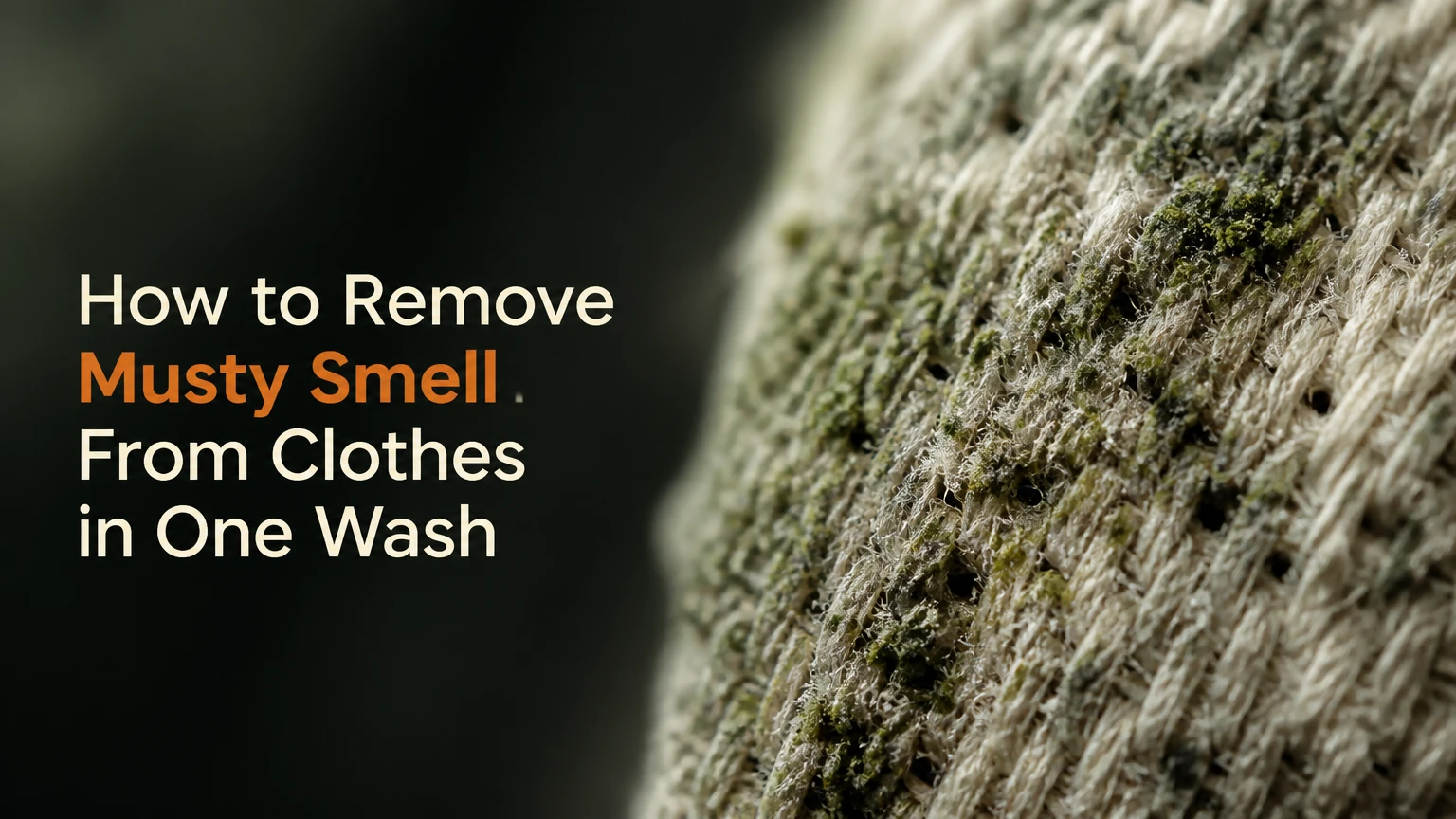
To remove a musty smell from clothes, wash washable items with heavy-duty detergent at the warmest care-label-safe temperature, use oxygen bleach when the fabric permits, rinse thoroughly, and dry completely. The most important factor is eliminating moisture and the odor source, because clean clothing can smell musty again if the washer, hamper, closet, or fabric remains damp.
Key Facts at a Glance
- Musty clothing odors usually come from prolonged dampness, mildew residue, detergent buildup, body oils, or a contaminated washer.
- Vinegar and baking soda should not be combined in the same wash because they largely neutralize each other.
- Oxygen bleach is generally more suitable than chlorine bleach for washable colored fabrics, but a care-label and colorfastness test is still required.
- Complete drying matters more than fragrance: clothing should feel dry at seams, waistbands, cuffs, pockets, and thick folds.
- Visible mold, strong contamination, delicate fibers, or health-sensitive occupants may require professional cleaning or disposal.
- A musty odor that returns in a closet often indicates excess humidity or poor airflow rather than a failed laundry cycle.
What Causes a Musty Smell in Clothes?
Musty clothing smells develop when moisture, organic residue, and limited airflow allow microorganisms or odor compounds to remain in the textile. Common triggers include leaving wet laundry in a washer, storing slightly damp clothes, using too much detergent, packing garments tightly, and placing clean clothes in a humid closet.
Mildew can leave both odor and discoloration, but not every musty smell proves that visible mold is growing on the garment. Polyester activewear often retains body oils and odor compounds even after ordinary detergent washing, while cotton towels hold water deep inside their loops. A front-loading washer can also transfer odor from a damp door gasket, detergent drawer, drain filter, or internal drum area.
The U.S. Environmental Protection Agency summarizes the basic principle as: “The key to mold control is moisture control.” Removing fragrance without removing moisture produces a temporary result.
Is a Musty Odor the Same as Mold?
A musty odor is a warning sign, not a laboratory diagnosis of mold. The smell may come from mildew, bacteria, decomposing residue, or volatile compounds trapped in fibers, so treatment should target both the odor and the moisture source.
If clothing has fuzzy growth, widespread dark spotting, a wet-basement odor after flooding, or contamination from sewage, do not shake or brush it indoors. People with asthma, mold allergies, chronic lung disease, or weakened immune systems should avoid handling suspect garments. The Centers for Disease Control and Prevention advises people with mold sensitivity or respiratory conditions to reduce exposure and seek medical advice for persistent symptoms.
Before You Start
The following setup suits a normal washable load with a light or moderate musty odor. Heavily mold-stained, dry-clean-only, leather, or irreplaceable garments need the variations later in this guide.
| Requirement | Typical specification | Why it matters |
|---|---|---|
| Total time | 1.5-4 hours | Includes washing, optional soaking, and drying |
| Active work | 10-20 minutes | Sorting, measuring, and moving garments |
| Difficulty | Low | Requires label checking and chemical safety |
| Detergent | Standard measured dose | Surfactants remove oils and odor residue |
| Oxygen bleach | Product-label dose | Oxidizes organic stains on compatible fabrics |
| Water temperature | 30-60°C, label permitting | Warm water improves soil removal |
| Machine load | Half to two-thirds full | Allows movement and rinsing |
| Drying space | Airflow around every garment | Prevents odor recurrence |
Gather heavy-duty laundry detergent, color-safe oxygen bleach if appropriate, clean towels for blotting, a drying rack or clothesline, and gloves for handling visibly soiled items. Do not use fabric softener during odor recovery because its coating can reduce absorbency and make residue harder to remove.
How to Remove Musty Smell From Clothes
A reliable process has six actions: isolate the garments, check the care labels, pre-treat residue, wash with detergent, rinse thoroughly, and dry immediately. For most washable cotton and synthetic garments, the process takes 1-4 hours depending on whether an oxygen-bleach soak is needed.
Step 1: Sort and Inspect the Garments
Separate washable colors, white cottons, delicates, wool, silk, dry-clean-only items, and garments with visible growth. Read the care label before selecting water temperature, bleach, tumble-drying, or professional cleaning.
Take potentially moldy items outdoors only if doing so will not spread contamination to people or neighboring property. Wear gloves and a well-fitting respirator such as an N95 when handling visible mold, and place items in a washable basket or sealed bag until treatment begins. Never put a visibly contaminated garment into a shared hamper.
You will know this step worked when: every garment has a compatible treatment group and no care label has been ignored.
Common mistake: washing a wool sweater or silk blouse in the same hot cycle as towels. Heat, agitation, and alkaline products can shrink, felt, weaken, or distort delicate fibers.
Step 2: Remove Loose Residue and Pre-Treat
For ordinary odor, skip aggressive brushing and move directly to laundering. For a small, dry mildew spot on a washable item, gently remove loose material outdoors with a disposable soft brush, then launder the garment separately.
Do not scrub a wet mold colony into the fabric. Do not use a household vacuum unless it has appropriate filtration and is designed for contaminated material. Pre-treat greasy collars, underarms, cuffs, and activewear panels with a small amount of liquid detergent for 10-15 minutes; body oils can protect odor compounds from water-based washing.
You will know this step worked when: surface debris is contained and visibly oily areas have a thin detergent film, not a saturated puddle.
Common mistake: spraying perfume or fabric freshener over the odor. Fragrance masks volatile compounds and can make later diagnosis more difficult.
Step 3: Wash With Detergent and, When Suitable, Oxygen Bleach
Load the washer loosely, add the detergent dose specified for the load and water hardness, and select the warmest temperature permitted by the care label. Add oxygen bleach according to its package directions, usually to the designated dispenser or drum, but never exceed the stated dose.
Oxygen bleach usually contains sodium percarbonate, which releases hydrogen peroxide in water. It can help with organic discoloration and odor on many cottons, linens, and colorfast synthetics, but it is not automatically safe for wool, silk, leather, spandex-heavy garments, or unstable dyes. Test a hidden area first.
Use a normal or heavy-duty cycle with adequate water and agitation. A packed drum prevents detergent from reaching fabric surfaces and stops loosened residue from rinsing away.
You will know this step worked when: the garment smells substantially cleaner while wet and has no slippery detergent film after rinsing.
Common mistake: adding more detergent to improve cleaning. Excess detergent can remain in fibers, bind soil, and create a new odor problem.
Step 4: Add an Extra Rinse
Run an extra rinse when the odor is strong, the garment is thick, detergent was overdosed, or oxygen bleach was used. Choose cold or cool water unless the care label specifies another setting.
An extra rinse removes suspended soil, detergent, oxidizer residue, and loosened odor compounds. It is especially useful for towels, fleece, thick cotton knits, and high-efficiency washers that use limited water.
You will know this step worked when: rinse water is not excessively sudsy and the fabric feels clean rather than waxy or powdery.
Common mistake: replacing rinsing with a scent booster. Scent products add fragrance; they do not extract the residue causing a persistent musty smell.
Step 5: Dry the Garments Completely
Move clothing to a dryer or drying line as soon as the cycle ends. Use the highest dryer temperature allowed by the care label, or air-dry in bright, moving air with space between garments.
Sunlight can help dry and freshen fabrics, but ultraviolet exposure is not a dependable sterilization method for every textile. Direct sun can fade dyes, weaken elastane, and damage vintage fabrics, so shade with strong airflow is safer for many garments. Dry thick seams and folds first because they retain moisture after the surface feels dry.
You will know this step worked when: cuffs, waistbands, pockets, collars, hems, and seams feel dry and the garment has no odor after cooling.
Common mistake: removing clothing from the dryer while it is warm and assuming warmth equals dryness. Let thick items cool for 10 minutes, then check hidden layers.
Step 6: Recheck After Cooling
Evaluate the garment only after it has cooled and equilibrated in dry air. Heat can temporarily suppress odor perception, while moisture can temporarily intensify it.
If the smell is gone, store the item only in a dry, ventilated place. If the odor remains, repeat with a targeted method rather than repeatedly adding vinegar, baking soda, or detergent.
Which Odor Treatment Works Best?
The best treatment depends on the fabric, odor source, and whether staining is present. Detergent is the foundation, oxygen bleach is the most useful add-on for many washable colorfast items, enzyme detergent suits oily activewear, and professional cleaning is safer for fragile or valuable garments.
| Treatment | Best fabric or situation | Typical time | Main limitation |
|---|---|---|---|
| Heavy-duty detergent | Cotton, linen, polyester | 45-90 minutes | May not remove deep oil buildup alone |
| Oxygen bleach | Colorfast cotton and linen | 1-4 hours | Can damage wool, silk, or unstable dyes |
| Enzyme sports detergent | Polyester activewear | 45-120 minutes | Must follow garment temperature limits |
| White vinegar rinse | Light residue and mineral buildup | 45-90 minutes | Does not reliably remediate mold |
| Baking soda | Mild odor and detergent residue | 45-90 minutes | Weak standalone treatment for embedded odor |
| Chlorine bleach | Compatible white cotton only | 45-90 minutes | Fades, weakens fibers, and creates hazardous fumes |
| Professional cleaner | Silk, wool, vintage, tailored garments | 1-7 days | Typical cost is $8-$40 per garment |
| Disposal | Extensive porous contamination | Immediate | Necessary when safe restoration is impractical |
Vinegar Versus Baking Soda
White vinegar and baking soda are different tools, but combining them in the same wash is inefficient. Acetic acid and sodium bicarbonate react to produce carbon dioxide, water, and sodium acetate, so the visible fizz does not represent superior cleaning power.
If mineral residue or a sour laundry smell is the problem, use a small amount of distilled white vinegar in a separate rinse, never in the same compartment or cycle as chlorine bleach. For mild odor, baking soda can support detergent cleaning, but it does not reliably kill mold or remove embedded body oils.
A vinegar treatment is not a substitute for detergent, oxygen bleach, complete drying, or fixing a damp washer. Repeated concentrated vinegar use can affect rubber components and some finishes.
Oxygen Bleach Versus Chlorine Bleach
Oxygen bleach is the safer first bleaching option for many colorfast washable garments because it is less likely than chlorine bleach to strip dye at label-safe concentrations. Chlorine bleach works faster on some compatible white cottons, but it can weaken fibers, damage elastane, discolor fabrics, and release dangerous gas when mixed with acids or ammonia.
| Decision factor | Oxygen bleach | Chlorine bleach |
|---|---|---|
| Colored cotton | Usually suitable after testing | Not suitable |
| White cotton towels | Suitable | Suitable if label permits |
| Polyester | Often suitable after testing | Label-dependent |
| Wool or silk | Generally unsuitable | Unsuitable |
| Visible mildew stain | Can lighten some stains | Can remove some stains |
| Fabric damage risk | Moderate with misuse | High with repeated use |
| Mixing safety | Never mix with other cleaners | Never mix with vinegar, acids, or ammonia |
Never mix chlorine bleach with vinegar, toilet cleaner, ammonia, or another disinfectant. If fumes occur, leave the area and ventilate it without exposing yourself to the vapor.
Fabric-Specific Variations
How Should You Treat Polyester Activewear?
Polyester activewear usually needs oil removal rather than hotter washing. Apply liquid enzyme or sports detergent to underarms and high-sweat areas for 10-15 minutes, wash at the warmest permitted temperature, run an extra rinse, and air-dry immediately.
Avoid fabric softener because it can reduce moisture transport and leave a film that traps body oils. Do not use high heat unless the care label allows it, since elastane blends can lose stretch. If odor returns when the garment warms against skin, repeat the enzyme treatment or use a commercial sports-odor product according to its label.
How Should You Treat Towels?
Wash musty towels separately with detergent at the hottest label-safe temperature, using oxygen bleach when compatible. Run an extra rinse, then dry on a complete cycle with space for air movement.
Towels retain moisture inside dense loops, so a surface-dry towel can still smell after folding. Do not overload the washer or dryer, and do not use fabric softener because it reduces absorbency and can trap residue. If towels remain musty after two targeted washes and a clean washer, replacement is often more economical than repeated chemical treatment.
How Should You Treat Wool, Silk, and Vintage Clothing?
Wool, silk, vintage clothing, and embellished garments should be aired in shade, spot-tested, and cleaned according to the label or a textile specialist’s instructions. Do not use hot water, oxygen bleach, chlorine bleach, borax, or vigorous brushing unless a qualified cleaner confirms compatibility.
For a valuable vintage garment, photograph stains, isolate the item from the wardrobe, and ask a cleaner about wet-cleaning, solvent cleaning, and odor treatment. Vodka or rubbing alcohol sprays are not universal solutions: alcohol can affect dyes, finishes, adhesives, and historic fibers, and it does not remove the moisture source.
Why Does the Musty Smell Keep Coming Back?
A recurring odor usually means the moisture source or residue source remains. The four most common causes are a contaminated washer, damp storage, incomplete drying, and synthetic fabric holding body oils.
Clothes Smell Musty After Washing
Clean the washer before washing the garments again. Wipe the door gasket, detergent drawer, and accessible surfaces; remove lint and residue from the drain filter if the manufacturer permits; then run the manufacturer’s Clean Washer cycle with the specified washer cleaner.
Do not automatically pour two cups of chlorine bleach into the machine. Washer designs and manuals differ, and excessive bleach can damage seals or create dangerous residue if another cleaner was recently used. Follow the appliance manufacturer’s instructions.
Clothes Smell Musty in the Closet
Measure closet humidity with an inexpensive hygrometer. A typical target is below 60% relative humidity, with lower humidity preferable for long-term storage; EPA guidance recommends controlling indoor moisture and drying wet areas promptly.
Leave space between hangers, avoid storing damp shoes or laundry nearby, improve airflow, and use a dehumidifier when the room remains humid. Calcium chloride moisture absorbers can help in small enclosed spaces, but they cannot correct a roof leak, plumbing leak, condensation problem, or persistently humid room.
Clothes Smell Musty After Drying
Check the dryer for incomplete drying, a blocked lint screen, poor exhaust flow, or an overloaded drum. Clean the lint filter every load and have the vent inspected if drying times increase or the dryer becomes unusually hot.
A dryer can remove moisture without removing embedded oils. Polyester and heavily soiled collars may therefore need an enzyme pre-treatment before another wash.
Common Mistakes and How to Fix Them
| Mistake | What happens | Recovery |
|---|---|---|
| Vinegar and baking soda together | The acid and base largely neutralize | Rewash with detergent, then rinse |
| Chlorine bleach with vinegar | Potentially toxic chlorine gas | Leave, ventilate, and seek help if symptoms occur |
| Wet laundry left overnight | Microbial odor compounds accumulate | Rewash promptly and dry completely |
| Overloaded washer | Poor movement and rinsing | Reduce load to half or two-thirds full |
| Fabric softener on towels | Coating reduces absorbency | Wash without softener and add an extra rinse |
| Sealed damp storage | Humidity remains trapped | Remove garments, dry them, and lower room humidity |
One practitioner rule is to diagnose the first point at which the odor appears. If clothes smell before washing, inspect the hamper and closet; if they smell after washing, inspect the washer; if they smell only after wearing, suspect body oils and synthetic fibers.
When Should You Discard Musty Clothes?
Discard porous clothing when it has extensive visible mold, sewage contamination, flood exposure, persistent odor after two appropriate treatments, or structural damage such as weakened fibers. Garments that cannot be safely washed and have little financial or sentimental value are poor candidates for repeated home remediation.
Small, isolated mildew spots on washable cotton can sometimes be treated successfully. Irreplaceable items, infant clothing, bedding used by someone with respiratory sensitivity, and contaminated garments from a major water event deserve professional assessment rather than experimentation.
A garment is not restored merely because the odor is temporarily masked. Inspect it after 24 hours in a dry room and after ordinary wear before returning it to long-term storage.
Typical Time and Cost
Household treatment usually costs $0.50-$6 per load, excluding the washer and dryer. Professional cleaning commonly costs $8-$40 per garment, while restoration after flood or extensive mold contamination can cost substantially more.
| Treatment scenario | Materials cost | Time to wash | Drying or waiting |
|---|---|---|---|
| Mild odor, detergent only | $0.50-$2 | 45-90 minutes | 1-3 hours |
| Colorfast garment with oxygen bleach | $1-$6 | 1-4 hours | 1-3 hours |
| Polyester activewear treatment | $2-$8 | 60-120 minutes | 1-2 hours |
| Musty towel reset | $1-$5 per load | 60-120 minutes | 1-3 hours |
| Washer cleaning | $2-$10 | 60-120 minutes | 10 minutes wiping |
| Professional dry cleaning | $8-$40 per item | 1-3 days | Cleaner-dependent |
These are typical household ranges, not fixed prices. Product size, local utility rates, garment quantity, and professional service level change the total.
Frequently Asked Questions
Can I remove a musty smell without washing clothes?
Airing can reduce a light odor, but it rarely removes residue embedded in fabric. Hang the garment in dry, moving air for several hours, preferably in shade for delicate textiles, then launder it when the care label permits. Do not rely on perfume, freezer storage, or sunlight alone for mold-stained clothing.
Does hot water kill mildew in clothes?
Hot water can improve soil removal and reduce some microorganisms, but ordinary laundry temperatures do not guarantee complete mold sterilization. Use the warmest label-safe setting with detergent, then dry thoroughly. High heat can shrink cotton, damage elastane, set some stains, or harm wool and silk.
How long should musty clothes soak?
A typical oxygen-bleach soak lasts 1-4 hours according to the product label, while detergent pre-treatment for oily areas usually takes 10-15 minutes. Longer soaking is not automatically better: dyes can bleed, fibers can weaken, and stagnant water can develop another odor.
Can I put moldy clothes directly in the washing machine?
Small amounts of mildew on washable clothing can be laundered separately, but heavily contaminated garments should not enter a shared household load. Remove loose growth outdoors with protection, follow the care label, clean the washer afterward, and keep contaminated items away from clean laundry.
How do I stop clothes from smelling musty in storage?
Store clothing only when completely dry, leave air space between garments, keep closet humidity below 60% when possible, and address leaks or condensation. Clean the closet, wash storage containers, and avoid sealing damp textiles in plastic totes. Moisture control prevents recurrence better than fragrance products.
The Bottom Line
To remove a musty smell from clothes, sort by care label, treat oily areas, wash with the correct detergent at the warmest safe temperature, add oxygen bleach when compatible, rinse thoroughly, and dry every seam completely. Do not combine vinegar with baking soda or chlorine bleach. If the odor returns, inspect the washer, closet humidity, hamper, and synthetic-fiber residue before repeating the wash.