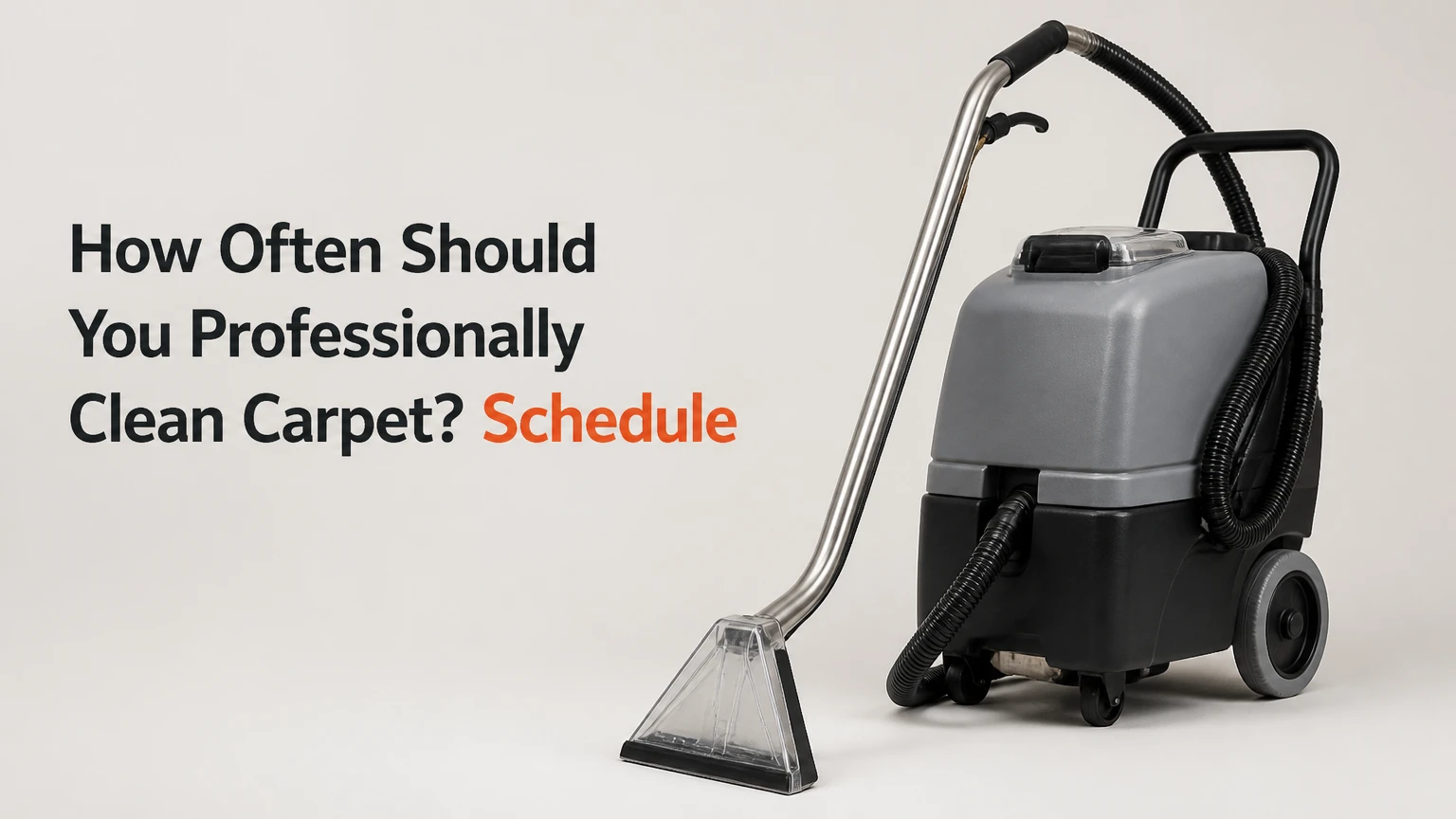
Most residential carpet should be professionally cleaned every 6-12 months, while lightly used carpet can often wait 12-18 months and homes with pets, children, smokers, or heavy traffic may need service every 3-6 months. Clean sooner for flooding, persistent odor, visible soil, recurring stains, or a move-out inspection.
Key Facts at a Glance
- A typical family home without pets needs professional carpet cleaning about every 6-12 months.
- One or two occupants with low shoe traffic may need service only every 12-18 months.
- Multiple pets, young children, smokers, or heavily used hallways can justify a 3-6 month interval.
- Hot water extraction usually dries in 6-12 hours when technicians control water volume and increase airflow.
- Very low moisture encapsulation commonly dries in 1-2 hours, but it is less suitable for saturated padding or deeply embedded grease.
- Vacuuming two to three times weekly in busy areas extends the useful interval between restorative cleanings.
How Often Should You Professionally Clean Carpet?
Professional carpet cleaning is usually a twice-yearly maintenance task for an average household, but the correct schedule depends on soil load, carpet fiber, indoor conditions, and the quality of daily vacuuming. A low-traffic home may need annual or 18-month service, whereas a pet-owning family may need quarterly or semiannual extraction.
The schedule should respond to contamination, not a calendar alone. A carpet can look acceptable while retaining oily soil near entrances, abrasive grit beneath furniture paths, and allergens in the pile. Conversely, cleaning too frequently with excessive moisture or detergent can create residue, slow drying, or damage sensitive fibers.
The Carpet and Rug Institute describes regular vacuuming as the primary way to remove dry particulate soil, while professional cleaning addresses soil that vacuuming cannot recover. A professional cleaner should therefore inspect the carpet before choosing a frequency or method.
Traffic Determines the Baseline Schedule
Foot traffic compresses grit into the pile, where particles abrade fiber surfaces during walking. Entryways, stairs, corridors, and living-room routes usually need attention before rarely used bedrooms.
| Household or space | Typical professional interval | Main reason to shorten it |
|---|---|---|
| One or two adults, shoes removed indoors, no pets | 12-18 months | Visible traffic lanes or oily entry soil |
| Family household, no pets, regular vacuuming | 6-12 months | Children, frequent guests, or stairs |
| One pet, moderate traffic, washable entry mat | 6-9 months | Shedding, dander, accidents, or odor |
| Multiple pets, children, or indoor smoking | 3-6 months | Saturated soil, urine, smoke film, and heavy lanes |
| Office corridors and reception areas | 1-3 months interim care | Daily foot traffic and appearance standards |
| Rarely used formal room | 12-24 months | Stains, moisture events, or manufacturer instructions |
These figures are typical planning ranges, not universal safety rules. Manufacturer care instructions take priority, especially for wool, viscose, hand-tufted rugs, carpet with a delicate backing, or installations still covered by warranty.
Which Events Require Cleaning Earlier?
Flooding, sewage exposure, major pet urine, smoke, and construction dust justify prompt professional assessment rather than waiting for the normal interval. A cleaner may need to treat the pad, subfloor, tack strips, or backing, because surface extraction alone cannot resolve contamination below the carpet face.
Book an inspection soon after:
- Water enters the carpet and remains damp for more than 24-48 hours.
- Pet urine creates a repeated odor that returns after ordinary spot treatment.
- Fine construction dust settles across the pile after sanding or drywall work.
- A tenant moves out and the carpet must meet a documented condition standard.
- A drink, dye, oil, or bodily fluid stain remains after careful blotting.
- Smoke odor persists after ventilation and laundering nearby fabrics.
- A household member develops symptoms associated with a known indoor-air trigger.
Professional cleaning is not a substitute for water-damage restoration, mold remediation, or medical care. Those situations require separate assessment and sometimes removal of contaminated materials.
Why Does Professional Carpet Cleaning Work?
Professional carpet cleaning combines dry-soil removal, chemical suspension, agitation, rinsing, and vacuum recovery. Detergent surfactants loosen oily soil from fibers, agitation distributes the solution, and extraction removes suspended soil with recovered water.
The technician first identifies fiber type, dye stability, pile construction, backing, and stain chemistry. A dry commercial vacuum then removes loose grit before moisture is introduced, because wetting unremoved sand can turn a removable particulate into abrasive mud.
Pre-spray chemistry breaks bonds between soil and fiber. Mechanical agitation improves contact, while controlled hot water extraction flushes the solution through the pile and recovers it through a vacuum slot. The outcome depends on both sides of that equation: adequate flushing and adequate recovery.
The U.S. Environmental Protection Agency explains that cleaning removes dirt and impurities from surfaces, while disinfecting uses chemicals to kill germs. That distinction matters: ordinary carpet cleaning removes soil, but it does not automatically prove disinfection or eliminate every pathogen.
What Happens During a Professional Service?
A competent residential appointment commonly takes 20-30 minutes per average room for labor, excluding setup, furniture movement, stain work, and access limitations. The technician should explain expected drying time before starting.
| Process stage | Typical action | Quality checkpoint |
|---|---|---|
| Inspection | Test fiber, dye, pH tolerance, stains, backing, and moisture | Method matches manufacturer and fiber limits |
| Dry vacuuming | Make multiple slow passes, especially at edges | Loose grit is removed before wet cleaning |
| Pre-treatment | Apply measured solution to oily or particulate soil | Product dwell time follows label instructions |
| Agitation | Use a counter-rotating brush or grooming tool where suitable | Soil releases without pile distortion |
| Extraction | Rinse and recover suspended soil with controlled passes | Carpet is damp, not saturated or squishy |
| Spot treatment | Address remaining dye, tannin, protein, or urine stains | Chemistry matches the stain and fiber |
| Grooming and drying | Set pile direction and use air movers or ventilation | Carpet dries evenly without sticky residue |
Furniture placement affects both price and results. Many cleaners move light tables and chairs but charge extra for beds, entertainment units, glass cabinets, or packed rooms.
Which Professional Carpet Cleaning Method Is Best?
Hot water extraction is usually the strongest choice for residential restorative cleaning, heavy soil, pets, and manufacturer specifications. Encapsulation is often better for frequent low-moisture commercial maintenance, while bonnet cleaning is mainly a fast surface treatment for appearance-sensitive facilities.
“Steam cleaning” commonly describes hot water extraction, even though the process primarily uses hot water, detergent, pressure, and vacuum recovery rather than steam alone. A method label does not guarantee quality; water control, pre-vacuuming, rinse recovery, and technician training determine much of the result.
| Method | Typical drying time | Soil reach | Best application | Main limitation |
|---|---|---|---|---|
| Hot water extraction | 6-12 hours | Pile and, with specialist tools, pad-edge contamination | Homes, pets, restorative cleaning | Overwetting risk |
| Encapsulation, VLM | 1-2 hours | Surface and upper pile soil | Offices, corridors, frequent maintenance | Weak on saturated grease and pad contamination |
| Bonnet cleaning | 30-90 minutes | Fiber tips and surface film | Hotels and rapid visual refreshes | Residue and limited deep recovery |
| Dry compound cleaning | 1-3 hours | Loose surface and moderate pile soil | Moisture-sensitive locations | Less effective on embedded oily soil |
Hot water extraction should not be described as automatically killing all microbes. Temperature, dwell time, chemical concentration, contact, and recovery vary, and carpet cleaning is primarily a soil-removal service rather than a validated sterilization procedure.
When Is Encapsulation Better Than Extraction?
Encapsulation is preferable when a commercial carpet must return to service quickly and soil is mainly dry, loose, or lightly oily. Polymer-based detergent surrounds particles as the carpet dries; subsequent vacuuming removes the crystallized residue.
Encapsulation is a maintenance method, not a universal replacement for restorative extraction. A corridor with monthly VLM cleaning may still need annual extraction, and a carpet with urine in the pad may require subsurface treatment instead.
Bonnet cleaning has an even narrower role. The rotating pad transfers surface soil into an absorbent material, but repeated use can redistribute detergent and leave deeper contamination in place.
How Do Carpet Fiber and Construction Change the Schedule?
Carpet fiber determines chemical tolerance, drying risk, stain behavior, and the safe level of agitation. Nylon is generally resilient, polyester resists many water-based stains but can retain oily soil, olefin handles moisture well but may attract oils, and wool requires conservative chemistry and controlled moisture.
| Carpet type | Common strength | Common risk | Practical cleaning rule |
|---|---|---|---|
| Nylon | Resilient pile and strong recovery | Browning, dye bleed, alkaline sensitivity | Use manufacturer-approved extraction and controlled pH |
| Polyester | Good resistance to many water-based stains | Oily soil retention and crushing | Vacuum traffic lanes and avoid excess detergent |
| Olefin, polypropylene | Low water absorption and solution-dyed color | Oil attraction, pile distortion, browning in blends | Use low-moisture care when construction requires it |
| Wool | Natural resilience and appearance | Shrinkage, dye bleed, felting, browning | Use a wool-trained technician and minimal moisture |
| Viscose or rayon | Soft, lustrous appearance | Browning, cellulosic distortion, watermarking | Avoid casual wet cleaning; obtain specialist assessment |
Carpet construction matters as much as fiber. A dense cut pile, loop pile, Berber, glued installation, loose-lay carpet, and hand-finished rug each respond differently to pressure and moisture. The cleaner should identify the product before quoting a method.
How Much Does Professional Carpet Cleaning Cost?
Typical U.S. residential carpet cleaning costs about $40-$75 per room, or $0.20-$0.40 per square foot, with many companies applying a $100-$150 minimum service charge. Stairs, urine treatment, furniture moving, heavy soil, access difficulty, and weekend appointments can raise the invoice.
Prices vary because a small two-room booking may still require travel, setup, hoses, chemicals, and labor. A large open-plan home can have a lower per-square-foot price but a higher total bill.
| Pricing model | Typical figure | Usually includes | Possible extra |
|---|---|---|---|
| Per room | $40-$75 | Standard room cleaning | Stairs, furniture, severe stains |
| Per square foot | $0.20-$0.40 | Measured carpet area | Minimum charge and access fees |
| Minimum booking | $100-$150 | Small-service labor and travel | Specialty treatment |
| Stair cleaning | $2-$5 per step, typical | Individual tread and riser | Landings, pet urine, furniture |
| Pet urine treatment | $25-$100+ per area, typical | Surface or targeted treatment | Subsurface extraction and pad work |
Ask whether the quote includes pre-vacuuming, pre-treatment, deodorizer, moving light furniture, taxes, and a return visit for wicking. A low advertised room price may exclude the minimum charge or apply only to several rooms booked together.
How Long Does Carpet Take to Dry?
Hot water extraction generally needs 6-12 hours to dry, although dense carpet, humid weather, poor airflow, and wet padding can extend that period. Encapsulation often dries in 1-2 hours because the process uses far less water.
Drying improves when the technician uses measured solution, strong vacuum recovery, air movers, open interior doors, HVAC circulation, and dehumidification. The carpet should feel merely cool or slightly damp, never wet enough to transfer moisture to a clean paper towel.
Keep people and pets off until the carpet is dry, or follow the technician’s specific instructions for limited access. Walking on damp carpet can flatten pile, transfer oils, and create rapid resoiling, while pets may add new contamination before treatment has finished.
Should You Choose Professional Cleaning or DIY?
Professional cleaning is preferable for whole-room soil, pet contamination, delicate fibers, recurring stains, and carpet that must dry evenly. DIY spot treatment is reasonable for a fresh spill when the homeowner blots promptly, uses a compatible product, and avoids soaking the backing.
Rental machines often deliver less vacuum recovery than a truck-mounted system and may leave more water in the carpet. They can also spread detergent if the user skips rinsing or makes too many slow wet passes.
| Situation | Professional service | DIY or rental | Better decision |
|---|---|---|---|
| Fresh coffee spill, 10 minutes old | Usually unnecessary | Blot and rinse lightly | DIY spot response |
| Whole living room with traffic lanes | Strong pre-treatment and recovery | Variable equipment performance | Professional cleaning |
| Pet urine odor after repeated attempts | Subsurface inspection and treatment | Surface products rarely reach pad | Professional assessment |
| Wool carpet or viscose rug | Fiber-specific testing | High shrinkage or browning risk | Specialist service |
| Small rental apartment before inspection | Fast scheduled cleaning | Possible if equipment is permitted | Compare total cost and deadline |
| Floodwater or sewage exposure | Restoration and moisture testing | Unsafe and incomplete | Restoration contractor |
A professional cleaner is not always better for every spill. Booking unnecessary wet cleaning for a tiny isolated mark can increase moisture exposure without improving the result.
How Should Different Households Set a Schedule?
Household conditions should modify the baseline interval rather than replace it. Pets, allergies, occupancy, building access, and carpet color each change how quickly soil accumulates and how visible damage becomes.
Pet Owners
Pet owners should usually schedule professional cleaning every 3-6 months when animals spend substantial time indoors, with immediate treatment for fresh urine or vomit. Request ultraviolet inspection only as a locating aid, not as proof that every contaminated area has been found.
Urine can migrate through the face yarn into backing and pad. A surface deodorizer may mask odor temporarily, while subsurface extraction or pad replacement may be necessary when contamination is extensive.
Allergy and Asthma Concerns
People with allergies or asthma may benefit from regular source control, including HEPA vacuuming, entrance mats, humidity management, laundering bedding, and professional soil removal every 6-9 months. Carpet cleaning can reduce settled particulate matter, but it is not an asthma treatment and does not guarantee symptom relief.
Avoid unsupported promises about a specific temperature killing dust mites throughout a carpet. The entire fiber, backing, and pad must reach appropriate conditions, and extraction cannot remove every allergen source from a room.
Condos and High-Rise Apartments
High-rise residents should select a portable extraction unit or low-moisture system when truck-mounted hose access is unavailable or building rules restrict loading. Reserve freight-elevator time, protect hallways, and confirm the building’s approved service hours before booking.
Commercial Properties
Commercial managers commonly combine monthly or quarterly encapsulation in busy corridors with annual or semiannual restorative extraction. Schedule deeper work during low-occupancy periods, then verify drying before reopening the space.
What Causes Carpet Cleaning Problems?
Most post-cleaning problems result from excess moisture, unsuitable chemistry, incomplete extraction, or contamination below the carpet surface. The visible symptom often appears after drying, when dissolved soil or stain material moves back toward the fiber tips.
Why Do Stains Reappear?
Wicking occurs when liquid or dissolved soil in the backing or pad travels upward as carpet dries. Reappearing stains often require a focused re-treatment, absorbent extraction, or subsurface correction rather than repeated spraying at the surface.
Why Does Carpet Turn Brown?
Browning occurs when moisture dissolves cellulosic material or alkaline residues and carries yellow-brown compounds toward the tips. Cellulosic-backed carpet, jute, cotton, and some natural fibers have greater browning risk than synthetic installations.
A technician may use controlled moisture, an appropriate acidic treatment, rapid drying, and careful extraction. Stronger chemistry is not automatically a better correction.
Why Does Carpet Ripple?
Ripples can appear when backing expands from moisture or when installation tension is inadequate. Minor rippling may reduce as the carpet dries, but persistent buckling usually requires professional restretching rather than another cleaning.
How Can You Prevent Rapid Resoiling?
Use the least detergent that meets the soil load, rinse thoroughly, and avoid walking on carpet until it dries. Sticky residue attracts new particulate soil, creating a faster-looking traffic lane after an apparently successful cleaning.
Practitioner rule: a carpet that becomes dirty again within days often has residue or unresolved oily soil, not an inherently defective fiber. The correction is usually better vacuuming, rinsing, or chemistry adjustment.
What Should You Ask a Carpet Cleaner Before Booking?
Ask the cleaner to identify the fiber, state the proposed method, provide a drying estimate, and disclose what the price includes. A reliable quote should distinguish routine cleaning from urine treatment, stain treatment, furniture moving, and water-damage restoration.
Use these questions:
- Is the carpet nylon, polyester, olefin, wool, viscose, or an unknown blend?
- Will you perform a fiber and dye-stability test first?
- Does the service include dry vacuuming and a rinse?
- What moisture level and drying time should I expect?
- Which stains may remain because of permanent dye or fiber damage?
- Is pet urine treatment surface-only or subsurface?
- Are stairs, closets, minimum charges, and furniture movement included?
- What manufacturer or IICRC guidance does the method follow?
- What happens if a stain wicks back after drying?
- Will you document pre-existing damage, ripples, wear, or color loss?
A technician who promises complete removal of every stain or guaranteed disinfection without inspecting the carpet is overselling the service. Dye loss, chemical burns, abrasion, and old urine damage may be permanent.
FAQ
Can I Professionally Clean Carpet Every Three Months?
You can clean carpet every three months when soil loading is high, provided the fiber, backing, chemistry, and drying process are appropriate. Quarterly service is more common in homes with multiple pets, children, smokers, or heavily used commercial corridors than in low-traffic bedrooms.
Is Carpet Cleaning Necessary if Carpet Looks Clean?
Professional cleaning can remain useful when carpet looks clean because dry grit, oily soil, and allergens may sit below the visible surface. Frequency should still follow actual traffic and vacuuming quality, so a lightly used room may not need annual extraction.
Should I Vacuum Before Professional Carpet Cleaning?
Vacuum high-traffic areas before the appointment if the cleaner does not include commercial pre-vacuuming. Dry vacuuming removes loose grit before moisture and detergent are applied, but leave embedded stains visible so the technician can inspect and pre-treat them.
Can Professional Cleaning Remove Every Carpet Stain?
Professional cleaning cannot remove every stain. Permanent dye loss, bleach marks, thermal damage, rust, deeply oxidized urine, and fiber discoloration may remain even after correct treatment, while fresh water-based spills often respond better than old oily or dye-based stains.
How Soon Can Furniture Go Back on Clean Carpet?
Light furniture can usually return after carpet is fully dry, often within 6-12 hours after hot water extraction. Use protective tabs or foil under furniture legs, avoid dragging items, and follow the technician’s instructions for heavy pieces.
Does Professional Carpet Cleaning Extend Carpet Life?
Professional cleaning can extend carpet life by removing abrasive grit and oily soil that wear fibers, especially when combined with frequent vacuuming and entrance mats. Cleaning cannot reverse traffic wear, permanent crushing, delamination, or damaged backing.
The Bottom Line
Most homes should professionally clean carpet every 6-12 months, while low-traffic households may wait 12-18 months and homes with pets, children, smokers, or severe traffic may need service every 3-6 months. Choose hot water extraction for deep residential cleaning, encapsulation for fast commercial maintenance, and specialist care for wool or viscose. The right answer to how often should you professionally clean carpet depends on soil load, fiber, moisture risk, and events that demand immediate treatment.