Professional carpet cleaning works by inspecting the carpet, removing dry soil, applying fiber-safe chemistry, agitating embedded contamination, and extracting dissolved soil with specialized equipment. The technician then treats remaining spots, grooms the pile, and accelerates drying. The selected method depends on fiber type, carpet construction, soil load, stains, moisture tolerance, and the time available before reuse.
Key Facts at a Glance
- Professional carpet cleaning is a controlled soil-removal process, not simply hot water sprayed onto carpet.
- Hot-water extraction usually provides the deepest restorative cleaning, but drying commonly takes 6-24 hours.
- Encapsulation typically dries in 1-3 hours because it uses less moisture and leaves crystallized soil for later vacuuming.
- Carpet fibers require different chemistry: wool generally needs mild, fiber-safe products, while synthetic fibers tolerate a wider cleaning range.
- A technician should test for colorfastness, identify the fiber, and inspect backing and existing damage before applying solution.
- Professional cleaning removes soil and many allergens, but it does not guarantee removal of permanent dye damage, deep urine contamination, or every microorganism.
What Does Professional Carpet Cleaning Remove?
Professional carpet cleaning removes dry particulate soil, oily residues, food and beverage deposits, traffic-lane contamination, loose allergens, and some odor-causing material from carpet fibers and backing. Vacuuming removes accessible surface soil, while professional equipment and chemistry reach contamination that ordinary household vacuums leave behind.
Carpet soil has different components. Sand and grit act as abrasives that wear fiber tips during foot traffic. Cooking oils, body oils, and asphalt residues bind fine particles to fibers. Water-soluble spills respond to rinsing, but oily stains need surfactants or solvents, and protein-based deposits such as milk or blood require an appropriate enzyme or protein-treatment strategy.
Professional cleaning is also more controlled than a rental-machine pass. Technicians regulate solution quantity, pressure, agitation, extraction speed, and drying. The result is not necessarily a new-looking carpet, because cleaning cannot reverse bleaching, melted fibers, worn pile, permanent dye transfer, or backing failure.
How Does the Cleaning Science Work?
The cleaning process combines chemistry, heat, mechanical action, and dwell time. Chemistry lowers the bond between soil and fiber, heat can accelerate soil dissolution, agitation distributes the solution, and dwell time allows the products to work before extraction.
The four factors interact rather than operate independently:
- Chemistry: Surfactants surround oily soil and help suspend it in water. Alkaline products commonly address greasy synthetic-carpet soil, while acidic rinses can neutralize alkaline residue.
- Heat: Warm solution generally improves the breakdown of oils, although excessive heat can damage dyes, adhesives, or sensitive fibers.
- Agitation: Brushes or grooming tools move solution through the pile and separate compacted soil from fiber surfaces.
- Time: A pre-spray needs controlled dwell time. Allowing it to dry can create residue or discoloration, while extracting immediately may reduce its cleaning effect.
The Carpet and Rug Institute uses its Seal of Approval program to evaluate carpet-cleaning products and equipment against performance criteria. IICRC standards, including S100 for professional carpet cleaning, emphasize inspection, fiber identification, method selection, controlled application, and complete extraction rather than one universal recipe.
How Does Professional Carpet Cleaning Work Step by Step?
Professional carpet cleaning usually follows seven operating stages, although the equipment and order can change for wool, rugs, commercial carpet, or severe pet contamination. A typical residential visit takes about 1.5-3 hours, excluding unusually large areas, furniture movement, or specialized odor treatment.
Step 1: Inspect the Carpet and Identify the Fiber
The technician first identifies fiber type, pile construction, backing condition, stains, traffic lanes, and previous treatments. Common fibers include nylon, polyester, triexta, olefin, wool, and blended constructions.
Inspection determines the safe cleaning method. A technician may perform a small colorfastness test, check for browning risk, identify loose seams or ripples, and ask about spills, pets, flooding, and prior do-it-yourself cleaning.
You will know this step worked when: the technician explains the carpet’s fiber, risks, planned method, and expected result before applying chemicals.
Common mistake: accepting a fixed cleaning process without inspection. A wool carpet, glued-down commercial tile, and nylon cut-pile carpet should not receive identical treatment.
Step 2: Remove Dry Soil Thoroughly
The cleaner uses a commercial vacuum or pile-lifting equipment to remove loose sand, hair, dust, and grit before adding moisture. Removing dry soil first prevents particles from becoming a muddy suspension that is harder to extract.
The often-repeated claim that a professional vacuum removes exactly 80% of dry soil is not a universal performance specification. Actual removal varies with pile height, filtration, embedded grit, vacuum airflow, furniture, and the number of passes.
You will know this step worked when: the technician makes deliberate vacuum passes and the carpet feels less gritty before pre-spray application.
Common mistake: skipping dry vacuuming because the carpet looks visibly clean. Fine abrasive particles can remain below the visible surface.
Step 3: Apply a Suitable Pre-Conditioner
The technician applies a measured pre-spray selected for the soil and fiber. Synthetic residential carpet with greasy traffic lanes may receive a moderately alkaline detergent, while wool typically needs a wool-safe, lower-alkalinity product.
Pre-conditioning does not mean soaking the carpet. The product should wet the fiber adequately, remain within its working dwell time, and stay under control around seams, furniture edges, and backing. Typical dwell time is approximately 5-15 minutes, but the product label and carpet condition control the exact period.
You will know this step worked when: oily traffic lanes look softened or slightly altered before agitation, without puddling or drying residue.
Common mistake: using more chemical to compensate for insufficient agitation or extraction. Excess detergent can leave sticky surfactant residue that attracts new soil.
Step 4: Agitate the Solution Into the Pile
A counter-rotating brush machine, rotary brush, carpet rake, or controlled manual brush moves the pre-conditioner through the pile. Agitation exposes soil at the fiber base and improves contact between cleaning solution and contamination.
Equipment choice depends on construction. A CRB machine can distribute chemistry through many residential piles, while excessive brushing can fuzz, distort, or damage delicate fibers. A technician should avoid aggressive mechanical action on looped, antique, hand-knotted, or fragile carpet unless the construction permits it.
You will know this step worked when: the pre-spray is distributed evenly and high-traffic areas no longer show sharply compacted pile.
Common mistake: agitating a delicate carpet with a brush designed for durable synthetic pile.
Step 5: Extract Dissolved Soil and Rinse the Carpet
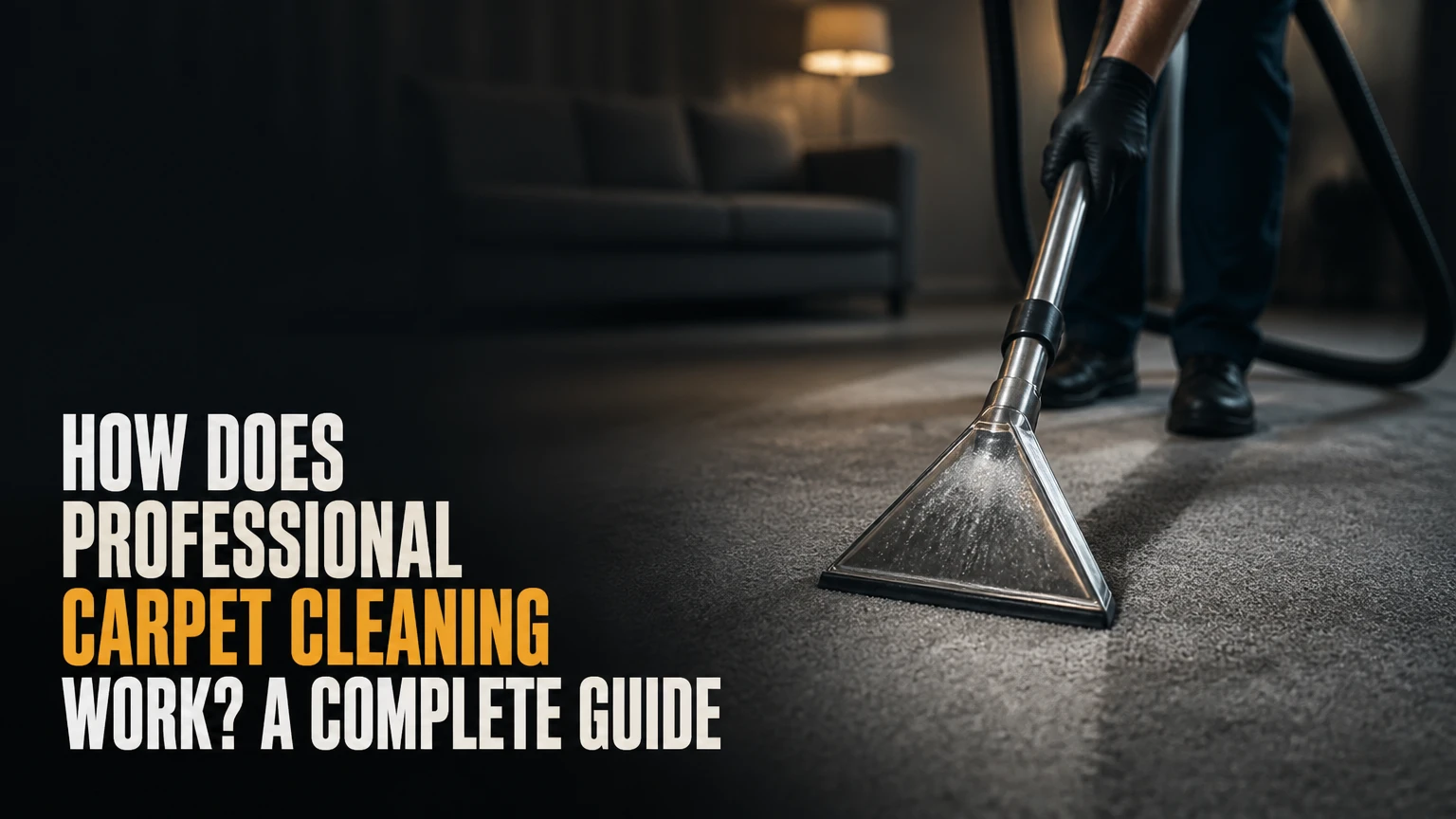
Hot-water extraction injects heated cleaning solution into the carpet and immediately recovers the liquid, suspended soil, and residue through a vacuum wand or extraction head. The method is often called steam cleaning, but a typical carpet extractor uses hot water and vacuum recovery rather than relying on steam.
Typical professional HWE settings vary widely. Solution temperatures may range from about 150-230°F, and equipment pressure may range from roughly 100-500 psi, depending on the machine, tool, fiber, and construction. A higher pressure number does not automatically mean better cleaning, because excessive moisture can reach the backing and increase drying risk.
An acidified or neutral rinse may follow alkaline pre-treatment. The rinse helps reduce remaining alkalinity, but it does not magically remove every contaminant or reverse fiber damage.
You will know this step worked when: recovered liquid is visibly soiled, carpet feels damp rather than saturated, and the technician makes controlled extraction passes.
Common mistake: moving the wand too quickly or applying excessive solution. Both choices can leave soil, moisture, or detergent behind.
Step 6: Treat Remaining Spots and Odors
Spot treatment addresses localized residues that remain after general cleaning. Ink, red wine, grease, nail polish, rust, pet dye, and furniture stains each require different chemistry, and some require specialist restoration rather than routine cleaning.
Pet odor work requires diagnosis. Surface deodorizer can improve odor in the pile, but urine that has migrated into backing, pad, subfloor, or baseboards may need subsurface inspection and treatment. In severe cases, replacement of contaminated pad or sections of flooring may be more reliable than repeated surface cleaning.
You will know this step worked when: treated spots are lighter or removed without a visible color halo, and the technician explains any permanent limitation.
Common mistake: promising complete stain removal before testing. Dye loss, chemical bleaching, rust, and heat-setting can make a mark permanent.
Step 7: Groom the Pile and Accelerate Drying
The cleaner grooms the carpet with a rake or brush to align fibers, remove visual wand marks, and improve appearance. Air movers then increase evaporation, while HVAC operation or dehumidification lowers indoor humidity.
Typical drying takes 6-24 hours after a substantial hot-water extraction. Encapsulation often dries in 1-3 hours, while dry-compound cleaning can permit near-immediate use if powder recovery is complete. Indoor humidity, airflow, carpet density, pad thickness, weather, and moisture application determine the actual result.
You will know this step worked when: the carpet has uniform pile direction, no standing moisture, and a clear plan for ventilation and furniture placement.
Common mistake: closing windows and turning off airflow immediately after a wet cleaning visit.
Which Professional Carpet-Cleaning Method Is Best?
Hot-water extraction is usually the strongest choice for restorative residential cleaning, while encapsulation is often better for frequent commercial maintenance where rapid drying matters. Dry compound cleaning suits moisture-sensitive materials, and bonnet cleaning is mainly an interim surface-maintenance method.
| Method | Typical moisture and equipment | Typical drying or reuse | Best application |
|---|---|---|---|
| Hot-water extraction | Heated solution, 100-500 psi, truck-mounted or portable extractor | 6-24 hours | Residential soil, pets, restorative cleaning |
| Encapsulation | Low-moisture polymer spray, CRB or rotary agitation | 1-3 hours | Offices, corridors, scheduled maintenance |
| Dry compound | Absorbent compound, dual-brush machine, no rinse water | Immediate to 1 hour | Delicate rugs, hotels, moisture-sensitive areas |
| Bonnet cleaning | Damp absorbent pad, rotary machine | 1-3 hours | Commercial interim appearance control |
Hot-Water Extraction
HWE provides the most complete removal when the carpet can safely tolerate moisture and the technician controls application and recovery. Truck-mounted units often provide stronger airflow and heat than small rental machines, although a skilled operator with a quality portable extractor can achieve good results in apartments or high-rise buildings.
HWE is not ideal when the carpet has unstable backing, severe rippling, moisture-sensitive adhesives, or insufficient ventilation. The method also cannot remove permanent discoloration simply because the water is hot.
Encapsulation Cleaning
Encapsulation uses polymers that surround suspended soil as the solution dries. Subsequent vacuuming removes the brittle, crystallized residue, which makes the method practical for offices that cannot close for a full day.
Encapsulation is less suitable for heavily saturated soil, deep sand, neglected carpet, or contamination below the pile. It works best as part of a planned maintenance program that includes frequent commercial vacuuming.
Dry Compound Cleaning
Dry compound cleaning distributes an absorbent material through the carpet with mechanical brushing. The compound captures dissolved or loosened soil and is removed with extensive vacuuming.
The process limits water exposure, but it is not literally residue-free. Inadequate vacuuming can leave powder in the pile, and heavy contamination may require multiple passes or a different method.
Bonnet Cleaning
Bonnet cleaning uses a damp pad under a rotary machine to absorb soil from the upper carpet surface. It can improve appearance quickly in commercial spaces, but it has limited restorative reach and can leave soil deeper in the pile if used without adequate vacuuming.
Bonnet cleaning should not be presented as equivalent to complete extraction. It is an interim method, not the default choice for heavily soiled residential carpet.
What Changes the Recommended Method?
Fiber, construction, contamination, and drying constraints determine the appropriate method more reliably than marketing labels such as “deep clean” or “steam clean.” A technician should select the lowest-risk process that can remove the identified soil.
| Carpet situation | Preferred starting method | Main reason | Important limitation |
|---|---|---|---|
| Nylon or polyester residential pile | HWE | Strong soil and residue recovery | Requires controlled drying |
| Busy office corridor | Encapsulation | Fast return to service | Limited for severe embedded soil |
| Wool area rug | Wool-safe low-moisture or specialist cleaning | Reduces shrinkage and dye risk | Requires fiber-specific testing |
| Severe pet urine | Inspection plus targeted extraction | Addresses pile and possible backing contamination | Pad or subfloor may also be affected |
| Glued-down commercial tile | Low-moisture method | Protects adhesive and reduces disruption | May need repeated maintenance visits |
Natural fibers need special caution. Wool can felt, shrink, bleed, or become alkaline-damaged; silk and antique rugs can require off-site immersion or specialist hand cleaning. WoolSafe certification is one useful credential to check when hiring a cleaner for wool, but certification does not replace inspection of the particular rug.
How Much Does Professional Carpet Cleaning Cost?
Typical residential carpet cleaning costs about $40-$80 per standard room, $0.20-$0.50 per square foot, or $99-$150 as a minimum service charge in many U.S. markets. Actual pricing changes with location, furniture, stairs, pet treatment, access, carpet condition, and whether the quote includes protectant or odor work.
| Pricing basis | Typical range | Usually includes | Common extra |
|---|---|---|---|
| Standard room | $40-$80 | Basic carpet cleaning | Stairs, heavy soil, furniture |
| Square foot | $0.20-$0.50 | Measured cleaned area | Minimum charge |
| Minimum visit | $99-$150 | Travel and setup plus service | Specialty treatments |
| Three-bedroom home | $180-$450 typical | Several carpeted rooms | Pet or rug restoration |
A low advertised room price may exclude travel, hallways, stairs, moving furniture, or heavily soiled areas. Ask whether the quote includes pre-vacuuming, pre-conditioning, extraction, spot treatment, deodorizer, protectant, and tax.
How Long Does a Professional Carpet-Cleaning Visit Take?
A typical three-bedroom residential visit takes approximately 1.5-3 hours, including setup and breakdown. Cleaning itself may take 20-30 minutes per average 150-square-foot room, but furniture, stairs, extensive spotting, and pet treatment can add substantial time.
Drying is separate from the appointment. Plan for 6-24 hours after HWE and roughly 1-3 hours after low-moisture cleaning, then keep heavy furniture and vigorous foot traffic off the carpet until the fibers and backing are fully dry.
Does Professional Carpet Cleaning Sanitize Carpet?
Professional cleaning removes soil and reduces many allergens, but ordinary carpet cleaning should not automatically be called disinfection or sterilization. The outcome depends on the chemical, contact time, temperature, contamination, and whether the product has a validated antimicrobial claim for that use.
The U.S. Environmental Protection Agency distinguishes cleaning from sanitizing and disinfecting. Cleaning removes soil and some germs; sanitizing reduces certain bacteria on labeled surfaces; disinfecting uses a registered product under specific label directions. Carpet porosity and the presence of organic soil make broad “kills 99.9%” claims unreliable unless the exact product and test support them.
Professional extraction can improve indoor conditions by removing dust, hair, and allergen-containing particles. It does not make a home sterile, and it cannot substitute for source control when mold, sewage, flooding, or persistent pet contamination is present.
What Should You Do Before and After Cleaning?
Homeowners should remove small objects, secure fragile items, identify stains, and keep pets and children away until the carpet is dry. Good preparation gives the technician access and prevents new contamination during the drying period.
Before the appointment:
- Vacuum visible debris if the provider does not include dry vacuuming.
- Remove toys, cables, plants, and lightweight furniture.
- Mark stains and tell the technician what caused them.
- Mention wool, previous dyeing, flooding, urine, glued-down sections, or known backing damage.
- Arrange ventilation and a safe place for pets during treatment.
After cleaning, use fans or air movers, maintain HVAC circulation, and avoid replacing furniture until the carpet is dry. Place protective tabs under furniture when recommended, and do not cover damp carpet with plastic because trapped moisture can create odor or microbial growth.
What Are the Most Common Professional Cleaning Mistakes?
The most damaging errors involve moisture control, chemistry, and incomplete soil recovery. A professional-looking machine cannot compensate for applying too much solution or choosing the wrong product for the fiber.
| Mistake | What happens | Prevention or correction |
|---|---|---|
| Over-wetting | Slow drying, odor, delamination, rippling | Use measured solution and strong recovery |
| Excess detergent | Sticky residue and rapid re-soiling | Follow label dilution and rinse thoroughly |
| Wrong pH on wool | Yellowing, browning, fiber damage | Test fiber and use wool-safe chemistry |
| Skipped dry vacuuming | Grit becomes muddy and harder to remove | Vacuum before pre-spray |
| Rapid wand movement | Soil and moisture remain | Use controlled overlapping passes |
| Closed, humid room | Drying slows and odor risk increases | Add airflow and reduce humidity |
A counterintuitive practitioner rule is that more water does not equal cleaner carpet. Cleaning improves when the solution dissolves soil and the extraction system recovers the suspended material; additional water can instead transport contamination into backing and pad.
Another rule is to judge the technician by recovery and drying controls, not by advertised temperature alone. Heat can accelerate cleaning, but airflow, vacuum lift, wand technique, and fiber safety determine whether the carpet finishes clean and dry.
Why Do Stains Return After Cleaning?
Returning stains usually result from wicking, where dissolved material in the backing or pad migrates upward as the carpet dries. Repeated surface spotting may lighten the fiber while leaving the original reservoir underneath.
The technician can often reduce wicking by treating the source, extracting carefully, applying controlled moisture, and drying rapidly. Severe pet urine, beverage spills, and oily contamination may require sub-surface extraction or pad replacement.
Rippling can follow excess moisture, stretched carpet, or an existing installation problem. Some carpet relaxes as it dries, but persistent buckling may require professional restretching. Browning on cellulosic backing or jute can occur when moisture and alkaline residues draw discoloration upward; an appropriate acidic treatment may help, but severe discoloration is not always reversible.
How Should You Choose a Carpet Cleaner?
Choose a cleaner who explains fiber identification, method selection, pricing, drying, and limitations before starting. A credible provider should give a written or clearly itemized quote rather than relying on an unusually low headline price.
Ask these questions:
- What fiber and construction do you identify?
- Which method will you use, and why is it suitable?
- Does the price include dry vacuuming, pre-spray, agitation, extraction, and spot treatment?
- What is the expected drying time under current indoor conditions?
- How will you handle urine in the backing or pad?
- Do you carry liability insurance and relevant training or certification?
- Which stains may remain permanent?
- What furniture-moving and minimum-charge rules apply?
For wool and specialty rugs, ask about WoolSafe training or certification and whether the rug will be cleaned on-site or at a specialist facility. For commercial facilities, request a maintenance schedule that combines frequent vacuuming with periodic encapsulation or restorative extraction.
How Often Should Carpet Be Professionally Cleaned?
Many homes benefit from professional cleaning every 6-12 months, while lightly used homes may need it less often and homes with pets, children, allergies, or heavy traffic may need it more frequently. The Carpet and Rug Institute commonly recommends professional cleaning at least every 12-18 months, while carpet warranties may specify their own interval.
Frequency should follow soil load rather than a rigid calendar. Clean sooner when traffic lanes remain gray after vacuuming, odors persist, spills have penetrated, or the carpet manufacturer requires scheduled cleaning for warranty maintenance.
Commercial offices may use encapsulation monthly or quarterly and schedule restorative extraction when traffic lanes, residue, or appearance indicate the need. Natural-fiber rugs often require annual to 18-month specialist assessment rather than routine wall-to-wall scheduling.
Is Professional Cleaning Better Than Renting a Carpet Machine?
Professional cleaning is usually better for large, heavily soiled, delicate, or pet-affected carpet because trained operators select chemistry and recover more moisture consistently. Rental equipment can be reasonable for a small, moderately dirty synthetic carpet when the homeowner follows dilution, movement, and drying instructions.
| Factor | Professional service | Rental machine |
|---|---|---|
| Equipment | Truck-mounted or commercial portable extractor | Consumer-grade portable unit |
| Operator | Trained technician with fiber testing | Homeowner follows manual |
| Typical cost | $99-$450 residential job | $30-$80 rental plus solution |
| Main risk | Over-wetting by poor provider | Slow passes, excess solution, weak recovery |
| Best use | Heavy soil, pets, wool, large areas | Small synthetic area and urgent cleanup |
A rental machine can leave carpet wetter when the operator makes too many wet passes or moves too quickly. Professional service is not automatically superior, however; poor technicians can over-apply detergent, skip inspection, or fail to dry the carpet. The provider’s process matters as much as the machine.
Frequently Asked Questions
Can professional carpet cleaning remove pet urine odor?
Professional carpet cleaning can remove surface urine residue and improve odor, but severe urine contamination may extend into the backing, pad, subfloor, or baseboards. Effective treatment requires locating the affected area, using appropriate extraction or subsurface treatment, and sometimes replacing contaminated pad. Surface deodorizer alone rarely solves deep, recurring odor.
Will professional cleaning make old carpet look new?
Professional cleaning can remove soil that dulls color and compresses pile, but it cannot restore worn fibers, bleach marks, melted areas, permanent dye changes, delamination, or severe crushing. A technician should distinguish removable soil from permanent damage during inspection and explain the likely improvement before cleaning.
Can carpet be walked on immediately after cleaning?
Light, clean-sock traffic may be acceptable when the technician permits it, but wet carpet should receive minimal traffic until dry. Keep pets and children away, avoid dragging furniture, and use airflow. Walking across damp carpet can flatten pile, transfer soil, and slow drying, especially after hot-water extraction.
Does carpet cleaning remove dust mites?
Extraction and thorough vacuuming can remove dust, allergen-containing particles, and some mite-related debris, but carpet cleaning is not a guaranteed dust-mite eradication treatment. Indoor humidity control, washable bedding, HEPA filtration, and regular vacuuming remain important when occupants have dust-mite sensitivity.
Can professional cleaners remove red wine or ink?
Some red wine and ink deposits can be substantially reduced, but results depend on dye chemistry, fiber type, age, heat exposure, and previous cleaning attempts. Red dye transfer, permanent marker, and chemical discoloration may require specialist restoration, and aggressive treatment can damage the carpet more than the original spot.
What is the best method for wool carpet?
Wool carpet generally requires a trained specialist using wool-safe chemistry, controlled moisture, low mechanical stress, and careful drying. A low-moisture or carefully managed extraction process may work, but the correct choice depends on construction, dye stability, backing, and rug history. Always request a fiber inspection and test area first.
The Bottom Line
Professional carpet cleaning works through inspection, dry-soil removal, fiber-appropriate chemistry, agitation, controlled extraction, spot treatment, grooming, and drying. Hot-water extraction is usually the best restorative option for durable residential carpet, while encapsulation reduces downtime in commercial settings and specialist low-moisture methods protect sensitive fibers. The quality of inspection, chemical control, extraction, and drying determines the result more than the label “steam cleaning.” Understanding how does professional carpet cleaning work helps you compare quotes, prevent damage, and choose a method suited to the carpet rather than the advertisement.