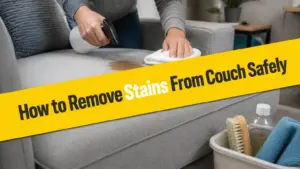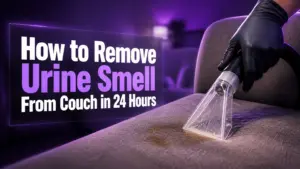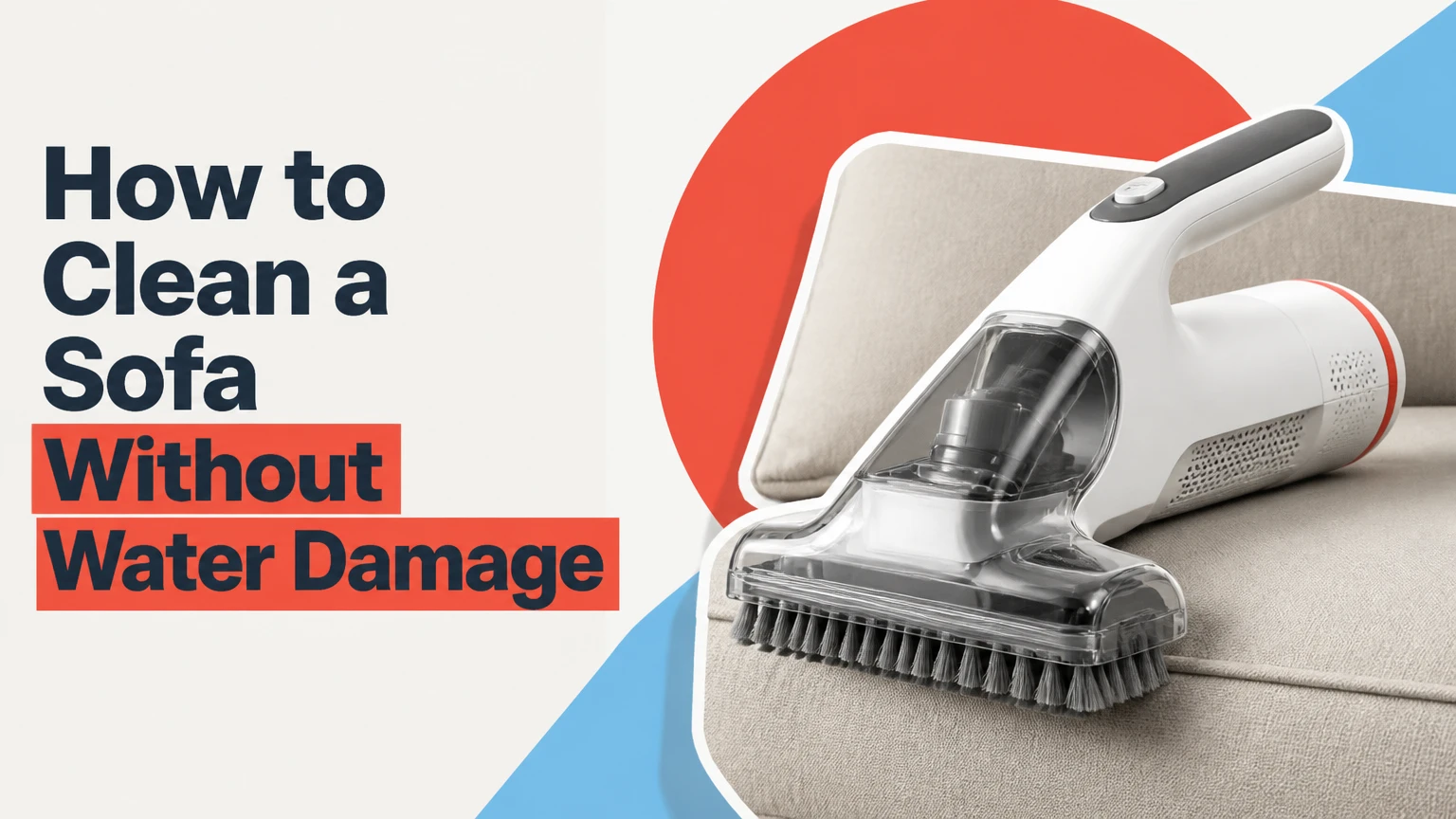
To clean a sofa safely, read its care code, vacuum all upholstery, test a compatible cleaner, treat stains, clean with minimal moisture, extract or blot thoroughly, and dry with strong airflow. The care label and fabric type determine whether water, solvent, foam, or vacuuming alone is appropriate.
Key facts at a glance
- W-coded upholstery accepts water-based cleaning, while S-coded upholstery requires a solvent-based method.
- WS-coded upholstery accepts either water or solvent, but testing remains necessary.
- X-coded upholstery should receive vacuuming or professional dry cleaning only, with no liquid applied at home.
- A typical fabric sofa needs 2-6 hours to dry when lightly wetted and properly ventilated.
- Deep-cleaning a sofa typically costs $15-$50 for DIY supplies, or $120-$300 for professional service.
- Never saturate cushions, mix cleaning chemicals, or scrub a stain aggressively.
Before You Start: Identify the Sofa’s Limits
The sofa care label determines the safest cleaning chemistry, and the label overrides generic advice about steam, vinegar, dish soap, or upholstery shampoo. Look under removable cushions, beneath the frame, or along the platform for a tag marked W, S, WS, or X; also check the furniture manufacturer’s online care guide.
The codes have specific meanings, but they do not identify every fiber, finish, dye, backing, or cushion filling. A W code does not guarantee that a fabric will tolerate saturation, and an S code does not mean every solvent is safe. Upholstery with silk, wool, rayon, antique dyes, loose pile, or unknown construction deserves professional assessment.
| Code | Permitted approach | Avoid at home | Typical example |
|---|---|---|---|
| W | Water-based foam, low-moisture cleaner, extraction | Solvent-only products | Polyester, nylon |
| S | Approved upholstery dry-cleaning solvent | Water, steam, wet shampoo | Some delicate synthetic blends |
| WS | Water-based or solvent-based method | Untested chemistry | Modern blended upholstery |
| X | Vacuuming and professional dry cleaning | All sprays, water, foam | Sensitive natural fibers |
What should you gather?
Prepare a vacuum with an upholstery nozzle, a crevice tool, white microfiber cloths, a soft upholstery brush, distilled water, and a cleaner approved for the care code. A portable extraction machine is useful for W or WS fabrics, but it is not automatically suitable for every water-safe sofa.
Use white materials because colored cloths and sponges can transfer dye. Protect wood, metal legs, flooring, and nearby walls from drips. Photograph the sofa before cleaning if it is valuable, rented, antique, or covered by a warranty.
How much time and money does sofa cleaning require?
A typical maintenance clean takes 30-60 minutes, excluding drying. A deeper fabric clean takes 1-2 hours of labor and 2-24 hours of drying, depending on moisture, cushion thickness, fiber type, humidity, and airflow.
| Approach | Typical cost | Active work | Drying or waiting time |
|---|---|---|---|
| Manual spot cleaning | $3-$15 | 10-30 minutes | 1-4 hours |
| DIY full clean | $15-$40 | 60-120 minutes | 2-24 hours |
| Extraction-machine rental | $30-$50 per day | 60-150 minutes | 4-24 hours |
| Professional upholstery service | $120-$300 | 60-180 minutes | 2-12 hours |
The American Cleaning Institute’s standing consumer guidance is to “read and follow label directions.” That rule applies to both the sofa manufacturer’s care tag and the cleaning-product label, because concentration and dwell time vary substantially between products.
Step 1: Vacuum the Sofa Thoroughly
Vacuum the entire sofa before applying moisture or cleaner, including cushions, piping, seams, gaps, the rear panel, and the area beneath removable cushions. Use an upholstery attachment on broad surfaces and a crevice tool at seams, where crumbs, pet hair, grit, and skin flakes accumulate.
Vacuum slowly, using overlapping passes rather than one fast sweep. For pet hair, use a rubber upholstery tool or a clean rubber glove first, then vacuum the loosened hair. Do not press a powered brush deeply into velvet, chenille, or loose-loop fabric because the brush can pull threads or flatten the pile.
You will know the step worked when the vacuum no longer collects visible grit from a seam and the surface feels free of loose particles. The common mistake is wet-cleaning first, which turns dust into gray slurry and drives it deeper into the backing.
Step 2: Test the Cleaner in a Hidden Area
Test the selected cleaner on an inconspicuous area, such as the underside, rear corner, or fabric beneath a cushion. Apply the same amount, pressure, dwell time, and agitation planned for the visible surface, then wait until the test patch dries before approving the method.
A five-minute test can reveal immediate dye transfer or texture change, but complete drying is a better test for water rings, shrinkage, stiffness, and color shift. Blot the patch with a white cloth. Stop if the cloth picks up significant color, the fabric ripples, the nap becomes shiny, or the backing feels wet.
A successful test leaves the dry fabric unchanged in color, hand feel, and texture. The common mistake is testing only whether the product removes dirt, rather than testing whether the sofa survives the treatment.
Step 3: Treat Stains Before Cleaning the Whole Sofa
Treat stains according to their composition, not simply their color. Remove solids with a spoon, absorb liquid with a dry cloth, and work from the outside of a stain toward the center to reduce spreading. Avoid flooding the spot, because liquid can carry dissolved soil into the cushion.
Apply a small amount of compatible product to a cloth or directly to the stain if the label permits. Allow the product to dwell for the manufacturer’s stated time, commonly 3-10 minutes, then blot or extract. Enzyme products are appropriate for many protein-based pet accidents, but they require adequate contact time and should not be mixed with disinfectants or bleach.
| Stain or soil | First treatment | Typical dwell time | Main warning |
|---|---|---|---|
| Coffee or tea | Blot, then W-code upholstery cleaner | 3-5 minutes | Heat can set milk proteins |
| Grease or butter | S-code solvent or fabric-approved degreaser | 5-10 minutes | Do not spread oil with water |
| Red wine | Blot, then compatible rinse cleaner | 3-5 minutes | Avoid aggressive salt scrubbing |
| Pet urine | Absorb, then enzyme product if approved | 10-15 minutes | Cushion foam may need replacement |
| Ink | Manufacturer-approved solvent test | 1-3 minutes | Dye transfer risk is high |
| Mud | Dry completely, vacuum, then spot clean | 5 minutes | Wet mud first creates a larger mark |
A stain may remain after one treatment because its dye has chemically altered the fiber. Cleaning removes soil; it cannot reliably reverse bleaching, sun fading, scorching, or permanent dye transfer.
Step 4: Agitate Gently, Then Clean in Sections
Agitate upholstery with a soft-bristled brush or a white microfiber cloth, using short strokes in the fabric’s natural direction. Work in sections of about 2 square feet so the cleaner does not dry before extraction, and clean an entire cushion panel or frame section from seam to seam to reduce visible borders.
For W-coded fabric, use a low-moisture upholstery foam or a diluted product specified for upholstery. For WS fabric, choose water extraction only after a successful test unless the manufacturer recommends solvent cleaning. For S fabric, use an upholstery solvent with ventilation and no open flame, following the product’s safety instructions.
The goal is to loosen soil, not create lather. Excess foam often indicates excess product, and residue left in the fabric attracts new dirt. You will know agitation worked when the surface soil lifts onto the white cloth or is removed during extraction. The common mistake is vigorous circular scrubbing, which damages chenille, velvet, and brushed microfiber.
Step 5: Choose the Cleaning Method That Matches the Fabric
The best sofa-cleaning method depends on the care code, fiber stability, soil depth, and available drying conditions. Hot-water extraction gives the deepest soil removal on compatible W fabrics, while low-moisture foam reduces drying risk; solvent cleaning is reserved for S-coded materials and tested delicate upholstery.
“Steam cleaning” is often used loosely. A true steam process uses vapor, but many upholstery machines labeled steam cleaners actually spray warm water and immediately extract it. Upholstery care depends on the amount of liquid, heat, pressure, and extraction, not on the marketing name of the machine.
| Method | Suitable code | Typical moisture level | Best use | Main limitation |
|---|---|---|---|---|
| Hot-water extraction | W, selected WS | Medium to high | Deep soil and allergens | Shrinkage or slow drying |
| Low-moisture foam | W, WS | Low | Routine cleaning | Less effective in thick foam |
| Dry solvent cleaning | S, selected WS | Very low | Delicate water-sensitive fabric | Ventilation and residue concerns |
| Manual foam and blotting | W, selected WS | Low | Small sofa or spot work | Labor intensive |
| Vacuum-only cleaning | X | None | Dust and loose debris | Does not remove liquid stains |
Apply only enough solution to loosen soil, then extract immediately. Do not add household steam to leather, genuine suede, X-coded upholstery, or fabric that has not passed a water test.
Step 6: Extract Moisture and Residue
Extract each cleaned section with an upholstery machine, making one slow extraction pass followed by one slower dry pass with no additional solution. If cleaning manually, press clean, dry microfiber towels onto the area and replace them as soon as they become damp.
Extraction removes suspended dirt, detergent, and water. It does not sterilize a sofa, and repeated wet passes do not necessarily improve cleanliness. A useful practitioner rule is to stop adding solution when the fabric is evenly damp and the recovery tank water becomes noticeably lighter, rather than chasing perfectly clear water.
Check the underside of cushions and the seams for retained moisture. Never stack damp cushions or place them directly against a wall. You will know extraction worked when the surface has no glossy wet patches and a dry towel picks up little moisture after firm pressing. The common mistake is leaving soap behind, which produces a stiff feel and rapid resoiling.
Step 7: Dry the Sofa Completely
Dry the sofa with a fan aimed across the upholstery, open ventilation where outdoor humidity is lower, and a dehumidifier when the room is humid. Stand removable cushions on edge with space between them, but do not expose leather, silk, or dyed fabric to intense direct sunlight.
Typical drying time ranges from 2-6 hours for lightly cleaned synthetic upholstery, 6-12 hours for thicker blends, and 12-24 hours for natural fibers or heavily wetted cushions. High humidity, dense foam, cold rooms, and poor airflow extend these ranges.
| Material or construction | Typical dry time | Drying checkpoint | Risk if still damp |
|---|---|---|---|
| Polyester seat cover | 2-6 hours | Surface and seams feel dry | Odor and re-soiling |
| Cotton or linen blend | 6-12 hours | No coolness at seams | Shrinkage or water rings |
| Thick foam cushion | 12-24 hours | Center feels dry, not only edges | Mildew inside foam |
| Leather upholstery | 1-2 hours | No surface moisture | Finish damage or stiffness |
| Low-moisture microfiber | 1-4 hours | Nap resets after brushing | Streaking or flattened pile |
A sofa is not dry merely because its surface feels dry. Press a folded dry towel into the thickest cushion for 10 seconds; dampness indicates more airflow is needed. Do not use the sofa until the cushion center and underside are dry.
How Do You Clean Different Sofa Materials?
Fabric upholstery requires a care-code test, leather requires controlled wiping and conditioning, and genuine suede requires specialist handling. Material identity matters more than appearance, because synthetic microfiber can resemble suede while tolerating a method that would permanently stain natural suede.
Fabric sofas
Polyester and nylon generally tolerate more routine cleaning than cotton, linen, rayon, or viscose, but the care tag remains decisive. Use a mild upholstery detergent, low moisture, gentle agitation, and thorough extraction. Natural fibers can shrink or develop tide marks when one area is wetted unevenly.
Chenille needs light pressure because its raised yarn can fuzz or flatten. Remove cushions only when the manufacturer permits it, and never machine-wash a fixed cover or place a damp cover in a dryer unless the care instructions specifically allow that process.
Leather sofas
Leather sofas should be vacuumed with a soft brush, wiped with a pH-balanced leather cleaner, dried promptly, and conditioned only when the manufacturer recommends conditioning. Aniline leather absorbs liquid easily and can darken permanently, while pigmented leather has a protective finish and is generally more forgiving.
Avoid alcohol, ammonia, bleach, abrasive cream, household furniture polish, and excess water. Apply cleaner to the cloth rather than pouring it onto the hide, and test beneath a cushion first. Conditioner cannot repair peeling polyurethane, deep scratches, sun damage, or structural cracking.
Microfiber and velvet
Synthetic microfiber may accept a solvent method, water-based method, or both, depending on its code. Some manufacturers approve a small amount of isopropyl alcohol for S-coded microfiber, but the product must be tested for dye and finish compatibility. After drying, brush the nap in one direction with a soft or nylon brush.
Velvet requires low pressure and controlled moisture. Genuine silk, rayon velvet, antique velvet, and genuine suede should be referred to a qualified upholstery or textile-restoration professional. A stiff brush can permanently distort the pile.
Which Sofa-Cleaning Method Should You Choose?
Hot-water extraction is the strongest option for heavily soiled, stable W-coded fabric when rapid drying is available. Low-moisture foam is safer for routine maintenance, solvent cleaning suits S-coded upholstery, and professional service is the prudent choice for valuable, fragile, or structurally contaminated furniture.
| Situation | Recommended choice | Why | Do not choose |
|---|---|---|---|
| Weekly dust and pet hair | HEPA vacuum | Removes loose allergen-bearing particles | Wet shampoo |
| W-coded polyester with heavy soil | Hot-water extraction | Reaches embedded soil | Uncontrolled saturation |
| S-coded delicate upholstery | Tested dry solvent | Avoids water damage | Steam or vinegar |
| Fresh child spill on WS fabric | Blot and spot clean | Limits liquid spread | Full sofa wetting |
| Antique velvet or silk | Specialist restoration | Controls fiber and dye risk | DIY brushing |
| Persistent urine in foam | Professional assessment | Surface cleaning may not reach core | Repeated misting |
Professional upholstery cleaning typically costs $120-$300, depending on sofa dimensions, cushions, access, fabric complexity, and local rates. Hire a professional when the label is missing, the sofa smells after drying, urine reached the foam, dye transfers during testing, or the furniture has high replacement value.
Common Problems and How to Fix Them
Water rings, stiff fabric, lingering odors, dye transfer, and shrinkage usually result from uneven wetting, excess product, contamination inside the cushion, or incompatible chemistry. Recovery should begin only after the fabric is dry, because repeated wet treatment can enlarge the original defect.
- Water rings: A ring forms when soil or cleaner migrates to a drying boundary. For a W or WS fabric, lightly mist the entire affected panel from seam to seam with distilled water and extract evenly; do not treat only the circle.
- Stiff fabric: Stiffness usually indicates detergent residue. Re-extract with clean water only if the care code allows it, then dry rapidly. Do not add vinegar automatically, because acid can affect dyes and finishes.
- Lingering odor: Baking soda can absorb some surface odor after sitting on dry upholstery for several hours, but it cannot neutralize urine inside foam or remove smoke compounds from the backing.
- Color bleeding: Stop immediately if a white cloth picks up dye. Keep the area from spreading, allow it to dry, and consult a professional.
- Shrinking or rippling: Further wetting rarely reverses fiber contraction. A restoration professional may reshape some upholstery, but replacement or re-covering may be necessary.
- Greasy dark patches: Water can spread oil. Use a care-code-approved solvent or degreaser, blot repeatedly, and avoid heat until the grease is removed.
What should you never use on a sofa?
Never use bleach, undiluted vinegar, ammonia, abrasive powders, or a generic carpet chemical without checking the sofa code and product directions. Never mix bleach with ammonia, vinegar, or other cleaners, because dangerous gases can form.
Disinfectant spray is also not a universal upholstery cleaner. Many disinfectants require a wet contact time that leaves upholstery over-wet, and a product registered for hard surfaces may not be approved for fabric. Cleaning removes soil; disinfection is a separate chemical process with material and exposure constraints.
How Often Should You Clean a Sofa?
Vacuum a frequently used sofa weekly, spot-clean spills immediately, and deep-clean compatible upholstery about every 12-18 months. Homes with pets, smokers, young children, allergies, or heavy daily use may need a professional assessment every 6-12 months.
Use a maintenance schedule based on soil load rather than a fixed calendar. Vacuum removable cushion sides monthly, inspect seams quarterly, and clean leather with an appropriate product according to the manufacturer’s schedule, often every 1-3 months.
How can allergy sufferers reduce sofa allergens?
Allergy sufferers should vacuum weekly with a sealed HEPA vacuum, clean only with a method compatible with the upholstery, and dry cushions completely before use. Hot-water extraction can remove embedded particulate soil from suitable W-coded fabric, but no home process guarantees removal of every dust mite allergen.
Keep pets off damp upholstery and wash removable covers only according to their labels. Leather and tightly woven synthetic fabric usually hold less loose dander than deep, open-textured upholstery, although surrounding floors, rugs, and curtains also contribute to household allergen levels.
FAQ
Can I clean a sofa with dish soap?
Use dish soap only when the sofa manufacturer or upholstery-cleaner label permits it, and dilute it heavily rather than applying concentrated detergent. Dish soap is designed to cut grease, so excess product can leave a sticky residue that attracts soil. Test a hidden area, use minimal moisture, and rinse or extract when the care code allows.
Can I use baking soda to clean a couch?
Baking soda can help absorb a mild surface odor from dry, code-compatible upholstery after several hours of contact, followed by thorough vacuuming. Baking soda does not deep-clean fabric, remove grease, neutralize urine inside foam, or replace extraction. Avoid forcing powder into delicate velvet, loose-weave fabric, or mechanical parts.
Is hot-water extraction the same as steam cleaning?
Hot-water extraction sprays heated water and cleaning solution, then removes the mixture with vacuum suction. Steam cleaning uses vapor, although retailers often use the term steam cleaning for extraction machines. Upholstery safety depends on heat, moisture, pressure, chemistry, and drying time, not the label printed on the machine.
Should I remove sofa cushion covers and wash them?
Remove and wash cushion covers only when the manufacturer’s care instructions explicitly permit it. A removable cover may shrink, lose its backing, bleed dye, or fail to fit after washing. Zip closure does not prove machine-washability, and a fixed cover should never be pulled off by force.
How do I clean a sofa without a machine?
Vacuum first, test the correct cleaner, apply a small amount of foam to a cloth, agitate gently, and blot repeatedly with clean microfiber towels. Manual cleaning works for light soil and small sofas, but it cannot remove as much suspended moisture and dirt as proper extraction, so use very little solution and allow extended drying.
When should I replace rather than clean a sofa?
Consider replacement or reupholstery when the frame is damaged, foam remains contaminated after professional treatment, the fabric has extensive dye loss, or cleaning costs approach the sofa’s replacement value. Cleaning improves removable soil and odor, but it cannot correct broken springs, degraded foam, peeling leather, or permanent fiber damage.
The Bottom Line
How to clean a sofa safely depends first on the care code, then on the material, stain, moisture level, and drying conditions. Vacuum before wetting, test every chemical, use the least aggressive effective method, extract residue, and dry the thickest cushion completely before returning the sofa to service.