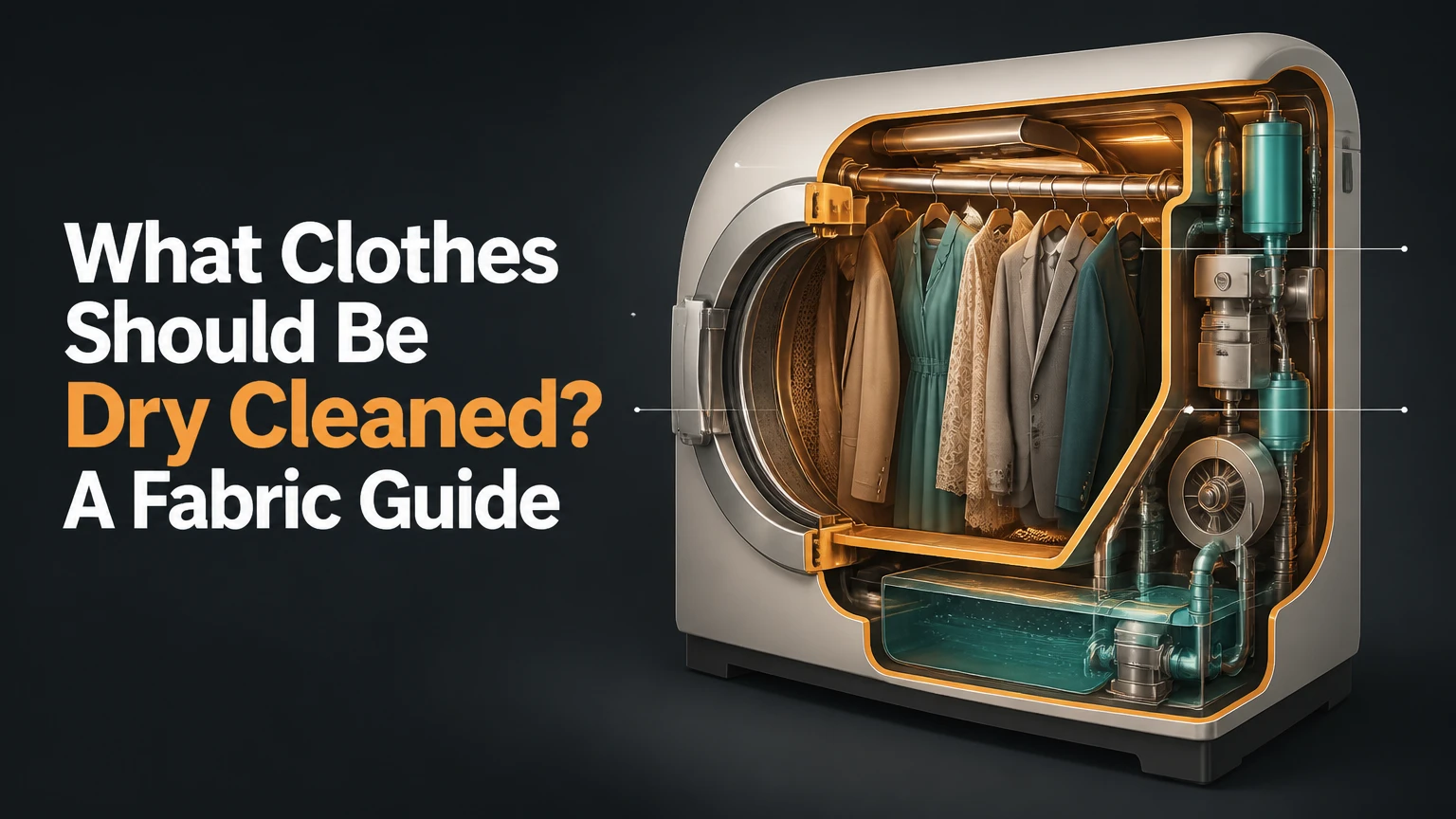
Clothes that should be dry cleaned include garments labeled “Dry Clean Only,” tailored suits, structured jackets, silk dresses, wool coats, embellished formalwear, leather, suede, velvet, and fabrics prone to shrinking or distortion in water. A “Dry Clean” label is a recommendation rather than an absolute prohibition, but construction, dye stability, and fiber content determine whether home washing is safe.
Key facts at a glance
“Dry cleaning” uses liquid solvent with little or no water, so the garment is still immersed in liquid.
“Dry Clean Only” means do not substitute home washing unless a qualified textile professional approves it.
Tailoring and lining can matter more than fiber content because water may shrink internal layers at different rates.
Steam removes wrinkles and some odors, but it does not remove body oils, food residue, or set-in stains.
Typical shop turnaround is 24-48 hours, while prices vary by location, garment weight, and construction.
Professional wet cleaning can safely handle some garments marked for dry cleaning when operators control moisture, agitation, tension, and drying.
What Clothes Should Be Dry Cleaned?
The safest candidates are garments whose care labels say “Dry Clean Only,” plus clothing with structural components or finishes that water and agitation can damage. Examples include wool suits, lined blazers, silk formalwear, pleated skirts, beaded dresses, leather jackets, suede shoes, velvet evening garments, and tailored coats.
A care label remains the first decision point because manufacturers test the complete garment, not only its main fabric. The Federal Trade Commission’s Care Labeling Rule distinguishes “Dryclean” instructions from “Dryclean Only,” and labels may also specify a solvent or finishing restriction. A garment marked “Dry Clean” may tolerate another method, but only after checking fiber content, colorfastness, trim, and construction.
What is the difference between Dry Clean and Dry Clean Only?
“Dry Clean Only” advises against laundering at home, while “Dry Clean” identifies the manufacturer’s recommended method but may leave room for a carefully selected alternative. The distinction does not guarantee that a dry cleaner can remove every stain or prevent every color, trim, or finish problem.
Check the complete label, including warnings such as “Do not steam,” “Do not tumble dry,” or “Remove trim before cleaning.” A care label is not a promise of unlimited durability. Heat, age, perspiration, unstable dyes, weak seams, and previous cleaning can still cause damage.
Which Fabrics Usually Need Professional Cleaning?
Silk, wool, cashmere, rayon, viscose, acetate, velvet, leather, and suede deserve professional assessment because moisture, heat, friction, or uneven drying can alter their size, surface, strength, or color. The table gives the usual recommendation, but the garment label and construction take priority.
| Fabric or material | Main risk from home washing | Usual professional method | Typical garments |
|---|---|---|---|
| Silk | Dye bleeding, water rings, loss of sheen | Solvent cleaning or controlled wet cleaning | Blouses, scarves, gowns |
| Wool and cashmere | Shrinkage, felting, surface distortion | Solvent cleaning or specialist wet cleaning | Suits, sweaters, coats |
| Rayon and viscose | Wet weakness, shrinkage, stretching | Professional cleaning after label review | Dresses, trousers |
| Acetate and triacetate | Finish damage, wrinkling, melting risk from heat | Solvent cleaning at controlled temperature | Linings, occasionwear |
| Velvet | Crushed pile, nap direction changes | Specialist solvent cleaning or approved care | Jackets, dresses |
| Leather and suede | Stiffness, dye transfer, oil loss | Leather specialist, not ordinary laundry | Coats, bags, trousers |
| Linen blends | Shrinkage and pronounced creasing | Label-dependent laundering or cleaning | Jackets, dresses |
What about wool, silk, and rayon?
Wool and silk are not automatically dry-clean-only, but each can be damaged by the wrong combination of water, agitation, alkalinity, and heat. Rayon and viscose are particularly risky because their strength and dimensional stability can change substantially when wet, especially in loosely woven or bias-cut garments.
A hand-washable wool sweater may be safer in cool water with minimal agitation than in a solvent cycle. Conversely, a wool jacket with canvas, padding, adhesive interlining, and a lining should usually go to a cleaner because the internal materials can respond differently to moisture.
Silk requires extra caution with spot treatment. Water may create a visible tide mark even when it does not chemically damage the fiber, and rubbing can produce a permanent pale patch by disturbing the surface.
Which Garment Construction Requires Dry Cleaning?
Construction often determines the answer more reliably than the fiber name. Tailored jackets, lined coats, pleated clothing, padded dresses, and embellished garments contain components that may shrink, separate, flatten, tarnish, or distort at different rates.
| Construction feature | What can go wrong in water | Recommended handling | Example |
|---|---|---|---|
| Canvas or fusible interfacing | Puckering, bubbling, jacket-front distortion | Professional cleaning | Suit jacket |
| Separate lining | Uneven shrinkage and pulled seams | Label-based professional care | Trench coat |
| Heat-set pleats | Pleats relax or flatten | Specialist cleaning | Pleated skirt |
| Beads and sequins | Snagging, melting, tarnishing, detachment | Cleaner inspection before processing | Evening dress |
| Metallic thread | Tarnish, color change, abrasion | Low-friction specialist method | Brocade jacket |
| Shoulder pads | Shape loss or displacement | Professional finishing | Blazer |
| Down or feather fill | Clumping and incomplete drying | Cleaner with extraction and drying equipment | Puffer coat |
Should suits and blazers be dry cleaned?
Suits and blazers should generally be professionally cleaned when visibly soiled, oily at the collar, stained, or labeled “Dry Clean Only.” Frequent cleaning can shorten the life of wool and finishes, so rotate suits, brush them after wear, air them in a ventilated room, and use light steaming between cleanings.
A practical rule for regular suit wear is to clean a suit about every two to three months, or sooner for sweat, food, smoke, rain contamination, or visible marks. The interval is a maintenance estimate, not a universal standard. A daily commuter’s jacket may need attention sooner than a suit worn for two hours indoors each month.
Clean matching jacket and trousers together when possible. Cleaning only one piece can produce slight differences in color, sheen, or texture.
How Does Professional Dry Cleaning Work?
Professional dry cleaning normally follows seven linked stages: inspection, tagging, pre-spotting, solvent cleaning, extraction, controlled drying, and finishing. The process uses a sealed machine that recovers much of the solvent, while technicians handle stains and pressing separately rather than expecting the machine alone to solve every problem.
- Inspection and tagging: Staff identify fiber content, stains, loose fasteners, tears, weak seams, and special trim, then attach an identification tag.
- Pre-spotting: A technician selects treatment based on whether the stain is oily, water-soluble, protein-based, tannin-based, or dye-related.
- Solvent cleaning: The garment moves through a sealed drum containing a cleaning solvent, detergent, and controlled mechanical action.
- Extraction: High-speed spinning removes most liquid solvent from the fabric.
- Drying and recovery: Warm air removes remaining solvent, which the machine captures, filters, distills, or recycles according to the equipment.
- Post-spotting: Remaining marks receive targeted treatment, often with steam, vacuum, or a specialized spotting agent.
- Finishing: Pressing, steaming, shaping, and hand ironing restore the intended silhouette.
The “dry” label is therefore a chemistry distinction, not a statement that the garment stays dry. Liquid solvent wets the clothing, but the process minimizes water and uses different solvency properties from a washing machine.
Which stains does dry cleaning remove best?
Dry cleaning is especially effective against oily and greasy soils, including body oils, butter, cosmetics, cooking fat, and some waxes. Water-based stains such as sweat, sugar, wine, and many soft drinks may need specialized wet-side spotting or professional wet cleaning, so solvent cleaning alone is not automatically superior.
| Stain type | Common examples | Likely treatment priority | Home action |
|---|---|---|---|
| Oil-based | Salad dressing, lipstick, body oil | Professional solvent or spotting agent | Blot, do not rub |
| Protein-based | Blood, milk, egg | Cold controlled treatment | Blot with clean cloth |
| Tannin-based | Coffee, tea, wine | Water-based spotting assessment | Blot promptly |
| Sugar-based | Soft drink, juice, syrup | Controlled wet treatment | Blot, avoid heat |
| Ink and dye | Pen ink, transfer dye | Solvent-specific testing | Do not apply alcohol blindly |
| Unknown aged mark | Yellowing, ring, oxidation | Test and fiber assessment | Tell the cleaner its history |
Tell the cleaner what caused the stain and when it occurred. Heat from an iron, dryer, or hair dryer can make some protein and sugar residues harder to remove, while aggressive rubbing can abrade silk, velvet, and fine wool.
Which Cleaning Method Should You Choose?
Dry cleaning is usually the better choice for solvent-sensitive construction, oily soils, and garments that must retain a precise shape. Laundering is often better for washable cotton, linen, polyester, and water-soluble perspiration, while professional wet cleaning can bridge the two when a trained operator follows the label and tests the garment.
| Method | Best use | Main strength | Important limitation |
|---|---|---|---|
| Solvent dry cleaning | Wool suits, silk dresses, oily stains | Low-water cleaning and shape preservation | Less effective alone on some water-soluble soils |
| Home laundering | Label-approved cotton, polyester, acrylic | Low cost and effective water-based cleaning | Shrinkage, dye transfer, and agitation risk |
| Hand washing | Unstructured washable knits | Gentle mechanical action | Cannot reproduce tailored finishing |
| Professional wet cleaning | Selected delicate labeled garments | Water-based soil removal without home-level risk | Requires skilled tension and drying control |
| Steaming and airing | Clean garments between washes | Wrinkle and odor reduction | Does not remove embedded soil or grease |
Is dry cleaning better than washing?
Dry cleaning is better than washing when water, agitation, or uneven drying threatens the garment’s fiber or construction; washing is better when the garment is designed for water and carries sweat or sugar-based soil. The correct method depends on the label, fabric blend, garment architecture, stain chemistry, and desired finish.
A polyester blouse with perspiration may clean more effectively in a labeled wash cycle than in repeated solvent cleaning. A wool jacket may look acceptable after home washing but develop hidden bubbling or a permanently altered shoulder shape. Method selection is a risk calculation, not a ranking of one process above all others.
How Much Does Dry Cleaning Cost and How Long Does It Take?
Typical standard turnaround is 24-48 hours, and common United States price ranges are about $4-$8 for a shirt, $7-$12 for trousers or a skirt, $15-$30 for a two-piece suit, $12-$40 or more for a dress, and $18-$35 for a winter coat. Local labor rates, stain complexity, fabric risk, pressing, rush service, and specialty handling can change those figures.
| Garment | Typical price range | Typical turnaround | Cost drivers |
|---|---|---|---|
| Blouse or dress shirt | $4-$8 | 24-48 hours | Hand finishing, silk, stains |
| Trousers or skirt | $7-$12 | 24-48 hours | Pleats, lining, repairs |
| Two-piece suit | $15-$30 | 24-48 hours | Pressing, fabric, matching pieces |
| Casual or formal dress | $12-$40+ | 2-5 days | Beading, length, lining |
| Winter coat | $18-$35 | 2-5 days | Weight, trim, down, fur |
| Wedding gown | $150-$500+ | 1-4 weeks | Restoration, pressing, preservation |
Ask for a quote before leaving high-value clothing. Wedding gowns, vintage garments, leather, suede, heavily beaded clothing, and smoke-damaged textiles usually require specialist pricing rather than the shop’s standard garment menu.
How Should You Prepare a Garment?
Empty pockets, remove detachable accessories only when the label permits it, identify stains, disclose previous home treatments, and photograph expensive items before drop-off. Keep the original care label attached because a cleaner needs the manufacturer’s fiber and process instructions.
Use this checklist:
- Point out every stain and name its source if known.
- Mention perfume, sunscreen, paint, adhesive, or home stain remover.
- Tell the cleaner about loose buttons, tears, worn cuffs, and missing sequins.
- Do not rub a mark with a napkin or brush.
- Do not iron or tumble-dry stained clothing.
- Keep garments ventilated before drop-off instead of sealing damp clothing in plastic.
- Request a written note for fragile trims, belt buckles, leather panels, and antique fasteners.
A garment bag protects clothing during transport, but long-term storage requires breathable fabric, low humidity, and protection from light. Thin plastic delivery covers are temporary dust protection, not archival storage.
How Often Should You Dry Clean Clothes?
Dry clean clothing when soil, odor, stains, or the care label requires it, rather than after every wear. A suit may need professional cleaning every two to three months with rotation and brushing, while a silk blouse worn next to the skin may need attention after one or two wears if perspiration is present.
| Garment situation | Typical interval | Between-cleaning care |
|---|---|---|
| Suit worn occasionally | Every 3-6 months | Air, brush, steam lightly |
| Suit worn weekly | Every 2-3 months | Rotate two or more suits |
| Silk blouse | After 1-3 wears | Air, inspect underarms |
| Wool coat | Once per season | Brush, spot-report promptly |
| Evening gown | After each significant wear | Air before storage |
| Costume or vintage textile | Condition-based | Acid-free storage, specialist review |
Over-cleaning creates its own risk. Solvent exposure, pressing, friction, and repeated handling can gradually weaken finishes, alter surface sheen, or stress trims even when each individual cycle appears successful.
What Are the Safer Alternatives?
Professional wet cleaning, hand washing, and label-approved machine washing are legitimate alternatives for selected garments, but “dry clean only” does not mean a home wet-cleaning experiment is safe. Professional wet cleaning uses controlled water temperature, detergent concentration, mechanical action, drying, and garment tension that ordinary household equipment cannot precisely reproduce.
Wet cleaning may suit some washable wool, silk, rayon, or structured garments after a cleaner evaluates them. It is particularly useful for water-soluble soils and for consumers who want to avoid petroleum-derived or chlorinated solvents, although the process still requires skill and energy for controlled drying.
Ask a cleaner these questions:
- Do you offer professional wet cleaning?
- Which solvent or process will you use?
- Can you test dye stability before cleaning?
- How do you protect beads, sequins, buttons, and leather trim?
- Will you clean a matching suit as a set?
- What happens if a stain cannot be removed?
- How do you handle solvent odor and garment ventilation?
A steamer is a maintenance tool, not a cleaning substitute. Steam relaxes wrinkles and may reduce some surface odors, but it does not extract body oil or remove a food stain.
When Do You Need a Specialist?
Leather, suede, wedding gowns, antique textiles, smoke-damaged clothing, fragile beading, and garments with extensive color bleeding require a specialist rather than a standard drop-off cleaner. Textile conservators may choose localized treatment, controlled humidification, or no cleaning at all when the fabric is too weak.
Vintage clothing deserves special caution because original dyes, threads, adhesives, and trims may have aged unpredictably. A cleaner should inspect an inconspicuous area, document existing damage, and explain the possibility of color loss or structural failure before processing.
Down-filled coats also need appropriate equipment. The shell may tolerate water, but feather or down filling can clump if the item is not extracted and dried completely. Ask whether the provider cleans and fully dries filled outerwear rather than assuming a normal coat service is adequate.
What If the Garment Still Smells or Looks Dirty?
A strong chemical odor after pickup is a reason to contact the cleaner, not a reason to wear the garment immediately. The shop should inspect the item and, where appropriate, re-air or reprocess it; a faint process odor may dissipate during ventilation, but a sharp persistent smell warrants further assessment.
For a missing button, broken trim, or new mark, report the problem promptly and retain the receipt and item tag. Reputable cleaners should document pre-existing damage, but liability can depend on the label, age, fiber, manufacturer warnings, and whether the problem was disclosed at intake.
Dingy whites do not automatically prove that solvent was dirty. Possible causes include oxidation, dye transfer, detergent residue, body soil, optical brightener loss, or a prior reaction with bleach. Request an explanation and a controlled re-cleaning assessment rather than demanding a generic rewash.
What is dry cleaning not good for?
Dry cleaning is not a guarantee against permanent stains, dye bleeding, fabric deterioration, odor from mildew, or damage caused by previous heat. Solvent cleaning is also not automatically the best method for water-soluble perspiration and sugar residues, and repeated cleaning can stress fragile trims.
No cleaning process can restore fiber that has melted, remove color that has chemically oxidized, or reliably reverse a heat-set stain. A responsible cleaner should explain the probable outcome before accepting high-risk clothing.
Frequently Asked Questions
Can I wash a garment labeled Dry Clean Only?
Do not wash a “Dry Clean Only” garment at home unless a qualified cleaner evaluates it and approves a specific method. The label reflects the tested behavior of the finished garment, including lining, interfacing, trims, dyes, and pressing requirements. Professional wet cleaning may be possible, but household washing adds uncontrolled shrinkage and agitation risk.
Should polyester clothes be dry cleaned?
Polyester clothes usually do not need dry cleaning unless the care label requires it because of tailoring, lining, pleats, embellishment, or a special finish. Many polyester shirts and dresses tolerate machine washing, but heat can set wrinkles, distort coatings, and damage glued decorations. Follow the label and use the lowest effective dryer temperature.
Can I dry clean a down jacket?
A down jacket can be professionally cleaned, but the provider must use a method suitable for the shell, filling, and water-repellent finish. Complete extraction and drying matter because damp down clumps and can develop odor. Check the label first, and use a cleaner experienced with filled outerwear rather than ordinary shirt service.
Does dry cleaning disinfect clothes?
Dry cleaning reduces many soils and may reduce some microorganisms through solvent, heat, and finishing, but it should not be treated as sterilization or a guaranteed disinfection service. For infectious contamination, ask the cleaner about its approved process and follow public-health guidance. Washing at an appropriate temperature may be more suitable for some contamination.
Should clothes be dry cleaned before storage?
Clean garments before long-term storage because perspiration, food, cosmetics, and body oil can oxidize and attract pests. After cleaning, remove temporary plastic covers, allow garments to ventilate, and store them in breathable coverings away from light, heat, and humidity. Do not store clothing while it is damp or strongly solvent-smelling.
The Bottom Line
The clothes that should be dry cleaned are usually labeled “Dry Clean Only,” tailored, lined, embellished, made from delicate fibers, or marked by oily stains. For what clothes should be dry cleaned, start with the complete care label, then assess construction, stain type, dye stability, and garment value. Dry cleaning protects some shapes, but professional wet cleaning or label-approved laundering can be better for selected water-soluble soils and washable fabrics.