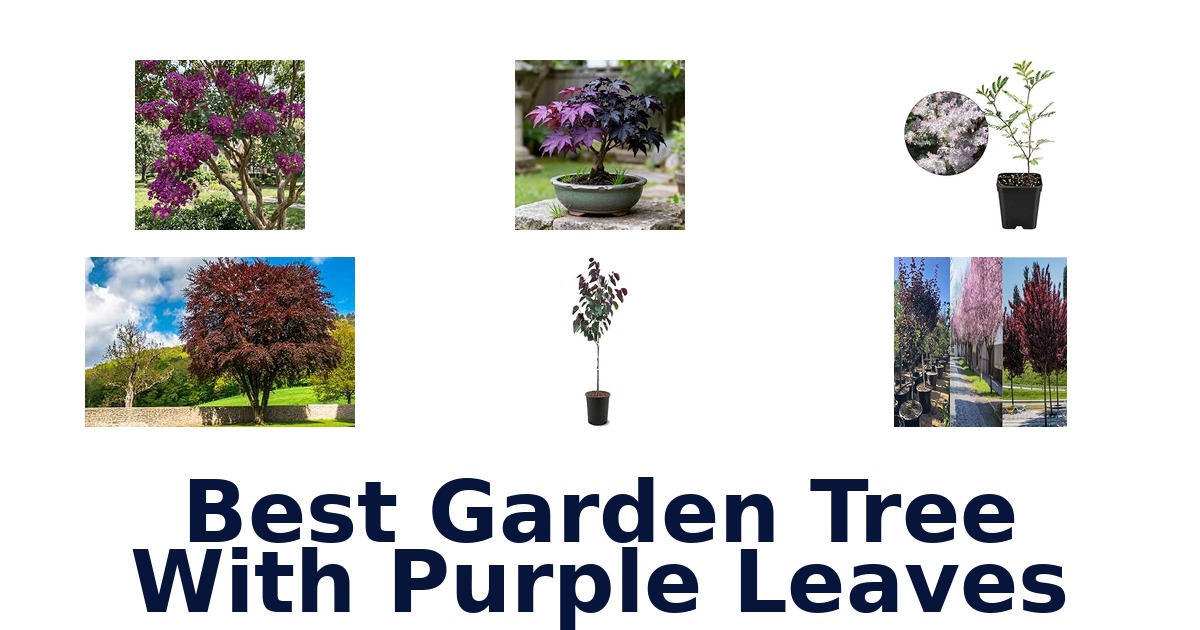
A strong purple-leaf garden tree delivers the foliage color you want in a form suited to your space and patience: this selection includes established live trees, small starter plants, and seeds. For immediate impact, the 5–7-foot Krauter Vesuvius Purple Leaf Plum Tree is the clearest fit, with deep purple foliage and pink spring blossoms. Smaller live options include a 2–3-foot Forest Pansy Redbud and a 20–30-inch Purple Leaf Beech seedling, while the Acacia arrives just 3–4 inches tall.
Seed packets offer a different route, but they require growing a tree from seed and do not provide a ready landscape specimen. Compare the plant’s starting form, stated climate range, and whether its color comes from leaves or flowers before choosing.
The Krauter Vesuvius Purple Leaf Plum Tree is the best overall choice for a garden needing purple-leaf color now: it arrives 5–7 feet tall, has deep burgundy-purple foliage, and produces pink spring blossoms. It is a live, fruit-bearing ornamental tree listed for ground planting or container growing. Choose the Forest Pansy Redbud instead if you want a smaller 2–3-foot live tree with early spring flowers, or the Purple Leaf Beech if its stated USDA Zones 4–7 range better suits your garden.
Our Top Picks
 Best Overall
Krauter Vesuvius Purple Leaf Plum
This live tree arrives 5–7 feet tall and combines deep purple foliage, pink spring blossoms, and ornamental fruit for immediate garden presence.
View on Amazon Best Spring Blooms
The 2–3-foot live tree has deep purple foliage and lavender-pink flowers in early spring, with a stated mature size of 20–25 feet.
View on Amazon Hardiness Range
This 20–30-inch live seedling is listed as hardy in USDA Zones 4–7; its leaves are most purple in full sun and greener in shade.
View on Amazon- Best Weeping Form Purple Leaf Weeping Acacia
Compare These Purple-Leaf Garden Tree Options
| # | Product | Weight | Material Feature | Care Instructions | Buy |
|---|---|---|---|---|---|
| 1 | 1. Krauter Vesuvius Purple Leaf PlumBest Overall | 5 lb | Container Grown, Deciduous, Fruit-bearing… | Plant In Full Sun To Partial Shade In… | View on Amazon |
| 2 | 2. Forest Pansy RedbudBest Spring Blooms | 5 lb | — | Low-maintenance ornamental tree | View on Amazon |
| 3 | 3. Purple Leaf BeechHardiness Range | 16 oz | GMO Free | Moist | View on Amazon |
| 4 |  4. Purple Leaf Weeping AcaciaBest Weeping Form | 3.3 lb | Live Plant | Plant In Well-draining Soil, Water… | View on Amazon |
| 5 |  5. Purple Maple Tree SeedsPurple Maple Seed Growers | 4.54 g | GMO Free | — | View on Amazon |
| 6 |  6. Purple Crape Myrtle SeedsSeed-Growing Gardeners | — | — | Plant Crape Myrtle seeds in loam soil with… | View on Amazon |
Detailed Reviews: Best Garden Tree With Purple Leaves
#1 · Best Overall
1. Krauter Vesuvius Purple Leaf Plum
- Weight: 5 lb
- Material Feature: Container Grown, Deciduous, Fruit-bearing…
- Care Instructions: Plant In Full Sun To Partial Shade In…
Best for: Immediate Landscape Impact.
Why it ranks #1: This live tree arrives 5–7 feet tall and combines deep purple foliage, pink spring blossoms, and ornamental fruit for immediate garden presence.
At 5–7 feet tall and ready for planting, GREEN BEAR’s Krauter Vesuvius Purple Leaf Plum delivers a more developed landscape presence on arrival. Deep burgundy-purple foliage pairs with fragrant pink spring blossoms, while its fruit-bearing variety adds small ornamental fruits through the season.
The supplied listing says the tree can go into the ground or a 15-gallon container, giving buyers a choice between a planted landscape position and container growing. Its 5–7-foot height makes it a mature specimen compared with seed-grown options, while deep purple-red foliage and fragrant pink spring blossoms provide separate seasonal features. Small ornamental fruits add another visual element, though the listing describes them as ornamental rather than presenting the tree as a food-production choice.
- Arrives 5–7 feet tall in a container
- Ready for ground planting or container growing
- Deep burgundy-purple foliage with pink spring blossoms
- Fruit-bearing variety produces small ornamental fruits
- Its 5–7-foot height requires room for a substantial specimen at planting.
Skip it if you want to raise a tree from seed in stages; this arrives 5–7 feet tall, while the Generic purple maple listing offers 30 seeds.
This plum suits buyers seeking an established ornamental with purple foliage, fragrant pink spring blossoms, and small fruits. Consider its 5–7-foot starting height and choose ground planting or the listed 15-gallon container option.
Full product details
| Brand | GREEN BEAR |
|---|---|
| Color | depends on season |
| Container Material | Plastic |
| Item Weight | 5 pounds |
| Manufacturer | Green Bear |
| Material Feature | Container Grown, Deciduous, Fruit-bearing, Live Plant, Ornamental, Pink Blooms, Purple Foliage, Ready To Plant See more |
| Material Features | Container Grown, Deciduous, Fruit-bearing, Live Plant, Ornamental, Pink Blooms, Purple Foliage, Ready To Plant |
| Special Features | 15 Gallon Container Included, Deep Purple-red Foliage, Fragrant Pink Spring Blossoms, Fruit-bearing Plums, Krauter Vesuvius Variety |
| Planter Color | Black |
| Care Instructions | Plant In Full Sun To Partial Shade In Well-drained Soil. Water Regularly During The First Growing Season To Establish A Deep, Extensive Root System. Once Established, Water During Dry Spells. Fertilize In Early Spring With A Balanced Slow-release Fertilizer. Prune In Late Winter Or Early Spring Befo |
| Special Feature | 15 Gallon Container Included, Deep Purple-red Foliage, Fragrant Pink Spring Blossoms, Fruit-bearing Plums, Krauter Vesuvius Variety See more |
| Style Name | Upright Ornamental Deciduous Tree |
Listed on Amazon as: Krauter Vesuvius Purple Leaf Plum Tree 5-7 Feet Tall, Fruit-Bearing, Ready for Your 15 Gallon Container or Ground Planting, Live Plant with Shipping Pot
View on Amazon#2 · Best Spring Blooms
2. Forest Pansy Redbud
- Weight: 5 lb
- Care Instructions: Low-maintenance ornamental tree
Best for: Spring-Blooming Redbud Buyers.
Why it ranks #2: The 2–3-foot live tree has deep purple foliage and lavender-pink flowers in early spring, with a stated mature size of 20–25 feet.
Lavender-pink flowers appear in early spring before the Forest Pansy Redbud’s foliage emerges, giving this 2–3-foot nursery-pot tree a distinct seasonal sequence. Deep purple foliage then holds color through summer, while heart-shaped leaves deepen to maroon for continued contrast.
The 1-gallon nursery pot and 2–3-foot height make this a live young tree rather than a seed-starting project. Its early flowers precede foliage, followed by deep purple summer color and heart-shaped leaves that deepen to maroon, so the listed features provide interest across more than one season. The tree is described as hardy in USDA Zones 5–9 and maturing to approximately 20–25 feet tall and wide, making eventual space an important planting consideration.
- Live Forest Pansy Redbud in a 1-gallon nursery pot
- Measures 2–3 feet tall
- Lavender-pink flowers bloom in early spring before foliage
- Deep purple foliage holds color all summer
- Matures to approximately 20–25 feet tall and wide, requiring substantial eventual space.
Skip it if you lack room for a tree that matures 20–25 feet tall and wide; the MYSHELFIE Purple Leaf Weeping Acacia is listed for patio containers.
This redbud fits buyers seeking early spring flowers followed by summer purple foliage in a Zone 5–9 garden. Plan for its stated 20–25-foot mature height and width when choosing a specimen or border location.
Full product details
| Brand | Generic |
|---|---|
| Color | Purple |
| Container Material | Plastic |
| Item Weight | 5 pounds |
| Manufacturer | Heritage Seedling |
| Special Features | Air Purification, Attracts Pollinators, Compact, Drought Tolerant, Low Maintenance |
| Care Instructions | Low-maintenance ornamental tree |
| Special Feature | Air Purification, Attracts Pollinators, Compact, Drought Tolerant, Low Maintenance |
Listed on Amazon as: Forest Pansy Redbud Tree, 1 gal. Nursery Pot, 2–3 ft Tree Height
View on Amazon#3 · Hardiness Range
3. Purple Leaf Beech
- Weight: 16 oz
- Material Feature: GMO Free
- Care Instructions: Moist
Best for: Established Beech Starter.
Why it ranks #3: This 20–30-inch live seedling is listed as hardy in USDA Zones 4–7; its leaves are most purple in full sun and greener in shade.
A 20–30-inch, two-year-old Purple Leaf Beech gives buyers a taller live seedling rather than seeds or a tiny starter. This deciduous European beech is hardy in USDA Zones 4–7, with purple foliage that can shift toward green in shade and deep bronze in fall.
The 20–30-inch height offers a more developed starting point for a landscape planting than the listed 3–4-inch Acacia starter. Its full-sun preference matters for color: the supplied details say leaves are more green in shade and show their most purple color in full sun. As a deciduous tree, it also brings a seasonal change, with yellowish-green blooms in April to May and foliage turning deep bronze in fall.
- Two-year-old live seedling measures 20–30 inches tall
- Purple-leaf European beech, Fagus sylvatica ‘Purpurea’
- Hardy in USDA Zones 4–7
- Foliage turns deep bronze in fall
- Dormant and supplied without leaves, so it has no visible foliage at arrival.
Skip it if you want visible foliage on arrival; this seedling is dormant and has no leaves, while the GREEN BEAR Krauter Vesuvius arrives as a 5–7-foot live tree.
Choose this beech if you want a taller young tree with purple foliage potential and fall bronze color in a Zone 4–7 garden. Plant it where full sun can support the strongest purple leaf color.
Full product details
| Brand | Generic |
|---|---|
| Color | Purple |
| Item Weight | 16 ounces |
| Manufacturer | Mightyoaktreenursery |
| Material Feature | GMO Free |
| Material Features | GMO Free |
| Special Features | Low Maintenance |
| Care Instructions | Moist |
| Special Feature | Low Maintenance |
Listed on Amazon as: 20-30 inches Tall Fagus sylvatica Purpurea Copper Beech, 2 Year Old Plant, Dormant, no Leaves
View on Amazon#4 · Best Weeping Form
4. Purple Leaf Weeping Acacia
- Weight: 3.3 lb
- Material Feature: Live Plant
- Care Instructions: Plant In Well-draining Soil, Water…
Best for: Small-Space Acacia Starter.
Why it ranks #4: The live evergreen starter has soft purple-gray foliage and a weeping habit, but arrives only about 3–4 inches tall in a 2-inch pot.
A graceful weeping form sets this Purple Leaf Weeping Baileyana apart, adding movement and texture to a landscape, patio container, or accent planting. The live evergreen starter arrives in a 2-inch nursery pot at approximately 3–4 inches tall, with soft, feathery purple-gray foliage.
Its compact 3–4-inch size makes this a small starter to transplant, rather than an instant specimen tree. The listed options of landscaping, patio containers, and accent planting let buyers choose where to establish it, while the weeping branching habit supplies visual shape as it grows. Care instructions call for well-draining soil, moderate watering, pruning as needed to maintain shape, and fertilizing during the growing season, giving the owner a defined maintenance routine.
- Live Acacia baileyana ‘Purpurea’ evergreen starter
- Soft, feathery purple-gray foliage
- Graceful weeping branching habit
- Suitable for landscaping, patio containers, and accent planting
- At approximately 3–4 inches tall, it needs time to grow into a landscape specimen.
Skip it if you need a mature tree for immediate impact; this starter is only 3–4 inches tall, while GREEN BEAR’s Krauter Vesuvius is 5–7 feet.
Pick this Acacia for a patio container or accent spot where its weeping form and purple-gray foliage can develop over time. Its 2-inch pot and small starter size make it a poor match for buyers seeking instant height.
Full product details
| Brand | MYSHELFIE, MY SHELFIE |
|---|---|
| Color | Green |
| Item Weight | 3.3 pounds |
| Manufacturer | MYSHELFIE |
| Material Feature | Live Plant |
| Material Features | Live Plant |
| Special Features | Attracts Pollinators |
| Care Instructions | Plant In Well-draining Soil, Water Moderately, Prune As Needed To Maintain Shape, Fertilize During Growing Season |
| Special Feature | Attracts Pollinators |
Listed on Amazon as: Acacia Tree Live Plant, Purple Leaf Weeping Baileyana, 2-Inch Pot
View on Amazon#5
5. Purple Maple Tree Seeds
- Weight: 4.54 g
- Material Feature: GMO Free
Best for: Purple Maple Seed Growers.
Why it ranks #5: The packet contains 30 purple maple seeds intended to grow trees with purple foliage, but offers no established plant or stated starter size.
Thirty purple maple seeds let gardeners start multiple ornamental trees from seed rather than purchase a single live specimen. The listing highlights purple foliage from spring through fall, offering a season-long color goal for growers willing to raise their own Acer palmatum trees.
A 30-seed quantity supports multiple planting attempts or a broader growing project, although the supplied facts do not specify germination rates or mature dimensions. The stated spring-through-fall purple foliage gives growers a clear ornamental objective as trees develop. This is a seed product, so it fits gardeners prepared to manage the early growing stages rather than anyone looking for an immediately established tree; the listing also identifies the seeds as non-GMO and heirloom.
- 30 purple maple seeds for planting
- Identified as Acer palmatum tree seed
- Purple foliage described as lasting from spring through fall
- Listed as non-GMO heirloom seeds
- Seeds must be grown into trees before they provide a landscape focal point.
Skip it if you want a live tree to plant immediately; these are seeds, while the Generic Forest Pansy Redbud arrives 2–3 feet tall in a nursery pot.
Choose these seeds if you want to grow purple-leaf maples from the beginning and can wait for trees to develop. The listed foliage color lasts from spring through fall, but this package is not an established tree.
Full product details
| Brand | Generic |
|---|---|
| Color | Purple |
| Item Weight | 4.54 g |
| Manufacturer | Generic |
| Material Feature | GMO Free |
| Material Features | GMO Free |
| Special Features | Attracts Pollinators |
| Special Feature | Attracts Pollinators |
Listed on Amazon as: 30+ Purple Maple Tree Seeds for Planting, Rare Acer Palmatum Tree Seed, Non-GMO Heirloom Plant Seeds for Garden Home
View on Amazon#6
6. Purple Crape Myrtle Seeds
- Care Instructions: Plant Crape Myrtle seeds in loam soil with…
Best for: Seed-Growing Gardeners.
Why it ranks #6: This packet supplies over 35 seeds for trees known for purple blooms, so its listed color is in flowers rather than purple leaves.
More than 35 Crape Myrtle seeds give seed-growing gardeners multiple chances to establish purple-blooming perennial trees. The listing describes a long-lasting variety that can return year after year once established, offering a route to a lasting garden display rather than an already-grown specimen.
The seed count supports several planting opportunities, so buyers can work toward a broader garden display instead of relying on a single seedling. Crape Myrtle seeds are specified for full sun and well-draining loam, which helps set clear site and soil requirements before sowing. The care directions call for regular watering during establishment and consistent moisture afterward; this is a gradual growing project, not an immediate landscape focal point.
- Over 35 Crape Myrtle seeds in the package
- Purple blooms for a colorful garden display
- Perennial tree variety described as returning year after year
- Growing directions specify full sun and well-draining loam
- Seeds require growing time before they become flowering trees.
Skip it if you need an established tree now; these seeds require growing, while the GREEN BEAR Krauter Vesuvius arrives 5–7 feet tall and ready to plant.
This seed lot suits gardeners who want multiple sowing opportunities and are comfortable raising trees from seed. Choose a sunny location with well-draining loam, and allow time for seedlings to establish before expecting a flowering display.
Full product details
| Brand | Unknown |
|---|---|
| Color | Purple |
| Care Instructions | Plant Crape Myrtle seeds in loam soil with full sun exposure. Ensure the planting location receives direct sunlight throughout the day for optimal growth and flowering. Use well-draining loam soil for best results. Water regularly to establish seedlings, then maintain consistent moisture without wat |
Listed on Amazon as: 35+ Crape Myrtle Purple Seeds/Perennial Tree
View on AmazonAvoid confusing purple flowers with purple foliage
Check whether the advertised purple belongs to the leaves or the blooms: the distinction changes the garden effect. The Purple Crape Myrtle Seeds are described as producing purple blooms, not purple leaves, so they are a weaker match for a foliage-focused search. By contrast, the Purple Maple Tree Seeds are specifically presented as seeds for purple foliage, though the listing does not give a mature plant size or a live starter.
Among live plants, the Krauter Vesuvius Purple Leaf Plum, Forest Pansy Redbud, Purple Leaf Beech, and Purple Leaf Weeping Acacia all have purple foliage described in their listings. A useful planning check is to decide whether you want a season-long foliage feature, a flowering display, or both.
The plum combines purple leaves with pink blossoms; the redbud pairs deep purple foliage with lavender-pink spring flowers. The crape myrtle listing supports a flower-color choice, not the specific purple-leaf goal.
Check mature scale before choosing a starter
A small shipping size does not mean the mature tree will stay small. The Forest Pansy Redbud arrives 2–3 feet tall but is listed to mature at approximately 20–25 feet tall and wide; the Purple Leaf Beech is a 20–30-inch seedling and is described as a large tree that can reach 50 feet or more. The Purple Leaf Weeping Acacia is only about 3–4 inches tall, and its supplied details do not state a mature size.
Those differences make it risky to choose by pot or shipping height alone. Check the product’s stated mature dimensions against the planting location and any nearby structures before ordering.
The plum listing says the tree arrives 5–7 feet tall and is ready for planting, but the supplied details do not provide a mature-size figure. Treat that missing dimension as a reason to verify suitability for your site rather than assuming its current height predicts its eventual footprint.
How to Choose a Purple-Leaf Garden Tree
Live tree or seeds
Choose a live tree if you want a planted specimen rather than a seed-starting project. The listed live options span the 5–7-foot Krauter Vesuvius Purple Leaf Plum, the 2–3-foot Forest Pansy Redbud, the 20–30-inch Purple Leaf Beech seedling, and the 3–4-inch Purple Leaf Weeping Acacia starter. The seed choices are 30 purple maple seeds and over 35 purple crape myrtle seeds; neither listing provides an established tree.
Buyers seeking a more immediate landscape presence should favor the taller live plum. Those willing to start small and grow a tree from seed may consider the maple seeds, which are described as producing purple foliage.
The crape myrtle is a less direct fit when purple leaves are essential because its listed color is in its blooms.
Foliage color and seasonal display
Look for a listing that describes the leaves themselves if purple foliage is your priority. The beech’s color depends on light: the listing says shade makes leaves greener and full sun gives the most purple color. The plum is described as having deep burgundy-purple foliage and pink spring blossoms, while the redbud has deep purple foliage and lavender-pink flowers before its leaves emerge.
The Acacia offers soft purple-gray foliage in an evergreen form. These choices suit different visual preferences: choose the plum for deep color with blossoms, the redbud for an early spring flower display, or the Acacia for a feathery, weeping look.
The crape myrtle seeds favor buyers whose priority is purple flowers rather than purple leaves.
Climate and growing conditions
Match the plant’s stated climate or care notes to your garden before deciding. The Purple Leaf Beech is specifically listed for USDA Zones 4–7 and notes that full sun produces the strongest purple color. The Forest Pansy Redbud listing gives a USDA Zones 5–9 range and says it prefers full sun to partial shade.
Crape myrtle seed instructions call for full sun and well-draining loam, while the Acacia instructions specify well-draining soil and moderate watering. The plum listing does not provide a hardiness range in the supplied details, and the maple seed listing also lacks a stated zone range.
Buyers with a garden matching the beech’s stated zones can use that range as a useful filter; those outside it should favor a product with a suitable stated range or verify local suitability before purchase.
Which Purple-Leaf Tree Should I Choose?
For the strongest ready-to-plant combination of purple foliage and spring flowers, choose the Krauter Vesuvius Purple Leaf Plum; it arrives 5–7 feet tall and is listed for ground or container planting. Choose the Forest Pansy Redbud if you want a smaller live starting tree with lavender-pink early spring flowers and a stated 20–25-foot mature size. The Purple Leaf Beech suits buyers whose conditions fit USDA Zones 4–7 and who can provide full sun for its strongest purple color.
Pick the Purple Leaf Weeping Acacia for a feathery, weeping evergreen look, accepting its very small 3–4-inch starter size. If you prefer seeds, the Purple Maple Tree Seeds are the closer foliage match; choose Purple Crape Myrtle Seeds for purple blooms rather than purple leaves.
Related Buying Guides
Frequently Asked Questions
How much direct sun do purple-leaf trees need to retain their foliage color?
Sun needs vary by tree, so check the specific listing and your local growing conditions. The Purple Leaf Beech listing says full sun brings out its strongest purple color. The supplied details do not specify sun requirements for the other options, so confirm those before choosing a planting spot.
How much space should I leave for a mature purple-leaf tree?
Allow for the tree’s mature size, not just the size it arrives at. The Forest Pansy Redbud listing gives a mature height of 20–25 feet; mature dimensions for the other options are not provided here. Check each tree’s expected spread and height before planting near buildings or other plants.
Is it better to buy a live tree or grow one from seed?
Choose a live tree if you want a starting plant rather than beginning with seed. The plum, redbud, beech, and acacia listings describe live plants, while the crape myrtle and maple listings are seeds. Seed-grown options require growing from seed, and the supplied details do not state how quickly they establish.
Which option is listed for container planting?
The Krauter Vesuvius Purple Leaf Plum is listed for either ground planting or container growing, and its title specifies a 15-gallon container. The other supplied listings do not identify container suitability. Check the product details and consider the tree’s eventual size before selecting a container.
Which seed option is closer to a purple-leaf tree?
The Purple Maple Tree Seeds are the closer match if purple foliage is your priority. The Purple Crape Myrtle Seeds are described as an option for purple blooms rather than purple leaves. Both are seed listings, so neither provides a ready-to-plant live tree.
Final Words
For immediate purple foliage with spring blossoms, choose the Krauter Vesuvius Purple Leaf Plum: it arrives 5–7 feet tall and is listed for ground or container planting. Pick the Forest Pansy Redbud for a smaller live starting tree, or the Purple Leaf Beech if its Zones 4–7 range and full-sun preference fit your garden. Choose the acacia for a weeping look, or seeds if you prefer growing from seed.