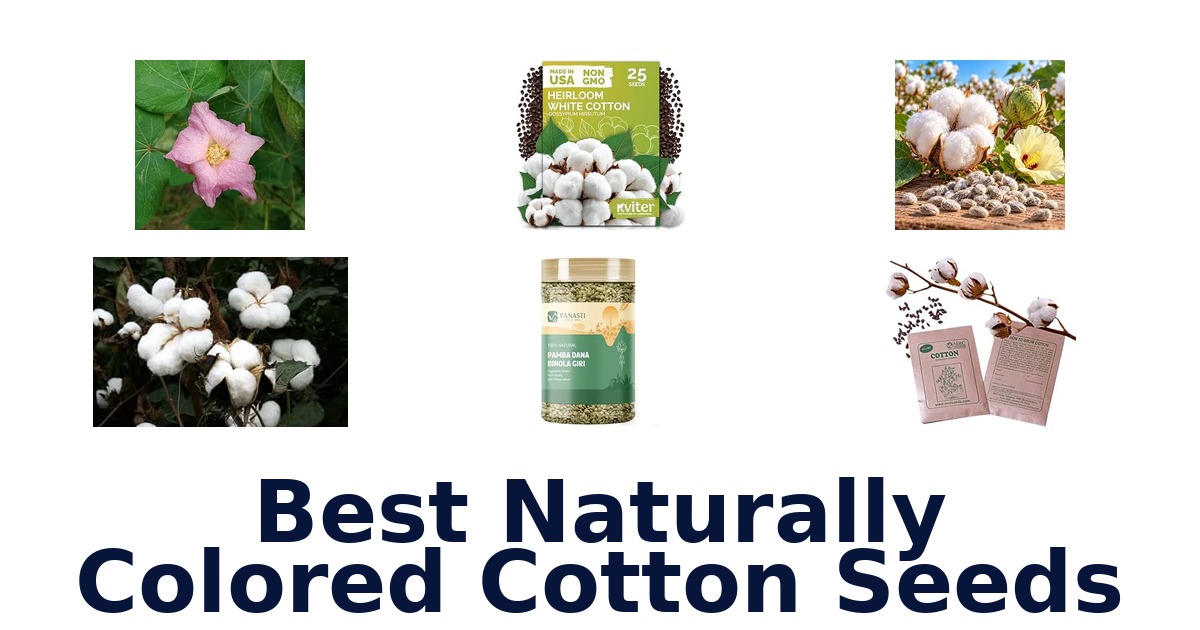
Strong naturally colored cotton seeds produce brown or green lint rather than the familiar white bolls, making them a fit for gardeners who want distinctive fiber for crafts or display. In this selection, Mountain Valley Seed Company offers Brown King and Erlene’s Green, the clearest matches for naturally colored cotton. The remaining options include white-fiber upland and Egyptian cotton, plus ornamental Levant cotton, so check the variety before choosing.
Seed quantities range from 20-plus to 100, while growing details include full-sun needs, warm-season conditions, and, for one packet, USDA Zones 9–The right choice depends on whether lint color, a larger seed lot, species, or ornamental flowers matter most.
These listings do not establish the final lint color for every variety, so use the named variety as your starting point.
Mountain Valley Brown King Cotton is the leading choice for naturally colored cotton because it is explicitly identified as a brown, non-GMO heirloom lint variety. Mountain Valley Erlene’s Green is the closest alternative for green lint, also described as non-GMO heirloom cotton. Both listings suit warm, sunny growing conditions.
If you would rather prioritize seed quantity or a specific white-fiber species, the upland and Egyptian cotton options may fit better, but they do not match the natural-color goal as directly.
Our Top Picks
 Best Overall
The Brown King variety is explicitly described as non-GMO heirloom cotton with naturally brown lint, making it the clearest match for colored fiber.
View on Amazon Best Green Lint
Mountain Valley Erlene’s Green
Erlene’s Green is a named green-lint heirloom variety and non-GMO, providing a distinct natural-color alternative for warm, sunny gardens.
View on Amazon Best Ornamental
Levant cotton offers showy multicolored flowers, pollinator appeal, and cotton pods; its product details do not specify naturally colored lint.
View on Amazon- Largest Seed Count CZ Grain American Cotton
Compare the Cotton Seed Options
| # | Product | Material Features | Material Feature | Buy |
|---|---|---|---|---|
| 1 | 1. Mountain Valley Brown KingBest Overall | GMO Free | GMO Free | View on Amazon |
| 2 | 2. Mountain Valley Erlene’s GreenBest Green Lint | GMO Free | GMO Free | View on Amazon |
| 3 | 3. Outsidepride Levant CottonBest Ornamental | GMO Free | GMO Free | View on Amazon |
| 4 |  4. CZ Grain American CottonLargest Seed Count | — | — | View on Amazon |
| 5 |  5. CZ Grain Egyptian CottonEgyptian cotton garden projects | Heirloom | Heirloom | View on Amazon |
| 6 |  6. Loseedsoo Upland CottonUpland cotton packet growers | — | — | View on Amazon |
| 7 |  7. KVITER White CottonZone 9–11 white-cotton growers | GMO Free, Heirloom | GMO Free, Heirloom | View on Amazon |
| 8 |  8. Wivolibe American CottonWhite-boll garden growers | Organic | Organic | View on Amazon |
| 9 |  9. MRC Seeds CottonFlexible-sowing cotton gardeners | GMO Free | GMO Free | View on Amazon |
| 10 |  10. VANASTI Pamba DanaHerbal-product shoppers | Genetically Modified Organism (GMO) Free… | Genetically Modified Organism (GMO) Free… | View on Amazon |
Detailed Reviews: Best Naturally Colored Cotton Seeds
#1 · Best Overall
1. Mountain Valley Brown King
- Material Features: GMO Free
- Material Feature: GMO Free
Best for: Brown-lint warm-season gardeners.
Why it ranks #1: The Brown King variety is explicitly described as non-GMO heirloom cotton with naturally brown lint, making it the clearest match for colored fiber.
Brown King is the named heirloom lint variety at the center of this Mountain Valley Seed Company packet, making it a specific choice for gardeners seeking naturally brown cotton. The listing identifies it as non-GMO and notes that it favors hot conditions and long, warm summers.
The Brown King name and natural-fiber emphasis distinguish this seed from white-cotton options for garden craft or educational interest. Its warm-climate guidance gives buyers a practical seasonal check: the listing says it thrives in hot, sunny conditions and long, warm summers. Mountain Valley also describes it as suitable for home gardens and small-scale use, with high germination rate listed as a special feature. No seed quantity or mature plant dimensions are supplied in the provided product facts.
- Named Brown King cotton lint variety
- Non-GMO heirloom seed
- Suitable for home gardens and small-scale use
- High germination rate listed
- The variety is specified for hot conditions and long, warm summers.
Skip it if you need white bolls; CZ Grain’s Egyptian cotton is explicitly described as producing fluffy white cotton.
This suits warm-climate gardeners interested in brown cotton lint for a home planting, craft exploration, or educational use. Its long-summer preference is a real fit consideration, and no plant size is listed.
Full product details
| Brand | Mountain Valley Seed Company |
|---|---|
| Manufacturer | Mountain Valley Seed Company |
| Material Feature | GMO Free |
| Material Features | GMO Free |
| Special Features | High Germination Rate |
| Special Feature | High Germination Rate |
| Style | Brown King |
| Style Name | Brown King |
Listed on Amazon as: Mountain Valley Seed Co Brown King Cotton Lint Non-GMO, Heirloom, High
View on Amazon#2 · Best Green Lint
2. Mountain Valley Erlene’s Green
- Material Features: GMO Free
- Material Feature: GMO Free
Best for: Warm-climate green-lint gardeners.
Why it ranks #2: Erlene’s Green is a named green-lint heirloom variety and non-GMO, providing a distinct natural-color alternative for warm, sunny gardens.
Erlene’s Green Cotton Lint brings a named green-lint heirloom variety to a sunny garden, offering a naturally colored option instead of the familiar white-boll look. Mountain Valley Seed Company identifies it as non-GMO and notes that it grows well in hot conditions and long, warm summers.
The green-lint identity makes this seed relevant to gardeners and crafters seeking colored cotton fiber, while its warm-climate guidance points toward a sunny site with a long growing season. The listing also describes the variety as heirloom and suitable for home gardening and educational use, so it can support a small planting or demonstration. High germination rate is listed as a special feature, though no seed quantity or mature plant dimensions are supplied here.
- Named Erlene’s Green Cotton Lint variety
- Non-GMO heirloom seed
- Suited to hot, sunny conditions
- Listed for gardening, crafts, and education
- It is specified for hot conditions and long, warm summers.
Skip it if you have a short, cool growing season; CZ Grain’s Egyptian cotton listing also requires warmth, so choose a locally suitable crop instead.
Consider it if you want green-lint cotton for a warm, sunny home garden, craft interest, or educational planting. Its stated preference for long, warm summers makes climate suitability an important boundary.
Full product details
| Brand | Mountain Valley Seed Company |
|---|---|
| Color | Red Beauty |
| Manufacturer | Mountain Valley Seed Company |
| Material Feature | GMO Free |
| Material Features | GMO Free |
| Special Features | High Germination Rate |
| Special Feature | High Germination Rate |
| Style Name | Erlene’s Green |
Listed on Amazon as: Mountain Valley Seed Co Erlene’s Green Cotton Lint Heirloom, Non-GMO
View on Amazon#3 · Best Ornamental
3. Outsidepride Levant Cotton
- Material Features: GMO Free
- Material Feature: GMO Free
Best for: Pollinator-friendly perennial beds.
Why it ranks #3: Levant cotton offers showy multicolored flowers, pollinator appeal, and cotton pods; its product details do not specify naturally colored lint.
Levant cotton pairs cotton pods with vibrant, multicolored flowers that attract bees and butterflies, making Outsidepride’s Gossypium herbaceum a garden-interest choice beyond fiber alone. The listing describes it as perennial and self-sowing, and specifies suitability for USDA zones 10–11.
The flowering period from late spring to early fall can extend visual interest, while nectar-rich blooms provide a reason to place the plant in a pollinator-focused bed. Its perennial and self-sowing traits may suit gardeners seeking a recurring planting, and the listed 30-to-60-inch height helps with placement among shrubs or other garden plants. Outsidepride identifies the seed as drought tolerant, but still lists watering as a care instruction. Its flowers and cotton pods, rather than a specified colored fiber, are the key appeal.
- Perennial Gossypium herbaceum
- Multicolored blooms attract bees and butterflies
- Listed for USDA zones 10–11
- Drought-tolerant feature and self-sowing ability
- Suitable climate is specified as USDA zones 10–11.
Skip it if you garden outside zones 10–11; MRC Seeds lists cotton adapted to diverse climatic conditions.
A strong fit for a zone 10–11 pollinator or shrub garden where multicolored flowers and cotton pods are welcome. Choose it for those garden features, not when a specific lint color is the priority.
Full product details
| Brand | Outsidepride |
|---|---|
| Color | White |
| Manufacturer | Outsidepride |
| Material Feature | GMO Free |
| Material Features | GMO Free |
| Special Features | Drought Tolerant |
| Care Instructions | Water |
| Special Feature | Drought Tolerant |
#4 · Largest Seed Count
4. CZ Grain American Cotton
Best for: Larger white-cotton sowings.
Why it ranks #4: The 100-seed Gossypium hirsutum packet offers the largest stated quantity, though its cotton is not identified as naturally colored.
A 100-seed quantity is the clearest distinction of CZ Grain’s American cotton packet, giving growers more seeds for a broader sowing than smaller listed packets. The variety is Gossypium hirsutum, also called Upland or Mexican cotton, and the listing says planting instructions are included.
The 100-seed supply can support a larger planting or leave more seeds available for staged sowing, while the included instructions give beginners a reference for getting started. CZ Grain identifies the species as the widely planted Upland cotton and describes it as ornamental, making it relevant to both garden interest and cotton growing. The supplied details do not specify a cotton color, climate range, plant size, or organic status, so those needs require another product choice.
- Includes 100 Gossypium hirsutum seeds
- Identified as Upland or Mexican cotton
- Planting instructions included
- Described as an ornamental plant
- The supplied listing does not identify the cotton fiber color.
Skip it if you need a confirmed naturally colored fiber variety; Mountain Valley Seed Company’s Erlene’s Green Cotton Lint names green lint.
This packet suits gardeners planning a relatively broad sowing of Upland cotton or wanting an ornamental planting with instructions. It is not the clearest choice when colored lint, climate guidance, or mature plant dimensions determine the purchase.
Full product details
| Brand | CZ Grain |
|---|---|
| Color | 100 Seeds |
| Manufacturer | CZ Grain |
Listed on Amazon as: American Cotton Seeds for Planting – Gossypium hirsutum – (100 Seeds)
View on Amazon#5
5. CZ Grain Egyptian Cotton
- Material Features: Heirloom
- Material Feature: Heirloom
Best for: Egyptian cotton garden projects.
Why it ranks #5: This 50-seed Gossypium barbadense option is a clearly identified cotton species for sunny gardens, but it produces white rather than colored bolls.
Gossypium barbadense distinguishes CZ Grain’s 50 Egyptian cotton seeds from the Upland cotton packets in this roundup, offering a named species for a sunny garden or demonstration planting. The listing describes fluffy white bolls and positions the plant for ornamental, educational, and garden uses.
The 50-seed quantity gives a defined starting amount for a planting, while the warm-season and full-sun requirements help determine where and when to sow. CZ Grain advises starting indoors in cooler regions or direct sowing after soil warms and frost danger passes, offering two approaches around local conditions. Consistent moisture is also specified in the care guidance. This is a white-fiber selection, so it fits growers seeking Egyptian cotton rather than a colored-lint variety.
- 50 Gossypium barbadense seeds
- Produces fluffy white cotton bolls
- Can be started indoors in cooler regions
- Suitable for educational and ornamental plantings
- Requires warm conditions and full sun to grow.
Skip it if you want green or brown fiber; Mountain Valley Seed Company offers named green and Brown King cotton lint varieties.
Choose this for a sunny, warm-season garden, educational planting, or ornamental display centered on Egyptian cotton and white bolls. Cooler-region growers can start indoors, but the crop still needs warmth and sun.
Full product details
| Brand | CZ Grain |
|---|---|
| Color | 50 Seeds |
| Item Weight | 12.96 ounces |
| Manufacturer | CZ Grain |
| Material Feature | Heirloom |
| Material Features | Heirloom |
| Special Features | Cotton Seeds |
| Care Instructions | Plant in full sun after frost; provide warm conditions and consistent moisture |
| Special Feature | Cotton Seeds |
| Style Name | Quality Seeds |
Listed on Amazon as: 50 Egyptian Cotton Seeds | Gossypium barbadense White Fiber Cotton Plants
View on Amazon#6
6. Loseedsoo Upland Cotton
Best for: Upland cotton packet growers.
Why it ranks #6: The packet contains approximately 50-plus American upland cotton seeds, but the listing describes the mature fibers as white.
Approximately 50 or more seeds in a five-gram packet make Loseedsoo’s American Upland cotton a defined option for gardeners planning multiple sowing positions. The listed Gossypium hirsutum variety is identified as FiberMax FM 958 and produces soft white cotton fibers in mature, opening bolls.
The stated packet quantity can support a broader garden sowing, while the warm-season annual description helps growers plan it as a seasonal crop. Broad green leaves and hibiscus-like flowers add visible stages before seed-bearing bolls open to show white fiber, giving the planting ornamental as well as cotton interest. The listing identifies the cultivar as FiberMax FM 958. The provided facts do not specify mature plant dimensions, USDA zones, or a detailed watering schedule, so those are not available for planning here.
- Approximately 50-plus seeds in a five-gram packet
- Identified as FiberMax FM 958
- Warm-season annual cotton
- White fibers emerge from mature, opening bolls
- The listing provides no mature plant dimensions or USDA zone range.
Skip it if you need a specified plant height; KVITER lists its white cotton at up to four feet tall.
This fits growers seeking a larger packet of American Upland cotton for a seasonal outdoor planting, with white fiber and ornamental foliage and flowers. Check local growing conditions independently because no zone range is listed.
Full product details
| Brand | Loseedsoo |
|---|---|
| Color | green |
| Item Weight | 1.6 ounces |
| Manufacturer | loseedsoo |
| Planter Color | Green |
Listed on Amazon as: 50+ Cotton Seeds for Planting (5g), American Upland Cotton (Gossypium hirsutum), Annual Plant Seeds for Outdoor Growing, White Fiber Bolls
View on Amazon#7
7. KVITER White Cotton
- Material Features: GMO Free, Heirloom
- Material Feature: GMO Free, Heirloom
Best for: Zone 9–11 white-cotton growers.
Why it ranks #7: The heirloom, GMO-free packet includes a growing guide and USDA Zones 9–11 guidance, but its cotton is explicitly white.
A stated USDA hardiness range of zones 9–11 gives KVITER’s white Gossypium hirsutum seeds a clear climate fit for warm-region gardeners. The listing also supplies mature size expectations—up to four feet tall with a two-foot spread—helpful for planning space around this heirloom cotton.
The zone guidance and full-sun requirement help buyers assess whether a warm, sunny garden bed suits this cotton before planting. Its listed height and spread offer practical spacing context, while moderate watering and a 24-hour seed soak outline parts of the care routine. A growing guide is included, so the packet provides a reference for planting and ongoing care. The variety is described as white, heirloom, and GMO-free, rather than as a naturally colored lint option.
- Suitable for USDA zones 9–11
- Matures up to four feet tall and two feet wide
- Growing guide included
- White heirloom, GMO-free seed
- Its listed climate suitability is limited to USDA zones 9–11.
Skip it if you garden outside zones 9–11; MRC Seeds describes cotton adapted to diverse climatic conditions.
A practical option for growers in zones 9–11 who can provide full sun, warm days, and moderate watering, with room for a four-foot plant. Its fiber is white, not naturally colored.
Full product details
| Brand | KVITER |
|---|---|
| Color | White |
| Manufacturer | RSS |
| Material Feature | GMO Free, Heirloom |
| Material Features | GMO Free, Heirloom |
| Special Features | Growing Guide Included, Low Maintenance, Made in the USA |
| Care Instructions | Detailed Step-By-Step Growing Guide on every seed packet — plant with confidence and watch it thrive. See more |
| Special Feature | Growing Guide Included, Low Maintenance, Made in the USA |
| Style Name | Cotton White |
Listed on Amazon as: 25 White Cotton Seeds for Planting, Gossypium Hirsutum
View on Amazon#8
8. Wivolibe American Cotton
- Material Features: Organic
- Material Feature: Organic
Best for: White-boll garden growers.
Why it ranks #8: This organic, non-GMO Gossypium hirsutum packet is intended for indoor or outdoor growing, but produces classic pure-white bolls.
Gossypium hirsutum heirloom seeds produce classic, fluffy white cotton bolls, giving gardeners a route from planting to a harvest suited to garden displays and crafts. Wivolibe identifies this seed as organic and non-GMO, while its listing also highlights indoor and outdoor growing for different garden setups.
The American cotton variety and white-boll harvest make this a fit for growers seeking familiar cotton fiber rather than a naturally colored lint variety. Its stated indoor/outdoor use gives gardeners flexibility to choose a backyard bed or a windowsill setting, while the organic and non-GMO material features help shoppers select seeds according to those preferences. The listing mentions planting guidance and high germination, but provides no specific plant dimensions or climate range in the supplied details.
- Gossypium hirsutum American variety
- Produces fluffy white cotton bolls
- Identified as organic and non-GMO
- Listed for indoor or outdoor growing
- The listing gives no specific climate range or mature plant dimensions.
Skip it if you want naturally colored lint; these seeds are described as producing pure white cotton bolls.
A good match for gardeners who want classic white cotton for a garden display, harvest, or craft project, and value organic, non-GMO seed. Choose another variety if naturally colored fiber is central to your plans.
Full product details
| Brand | Wivolibe |
|---|---|
| Color | White |
| Manufacturer | Wivolibe |
| Material Feature | Organic |
| Material Features | Organic |
| Special Features | soft |
| Special Feature | soft |
Listed on Amazon as: Cotton Seeds,30 American Cotton Seeds for Planting, Gossypium Hirsutum, Organic & Non-GMO – Pure White Cotton Seeds for Growing Indoor/Outdoor, High Germination, Great for Garden, Crafts
View on Amazon#9
9. MRC Seeds Cotton
- Material Features: GMO Free
- Material Feature: GMO Free
Best for: Flexible-sowing cotton gardeners.
Why it ranks #9: The untreated, non-GMO seeds produce white bolls and suit full sun, so they are a reasonable cotton option but not a color match.
Indoor sowing and direct sowing are both listed for MRC Seeds’ untreated, non-GMO Gossypium hirsutum, giving gardeners a choice of starting method. The plants are specified at three to five feet tall, and the listing also identifies them as attractive to pollinators.
The two sowing methods let growers choose between starting indoors and planting directly, while the stated three-to-five-foot height helps with garden placement. MRC Seeds describes the cotton as producing white bolls and being adapted to the USA climate, with tolerance to several named pests including aphids, jassids, and cotton bollworms. These details support a flexible garden plan, though the listing does not provide a specific USDA zone range or seed count beyond 20-plus in the title.
- Untreated, non-GMO Gossypium hirsutum
- Indoor sowing or direct sowing
- Listed height of three to five feet
- White bolls and pollinator-attracting feature
- The listing gives no specific USDA zone range.
Skip it if you need a defined zone recommendation; KVITER specifies USDA zones 9–11 for its white cotton seeds.
A fit for gardeners who value untreated, non-GMO seed and want a choice between indoor and direct sowing. Allow for a three-to-five-foot plant, and note that the listing gives no exact zone range.
Full product details
| Brand | MRC Seeds |
|---|---|
| Color | White |
| Item Weight | 4.54 g |
| Manufacturer | 611387876302 |
| Material Feature | GMO Free |
| Material Features | GMO Free |
| Special Features | Attracts Pollinators |
| Special Feature | Attracts Pollinators |
Listed on Amazon as: Cotton Seeds Non GMO, Untreated – 20+ cottonseeds from MRC Seeds to Grow Cotton Plants in Garden
View on Amazon#10
10. VANASTI Pamba Dana
- Material Features: Genetically Modified Organism (GMO) Free…
- Material Feature: Genetically Modified Organism (GMO) Free…
Best for: Herbal-product shoppers.
Why it ranks #10: Although the ingredient is Gossypium herbaceum, this 100-gram product is presented as an herbal powder rather than a planting seed packet.
A 100-gram jar of Gossypium herbaceum seed powder—not a clearly specified planting-seed packet—sets VANASTI apart from the garden cotton selections. Its listing presents the item as a pure, plant-based herbal product and names home remedies and natural wellness among its recommended uses.
The powder form and jar container indicate a product presented for herbal use, rather than a packet with sowing directions or garden-care specifications. VANASTI states that the ingredients are Gossypium herbaceum cotton seeds and describes the product as GMO-free, vegan, and without added artificial colors, flavors, or preservatives. Those details may matter to herbal-product shoppers, but they do not establish planting quantity or cultivation guidance. The supplied safety note also says the facility might have contacted traces of other nuts and seeds.
- Gossypium herbaceum named in ingredients
- 100-gram quantity
- Listed as GMO-free and vegan
- No added artificial colors, flavors, or preservatives
- The item is powder in a jar, not a listed planting-seed packet.
Skip it if you need seeds with planting instructions; CZ Grain’s American cotton seeds include planting instructions.
This is relevant to shoppers seeking a jarred herbal product labeled with Gossypium herbaceum, not gardeners shopping for a conventional sowing packet. The listing offers no cotton-growing directions, and notes possible facility contact with other nuts and seeds.
Full product details
| Brand | VANASTI |
|---|---|
| Container Type | Jar |
| Item Form | Powder |
| Item Weight | 100 g |
| Manufacturer | Pragati Exports |
| Material Features | Genetically Modified Organism (GMO) Free, Plant Based, Vegan |
| Recommended Uses | Home Remedies, Natural Wellness |
| Additional Information | Important information Safety Information Produced in a facility that might have contacted traces of other nuts and seeds Ingredients Gossypium herbaceum (Cotton Seeds) |
Listed on Amazon as: Pamba Dana 3.52 oz | Binola Seeds | Gossypium herbaceum | Cotton Seeds | 100 Gram (Pack of 1)
View on AmazonNatural lint color is not the same as flower color
A cotton plant’s flower color does not establish the color of its harvested lint. Outsidepride Levant Cotton is described as having vibrant, multicolored flowers and cotton pods, but its details do not say the lint is brown or green. By contrast, Mountain Valley Brown King and Mountain Valley Erlene’s Green are specifically named and described as brown- and green-lint varieties.
This distinction matters if the goal is naturally colored fiber for crafts rather than an ornamental flowering plant. Check the variety name and the description of the cotton lint, not just a color field or flower photograph.
The white-fiber listings in this group are useful comparisons: several explicitly describe white bolls, including the American and Egyptian cotton options. If a listing does not state lint color, treat that color as unconfirmed rather than assuming that an unusual flower or plant color carries through to the fiber.
Match the cotton species to the product’s intended use
The species name helps distinguish planting seeds from products that may not be presented for garden sowing. Most of the garden listings identify Gossypium hirsutum, while CZ Grain Egyptian Cotton lists Gossypium barbadense and Outsidepride identifies Gossypium herbaceum. VANASTI also lists Gossypium herbaceum, but its product form is powder in a jar, with recommended uses of home remedies and natural wellness; it is not described as a planting packet.
That is a category mismatch for a gardener seeking seeds to grow. A second trap is reading a seed count as a promise of harvest: the listed 100 seeds from CZ Grain and 50-plus from Loseedsoo describe packet quantity, not the number of plants or bolls that will mature.
For colored lint, variety-specific color information is more decisive than a larger count or a familiar cotton species name.
How to Choose Naturally Colored Cotton Seeds
Lint color and variety
Choose a packet that names the lint color if colored fiber is your priority. Mountain Valley Brown King is identified as brown cotton, while Mountain Valley Erlene’s Green is described as green cotton; both are non-GMO heirloom lint varieties. Several alternatives explicitly produce white cotton, including Wivolibe American Cotton, KVITER White Cotton, and MRC Seeds Cotton.
Outsidepride Levant Cotton has multicolored flowers, but its listed facts do not confirm colored lint. Buyers seeking brown or green fiber should favor the named lint varieties; those who mainly want an ornamental flowering plant may prefer Levant cotton.
Do not treat an unspecified lint color as evidence of a natural color.
Seed quantity and species
Compare the stated seed count and species with the size and purpose of your planting. CZ Grain American Cotton lists 100 seeds of Gossypium hirsutum, while Loseedsoo lists approximately 50-plus upland cotton seeds and CZ Grain Egyptian Cotton lists 50 seeds of Gossypium barbadense. Other packets state 25, 30, or 20-plus seeds.
A larger count can suit gardeners planning a broader planting or wanting more seeds to try, but it does not establish germination or harvest results. Buyers set on naturally colored lint should prioritize Brown King or Erlene’s Green, whose listings identify the color, even though the supplied details do not state a seed count for either.
Climate and growing guidance
Look for warm-season and sunlight guidance that fits your growing conditions. Cotton listings commonly call for warm conditions and full sun; CZ Grain Egyptian Cotton says to plant in full sun after frost, and its care instructions call for warm conditions and consistent moisture. KVITER gives a more specific range, USDA Zones 9–11, with full sun and warm days.
Mountain Valley’s brown and green varieties are described as thriving in hot, sunny conditions and long, warm summers. Gardeners in warm regions can choose among these varieties based on lint color, while those with cooler conditions should pay particular attention to the warm-season requirements and consider starting indoors where the listing advises it.
No listing here establishes that cotton will thrive in every climate.
Which naturally colored cotton seeds should I choose?
For brown lint, choose Mountain Valley Brown King: its listing explicitly identifies brown, non-GMO heirloom cotton. For green lint, Mountain Valley Erlene’s Green is the direct alternative, with green lint named in the variety. If flowers and pollinator appeal matter more than confirmed lint color, consider Outsidepride Levant Cotton, whose details describe multicolored blooms and cotton pods.
For a larger seed quantity rather than a colored-fiber match, CZ Grain American Cotton lists 100 seeds; it is Gossypium hirsutum and not identified as naturally colored. Avoid VANASTI Pamba Dana for a garden planting: it is presented as a powder in a jar, not a seed packet.
Before buying, match the variety and growing conditions to your intended use.
Frequently Asked Questions
When should cotton seeds be started indoors or sown outdoors?
The listings do not specify planting dates or indoor-starting schedules, so timing depends on your local growing conditions. Check the seed packet or seller guidance for the variety you choose, and plan around suitable warmth. The listings for Brown King and Erlene’s Green specifically describe cotton suited to warm, sunny conditions.
How much sun, warmth, and water do cotton plants need?
The supplied listings identify warm, sunny conditions as suitable for the Brown King and Erlene’s Green options, but they do not give exact sunlight, temperature, or watering requirements. Use the growing directions for your selected seed and local conditions rather than assuming every variety has identical needs.
Can naturally colored cotton be used for spinning or other crafts?
Naturally colored cotton lint can be considered for spinning or crafts, but the listings provided do not detail processing or fiber performance. Brown King is explicitly identified as brown cotton lint, and Erlene’s Green as green lint; several other options are described as white-fiber cotton instead.
Which options are explicitly identified as naturally colored cotton?
Mountain Valley Brown King is explicitly identified as brown, non-GMO heirloom lint cotton, while Mountain Valley Erlene’s Green is the direct green-lint alternative and is also described as non-GMO heirloom cotton. The other listed options do not match the natural-color goal as directly.
How can I tell whether a listing is seed for planting rather than another cotton product?
Check the item form and planting description before ordering. Most options here are presented as seeds for planting, but VANASTI Pamba Dana is presented as powder in a jar, not a seed packet, so it is not the appropriate choice for garden planting.
Final Words
For a clear naturally colored lint choice, select Mountain Valley Brown King for brown cotton; choose Mountain Valley Erlene’s Green if you specifically want green lint. Both listings suit warm, sunny growing conditions. If quantity or a white-fiber species matters more, consider the upland or Egyptian options, while recognizing they do not match the color goal as directly.
Check the item form before buying, especially for Pamba Dana.