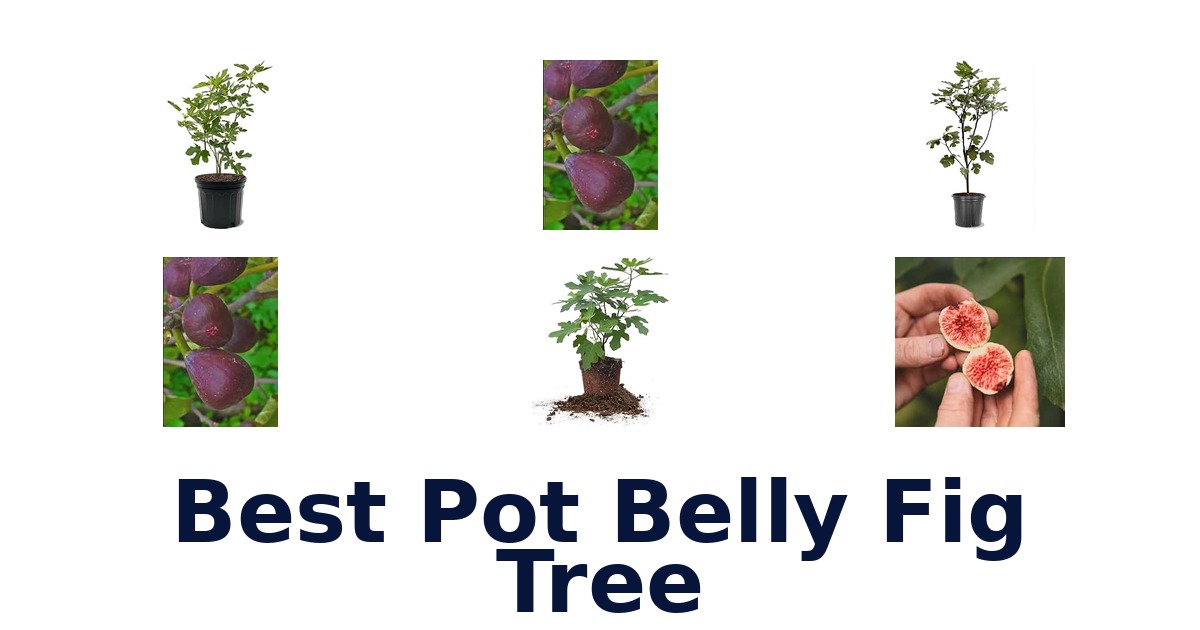
A strong pot belly fig tree choice is compact enough for a container or small patio while still offering edible fruit, making dwarf varieties the natural place to start. This roundup compares nine live fig plants and trees, including Little Miss Figgy and Little Ruby, alongside larger, more established options such as five- and seven-gallon trees. The listings vary in pot size, stated hardiness, fruiting details, and intended growing space, so the best fit depends on whether you value a small footprint, a larger starting plant, or cold-climate performance.
Check shipping restrictions and the listed climate range before ordering. Product details do not establish the exact mature size for every variety, so use the compact or dwarf descriptions as a guide rather than assuming all plants stay miniature.
Japanese Maples and Evergreens Little Miss Figgy is the leading choice for a pot belly fig because its listing explicitly describes a compact dwarf tree suited to containers and small spaces. It arrives as a starter plant in a 2.5-inch pot and is described as producing sweet, dark-purple-skinned figs with red interiors. If you prefer a larger established plant or need a listed hardiness range, consider one of the Chicago Hardy trees instead; those are less clearly suited to a permanently compact container footprint.
Our Top Picks
 Best Overall
Japanese Maples Little Miss Figgy
Its compact dwarf habit is explicitly suited to containers and small spaces, and the 2.5-inch starter pot fits buyers beginning a patio fig.
View on Amazon Most Compact
Japanese Maples Little Ruby Fig
The listing identifies a compact dwarf habit, container and bonsai suitability, and a fall crop, matching small-space growing particularly well.
View on AmazonBest Multi-Plant PackJapanese Maples Little Ruby Four-Pack
Four compact Little Ruby plants suit buyers wanting several container or garden specimens; the variety is described as cold tolerant and producing breba and fall crops.
View on Amazon- Best Listed Hardiness Perfect Plants Chicago Hardy
- Largest Starter Tree Arbor Day Chicago Hardy
Compare These Fig Trees for Pots and Patios
| # | Product | Weight | Care Instructions | Buy |
|---|---|---|---|---|
| 1 | 1. Japanese Maples Little Miss FiggyBest Overall | — | Plant in full sun in well-draining soil…. | View on Amazon |
| 2 | 2. Japanese Maples Little Ruby FigMost Compact | — | Plant in full sun in well-draining soil…. | View on Amazon |
| 3 | 3. Japanese Maples Little Ruby Four-PackBest Multi-Plant Pack | — | Plant in full sun in well-draining soil…. | View on Amazon |
| 4 |  4. Perfect Plants Chicago HardyBest Listed Hardiness | — | — | View on Amazon |
| 5 |  5. Arbor Day Chicago HardyLargest Starter Tree | 25 lb | Planting Instructions Included | View on Amazon |
| 6 |  6. Brown Turkey FigTwo-season fig pickers | 5 lb | Plant in well-drained soil with good… | View on Amazon |
| 7 |  7. Hirt’s White Marseilles FigSeasonal indoor-outdoor patio growers | 1.1 lb | — | View on Amazon |
| 8 |  8. Arbor Day Texas Everbearing FigExtended-season established-tree buyers | 15 lb | Planting Instructions Included | View on Amazon |
| 9 | 9. Black Mission FigWarm-climate cooking harvests | 25 lb | Plant in a sunny location in well-drained… | View on Amazon |
Detailed Reviews: Best Pot Belly Fig Tree
#1 · Best Overall
1. Japanese Maples Little Miss Figgy
- Care Instructions: Plant in full sun in well-draining soil….
Best for: Compact patio fig starters.
Why it ranks #1: Its compact dwarf habit is explicitly suited to containers and small spaces, and the 2.5-inch starter pot fits buyers beginning a patio fig.
A compact dwarf habit is the key advantage of Little Miss Figgy, allowing fig growing in patios and other small spaces where a larger tree is impractical. This live starter arrives in a 2.5-inch pot, and its sweet figs are described as dark purple outside with a red interior.
The 2.5-inch nursery-grown starter is a small beginning rather than a mature tree, which suits growers willing to raise it over time. Its compact, dwarf form is identified as container-friendly and suitable for patios, small gardens, and bonsai, giving it several space-conscious uses. The listed fruit has dark purple skin and a red interior, with a sweet, rich flavor. Its hardy, easy-to-grow description supports a broad-use pitch, though no specific hardiness zone is supplied.
- Compact dwarf growth suits small spaces
- Container-friendly for patios and small gardens
- Sweet figs with dark purple skin and red interior
- Nursery-grown live starter in a 2.5-inch pot
- The 2.5-inch pot size means it arrives as a starter plant, not a large established tree.
Skip it if you want a larger potted tree ready for transplanting; Arbor Day Foundation’s 7-gallon Chicago Hardy arrives with established roots.
Little Miss Figgy suits a space-limited grower who wants a container fig with sweet, richly flavored fruit and is comfortable starting small. Its 2.5-inch pot is a starter size, so plan on growing the plant onward.
Full product details
| Brand | Japanese Maples and Evergreens |
|---|---|
| Color | Purple |
| Manufacturer | Japanese Maples and Evergreens |
| Material Feature | Live Ficus carica ‘Little Miss Figgy’ plant, nursery grown, non-GMO, starter plant in 2.5 inch pot |
| Material Features | Live Ficus carica ‘Little Miss Figgy’ plant, nursery grown, non-GMO, starter plant in 2.5 inch pot |
| Special Features | compact dwarf fruit tree, sweet edible figs, container friendly fig plant, hardy fig variety, space saving fruit plant |
| Care Instructions | Plant in full sun in well-draining soil. Water regularly during establishment, then moderately once mature. Prune as needed to maintain size and shape. See more |
| Special Feature | compact dwarf fruit tree, sweet edible figs, container friendly fig plant, hardy fig variety, space saving fruit plant See more |
Listed on Amazon as: Little Miss Figgy Fig Tree Live Plant – Ficus carica ‘Little Miss Figgy’ – Dwarf Hardy Fig – Sweet Fruit – Compact Patio Fig – 2.5 Inch Pot
View on Amazon#2 · Most Compact
2. Japanese Maples Little Ruby Fig
- Care Instructions: Plant in full sun in well-draining soil….
Best for: Single compact bonsai-suitable fig.
Why it ranks #2: The listing identifies a compact dwarf habit, container and bonsai suitability, and a fall crop, matching small-space growing particularly well.
A dwarf habit that is explicitly suitable for containers and bonsai gives this single Little Ruby plant a small-space role. Its bite-sized figs combine amber-mauve skin with a strawberry-pink center, and the variety is described as cold tolerant, with both an overwintering summer crop and a fall harvest.
Little Ruby’s compact, container-friendly growth suits a patio, small garden, or bonsai use, making it easier to fit where a larger fig would take more space. Its cold-tolerant description and performance in cooler summer climates broaden its stated appeal, though no hardiness zone is specified. The breba crop overwinters for summer, followed by a reliable fall crop. Sweet bite-sized fruit with amber-mauve skin and a pink center gives the harvest a distinctive appearance.
- Compact dwarf growth fits containers and small gardens
- Suitable for bonsai
- Overwintering breba crop plus fall harvest
- Sweet fruit with amber-mauve skin and strawberry-pink center
- Fruit is bite-sized, which may not meet preferences for larger figs.
Skip it if you need several plants rather than one; the four-pack Little Ruby listing supplies the same variety in a larger quantity.
This single Little Ruby suits a grower wanting a compact container or bonsai fig with two crop windows and distinctive fruit. Its bite-sized figs and unspecified hardiness zone are relevant boundaries when choosing a site.
Full product details
| Brand | Japanese Maples and Evergreens |
|---|---|
| Color | Purple |
| Manufacturer | Japanese Maples and Evergreens |
| Material Feature | Live Ficus carica ‘Little Ruby’ plant, nursery grown, non-GMO, edible fruit tree, compact deciduous fig variety See more |
| Material Features | Live Ficus carica ‘Little Ruby’ plant, nursery grown, non-GMO, edible fruit tree, compact deciduous fig variety |
| Special Features | Compact dwarf habit, sweet amber-mauve fruit, strawberry pink flesh, cold tolerant variety, breba and fall crop producer, container friendly, bonsai suitable |
| Care Instructions | Plant in full sun in well-draining soil. Water regularly during active growth. Prune in late winter to maintain size and encourage fruiting. Protect container plants in extreme winter cold. See more |
| Special Feature | Compact dwarf habit, sweet amber-mauve fruit, strawberry pink flesh, cold tolerant variety, breba and fall crop producer, container friendly, bonsai suitable See more |
Listed on Amazon as: Ficus carica ‘Little Ruby’ Dwarf Fig Tree – Compact Hardy Fig – Sweet Amber Mauve Fruit – Strawberry Pink Center – Great for Containers & Bonsai
View on Amazon#3 · Best Multi-Plant Pack
3. Japanese Maples Little Ruby Four-Pack
- Care Instructions: Plant in full sun in well-draining soil….
Best for: Small-space multi-crop growers.
Why it ranks #3: Four compact Little Ruby plants suit buyers wanting several container or garden specimens; the variety is described as cold tolerant and producing breba and fall crops.
Two named crops—an overwintering summer breba crop and a fall harvest—give this four-pack of Little Ruby figs an extended picking proposition. The compact dwarf plants suit pots, patios, and small gardens, while amber-mauve fruit with strawberry-pink centers adds a distinctive look to the harvest.
The four-pack offers multiple Little Ruby plants, while their compact habit supports container, patio, and small-garden placement rather than requiring a large orchard area. The variety is described as cold tolerant and able to perform in cooler summer climates, a useful fit where heat is limited. Its breba crop overwinters for summer fruit, followed by a reliable fall crop. The bite-sized figs have amber-mauve skin and strawberry-pink centers, pairing a recognizable appearance with sweet flavor.
- Four live Little Ruby plants in the pack
- Compact habit suits pots and small gardens
- Breba summer crop plus fall harvest
- Cold tolerant and described for cooler summer climates
- The fruit is described as bite-sized, which may not suit growers seeking larger figs.
Skip it if you prefer a single compact plant rather than four; the Little Ruby single-plant listing offers the same variety without a four-pack.
This pack fits growers with room for several compact figs who value two crop windows and fruit with colorful interiors. Its small-space habit helps, but the bite-sized fruit and four-plant quantity should match your plans.
Full product details
| Brand | Japanese Maples and Evergreens |
|---|---|
| Color | Purple |
| Manufacturer | Japanese Maples and Evergreens |
| Material Feature | Live Ficus carica ‘Little Ruby’ plant, nursery grown, non-GMO, edible fruit tree, compact deciduous fig variety See more |
| Material Features | Live Ficus carica ‘Little Ruby’ plant, nursery grown, non-GMO, edible fruit tree, compact deciduous fig variety |
| Special Features | Compact dwarf habit, sweet amber-mauve fruit, strawberry pink flesh, cold tolerant variety, breba and fall crop producer, container friendly, bonsai suitable |
| Care Instructions | Plant in full sun in well-draining soil. Water regularly during active growth. Prune in late winter to maintain size and encourage fruiting. Protect container plants in extreme winter cold. See more |
| Special Feature | Compact dwarf habit, sweet amber-mauve fruit, strawberry pink flesh, cold tolerant variety, breba and fall crop producer, container friendly, bonsai suitable See more |
Listed on Amazon as: 4 Pack – Ficus carica ‘Little Ruby’ Dwarf Fig Tree – Compact Hardy Fig – Sweet Amber Mauve Fruit – Strawberry Pink Center – Great for Containers & Bonsai
View on Amazon#4 · Best Listed Hardiness
4. Perfect Plants Chicago Hardy
Best for: Sunny patio and garden growers.
Why it ranks #4: Its stated Zones 5–10 range and self-pollinating habit suit colder-region growers, though its listed mature height of 15–30 feet is not especially compact.
Self-pollination and included fig food make this one-gallon Chicago Hardy a straightforward starting point for a home fruit tree. Its branches and foliage leave room for figs to develop, while the full-sun preference helps identify the right spot: a sunny landscape bed or patio container.
The one-gallon live plant comes with easy-to-use fig food, giving new growers a practical care starting point alongside the tree. Its self-pollinating habit means fruit production does not depend on a second fig tree. Chicago Hardy is listed for Zones 5–10, and the stated mature height of 15–30 feet signals substantial eventual growth, so a container or landscape location should suit a tree of that scale. Full sun is the stated site preference.
- Self-pollinating variety
- Includes easy-to-use fig food
- Suitable for landscape or patio-container growing
- Listed for Hardiness Zones 5–10
- Mature height is listed at 15–30 feet, requiring room for a large tree.
Skip it if you need a naturally dwarf fig for a tight patio; Little Miss Figgy is specifically described as compact and container-friendly.
Choose this Chicago Hardy if you have a full-sun garden or roomy patio container and want a self-pollinating fig with included food. Account for its 15–30-foot mature height and the listed shipping restrictions for Arizona and California.
Full product details
| Brand | PERFECT PLANTS |
|---|---|
| Color | Includes Care Guide |
| Manufacturer | PERFECT PLANTS |
| Model Number | Chicago Hardy |
| Special Features | Easy To Use |
| Special Feature | Easy To Use |
| Style | 1 Gallon |
| Style Name | 1 Gallon |
Listed on Amazon as: Perfect Plants Chicago Hardy Fig Tree, 1 Gallon, Live Plant
View on Amazon#5 · Largest Starter Tree
5. Arbor Day Chicago Hardy
- Weight: 25 lb
- Care Instructions: Planting Instructions Included
Best for: Cold-region established-tree growers.
Why it ranks #5: The seven-gallon established-root tree offers a larger starting plant and Zones 5–10 hardiness, but its size may be less convenient for tight patio spaces.
Hardiness across Zones 5–10 makes this seven-gallon Chicago Hardy a compelling option for growers in colder regions. It arrives in a nursery pot with established roots for transplanting, and its fruit forms on new growth, supporting production even where winter dieback occurs.
The seven-gallon pot and established roots provide a substantial transplanting starting point for a garden planting. Chicago Hardy’s stated Zones 5–10 range broadens its climate fit, and the listing says it can bounce back after freezes. Fruiting on new growth is particularly relevant in colder areas where winter dieback may occur. The purple-brown figs have sweet, jammy flesh and are described as suitable for fresh use or cooking; planting instructions are included.
- Listed for USDA Zones 5–10
- Seven-gallon pot with established roots
- Fruits on new growth, including after winter dieback
- Sweet purple-brown figs suit fresh use and cooking
- Unavailable to Arizona and California under the listed agricultural restrictions.
Skip it if you need a tree shipped to Arizona or California; the listing states this Chicago Hardy is unavailable there.
Choose this Chicago Hardy for a colder-region garden where established roots and fruiting on new growth are useful. Its seven-gallon format calls for transplanting space, and the listed shipping restriction excludes Arizona and California.
Full product details
| Brand | Arbor Day Foundation |
|---|---|
| Color | Purple |
| Item Weight | 25 pounds |
| Manufacturer | Arbor Day Foundation |
| Part Number | 10947 |
| Special Features | Fruiting Tree |
| Planter Color | Black |
| Care Instructions | Planting Instructions Included |
| Special Feature | Fruiting Tree |
Listed on Amazon as: Chicago Hardy Fig Tree, 7 Gallon Live Nursery Pot| Arbor Day Foundation- Fruiting Tree (Due to Agricultural Laws, Unavailable to AZ, CA)
View on Amazon#6
6. Brown Turkey Fig
- Weight: 5 lb
- Care Instructions: Plant in well-drained soil with good…
Best for: Two-season fig pickers.
Why it ranks #6: This self-pollinating one-gallon tree is listed for Zones 7–9 and two annual crops, but the listing does not identify a dwarf or compact habit.
Brown Turkey’s two harvest windows—late spring and early fall—give home growers more than one chance to pick fruit during the season. This one-gallon nursery-pot tree is self-pollinating, so a single planting can produce its sweet edible figs without requiring a separate pollinator tree.
The one-gallon Brown Turkey is a compact starting format for a home planting, and self-pollination means it does not require another fig tree for fruit production. The supplied description names crops in late spring and early fall, while another notes ripening in early and late summer; together, they indicate more than one seasonal picking period without a precise calendar guarantee. Well-drained soil and good sunlight are listed care needs, with regular watering during dry spells.
- Self-pollinating variety for single-tree planting
- Multiple harvests during the year
- One-gallon nursery-pot format
- Sweet edible figs described as brownish-purple with amber flesh
- Listed for USDA Hardiness Zones 7–9, a narrower range than Chicago Hardy’s Zones 5–10.
Skip it if you need a fig listed for colder Zones 5–6; Arbor Day Foundation’s Chicago Hardy is specified for Zones 5–10.
Brown Turkey suits growers in its listed Zones 7–9 who want sweet fruit and multiple seasonal picking periods from one tree. Give it sunlight and well-drained soil, and water regularly during dry spells.
Full product details
| Brand | Generic |
|---|---|
| Color | Green |
| Item Weight | 5 pounds |
| Manufacturer | Simpson Nursery |
| Special Features | Attracts Pollinators |
| Care Instructions | Plant in well-drained soil with good sunlight. Water regularly, especially during dry spells. Prune for shape and remove dead wood. Enjoy fresh, sweet figs from your own Brown Turkey Fig Tree. See more |
| Special Feature | Attracts Pollinators |
Listed on Amazon as: Brown Turkey Fig, 1 gal, Nursery Pot
View on Amazon#7
7. Hirt’s White Marseilles Fig
- Weight: 1.1 lb
Best for: Seasonal indoor-outdoor patio growers.
Why it ranks #7: The listing calls this fig very productive and suitable for Zones 7–10, with summer outdoor and winter indoor patio use, but gives no compact size.
The White Marseilles fig’s stated seasonal routine—outdoors in summer and indoors in winter in cooler regions—gives patio growers a way to manage its climate exposure. Also called Italian Honey, South Carolina Yellow, and Blanche, this productive fig is listed for Zones 7–10 and arrives in a 2.5-inch pot.
The small 2.5-inch pot makes this a starter plant, while the supplied care guidance describes a seasonal patio workflow: set it outdoors in summer and move it indoors for winter in cooler regions. Its listed Zones 7–10 provide a climate reference, and its “very productive” description speaks to fruit-bearing potential without a stated yield. Dormant shipping in winter is also specified. The listing says fig trees usually begin bearing within two years, but gives no guaranteed timing for this individual plant.
- Also known as Italian Honey, South Carolina Yellow, and Blanche
- Listed for Zones 7–10
- Can be grown outdoors in summer and moved indoors in winter in cooler regions
- Described as very productive
- The 2.5-inch pot is a starter size rather than an established large tree.
Skip it if you want an established five-gallon transplant instead of a small starter; Arbor Day Foundation’s Texas Everbearing arrives in a five-gallon pot with established roots.
This White Marseilles starter suits a patio grower able to move it indoors for winter in cooler regions. Its seasonal handling and small pot size are key considerations, as is its listed Zones 7–10 range.
Full product details
| Brand | Hirt's Gardens |
|---|---|
| Color | White |
| Item Weight | 1.1 pounds |
| Manufacturer | Hirt's Gardens |
| Material Feature | Organic |
| Material Features | Organic |
Listed on Amazon as: White Marseilles Italian Honey Fig Plant – 2.5" Pot – Blanche Fig
View on Amazon#8
8. Arbor Day Texas Everbearing Fig
- Weight: 15 lb
- Care Instructions: Planting Instructions Included
Best for: Extended-season established-tree buyers.
Why it ranks #8: Its five-gallon established-root tree offers summer-through-fall harvests, but the listing does not specify a dwarf habit or mature dimensions.
A five-gallon potted tree with established roots is the central advantage of this Texas Everbearing fig, offering a ready transplanting starting point rather than a tiny starter. Its multiple summer-through-fall harvests extend the picking window, and the fruit is suited to fresh eating, baking, drying, and preserves.
The established-root five-gallon nursery-pot format is intended to make transplanting into a garden easier and provide a strong start. Its multiple crops from summer through fall can spread out picking, while the listed uses—fresh eating, baking, drying, and jams or preserves—give the harvest several practical destinations. Large, lobed leaves also add landscape texture, making it both a fruiting and ornamental choice. Planting instructions are included; the listing states it is unavailable to Arizona and California.
- Five-gallon potted tree with established roots
- Multiple harvests from summer through fall
- Fruit suits fresh eating, baking, drying, and preserves
- Large lobed foliage adds landscape texture
- Unavailable to Arizona and California under the listed agricultural restrictions.
Skip it if you need a fig shipped to Arizona or California; the listing explicitly says this tree is unavailable in both states.
This Texas Everbearing fig fits buyers seeking an established-root tree, an extended summer-to-fall harvest, and ornamental foliage. Consider it for a yard or container setting, and note its stated Arizona and California shipping restriction.
Full product details
| Brand | Arbor Day Foundation |
|---|---|
| Color | Purple |
| Item Weight | 15 pounds |
| Manufacturer | Arbor Day Foundation |
| Part Number | 10397 |
| Special Features | Fruiting Tree |
| Planter Color | Black |
| Care Instructions | Planting Instructions Included |
| Special Feature | Fruiting Tree |
Listed on Amazon as: Texas Everbearing Fig Tree, 5 Gallon Live Nursery Pot| Arbor Day Foundation- Fruiting Tree (Due to Agricultural Laws, Unavailable to AZ, CA)
View on Amazon#9
9. Black Mission Fig
- Weight: 25 lb
- Care Instructions: Plant in a sunny location in well-drained…
Best for: Warm-climate cooking harvests.
Why it ranks #9: The seven-gallon tree is self-pollinating and bears sweet fruit, but its stated 10–20-foot height and Zones 7–10 range make it a weaker small-space match.
A seven-gallon Black Mission fig with multiple harvests combines a substantial nursery-pot size with fruit suited to fresh eating, drying, baking, and preserves. Its self-pollinating habit removes the need for a second tree, while dark purple-to-black skin and strawberry-pink flesh identify the fruit.
The seven-gallon nursery pot provides a larger starting format than the listed one-gallon options, and its self-pollinating trait allows a single-tree planting to produce fruit without a pollination partner. Black Mission prefers full sun and fertile, well-drained soil, so site selection and drainage matter. Its stated Zones 7–10 range narrows the climate fit. Multiple harvests and versatile fruit uses give home growers options for eating fresh or preserving the crop in several ways.
- Seven-gallon nursery-pot tree
- Self-pollinating; no second tree required
- Multiple harvests
- Fruit suited to fresh eating, drying, baking, and preserves
- Its stated Hardiness Zones 7–10 limit its listed climate range.
Skip it if you garden in a colder listed zone; Arbor Day Foundation’s Chicago Hardy is specified for Zones 5–10.
Black Mission suits growers in Zones 7–10 with a sunny, well-drained site and interest in several fruit uses. Choose it for multiple harvests and a single-tree planting, while allowing for its stated 10–20-foot mature height.
Full product details
| Brand | Generic |
|---|---|
| Color | Green |
| Item Weight | 25 pounds |
| Manufacturer | Simpson Nursery |
| Special Features | Low Maintenance |
| Care Instructions | Plant in a sunny location in well-drained soil, ensuring good drainage to prevent waterlogged conditions. Water newly planted trees regularly to establish a strong root system, and maintain consistent moisture during dry periods. Mulching around the base helps retain soil moisture and suppress weeds |
| Special Feature | Low Maintenance |
Listed on Amazon as: Black Mission Fig Tree, Multiple Harvests, Fruit Bearing, Compact, 7 gal, Nursery Pot (Due to Agricultural Laws, we Cannot Ship to CA, AZ, AK, or HI)
View on AmazonWhy a compact fig can outgrow its patio spot
A compact or dwarf label is useful, but it does not guarantee a particular mature height or eliminate the need to manage the container. The Little Miss Figgy listing describes a compact dwarf tree and the Little Ruby listings describe compact growth, yet none supplies a mature-height measurement. By contrast, the Chicago Hardy listing from Perfect Plants specifies 15–30 feet, while Black Mission is listed at 10–20 feet.
Those figures are a reminder that ordinary fig trees may demand substantial room if planted in the ground. For a small patio, use the dwarf descriptions to narrow the choice, then confirm the seller’s current size and growing instructions before ordering.
A starter plant in a 2.5-inch pot also needs room to develop; its shipping pot is not evidence that it can remain in that pot indefinitely.
Shipping restrictions can rule out an otherwise suitable fig
A plant’s stated growing range does not guarantee that the seller can ship it to your address. Perfect Plants says its Chicago Hardy does not ship to Arizona or California, and the Arbor Day Foundation Chicago Hardy also excludes those states. The Black Mission listing excludes California, Arizona, Alaska, and Hawaii.
The Texas Everbearing listing likewise says it is unavailable to Arizona and California. These restrictions are distinct from climate suitability: the Perfect Plants Chicago Hardy is listed for Zones 5–10, but that does not override its shipping exclusions.
Check the destination restrictions on the current product page before choosing based on hardiness or size. Also distinguish a listed growing zone from winter care for a container: the White Marseilles listing specifically suggests bringing the patio plant indoors during winter in cooler regions, while other listings do not provide the same container-winter instructions.
How to Choose a Compact Fig Tree
Growth habit and available space
Look for an explicit compact or dwarf description if the tree must fit a patio or small garden. Little Miss Figgy is described as a compact dwarf tree for containers and small spaces; Little Ruby is also described as compact and suitable for pots and bonsai. In contrast, Perfect Plants lists Chicago Hardy at 15–30 feet and Black Mission at approximately 10–20 feet.
Those height figures favor buyers with room to plant a larger tree, while the dwarf descriptions better fit constrained spaces. The listings do not give mature heights for the dwarf varieties, so confirm expected dimensions and pruning needs before relying on a small-space label.
Starting plant size and container plans
Choose the supplied plant size based on how quickly you want to begin with an established specimen and how you will accommodate it. Little Miss Figgy is a starter plant in a 2.5-inch pot, and White Marseilles is listed in a 2.5-inch pot. Perfect Plants Chicago Hardy comes in a one-gallon size, Brown Turkey is one gallon, Texas Everbearing is five gallons, and two Arbor Day listings arrive in seven-gallon nursery pots.
The larger listed pots suit buyers prepared to handle a bigger tree at arrival; the small starters suit buyers comfortable establishing a young plant. Pot size alone does not confirm the eventual container size or growth rate.
Climate range and harvest details
Match the listed hardiness information and fruiting description to your growing situation, while remembering that the listings do not give complete care guidance for every climate. Perfect Plants Chicago Hardy is listed for Zones 5–10, while Brown Turkey is listed for Zones 7–9 and Black Mission for Zones 7–Little Ruby is described as cold tolerant and as producing breba and fall crops; Brown Turkey is described as producing two crops, and Texas Everbearing as producing from summer through fall.
These details favor buyers prioritizing cold tolerance or an extended harvest. White Marseilles is listed for Zones 7–10, with the seller suggesting summer outdoor growing and winter indoor placement in cooler regions.
Which pot belly fig tree should you choose?
For the most clearly stated small-space fit, choose Japanese Maples Little Miss Figgy: its compact dwarf habit and container suitability directly match a patio fig search. Choose Japanese Maples Little Ruby Fig if you want a compact plant described as suitable for bonsai and bearing both breba and fall crops. The four-pack, Japanese Maples Little Ruby Four-Pack, suits someone seeking multiple plants rather than a single specimen.
For colder listed zones and a larger starting plant, Arbor Day Chicago Hardy combines a seven-gallon pot with a Zones 5–10 range, but check its shipping limits and allow for a less compact tree. Perfect Plants Chicago Hardy also lists Zones 5–10 but gives a 15–30-foot mature height.
Before ordering, verify destination eligibility and ask the seller about mature size and container care.
Frequently Asked Questions
How large should a pot be for a dwarf fig tree, and when should it be repotted?
Choose a sturdy pot with drainage holes that gives the roots room to grow without being excessively large. Repot when roots crowd the container, emerge from drainage holes, or the plant dries unusually quickly. Move it into a slightly larger pot and use fresh, well-draining potting mix; avoid disturbing the root ball more than necessary.
How much direct sunlight and water does a container-grown fig need?
Give a container-grown fig a sunny position and water when the top layer of potting mix begins to dry. Water thoroughly until excess drains, then empty any standing water. Heat, wind, pot size, and season affect how quickly the soil dries, so check it regularly rather than following a fixed schedule.
Should a potted fig tree be brought indoors or protected during winter?
Protect a potted fig when winter conditions exceed the hardiness listed for its cultivar, since container roots are more exposed than roots in the ground. Check the seller’s hardiness information and local conditions. Depending on the tree and climate, protection may mean a sheltered location or moving it to a cool, protected space.
What should I check before ordering a fig tree for my patio?
Check the listing for mature size, container suitability, starting-plant size, and destination shipping restrictions. A compact dwarf explicitly described for containers is a clearer choice for a small patio than a tree with a listed mature height of 15–30 feet. Ask the seller about container care if the listing leaves important details unclear.
How can I choose between a single fig tree and a multi-plant pack?
Choose a single plant if you want one specimen or are testing how a fig performs in your space. A multi-plant pack suits buyers who want several plants rather than one. Compare the listed plant type and container suitability, and make sure you have room and suitable growing conditions for each plant.
Final Words
For the clearest small-space fit, choose Little Miss Figgy: its listing identifies it as a compact dwarf suited to containers and patios. Little Ruby is another compact option, while its four-pack is intended for buyers wanting multiple plants. If a larger established tree or a listed hardiness range matters more, compare the Chicago Hardy listings and verify shipping eligibility, mature size, and container-care guidance before ordering.