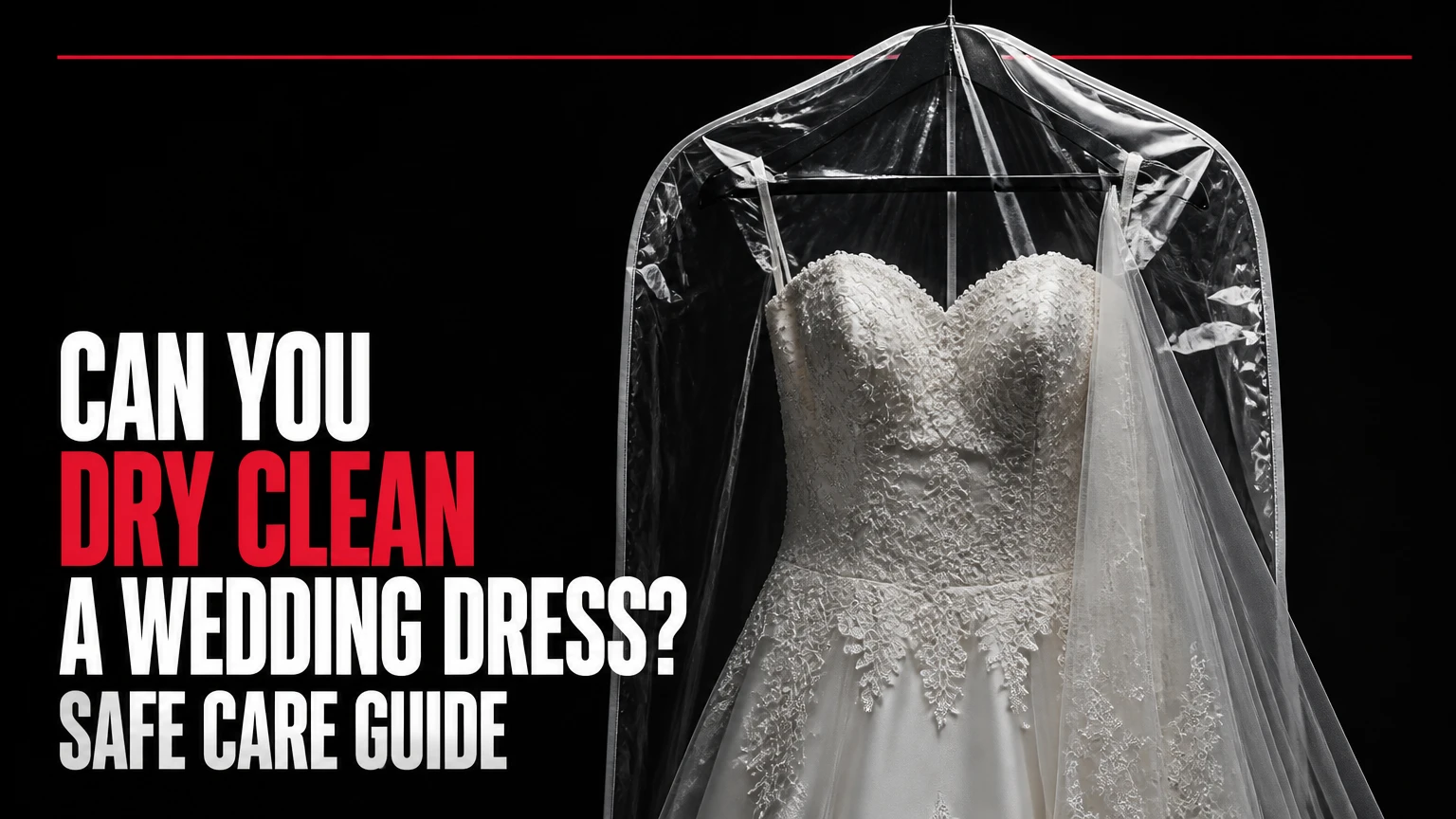
Yes, you can dry clean a wedding dress, but a bridal gown should go to a cleaner experienced with wedding dresses rather than an ordinary garment counter. The correct process depends on the gown’s fibers, lining, beadwork, lace, adhesives, dyes, and stains. Professional cleaning soon after the wedding reduces the chance that sugar, perspiration, makeup, or mud will oxidize permanently.
Key Facts at a Glance
- Wedding dress cleaning typically costs about $150-$500 for cleaning and pressing, while cleaning plus preservation commonly costs $400-$800 or more.
- A wedding dress should be inspected before cleaning because silk, rayon, acetate, glued trims, sequins, and metallic decoration can react differently to solvents and water.
- Dry cleaning removes many oil-based soils effectively, but wet cleaning or carefully controlled pretreatment may work better for water-soluble sugar, mud, and grass residues.
- Standard cleaning makes a gown wearable or suitable for resale; preservation adds archival packaging and long-term storage protection.
- Typical turnaround is 2-6 weeks, although intricate gowns, peak bridal season, shipping, and re-treatment can extend the schedule.
- Do not rub stains, apply household products, or seal a damp wedding dress in plastic before professional assessment.
Can You Dry Clean a Wedding Dress?
You can dry clean a wedding dress when the fabric, dye, construction, and embellishments are compatible with the selected process. The safer answer is not “always dry clean,” because some gowns require wet cleaning, hand cleaning, spot treatment, or a combination of methods after a professional inspection.
Wedding gowns are unusually difficult garments. A single dress may contain silk or polyester satin, several layers of tulle, horsehair braid, interfacing, boning, lace, pearls, sequins, rhinestones, and glued decorations. A solvent that is suitable for the outer fabric may loosen adhesive, strip a finish, dissolve a coating, or affect a trim.
The care label and designer’s instructions matter. A specialist should inspect the entire garment, identify visible and hidden stains, examine the hem and lining, and test vulnerable materials before committing to a cleaning cycle.
What Does Wedding Dress Cleaning Include?
Wedding dress cleaning means removing accumulated soil, stains, odor, and handling marks, then returning the gown to a wearable shape. Preservation is a separate service that adds protective materials, folding methods, and a storage container designed to reduce light, dust, insects, and acidic contact.
Cleaning does not guarantee that every stain will disappear. Heat-set makeup, aged wine, dye transfer, rust, browned sugar, and fabric discoloration may be permanent or may require conservation rather than ordinary cleaning.
How Do Professionals Clean a Wedding Dress?
Professional wedding dress cleaning normally follows six stages: inspection, documentation, stain treatment, controlled cleaning, reinspection, and finishing. The technician selects dry cleaning, wet cleaning, hand treatment, or a hybrid process according to the gown rather than applying one machine cycle to every dress.
1. Inspect the Fabric, Construction, and Trim
The cleaner records fiber content, care-label instructions, lining, seams, boning, closures, lace, beading, sequins, metallic thread, feathers, and adhesive-mounted decoration. Loose beads, weakened seams, and missing hooks should be photographed before work begins.
A good intake record also notes pre-existing yellowing, water rings, tears, brittle fabric, and stains. Ask for a written condition report if the gown has high financial or sentimental value.
2. Map and Test the Stains
The technician marks visible stains and asks what happened at the reception. Champagne, cake icing, perspiration, foundation, lipstick, grass, soil, and body oils require different treatment strategies.
Many sugary drinks dry clear. Residue can later darken as it oxidizes, so tell the cleaner about every spill even when the fabric appears clean. Hidden inspection under strong lighting may reveal additional discoloration, but no lighting method can identify every invisible residue.
3. Choose the Cleaning Method
The cleaner chooses a solvent process, wet cleaning, hand cleaning, or selective spot treatment after testing colorfastness and trim stability. Low mechanical action and controlled temperature are especially important for layered skirts, fragile lace, and loosely attached decoration.
A “dry-clean-only” label does not mean that every dry-cleaning solvent is equally safe. Conversely, a gown without a dry-cleaning label is not automatically safe to wash at home.
4. Reinspect and Treat Remaining Soil
After the first process, the technician checks the hem, underarms, neckline, train, cuffs, and lining. Remaining marks may receive a second targeted treatment, although repeated aggressive treatment can weaken fibers or change the surface.
5. Press and Reshape the Gown
Finishing may involve hand pressing, controlled steaming, or shaping on a form. The operator must support layers and avoid flattening dimensional lace, pleats, gathered tulle, or textured appliqué.
6. Document the Result Before Packaging
The finished gown should be checked for residual stains, loose trims, odor, distortion, and moisture. If preservation is ordered, the cleaner should package the gown only when it is fully dry and ready for storage.
Which Cleaning Method Is Safest?
No single method is safest for every wedding dress. Dry cleaning often performs well on oil-based body soil, while controlled wet cleaning can be more effective for water-soluble residues and mineral soil. Material testing, technician experience, and mechanical control matter more than the process name alone.
| Method | Typical strength | Main risk | Suitable situation |
|---|---|---|---|
| PERC dry cleaning | Strong oil and grease removal | Can affect adhesives, coatings, or fragile trims | Tested, solvent-compatible gowns |
| Hydrocarbon solvent | Gentler solvent action for many synthetics | Less effective on some heavy water-based soil | Beaded polyester or mixed-fiber gowns after testing |
| Silicone solvent, including GreenEarth | Low odor and gentle handling profile | Availability and stain performance vary | Delicate gowns accepted by a specialist |
| Professional wet cleaning | Effective on many sugar, mud, and water-soluble soils | Dye bleeding, shrinkage, or distortion if uncontrolled | Compatible, colorfast fabrics with tested construction |
PERC is perchloroethylene, a traditional dry-cleaning solvent. Environmental and workplace rules differ by jurisdiction, and the existence of a “green” solvent does not prove that it is suitable for a particular trim.
Wet cleaning is not the same as putting a wedding dress in a household washing machine. Professional wet cleaning uses controlled water temperature, specialized detergents, reduced agitation, and programmed drying. Some gowns tolerate it well; others do not.
Which Fabrics Need Extra Caution?
Silk, rayon, acetate, and gowns with glued or coated details require particular care because moisture, heat, friction, or solvent exposure can change their appearance. Polyester is often more forgiving, but polyester satin can still suffer from snagging, finish damage, dye transfer, or crushed structure.
| Gown material or feature | Common concern | Ask the cleaner to verify |
|---|---|---|
| Silk satin or silk charmeuse | Water marks, color migration, abrasion | Fiber test, colorfastness, solvent or wet-clean compatibility |
| Polyester satin | Snags, pressure marks, melted adhesive | Low friction and trim stability |
| Rayon or viscose | Shrinkage, distortion, water spotting | Whether the care label permits the proposed method |
| Tulle and organza | Crushing, snagging, static, shape loss | Mechanical action and drying support |
| Beads, sequins, pearls | Breakage, melting, discoloration | Attachment method and solvent resistance |
| Glued rhinestones or appliqué | Adhesive softening or release | Adhesive test and replacement policy |
Expert insight: embellishment attachment often determines the safe method more than the base fabric does. A polyester gown with glued crystals can be riskier to clean than a plain silk gown with sewn decoration.
How Much Does Wedding Dress Cleaning Cost?
Typical wedding dress cleaning costs $150-$500, while cleaning and preservation commonly cost $400-$800 or more. A cleaner may quote outside these ranges for extensive mud, heavy beadwork, fragile silk, severe discoloration, structural repair, shipping, or a large multi-layer train.
| Service level | Typical price | Typical timing | Common result |
|---|---|---|---|
| Simple synthetic gown cleaning and press | $150-$300 | 2-4 weeks | Wearable gown with basic finishing |
| Silk, lace, or moderately beaded gown | $300-$500 | 3-6 weeks | Cleaning, inspection, and detailed pressing |
| Heavy soil or complex embellishment | $400-$700 | 4-8 weeks | Specialized treatment and possible repairs |
| Cleaning plus preservation packaging | $400-$800+ | 4-10 weeks | Cleaned gown in archival-style storage materials |
| Rush cleaning | Base price plus 50%-100% | 48-72 hours | Faster handling with greater scheduling pressure |
Prices are typical practitioner ranges, not a universal tariff. Request an itemized quote that separates cleaning, pressing, repairs, preservation packaging, shipping, tax, and rush fees.
What Changes the Quote?
The gown’s length, number of layers, fabric value, stain severity, bead density, construction, and required handwork affect labor. A detachable overskirt, cathedral train, veil, gloves, sash, or petticoat may be priced separately.
A low quote can exclude preservation materials or post-cleaning repairs. Compare the written scope of service rather than comparing headline prices alone.
How Long Should Wedding Dress Cleaning Take?
Typical wedding dress cleaning takes 2-6 weeks, and intricate gowns may require 6-12 weeks during a busy bridal season. Rush service can sometimes take 48-72 hours, but accelerated handling may reduce inspection time and usually costs 50%-100% more.
Send the dress as soon as practical after the wedding. A short delay of several days is rarely catastrophic, but storing a stained gown for months allows residues to oxidize and become harder to remove.
If the gown is needed for resale, alteration, or a post-wedding event, tell the cleaner before booking. Shipping time can add several days each way, and preservation packaging may make immediate try-on or tailoring less convenient.
Should You Choose Cleaning or Preservation?
Choose standard cleaning when you expect to resell, alter, reuse, or access the gown within the next few years. Choose preservation when the gown is an heirloom and long-term protection matters more than easy access.
| Goal | Recommended service | Storage approach | Main trade-off |
|---|---|---|---|
| Resell within 6-18 months | Clean and press | Breathable textile garment bag | Lower cost, easier buyer inspection |
| Wear again within 1-3 years | Clean and press | Cool, dark, dry closet | Requires later reshaping |
| Keep as a family heirloom | Clean and preserve | Archival box with acid-free tissue | Higher cost and limited access |
| Display occasionally | Clean, then consult a conservator | Low-light display with support | Light exposure can accelerate fading |
| Preserve only selected details | Clean and store veil or fabric sample separately | Acid-free materials | Gown itself remains accessible |
Preservation does not make a gown indestructible and does not reverse existing yellowing. It also does not remove the need for a dry, stable storage location.
What Should Preservation Packaging Contain?
Look for acid-free, lignin-free tissue and a box that allows the gown to be folded without crushing dimensional decoration. Tissue should separate folds and prevent beads, sequins, and lace from rubbing against adjacent layers.
Avoid assuming that an airtight plastic container is automatically archival. A sealed container can retain moisture if the gown was packaged before it was fully dry, while ordinary cardboard, newspaper, colored tissue, and untreated wood can transfer damaging acids or dyes.
Some preservation providers offer 30-year or longer warranties. Read the exclusions, especially clauses covering pre-existing damage, later storage conditions, flooding, insects, mold, and color changes that occur naturally with aging.
What Stains Can and Cannot Be Removed?
Wedding dress cleaners can often improve fresh body oils, makeup, food, drink, grass, and soil, but old oxidation, rust, dye transfer, and heat-set stains may remain. A professional should explain the probability of improvement and the risk of treatment before work begins.
| Stain or soil | Often responds to | Important limitation |
|---|---|---|
| Perspiration and body oil | Solvent cleaning and targeted pretreatment | Aged yellowing may remain |
| Foundation and lipstick | Solvent-compatible spot treatment | Rubbing can spread pigment |
| Champagne or wine | Water-based and solvent-specific treatment | Sugar can darken over time |
| Cake icing | Controlled wet treatment | Oils and dyes may require separate steps |
| Mud and grass | Dry removal plus wet pretreatment | Mineral rings can remain on silk |
| Rust | Specialist chemical treatment | Treatment can weaken or discolor fabric |
| Dye transfer | Carefully tested specialist treatment | Complete removal is not guaranteed |
Can a Muddy Wedding-Dress Hem Be Cleaned?
A muddy hem can often be improved, but mud usually requires dry soil removal and water-based treatment rather than solvent cleaning alone. Tell the cleaner whether the gown contacted grass, clay, asphalt, salt, or standing water because each residue creates different risks.
Do not scrub the train while it is wet. Friction can drive particles deeper into the weave and damage satin, lace, or tulle.
Can Invisible Champagne Stains Become Visible Later?
Invisible champagne and wine residue can become visible later because sugars and other compounds remain in the fibers after the liquid dries. Report every spill, including clear alcohol, soda, cake, and perspiration, even if the gown currently looks white.
This is one reason prompt cleaning has practical value. Cleaning cannot guarantee removal once oxidation or browning has altered the fiber or dye.
Is DIY Cleaning Safe?
DIY cleaning is unsafe for most structured wedding dresses because household water, detergent, heat, agitation, and stain removers can cause shrinkage, rings, dye bleeding, adhesive failure, or permanent texture changes. Home treatment is especially risky for silk, rayon, layered tulle, boned bodices, and heavily decorated gowns.
Avoid club soda, bleach, hydrogen peroxide, vinegar, dish soap, rubbing alcohol, and stain wipes unless a textile conservator specifically directs their use. Blotting a fresh spill gently with a clean white absorbent cloth is safer than rubbing, but even blotting is not a substitute for professional assessment.
If immediate transport is impossible, hang the gown in a clean, breathable cotton or nonwoven garment bag in a cool, dry, dark room. Do not put a wet or visibly damp dress into a sealed plastic bag.
How Do You Choose a Wedding Dress Cleaner?
Choose a cleaner that regularly handles bridal gowns, documents condition before work, explains the proposed method, and accepts responsibility for discussing known risks. A standard neighborhood dry cleaner may be excellent with suits and trousers while lacking the equipment, repair support, or trim-testing experience required by a complex gown.
Ask these questions before booking:
- How many wedding dresses does the facility process each month?
- Will the gown be cleaned on-site or shipped to another plant?
- Which cleaning method and solvent are being proposed?
- How will the cleaner test silk, dye, beads, sequins, and adhesives?
- Who pays for loose beads, damaged trims, or failed treatment?
- Is a seamstress or textile conservator available for repairs?
- Does the quote include pressing, veil cleaning, repairs, and preservation?
- What exclusions appear in the damage or color warranty?
- How long will the gown remain at the facility?
- Can the cleaner provide before-and-after photographs?
A cleaner who promises that every stain will disappear is less credible than one who identifies likely outcomes and treatment limits. Document the gown yourself with dated photographs before handing it over.
What Are the Red Flags?
Avoid providers who refuse to inspect the gown, give a price without seeing it, place every garment into the same machine cycle, or cannot explain how glued decoration will be tested. Refusal to provide a receipt, condition report, or written scope also creates avoidable disputes.
Online reviews can help assess reliability, but they do not prove technical competence with your specific fabric. Ask for relevant examples involving similar construction rather than relying on a high general rating.
What Should You Do After the Wedding?
Remove the gown from its event garment bag, allow it to air briefly in a clean dry room, and arrange professional assessment promptly. Keep makeup, food, drink, and damp fabric away from heat because heat can set some stains and moisture can encourage mildew.
Follow this short sequence:
- Photograph the front, back, hem, train, lining, and visible stains.
- Record every spill, including clear drinks and perspiration.
- Remove pins, temporary bustle ties, and personal items.
- Keep detachable accessories labeled with the gown.
- Call a bridal-gown specialist within several days.
- Ask whether the veil, petticoat, gloves, or sash need separate treatment.
- Choose cleaning only or cleaning plus preservation after receiving the quote.
Expert insight: the train deserves separate attention from the bodice. The train usually receives the heaviest contact soil, while the neckline and underarms accumulate oils that may be less visible but more chemically active during storage.
Can a Wedding Dress Be Cleaned Years Later?
A wedding dress can often be cleaned years later, but delayed treatment carries a higher risk of permanent stains, yellowing, brittleness, and weakened seams. Aged gowns should receive a conservative inspection, and a textile conservator may be more appropriate than a routine cleaner when the fabric is antique or already fragile.
Do not attempt to whiten an older gown at home. Whitening agents can remove optical brighteners, alter historic dyes, weaken protein fibers, and create uneven color.
For vintage gowns, ask whether the objective is stain removal, stabilization, appearance improvement, or historical preservation. Those goals require different decisions, and aggressive cleaning may destroy evidence of the original material.
The Bottom Line
Yes, you can dry clean a wedding dress, but the best method depends on the gown’s fabric, construction, embellishments, dyes, and stains. Use a bridal-gown specialist, arrange assessment soon after the wedding, and disclose every spill even when no mark is visible.
Choose cleaning and pressing for resale, alteration, or near-term reuse. Choose preservation packaging for long-term heirloom storage, and treat solvent cleaning, wet cleaning, and preservation as separate decisions rather than interchangeable services.
Frequently Asked Questions
Can I take a wedding dress to any dry cleaner?
You can physically take a gown to any cleaner, but a general dry cleaner may not have experience with layered bridal construction, glued trims, silk, or extensive beadwork. Select a provider that documents condition, tests vulnerable materials, explains the process, and provides written pricing and damage terms before accepting the dress.
Should a wedding dress be cleaned before selling it?
A wedding dress should usually be professionally cleaned before sale because buyers notice hem soil, makeup, odor, and yellowing. Choose cleaning and pressing rather than bulky preservation packaging if buyers need to inspect or try on the gown. Keep the cleaned dress in a breathable garment bag until shipment.
Can a wedding dress go in a washing machine?
A wedding dress should not go in a household washing machine unless the designer’s instructions explicitly permit that treatment and the garment has no vulnerable construction. Machine agitation, water temperature, detergent, spin force, and dryer heat can damage lace, boning, silk, tulle, beads, and adhesives.
How should I store a wedding dress after dry cleaning?
Store a dry wedding dress in a cool, dark, stable environment using acid-free tissue or a breathable textile garment bag. Avoid ordinary plastic, newspaper, colored tissue, attics, basements, and direct sunlight. Inspect preserved gowns periodically for moisture, insects, box damage, or new discoloration.
Is wedding dress preservation worth the cost?
Wedding dress preservation is worth the cost when the gown has strong sentimental value and will remain stored for years or decades. It may not be worthwhile for a dress planned for resale, alteration, or frequent wear. Compare packaging materials, access, warranty exclusions, and storage instructions before paying for the service.
What if my wedding dress is already yellow?
A yellowed wedding dress may improve with specialist cleaning, but the cause determines the likely result. Oxidized stains, aged silk, degraded finishes, and dye changes may not respond fully to cleaning. Obtain an assessment before treatment, especially if the gown is vintage, fragile, or historically important.