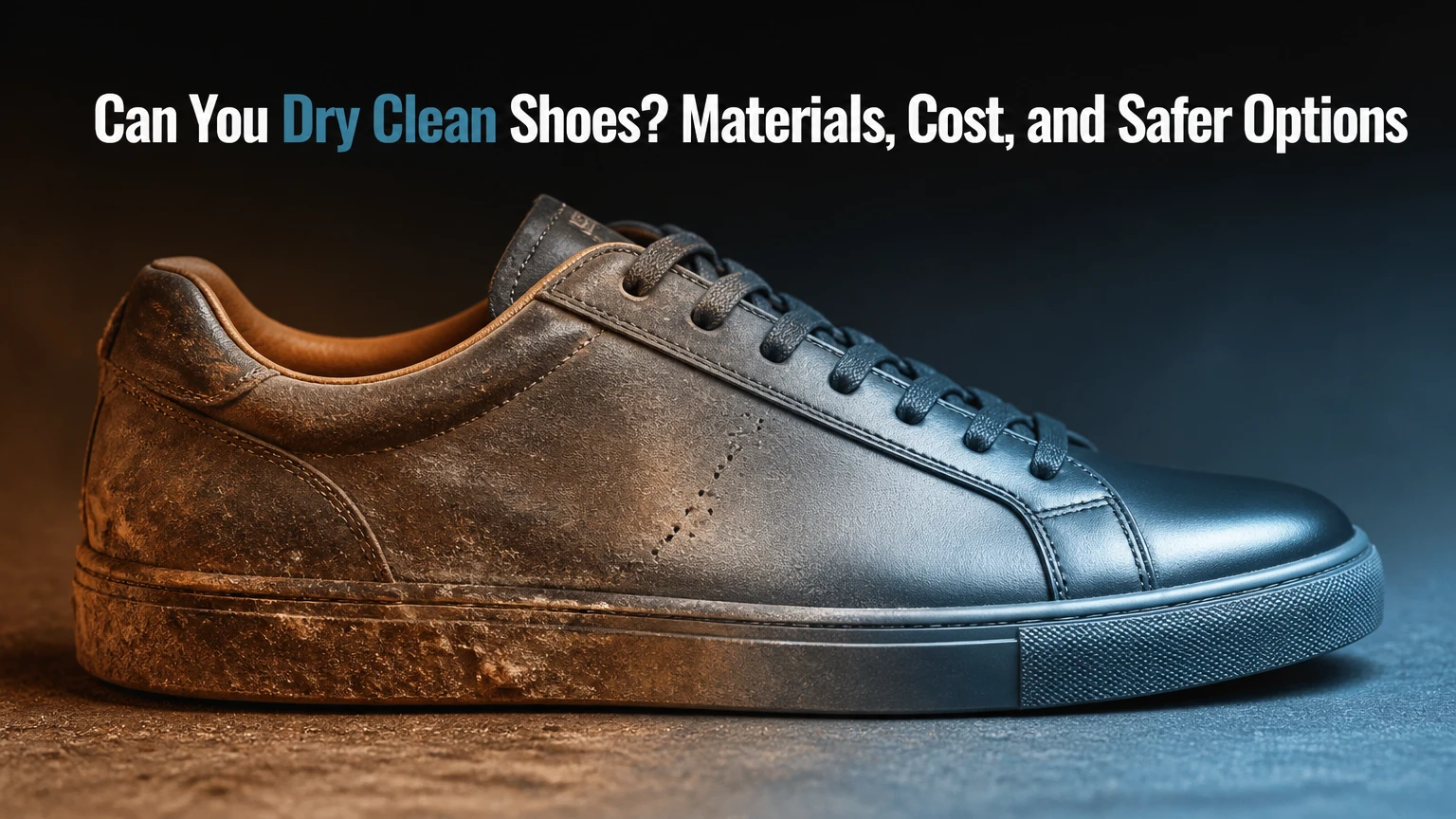
Yes, shoes can be professionally dry cleaned, but shoe dry cleaning is not the same as putting footwear into a clothing dry-cleaning machine. A specialist usually combines dry brushing, controlled solvent or low-moisture foam treatment, stain extraction, deodorizing, and material-specific finishing. The correct method depends on the upper, adhesives, lining, stain, and shoe construction.
Key Facts
- Shoe dry cleaning is a specialist cleaning service, not a single regulated cleaning method.
- Smooth leather, suede, nubuck, mesh, knit, canvas, satin, and rubber require different treatments.
- Typical professional shoe-cleaning prices range from $15-$40 for standard sneakers and $50-$90 or more for luxury leather, suede, or boots.
- A professional service commonly needs 2-5 business days because shoes must dry slowly and completely.
- Dry cleaning can remove soil, oil, and odor, but it cannot repair torn leather, failed stitching, crushed cushioning, or severe sole separation.
- Home cleaning is reasonable for washable canvas and rubber, but delicate suede, dyed leather, satin, and glued luxury sneakers carry higher risk.
Can You Dry Clean Shoes Safely?
Professional shoe dry cleaning is generally safe when the technician identifies the material, tests colorfastness, uses a compatible cleaner, and controls drying. Household “dry-cleaning” chemicals are not automatically safe for footwear, and a clothing cleaner may reject shoes because solvents can damage finishes, synthetic foam, rubber, or adhesive bonds.
The phrase creates confusion because conventional garment dry cleaning uses a machine and a solvent bath or vapor cycle, while footwear usually needs localized treatment. A shoe cannot be treated like a flat fabric panel: its toe box, counter, insole, welt, midsole, lining, and adhesive layers respond differently.
Water is not universally harmful. Small, controlled amounts of water are suitable for some textiles and rubber, while saturation can swell leather fibers, stain suede, loosen adhesive, or distort a glued sneaker. The real risk is uncontrolled moisture, heat, friction, and an unsuitable chemical combination.
What Shoe Dry Cleaning Actually Means
Shoe dry cleaning usually means a low-moisture or solvent-assisted cleaning process that limits soaking. Technicians may use a vacuum, soft brush, foam cleaner, leather lotion, suede eraser, solvent spotter, microfiber cloth, or extraction equipment, depending on the shoe.
A competent service should explain the treatment rather than use “dry clean” as a blanket promise. Ask whether the process includes colorfastness testing, separate insole cleaning, drying at room temperature, conditioning for leather, and a disclaimer for existing dye migration or delamination.
Some businesses call water-based sneaker detailing “dry cleaning” because the shoe is not immersed. That description can still be acceptable if the service accurately states that it uses low-moisture foam. The label matters less than the chemicals, moisture level, technician skill, and material diagnosis.
Which Materials Are Suitable for Dry Cleaning?
Smooth finished leather, suede, nubuck, textile sneakers, canvas, and synthetic uppers can often be professionally cleaned, but no material is universally safe for every solvent. A technician should inspect hidden areas, identify coatings and dyes, and select a method that does not strip finish or flatten texture.
| Shoe material | Usually suitable method | Main risk | Home-care limit |
|---|---|---|---|
| Smooth finished leather | Leather cleaner, damp cloth, conditioner | Finish stripping or darkening | Avoid soaking and household detergent |
| Suede | Dry brush, suede eraser, specialist cleaner | Water rings, flattened nap, dye loss | Treat fresh dry soil only |
| Nubuck | Nubuck block, soft brush, controlled cleaner | Polished patches and color change | Do not use leather wax |
| Mesh or knit | Low-moisture textile foam, extraction | Fraying, dye migration, stretched shape | Blot; do not scrub aggressively |
| Canvas | Mild detergent and limited water | Shrinkage, color bleed, yellowing | Air dry with paper support |
| Satin or velvet | Specialist spot treatment | Water marks, crushing, color transfer | Avoid DIY liquid cleaning |
| Rubber and EVA | Mild cleaner and brush | Solvent swelling or surface whitening | Keep strong solvent away |
| Coated or patent leather | Manufacturer-compatible cleaner | Clouding, cracking, coating lift | No alcohol or abrasive sponge |
Smooth Leather
Smooth leather is often better served by professional leather cleaning than by ordinary garment dry cleaning. The technician removes surface soil, treats grease selectively, then applies a compatible conditioner or cream; excessive solvent can remove pigment, wax, or protective finish.
Leather shoes also require shape control. Shoe trees or internal supports help prevent creasing while the upper dries, but wet leather should not be placed against a radiator, heat vent, hair dryer, or direct high sun. Rapid drying pulls oils from the hide and can produce stiffness or cracking.
Suede and Nubuck
Suede and nubuck need nap preservation, not polishing. Dry soil is often lifted with a crepe brush or suede block, while oily marks may need an experienced technician because a water ring can enlarge the affected area and an aggressive brush can create a permanent shiny patch.
Brass or wire brushes are not universal solutions. A stiff brush can damage fine suede, especially on thin fashion footwear, and should be selected according to nap length and manufacturer guidance. Suede protector spray belongs after cleaning, once the upper is fully dry and color has stabilized.
Sneakers, Mesh, and Knit
Sneaker cleaning is a construction problem as much as a stain problem. Mesh, engineered knit, leather overlays, printed panels, foam midsoles, rubber foxing, and painted details can all appear on one pair, so one cleaner and one brush cannot safely treat every surface.
Low-moisture foam is often preferable to immersion for glued sneakers, but foam does not guarantee color safety. Red, navy, black, and highly saturated textile dyes can bleed even with limited moisture. A technician should isolate panels, use clean towels frequently, and avoid forcing dirty liquid into the lining.
How Professionals Clean Footwear
A professional shoe-cleaning service commonly follows seven stages: inspection, preparation, dry soil removal, targeted stain treatment, controlled cleaning, drying and deodorizing, and final conditioning. The sequence protects the shoe because technicians remove loose grit before brushing or applying chemistry.
1. Inspect the Construction
The technician records the upper material, lining, sole compound, trim, dye stability, stain type, and existing damage. Oil, protein, tannin, salt, mud, ink, and dye transfer need different treatments, and an old stain may have chemically changed the material.
Inspection should include the tongue, heel counter, insole, welt, stitching, and adhesive line. A cleaner who promises complete removal before testing is overstating the likely result.
2. Remove Laces, Insoles, and Loose Soil
Laces and removable insoles are treated separately. Dry brushing or vacuuming removes grit that would otherwise become abrasive paste during wet or foam cleaning.
Technicians typically use horsehair, nylon, or textile brushes with different stiffnesses. Hard bristles are appropriate for some rubber soles, but can permanently roughen suede and snag open knit.
3. Test Colorfastness
A hidden-area test checks whether pigment transfers to a white cloth or reacts to the selected cleaner. The test is especially important for aniline leather, dark suede, dyed canvas, vintage footwear, and multi-color sneakers.
A failed test changes the service plan. The realistic options may be localized treatment, a lighter clean, recoloring, or returning the shoe untreated rather than risking a larger stain.
4. Treat Stains Locally
The technician applies the least aggressive product likely to work. Grease often responds to an appropriate solvent or absorbent powder, while mud should dry first and salt deposits need careful removal without spreading moisture across the entire panel.
Ink, paint, and dye transfer are difficult because removing the contaminant may also remove the shoe’s own pigment. Professional cleaning improves appearance; it does not guarantee invisible restoration.
5. Clean With Low Moisture or Compatible Solvent
Foam, solvent, or a controlled damp method is agitated in small sections and removed with microfiber towels or extraction equipment. The technician should avoid saturating the footbed, internal foam, and adhesive channels.
“Waterless” does not mean risk-free. Solvents can dissolve finishes, soften some plastics, affect rubber, and create harmful vapors, so household experimentation is inappropriate without product-specific instructions and ventilation.
6. Dry Slowly and Restore the Shape
Shoes are dried at room temperature with airflow, internal supports, or shoe trees where appropriate. Typical drying takes 12-48 hours, although dense boots, wet linings, and humid conditions can extend the period.
A shoe is not ready when the exterior feels dry. The lining, toe box, and insole must also be dry, because trapped moisture encourages odor and microbial growth.
7. Finish and Inspect
Leather may receive conditioner or cream, while suede may be brushed to restore its nap. Soles can be cleaned separately, but yellowed polyurethane or oxidized rubber often needs restoration rather than ordinary cleaning.
The final inspection checks symmetry, odor, dye transfer, loose trim, remaining stains, and shape. A reputable cleaner reports permanent limitations instead of disguising damage with excess polish or dye.
How Much Does Shoe Cleaning Cost?
Typical professional shoe cleaning costs $15-$40 for standard fabric sneakers, $30-$60 for leather or suede shoes, and $50-$90 or more for tall boots, luxury footwear, or restoration work. Prices vary by country, city, material, stain complexity, pickup service, and whether conditioning or recoloring is included.
| Service type | Typical price per pair | Typical turnaround | Common inclusions |
|---|---|---|---|
| Fabric sneaker clean | $15-$30 | 2-4 business days | Upper, midsole, laces |
| Premium sneaker detail | $30-$60 | 3-7 business days | Multi-panel treatment, deodorizing |
| Smooth leather care | $25-$50 | 2-5 business days | Cleaning, conditioning, polish |
| Suede or nubuck treatment | $30-$65 | 3-7 business days | Nap lifting, spot treatment |
| Boots | $50-$90+ | 4-10 business days | Shaft, upper, sole cleaning |
| Satin, velvet, or bridal shoes | $40-$100+ | 5-10 business days | Specialist spot treatment |
| Recoloring or sole restoration | $75-$200+ | 1-3 weeks | Repair or cosmetic restoration |
Express service commonly takes 24-48 hours and may add 50%-100% to the standard fee. A quoted price may exclude shipping, stubborn stain treatment, waterproofing, recoloring, sole repair, or replacement insoles, so request an itemized estimate.
How Long Does the Service Take?
Most shoe-cleaning services need 2-5 business days, while delicate materials, boots, heavy odor, and restoration work commonly require 5-10 business days. Drying time, not brushing time, controls much of the schedule because internal moisture must leave without heat damage.
A 24-hour service can be reasonable for a lightly soiled synthetic sneaker, but it is less appropriate for saturated suede, thick leather boots, or shoes with strong odor inside the lining. Ask whether the promised turnaround includes drying and final inspection.
Dry Cleaning Versus Home Washing
Professional treatment is the safer choice for expensive, delicate, dyed, or multi-material footwear; home cleaning is more economical for lightly soiled canvas, rubber, and washable synthetic shoes. Neither method removes structural damage, and professional service cannot reverse every stain.
| Decision factor | Professional cleaning | Home low-moisture care | Washing machine |
|---|---|---|---|
| Typical cost | $15-$90+ per pair | $2-$15 in supplies | $2-$8 in detergent and energy |
| Control over moisture | Section-by-section | Moderate | Low |
| Suede and leather risk | Lower with specialist | Medium to high | Very high |
| Typical time | 2-10 business days | 30-90 minutes plus drying | 1-3 hours plus drying |
| Stain expertise | Oil, salt, dye, ink assessment | Surface soil and light marks | General soil only |
| Shape protection | Supports and controlled drying | Paper or shoe trees | Tumbling and compression |
| Best use | Luxury or delicate shoes | Routine maintenance | Only manufacturer-approved washable shoes |
When Home Cleaning Makes Sense
Home care is suitable when the care label allows it, the upper is colorfast, the stain is recent, and the shoe has no fragile trim or structural damage. Start with dry brushing, then use a small amount of material-specific cleaner on a cloth or soft brush.
For canvas, clean one panel at a time and blot rather than flood. For rubber midsoles, a diluted mild cleaner and soft brush usually provide more control than a washing machine. Remove insoles, loosen laces, stuff the shoe with paper, and air dry away from direct heat.
Nike’s public shoe-care guidance recommends removing excess dirt, using a mild cleaning solution, and allowing shoes to air dry, while many footwear manufacturers advise against washing machines because heat, agitation, and prolonged moisture can damage adhesives and shape. Manufacturer instructions take priority over generic cleaning advice.
When Professional Treatment Is Worth Paying For
Professional service makes sense when replacement cost is high, the material is difficult to identify, the stain is oily or dye-based, or the shoe has sentimental value. A $40 cleaning is economically rational for a $250 leather shoe when a failed home experiment could require recoloring or replacement.
Professional cleaning is not a repair service. It cannot reliably fix cracked leather, split seams, crushed heel counters, separated soles, mold that has penetrated deep materials, or foam breakdown caused by age.
How Should Different Problems Be Treated?
The correct treatment depends on the contaminant and material rather than the shoe’s color alone. Mud should dry before removal, grease needs controlled absorption or solvent treatment, salt requires careful dissolution, and odor requires drying and source control.
| Problem | Safer first response | Avoid | Professional threshold |
|---|---|---|---|
| Wet mud | Air dry, then brush away | Scrubbing wet grit | Suede, nubuck, or dyed leather |
| Grease or oil | Blot, isolate, use material cleaner | Water-only rubbing | Dark spreading mark or luxury leather |
| Salt lines | Dry brush, minimal compatible cleaner | Flooding the whole panel | White rings on suede or leather |
| Bad odor | Remove insoles, dry fully, wash insoles if allowed | Masking spray alone | Odor returns after 48 hours |
| Ink or dye transfer | Stop rubbing and isolate stain | Alcohol without testing | Any visible pigment transfer |
| Yellowed sole | Clean surface oxidation | Household bleach or strong solvent | Deep oxidation or cracking |
| Mold | Isolate footwear and seek specialist advice | Wearing or brushing indoors | Visible growth or persistent musty odor |
Odor, Sanitizing, and Ozone
Odor control begins with complete drying, insole treatment, and removal of sweat residue; perfume or deodorizing spray only masks the volatile compounds temporarily. A cleaner may use an antimicrobial product or an ozone chamber, but ozone is not automatically safe or necessary.
Ozone is a respiratory irritant and must be generated in a sealed, controlled chamber with adequate off-gassing before the shoes return to the customer. It can also accelerate degradation of some elastomers, dyes, and rubber components. Ask what concentration, exposure time, and ventilation procedure the service uses, rather than accepting “ozone sanitized” as proof of superior cleaning.
Do not use ozone generators in an occupied room, closet, vehicle, or bedroom. Removing the odor source is more reliable than repeatedly applying an oxidizer.
Common Failures and How to Fix Them
Most shoe-cleaning disasters result from excess water, excess heat, incompatible chemicals, or friction applied before the material is identified. Recovery is sometimes possible, but repeated treatment usually reduces the remaining finish and pigment.
- Water rings on suede: Stop adding water, let the shoe dry naturally, then use a suede brush lightly across the entire panel. A professional may need to even the color across the full upper.
- Stiff leather: Apply no household oil or cooking oil. Let the shoe dry fully, then use a small amount of manufacturer-compatible leather conditioner and allow 12-24 hours before buffing.
- Flattened suede nap: Brush only after the material is completely dry. If the surface is shiny from abrasion, additional brushing may worsen it and professional refinishing may be required.
- Dye transfer on mesh: Blot immediately with a clean, dry cloth and stop rubbing. Solvent treatment without a colorfastness test can enlarge the affected area.
- Loose sole or delamination: Do not heat the shoe or place it in a dryer. Cleaning cannot restore a failed adhesive bond, so a cobbler or repair specialist should assess it.
- Persistent odor: Remove and replace contaminated insoles, dry the interior for at least 24 hours, and inspect for mold. Repeated spray use without drying rarely solves the cause.
An experienced cleaner’s rule is simple: never escalate from mild to aggressive treatment on the same spot without drying and reassessing. A wet stain can appear worse temporarily, and immediate escalation often removes the shoe’s dye before the contaminant has been evaluated.
How Do You Choose a Shoe-Cleaning Service?
Choose a service that names its process, identifies materials before treatment, documents existing damage, and provides a written price range. A generic dry cleaner may be excellent with garments but lack the brushes, supports, conditioners, and repair knowledge required for footwear.
Ask these questions before handing over the shoes:
- Do you clean this exact material and brand?
- Is the process solvent-based, foam-based, damp cleaning, or immersion?
- Will you perform a hidden colorfastness test?
- Are laces and insoles cleaned separately?
- How will the shoes be dried and supported?
- Does the price include conditioning, deodorizing, and sole cleaning?
- What happens if dye migration or adhesive failure appears?
- Do you offer repair, recoloring, or only cleaning?
Photograph the shoes at drop-off, especially existing scuffs, cracks, yellowing, and sole separation. The record protects both sides and prevents a pre-existing defect from being mistaken for cleaning damage.
A Practical Care Schedule
Light maintenance every 1-2 weeks usually prevents more damage than occasional aggressive cleaning. Wipe midsoles, brush dry soil from uppers, remove insoles after heavy wear, and let each pair rest for at least 24 hours before the next use when perspiration is substantial.
| Use pattern | Home maintenance | Professional interval | Storage practice |
|---|---|---|---|
| Occasional formal shoes | Brush after each wear | Every 6-12 months | Shoe trees and breathable bag |
| Daily leather shoes | Wipe weekly, condition every 2-3 months | Every 6 months | Rotate pairs for 24 hours |
| Daily sneakers | Brush weekly, wash insoles as allowed | Every 2-4 months | Air out after exercise |
| Suede fashion shoes | Dry brush after wear | Before major events | Store dry with nap protected |
| Running or work shoes | Remove mud promptly | When odor or embedded soil persists | Separate from clean footwear |
Waterproofing products can help suede, nubuck, and textiles, but they do not make shoes waterproof and should be tested on a hidden area. Reapply only at the product’s stated interval; excessive silicone or fluorochemical residue can change texture and attract soil.
FAQ
Can a regular dry cleaner clean shoes?
Some garment dry cleaners accept shoes, but many outsource them or decline because footwear has mixed materials, adhesives, foam, and rigid components. Confirm the actual process, material experience, colorfastness testing, drying method, and damage policy before booking the service.
Can you dry clean white sneakers?
White sneakers can receive professional low-moisture cleaning, but yellowing, paint loss, oxidized midsoles, and dye transfer may remain. White mesh, leather, rubber, and foam require separate products. A cleaner should not promise a factory-new result when the midsole has chemically aged.
Can shoe insoles be dry cleaned?
Removable fabric insoles can sometimes be cleaned separately, but foam, cork, leather, and molded orthotic insoles may deform or retain solvent. Ask whether the insole can be washed, deodorized, or replaced. Cleaning the upper while leaving a contaminated insole often allows odor to return.
Does dry cleaning remove mold from shoes?
Dry cleaning may reduce surface contamination, but it cannot guarantee removal of mold that has penetrated porous leather, foam, or lining. Isolate moldy footwear, avoid brushing it indoors, and consult a specialist. Discarding heavily contaminated low-value shoes may be safer than restoration.
Can dry cleaning remove shoe odor permanently?
Professional cleaning can reduce odor by removing sweat residue and treating insoles, but permanence depends on drying, foot hygiene, storage humidity, and repeated wear. Replace heavily contaminated insoles and allow shoes to dry for 24 hours between uses. Deodorizing spray alone does not remove the source.
Is it cheaper to clean shoes at home?
Home cleaning costs approximately $2-$15 in supplies, while professional service typically costs $15-$90 or more per pair. Home care is cheaper for washable canvas and rubber, but professional treatment is financially safer for expensive suede, leather, satin, or multi-material sneakers.
The Bottom Line
Yes, you can dry clean shoes, but the safest interpretation is specialist, low-moisture footwear cleaning rather than a standard garment dry-cleaning cycle. Use professional treatment for delicate materials, valuable footwear, oil or dye stains, and persistent odor; use careful home maintenance for washable canvas, synthetic uppers, and rubber. The exact material, construction, stain, and drying method determine the result, not the label “dry clean.”