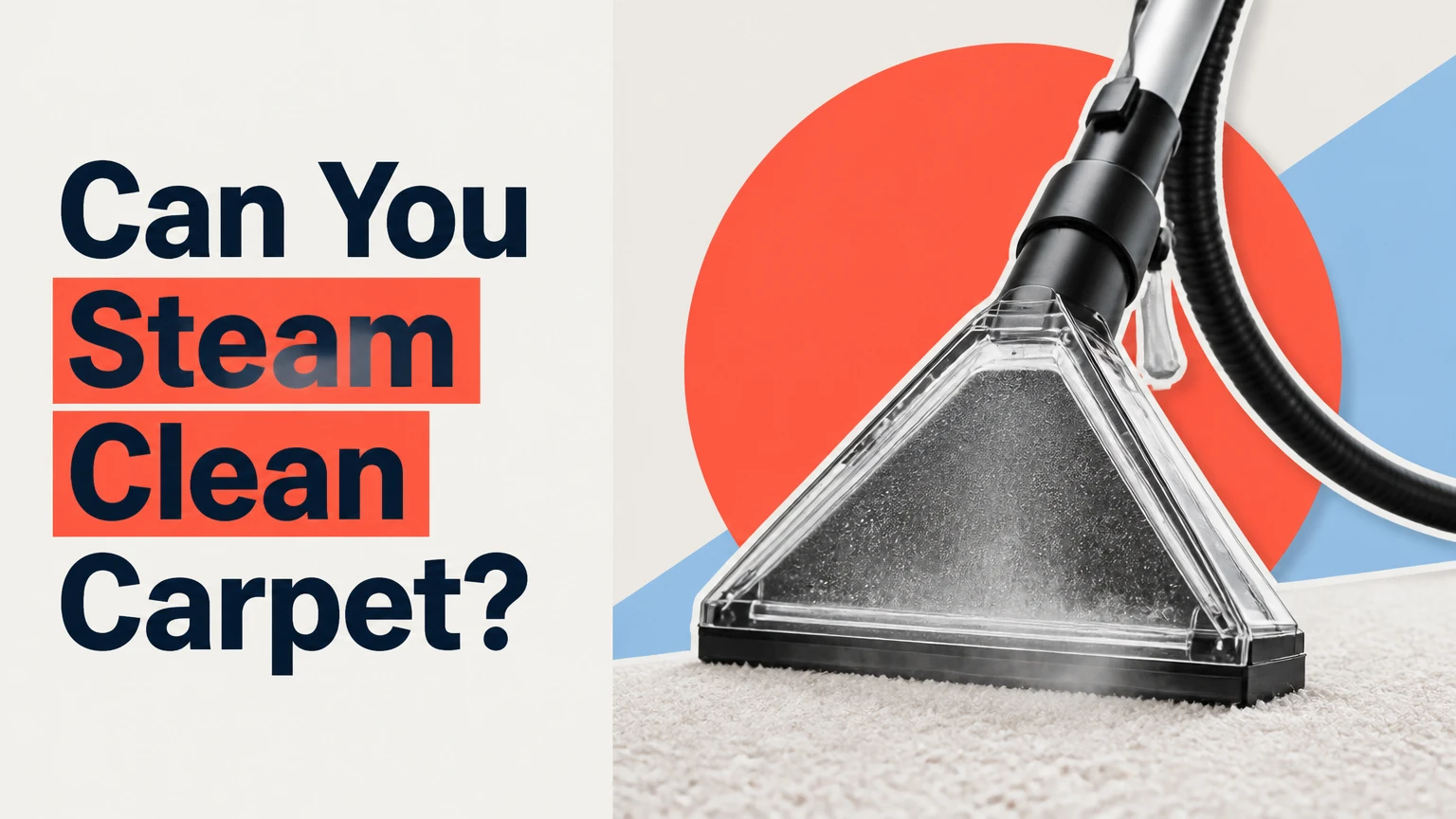
Yes, you can steam clean carpet, but professional “steam cleaning” usually means hot water extraction rather than dry steam. A carpet extractor sprays heated water and detergent into the pile, then immediately vacuums out loosened soil. The method provides the deepest routine clean when the carpet, backing, pad, and floor can tolerate moisture.
Key facts at a glance
- Carpet steam cleaning normally means hot water extraction, not vapor-only steam cleaning.
- A typical professionally cleaned carpet dries in 4-12 hours when ventilation and extraction are adequate.
- Excess water, detergent, or heat can cause browning, odor, delamination, shrinkage, or rippling.
- Synthetic nylon, polyester, and polypropylene carpets usually tolerate extraction better than wool and other natural fibers.
- Professional cleaning typically costs $30-$80 per room, with many companies applying a $100-$150 minimum charge.
- The most important drying variable is recovered water, followed by airflow, humidity, carpet construction, and pad thickness.
What does carpet steam cleaning mean?
Carpet steam cleaning is the common consumer term for hot water extraction, a method that combines a cleaning solution, heated water, mechanical agitation, and vacuum recovery. The process does not normally fill a room with visible steam, and a vapor steam cleaner is not a substitute for a carpet extractor.
Hot water extraction works because soil is held to fibers by oils, residues, and physical entanglement. A preconditioning solution softens oily traffic soil, agitation separates particles from fibers, and vacuum extraction removes suspended soil with the spent water.
The Carpet and Rug Institute’s consumer guidance summarizes the maintenance principle this way: “The most important thing you can do to keep your carpet clean is to vacuum regularly.” Extraction is therefore a periodic deep-cleaning method, not a replacement for frequent dry soil removal.
Steam cleaner versus carpet extractor
The term “steam cleaner” creates two different equipment categories. A vapor steam cleaner heats a small amount of water to produce low-moisture steam, while a carpet extractor sprays liquid water and recovers it through a vacuum hose or recovery tank.
| Equipment | Water delivery | Typical use | Carpet risk |
|---|---|---|---|
| Vapor steam cleaner | 0.1-0.5 gallons per hour | Hard floors, grout, sealed surfaces | Heat damage, slow soil removal |
| Portable extractor | 0.5-1.5 gallons per minute | Apartments, stairs, single rooms | Overwetting with slow passes |
| Rental extractor | 0.5-2 gallons per minute | Synthetic wall-to-wall carpet | Incomplete recovery |
| Truck-mounted extractor | 1-3 gallons per minute | Whole homes, heavy soil | Excess heat on sensitive fibers |
A vapor machine can refresh some surface areas, but its heat and limited rinse volume do not provide the flushing and recovery needed for heavily soiled carpet. Always follow the carpet manufacturer’s cleaning code and warranty instructions before applying heat or water.
How does hot water extraction clean carpet?
Hot water extraction cleans carpet through four linked actions: dry soil removal, chemical soil suspension, fiber agitation, and immediate vacuum recovery. Cleaning success depends more on soil removal and water recovery than on maximum temperature alone.
Professional technicians usually begin with a slow vacuum pass because abrasive sand and grit account for much of the wear in traffic lanes. The technician then applies a measured pre-spray, allows dwell time for the chemistry to work, agitates dense areas, rinses with heated water, and makes additional vacuum-only passes.
The professional sequence
- Inspect and test. Identify fiber type, carpet colorfastness, stains, backing condition, and the manufacturer’s cleaning code. Test an inconspicuous area for dye bleeding or texture change.
- Vacuum slowly. Make two perpendicular passes in heavily trafficked areas. Empty the vacuum canister or bag before cleaning.
- Apply preconditioner. Use the labeled dilution rate. Typical residential products require about 1-3 ounces of concentrate per gallon of water, but formulations vary.
- Allow dwell time. Leave the solution for approximately 5-10 minutes without letting it dry. Dwell time gives surfactants and alkaline builders time to loosen oily soil.
- Agitate carefully. Use a carpet rake or suitable brush on synthetic pile. Avoid aggressive brushing on looped, cut-loop, or fragile wool carpet.
- Extract with heated rinse water. Use overlapping passes at a controlled speed. A professional normally uses one wet pass followed by one or more dry vacuum passes.
- Neutralize when required. An acidic rinse can reduce alkaline residue, but wool and dyed fibers require chemistry selected for their construction.
- Groom and dry. Align the pile, place tabs or foil under furniture legs, open appropriate ventilation, and use fans or air movers.
The Carpet and Rug Institute Seal of Approval program evaluates carpet cleaning products and equipment against performance criteria, but a product’s approval does not remove the need for correct dilution, fiber testing, or adequate extraction. Equipment pressure also varies by tool, hose length, spray jet, and operator technique.
Can you steam clean carpet yourself?
You can steam clean many synthetic carpets yourself with a rented or home carpet extractor, provided you control detergent quantity and moisture. DIY extraction is most suitable for nylon, polyester, and polypropylene carpet in good condition; wool, silk, viscose, antique rugs, and damaged backing generally require a qualified cleaner.
Before you start
| Requirement | Typical value | Practical specification |
|---|---|---|
| Preparation time | 30-60 minutes | Remove loose objects and vacuum first |
| Cleaning time | 20-40 minutes per 12-by-12-foot room | Add 10-20 minutes for furniture movement |
| Drying time | 4-12 hours | Allow 24 hours when humidity is high |
| Rental cost | $35-$50 per day | Add $20-$40 for detergent and fees |
| DIY difficulty | Moderate | Requires slow passes and water disposal |
| Required tools | 5-7 items | Extractor, vacuum, detergent, fans, white towels |
Step 1: Check the carpet and floor
Read the carpet label or manufacturer’s care guide. Locate the cleaning code, inspect seams and edges, and check whether carpet rests over hardwood, laminate, glued flooring, or a moisture-sensitive subfloor.
Do not wet-clean carpet with loose seams, visible delamination, severe rippling, deteriorated latex, or a damp pad. The existing defect can become worse when the backing absorbs water.
Success checkpoint: the carpet is firmly attached, the floor underneath is moisture-tolerant, and a hidden dye test shows no transfer.
Common mistake: assuming a carpet is synthetic because it looks machine-made. Some blends and luxury fibers behave differently.
Step 2: Vacuum and treat spots
Vacuum twice in opposite directions, especially along entrances and hallways. Blot fresh liquid spills with white towels, then use a compatible spot product rather than saturating the area with general detergent.
For pet urine, remove as much liquid as possible before extraction. A surface-only cleaning may improve appearance while leaving urine salts in the backing or pad, where odor can return during humid weather.
Success checkpoint: loose grit is removed, and spot treatments have completed their labeled dwell time.
Common mistake: skipping vacuuming. Dry soil can become muddy residue when mixed with extraction water.
Step 3: Mix the cleaning solution
Fill the machine according to its instructions and measure detergent precisely. More soap rarely improves cleaning because consumer machines may not have enough rinse and vacuum capacity to remove the extra surfactant.
Use a product labeled for carpet extractors, and never combine bleach, ammonia, acidic rinse, enzyme products, or household cleaners in the same tank. Chemical combinations can release irritating vapors or damage fibers.
Success checkpoint: the solution is diluted exactly as directed, with no visible foam in the clean-water tank.
Common mistake: using laundry detergent, dish soap, or an unmeasured “extra capful” for heavily soiled carpet.
Step 4: Extract slowly with overlapping passes
Move the machine at roughly 1-2 feet per second, depending on the model. Make one controlled wet pass, then two or three slow suction-only passes; release the spray trigger before reversing or turning.
Do not repeatedly flood a dark stain. Deep discoloration may come from dye loss, burning, rust, permanent fiber damage, or contamination below the carpet, none of which extraction can restore.
Success checkpoint: the recovery tank collects visibly dirty water, and the carpet feels damp rather than saturated.
Common mistake: moving quickly because the carpet looks wet. Fast movement reduces agitation and extraction, leaving soil and water behind.
Step 5: Dry the carpet completely
Run fans across the carpet surface, use air conditioning or a dehumidifier, and increase ventilation when outdoor humidity is lower than indoor humidity. Keep foot traffic low while the pile is damp, and place furniture protectors under legs.
A carpet that remains wet beyond 24 hours has a substantially higher odor and microbial-growth risk, particularly when the pad or backing is saturated. Do not reinstall rugs or push furniture tightly against damp carpet.
Success checkpoint: the carpet feels dry at the surface and at seams, has no cool damp spots, and produces no musty odor.
Common mistake: closing windows and turning off fans because the surface appears dry. Moisture can remain below the pile.
Which equipment and method should you use?
A truck-mounted hot water extractor usually provides the strongest vacuum recovery and fastest production, while a portable extractor is more practical for high-rise apartments and isolated rooms. A rental machine costs less upfront but generally requires more operator judgment than a professional service.
| Option | Typical purchase or service cost | Typical drying range | Best fit |
|---|---|---|---|
| Professional truck-mounted extraction | $30-$80 per room, $100-$150 minimum | 4-8 hours | Whole-home deep cleaning |
| Professional portable extraction | $25-$60 per room, $100-$150 minimum | 6-12 hours | High-rise or limited-access homes |
| Rental extractor | $35-$50 per day plus $20-$40 supplies | 8-24 hours | Budget-conscious synthetic carpet |
| Consumer extractor | $150-$400 purchase price | 8-24 hours | Frequent pet and spot cleaning |
| Low-moisture encapsulation | $0.15-$0.35 per square foot, typical | 1-3 hours | Maintenance cleaning and offices |
Machine specifications are not directly comparable across brands. A pressure gauge may show pump pressure rather than the pressure delivered at the spray tip, and a high temperature at the machine does not mean the carpet fiber reaches that temperature.
Truck-mounted versus portable extraction
Truck-mounted units place the engine, heating system, waste tank, and high-powered vacuum outside the home. Their longer hoses and stronger recovery often reduce residual moisture, but technicians must use suitable heat and pressure for the fiber.
Portable extractors operate inside the property and can reach apartments, upper floors, and rooms inaccessible to van hoses. Their performance depends heavily on electrical supply, hose length, recovery seals, water temperature, and how often the operator empties the tank.
Is steam cleaning better than other carpet methods?
Hot water extraction is usually the strongest choice for deep soil, allergens attached to dust, and heavily trafficked residential carpet, but low-moisture methods can be better when rapid reoccupation or moisture control matters. No method removes every stain or repairs fiber damage.
| Method | Typical moisture | Typical return-to-use | Main strength | Main limitation |
|---|---|---|---|---|
| Hot water extraction | 0.5-2 gallons per room | 4-12 hours | Deep soil removal | Longer drying and overwetting risk |
| Encapsulation | 0.1-0.3 gallons per room | 1-3 hours | Low residue maintenance | Limited on heavily impacted soil |
| Dry compound cleaning | Less than 0.1 gallon per room | 0.5-2 hours | Very low moisture | Powder recovery can be incomplete |
| Carpet shampooing | 1-3 gallons per room | 12-24 hours | Strong initial visual brightening | Foam and sticky residue |
| Vapor steam cleaning | Less than 0.1 gallon per room | 1-4 hours | Hard-surface sanitation | Poor carpet soil flushing |
Extraction is not automatically the best option for every building. A busy office that must reopen within an hour may reasonably choose encapsulation, then schedule restorative extraction during a shutdown.
Does steam cleaning sanitize carpet?
Hot water extraction can reduce microorganisms and allergens, but ordinary carpet cleaning is not automatically disinfection. Sanitizing claims depend on temperature, contact time, chemical registration, soil load, and the specific organism, so a household extractor should not be treated as a sterilizer.
The U.S. Environmental Protection Agency distinguishes cleaning from sanitizing and disinfecting. EPA-registered disinfectants must be used exactly according to their label, and many are not approved for carpet. High heat also cannot compensate for poor contact or inadequate recovery.
How much does carpet steam cleaning cost?
Typical US pricing is $30-$80 per room for professional extraction, $35-$50 for a one-day rental, and $150-$400 to purchase a consumer extractor. Actual invoices vary with minimum charges, stairs, furniture, urine treatment, moving heavy items, carpet area, and regional labor rates.
| Service component | Typical price | Common trigger |
|---|---|---|
| Standard room cleaning | $30-$80 | One average room |
| Whole-home minimum | $100-$150 | Small jobs and travel |
| Stair cleaning | $2-$5 per step | Separate stair flight |
| Pet urine treatment | $25-$100 per room | Pad or subfloor treatment |
| Rental machine | $35-$50 per day | Retail or hardware rental |
| Cleaning solution | $20-$40 | Product sold with rental |
Ask whether the quote includes preconditioning, deodorizer, stain treatment, furniture movement, protectant, travel, and sales tax. A low advertised room price may exclude the minimum charge or define a room more narrowly than a 12-by-12-foot space.
What carpet types should not be steam cleaned?
Wool, silk, viscose, jute, seagrass, antique rugs, and carpets with unstable dyes should not receive untested DIY extraction. These materials can shrink, brown, bleed, distort, or develop texture changes when exposed to excessive water, alkalinity, heat, or agitation.
The International Institute of Carpet and Textile Cleaning, commonly known as IICRC, publishes cleaning standards and technician training for textile care. For wool carpet, ask for a technician experienced with natural fibers and request a documented test area before full cleaning.
| Carpet or textile | Safer approach | Main hazard |
|---|---|---|
| Nylon | Hot water extraction after testing | Dye bleeding or overwetting |
| Polyester | Extraction with low-residue detergent | Oleophilic soil and rapid resoiling |
| Polypropylene | Controlled extraction | Heat distortion and oily soil |
| Wool | Low-moisture or specialist extraction | Shrinkage, browning, felting |
| Viscose or rayon | Specialist rug cleaning | Cellulose distortion and browning |
| Sisal or jute | Dry or specialist method | Water rings and fiber swelling |
Expert insight: fiber identity is only half the diagnosis. Backing, adhesive, pad, installation age, prior cleaning residue, and floor material can determine whether a technically correct cleaning method still causes damage.
Why does carpet smell after extraction?
A musty carpet odor usually means moisture, contaminated padding, detergent residue, or urine remains below the visible pile. Surface fragrance can mask the problem temporarily, but odor returns when humidity rises or the carpet is compressed.
Increase airflow immediately with fans aimed across the surface, run air conditioning or a dehumidifier, and inspect seams and the pad if odor persists. If carpet remains wet after 24 hours, professional water extraction may be necessary.
Pet urine requires separate diagnosis. When urine reaches the pad or subfloor, cleaning the fiber alone cannot reliably remove the odor source; affected pad may need replacement, and sealed subfloor areas may require specialized treatment.
Why do stains reappear after carpet cleaning?
A returning stain usually results from wicking, residue, or an unseen contamination source beneath the carpet. Wicking occurs when dissolved soil or stain material travels upward from the backing or pad as moisture evaporates.
Let the carpet dry fully before treating the mark again. If the stain is on the surface, apply a compatible spotter sparingly, blot with a white towel, and perform a small extraction rinse; repeated flooding can deepen the wicking.
Expert insight: a stain that disappears while wet and returns as the carpet dries is often a moisture-movement problem, not evidence that the cleaning chemical was too weak.
Can steam cleaning make carpet ripple?
Excess moisture can contribute to carpet rippling, especially when latex backing, adhesive, or a stretched installation has already deteriorated. A carpet may relax as it dries, but ripples that remain after 24-48 hours usually need inspection and possible professional restretching.
Do not drag furniture across rippled carpet or attempt to iron, heat, or forcibly flatten it. Repeated wet cleaning can enlarge loose areas, and carpet that has delaminated from its backing may not be recoverable through stretching alone.
How often should carpet be steam cleaned?
Most households need professional hot water extraction every 12-18 months, while homes with pets, children, allergies, or heavy entrances may need cleaning every 6-12 months. Frequent vacuuming and prompt spot treatment extend the interval by limiting abrasive soil and sticky residues.
The Carpet and Rug Institute recommends regular vacuuming and prompt spill care as core maintenance practices. Carpet manufacturers may specify a cleaning interval for warranty compliance, so the warranty document takes priority over a generic schedule.
A practical schedule is:
- Vacuum high-traffic lanes at least twice weekly.
- Vacuum the rest of the carpet weekly.
- Treat liquid spills immediately.
- Extract residential carpet every 12-18 months.
- Schedule earlier cleaning when traffic lanes remain gray after vacuuming.
What are the biggest carpet cleaning mistakes?
The most damaging mistakes are excess water, excess detergent, skipped vacuuming, wrong chemistry, and inadequate drying. Each mistake leaves a different failure pattern, so the remedy must address the mechanism rather than simply adding more product.
| Failure | Likely cause | Corrective action |
|---|---|---|
| Sticky carpet | Too much detergent | Rinse with clean water and make dry passes |
| Musty odor | Pad or backing stayed wet | Increase airflow and inspect below carpet |
| Brown tips | Alkaline residue or overwetting | Specialist rinse and controlled drying |
| Stain returns | Wicking from backing or pad | Blot, spot-rinse, and reduce moisture |
| Carpet ripples | Wet backing or loose installation | Dry fully, then arrange inspection |
| Gray traffic lanes | Embedded abrasive soil | Vacuum thoroughly and use professional extraction |
Never add defoamer to the clean-water tank unless the equipment manufacturer specifically directs it. Defoamer usually belongs in the recovery system, and foam can indicate detergent residue entering the machine from previous cleanings.
Which option fits your situation?
A renter with synthetic carpet and a tight budget can rent an extractor, use measured detergent, and reserve professional cleaning for move-out or severe soil. A pet owner benefits from a consumer spot extractor for accidents but still needs periodic professional treatment when urine reaches the pad.
| Situation | Preferred method | Reason | Avoid |
|---|---|---|---|
| One synthetic room | Portable or rental extraction | Low setup cost | Saturating repeated passes |
| Whole-home annual clean | Professional extraction | Better recovery and speed | Unverified low-price add-ons |
| Wool wall-to-wall carpet | Certified specialist | Fiber and pH control | Grocery-store rental machine |
| Office reopened same day | Encapsulation | 1-3 hour return-to-use | High-moisture extraction |
| Severe pet urine | Inspection plus extraction | Pad and subfloor diagnosis | Surface deodorizer alone |
| Hardwood beneath carpet | Low-moisture or specialist extraction | Limits floor exposure | Uncontrolled flooding |
The best method is determined by fiber, backing, soil type, drying conditions, and the required return-to-use time. A professional cleaner should explain those variables before recommending equipment or chemicals.
FAQ
Can I steam clean carpet with a clothes steamer?
A clothes steamer is not designed to rinse and recover carpet soil. Short, controlled applications may loosen a small surface mark, but prolonged steam can wet the backing, spread the stain, or distort synthetic fibers. Use a carpet extractor for water-based deep cleaning.
Should I move furniture before carpet extraction?
Move lightweight furniture and small objects before cleaning, but do not move heavy wardrobes or appliances without a plan. Professional cleaners can often place protective tabs or foil under legs, while furniture should remain off damp carpet until the carpet is fully dry.
Can steam cleaning remove old pet stains?
Extraction can improve old pet stains when contamination is limited to the carpet pile, but it may not remove urine that has reached the pad or subfloor. Ultraviolet inspection, moisture detection, pad access, and targeted treatment may be needed for persistent odor.
Does carpet steam cleaning remove dust mites?
Hot water extraction removes dust, soil, and allergen-containing particles from carpet, but it does not make a home dust-mite-free. HEPA vacuuming, humidity control below approximately 50%, washable bedding, and regular cleaning address the wider indoor environment.
Can I walk on carpet immediately after cleaning?
Limit walking until the carpet is dry, commonly 4-12 hours after extraction. If necessary, wear clean socks and use clean plastic or foil under furniture legs, because shoes and tracked soil can mark damp fibers and furniture can compress wet pile.
Does steam cleaning void a carpet warranty?
Professional hot water extraction normally supports many carpet maintenance warranties, but warranty terms differ by manufacturer and fiber. Check the care document for approved methods, cleaning frequency, chemical restrictions, and whether the technician must use a certified process.
The Bottom Line
Can you steam clean carpet? Yes, hot water extraction is an effective deep-cleaning method for many synthetic carpets when the operator uses the correct detergent, controlled moisture, thorough vacuum recovery, and complete drying. Choose a trained specialist for wool, delicate textiles, damaged backing, severe pet contamination, or any carpet installed over moisture-sensitive flooring.