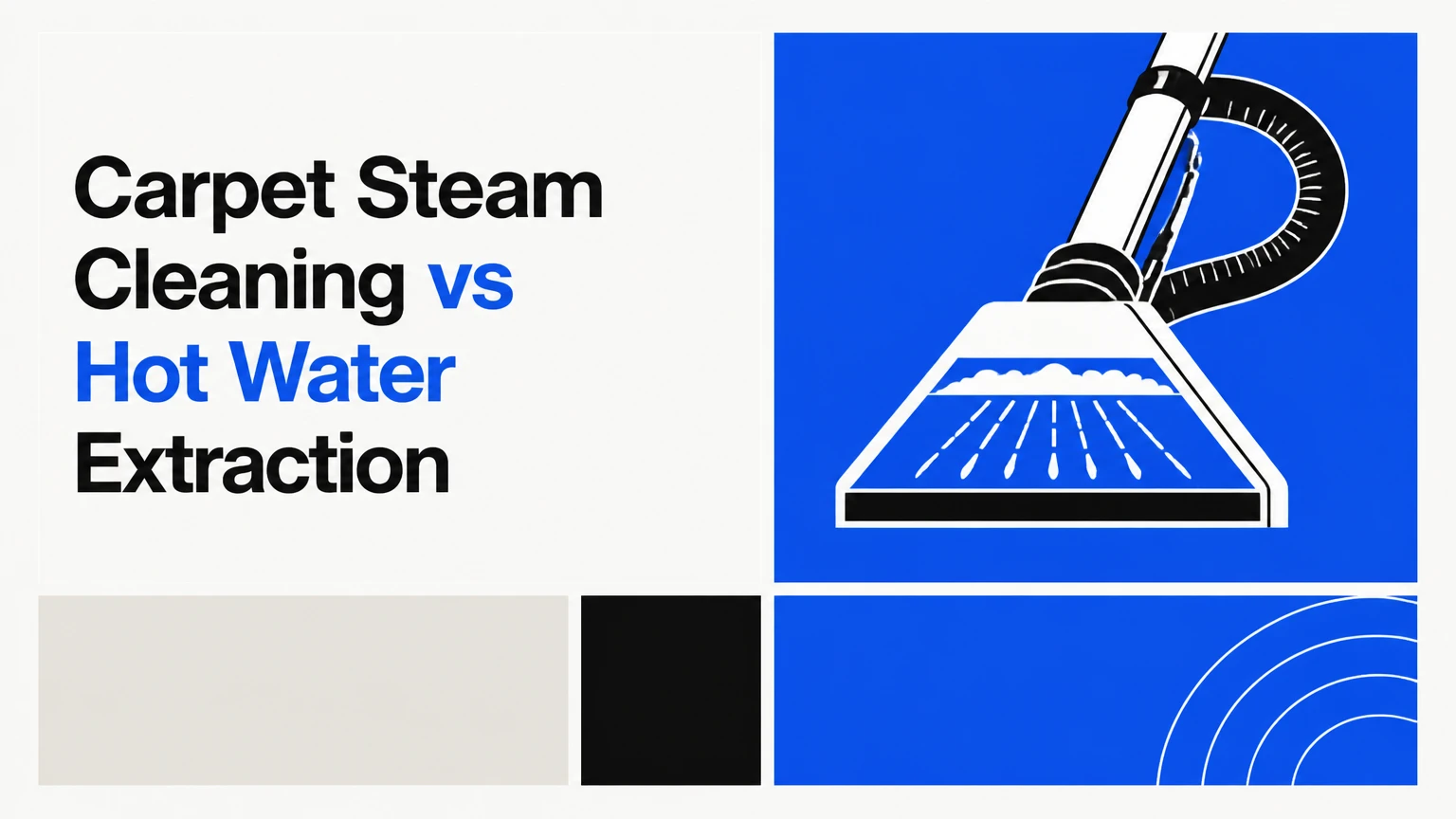
Hot water extraction (HWE) is a heavy-duty restorative process that flushes embedded soil from carpets using pressurized liquid water, detergents, and heavy vacuum suction. In contrast, true steam cleaning is a low-moisture surface sanitization method that applies vaporized gas above 212°F without heavy extraction. While the carpet cleaning industry routinely uses “steam cleaning” as a marketing buzzword for HWE, hot water extraction is the only true deep-cleaning method, whereas actual steam is strictly for surface sanitization.
Key Facts / At a Glance
- The Marketing Myth: 95% of companies advertising “carpet steam cleaning” are actually performing hot water extraction.
- Operating Temperatures: HWE operates between 150°F and 200°F; true steam cleaning requires temperatures exceeding 212°F to vaporize the water.
- Moisture and Recovery: HWE injects pressurized water and vacuums out 95% of it alongside dirt; true steam machines lack rinsing and heavy vacuum extraction capabilities.
- Warranty Compliance: Major carpet manufacturers explicitly require professional hot water extraction every 12 to 18 months to maintain structural warranties.
- Damage Risks: Applying true steam (>212°F) to glued-down carpets causes irreversible delamination (backing separation) and permanently sets protein stains like urine or blood.
Quick Verdicts by User Need
- For pet owners and allergy sufferers: Choose Hot Water Extraction. It physically flushes out urine salts, dander, and dust mite feces.
- For chemical-sensitive households: Choose True Steam Cleaning. It uses zero synthetic detergents, relying purely on thermal heat for sanitization.
- For maintaining a carpet warranty: Choose Hot Water Extraction. The IICRC S100 standard dictates this method for restorative cleaning.
- For natural delicate fibers (wool, silk, sisal): Choose Neither. High heat and heavy moisture will shrink or warp natural fibers; opt for professional low-moisture dry-compound cleaning.
The Industry “Steam Cleaning” Myth Explained
When consumers search for carpet steam cleaning, they usually want hot water extraction. Because steam is associated with sterilization and cleanliness, marketing departments co-opted the term decades ago. Today, when a professional pulls up in a van with large hoses, they are deploying a truck-mounted hot water extraction unit, not a steam cleaner.
True steam vapor cleaners are small, enclosed boiler tank cylinders that generate continuous dry steam (less than 5% moisture content) under 4 to 8 bars of pressure. These are primarily utilized for hard floors, tile grout, and mattress sanitization, not for pulling heavy soil loads out of thick carpet piles.
How the Cleaning Processes Compare
The operational steps for hot water extraction and true steam cleaning reveal entirely different approaches to dirt removal.
The Hot Water Extraction Process:
HWE relies on the scientific principle of T.A.C.T. (Temperature, Agitation, Chemical, Time).
- Dry Soil Removal: Commercial vacuuming removes loose hair and insoluble grit.
- Pre-Conditioning: An alkaline solution is sprayed over the carpet to break down oils and binders.
- Mechanical Agitation: A Counter-Rotating Brush (CRB) works the chemistry deep into the pile.
- Dwell Time: The solution sits for 10 to 15 minutes to fully suspend contaminants.
- Pressurized Rinse & Extraction: A wand jets hot water (200–500 PSI) to flush the chemical and dirt, while dual-stage vacuums immediately extract the wastewater.
- Grooming: A carpet rake aligns the fibers for uniform drying.
The True Steam Cleaning Process:
True steam relies purely on thermal energy to break surface tension and kill biological life.
- Vacuuming: Removing surface debris.
- Steam Application: A technician moves a steam wand slowly across the carpet, allowing the 212°F+ heat to penetrate the top fibers.
- Wiping (Optional): A microfiber pad attached to the head absorbs surface oils melted by the heat.
- Air Drying: The minimal residual vapor evaporates naturally into the room.
Comprehensive Comparison Table
| Feature / Metric | Hot Water Extraction (HWE) | True Steam Cleaning |
| Water State & Temp | Liquid water: 150°F – 200°F (65°C – 95°C) | Vaporized gas: >212°F (>100°C) |
| Pressure Applied | 200 to 500 PSI (Residential) | 50 to 120 PSI (Vapor pressure) |
| Soil Removal Depth | Deep subsurface (Base of the pile) | Surface level only (Top of the fibers) |
| Average Drying Time | 4 to 12 hours (Requires ventilation) | 1 to 3 hours |
| Average Job Duration | 1.5 – 3 hours for a standard home | 45 minutes – 1.5 hours |
| Chemical Dependency | Requires pre-sprays and rinses | Chemical-free (Heat only) |
| Average Price Range | $150 – $400 ($30–$60 per room) | $100 – $250 per home |
Which Method Removes More Deep Soil and Allergens?
Hot water extraction provides vastly superior deep soil and allergen removal compared to true steam cleaning.
HWE operates as a flushing mechanism. By injecting pressurized water into the base of the carpet pile and immediately recovering it with high-CFM (Cubic Feet per Minute) vacuum blowers, HWE extracts up to 98% of deep allergens, skin flakes, and heavy particulate soil. True steam cleaning possesses zero flushing power and zero heavy suction. The thermal heat of steam will instantly kill a dust mite, but the dead mite and its feces remain trapped in the carpet backing because there is no mechanical water flow to carry them away.
Verdict: Hot water extraction is the indisputable winner for soil and allergen removal.
How Do Drying Times and Convenience Compare?
True steam cleaning is significantly faster and more convenient, allowing immediate room use with minimal disruption.
Because true steam utilizes vapor with less than 5% moisture content, carpets dry completely in 1 to 3 hours. Hot water extraction involves heavy liquid saturation. Even with commercial-grade truck-mounted vacuum recovery, HWE leaves carpets damp for 4 to 12 hours. In poorly ventilated spaces with high humidity, an improper HWE job can leave a carpet wet for up to 24 hours, restricting foot traffic and requiring the use of floor-drying fans and dehumidifiers.
Verdict: True steam cleaning wins for rapid drying time and immediate convenience.
Which Method Carries a Higher Risk of Carpet Damage?
True steam cleaning carries a much higher risk of permanent structural damage and stain setting on modern residential carpets.
Applying water vapor exceeding 212°F directly to a synthetic carpet creates severe thermal risks. The extreme heat can melt the latex seam glues holding the primary and secondary backings together, a catastrophic failure known as delamination. Furthermore, exposing protein-based stains (like pet urine, blood, or dairy) to temperatures above 140°F causes the proteins to denature and permanently bond with the carpet dye sites. Hot water extraction’s primary risk is over-wetting by an untrained operator, which can cause temporary musty odors, but it operates at safe temperatures that do not degrade structural adhesives.
Verdict: Hot water extraction is safer for the structural integrity of synthetic, glued, and stained carpets.
How Much Does Each Service Cost?
True steam cleaning is generally cheaper, ranging from $100 to $250 per house, while hot water extraction ranges from $150 to $400.
The price difference reflects the overhead and labor involved. HWE requires expensive truck-mounted machinery, specialized chemical pre-sprays, acid rinses, and fuel to power the heat exchangers and vacuum blowers. It also requires the technician to spend an average of 1.5 to 3 hours actively scrubbing and extracting a home. True steam cleaning utilizes highly portable electric boiler units, requires zero chemical purchases, and takes less than half the time to complete since there is no extraction phase.
Verdict: True steam cleaning is more budget-friendly, but you are paying for surface sanitization rather than restorative deep cleaning.
Which Should You Choose?
Best for Homes with Pets and Toddlers
Choose Hot Water Extraction. Pet oils and biological matter require alkaline pre-sprays to emulsify the organic bonds. Once broken down, HWE physically removes the urine salts and dirt from the home into a waste tank. Steam cleaning will simply bake the urine smell permanently into the synthetic fibers.
Best for Chemical-Sensitive Households
Choose True Steam Vapor Cleaning. If a household member suffers from severe chemical sensitivities to synthetic fragrances, surfactants, or encapsulation polymers, steam is the safest route. It relies entirely on thermally generated water vapor to kill surface bacteria and melt surface greases without introducing foreign agents into the indoor air quality.
Best for Warranty Compliance
Choose Hot Water Extraction. Carpet manufacturers (like Mohawk and Shaw) build their warranties around the IICRC S100 standard, which mandates professional HWE every 12 to 18 months. Using unapproved DIY machines or low-moisture steam can void claims against premature wear or fiber crushing.
Common Mistakes and Post-Clean Troubleshooting
Mistakes during either cleaning process lead to rapid re-soiling or biological growth. If you are hiring a professional or attempting to clean a carpet yourself, watch for these common failure modes.
- The Over-Wetting Trap (HWE): Running multiple wet extraction passes without executing matching “dry passes” (vacuuming without spraying water) over-saturates the backing pad. This creates a breeding ground for mold and mildew. A properly extracted carpet should feel damp to the touch, but never squishy when stepped on.
- Leaving Soap Behind (HWE): Adding heavy alkaline shampoo directly into the machine’s clean water tank without using a neutralizing pure water or acid rinse leaves a sticky residue. This leftover soap acts as a dirt magnet, causing the carpet to look filthy again within weeks.
- Troubleshooting Fix: If a carpet feels crunchy or stiff after drying, lightly mist the area with a 1:1 mixture of white vinegar and water, then extract with a clean water rinse.
- Wicking (HWE & Steam): Wicking occurs when deep stains in the carpet backing travel up the damp fiber shaft via capillary action as the carpet dries, reappearing on the surface 24 hours later.
- Troubleshooting Fix: Thoroughly vacuum once the carpet is completely dry. Retreat the specific spot locally with an encapsulation spray (which forms a crystalline barrier) and blot with a dry microfiber towel.
- Musty Smells (HWE): A sour or musty smell developing 24 to 48 hours after cleaning indicates the carpet pad is still wet due to insufficient airflow or weak suction extraction.
- Troubleshooting Fix: Immediately set up high-velocity floor-drying fans and run a dehumidifier in the room to force rapid evaporation before mold spores establish colonies.
Frequently Asked Questions
Is hot water extraction the same as carpet shampooing?
No. Carpet shampooing involves scrubbing a thick, foamy detergent into the carpet fibers with a rotary brush and letting it dry, which often leaves massive amounts of sticky residue. Hot water extraction utilizes pressurized water to aggressively rinse and vacuum out the dirt and any pre-applied cleaning agents.
Does true steam cleaning permanently set stains?
Yes, true steam cleaning will permanently set protein-based stains. Temperatures above 140°F alter the molecular structure of proteins found in blood, milk, feces, and urine, causing them to permanently bond with the carpet fibers. These specific stains must be broken down with targeted enzymes and extracted with cooler water.
How often should I schedule hot water extraction?
The industry standard dictates hot water extraction every 12 to 18 months for normal households to maintain warranties. However, homes with indoor pets, toddlers, or heavy foot traffic should schedule professional HWE every 6 to 9 months to prevent abrasive dry soils from cutting and fraying the carpet yarns.
Can I walk on the carpet immediately after hot water extraction?
You should avoid walking on the carpet until it is completely dry. Walking on damp carpets compresses the wet pile, hindering airflow and extending the drying time. More importantly, damp fibers act as a sponge, immediately pulling dirt, oils, and dyes off the soles of your shoes or bare feet.