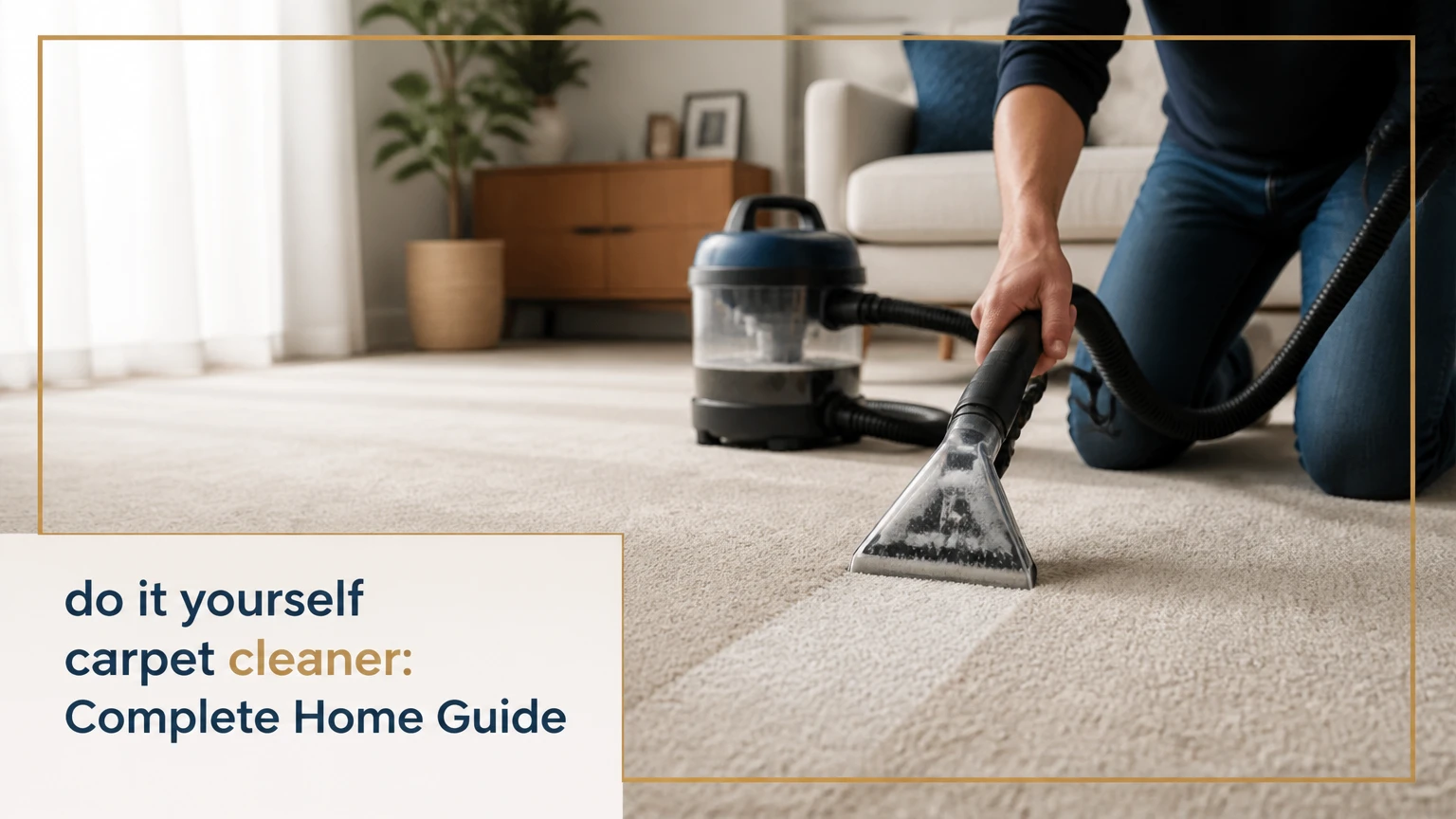
A do it yourself carpet cleaner is a home method for removing soil from carpet with a rental extractor, owned machine, dry compound, or hand-applied spot solution. For most wall-to-wall synthetic carpet, hot-water extraction with light detergent, thorough vacuum recovery, and rapid drying provides the strongest practical DIY result.
Key Facts
- A rental carpet extractor typically costs $30-$50 for 24 hours, before detergent and optional fees.
- Most household carpet should dry within 6-12 hours when extraction and airflow are adequate.
- Carpet-cleaning success depends more on water recovery and detergent control than on using the hottest water.
- Never apply a homemade solution before testing a hidden area for color loss, texture change, or residue.
- Wool, viscose, jute, silk, antique, and rug-backed carpets usually need fiber-appropriate professional care.
- A clean-water rinse removes residual detergent that can cause rapid resoiling.
What Is a Do It Yourself Carpet Cleaner?
A do it yourself carpet cleaner can mean either the person performing the work, the machine used to clean carpet, or the cleaning method itself. In household use, the term usually refers to a rental or consumer carpet-extraction machine combined with a compatible low-foaming solution.
DIY carpet cleaning is different from ordinary vacuuming. Vacuuming removes loose, dry particles from the upper pile, while extraction introduces liquid and then removes suspended soil through suction. Dry carpet compound and manual blotting are lower-moisture alternatives for maintenance or small areas.
The correct method depends on four variables: carpet fiber, carpet construction, soil type, and available drying conditions. Nylon and solution-dyed polyester generally tolerate routine extraction better than wool or viscose, but the carpet manufacturer’s care label takes priority over a general recipe.
How does the CHAT cleaning principle work?
The CHAT principle describes four variables that support soil removal: chemicals, heat, agitation, and time. A detergent loosens oily soil, moderate heat improves soil suspension, agitation distributes the solution, and dwell time allows the chemistry to work before extraction.
The four variables are not equal in every home. Increasing heat can damage some dyes, adhesives, or natural fibers, while excessive agitation can distort looped or plush pile. A measured detergent dose, gentle mechanical action, and strong vacuum recovery are safer than simply adding more soap or hotter water.
Professional cleaners also manage a fifth practical variable, moisture control. A carpet can look cleaner immediately yet develop odor, browning, or recurring stains if liquid reaches the backing and pad without being recovered.
Which DIY carpet-cleaning method should you use?
Hot-water extraction is the best general-purpose DIY method for wall-to-wall synthetic carpet with traffic soil. Dry compound suits delicate or moisture-sensitive surfaces, a portable extractor handles isolated spills, and professional cleaning becomes the safer option for wool, extensive pet contamination, flooding, or persistent odor.
| DIY method | Typical cost | Moisture and drying | Soil-removal ability | Best application |
|---|---|---|---|---|
| Rental upright extractor | $30-$50 per day plus $15-$25 solution | Medium-high, 8-18 hours | Moderate-high | One-time cleaning of 200-1,000 square feet |
| Owned upright extractor | $100-$300 purchase plus $0.10-$0.30 solution per use | Medium-high, 8-24 hours | Moderate | Homes with pets, children, or recurring spills |
| Portable spot extractor | $80-$200 purchase | Localized, 2-8 hours | Moderate for small areas | Fresh spills, stairs, upholstery, vehicle carpet |
| Dry carpet compound | $5-$15 per room | Low, usually under 1 hour | Low-moderate | Light soil and moisture-sensitive maintenance |
| Hand-applied spot solution | Under $5 for pantry ingredients or $8-$20 product | Low, 1-6 hours | Moderate on fresh stains | Spots smaller than a few square feet |
| Professional hot-water extraction | Often $120-$300 for a typical home | Lower when equipment is powerful, 2-8 hours | High-very high | Deep soil, large homes, delicate diagnosis |
The table gives typical North American household ranges, not fixed national prices. Rental pricing changes with location, weekend demand, deposit requirements, furniture fees, and transportation.
Is a rented machine better than an owned carpet cleaner?
A rented upright extractor usually offers stronger water lift and a wider cleaning path than a low-cost owned machine, while an owned portable unit is more convenient for immediate spot treatment. Rent when cleaning several rooms once or twice yearly; buy when rapid response to pet or food spills matters more than maximum whole-room productivity.
Before renting, inspect the recovery tank, suction path, brush condition, cord, hose seals, and upholstery attachment. A poorly maintained rental can leave carpet wetter than a smaller machine with better seals and slower passes.
An owned machine pays off when the household regularly cleans stairs, entryways, or small accidents. It is less attractive for occasional whole-home cleaning because storage, maintenance, dirty-tank sanitation, and replacement parts add ownership work.
How do you deep-clean carpet with an extractor?
Deep-cleaning carpet with an extractor normally takes 45-75 minutes per 200-300 square feet, plus 6-12 hours of drying. The sequence is dry vacuuming, pre-treatment, controlled extraction, a clear-water rinse, and aggressive airflow. The most important success factor is removing water rather than flooding the pile.
Before you start
| Requirement | Typical amount or setting | Why it matters |
|---|---|---|
| Cleaning time | 2-4 hours for 500-800 square feet | Includes furniture, fills, passes, and cleanup |
| Rental or owned extractor | 1 machine with floor head | Provides liquid recovery |
| Carpet detergent | Manufacturer dose, often 2-6 fluid ounces per tank | Excess product leaves sticky residue |
| Clean water | 2-5 gallons for 500-800 square feet | Quantity varies with machine and soil |
| White towels | 6-12 absorbent towels | Supports blotting and wicking control |
| Air movement | 2-4 floor fans plus HVAC or dehumidifier | Accelerates evaporation |
| Test materials | Hidden carpet section and diluted solution | Confirms color and texture safety |
Read the care label before mixing anything. Photograph furniture placement, place foil or waterproof tabs under furniture legs, and keep children and pets away from wet carpet and cleaning chemicals.
Step 1: Inspect and dry-vacuum
Remove small furniture and vacuum slowly in two directions, giving extra passes to edges, stairs, and traffic lanes. Empty the vacuum before starting if airflow drops, because dry particulate soil consumes extraction capacity when left in the pile.
You will know this step worked when the vacuum collects noticeably less debris on a second pass and loose hair no longer rolls into visible clumps. Do not wet-clean a carpet that still contains sand, grit, or heavy pet hair.
The common mistake is rushing the vacuuming because the carpet looks merely dull. Dry soil can represent a large share of removable contamination, and wetting it first turns loose particles into a slurry that is harder to recover.
Step 2: Classify and pre-treat soil
Identify grease, protein, tannin, dye, or particulate soil before choosing a product. Apply a carpet-safe pre-spray only to traffic lanes and visible stains, using the label dilution and a 5-10 minute dwell time without allowing the area to dry.
You will know the pre-treatment is working when oily traffic lanes look less gray and the solution remains slightly damp during dwell. Agitate gently with a soft carpet brush, especially on dense synthetic pile.
Do not spray a large quantity of kitchen dish soap. Dishwashing products can foam heavily, complicate extraction, and leave a surfactant film that attracts new soil.
Step 3: Fill the extractor correctly
Fill the clean tank with warm tap water within the manufacturer’s specified range, commonly about 113-140°F (45-60°C). Add only the recommended low-foaming carpet formula, because boiling water and concentrated detergent can damage backing, seals, dyes, or the machine.
Never combine bleach, ammonia, vinegar, hydrogen peroxide, or commercial carpet chemicals in one tank. Chemical mixtures can produce irritating vapors, alter dye chemistry, or neutralize the intended cleaning action.
You will know the setup is correct when the machine sprays evenly, produces controlled foam, and shows no leaks around the lid, hose, or tank gasket. Use a separate bucket for dirty tools, not for diluting unlabelled chemicals.
Step 4: Make one controlled wet pass
Begin at the farthest corner and work toward the exit. Release solution while moving at the machine manufacturer’s recommended speed, usually a slow, steady pass of roughly 1 foot per second, and overlap adjacent passes by about one inch.
You will know the wet pass is controlled when the carpet appears uniformly damp rather than glossy or visibly saturated. A single deliberate pass is usually safer than repeatedly spraying a dark area.
The common mistake is stopping while the spray trigger remains depressed. Stationary spraying concentrates water in one section and can push moisture through the pile into the pad.
Step 5: Make two or three dry passes
Release the spray trigger and move over the same path two or three times using suction only. Empty the recovery tank when its float shuts off suction or when the tank reaches its fill line.
You will know recovery is adequate when the machine collects little additional water on the final dry pass and the pile feels damp, not wet, to a clean hand protected by a towel. Slow suction passes generally remove more moisture than fast repeated spraying.
A second mistake is judging cleaning quality by the amount of dirty water in the tank. Dark recovery water can result from dye, detergent, or soil suspension; clear water does not prove that every stain has been removed.
Step 6: Rinse with clear water
Empty the dirty tank, refill the clean tank with warm water only, and make one light wet pass followed by two dry passes. A clear-water rinse is especially useful when pre-spray or detergent was applied to heavily soiled areas.
You will know rinsing helped when the carpet feels soft rather than tacky after drying and the extracted water shows less foam. Do not saturate the carpet again in the name of rinsing; a rinse removes residue only when followed by strong recovery.
Step 7: Dry the carpet rapidly
Place fans so air crosses the carpet surface, run the HVAC system, and use a dehumidifier when outdoor air is humid. Keep windows closed if outside humidity is high, because ventilation alone does not always lower indoor moisture.
Typical drying time is 6-12 hours for a well-extracted synthetic carpet and 12-24 hours for dense pile, cool weather, poor airflow, or an over-wet job. Keep traffic restricted until the carpet is dry, and replace furniture only after placing protective tabs beneath the legs.
The carpet is ready when the pile, backing edge, and pad-adjacent areas feel dry and no cool dampness transfers to a white towel. Persistent dampness beyond 24 hours requires immediate airflow and moisture reduction.
What cleaning solution should you use?
A labeled carpet-extraction detergent is the safest default because its dilution, foaming behavior, pH, and compatibility are designed for carpet machines. Homemade vinegar, baking soda, dish soap, or peroxide mixtures can work on limited spots, but they lack consistent formulation and may leave residue or alter color.
| Soil or stain | First treatment | Contact time | Avoid |
|---|---|---|---|
| Fresh coffee or tea | Blot, then use a neutral carpet spotter | 3-5 minutes | Hot water alone on old tannin stains |
| Grease or cooking oil | Carpet-safe solvent or enzyme-free grease spotter | Label direction, often 5-10 minutes | Rubbing oil deeper into pile |
| Milk, egg, or food protein | Enzyme product labeled for carpet | 10-15 minutes | High heat before protein removal |
| Pet urine | Absorb, rinse-extract, then use a labeled urine enzyme treatment | Product-specific, often several hours | Fragrance-only deodorizer |
| Red wine or colored dye | Blot and use a tested professional dye protocol | Product-specific | Uncontrolled peroxide on colored carpet |
| Mud or soil | Dry completely, vacuum, then extract residue | No wet dwell initially | Wet-vacuuming thick mud immediately |
Blot liquid spills with white towels, working from the outside toward the center. Never scrub a looped carpet aggressively, because friction can fuzz yarn, distort loops, or create a visible texture change called blooming.
Hydrogen peroxide deserves particular caution. It can lighten some dyes, and a successful test on one portion of carpet does not guarantee uniform results across areas exposed to sunlight, wear, or previous chemicals.
How can you clean carpet without a machine?
You can clean carpet without a machine by vacuuming thoroughly, applying a small amount of carpet-safe spotter, blotting with white towels, or using a labeled dry compound for light surface soil. Manual cleaning is suitable for small areas, but it cannot match an extractor’s ability to flush and recover soil from the backing.
For dry compound cleaning, distribute the product at the label rate, brush it lightly into the pile, allow the stated dwell period, and vacuum in two directions. Avoid homemade powder mixtures on dark or dense carpet unless you can remove every particle; cornstarch and baking soda can lodge in the pile or leave alkaline residue.
For a fresh spill, first remove solids with a spoon, blot liquid, apply diluted spotter to a towel rather than flooding the carpet, and blot until transfer stops. Rinse the towel frequently and finish with a small amount of clean water followed by dry towels.
Manual cleaning is a poor choice for whole-room greasy traffic lanes, urine that has reached the pad, water damage, or widespread odor. Those problems require controlled flushing, moisture measurement, or odor treatment below the carpet surface.
How does DIY cleaning compare with professional service?
Professional truck-mounted extraction usually removes more soil and dries faster than a rental machine because it provides stronger vacuum lift, larger waste capacity, and trained chemical selection. DIY cleaning costs less for routine synthetic carpet, while professional service reduces risk when fibers, backing, stains, or moisture damage are difficult to identify.
| Decision factor | Rental extractor | Owned consumer machine | Dry compound | Professional truck-mount |
|---|---|---|---|---|
| Typical direct cost | $45-$85 total | $100-$300 upfront | $5-$15 per room | $120-$300 typical home |
| Productive cleaning rate | 200-300 sq. ft./hour | 150-250 sq. ft./hour | 300-500 sq. ft./hour | 500-1,000 sq. ft./hour |
| Typical drying time | 8-18 hours | 12-24 hours | Under 1 hour | 2-8 hours |
| Water recovery capacity | 1-3 gallons | 0.5-2 gallons | No recovery tank | 5-15 gallons |
| Main risk | Over-wetting | Slow recovery | Residue or incomplete removal | Incorrect chemical or technician choice |
| Best use | Several rooms once | Frequent household spills | Light maintenance | Deep soil, delicate diagnosis, large areas |
The professional advantage is equipment and judgment, not the label “steam cleaning.” Many services use hot-water extraction, and some low-moisture systems are appropriate for commercial or moisture-sensitive carpet. Ask which method, solution, drying plan, and guarantee the provider uses.
When should you hire a professional?
Hire a professional when urine odor remains after one careful treatment, carpet has been flooded, mold-like growth is visible, stains cover multiple rooms, or the carpet is wool, viscose, silk, jute, antique, or structurally fragile. Professional help is also sensible when a rental machine cannot leave the carpet dry within 24 hours.
Do not use a household extractor to remediate sewage, contaminated floodwater, or suspected mold in the pad. The U.S. Environmental Protection Agency recommends prompt drying of water-damaged materials, and porous materials with extensive contamination may require removal rather than repeated surface cleaning.
A professional is not automatically better for every job. An untrained operator can over-wet carpet, use an unsuitable alkaline product, or leave residue, so request proof of insurance, written pricing, fiber-appropriate methods, and references for similar carpet.
What are the most common DIY carpet-cleaning mistakes?
The most damaging DIY errors are excessive water, excess detergent, unsuitable chemistry, aggressive agitation, and inadequate drying. Each error has a recognizable correction, but some backing delamination, dye loss, and permanent texture changes cannot be reversed.
| Failure mode | Observable symptom | Likely cause | Corrective action |
|---|---|---|---|
| Carpet dries sticky | Soil returns within days or weeks | Detergent residue | Clear-water rinse and stronger dry passes |
| Musty odor develops | Smell increases after drying | Pad remains damp | Fans, HVAC, dehumidifier, moisture inspection |
| Stain reappears | Spot returns at fiber tips | Wicking from backing or pad | Light mist, white towel, weighted blotting |
| Carpet turns brown | Tan or yellow edge after drying | Cellulosic browning or overwetting | Controlled rinse, rapid drying, professional advice |
| Machine leaves carpet soaked | Little water in recovery tank | Clogged nozzle, seal leak, full float | Clean intake, inspect gasket, test suction |
| Pile looks fuzzy | Texture remains altered | Excessive scrubbing or brush wear | Stop agitation and assess fiber damage |
One practitioner rule matters above all others: clean less aggressively when the carpet is uncertain. A light test section can reveal dye bleeding, browning, or texture change before the same error affects an entire room.
Another counterintuitive rule is that a second dry pass often improves the result more than a second wet pass. Removing another few ounces of water reduces residue concentration, drying time, and the chance of pad odor.
How do you fix stains that return after drying?
Stains that return after drying usually wick upward from residue in the carpet backing or pad. Lightly mist the affected area with clean water, place a folded white towel over it, weight the towel evenly, and replace it as it absorbs colored moisture.
Do not flood the spot again or scrub it outward. If the stain returns repeatedly, the contaminant is probably below the face yarn, and surface treatment will have limited value until the pad or backing receives appropriate extraction.
Why does carpet smell worse after cleaning?
Carpet smells worse after cleaning when organic soil, pet urine, detergent residue, or pad moisture remains trapped below the surface. Increase air movement immediately, run a dehumidifier, and inspect the pad rather than masking the odor with fragrance.
A musty smell that persists after the carpet is fully dry can indicate contamination below the carpet or an underlying moisture source. Antimicrobial products should be labeled for carpet and used exactly as directed; they are not a substitute for removing the source.
How should you clean different carpet fibers?
Synthetic nylon, polyester, and polypropylene carpet generally tolerate controlled extraction, while wool, viscose, jute, silk, and antique rugs require lower-risk, fiber-specific care. Fiber identification should precede chemical selection because the same alkaline detergent and agitation that clean synthetic carpet can shrink, bleed, or weaken natural and regenerated fibers.
| Carpet or rug material | DIY extraction position | Water and chemistry concern | Safer approach |
|---|---|---|---|
| Nylon | Usually suitable with testing | Dye and finish sensitivity | Low-foaming labeled detergent |
| Polyester | Usually suitable | Oily soil can cling to fiber | Pre-treatment plus thorough rinse |
| Polypropylene | Usually moisture-tolerant | Heat and backing still matter | Moderate-temperature extraction |
| Wool | Avoid casual machine cleaning | Shrinkage, dye bleed, felting | Wool-labeled low-moisture method |
| Viscose or rayon | Avoid home wet cleaning | Browning, texture distortion | Qualified rug specialist |
| Jute or sisal | Avoid saturation | Browning, shrinkage, fiber swelling | Dry or specialist cleaning |
Check the carpet warranty and manufacturer instructions before using a rental machine. A care label may specify maximum temperature, approved chemistry, or a professional-cleaning requirement.
Frequently Asked Questions
Can I use vinegar in a carpet cleaner?
Vinegar is not a universal carpet-extractor detergent. Acetic acid can affect dyes, finishes, backing adhesives, and machine components, while its odor does not remove urine salts or deeply embedded soil. Use a manufacturer-approved carpet solution in the machine, and reserve diluted vinegar only for a carefully tested, small spot when the carpet instructions permit it.
Can baking soda remove carpet odor?
Baking soda can absorb some surface odor temporarily, but it cannot neutralize urine or remove contamination in the pad. Apply powder sparingly, keep it dry, vacuum it completely, and avoid using it as a substitute for extraction or enzyme treatment. Persistent odor indicates a source problem beneath or within the carpet.
How often should carpet be deep-cleaned?
Many households deep-clean wall-to-wall carpet every 6-12 months, with more frequent cleaning in entryways, homes with pets, or high-occupancy rooms. Vacuuming frequency matters more between extraction cycles. The Carpet and Rug Institute recommends regular vacuuming and prompt spill removal as core carpet-maintenance practices, while manufacturer warranties may specify a professional interval.
Can I walk on carpet after cleaning?
Walk on freshly cleaned carpet only when necessary, using clean socks or indoor footwear and avoiding furniture movement. Street shoes transfer soil onto damp fibers, while heavy traffic can flatten wet pile and create uneven drying. Keep pets away until the carpet is fully dry, especially after enzyme or chemical treatment.
Is carpet cleaning the same as steam cleaning?
Carpet cleaning and steam cleaning are often used interchangeably, but household machines usually perform hot-water extraction rather than injecting steam. The machine sprays warm solution, agitates or brushes the pile, and vacuums liquid into a recovery tank. Actual steam exposure is not required for effective soil removal and may be unsuitable for some fibers.
The Bottom Line
The best do it yourself carpet cleaner method for most synthetic wall-to-wall carpet is controlled hot-water extraction: vacuum first, pre-treat lightly, use the correct detergent dose, make slow wet passes, make multiple dry passes, rinse with clear water, and dry with strong airflow. Choose dry compound for light, moisture-sensitive maintenance and hire a qualified cleaner for delicate fibers, flooding, deep pet contamination, or carpet that cannot dry within 24 hours.