Hemming pants takes about 10-15 minutes with iron-on tape, 15-30 minutes by sewing machine, 30-60 minutes by hand, or 1-3 days through a standard tailor. The true time depends on fabric, hem style, measurement, pressing, shop workload, and whether jeans need an original manufacturer hem preserved.
Key Facts at a Glance
- A temporary no-sew hem usually takes 10-15 minutes, including measuring and pressing.
- A straightforward machine-sewn hem usually takes 15-30 minutes for someone prepared to sew.
- A professional tailor commonly needs 1-3 business days, while rush service may take 1-4 hours.
- Jeans with an original hem usually take longer than plain trousers because the existing hem must be removed and reattached.
- Pants should be measured while wearing the shoes intended for the outfit.
- A hem adjustment changes leg length, but it does not correct a wrong waist, seat, rise, or leg taper.
How Long Does It Take to Hem Pants?
The fastest practical answer is 10 minutes for fabric tape and up to 3 business days for ordinary professional tailoring. A simple sewn hem is usually finished in under an hour, but fitting, travel, shop queues, pressing, and quality checks can make the total elapsed time substantially longer than the stitching itself.
A tailor may complete the physical sewing in 15-30 minutes yet quote two days because alterations are processed in batches. Same-day service is often available for an additional fee, but availability depends on the shop, garment complexity, and the time of day you bring the pants in.
The largest timing difference comes from the hem construction. A plain trouser leg has one lower edge to fold and stitch; a pair of jeans may have thick side seams, heavy denim, decorative topstitching, and a distressed original hem that requires specialized handling.
Typical timing by method
| Hemming method | Hands-on time | Typical elapsed time | Finish quality |
|---|---|---|---|
| Iron-on fabric tape | 10-15 minutes | 10-20 minutes | Temporary to semi-permanent |
| Hand-sewn hem | 30-60 minutes | 30-75 minutes | Good, potentially invisible |
| Sewing-machine hem | 15-30 minutes | 20-40 minutes | Durable, visible or concealed |
| Professional plain hem | 15-30 minutes | 1-3 business days | Consistent and durable |
| Professional original jean hem | 30-60 minutes | 1-5 business days | Preserves factory edge |
| Rush tailor service | 20-45 minutes | 1-4 hours | Depends on shop equipment |
These are typical practitioner ranges, not universal service guarantees. A first-time sewer should add 30-60 minutes for pinning, thread changes, test stitching, and correcting an uneven fold.
What Is Hemming, and What Does the Work Involve?
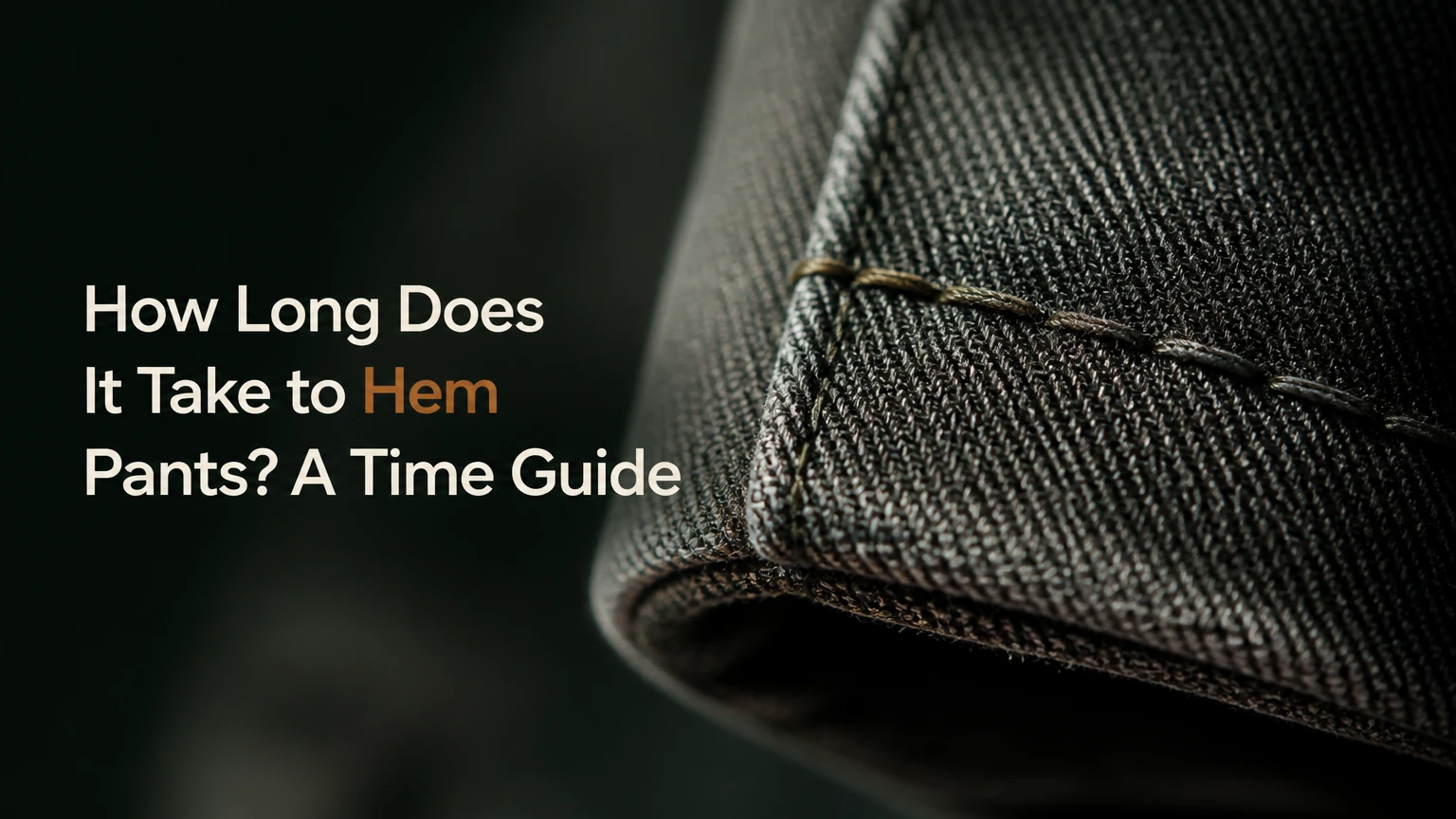
Pants hemming shortens a trouser leg and finishes its lower edge so the fabric does not unravel. The alteration removes excess length, folds the remaining edge inward, presses the fold, and secures it with stitching, tape, or a specialized finish.
The visible result depends on the intended garment. Casual chinos often use a machine-stitched hem with visible topstitching, while suit trousers commonly use a blind hem whose stitches barely show from the outside. Jeans may use an original hem, which retains the branded, faded lower edge.
Hemming is a length alteration only. If the pants twist, pull across the seat, gape at the waist, or feel tight through the thigh, shortening the legs will not solve those problems. A tailor may need to adjust the waist, seat, rise, or leg taper separately.
Does hemming change how pants fit?
Hemming changes the visual proportion and shoe clearance, but it does not alter the waist, hip, thigh, knee, or rise measurements. Correct length can make trousers drape better because excess fabric no longer pools around the ankle, yet a poorly fitted upper block remains poorly fitted after hemming.
For dress trousers, the desired break matters. A full break creates a noticeable horizontal fold at the shoe, a half break creates a smaller fold, and no break leaves the trouser leg nearly clean at the front. Personal style, trouser width, shoe height, and workplace dress standards all affect the final mark.
Which Hem Style Should You Use?
The best hem style depends on the garment’s construction, fabric weight, and desired appearance. Use a blind hem for formal wool trousers, a conventional topstitched hem for chinos, an original hem for most premium jeans, and a cuff only when the design and available fabric support it.
| Hem style | Typical garment | Extra time | Visible result |
|---|---|---|---|
| Topstitched hem | Chinos, casual trousers | 15-30 minutes | Continuous visible stitch line |
| Blind hem | Suit trousers, wool dress pants | 25-45 minutes | Nearly invisible exterior stitches |
| Original or Euro hem | Jeans with factory distressing | 30-60 minutes | Original lower edge retained |
| Cuffed hem | Pleated trousers, tailored pants | 20-40 minutes | Folded band, usually 1.5-2 inches |
| Raw hem | Fashion denim, casual canvas | 5-15 minutes | Cut edge that frays gradually |
| Stretch-coverstitch hem | Leggings, knit trousers | 20-40 minutes | Flexible seam with controlled stretch |
An original hem is not always the best choice. It can shorten the usable leg only by the distance between the original hem and the new position, and the reattached seam may leave a visible horizontal line or bulky ridge.
A cuff also has structural limits. The leg must contain enough excess fabric to create the desired cuff, and a narrow or tapered leg may not fold cleanly without distorting the opening.
How Do You Measure Pants for the Correct Length?
Measure pants while the wearer stands naturally in the intended shoes, then mark both legs separately. Human posture, leg length, and garment construction vary enough that copying one leg’s mark onto the other can produce an uneven result.
Use a second person for fitting when possible. The wearer should stand straight without pulling the waistband upward or forcing the knees into a locked position. Pin the fold from the inside, remove the pants carefully, and confirm the mark on a flat surface.
For trousers worn with dress shoes, place the front crease so the hem meets the shoe according to the desired break. For jeans and casual pants, measure based on the intended stack or ankle exposure rather than applying a suit-trouser standard.
What tools and allowances are needed?
| Task | Tool or material | Typical amount or setting |
|---|---|---|
| Marking | Tailor’s chalk or washable pen | 1 continuous mark per leg |
| Securing | Straight pins or clips | 6-10 per leg |
| Cutting | Fabric shears | 1 clean cut per leg |
| Pressing | Iron and pressing cloth | Medium heat for wool, cotton setting for denim |
| Seam allowance | Folded hem depth | 0.5-2 inches, style dependent |
| Stitching | Matching thread | 2-3 bobbin or hand-thread lengths |
| Inspection | Ruler or seam gauge | Check every 2-3 inches |
Do not treat the common 1.5-2-inch allowance as a universal rule. A narrow dress-pant hem may use approximately 1 inch, while a jeans hem often needs enough depth to reproduce the original construction. Check the existing hem before cutting.
How Do You Hem Pants Step by Step?
A basic pants hem takes six actions: prewash when appropriate, fit with shoes, mark the finished length, add the hem allowance, press the fold, and stitch the edge. The process usually takes 20-40 minutes for an experienced sewer and succeeds when both legs hang evenly without twisting.
Step 1: Wash and dry compatible pants
Wash cotton, linen, and denim pants according to the care label before permanent alteration. Heat and moisture can shrink natural fibers, so hemming unworn or unwashed pants may leave the finished legs shorter after laundering.
Do not automatically wash tailored wool trousers. Follow the garment’s dry-cleaning instructions, because water can change the fabric texture, lining, or shape.
Success checkpoint: The pants are clean, dry, and at their normal post-laundry dimensions.
Common mistake: Measuring new cotton pants before the first wash.
Step 2: Put on the intended shoes
Wear the exact shoes or a pair with the same heel height and sole thickness. Measure jeans with sneakers if they will be worn with sneakers, and measure suit trousers with the dress shoes used for the suit.
Success checkpoint: The wearer stands naturally, and the waistband sits at its normal position.
Common mistake: Measuring in socks, then discovering the hem drags over shoes.
Step 3: Mark the finished length
Fold the excess fabric inward and pin the desired hem. Check the front, back, inner seam, and outer seam before removing the pants.
A half break is a practical default for many men’s dress trousers, but it is not a rule for every body or style. Wide-leg trousers, cropped trousers, boots, and women’s tailored pants may require a different visual endpoint.
Success checkpoint: Both legs show the intended break and shoe clearance while standing and walking.
Common mistake: Marking while seated, which shortens the apparent front length.
Step 4: Add the hem allowance before cutting
Mark the cutting line below the finished edge, leaving enough material for the selected hem. For a basic double-fold hem, 1-1.5 inches is often workable; use the original construction as the guide for jeans and unusual fabrics.
Cut one leg, then use the removed piece as a rough reference for the second leg only after verifying the first finished measurement. Never cut directly on the final-length line.
Success checkpoint: The cut edge has adequate fabric to fold under without reducing the intended finished length.
Common mistake: Cutting away the entire marked fold and losing the allowance.
Step 5: Press the fold
Fold the raw edge inward, press it flat, then fold again if the chosen finish requires a concealed raw edge. Use a pressing cloth on wool, dark synthetics, and fabrics prone to shine.
Pressing controls the shape before sewing. Skipping it often creates a wavy hem, especially on curved or stretchy legs.
Success checkpoint: The fold remains even when the pins are removed.
Common mistake: Stretching the fabric while ironing, which produces a flared or rippled opening.
Step 6: Stitch and inspect
Sew around each leg using matching thread, an appropriate needle, and a stitch length suited to the fabric. Backstitch or secure the seam at the beginning and end, then trim loose threads and press the completed hem.
For a blind hem, catch only a few fibers from the outside of the fabric. For jeans, match the thread color, needle size, and stitch appearance as closely as practical.
Success checkpoint: The hem is secure, even, and free from skipped stitches or puckering.
Common mistake: Using a universal needle on heavy denim or a heavy denim needle on fine wool.
How Long Does a Tailor Take to Hem Pants?
A tailor usually needs 1-3 business days for a standard pants hem, although the sewing itself commonly takes 15-30 minutes. Same-day work often takes 1-4 hours when the shop accepts rush orders, but original jean hems, cuffs, lining, and difficult fabrics can extend the turnaround.
Professional timing includes intake, fitting, queue management, pressing, inspection, and pickup preparation. A shop that quotes two days is not necessarily spending two full days on the garment.
Ask four questions before leaving the pants: what hem style will be used, whether the fitting occurs while wearing shoes, when the garment will be ready, and whether the quoted price includes pressing or rush handling.
What makes a professional hem take longer?
| Timing factor | Added hands-on time | Why it matters |
|---|---|---|
| Plain cotton trouser hem | 0-10 minutes | Simple fold and standard stitch |
| Heavy denim and thick seams | 10-25 minutes | Requires stronger needle and slower sewing |
| Original jean hem | 20-40 minutes | Existing hem is removed and repositioned |
| Blind hem on lined trousers | 15-30 minutes | Lining must be opened and closed neatly |
| Cuffed hem | 10-20 minutes | Requires precise fold depth and pressing |
| Tapered or uneven leg opening | 15-30 minutes | Hem circumference may need reshaping |
| Rush service | Variable | Moves the garment ahead of queued work |
A tailor cannot always make every original hem look factory-perfect. Industrial denim machines, specialized thread, wash effects, and factory pressing equipment may not be available in a local alteration shop.
How Much Does Pants Hemming Cost?
Typical professional pants hemming costs about $15-$35 for a plain hem, $20-$45 for jeans, and $30-$75 or more for an original jean hem, lined trousers, cuffs, or rush service. DIY costs range from roughly $3-$15 for tape and thread if an iron and sewing equipment are already available.
Prices vary by country, city, garment value, and shop positioning. The BDT 200-1,000 range in the supplied overview may be realistic for some Bangladesh markets, but it should not be presented as a worldwide price.
| Service or method | Typical cost in the United States | Typical turnaround | Main price driver |
|---|---|---|---|
| Iron-on hemming tape | $3-$15 per package | 10-20 minutes | Tape length and brand |
| DIY hand sewing | $2-$10 for thread and needle | 30-75 minutes | Existing tools versus new supplies |
| DIY machine sewing | $0-$10 per garment | 20-40 minutes | Machine and thread already owned |
| Plain tailor hem | $15-$35 | 1-3 business days | Local labor rate |
| Jeans standard hem | $20-$45 | 1-3 business days | Denim weight and seam thickness |
| Jeans original hem | $30-$75+ | 1-5 business days | Reattachment precision |
| Rush alteration | $30-$100+ | 1-4 hours | Same-day labor and queue priority |
Dry-cleaning chains, department-store alteration counters, independent tailors, and specialty denim shops often use different pricing models. Get a written quote when the pants are lined, cuffed, tapered, embellished, or made from a luxury fabric.
Is No-Sew Hemming Tape a Permanent Fix?
Iron-on hemming tape is suitable for a temporary or low-stress adjustment, but it is less reliable than stitching for frequent washing, heavy denim, or high-friction hems. Fabric tape usually takes 10-15 minutes and works best when the fold is clean, the iron temperature matches the fabric, and the garment remains flat during cooling.
Tape is useful for travel, emergencies, costumes, and inexpensive casual pants. It is a poor choice for a high-value suit, thick jeans, silk, or trousers that will be washed repeatedly.
Follow the tape manufacturer’s temperature and pressing instructions. Test a hidden area first, because excess heat can melt synthetic fibers or create shine on dark fabrics.
What are the main DIY and tailor trade-offs?
| Decision factor | Hemming tape | Hand sewing | Machine sewing | Professional tailor |
|---|---|---|---|---|
| Initial equipment | Iron required | Needle and thread | Sewing machine | No equipment |
| Typical time | 10-15 minutes | 30-60 minutes | 15-30 minutes | 1-3 days elapsed |
| Heavy denim ability | Low | Moderate | High with correct needle | High |
| Exterior visibility | Usually none | None to slight | Visible or hidden | Chosen finish |
| Wash durability | Low to moderate | Moderate to high | High | High |
| Error recovery | Limited | Usually reversible | Usually reversible | Best for costly garments |
The practical rule is simple: use tape for speed, machine sewing for repeatable durability, hand sewing for control, and a tailor for value, complexity, or uncertainty.
Which Fabrics and Garments Need Special Handling?
Stretch knits, lined trousers, wool, leather, heavy denim, and pants with cuffs require techniques beyond a basic folded hem. These garments can take 10-30 extra minutes because the sewer must manage elasticity, layers, thickness, or the existing design.
Stretch pants need a stitch that accommodates movement. A straight stitch can pop when the wearer bends a knee, so a zigzag, twin needle, or coverstitch is generally more appropriate for knit fabrics.
Wool dress pants benefit from a blind hem and careful pressing. High heat can flatten the nap or leave a glossy mark. Leather should usually go to a specialist because needle holes are permanent and adhesive can stain.
Military uniforms, workwear, and reflective garments may have regulated trim placement. Hemming can violate required distances from stripes, safety tape, or boot tops, so check the garment’s uniform standard before altering it.
What Are the Most Common Hemming Mistakes?
The most damaging hemming errors are incorrect shoe measurement, insufficient seam allowance, uneven leg marking, unsuitable thread or needle, and failure to account for shrinkage. Some errors are reversible, but cutting too much fabric can require a cuff, a false hem, or replacement material.
- Measuring without shoes: The finished leg becomes too short with the intended footwear. Refit the pants while wearing the correct shoes before cutting.
- Cutting on the finished mark: The hem has no material to fold under. If enough fabric remains, add a narrower hem; otherwise ask a tailor about a false hem or cuff.
- Assuming both legs are identical: Manufacturing and posture can create different leg lengths. Mark and verify each leg independently.
- Ignoring side-seam bulk: Thick jean seams can prevent a flat fold. Grade or reduce excess bulk only when the garment construction allows it.
- Using adhesive on heat-sensitive fabric: Synthetic fibers may melt or shine. Test first and use stitching for delicate or expensive garments.
- Skipping a walking check: A hem that looks correct while standing may catch under the heel. Walk, sit, and climb one step before final stitching.
A useful practitioner rule is to delay the final cut until the pinned garment has passed both a standing check and a walking check. The extra two minutes can prevent an irreversible shortening mistake.
Can Pants Be Hemmed in One Day?
Pants can often be hemmed in one day when the shop offers rush service and the garment needs a straightforward alteration. Plain chinos, uniform trousers, and standard machine hems are the strongest candidates; original jean hems, lined wool trousers, and multiple alterations may require more time.
Call before visiting and describe the garment accurately. Say whether it is denim, lined, cuffed, tapered, stretchy, or part of a suit, and state the required pickup time.
Same-day service is not always the best choice for a formal event. A fitting error discovered at pickup may leave no time for correction, so schedule the alteration several days before the event whenever possible.
Should You Hem Pants Yourself or Use a Tailor?
Choose DIY hemming when the pants are inexpensive, the alteration is simple, and a slightly visible result is acceptable. Choose a tailor when the garment is expensive, the fabric is difficult, the hem must be invisible, or the original construction needs to be preserved.
Choose DIY for a quick, low-risk adjustment
Iron-on tape suits a traveler or student who needs an immediate fix. Machine sewing suits someone who already owns a machine and can test the stitch on scrap fabric first.
DIY is not ideal for a $300 suit, raw silk, leather, or premium selvedge denim. The low monetary cost does not offset the risk of permanent damage.
Choose a tailor for formal or high-value trousers
A tailor can balance both legs, match thread, manage a lining, and select a hem that fits the garment’s construction. Request a blind hem for formal wool trousers and ask specifically for an original hem when preserving the factory jean edge matters.
Bring the shoes the pants will be worn with. A tailor can pin the length more accurately when the final outfit is present.
Choose a specialist for complex denim
A denim alteration specialist is the safest choice for thick selvedge denim, chain stitching, heavy distressing, or an original hem. A standard tailor may still produce a durable hem, but the stitch color, fading line, and bulk may differ from the factory finish.
How Should You Care for Newly Hemmed Pants?
Allow adhesive hems to cool fully before wearing and follow the product’s washing instructions. For sewn hems, turn pants inside out, use the care-label temperature, and avoid aggressive drying when the fabric is prone to shrinkage.
Press the hem from the inside when possible. Direct high heat on dark wool or synthetic fibers can produce shine, while repeated high-temperature drying can shorten natural-fiber pants again.
Inspect the hem after the first wash. Loose thread, puckering, tape separation, or a twisted leg indicates that the finish or laundering method needs correction.
FAQ
Can pants be hemmed without cutting them?
Yes, pants can be temporarily shortened by folding the excess inward, securing it with tape, hand stitches, or a hidden fold. Permanent alterations usually involve cutting away excess fabric, but a tailor may preserve extra material when the pants need future lengthening.
How much can trousers safely be shortened?
Many trousers can be shortened by 1-3 inches without changing the leg shape, provided enough hem allowance remains. Shortening several inches from a strongly tapered leg can alter the opening and may require reshaping the lower leg rather than a simple hem.
How long does it take to hem jeans by hand?
Hand-hemming jeans usually takes 45-90 minutes for a beginner and 30-60 minutes for an experienced sewer. Heavy denim, thick belt-loop or side seams, decorative thread, and an original hem increase the time and make a sewing machine more practical.
Can a tailor fix pants that were cut too short?
A tailor may fix pants cut too short by adding a cuff, using a false hem, lowering the existing hem, or inserting a matching fabric band. The available solution depends on the remaining seam allowance, garment color, construction, and whether a visible repair is acceptable.
Should pants be dry-cleaned before hemming?
Dry-clean tailored wool pants according to their care instructions before fitting if cleaning could change their shape. Washable cotton or denim pants should usually be washed and dried first, because laundering can shrink the inseam after alteration.
Is a blind hem stronger than a regular sewn hem?
A blind hem is designed for low exterior visibility, not maximum strength. A conventional machine-stitched hem generally provides a more obvious and robust seam, while a properly sewn blind hem is adequate for most dress trousers and preserves a cleaner appearance.
The Bottom Line
How long does it take to hem pants? A no-sew adjustment takes about 10-15 minutes, machine sewing takes 15-30 minutes, hand sewing takes 30-60 minutes, and professional service usually takes 1-3 business days. Choose the method according to fabric, garment value, desired finish, and whether the pants need an original jean hem or formal blind stitching.