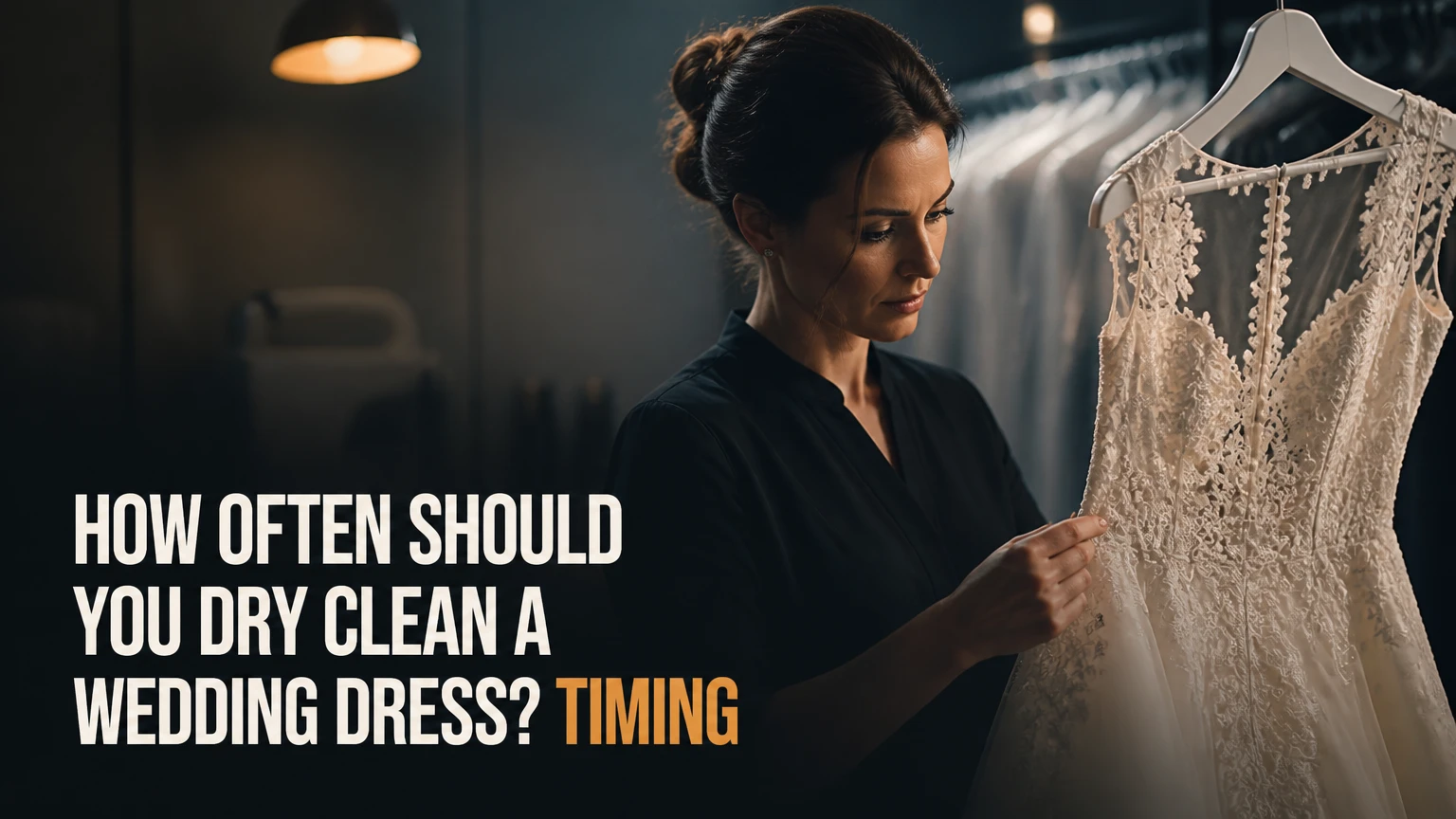
A wedding dress usually needs professional cleaning once after the wedding, ideally within 1-6 weeks, before sweat, oils, sugar, alcohol, makeup, and ground-in hem soil oxidize. Clean the gown again only after it is worn, visibly or invisibly soiled, exposed to smoke or moisture, or removed from long-term storage for another event.
Key Facts at a Glance
- A wedding gown does not need routine annual dry cleaning when it remains clean, dry, and correctly stored.
- The best cleaning window is usually within 1-6 weeks after the ceremony, although a delayed gown still deserves professional assessment.
- A bridal specialist should test the fabric, lining, dyes, trims, beads, sequins, and adhesives before selecting a cleaning process.
- Dry cleaning is not automatically safer than wet cleaning; the correct method depends on fiber chemistry, stain type, construction, and embellishment.
- Typical U.S. prices range from $150-$350 for cleaning and pressing, and $400-$1,000 or more for cleaning with preservation.
- A preservation box is not a cleaning frequency. Open, inspect, and re-clean a preserved gown only when use or storage conditions create a reason.
How Often Should You Dry Clean a Wedding Dress?
A wedding dress should generally be professionally cleaned once after the wedding, not on a fixed annual schedule. The second cleaning trigger is use or contamination: an anniversary shoot, vow renewal, resale fitting, smoke exposure, water intrusion, pest activity, mildew odor, or a new stain.
The “clean it exactly once” advice is useful for a gown that will be worn once and stored correctly, but it is not a universal rule. A dress worn for a photo session can collect perspiration and body oils even when it looks spotless. A gown kept in a humid attic may need assessment despite never being worn again.
Professional textile cleaning removes contaminants that ordinary inspection misses. Clear champagne, sweet cocktails, perspiration, skin oils, and sunscreen can remain nearly invisible until oxidation changes them to yellow or brown discoloration. Repeated cleaning also has a cost: solvent, agitation, spotting, pressing, and handling can stress fragile fibers, coatings, and weak seams. The right frequency balances contamination against unnecessary processing.
When Should You Take the Gown to a Cleaner?
Take a wedding dress to a qualified cleaner within several days to six weeks after the ceremony. A short delay of a few months does not make cleaning pointless, but older stains often require additional testing, restoration work, or a lower chance of complete removal.
Keep the gown temporarily in a cool, dry, dark place with air circulation. Do not leave it in the venue’s plastic bag, a hot car, a basement, or a damp closet while waiting for an appointment.
| Gown condition | Recommended timing | Reason | Likely service |
|---|---|---|---|
| Worn once, visible food or drink stains | 2-14 days | Fresh tannin and sugar stains remain easier to identify | Cleaning plus pressing |
| Clean-looking gown with perspiration or makeup | 1-6 weeks | Invisible oils can oxidize during storage | Inspection and cleaning |
| Gown waiting 3-12 months | Book promptly | Set-in stains may need repeated spotting | Cleaning, possible restoration |
| Gown stored for several years | Before reuse or sale | Yellowing, odor, and storage damage need assessment | Cleaning or restoration |
| Gown exposed to smoke, floodwater, or mildew | Immediately isolate and call a specialist | Moisture and odor can spread biological damage | Specialist assessment |
Why Clean a Wedding Dress?
Wedding dress cleaning prevents oils, sugars, acids, particulate soil, and perspiration from remaining in contact with fibers for years. Oxidation can make invisible residues yellow or brown, while ground-in grit can abrade fibers when a train is folded and moved.
The hem deserves particular attention because it contacts flooring, grass, asphalt, dust, and oily residue. Food and drink stains also change over time. A clear alcoholic drink may contain sugar, flavor compounds, or coloring that becomes visible only after storage.
Cleaning is preservation preparation, but cleaning alone is not preservation. Cleaning removes contaminants; preservation adds suitable tissue, folding, packaging, environmental guidance, and, in some services, repairs. A dress can be clean and still deteriorate inside an acidic box, a humid room, or a plastic garment cover.
The American Institute for Conservation recommends preventive-care decisions based on an object’s materials, condition, environment, and intended use rather than a universal treatment schedule. That principle applies well to bridal gowns: the gown’s construction and future use matter more than a calendar reminder.
Which Gowns Need Special Handling?
Silk, rayon, acetate, vintage fabric, unstable dyes, glued trims, metallic threads, and heavily beaded bodices need specialist evaluation before cleaning. Polyester does not automatically make a gown risk-free because linings, lace, adhesive, sequins, and finishes may react differently from the main fabric.
Read the manufacturer’s care label, then tell the cleaner when the gown was made, how it was altered, and what touched the stains. A bridal cleaner should record fabric composition, inspect seams and hems, test vulnerable components, and explain the risk of color bleed, bead loss, shrinkage, or texture change.
| Gown feature | Main risk | Specialist check | Practical instruction |
|---|---|---|---|
| Silk satin or silk chiffon | Water marks, dye migration, fiber weakening | Solvent and spot-test on hidden area | Avoid home water treatment |
| Polyester satin | Heat distortion, oily stains, pressed shine | Temperature and stain-solvent testing | Use controlled finishing |
| Tulle, lace, or net | Snagging, stretching, edge fraying | Seam, applique, and agitation inspection | Request gentle handling |
| Glass beads and sequins | Scratching, coating loss, breakage | Attachment and coating test | Identify loose or damaged pieces |
| Glued rhinestones or trims | Adhesive softening or dissolution | Adhesive compatibility test | Disclose designer and trim details |
| Antique or heirloom gown | Brittle fibers, degraded thread, old dyes | Conservation assessment | Choose restoration expertise over routine cleaning |
A specialist may recommend hand cleaning, controlled wet cleaning, hydrocarbon solvent, silicone-based solvent, or limited spot treatment. No solvent is universally safest. The cleaning label and a cleaner’s process knowledge cannot eliminate every risk, so ask for a written condition report and a clear explanation of exclusions.
What Happens During Professional Cleaning?
Professional wedding dress cleaning normally involves inspection, stain mapping, testing, targeted pretreatment, the selected cleaning process, finishing, and a final review. The machine cycle is only one stage, and a cleaner who cannot explain inspection and embellishment testing may be treating the gown like ordinary clothing.
Stage 1: Inspect and Document
The technician identifies fibers, linings, dyes, trim materials, closures, boning, foam, and adhesive components. The cleaner should photograph existing damage, loose beads, broken threads, discoloration, and hem wear so pre-existing problems are not confused with cleaning-related changes.
Stain mapping records the location and likely chemistry of perspiration, makeup, wine, oil, mud, and sugar. Ultraviolet light can help locate some residues, but UV inspection is an aid, not a universal stain detector.
Stage 2: Test and Pretreat
The cleaner tests a concealed area and vulnerable embellishments before applying a spotting agent. Oil-based makeup and body oils require a different approach from tannins in wine, protein residues in perspiration, or sugar-based soft drinks.
The hem may receive hand spotting or mechanical soil removal. Rubbing, aggressive brushing, and indiscriminate bleach are unsuitable because they can spread stains, roughen silk, damage lace, or remove optical brighteners unevenly.
Stage 3: Clean and Finish
The gown enters a controlled process selected for its materials. The technician may use a solvent machine, professional wet cleaning, hand treatment, or a combination, followed by low-temperature drying, steaming, pressing, and reshaping.
The final review checks stain reduction, odor, seam condition, trim security, and overall appearance. A responsible cleaner reports stains that cannot be safely removed instead of escalating treatment until the fabric fails.
Which Cleaning Method Is Right?
The correct cleaning method depends on fiber, stain chemistry, construction, and trim compatibility, not on the word “dry clean” alone. Dry cleaning uses a liquid solvent other than water, while professional wet cleaning uses water, detergent, controlled mechanical action, and carefully managed drying.
| Method or solvent family | Typical strengths | Main risks | Suitable situation |
|---|---|---|---|
| Hydrocarbon solvent | Lower mechanical harshness; useful for many delicate gowns | May need more work on heavy water-soluble stains | Mixed synthetics, delicate trims, oily soil |
| Silicone-based solvent | Gentle handling for selected fine fabrics and embellishments | Availability and price vary; not suitable for every stain | Intricate gowns after compatibility testing |
| Perchloroethylene solvent | Strong action on many oily soils | Can affect adhesives, coatings, and some trims | Compatible synthetic gown with heavy grease |
| Professional wet cleaning | Effective for selected sugar, salt, and perspiration residues | Shrinkage, dye bleed, and water marks | Stable fibers and construction approved by testing |
| Hand spot treatment | Limits exposure to a full process | Uneven results or ring formation if misused | Small, localized fresh stains |
Perchloroethylene, often called perc, should not be treated as inherently harmful to every gown or inherently suitable for every synthetic gown. The machine’s filtration, technician’s experience, temperature, spotting chemistry, and trim testing all affect the result. Ask which process the business uses and why it fits the actual dress.
How Much Does Wedding Dress Cleaning Cost?
Typical U.S. wedding dress cleaning costs $150-$350 for cleaning and pressing, while cleaning plus preservation commonly costs $400-$1,000 or more. Repairs, restoration of yellowed fabric, rush service, shipping, detachable trains, multiple layers, and dense beadwork can increase the final price.
Prices vary by region and gown complexity, so an online flat rate is only a starting point. Request an itemized quote that separates cleaning, pressing, stain treatment, repairs, boxing, shipping, and insurance coverage.
| Service | Typical U.S. price | Typical turnaround | Usually includes |
|---|---|---|---|
| Clean and press | $150-$350 | 1-4 weeks | Inspection, cleaning, finishing |
| Clean only | $100-$250 | 1-3 weeks | Cleaning without long-term packaging |
| Clean and preserve | $400-$1,000+ | 2-8 weeks | Cleaning, tissue, preservation box |
| Yellowing restoration | $300-$1,500+ | 4-12 weeks | Testing, restoration treatment, finishing |
| Rush bridal service | Base price plus 25%-75% | 2-7 days | Priority handling if capacity exists |
A low quote can exclude stain testing, trim repair, pressing, or a suitable storage container. A high quote is not proof of superior conservation. Compare the process, materials, condition documentation, warranty language, and insurance terms.
Cleaning or Preservation: Which Do You Need?
Choose cleaning only when you plan to sell, alter, wear, or inspect the gown soon; choose preservation when long-term storage is the main goal. Preservation usually combines cleaning with acid-free tissue, a suitable box, folding guidance, and protection from light and handling.
| Owner plan | Best initial choice | Storage approach | Re-cleaning trigger |
|---|---|---|---|
| Sell within 1-12 months | Clean and press | Breathable garment bag, dark closet | New fitting soil or transport exposure |
| Alter into another garment | Clean and inspect | Breathable temporary cover | Before final alteration if handled often |
| Wear at a vow renewal | Clean after original wedding | Short-term breathable storage | After the renewal |
| Keep as a family heirloom | Clean and preserve | Acid-free materials, stable indoor room | Before future use or if contamination occurs |
| Unsure about future use | Clean first, decide later | Unbuffered or suitable archival materials | After wear, odor, moisture, or visible soil |
Preservation does not guarantee that a gown will remain unchanged for 30, 50, or 100 years. A service warranty may cover a particular process or packaging failure, but it cannot control heat, humidity, flood, pests, light, or the natural aging of silk and dyes. Avoid nitrogen-flushed or permanently sealed packaging claims unless the provider explains how the gown can be inspected and what the warranty actually covers.
How Should You Store a Cleaned Wedding Dress?
Store a cleaned wedding dress in acid-free or conservation-appropriate materials, away from light, heat, pests, and fluctuating humidity. Keep the storage area indoors, and avoid attics, garages, basements, exterior walls, and plastic dry-cleaning bags that can trap moisture or release degrading chemicals.
Fold the gown with clean hands onto acid-free tissue, pad hard folds, and avoid compressing beadwork under heavy layers. A breathable garment bag is practical for short-term storage, while an archival box is more appropriate for a gown that will remain folded and undisturbed.
Inspect stored gowns every 12-24 months without dragging them across a floor. Check for odor, yellowing, insect activity, dampness, adhesive failure, and new creases. Repack the gown if tissue becomes dusty or the storage environment changes.
What Should You Do About Common Stains?
Blot fresh liquid stains with a clean white cloth, avoid rubbing, and give the cleaner the exact substance and timing. Do not apply water, club soda, bleach, stain wipes, or household detergent unless a textile professional specifically directs the treatment.
Red Wine or Dark Liquor
Blot excess liquid from the surface and keep the dress away from heat. Do not sprinkle salt or pour water through multiple layers, because moisture can spread dye and create tide marks.
Mud on the Hem
Allow wet mud to dry, then leave the residue for the cleaner rather than scraping it into the weave. Record whether the hem touched asphalt, grass, sand, or treated flooring because those soils require different treatment.
Makeup and Self-Tanner
Do not use an alcohol wipe or oil-based cosmetic remover. Tell the cleaner whether the mark is foundation, lipstick, mascara, bronzer, or self-tanner, since each product can respond differently to spotting agents.
Yellowing After Storage
Yellowing requires restoration assessment, not repeated routine cleaning. A specialist may test controlled reduction or oxidation treatments, but brittle vintage fibers and weakened seams can limit the safe result.
What If the Gown Was Stored for Years?
A wedding dress stored for years should be inspected before cleaning, even if no stain is visible. The specialist should look for oxidation, mildew, insect damage, adhesive deterioration, brittle fibers, dye change, and permanent fold compression before recommending treatment.
Do not assume a yellowed gown can be returned to its original white color. Restoration may improve discoloration, but aggressive treatment can break old fibers, weaken thread, or expose earlier repairs. Ask for a condition report, treatment plan, expected outcome, and price range before authorizing work.
A musty or damp gown should be isolated from other textiles. Never seal active moisture in plastic or an airtight container, because trapped humidity can accelerate mildew and odor.
Which Choice Fits Your Plans?
A resale gown usually needs professional cleaning and pressing, not a premium sealed preservation box. The buyer may need to inspect the fabric, and a breathable garment bag makes short-term access easier.
A future heirloom benefits from cleaning followed by appropriate preservation materials and periodic environmental checks. The owner should keep photographs, receipts, the condition report, and any designer or fiber information with the storage records.
A budget-conscious owner can compare local bridal specialists with mail-in services, but shipping adds handling and insurance risks. Ask who inspects the gown, whether the provider photographs it on arrival, how damage claims work, and whether the return packaging is breathable.
A gown for immediate alteration may need cleaning before the tailor handles it repeatedly. Alterations can expose hidden stains, cut away soiled hems, or change the structure, so coordinate the cleaner and tailor before work begins.
Common Mistakes and Their Fixes
- Waiting years because the gown looks clean. Invisible perspiration and sugar can oxidize. Book an inspection promptly, even when the ideal six-week window has passed.
- Choosing a general cleaner without bridal experience. Ordinary garments rarely contain long trains, boning, fragile lace, and glued trims. Ask for bridal-gown references and a written process.
- Treating a stain at home. Water and rubbing can create rings, spread dye, and damage silk. Blot only, document the substance, and stop manipulating the fabric.
- Leaving the gown in a plastic bag. Plastic can trap humidity and may cause odor or mildew in unstable environments. Replace it with temporary breathable coverage.
- Assuming preservation means permanent sealing. A box does not correct poor climate control or guarantee unchanged color. Verify materials, inspection access, warranty scope, and storage instructions.
- Ignoring existing damage. Loose sequins, split seams, and brittle lace can worsen during handling. Photograph the gown and request a condition report before approval.
Frequently Asked Questions
Can You Wash a Wedding Dress in a Washing Machine?
Most wedding dresses should not enter a household washing machine because agitation, water temperature, spin force, dyes, boning, and embellishments create unpredictable damage. A professional may approve controlled wet cleaning for a stable gown after testing, but that decision belongs to the cleaner after examining the complete construction.
Should You Dry Clean a Wedding Dress Before the Wedding?
A new wedding dress usually does not need cleaning before the ceremony unless it has acquired storage odor, makeup, dust, or fitting soil. Steam or press the gown only through a bridal specialist when the care label and fabric permit it, because unnecessary cleaning adds handling without improving a clean dress.
Can I Wear a Preserved Wedding Dress Again?
You can wear a preserved wedding dress again, but opening the package may affect a service warranty or reveal creasing that requires professional finishing. After wearing the gown, have it inspected and cleaned if perspiration, makeup, food, smoke, moisture, or outdoor soil contacted the fabric before storing it again.
How Long Does Wedding Dress Cleaning Take?
Typical cleaning takes 1-4 weeks, while preservation commonly takes 2-8 weeks and complex restoration can take 4-12 weeks. Peak wedding season, shipping, dense beadwork, multiple layers, repairs, and set-in stains extend turnaround. Confirm the completion date before sending a gown needed for resale or an anniversary event.
Is Wedding Dress Cleaning Covered by Insurance?
Homeowners or renters insurance may cover cleaning or restoration after a covered event, such as water damage, fire, or theft, but routine post-wedding cleaning is normally an owner expense. Photograph the gown, retain the cleaner’s condition report, and ask the insurer about coverage limits before shipping a high-value gown.
The Bottom Line
For most brides, professional cleaning once within 1-6 weeks after the wedding is the sound starting point. A wedding dress does not need annual dry cleaning when it remains clean and properly stored, but it should be re-cleaned after reuse or exposure to stains, smoke, moisture, pests, or heavy handling. The answer to “how often should you dry clean a wedding dress” is therefore condition-based, not an exact lifetime number: clean promptly after wear, then preserve and inspect it carefully.