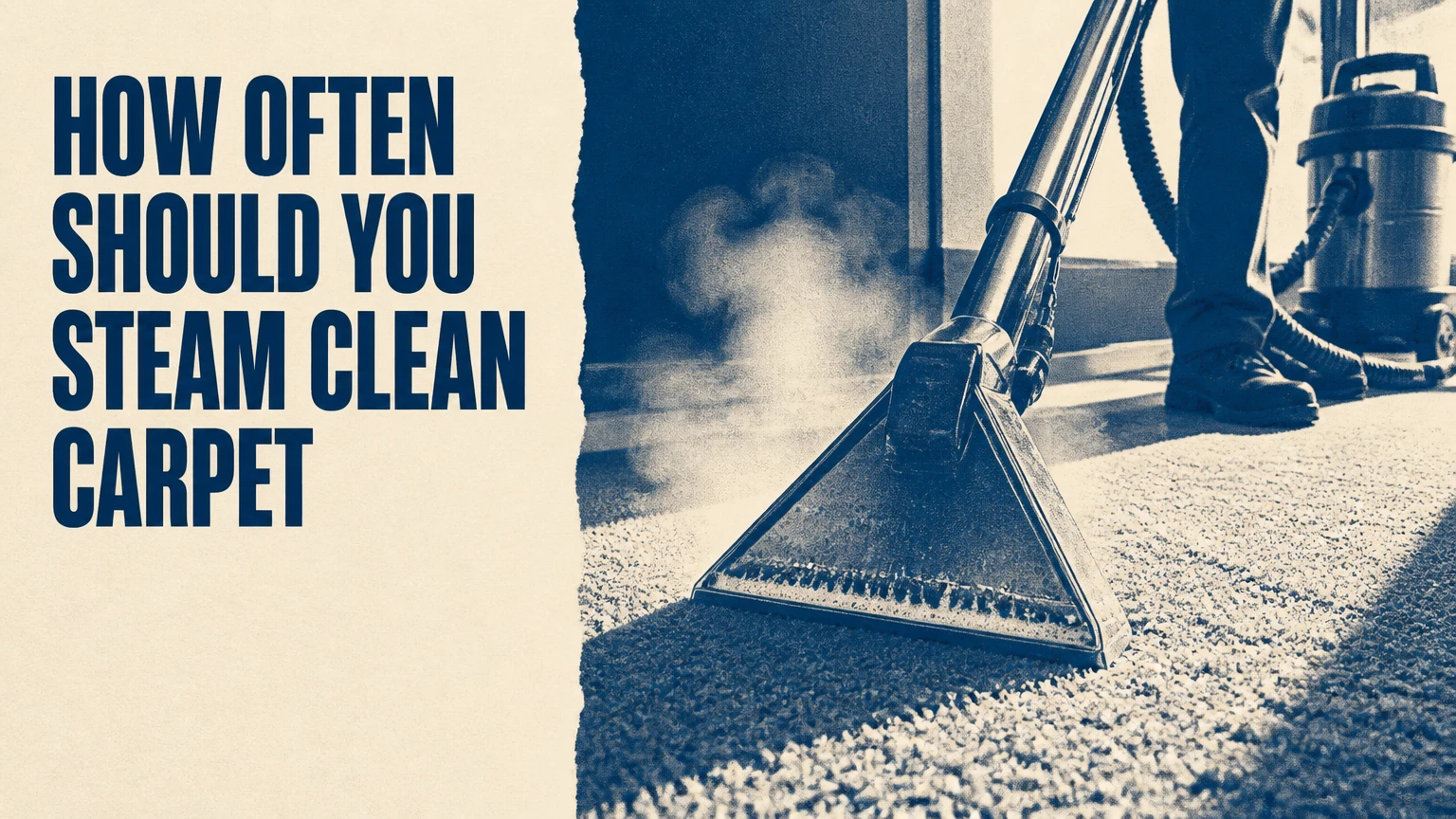
Homeowners should steam clean residential carpets every 12 to 18 months under normal conditions. This baseline frequency removes embedded soils and prevents fiber abrasion. Homes with multiple pets, large families, or asthma sufferers require professional hot water extraction every 3-6 months to maintain indoor air quality.
At a Glance
- Standard residential carpets need professional deep cleaning every 12 to 18 months.
- Carpet warranties from major manufacturers require documented professional extraction every 12 to 24 months.
- Homes with multiple pets require hot water extraction every 3-6 months.
- Vacuuming thoroughly before any wet cleaning prevents dry soil from turning into permanent mud.
- Industrial truck-mounted extractors remove 95 percent of moisture to ensure a 6-12 hour dry time.
Standard Carpet Cleaning Frequency Guidelines
Homeowners should clean carpets every 12 to 18 months for low-traffic households containing one or two adults. This schedule assumes routine weekly vacuuming and immediate spot treatment of accidental spills. The standard 12-month rule provides a baseline for residential floor care. Daily foot traffic pushes microscopic dirt particles deep into the carpet pile. Vacuuming removes surface debris. Wet extraction washes out the hidden particles.
When debris remains buried in the backing material, it acts like tiny shards of glass. Walking across soiled floors grinds these sharp particles against the synthetic yarns. This friction causes physical damage to the flooring structure over time. Regular washing removes these abrasives before they permanently alter the texture of the room. Families with children typically track more dirt indoors. These active households should increase their professional washing schedule to every 9-12 months.
| Household Type | Occupants | Recommended Extraction Frequency |
| Low Traffic | 1-2 Adults, No Pets | Every 12-18 months |
| Medium Traffic | Families with Children | Every 9-12 months |
| High Traffic | Pet Owners (1-2 pets) | Every 6-9 months |
| Extreme Traffic | Large Families, Multiple Pets | Every 3-6 months |
Do Carpet Warranties Require Professional Steam Cleaning?
Yes, major carpet manufacturers mandate professional hot water extraction every 12 to 24 months to maintain warranty coverage. Manufacturers write these maintenance schedules directly into the purchase contract. Skipping this requirement voids stain and texture retention warranties immediately. A 2023 warranty guideline document from Shaw Industries explicitly states that homeowners must retain all professional cleaning receipts to process any future claims.
Renting a grocery store machine does not fulfill this contractual obligation. Manufacturers require documented service from certified technicians using approved extraction equipment. The industry standard demands water temperatures exceeding 200 degrees Fahrenheit to properly activate pre-treatment chemicals. Consumer machines simply cannot generate this thermal output. Store your professional invoices in a safe place. If a stain permanently discolors your floor, the manufacturer will ask for these receipts before authorizing a replacement.
How Does Pet Ownership Affect Carpet Cleaning Schedules?
Pet owners must wash carpets every 6-9 months to remove urine proteins, dander, and oily residues. Large families with multiple dogs require deep extraction every 3-6 months. Animals naturally produce body oils that rub off onto flooring fibers. This sticky oil captures airborne dust instantly. The resulting sludge embeds itself tightly against the primary backing of the rug.
Vacuuming cannot remove sticky animal oils. Pressurized hot water mixed with specialized enzymes is the only effective removal method. Animal urine presents a distinct chemical problem. When urine dries inside a synthetic fiber, it crystallizes into hard alkaline salts. These salts reactivate and emit strong odors whenever room humidity rises. Professional technicians apply acidic neutralizers to dissolve these salts before washing the area. Frequent extraction prevents these organic compounds from permanently altering the dye structure of your flooring.
How Do Severe Allergies Change Hot Water Extraction Routines?
Asthma and allergy sufferers require carpet extraction every 3-6 months. Synthetic flooring acts as a massive environmental filter for the home. It traps pollen, dust mites, and pet dander that float through the air. This filtering mechanism improves indoor air quality temporarily. Eventually, the filter becomes completely full.
Walking across a saturated carpet launches microscopic allergens back into the breathing zone. The Environmental Protection Agency (2021) asthma management guidelines note that routine deep extraction effectively removes deeply embedded biological contaminants. Hot water temperatures instantly kill dust mites upon contact. The high-powered vacuum suction then removes the dead organisms and their waste products from the home entirely. Regular maintenance ensures the flooring continues to trap new allergens effectively.
Does High Humidity Alter Carpet Maintenance?
Homes in high-humidity climates need professional extraction every 6-9 months. Coastal regions and tropical zones experience constant airborne moisture. This environmental moisture penetrates porous building materials easily. When synthetic yarns absorb excess atmospheric water, they become slightly damp to the touch.
Damp fibers act like a magnet for dry soil tracked in from outside. The mixture of humidity and dirt creates a persistent layer of mud at the base of the yarn. This muddy layer breeds bacteria rapidly in warm environments. Standard 12-month schedules fail completely under these specific environmental conditions. Frequent washing removes the bacterial growth before sour odors spread through the ventilation system. Residents in dry desert climates can safely follow longer maintenance intervals.
How Frequently Should Commercial Office Carpets Be Cleaned?
Facility managers must deep clean high-traffic commercial carpets every 1-3 months. Corporate waiting rooms, retail floors, and restaurant dining areas endure hundreds of visitors daily. This relentless foot traffic introduces massive volumes of asphalt residue, food grease, and street dirt. Commercial grade flooring uses dense, low-pile loops designed to hide this soil efficiently.
While commercial floors look clean on the surface, they conceal heavy internal contamination. Waiting a full year to extract a busy office floor guarantees permanent structural damage. The Institute of Inspection, Cleaning and Restoration Certification (IICRC, 2022) recommends a strategic zone approach for commercial properties. Entrance lobbies require monthly extraction. Secondary hallways need quarterly washing. Private offices with low traffic only require annual deep cleaning.
Can You Steam Clean A Carpet Too Much?
Yes, extracting carpets too frequently damages the structural integrity of the flooring. Washing a floor every single month introduces excessive mechanical stress. The combination of intense heat, harsh chemical detergents, and aggressive vacuum suction slowly degrades the synthetic yarns. Modern manufacturing uses chemical binders to attach the visible yarn to the hidden backing material.
Repeatedly soaking this latex binder causes it to break down and crumble. When the binder fails, the flooring begins to ripple, bubble, and detach from the subfloor. Over-cleaning also strips away the factory-applied stain repellents. Once these chemical protectors vanish, the floor absorbs spills instantly. Stick to the recommended schedules. You should only wash your floors when visible soil accumulates or an organic accident occurs.
What Causes The Grey Lane Effect In Hallways?
Dark pathways form when ground-in dirt physically scratches and damages the carpet fibers. This phenomenon appears as a distinct grey shadow running down the center of busy hallways and stairs. Many homeowners mistake this shadow for simple dirt. They hire a technician to wash the area, but the dark lane remains visible after drying.
The grey lane effect is actually a permanent optical illusion caused by abrasion. Sharp soil particles act like sandpaper against the plastic yarns. This constant friction scratches the smooth, reflective surface of the fiber. Scratched plastic absorbs light instead of reflecting it. The damaged area appears darker than the surrounding pristine edges. No amount of washing can repair physically scratched plastic. You must extract the soil before the abrasion occurs.
How Soon Can You Deep Clean Brand New Carpet?
Property owners must wait at least six months before applying hot water extraction to brand new carpets. Freshly installed flooring requires a specific curing period to settle into the room. Installers stretch the material tightly across sharp tack strips to keep it flat. The primary backing needs several months to relax into this stretched position.
Introducing 200-degree water to unsettled flooring causes immediate problems. The thermal shock shrinks the synthetic backing material rapidly. This sudden shrinkage pulls the edges away from the baseboards and creates massive wrinkles across the center of the room. Furthermore, new floors contain protective chemical treatments applied at the factory. Early washing strips these fresh protectors away unnecessarily. Rely on frequent vacuuming for the first two seasons.
Is Professional Carpet Cleaning Better Than Renting A Machine?
Professional truck-mounted cleaning significantly outperforms rental machines in heat, pressure, and vacuum suction. Hardware store rentals utilize standard 120-volt wall outlets. This electrical limitation severely restricts their mechanical capability. They cannot heat water past standard tap temperatures. They cannot generate enough pressure to blast dirt out of thick pile.
Industrial units mount directly to a commercial van. They use a gasoline engine to power massive blowers and specialized water heaters. These professional machines heat cleaning solutions to 220 degrees Fahrenheit. This extreme thermal energy melts oily residues instantly. More importantly, the industrial vacuum blower recovers 95 percent of the water applied to the floor. Rental machines frequently leave gallons of dirty water trapped in the backing material.
| Specification | Professional Truck-Mount | Grocery Store Rental |
| Water Temperature | 200-240°F | 110-120°F (Tap Water) |
| Water Pressure | 300-500 PSI | 30-50 PSI |
| Vacuum Lift | Heavy Industrial Suction | Light Wet-Vac Suction |
| Typical Dry Time | 6-12 Hours | 24-48 Hours |
Steam Cleaning Vs Dry Carpet Cleaning Methods
Hot water extraction flushes deep soils with pressurized water, while dry cleaning uses absorbent compounds to lift surface dirt with minimal moisture. Extraction remains the industry gold standard for restorative residential care. It aggressively washes out thick mud, heavy oils, and biological hazards. However, it requires a dedicated drying period.
Dry methods offer an excellent alternative for specific commercial applications. Technicians sprinkle a damp, sponge-like powder across the floor. A specialized brush machine agitates this powder deep into the pile. The compound acts like tiny chemical sponges to absorb oily soils. Technicians then vacuum the soiled powder away. This low-moisture approach allows a busy retail store to reopen immediately. Dry methods excel at surface appearance management but fail to remove heavy organic contamination.
How Much Does Professional Hot Water Extraction Cost?
Professional residential carpet extraction costs between $150 and $300 for a standard three-bedroom home. Pricing structures vary based on total square footage, geographical location, and the specific cleaning method utilized. Most reputable companies charge by the room. A standard room typically costs between $40 and $60. Hallways and staircases carry separate flat fees due to the difficult labor involved.
Severe contamination increases the final invoice significantly. If a technician encounters heavy pet urine, they must apply specialized enzymatic treatments. These biological counteractants cost an additional $20 to $40 per affected area. Beware of companies advertising whole-house specials for under $50. These bait-and-switch operations use low-quality chemicals and routinely pressure homeowners into expensive, unnecessary upgrades upon arrival.
| Service Area / Condition | Typical Cost Range | Included Services |
| Standard Room (up to 200 sq ft) | $40 – $60 | Vacuuming, Pre-spray, Extraction |
| Hallway or Walkway | $20 – $30 | Traffic lane treatment |
| Standard Staircase (12-14 steps) | $45 – $70 | Hand-tool detailing |
| Pet Urine Treatment (per room) | $20 – $40 | Enzyme application, sub-surface flush |
How Long Does Carpet Take To Dry After Wet Extraction?
Professionally extracted carpets dry completely in 6 to 12 hours. Several environmental variables dictate the exact timeline. Ambient room temperature directly controls evaporation rates. Warmer rooms dry much faster than cold basements. Indoor humidity also plays a massive role. Air can only hold a specific amount of moisture. If the indoor air is already saturated from a rainy day, evaporation slows to a crawl.
Airflow remains the most critical factor for rapid evaporation. Homeowners should turn on ceiling fans and open interior doors immediately after the technician leaves. If the weather permits, cracking a few windows creates a cross-breeze that forces moisture out of the building. HVAC systems also pull damp air out of the environment efficiently. Set your thermostat to a comfortable 70 degrees to accelerate the process.
What Happens If Carpet Stays Wet Too Long?
Carpets that remain wet beyond 24 hours will develop mold, mildew, and sour odors. Extended drying times represent a severe failure in the extraction process. This usually occurs when a homeowner uses a rental machine and applies far too much water without adequate vacuum suction. The excess moisture pools at the base of the floor and soaks into the polyurethane padding.
Once the padding becomes saturated, it takes days to dry completely. Darkness, warmth, and moisture create a perfect breeding ground for mold spores. A distinct musty odor indicates that fungal colonies have already formed beneath the surface. If you accidentally overwet your floors, place heavy industrial fans directly over the saturated zones immediately. You may need to hire a restoration company to lift the flooring and replace the ruined padding.
Should You Vacuum Before Or After Steam Cleaning?
Residents must thoroughly vacuum all flooring immediately before any wet extraction begins. This preliminary step dictates the entire success of the washing process. Floors contain massive amounts of loose, dry particulate matter like sand, human hair, and dead skin cells. Dry vacuums remove this loose debris easily.
If you skip this step, the pressurized water instantly mixes with the dry soil. This chemical reaction creates a heavy, sticky mud deep inside the fibers. Extraction wands struggle to lift thick mud. The technician will spend hours fighting a mess that a simple vacuum could have prevented in ten minutes. Most high-quality professional services include pre-vacuuming in their standard pricing. Always ask your chosen company if you need to perform this task yourself prior to their arrival.
How To Fix Sticky Carpet After DIY Shampooing
You can fix sticky carpets by running a pure hot water extraction cycle with zero added detergent. Hardware store rental machines frequently cause massive residue problems. Homeowners naturally assume that adding extra soap will produce cleaner floors. Unfortunately, rental vacuums lack the mechanical power to rinse thick detergent away.
The soapy residue dries into a sticky film across every single yarn. This film acts like industrial glue, grabbing dirt off the bottom of your shoes. A floor washed with too much soap will look completely black within three months. To reverse this damage, fill a machine with plain, scalding hot water. Add one cup of standard white vinegar to the water tank to help neutralize the alkaline soap. Extract the floor slowly to flush out the hidden detergent completely.
The Bottom Line
Homeowners should schedule professional hot water extraction every 12 to 18 months for standard residential properties. This baseline schedule keeps warranties intact while preventing permanent physical abrasion to the synthetic fibers. Households managing multiple pets, severe allergies, or extreme foot traffic must increase this frequency to every 3-6 months. Always ensure your chosen technician uses a powerful truck-mounted system to extract the water completely, preventing mold growth and securing a fast drying time.