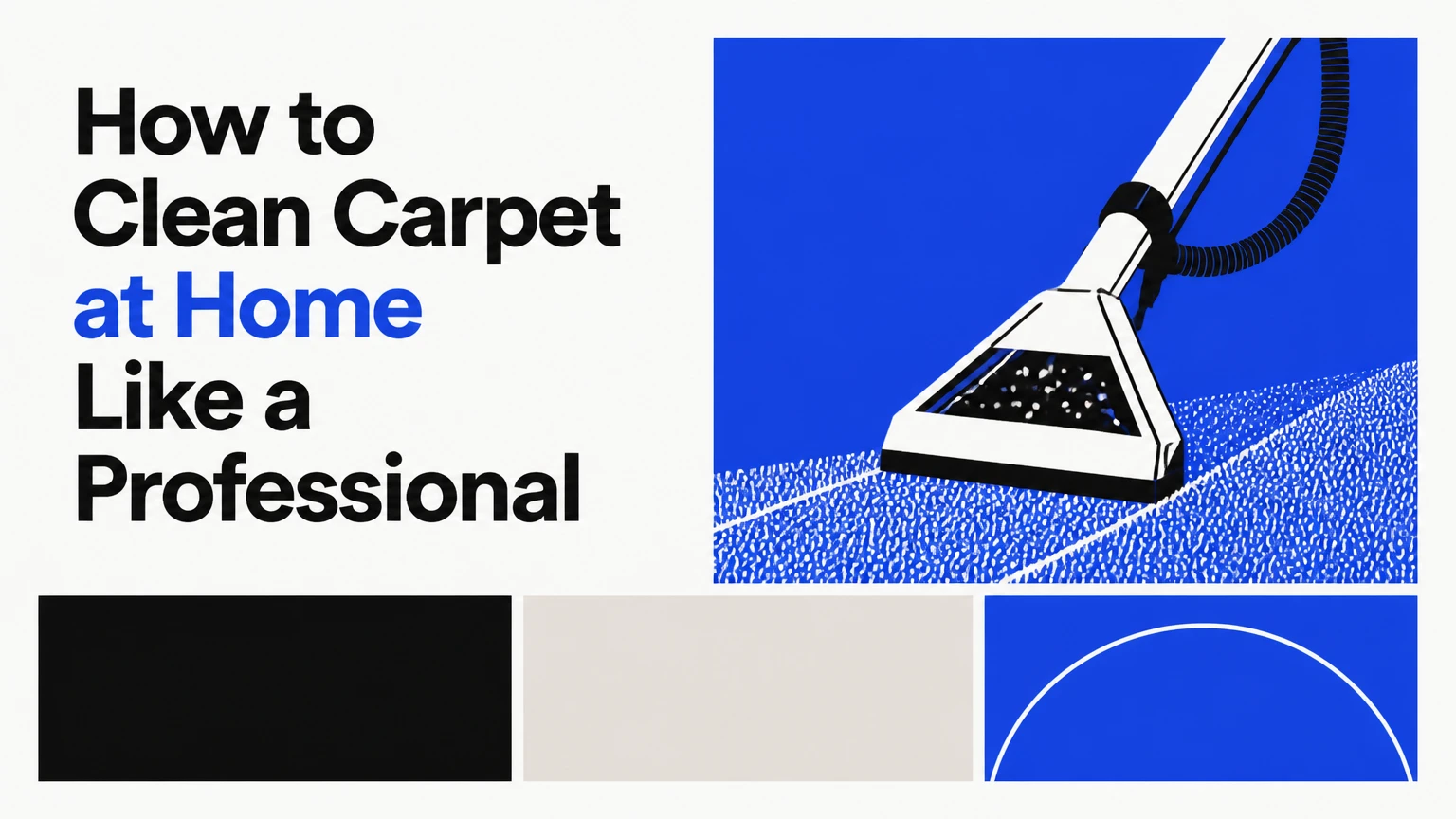
Learning how to clean carpet at home successfully requires a strict six-step process: preparation, dry extraction, spot treatment, deep washing, acidic neutralizing, and accelerated drying. Expect to spend roughly two hours cleaning and six hours drying. Success depends entirely on meticulously extracting moisture to prevent mold and wicking.
🧰 Before You Start
- Time Required: 1.5 to 2 hours active; 6 to 12 hours passive drying (per 12×12 room).
- Difficulty Level: Intermediate
- Estimated Cost: $40–$80 (Machine rental + solutions)
- Equipment Needed: Vacuum with adjustable beater bar, carpet extractor machine (e.g., Bissell or Rug Doctor), 5 to 6 white microfiber cloths, nylon soft-bristled brush, plastic furniture tabs (or aluminum foil squares), measuring cups.
- Chemicals Needed: Commercial liquid carpet shampoo (pH 6 to 9), 5% distilled white vinegar, clear bleach-free dish soap (like Dawn), and pure baking soda.
Step 1: Clear the Floor and Test for Colorfastness
Remove all obstacles from the space and ensure your chemicals will not bleach your carpet dyes.
Remove all light furniture from the room. For heavy furniture that must stay, place plastic furniture tabs or 4×4-inch squares of aluminum foil under the legs. This prevents wet carpet from absorbing wood stains or rust. Next, mix your shampoo solution (2 ounces of shampoo per 1 gallon of warm water) and apply a few drops to a hidden area of the carpet, like inside a closet. Press a white microfiber cloth into the damp spot for 30 seconds.
- Success Checkpoint: You will know it is safe to proceed when the white cloth comes up completely clean, showing zero dye transfer from the carpet.
- Common Mistake: Skipping the foil or plastic tabs under wood furniture. Moisture acts as a solvent, and wood stain will permanently bleed into wet carpet fibers within an hour.
Step 2: Perform Dry Extraction Vacuuming
Remove the maximum amount of dry, abrasive soil before introducing any water.
Set your vacuum’s brush roll height so the bristles lightly sweep the top of the carpet pile. Vacuum the entire room horizontally, moving the vacuum at a slow, deliberate pace of roughly 2 feet per second. Once the room is finished, vacuum the exact same area vertically (cross-hatching).
- Success Checkpoint: The carpet pile will stand uniformly upright, and the vacuum canister will likely hold fine, powdery grit rather than just surface hair.
- Common Mistake: Moving the vacuum at walking speed. Fast passes only pick up surface lint; a slow pace is required for the airflow to pull heavy, deep-set silica grit out of the backing.
Step 3: Treat Stains with Targeted Agitation
Break down sticky, oily, or stubborn stains manually before machine extraction.
Mix 1/4 teaspoon of clear dish soap into 1 cup of warm water (use cold water for fresh organic spills). Apply this directly to a white microfiber cloth, not the carpet. Press the damp cloth firmly onto the outer edges of the stain, working your way to the center. If necessary, gently agitate the fibers with a soft nylon brush in a single direction. Blot heavily with a dry white cloth to absorb the lifted soil.
- Success Checkpoint: The stain visually fades, and your white cloth stops picking up the stain’s color when you press it into the carpet.
- Common Mistake: Scrubbing aggressively in circles. Untwisting the carpet fibers permanently frays the pile and pushes the stain deeper into the backing pad.
Step 4: Execute the Deep Washing Extraction
Inject the detergent solution into the pile and immediately vacuum it out.
Fill your extractor machine’s clean tank with hot tap water. Do not exceed 150°F (65°C) to avoid melting synthetic glues or shrinking delicate wool. Add exactly 2 ounces (60 ml) of commercial shampoo per gallon of water. Set the machine to “Deep Clean”. Pull the trigger to spray the solution while pushing the machine forward slowly, then pulling it back. Release the trigger completely, and make two “dry passes” over the exact same path to suck up the dirty water. Overlap your next path by 2 inches.
- Success Checkpoint: The machine’s dirty water tank fills with dark, murky water, and the freshly cleaned carpet feels damp but not spongy or soaked.
- Common Mistake: Using excessive detergent. More shampoo does not equal cleaner carpet; it leaves a sticky residue that acts like a dirt magnet once dry, forcing you to clean it again in a month.
Step 5: Apply an Acidic Neutralizing Rinse
Strip away highly alkaline shampoo residues to restore the carpet’s soft texture.
Empty both the dirty and clean water tanks of your machine. Refill the clean tank with cold tap water and add 1 cup of 5% distilled white vinegar per gallon of water. Set the machine to “Rinse” if it has that feature. Repeat the extraction motion across the entire room: one wet pass with the trigger pulled, followed by two dry passes to extract the moisture.
- Success Checkpoint: The carpet feels slightly cooler and the faint smell of vinegar is present (this smell dissipates entirely as the carpet dries).
- Common Mistake: Skipping the rinse step. Leaving alkaline soap in the carpet is the leading cause of fibers feeling “crunchy” or stiff the next day.
Step 6: Accelerate the Drying Phase
Evaporate the remaining moisture as rapidly as possible to prevent mold and wicking.
Turn all ceiling fans to high and bring in portable box fans aimed directly at the floor. Set your home HVAC system fan to “On” (instead of “Auto”) to keep air circulating constantly. If outdoor humidity is below 50%, crack the windows. If you own a dehumidifier, place it in the center of the room and set it to run continuously. Keep all foot traffic off the carpet for 6 to 12 hours.
- Success Checkpoint: You can press a dry paper towel firmly into the thickest part of the carpet pile and it comes away completely dry.
- Common Mistake: Walking on damp carpets. Wet fibers crush easily; walking on them leaves permanent tracking marks and instantly transfers dirt from your socks to the clean floor.
Common Mistakes and How to Fix Them
Even careful beginners run into hiccups. Here is how to troubleshoot the most frequent post-cleaning failures:
| Symptom / Failure | Root Cause | Immediate Fix |
| Carpet feels crunchy after drying | Alkaline detergent residue was left behind from using too much soap or skipping Step 5. | Mix 1 cup of white vinegar with 1 gallon of warm water, mist it lightly over the carpet, and extract it using a machine with only plain water. |
| Foul, musty odor develops | The carpet pad was over-saturated, trapping water and causing bacteria or mold growth. | Run high-powered fans and a dehumidifier immediately. Sprinkle a heavy layer of baking soda, let it sit for 2 hours to absorb the odor, then vacuum. |
| Stains reappear (“Wicking”) | The original spill saturated the backing pad. As the surface dried, the stain traveled back up the fibers. | Lightly re-wet the spot with warm water. Place a thick white towel over it and stack heavy books on top. Leave overnight to absorb the wicking stain. |
| Machine leaves carpet soaking wet | The dirty water tank is full, or the front suction nozzle is clogged with pet hair. | Turn off and unplug the machine. Empty the waste tank and use a paperclip to clear trapped hair from the narrow suction grill on the floor nozzle. |
Alternative Cleaning Variations
Not every situation requires a heavy-duty rented extractor. Adjust the process for these common scenarios:
- The “No-Machine” Spot Clean: If you only have a 3×3 foot area to clean and no extractor, you can use the “bonnet method.” Perform Steps 1 through 3. Then, lightly mist the carpet with a spray bottle containing warm water and 1 drop of dish soap. Take a dry, heavy microfiber towel, lay it flat over the damp area, and scrub firmly over the top of the towel. The towel will act as a manual extractor, absorbing the dirt and moisture.
- Cleaning Heavy Pet Urine: Standard carpet shampoo will not remove the uric acid crystals in pet urine. Before Step 4, saturate the stain with a dedicated biological enzymatic cleaner. Cover it with a damp towel and let it sit for 24 hours so the enzymes can literally “eat” the odor-causing bacteria, then extract normally.
How Long Does It Take and What Does It Cost?
- Time Commitment: Vacuuming and prepping a standard 12×12 room takes 30 minutes. Machine extraction and rinsing will take 45 to 60 minutes. Drying requires 6 to 12 hours of passive time. Budget an entire Saturday afternoon for a 3-bedroom house.
- Cost Breakdown: If you own a machine, the cost of shampoo and vinegar is less than $10 per room. Renting a commercial-grade unit (like a Rug Doctor from a hardware store) usually costs between $35 and $50 for a 24-hour period, bringing your total weekend project cost to roughly $60 to $80.
Frequently Asked Questions
Can I use laundry detergent in my carpet cleaner?
Never use laundry detergent on carpets. It is highly concentrated, extremely alkaline, and designed to be fully submerged and rinsed out in a washing machine. Using it in a carpet extractor leaves a sticky, sudsy residue that permanently attracts dirt and stiffens the carpet fibers.
How often should I deep clean my carpets?
For moderate-traffic homes, a full deep clean is recommended every 12 to 18 months. Homes with multiple indoor pets, allergy sufferers, or heavy foot traffic should perform a deep extraction every 6 to 9 months to prevent permanent soil embedding and fiber abrasion.
Why does my carpet look worse a week after cleaning?
This happens when you use too much detergent or skip the neutralizing rinse. The chemical residue left behind acts like an adhesive. Every time you walk on the carpet, dirt from your shoes instantly sticks to the residue, making it look dirty much faster.
Is it safe to clean a wool carpet at home?
Yes, but wool requires strict parameters. Never use water hotter than 150°F (65°C), or the wool will permanently shrink. You must also use a specific wool-safe, pH-neutral detergent, as standard alkaline commercial shampoos will strip the natural oils from the wool fibers and cause brittleness.
Does baking soda actually deodorize carpets?
Yes, pure sodium bicarbonate effectively neutralizes acidic odor compounds. However, it is a micro-abrasive. If you sprinkle it heavily, it can sift down into the backing pad and destroy the motor of your vacuum over time. Use it sparingly, only for severe odors, and vacuum it up thoroughly.
Mastering how to clean carpet at home is entirely about discipline. By strictly following the correct dilution ratios, moving slowly during extraction, and forcing an acidic rinse, you can achieve professional-grade results without paying professional-grade prices.