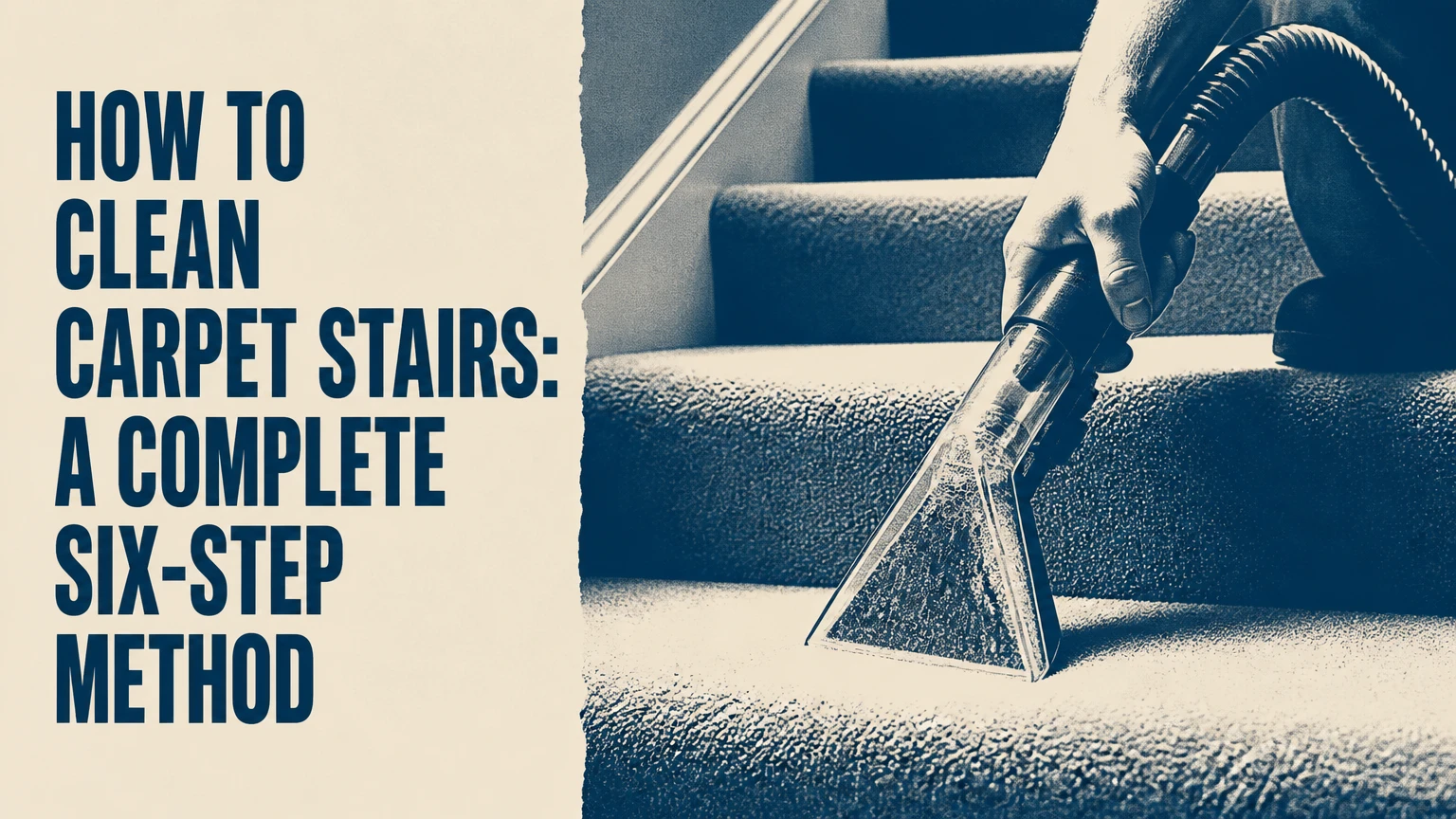
To clean carpet stairs, loosen dry debris, vacuum, test and pre-treat stains, scrub with measured solution, rinse, extract, and dry thoroughly. This six-step method takes about 1-2 hours of hands-on work plus 4-6 hours of drying, requires moderate effort, and succeeds or fails mainly on moisture control.
Before You Start
Time required: 1-2 hours of active work for a typical 12-14-step staircase, plus 4-6 hours of drying. Heavy soil or multiple stain treatments can extend active time to 2-3 hours.
Difficulty: Moderate. You need to kneel, work on narrow surfaces, control water carefully, and keep the stairs out of use while damp.
Typical DIY cost: $15-$45 if you already own a suitable vacuum. Buying a stair tool, cleaner, cloths, and a fan can bring the total to $60-$180.
Prerequisites: Check the carpet manufacturer’s care label, identify the fiber if possible, ventilate the area, keep children and pets away, and test every chemical in a hidden area. Do not wet-clean carpet with loose seams, exposed tack strips, damaged backing, or unresolved water damage.
| Item | Quantity or specification | Typical cost | Purpose |
|---|---|---|---|
| Vacuum cleaner | Handheld or canister model with motorized brush attachment | $0-$150 | Removes loose and embedded dry soil |
| Nylon utility brush | 1 hand-sized, stiff-bristled brush | $4-$10 | Loosens hair and compacted dirt |
| Carpet shampoo | 500 ml commercial product, or compatible enzymatic cleaner | $6-$18 | Breaks down soil and stains |
| Warm water | 4 litres at 40°C-50°C | Usually available at home | Dilutes the cleaning solution |
| Mixing bucket | 1 standard 5-litre bucket | $3-$8 | Holds the main solution |
| Spray bottle | 1 empty 1-litre bottle | $2-$6 | Applies measured pre-treatment |
| Microfiber cloths | 4-6 clean, white, lint-free cloths | $6-$15 | Rinses, blots, and extracts moisture |
| Baking soda | 500 g box | $2-$5 | Absorbs odor after the carpet is dry |
| Fan or dehumidifier | 1 unit | $0-$150 | Speeds evaporation and protects the backing |
| Protective materials | Plastic sheet and painter’s tape | $3-$8 | Protects walls and nearby flooring |
Process summary
| Step | Action | Active time | Most common mistake |
|---|---|---|---|
| 1 | Loosen dry debris | 1 minute per stair | Brushing wet carpet |
| 2 | Vacuum every surface | 2 minutes per stair | Missing risers and nosing |
| 3 | Test and pre-treat stains | 5 minutes, plus 10 minutes dwell | Saturating the backing |
| 4 | Scrub with diluted shampoo | 3 minutes per stair | Using a dripping brush |
| 5 | Rinse and extract residue | 2 minutes per stair | Leaving detergent behind |
| 6 | Blot and dry completely | 2 minutes setup, 4-6 hours drying | Walking on damp carpet |
Prepare and remove dry soil
Step 1: Inspect, test, and protect the staircase
Inspect the carpet, test the cleaner, and protect surrounding surfaces before disturbing the stairs.
First, read the carpet care label and identify whether the carpet is wool, nylon, polyester, olefin, or an unknown blend. Look for loose carpet, frayed seams, exposed staples, lifting edges, or dampness underneath. Tape a plastic sheet over the floor at the bottom and protect painted walls beside the staircase if your brush or hose may touch them.
Mix a teaspoon of the chosen cleaner according to its label, then apply a few drops to a hidden corner. Wait 10 minutes, blot with a white cloth, and inspect the cloth and fibers for dye transfer, discoloration, distortion, or stickiness. Wool and other natural fibers need a WoolSafe-approved or manufacturer-approved product. Do not use a general alkaline degreaser unless the carpet label permits it.
You’ll know it worked when the test patch has the same color, texture, and pile direction as the surrounding carpet, and the backing feels dry.
Common mistake: Starting with a full staircase before testing. Avoid it because one incompatible product can create permanent color loss or pile damage.
Step 2: Loosen and vacuum dry debris
Loosen embedded dry soil with a dry nylon brush, then vacuum each stair from the top downward.
Start at the highest stair so loosened dirt never falls onto finished work. Brush the tread, the vertical riser, the front nosing, and the side edges for about 1 minute per stair. Use firm, controlled strokes rather than aggressive scrubbing. Work with the pile direction first, then use short crosswise strokes on hair or compacted grit.
Fit the motorized brush attachment and set the vacuum to its carpet or high-suction setting. If the carpet is looped, berber, antique, or visibly delicate, turn off the rotating brush and use suction only. Make 3 overlapping passes across each tread, then vacuum the riser, nosing, seam, and corners. Hold a handheld nozzle at the junction where the tread meets the riser, but do not force it into loose seams.
Empty the vacuum before starting and check the brush roll after several stairs. Hair wrapped around the roll reduces suction and can pull carpet loops.
You’ll know it worked when the vacuum collects little visible grit, the pile stands more evenly, and no loose hair remains along the nosing or corners.
Common mistake: Brushing or vacuuming only the flat tread. Cleaners often miss the riser, edge, and seam, where concentrated soil remains.
Treat stains and scrub the carpet
Step 3: Identify and pre-treat visible stains
Identify each stain, test its treatment, and pre-treat only the affected fibers with a controlled amount of solution.
For ordinary tracked-in soil, mix 2 tablespoons of carpet shampoo with 500 ml of warm water in the spray bottle. Spray the spot until the fibers are damp, not soaked. Keep the nozzle 15-20 cm above the surface and apply two or three light passes instead of one heavy spray. Leave the solution for 10 minutes, following the product label if it specifies a shorter dwell time.
Use an enzymatic cleaner for organic pet urine, vomit, or fecal residue only when its label approves the carpet fiber. Apply enough to reach the contaminated fibers, but do not flood the stair. Blot liquid pet messes first with white cloths. Never combine enzyme cleaner, chlorine bleach, ammonia, vinegar, or other chemicals.
For mud, let it dry completely, scrape away the crust with a spoon, and vacuum before applying solution. For grease, use a carpet-safe spot product and follow its label rather than increasing shampoo concentration.
You’ll know it worked when the spot looks uniformly damp, the stain edge is softened, and no liquid has reached the stair’s backing or wood structure.
Common mistake: Treating a stain by rubbing outward from its center. Avoid this because it spreads the mark and roughens the pile; blot or work from the outer edge toward the center.
Step 4: Scrub with a low-moisture shampoo solution
Scrub the carpet with a damp nylon brush and a measured solution, concentrating on the nosing and other high-contact areas.
Pour 4 litres of warm water, approximately 40°C-50°C, into the 5-litre bucket. Add 4 tablespoons of carpet shampoo and mix gently to avoid excessive foam. Dip only the brush head into the solution, then shake or press it against the bucket to remove drips. The bristles should feel damp, not release water when you lift the brush.
Work from the top stair downward. Clean one stair at a time, beginning with the riser, moving across the tread, and finishing with the front nosing and side edges. Use overlapping circular strokes for about 3 minutes per stair, with moderate pressure. Spend extra time on the nosing because shoes deposit oily soil there, but do not bend or twist carpet loops.
Most manufacturers specify different dilution ratios, so the product label overrides this typical mixture. If the label calls for less shampoo, use less. Too much detergent makes rinsing harder and can leave the carpet stiff.
You’ll know it worked when the surface looks evenly refreshed, soil transfers to the brush or cloth, and no foamy puddles or dark wet patches appear.
Common mistake: Re-dipping a dirty brush into the bucket repeatedly. Rinse the brush in a separate container or under clean water when it becomes gray, then wring it nearly dry.
Rinse, extract, and dry
Step 5: Rinse away detergent and suspended soil
Rinse each cleaned stair with a nearly dry white microfiber cloth, then blot until the cloth stops picking up visible residue.
Fill a clean container with plain warm water. Dip one microfiber cloth, wring it completely, and fold it into quarters. Press and blot the riser, tread, nosing, seams, and corners. Do not pour or spray rinse water onto the carpet. Rinse and wring the cloth after each stair, changing to a fresh cloth when it becomes gray.
Use separate sections of the folded cloth for the main surface and the nosing. Press vertically on the riser and horizontally on the tread so you lift residue instead of moving it around. After rinsing, press a dry white cloth onto the darkest or thickest area for 5-10 seconds. If it feels wet or shows foamy residue, repeat the controlled rinse and blot.
The Carpet and Rug Institute’s consumer cleaning guidance favors blotting over aggressive rubbing for carpet spots. That advice matters especially on stair edges, where friction can distort the pile.
You’ll know it worked when the rinse cloth shows little or no foam, the carpet feels clean rather than slippery, and a dry cloth picks up moisture without becoming saturated.
Common mistake: Skipping this step because the carpet looks clean. Dried shampoo attracts soil and can leave fibers crunchy within hours.
Step 6: Extract moisture and dry the stairs fully
Extract remaining moisture with dry cloths, increase airflow, and keep the staircase closed until every surface is completely dry.
Blot each stair once more with a dry white microfiber cloth, pressing firmly without twisting the carpet. Place a fan at the bottom of the stairs and aim it upward so air travels across the risers and treads. Add a second fan at the top if possible, or run a dehumidifier nearby with doors open for circulation.
Open nearby windows only when outdoor humidity is lower than indoor humidity. Keep the indoor temperature moderate and never use a high-heat heater against the carpet. Check the nosing, stair corners, and carpet edges after 2 hours because these areas often retain moisture longer.
Typical drying time is 4-6 hours for controlled hand cleaning. Dense carpet, high humidity, poor airflow, and heavy pre-treatment can extend it to 8-12 hours. Do not replace furniture, allow pets onto the stairs, or resume normal traffic while any section feels cool, damp, or tacky.
You’ll know it worked when the carpet feels dry and resilient, the backing has no cool dampness, the room has no sour odor, and a dry white cloth remains dry after firm pressure.
Common mistake: Directing the fan at only one tread. Position airflow so it crosses the entire stair flight, especially the risers and enclosed corners.
Common Mistakes and How to Fix Them
Over-wetting the backing
Excess water can reach the underlay, adhesive, tack strips, or timber structure. It may cause odor, delamination, mold growth, or loosened carpet. Stop adding cleaner, press dry towels onto the area, and increase airflow immediately. If the backing remains wet after 12 hours, contact a carpet cleaner rather than adding more chemicals.
Cleaning from the bottom upward
Dirt and dirty rinse water fall downward. If you begin at the bottom, later work can soil finished stairs. Allow the area to dry, vacuum the affected lower stairs again, and restart from the highest stair.
Using colored cloths or towels
Dyes can transfer into pale carpet when moisture and pressure combine. Blot with clean white microfiber cloths only. If dye transfer has already occurred, stop rubbing and contact a professional who can identify the fiber and colorant safely.
Leaving soap residue behind
Crunchy texture, rapid resoiling, and a sticky feel indicate detergent residue. Lightly dampen the affected fibers with a 50/50 mixture of warm water and white vinegar only if the carpet manufacturer permits mild acid treatment. Blot firmly with dry cloths and ventilate. Never use vinegar over a fresh enzyme product or mix it with other cleaners.
Creating a musty or sour odor
This usually indicates that the backing stayed damp too long. Do not cover the smell with fragrance. Dry the stairs aggressively with fans and a dehumidifier. Once fully dry, apply a light layer of baking soda, leave it for 24 hours, and vacuum thoroughly. Do not apply baking soda to wet carpet.
Stains returning after drying
A reappearing spot is often wicking, where dissolved soil in the backing travels upward as moisture evaporates. Re-treat with the smallest effective amount of compatible cleaner. Place a thick dry microfiber cloth over the spot, add a flat weight such as a heavy book protected by plastic, and leave it until the cloth absorbs the rising soil. Repeat once, then seek extraction cleaning if the mark returns.
Variations for carpet type and equipment
Wool and natural-fiber carpet
Use only a wool-safe, pH-appropriate product approved by the manufacturer or WoolSafe program. Avoid the stiffest brush pressure, high heat, strong alkaline cleaners, and prolonged dwell times. Test for color bleeding and texture change in an inconspicuous area. Wool fibers can felt or distort when scrubbed aggressively, so use short, gentle agitation and minimal moisture.
Carpet extractor or portable machine
A portable extractor can remove more rinse water than hand blotting, but stairs require a compact upholstery or stair tool. Vacuum first, use the manufacturer’s stated solution ratio, and make one slow wet pass followed by two or three slow suction-only passes. Do not hold the spray trigger continuously. Test the machine on one hidden stair and keep the hose from becoming a trip hazard.
| Situation | Best approach | Change to the process |
|---|---|---|
| Light dust and traffic soil | Vacuum plus low-moisture hand cleaning | Use less solution and one rinse pass |
| Heavy soil on synthetic carpet | Portable extractor or professional hot-water extraction | Follow machine dilution and make extra suction passes |
| Wool or unknown delicate fiber | Approved low-moisture product and gentle hand work | Avoid aggressive brush action and heat |
| Pet urine in backing | Enzymatic treatment or professional extraction | Treat contamination depth, not only surface color |
| One isolated stain | Targeted spot treatment | Do not wet-clean the entire staircase |
Small staircase or limited mobility
Clean three or four stairs at a time if you cannot safely carry a bucket or vacuum. Use a small spray bottle, a hand brush, and a compact wet-dry vacuum. Keep one hand free when moving on the staircase, and never place loose tools on a tread where they can create a slip hazard. A professional service is safer when balance, kneeling, or lifting is difficult.
How long does it take and what does it cost?
A 12-14-step staircase typically requires 5-7 minutes of active work per stair for brushing, vacuuming, scrubbing, and rinsing. Add 5-10 minutes for inspection and pre-treatment, then allow 4-6 hours for drying. Dense pile, high humidity, and severe stains move the job toward the upper end.
| Cleaning option | Typical total cost | Active time | Drying expectation |
|---|---|---|---|
| Existing household tools | $15-$45 for consumables | 1-2 hours | 4-8 hours |
| Buy a stair brush and supplies | $25-$70 | 1-2 hours | 4-8 hours |
| Rent a portable extractor | $50-$100 per day, plus solution | 45-90 minutes | 6-12 hours |
| Professional stair cleaning | $100-$250 typical range | Usually 30-90 minutes onsite | Often 4-8 hours |
These are typical consumer ranges, not fixed prices. Local labor rates, staircase size, access, fiber type, stain severity, and minimum service charges determine the final amount.
FAQ
Can I use only baking soda to clean carpet stairs?
Baking soda can absorb some odor after the carpet is completely dry, but it does not remove embedded oily soil or rinse detergent from fibers. Apply a light layer, wait up to 24 hours, and vacuum thoroughly. Avoid it on damp carpet because powder can cake into the pile and backing.
Should I steam-clean carpeted stairs?
You can use a suitable portable hot-water extractor when the carpet manufacturer permits wet cleaning and the machine has a stair or upholstery tool. Use minimal spray, several suction-only passes, and strong airflow. Avoid steam cleaning unknown, wool, glued, loose, or damaged carpet until a professional assesses it.
How do I remove a coffee stain from a stair?
Blot fresh coffee with a white cloth, working from the outside toward the center. Test a carpet-safe spot cleaner, apply a small amount, wait according to its label, and blot. Rinse with a nearly dry cloth. Avoid bleach, aggressive scrubbing, and excess water, which can spread the stain or cause wicking.
How often should carpeted stairs be cleaned?
Vacuum high-traffic stairs at least twice weekly, or daily in homes with pets and children. Spot-clean spills immediately, then perform a deeper low-moisture clean every 6-12 months. Clean sooner when the pile looks gray, feels sticky, develops odor, or shows soil along the nosing.
Why do stair edges become darker than the rest?
The nosing receives repeated shoe impact, body oils, outdoor grit, and compressed traffic. Dry vacuum it slowly, loosen compacted soil with a soft nylon brush, and give it extra attention during pre-treatment and rinsing. If darkness remains after cleaning, the pile may be permanently worn or chemically discolored.
When should I hire a professional?
Hire a professional when urine has reached the underlay, the backing stays damp for more than 12 hours, stains repeatedly wick back, carpet is wool or antique, or seams and tack strips are loose. Professional extraction is also safer when you cannot control moisture or safely work on the stairs.
Cleaning carpet stairs works when dry soil is removed first, detergent is measured, rinsing is thorough, and the backing dries quickly. Follow the six steps in order, use white cloths, keep the brush damp rather than dripping, and close the staircase until fully dry. That controlled approach is the reliable way to clean carpet stairs without creating residue, odor, or repeat stains.