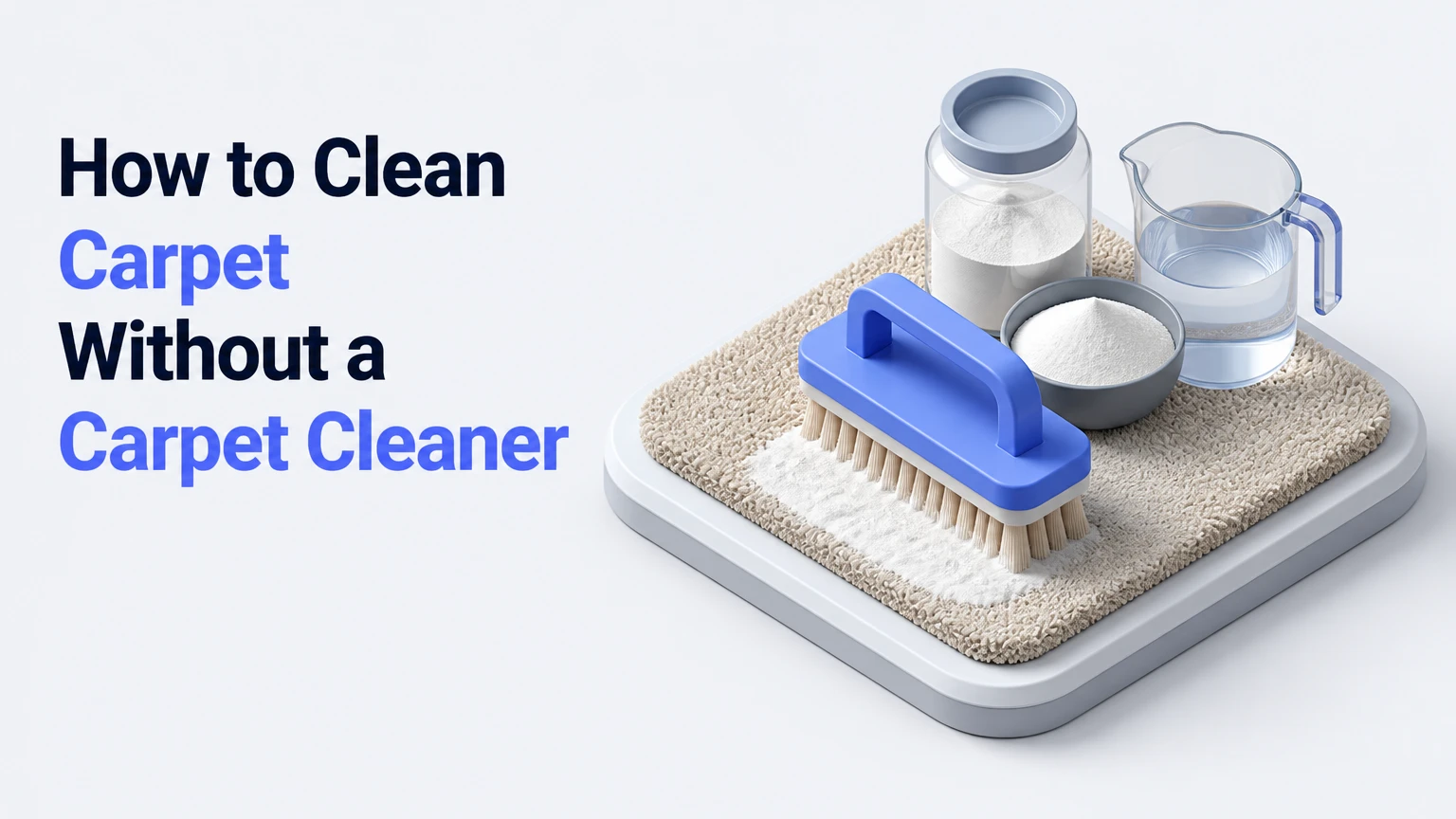
You can deep-clean a carpet without a specialized machine by utilizing a chemical reaction between baking soda and white vinegar to lift embedded dirt. This 8-step manual extraction process takes about an hour of active work, requires 4 to 6 hours of drying time, and succeeds primarily based on your ability to blot—rather than rub—the fibers dry.
Before You Start
- Active Time Required: 45–60 minutes per 10 square feet.
- Total Time: 5–7 hours (including drying).
- Difficulty: Beginner.
- Cost: $3–$8 (utilizing household items).
- Tools and Materials Needed:
- Baking soda: 1 cup per 10 sq ft.
- White vinegar: 1 cup per 10 sq ft.
- Warm water (under 40°C/104°F): 1 cup per 10 sq ft.
- Standard 16 oz spray bottle.
- Manual stiff-bristled scrub brush (substitute with a soft sponge for wool carpets).
- 3 to 4 clean, white microfiber towels.
- Flour sifter or fine-mesh strainer.
- Vacuum cleaner with a rotating beater bar.
The 8-Step Hand-Cleaning Process
Step 1: Prep the Room and Vacuum Perpendicularly
Clear all furniture from the target area and vacuum the carpet slowly in two perpendicular directions to extract dry debris. Set your vacuum height to “Low Carpet” or “Normal” and use the highest suction setting available. Pass over each section north-to-south, then east-to-west.
- Success Checkpoint: You will know this step worked when you can run a hand over the carpet and feel no gritty, loose surface dirt.
- Common Mistake: Skipping the perpendicular passes leaves embedded dust in the lower pile, which instantly turns into muddy sludge when you apply the liquid in Step 4.
Step 2: Test the Vinegar Solution for Colorfastness
Test your acidic cleaning solution on a hidden corner of the carpet before applying it to the center of the room. Mix 1 tablespoon of white vinegar with 1 tablespoon of warm water, dab it onto an inconspicuous spot (like inside a closet), wait 5 minutes, and press a white towel into the damp spot.
- Success Checkpoint: The test is successful if the white towel comes up completely clean, indicating the carpet dyes will not bleed.
- Common Mistake: Skipping this test on older or cheap synthetic carpets can result in permanent, blotchy color loss across your living room.
Step 3: Sift the Baking Soda Over the Carpet
Distribute baking soda evenly over the entire carpet surface using a kitchen sifter. Apply exactly 1 cup of baking soda per 10 square feet. Keep the sifter 2 to 3 inches above the carpet to ensure a fine mist of powder rather than heavy mounds.
- Success Checkpoint: The carpet should look like it has a light, even dusting of snow, with the original color still faintly visible underneath.
- Common Mistake: Dumping the baking soda directly from the box creates dense clumps that will trap moisture and turn into rock-hard cement in the carpet backing.
Step 4: Mix and Spray the Vinegar Solution
Combine 1 cup of white vinegar and 1 cup of warm water into your spray bottle and mist it directly over the baking soda. Spray evenly until the carpet is damp to the touch, but do not allow puddles to form.
- Success Checkpoint: You will immediately hear and see a rapid fizzing reaction as the acid hits the alkaline baking soda, forcing trapped dirt to the surface.
- Common Mistake: Using hot or boiling water instead of warm water. Heat will permanently set any hidden protein-based stains (like pet urine or blood) deep into the fibers.
Step 5: Scrub the Fibers in Overlapping Circles
Drive the fizzing mixture deep into the carpet using your stiff-bristled brush. Work in 2-foot by 2-foot sections, using small, overlapping circular motions to agitate the fibers from all angles. Dedicate 10 to 15 minutes of scrubbing per 10 square feet.
- Success Checkpoint: The foam will begin to turn a grayish-brown color as it successfully pulls oil and particulate soil out of the carpet pile.
- Common Mistake: Scrubbing in harsh, side-to-side straight lines. This linear friction causes friction burns, frays the synthetic threads, and permanently distorts the carpet’s texture.
Step 6: Blot Excess Moisture to Lift Grime
Press your clean, dry, white microfiber towels firmly into the scrubbed carpet to absorb the water, baking soda, and lifted dirt. Use your body weight: lay the towel flat and step on it with bare feet or press heavily with your palms for 10 seconds per spot.
- Success Checkpoint: The towel will come up damp and visibly soiled, while the carpet beneath will feel significantly drier to the touch.
- Common Mistake: Using dyed or colored towels. The acidic vinegar will cause the dye from the towel to bleed directly into your wet, porous carpet fibers.
Step 7: Maximize Airflow for Air Drying
Leave the carpet completely undisturbed for 4 to 6 hours while providing maximum ventilation. Open multiple windows to create a cross-breeze, turn on ceiling fans, or position floor fans directly toward the damp area.
- Success Checkpoint: Press a dry paper towel firmly into the thickest part of the carpet; if it comes up completely dry, the padding underneath has cured.
- Common Mistake: Walking on the carpet while it is damp. Wet fibers act like a magnet for the dirt and oils on your socks or bare feet.
Step 8: Perform the Final Residue Vacuum
Vacuum the completely dry carpet thoroughly to extract the crystallized baking soda that has trapped the remaining microscopic dirt. Use slow, overlapping passes with the vacuum’s beater bar engaged.
- Success Checkpoint: The carpet fibers will feel soft, fluffy, and separate, with no stiff, crunchy spots remaining.
- Common Mistake: Vacuuming before the carpet is 100% dry. Damp baking soda will bypass your vacuum filters and permanently destroy the appliance’s motor.
Common Mistakes and Troubleshooting
| Problem | Cause | Solution |
| White powdery residue remains | Too much baking soda used, or the vacuum suction is too weak. | Vacuum the area again slowly. If residue persists, mist lightly with warm water, blot dry immediately, and vacuum again once dry. |
| Strong vinegar smell lingers | Lack of proper ventilation during the 4–6 hour drying phase. | Open windows and run a high-velocity fan. The acetic acid smell naturally dissipates within 24 hours as airflow continues. |
| The carpet feels crunchy or stiff | Baking soda residue remains cemented to the fibers. | Mist the stiff area lightly with pure warm water (no vinegar), agitate gently with your fingers, and blot it up with a clean towel. |
| Carpet smells like mildew | Oversaturation. Too much liquid was pushed into the carpet padding. | Place heavy books over dry towels on the wet spot to extract deep moisture. Run a dehumidifier in the room for 48 hours. |
Variations for Specific Situations
Cleaning Wool or Natural Fiber Carpets
Do not use a stiff-bristled brush or hot water on natural fibers. Replace the stiff brush with a soft sea sponge or a horsehair upholstery brush. Substitute the warm water for cold water to prevent shrinking the wool, and reduce the vinegar concentration to 1/2 cup per 1 cup of water to protect the delicate natural proteins.
High-Pile or Shag Carpets
Baking soda easily gets trapped at the base of high-pile carpets. Before Step 3, use a specialized carpet rake to stand the fibers straight up. During Step 8, you may need to manually massage the fibers with your hands to break up dried baking soda clumps before the vacuum can successfully extract them.
Treating Oil-Based Stains
Baking soda and vinegar excel at particulate dirt and odors, but they cannot break down heavy lipids. If you are dealing with grease, makeup, or oil stains, apply 3 drops of clear, non-bleach dish soap directly to the stain before Step 3. The surfactants in the dish soap will cut the oil, allowing the vinegar step to lift it.
How Long Does It Take and What Does It Cost?
- Time: Expect to spend exactly 1 hour of manual labor for a standard 10×10 foot area. The subsequent drying phase strictly requires 4 to 6 hours. Do not rush the drying time.
- Cost: If you already own a vacuum and microfiber towels, the consumable cost (vinegar and baking soda) is incredibly low—averaging $3 to $5 per room. Purchasing a dedicated carpet brush and spray bottle will add roughly $10 to your initial setup.
Frequently Asked Questions
Can I use apple cider vinegar instead of white vinegar?
No. Apple cider vinegar contains tannins and natural brown colorants that can permanently stain light-colored carpets. Always use distilled white vinegar, which is clear and leaves no pigment behind.
Is it safe for pets to walk on the carpet after using this method?
It is safe once completely dry. Both baking soda and distilled white vinegar are non-toxic to cats and dogs. However, keep pets out of the room while the carpet is damp, as wet paws will immediately dirty the fresh fibers.
How often should I hand-clean my carpets?
For moderate-traffic areas, perform this deep cleaning method once every 6 months. Over-cleaning manually can wear down the carpet pile through excessive mechanical brushing, so rely on standard weekly vacuuming for general maintenance.
What should I do if I don’t have a stiff-bristled brush?
You can substitute a clean, unused rubber squeegee or a silicone pet-hair removal tool. Pull it across the carpet in short strokes to agitate the baking soda and vinegar mixture into the fibers without causing abrasive damage.