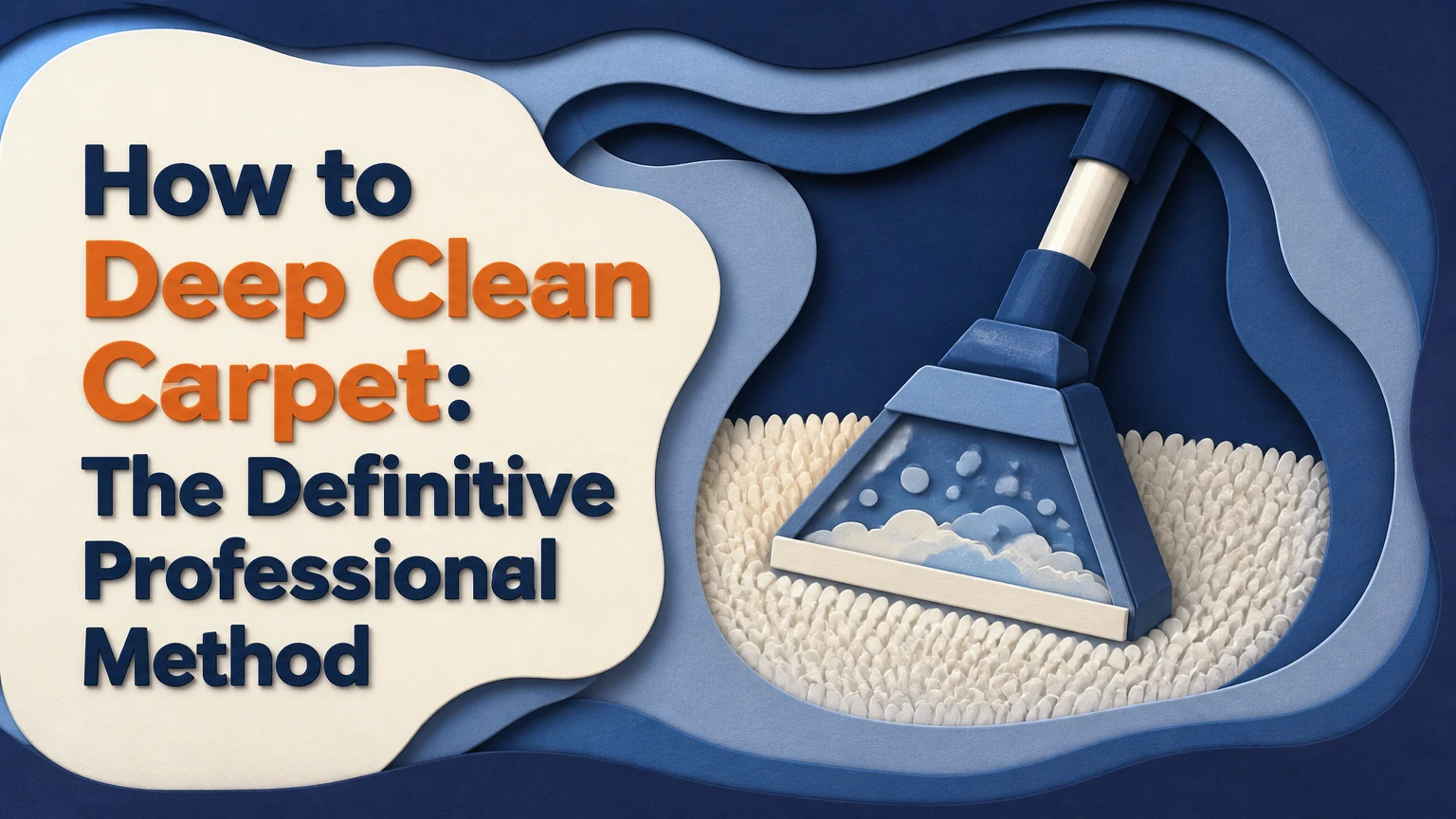
To learn how to deep clean carpet effectively, you must follow a strict 7-step process using hot water extraction, enzymatic pre-treatments, and a dedicated pure water rinse. This intermediate-level task takes 4 to 10 hours total. The single most critical factor for success is extracting all detergent residue so dirt doesn’t aggressively re-soil your floors.
Before You Start
- Time Required: 1.5 hours active labor per room (12×12 ft); 4–8 hours passive drying.
- Difficulty Level: Intermediate. Requires operating 40lb+ machinery and mixing precise chemical dilutions.
- Typical Cost: $50–$80 (Machine rental) + $30–$50 (Professional chemistry).
- Tools Checklist:
- Carpet Extraction Machine (e.g., Bissell Big Green, Hoover SmartWash)
- Standard upright vacuum with a rotating brush roll
- Pump-up or trigger spray bottle (32oz minimum)
- Horsehair or soft-bristled carpet brush
- Undyed white microfiber cloths
- Chemicals Checklist:
- Enzymatic Carpet Pre-Spray
- Extraction Detergent or Acidic Textile Rinse
- 70% Isopropyl Rubbing Alcohol (for oil/grease spots)
Phase 1: Preparation and Dry Soil Removal
Step 1: Prep the Room and Clear Debris
Remove all furniture from the area and pick up large debris by hand to prevent mechanical clogs. Clear out heavy items like sofas, or place small foil squares under wooden or metal furniture legs to prevent rust or wood stain transfer onto damp carpet.
- Specifics: Allocate 10–15 minutes for a 12×12 ft room. Do not rely on your extraction machine to pick up coins, bobby pins, or paper clips; these will instantly shatter the machine’s impeller.
- Success Checkpoint: You’ll know it worked when the floor is completely bare and free of any objects larger than a grain of rice.
- Common Mistake: Leaving metal-legged chairs on wet carpet. The moisture pulls rust from the metal in minutes, causing a permanent orange stain.
Step 2: Perform a Cross-Hatch Dry Vacuum
Vacuum the entire space slowly using a rigid grid pattern to extract the dry, abrasive particulate soil that accounts for 75% of carpet dirt.
- Specifics: Set your vacuum height to match your carpet pile. Push the vacuum North-to-South across the whole room. Then, turn 90 degrees and vacuum East-to-West. Move at half your normal vacuuming speed (about 1 foot per second).
- Success Checkpoint: You’ll know it worked when the carpet pile stands uniformly upright and the vacuum canister fills with fine, sandy grit.
- Common Mistake: Rushing the vacuum stage. Water turns dry dirt into mud; if you skip thorough dry vacuuming, your extractor will simply push mud deeper into the carpet backing.
Step 3: Test Chemicals for Colorfastness
Apply a few drops of your enzymatic pre-spray to a hidden area of the carpet to ensure the dye will not bleed or fade.
- Specifics: Find a spot inside a closet or behind a door. Apply the mixed chemical, wait 5 minutes, and press a dry, white microfiber cloth firmly into the damp spot for 30 seconds.
- Success Checkpoint: You’ll know it worked when you pull the white cloth up and see zero color transfer from the carpet fibers.
- Common Mistake: Assuming synthetic carpets never bleed. While nylon is highly colorfast, acidic spotters or high-pH degreasers can strip factory dyes instantly.
Phase 2: Chemical Treatment and Extraction
Step 4: Apply Pre-Treatment and Agitate Fibers
Spray your enzymatic pre-treatment evenly across the carpet and manually brush it in to break down bonded oils and sticky soils.
- Specifics: Mix 60 ml (2 oz) of enzymatic pre-spray per 1 liter (32 oz) of warm water in your pump sprayer. Mist the carpet until damp but not soaking, focusing heavily on dark traffic lanes. Lightly rake the fibers with your horsehair brush. Let the chemical dwell for exactly 10 minutes.
- Success Checkpoint: You’ll know it worked when the darkest traffic lanes visibly lighten and soil begins to suspend at the top of the fibers.
- Common Mistake: Letting the pre-spray dry. If the enzymes dry, they stop working and bind the dirt back to the fiber. Mist lightly with water if it starts drying before you extract.
Step 5: Perform the Hot Water Extraction Pass
Inject hot water and extraction detergent into the carpet while simultaneously vacuuming it out to flush the suspended soils.
- Specifics: Fill the clean tank with hot tap water. (Use 150°F maximum for synthetic nylon/polyester; use warm 120°F water for wool to prevent shrinking). Add 7.5 ml to 15 ml of extraction detergent per liter of water. Start in the furthest corner. Squeeze the trigger and pull backward at a steady 1 foot per second. Overlap your wheels by 50% on every new pass to prevent zebra striping.
- Success Checkpoint: You’ll know it worked when the water pulling through the machine’s clear plastic nozzle looks dark gray or brown.
- Common Mistake: Over-wetting. Pushing the machine forward while holding the spray trigger forces water deep into the foam pad. Only spray while pulling backward.
Step 6: Execute the Pure Water Rinse Pass
Flush the carpet a second time using only pure water or an acidic rinse to neutralize pH and remove sticky soap residue.
- Specifics: Empty the dirty recovery tank. Refill the clean water tank with warm water only (or an acidic textile rinse per bottle instructions)—absolutely no detergent. Repeat your exact path from Step 5. Do one pass pulling the trigger to inject pure water, followed immediately by a “dry stroke” (pulling backward with no trigger pressed) to vacuum up maximum moisture.
- Success Checkpoint: You’ll know it worked when the water coming through the clear nozzle runs mostly clear and the carpet feels merely damp, not squishy.
- Common Mistake: Skipping the dry strokes. Failing to do un-triggered passes leaves the carpet backing saturated, inviting mold.
Phase 3: Finishing and Curing
Step 7: Accelerate the Forced Air Drying Process
Create aggressive cross-ventilation immediately to dry the carpet down to the base of the fibers within 8 hours.
- Specifics: Turn on all ceiling fans on their highest setting. If outdoor humidity is below 50%, open the windows. Position dedicated floor/box fans flat on the floor, blowing horizontally across the carpet surface.
- Success Checkpoint: You’ll know it worked when you can press a dry paper towel into the thickest part of the carpet after 6 hours and it pulls back completely dry.
- Common Mistake: Walking on the carpet while damp. Damp fibers act like a magnet for the dirt and oils on the bottom of your socks or bare feet. Stay off it completely.
Common Mistakes and How to Fix Them
Even following instructions closely, variables in humidity or machine strength can cause issues. Here is how to fix the most frequent failures.
| Problem / Failure | Root Cause | Exact Solution |
| Wicking (Stains reappeared after drying) | Soil trapped deep in the backing traveled up the fibers to the surface as the water evaporated. | Lightly spray the dry spot with your pre-treatment. Blot firmly with a white cloth weighted down by a heavy object (like a stack of books) overnight to absorb rising soil. |
| Carpet smells musty or like a “wet dog” | The backing or pad stayed wet for over 24 hours, initiating mild bacteria/mildew growth. | Run a mechanical dehumidifier in the room immediately. Re-extract the carpet using a mixture of 1 cup distilled white vinegar per gallon of pure warm water. |
| Machine lost suction/isn’t picking up water | The recovery tank lid is misaligned, the rubber gasket is loose, or hair clogged the intake. | Turn off the machine. Remove, clean, and firmly reseat the dirty water tank lid to ensure an airtight seal. Clear the front floor intake nozzle of lint. |
| Carpet feels stiff or crunchy to the touch | High pH detergent was left in the fibers due to a skipped pure water rinse pass. | Perform Step 6 again. Load the machine with hot water and an acidic textile rinse (2oz per gallon) to neutralize the alkaline soap and soften fibers. |
Variations for Different Carpet Types
The method above is the standard for nylon and polyester residential carpets. Adjust your approach for these variations:
- Wool Carpet: Wool is highly absorbent and sensitive to heat and high pH. Never use water hotter than 120°F. Never use highly alkaline pre-sprays (keep pH under 8.5). Limit moisture by doing two dry vacuum passes for every one wet spray pass, and double your floor fans.
- Heavy Pet Odor: Standard enzymes will not penetrate the carpet pad where urine crystallizes. Before Step 4, you must use a specialized sub-surface extraction tool (like a Water Claw) and pour a dedicated bio-enzymatic urine digester directly over the spot until it reaches the sub-floor, let it dwell for 30 minutes, and extract it completely.
- Oil and Grease Spots: If you have black tar, grease, or makeup stains, water-based enzymes will bead off them. Apply a few drops of 70% Isopropyl Rubbing Alcohol to a white cloth and gently dab the spot (Step 3) to break the oil bond before moving to the water-based extraction.
How Long Does It Take and What Does It Cost?
Time Breakdown:
For a standard 12×12 foot room, expect 10 minutes of prep, 10 minutes of dry vacuuming, 15 minutes of chemical dwell time, and 45 minutes of active machine extraction/rinsing. Total active labor: 1.5 hours per room. Passive drying takes 4 to 8 hours depending on your HVAC and fan setup.
Cost Breakdown:
- Machine Rental: $40–$50 for 24 hours (e.g., Rug Doctor or Bissell Big Green from a hardware store).
- Professional Chemistry: $30–$40 for a liter of concentrated pre-spray and a liter of acid rinse (which yields enough to clean a whole house 3–4 times).
- Total: ~$70–$90. (Compared to $200–$300 to hire a professional truck-mount service).
Frequently Asked Questions
Do I really need to use a pre-spray, or can I just put soap in the machine?
Putting soap directly in the machine is the most common DIY error. It guarantees you will leave sticky soap residue behind. Pre-spraying isolates the chemical to the dirtiest areas and allows the machine to act purely as a flushing tool.
Can I use laundry detergent or dish soap in my carpet extractor?
No. Laundry and dish detergents generate massive amounts of foam. This foam will bypass the extractor’s float valve, get sucked into the vacuum motor, and instantly destroy the machine. Only use non-foaming carpet extraction specific formulas.
How often should I deep clean my carpets?
Carpet manufacturers recommend hot water extraction every 12 to 18 months for normal households, and every 6 to 9 months for homes with multiple pets or high foot traffic. Cleaning more frequently than this can prematurely wear out the fiber twist.
What do I do if I accidentally scrubbed a stain and the carpet is fuzzy?
Scrubbing untwists the carpet yarns, causing “blooming” or fraying. Unfortunately, this is permanent structural damage to the plastic fiber, not a stain. You cannot fix frayed fibers; you can only carefully trim the longest loose fuzz with fabric scissors to make it less noticeable.
By taking the time to dry vacuum thoroughly, respect chemical dwell times, and strictly adhere to a pure-water rinse pass, you now know exactly how to deep clean carpet. Doing this correctly not only removes the visual soil but restores the fiber health and prolongs the lifespan of your flooring investment.