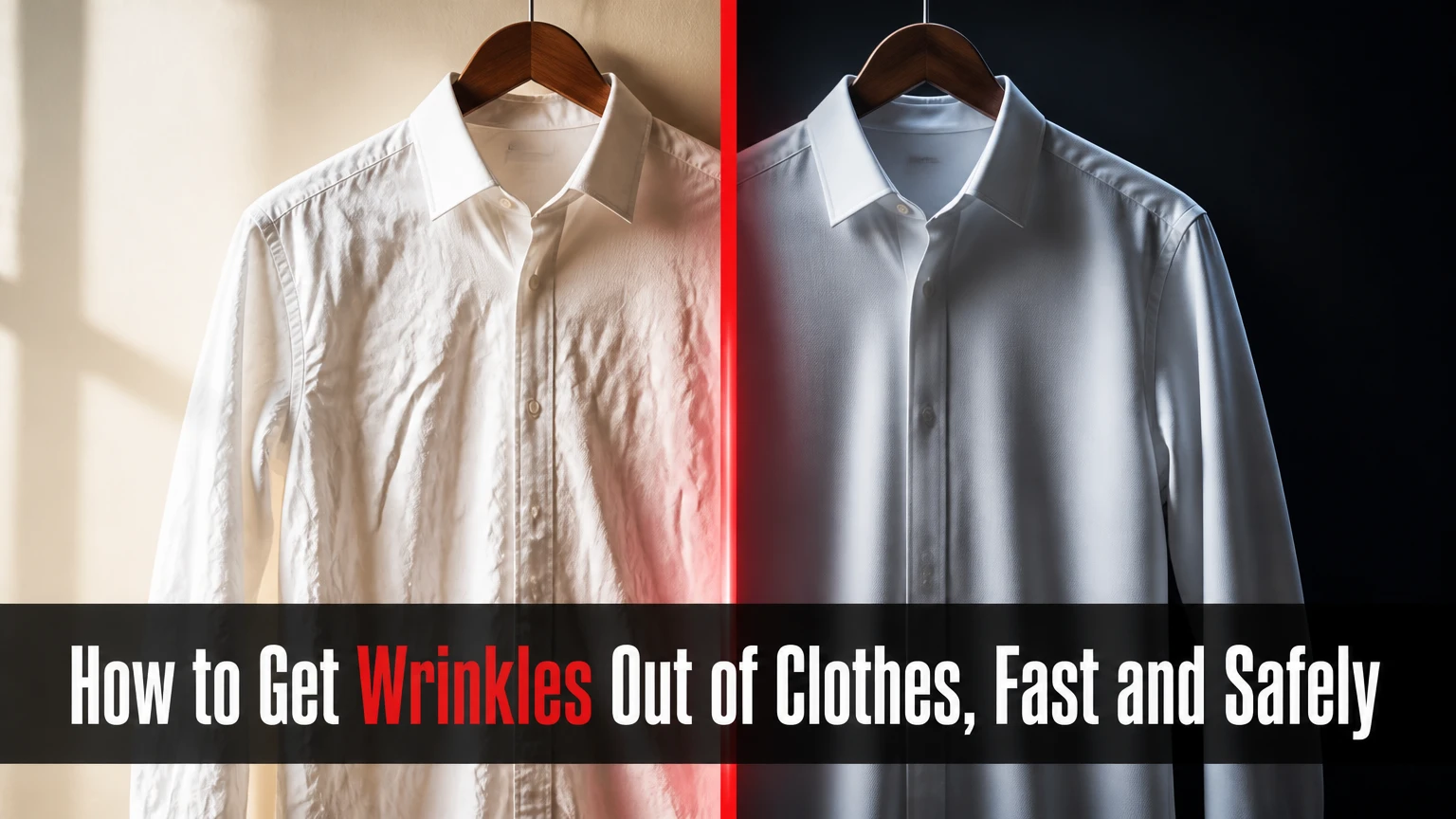
To get wrinkles out of clothes, restore slight moisture and warmth to the fabric, apply tension or pressure, and let the garment cool while hanging smoothly. Use a steamer for most delicate or shaped garments, an iron for crisp creases, and a dryer with a damp towel for casual clothing. Always follow the care label first.
Key Facts at a Glance
- A garment steamer usually removes light wrinkles in 1-3 minutes per garment.
- An iron creates sharper creases than a steamer because heat combines with direct pressure.
- A dryer with one damp washcloth can relax casual garments in approximately 10-15 minutes.
- Silk, rayon, velvet, leather, and embellished clothing require lower-risk methods and a hidden-area test.
- Wrinkle-release spray works best when the garment is misted lightly, pulled taut, and allowed to dry completely.
- Removing wrinkles from clean clothing is safer because heat can permanently set oil, sweat, and stains.
Why Do Clothes Wrinkle?
Clothes wrinkle when textile fibers become bent and cool or dry in that distorted position. Heat and moisture temporarily increase fiber mobility, while pressure, gravity, or hand tension realigns the fabric before it sets again during cooling.
Natural fibers such as cotton, linen, wool, and silk contain polymer structures that respond to moisture and heat. Synthetic fibers such as polyester and nylon can also deform, but excessive heat may soften, melt, glaze, or permanently reshape them. The care label therefore matters more than a generic temperature chart.
A successful de-wrinkling process has four parts:
- Moisture: Steam, a damp cloth, or a light mist softens the fabric response.
- Controlled heat: Warmth relaxes fibers, but excessive heat damages them.
- Mechanical action: Pressure, gravity, shaking, or tension flattens the garment.
- Cooling: The garment must remain smooth while it cools and dries.
Wrinkles often return when a garment is removed too soon from a dryer, folded while warm, or worn before residual moisture evaporates. Hanging is part of the treatment, not an optional finishing step.
What Temperature Is Safe for Each Fabric?
The safest temperature is the lowest setting that removes the wrinkle, subject to the garment’s care label. The ranges below are practical starting points for common fibers, not replacements for the manufacturer’s instructions.
| Fabric or fiber | Typical iron setting | Safer first choice | Main risk |
|---|---|---|---|
| Nylon or acetate | Low, about 110-135°C | Light steaming from a distance | Melting or shiny patches |
| Polyester | Low to medium, about 135-150°C | Steaming or pressing inside out | Glazing and heat-set marks |
| Wool | Medium, about 150-165°C with steam | Steaming with tension | Flattened nap or water marks |
| Silk | Low, about 110-135°C, usually dry or barely damp | Back-side steaming | Water spots and scorching |
| Cotton | Medium to high, about 165-200°C | Ironing with controlled steam | Shine, scorching, or color transfer |
| Linen | High, about 190-200°C if labeled safe | Damp ironing or steaming | Scorching and permanent shine |
| Rayon or viscose | Low to medium, about 135-150°C | Inside-out steaming | Stretching, water rings, distortion |
| Spandex blend | Low, about 110-135°C | Air drying and gentle steaming | Loss of elasticity |
The numbers are typical appliance ranges. Iron symbols on the care label take precedence because dyes, finishes, coatings, blends, and garment construction change the safe limit.
How Should You Read the Care Label?
A one-dot iron symbol indicates low heat, two dots indicate medium heat, and three dots indicate high heat. A crossed-out iron means the garment should not be ironed. A crossed-out tumble-dryer symbol means the dryer method is unsuitable even if the garment is casual.
A “dry clean only” label does not automatically prohibit steaming, but linings, glued interfacing, structured shoulders, and delicate trims make home treatment risky. Test a hidden seam first, and keep steam away from adhesive details.
How to Get Wrinkles Out of Clothes: Five Reliable Methods
The best method depends on fabric, finish, urgency, and available equipment. Use direct ironing for crisp results, vertical steaming for shaped garments, a dryer for casual clothing, a spray for portable touch-ups, and bathroom humidity only for light wrinkles.
Before You Start
| Requirement | Typical value |
|---|---|
| Time available | 1-20 minutes |
| Difficulty | Easy, moderate for delicate garments |
| Basic tools | Hanger, clean towel, water, garment |
| Optional equipment | Iron, ironing board, steamer, dryer, spray bottle |
| Garment condition | Clean, dry or slightly damp, stain-free |
| Safety check | Care label and hidden-area test |
Do not treat stained or visibly dirty clothing with high heat. Heat can drive oils, perspiration, and some food residues deeper into fibers, making later cleaning less effective.
Method 1: Iron the Garment
Ironing is the best choice when a shirt collar, trouser crease, cuff, or cotton panel needs a sharp, controlled finish. Set the iron to the care-label temperature, use steam only when permitted, and move the soleplate continuously rather than leaving it in one place.
- Prepare the garment. Turn dark, printed, synthetic, and delicate clothing inside out. Place a clean pressing cloth between the iron and the fabric when the surface may shine.
- Set the temperature. Start low and increase gradually. Do not begin with the highest setting because one heat mark can be permanent.
- Dampen appropriately. Use the iron’s steam function or a light water mist for cotton and linen if the label allows it. Keep silk and water-sensitive rayon nearly dry.
- Iron small sections first. Press collars, cuffs, plackets, pockets, and seams before moving to broad panels. Smooth the fabric with your free hand.
- Use short passes. Glide the iron with moderate pressure. Lift it over buttons, zippers, plastic decorations, and raised embroidery.
- Hang immediately. Put the garment on a shaped hanger, align seams, and let it cool for at least 5 minutes before folding.
You will know ironing worked when the panel lies flat without a damp sheen, the seams remain aligned, and no new horizontal line appears behind the iron.
Common mistake: Pressing directly over a printed logo or synthetic lining can transfer, melt, or flatten the design. Use the reverse side and a pressing cloth.
Method 2: Steam the Garment
Steaming is the most versatile first choice for dresses, jackets, knitwear, polyester shirts, and garments whose shape would flatten under an iron. A handheld steamer commonly takes 1-3 minutes for a light garment, while thick wool, heavy linen, and lined jackets need additional passes.
- Hang the garment securely. Use a broad hanger for jackets and a shaped hanger for shirts. Keep the garment away from walls, wood, and heat-sensitive surfaces.
- Fill the steamer correctly. Use the water type specified by the manufacturer. Distilled water may reduce mineral buildup, but some appliances require filtered or tap water.
- Start at the hem. Hold the fabric lightly taut and move the nozzle upward in vertical strokes. Gravity helps the fibers settle straight.
- Control the distance. Keep the nozzle about 2-5 centimeters away for silk, acetate, and delicate synthetics. The nozzle may contact sturdy cotton only when the appliance instructions permit it.
- Treat both sides when necessary. Steam the inside of a thick jacket or trouser leg if one pass does not reach the crease.
- Let the garment dry. Leave it hanging for 5-10 minutes before wearing or packing.
You will know steaming worked when wrinkles release as the fabric warms and the garment hangs without rippling after it dries.
Common mistake: Holding a steamer in one place saturates fabric and may create water marks. Keep the nozzle moving and use less steam on thin materials.
Method 3: Use the Dryer With Moisture
A dryer can remove light wrinkles from T-shirts, jeans, cotton blends, and other tumble-safe casual clothing. Add one clean, damp washcloth or 2-3 ice cubes, run a medium cycle for about 10-15 minutes, and remove the garments immediately.
- Check the label. Exclude wool, silk, rayon, leather, structured jackets, glued details, and anything marked “do not tumble dry.”
- Use a small load. Two to four garments give clothing room to tumble and flatten. An overloaded drum preserves wrinkles.
- Add controlled moisture. Use one wrung-out washcloth, not a soaked towel. A damp cloth produces predictable steam and avoids excess drying time.
- Choose moderate heat. Medium heat is a safer starting point than high heat for blends and colored clothing.
- Stop promptly. Remove the load as soon as the cycle ends, shake each item, smooth seams, and hang everything.
You will know the dryer method worked when the garment is warm and mostly smooth, with no damp clumps or twisted seams.
Common mistake: Leaving clothes in the drum after the cycle creates new set-in creases. The dryer loosens wrinkles only while the fabric has room, heat, and moisture to move.
Method 4: Use Wrinkle-Release Spray
Wrinkle-release spray is useful for travel, office touch-ups, and garments with light surface creases. Mist the hanging garment lightly from 15-25 centimeters away, pull the cloth taut in two directions, and allow 5-10 minutes for complete drying.
- Patch test first. Apply the product to an inside hem, especially on silk, dark dyes, rayon, and water-sensitive fabrics.
- Use a light mist. The fabric should feel slightly damp, never wet enough to sag.
- Apply tension. Pull the garment downward from the hem and smooth across the wrinkle with your palm.
- Shake and hang. A firm shake separates folded layers, while hanging lets gravity maintain the alignment.
- Check the smell and residue. Do not wear the garment until it is dry and the product has evaporated.
You will know the spray worked when the crease relaxes without a visible ring, sticky patch, or strong remaining fragrance.
Common mistake: Substituting concentrated fabric softener, dish soap, or alcohol for a commercial wrinkle-release product can stain fabric or weaken finishes. A homemade mixture has no universal safety standard, so patch testing is essential.
Method 5: Use Bathroom Humidity
Bathroom humidity can soften light wrinkles in a shirt, dress, or synthetic blend when no equipment is available. Hang the garment away from direct water for 15-20 minutes during a hot shower, then shake, smooth, and air-dry it.
- Hang the garment on a sturdy hanger, shower rod, or door hook.
- Keep it at least several feet from the shower stream and away from wet walls.
- Close the bathroom door, turn off the exhaust fan, and take a normal hot shower.
- Remove the garment after the room becomes humid, then smooth the fabric by hand.
- Let the garment dry completely before wearing it.
The shower method is weaker than an active steamer because humidity is less concentrated and provides little mechanical tension. It should not be used as a reason to run a shower solely for clothing, particularly in areas with water restrictions.
Which Method Should You Choose?
Choose a steamer for the safest broad-purpose result, an iron for defined creases, and a dryer for casual garments when speed matters more than energy use. Spray and shower humidity are convenience methods for light wrinkles, not substitutes for pressing heavily creased or structured clothing.
| Method | Typical time | Typical cost | Finish | Best fabric situation |
|---|---|---|---|---|
| Steam iron | 3-7 minutes | $20-$100 | Sharp, pressed | Cotton shirts, linen trousers |
| Handheld steamer | 1-3 minutes | $30-$70 | Soft, draped | Silk, knits, dresses |
| Upright steamer | 2-5 minutes | $80-$250 | Soft, efficient | Jackets, wardrobes, frequent use |
| Dryer with damp cloth | 10-15 minutes | Existing appliance | Casual, moderate | T-shirts, jeans, cotton blends |
| Wrinkle-release spray | 2 minutes plus 5-10 drying | $5-$12 | Light touch-up | Travel and office emergencies |
| Shower humidity | 15-20 minutes | Water and electricity | Light, uneven | Thin shirts without equipment |
What Is the Fastest Way to Remove Wrinkles?
For one garment, a handheld steamer is typically fastest at 1-3 minutes. For several casual garments, a dryer with one damp washcloth is more efficient because it treats multiple pieces at once, although it uses more energy and creates a higher shrinkage risk.
A dry iron can be faster than steam on a single small wrinkle, especially on a cotton collar. The fastest method fails when the garment is too wet, the fabric is overloaded with wrinkles, or the care label prohibits heat.
Is Steaming Better Than Ironing?
Steaming is better for delicate, draped, textured, and three-dimensional garments, while ironing is better for crisp collars, cuffs, seams, and trouser pleats. Steaming reduces direct contact, but ironing offers more control over a stubborn crease and a more formal finish.
| Need | Recommended method | Reason | Avoid when |
|---|---|---|---|
| Remove wrinkles from silk | Low-distance steam | Limits soleplate contact | Garment has water-sensitive dye |
| Create trouser crease | Iron with pressing cloth | Applies direct compression | Fabric is heat-sensitive |
| Smooth a wool jacket | Vertical steam | Preserves shape and nap | Jacket has glued trim |
| Flatten cotton shirt | Steam iron | Combines moisture and pressure | Shirt has untreated stain |
| Refresh a knit sweater | Gentle steam | Avoids stretching from ironing | Sweater is wet or unstable |
A steamer is not automatically safer. Direct steam can distort rayon, flatten velvet, or drive moisture into lining and padding. Test first.
How Do You Remove Wrinkles From Specific Fabrics?
Fabric construction determines the safest treatment. Cotton and linen tolerate more heat than silk or nylon, while rayon often reacts badly to localized water and tension.
Cotton and Linen
Use a warm iron with steam or a damp pressing cloth when the care label permits it. Work while the garment is slightly damp, or mist one panel at a time, because completely dry linen often needs more pressure and higher heat.
Linen may retain a relaxed texture even after careful pressing. The goal is a smooth, natural finish rather than an artificially rigid surface.
Polyester and Nylon
Use low to medium heat, steam from a short distance, or a dryer on moderate heat. Turn synthetic garments inside out and place a cloth over areas that may develop shine.
Never leave a hot iron stationary on polyester or nylon. A melted or glazed patch usually cannot be restored.
Silk
Hang silk and steam from the reverse side with the nozzle several centimeters away. Avoid spraying visible water droplets because silk may develop rings, and never press wet silk at high heat.
For severe creases, place a thin cotton pressing cloth over the reverse side and use the lowest label-approved setting. Dry cleaning is safer for lined silk garments with construction details.
Wool and Cashmere
Use vertical steam and gentle hand tension, then allow the garment to dry flat or on a broad hanger according to its shape. Avoid aggressive pulling because warm wool can stretch.
Ironing wool requires a pressing cloth and a lifting motion rather than repeated sliding. Pressure can flatten the nap and leave a shiny area.
Rayon and Viscose
Steam lightly from the reverse side and support the garment while it dries. Rayon becomes weaker when wet, so excessive pulling can lengthen a sleeve, distort a shoulder, or create an uneven hem.
Do not saturate rayon with spray. A hidden-area test is especially important because water marks are common.
How Do You Remove Wrinkles From a Suit or Structured Jacket?
Use a garment steamer on the outer fabric while the suit hangs on a broad hanger, but keep steam away from glued canvases, leather trim, and delicate lining. For a sharply defined trouser crease, use an iron and pressing cloth only on the reverse side or through a protective cloth.
A suit jacket should not be placed in a dryer or pressed directly across lapels. Steam the back, sleeves, and lower front panels first, then shape the lapels by hand without flattening their roll. Let the jacket dry for 10-15 minutes before wearing it.
Persistent wrinkles in wool, tailored silk, or a jacket with internal structure may require a professional presser or dry cleaner. Home steam can relax surface creases, but it cannot reliably correct a distorted canvas or permanently crushed lapel.
Common Mistakes and How to Fix Them
Ironing a Dirty Garment
Problem: Heat sets oil, perspiration, and food residue.
Fix: Launder or spot-clean the garment first, then dry it according to the label before pressing.
Using Excessive Heat
Problem: Synthetic fibers glaze or melt, while natural fibers scorch.
Fix: Start at the lowest setting and increase only after a hidden-area test.
Over-Wetting the Fabric
Problem: Saturated clothing develops water rings, stretches, or takes too long to dry.
Fix: Use steam or a light mist, then keep the garment moving and hanging.
Leaving Clothes in the Dryer
Problem: Warm fabric cools in a compressed heap and develops new creases.
Fix: Remove clothing immediately, shake each item, smooth seams, and hang it.
Using Vinegar in an Iron Without Manufacturer Approval
Problem: Vinegar can damage seals or internal components in some steam irons, while mineral deposits vary by water supply and appliance design.
Fix: Follow the iron manufacturer’s descaling instructions. Use distilled water only when the manual permits it; do not assume a 50/50 vinegar mixture is universally safe.
Pressing Over Prints, Sequins, or Buttons
Problem: Decorations can melt, transfer, crack, or distort.
Fix: Turn the garment inside out, use a pressing cloth, and lift the iron over raised details.
Steaming Velvet or Napped Fabric Incorrectly
Problem: Direct pressure changes the direction of the pile and creates patches.
Fix: Steam from the reverse side, keep the nozzle moving, and restore the nap with a soft garment brush after drying.
Choose by Situation
For a Work Shirt Needed in Five Minutes
Hang the shirt, steam the collar, placket, chest, and sleeves, then leave it on the hanger while you finish dressing. If no steamer exists, use a warm iron on the reverse side and concentrate on visible areas rather than pressing every panel.
For Clothes Straight From a Suitcase
Hang the garment, use a handheld steamer or light wrinkle-release spray, and let it rest for 5-10 minutes. A hotel shower can soften minor folds, but it will not replace pressing for a deeply compressed linen jacket.
For a Large Casual Laundry Load
Use the dryer with a small load and one damp washcloth for 10-15 minutes. Remove every garment immediately. Do not use this shortcut for wool, silk, rayon, leather, fitted garments with elastane, or anything marked “hang dry.”
For Vintage Clothing
Use the least invasive method first: gravity, brief distant steam, and a hidden-area test. Vintage dyes, finishes, elastic, and adhesives may be less stable than modern equivalents, so a professional textile conservator or experienced cleaner is safer for valuable pieces.
For No Equipment
Hang the garment in a humid bathroom, smooth it by hand, and allow it to air-dry. For a stronger no-iron treatment, lightly mist the fabric with clean water, pull it taut, and position it near moving air from a fan.
How Much Time and Money Does Wrinkle Removal Take?
Home wrinkle removal costs nothing when you use an existing dryer or bathroom, while dedicated equipment ranges from approximately $20 for a basic iron to $250 for an upright steamer. Time ranges from 1 minute for a small steam touch-up to 20 minutes for passive bathroom humidity.
| Situation | Method | Typical time | Typical additional cost |
|---|---|---|---|
| One shirt, light wrinkles | Handheld steamer | 1-3 minutes | $0 after purchase |
| One cotton shirt, sharp finish | Steam iron | 3-7 minutes | $0 after purchase |
| Four casual garments | Dryer and damp cloth | 10-15 minutes | Appliance energy cost |
| Travel touch-up | Wrinkle-release spray | 2 minutes plus drying | $5-$12 bottle |
| No equipment, thin shirt | Shower humidity | 15-20 minutes | Water and electricity |
| Valuable structured garment | Professional cleaning or pressing | Varies by provider | Local service price |
These figures are typical household ranges, not universal service prices. Appliance power, garment thickness, room humidity, and wrinkle severity change the result.
How Can You Prevent Wrinkles From Returning?
Remove laundry from the washer or dryer promptly, shake each item, smooth the seams, and hang or fold it while the fibers are still relaxed. Avoid packing clothing tightly, overloading drawers, and leaving damp garments in a basket.
For travel, roll knitwear loosely, fold structured shirts around a flat layer, and leave space in the suitcase. Wrinkle-resistant polyester and treated cotton resist creasing better than untreated linen, but no fabric remains wrinkle-free under compression.
A useful household routine is to separate garments by drying behavior. Tumble-dry casual cotton pieces together, remove them promptly, and hang delicate or structured garments before the cycle ends. That reduces both wrinkles and unnecessary high-heat exposure.
FAQ
Can I Get Wrinkles Out of Clothes Without Heat?
Light wrinkles can sometimes be reduced with water, tension, gravity, and moving air, but heat or steam usually produces a faster, more complete result. Mist the garment lightly, pull it smooth on a hanger, shake it firmly, and place it near a fan until dry. This method cannot reliably remove sharp or set-in creases.
How Do I Get Wrinkles Out of Jeans?
Place tumble-safe jeans in the dryer with one damp washcloth for 10-15 minutes on medium heat. Remove them immediately, shake them, smooth the legs and waistband, and hang them. For a single stubborn crease, use a medium-temperature iron inside out with a pressing cloth.
Can I Put Wrinkled Clothes in the Dryer?
You can put wrinkled clothes in the dryer when the care label permits tumble drying. Use a small load, one damp washcloth, and moderate heat for roughly 10-15 minutes. Avoid the dryer for silk, wool, rayon, leather, structured jackets, embellished items, and garments that may shrink.
Why Do My Clothes Still Look Wrinkled After Ironing?
Wrinkles remain when the soleplate is too cool, the fabric is too dry, the garment is stretched incorrectly, or the crease is embedded in a seam or lining. Recheck the care-label setting, mist cotton or linen lightly, press one section at a time, and let the garment cool flat or hanging.
Does Fabric Softener Remove Wrinkles?
Fabric softener may make some fibers feel smoother during laundering, but it does not reliably remove established wrinkles from a dry garment. Excess product can leave residue and reduce absorbency. Use a steamer, iron, dryer treatment, or labeled wrinkle-release spray for visible creases.
Should I Iron or Steam a Dress?
Steam a dress when it is draped, delicate, lined, pleated, or made from a synthetic blend; iron it when the fabric needs a crisp seam or structured finish. Keep steam away from glued decorations and test silk, rayon, velvet, and dark dyes in a hidden area first.
The Bottom Line
To get wrinkles out of clothes safely, match the method to the fabric and finish: steam most garments, iron cotton and linen when sharp creases matter, use a damp-cloth dryer cycle for tumble-safe casual clothing, and reserve sprays or shower humidity for light travel wrinkles. Always use controlled moisture, the lowest effective heat, mechanical tension, and immediate hanging.