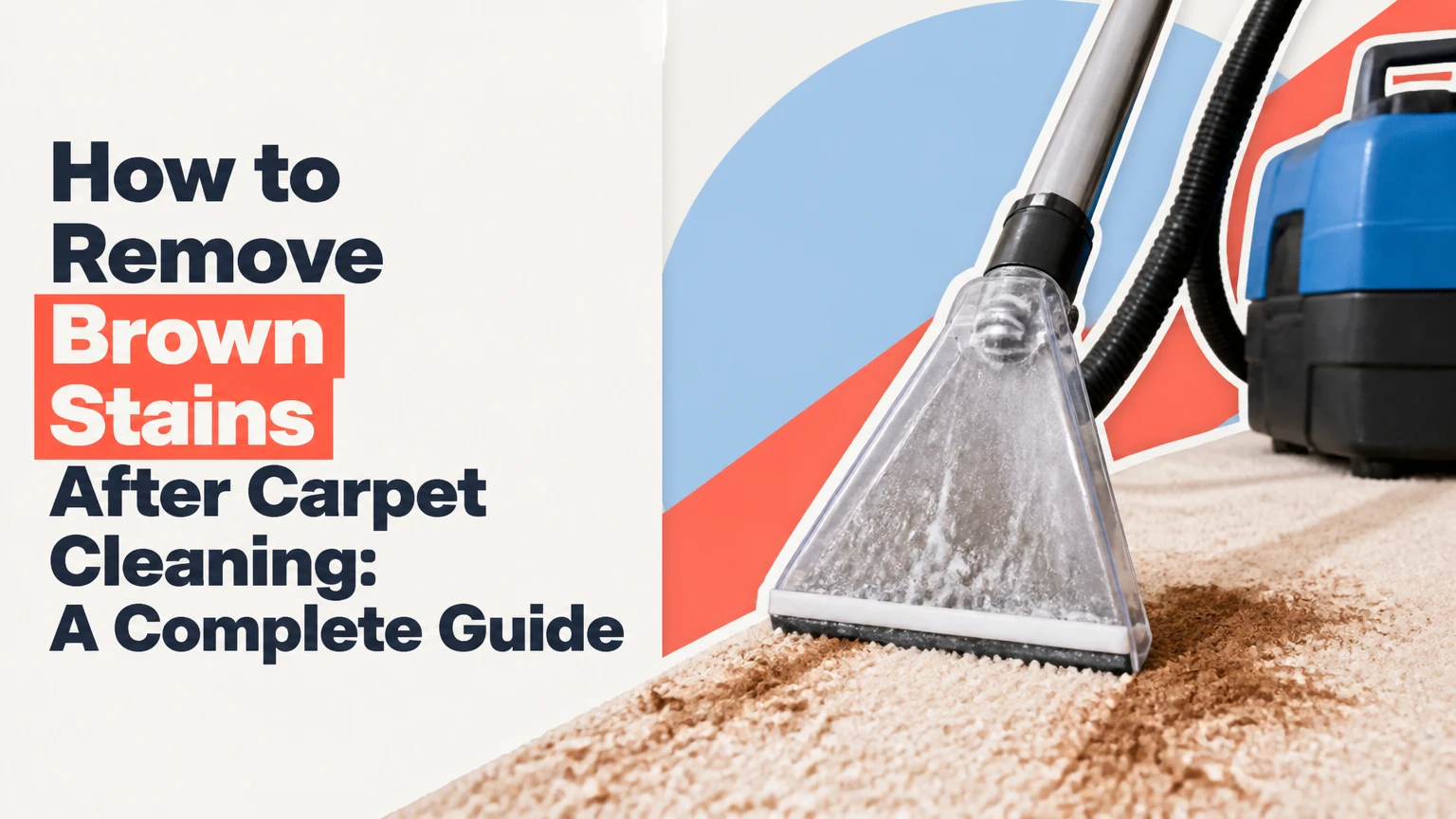
Learning how to remove brown stains after carpet cleaning requires neutralizing alkaline residue that wicked to the surface during drying. This eight-step process takes about 20 minutes of active work followed by an overnight drying phase. It is a beginner-friendly repair, provided you absolutely control the moisture level.
Before You Start
Successfully reversing a browning issue comes down to utilizing the correct acidic pH and preventing further capillary action. According to the Institute of Inspection, Cleaning and Restoration Certification (IICRC) S100 standard (2015), carpet browning typically occurs because high-pH cleaning residues or natural lignins from a jute backing have migrated up the fiber shaft as the water evaporated.
You must gather the exact materials listed below before beginning. Substituting colored towels or using hot water will worsen the problem permanently.
| Material or Tool | Specification or Quantity | Typical Cost | Purpose in Process |
| White Vinegar | 5% acidity level (standard grocery store grade) | $3-5 | Acts as a mild acid to neutralize alkaline residue. |
| Commercial Browning Treatment | Optional upgrade (e.g., Chemspec or Prochem) | $20-30 | Contains specialized citric or sulfamic acids for severe cases. |
| White Cotton Towels | 3-5 clean, dry, 100% white towels | $10-15 | Absorbs moisture and pigment without transferring dye. |
| Pump Sprayer or Bottle | Must feature an adjustable fine-mist nozzle | $5-10 | Ensures exact moisture control to prevent soaking the pad. |
| Heavy Flat Weights | 15-20 lbs total (heavy books or hand weights) | Free | Forces deep moisture to wick into the towel stack. |
| Plastic Wrap | Standard kitchen cellophane | $2-4 | Protects your heavy books from absorbing carpet moisture. |
| Air Mover | Box fan, floor fan, or active dehumidifier | Free | Accelerates the final drying phase to stop future wicking. |
Process Overview Metrics:
- Active Labor Time: 15-25 minutes.
- Passive Drying Time: 8-12 hours.
- Difficulty Level: Beginner.
- Total Cost: $10-40 depending on chemical choices.
The 8-Step Removal Process
The following sequence safely neutralizes the stain and extracts it mechanically. Follow the timings strictly to avoid damaging your carpet fibers.
Step 1: Perform a Dry Vacuum Pass
Run a dry vacuum over the affected area without the beater bar engaged to extract crystallized alkaline salts.
When dirty water evaporates at the tips of carpet fibers, it leaves behind a crust of dried mineral deposits, soil, and alkaline cleaning agents. Adding moisture directly to this dry crust immediately reactivates the soil and pushes it deeper. Use your vacuum hose attachment to gently agitate the brown tips. Make three to four slow passes in alternating directions.
- Success Checkpoint: You’ll know it worked when the carpet fibers separate slightly and feel less stiff to the touch.
- Common Mistake: Using a heavy beater bar brush. Aggressive spinning brushes will untwist the delicate fiber tips and spread the dry browning dust across a wider radius.
Step 2: Test for Colorfastness
Apply your chosen acidic solution to an inconspicuous patch of carpet and press a white towel against it for 60 seconds.
Even mild acids can destabilize certain unstable carpet dyes. Find a hidden section of carpet inside a closet or behind a heavy piece of furniture. Lightly dampen a corner of your white cotton towel with straight white vinegar or your diluted commercial treatment. Press the damp towel firmly into the hidden carpet fibers for one full minute. Lift the towel and inspect the white fabric in good lighting.
- Success Checkpoint: You’ll know it worked when the towel shows absolutely zero dye transfer and the carpet retains its original color.
- Common Mistake: Skipping this test on wool carpets. Wool is highly reactive to pH changes, and failing to test can result in permanent, irreversible bleaching.
Step 3: Mix Your Acidic Rinse Solution
Mix your acidic solution using exactly one part white vinegar to two parts cool water in your spray bottle.
Temperature and chemical ratio dictate the safety of this step. Use cool or room-temperature water strictly. If you are using standard household white vinegar (which has a 5% acetic acid concentration), combine 1 cup of vinegar with 2 cups of cool water. This dilution yields an approximate pH of 4.5, which is perfectly balanced to neutralize alkaline stains sitting at a pH of 9 or 10. If you are using a commercial browning treatment, mix 4 to 6 ounces of the chemical per gallon of cool water, exactly as the manufacturer label dictates.
- Success Checkpoint: You’ll know it worked when the liquid is thoroughly mixed, visually clear, and housed in a sprayer capable of producing a fine mist.
- Common Mistake: Guessing the ratios or using hot water. Hot water acts as a catalyst that permanently sets natural cellulosic browning into the synthetic fibers.
Step 4: Mist the Affected Surface Fibers
Squeeze the trigger to apply a light, even mist strictly to the top third of the carpet fibers.
Adjust your sprayer nozzle to its finest mist setting. Hold the bottle six to eight inches above the carpet surface. Apply two to three light sprays per square foot. The sole objective is to dampen the brown discoloration at the very tips of the yarn. You absolutely must not allow the liquid to penetrate down to the primary backing or the foam pad underneath.
- Success Checkpoint: You’ll know it worked when the carpet feels slightly damp to a light touch but your fingers remain dry if you press them down to the roots.
- Common Mistake: Pouring the solution directly from a cup. Flooding the area pushes the brown pigment directly into the pad, guaranteeing it will wick back up to the surface tomorrow.
Step 5: Allow the Solution to Dwell
Leave the acidic mist undisturbed on the carpet fibers for five to ten minutes.
Chemical reactions require contact time to function. The acid in your solution needs these minutes to locate the alkaline salts, break their molecular bonds, and suspend the brown pigment in the moisture. Set a timer for seven minutes. Do not touch, agitate, or blot the spot while the timer is running.
- Success Checkpoint: You’ll know it worked when the dark brown stain begins to look slightly lighter or more transparent as the pigments break down.
- Common Mistake: Rushing the dwell time. If you blot immediately after spraying, you will only absorb the vinegar mixture while leaving the crystallized browning salts firmly attached to the carpet fibers.
Step 6: Perform the Initial Hand Blot
Press a dry white cotton towel firmly into the damp carpet using the heels of your hands.
Fold your clean white towel into a neat square so you have a thick, uniform pad. Place the towel directly over the misted area. Lean your body weight onto the heels of your hands and press straight down into the floor for ten seconds. Lift the towel straight up. You should see yellow or brown transfer on the white fabric. Fold the towel to a clean, dry section and repeat this vertical pressing motion until no more moisture transfers to the cloth.
- Success Checkpoint: You’ll know it worked when the folded towel extracts visible brown pigment and the carpet feels mostly dry to the touch.
- Common Mistake: Scrubbing or rubbing in circles. Lateral friction permanently damages the yarn structure, creating a fuzzy, frayed texture that looks like a permanent shadow.
Step 7: Set Up the Weighted Extraction Stack
Place a fresh towel over the stain, cover it with plastic wrap, and apply 15 to 20 pounds of flat weight.
This mechanical extraction stops the capillary action that causes wicking. Lay a brand new, completely dry white towel over the treated zone. Cut a sheet of plastic wrap that is slightly larger than the towel and lay it flat on top. Stack heavy items evenly across the plastic. Encyclopedias, a 20-pound dumbbell resting on a cutting board, or heavy storage boxes work perfectly. Leave this stack completely undisturbed for 8 to 12 hours, preferably overnight. As the carpet attempts to dry, the moisture and any remaining brown pigment will be forced upward into the dry towel.
- Success Checkpoint: You’ll know it worked when you remove the stack the next morning and the bottom of the towel is damp with dirty water, while the carpet below is bone-dry and clean.
- Common Mistake: Omitting the plastic wrap layer. Without the moisture barrier, the dampness will ruin your books or cause the weights to rust directly onto your freshly cleaned carpet.
Step 8: Apply Accelerated Airflow
Aim a high-velocity fan directly at the treated area for two to four hours until the fibers are completely dry.
Once you remove the weighted stack, the carpet might retain a tiny fraction of residual humidity. Position a box fan, floor blower, or dehumidifier unit so the airflow sweeps directly across the carpet pile. Fast evaporation prevents any deeply hidden moisture in the backing from having the time to travel up the fiber shafts.
- Success Checkpoint: You’ll know it worked when you can press a dry paper towel hard into the carpet and it pulls up zero moisture.
- Common Mistake: Letting the room dry passively with closed windows. Stagnant, humid air extends the drying time by hours, giving deep soils a second chance to migrate to the surface.
Common Mistakes and How to Fix Them
Even careful practitioners occasionally encounter a stubborn stain. When a removal attempt fails, the appearance of the failure tells you exactly what went wrong. Here are the most frequent failure modes and the precise steps required to recover from them.
Re-Wetting the Backing Pad
If the stain disappears perfectly during cleaning but returns exactly the same size the next morning, you have a classic wicking failure. The initial cleaning pushed dirty water deep into the foam underpad. As the surface dried, it acted like a wick in a kerosene lamp, pulling the dirty water up from the bottom.
- The Fix: You do not need more chemicals. Mist the surface extremely lightly with plain water to reactivate the tips, then immediately apply the weighted towel stack. Leave 20 pounds of weight on the spot for 24 hours. The dry towel will draw the soil out of the pad mechanically.
Using High Heat on Cellulosic Browning
If your carpet has a natural jute backing, over-wetting it causes the jute to release lignin, a natural brown dye. If you hit this cellulosic browning with hot steam, the heat will permanently dye the synthetic face yarns.
- The Fix: Standard vinegar will not touch heat-set lignin. You must purchase a commercial Cellulosic Browning Treatment containing sodium metabisulfite. This is a reducing agent that chemically removes oxygen from the stain, rendering it invisible. Mix this strictly with cold water, apply a light mist, and dry it instantly with high-speed fans.
Applying High-pH Spotters
When homeowners see a brown stain, they often panic and grab standard household carpet shampoos, ammonia, or oxygen bleach. These products carry a pH between 9 and 11. Because browning is caused by alkalinity, adding a high-pH cleaner accelerates the chemical reaction, turning a light yellow stain into a dark, rusty brown blotch.
- The Fix: Stop using soap immediately. Flush the area with the 1:2 vinegar-to-water acidic solution to bring the pH down. Blot aggressively with dry towels until the sudsing completely stops, then proceed to the weighted extraction phase.
Scrubbing Instead of Blotting
If the brown stain is gone but the area looks darker, fuzzy, or holds a permanent shadow, you have un-twisted the carpet yarns. Yarns are tightly twisted and heat-set at the factory to reflect light evenly. Scrubbing with a brush or a rough towel tears these twists apart.
- The Fix: Unfortunately, mechanical damage is permanent. You cannot re-twist the fibers. You can minimize the visual shadow by carefully trimming the fuzziest loose ends with sharp sewing scissors, but the texture change will remain forever. Always press vertically.
Variations for Different Carpet Fibers
Carpet materials react to water, heat, and chemicals in vastly different ways. Adjust your approach based on the specific textiles in your home.
| Carpet Material | Chemical Sensitivity | Required Dwell Time | Heat Tolerance |
| Nylon (Synthetic) | Low. Extremely durable and resists chemical burns. | 10 minutes | High. Can withstand steam if needed. |
| Wool (Natural) | High. Damaged easily by high pH and strong acids. | 3-5 minutes max | Low. Hot water causes permanent shrinkage. |
| Olefin / Polyester | Medium. Highly prone to oil attraction. | 7-10 minutes | Low. Fibers can literally melt under high heat. |
| Jute / Hemp / Sisal | Extreme. Water causes immediate rot and browning. | 0 minutes (Dry clean only) | Zero. Never apply water to natural plant fibers. |
Treating Nylon Carpets
Nylon is the most forgiving material in residential flooring. It responds beautifully to the standard vinegar and water treatment. Because nylon fibers are structurally dense, you can safely leave the acidic solution to dwell for up to 12 minutes if the browning is particularly severe. Nylon also releases moisture rapidly into the weighted towel stack.
Treating Wool Carpets
Wool requires immense caution. Wool fibers have an overlapping scale structure that traps water, making it take twice as long to dry. Furthermore, highly acidic solutions can burn the protein structures in wool. When treating wool, dilute your vinegar further to a 1:4 ratio (one part vinegar to four parts water). Limit your dwell time to three minutes, and immediately blot the area dry. Never use commercial sodium metabisulfite treatments on wool unless the label explicitly guarantees it is wool-safe.
Treating Olefin and Polyester
Olefin (polypropylene) is inherently stain-resistant but acts as an absolute magnet for oils. When alkaline residues wick to the top of olefin, they often bind with microscopic oils tracked in from the garage. If the standard acidic rinse fails on olefin, you may need to wipe the tips lightly with a solvent-based spotter on a white rag before applying the acid rinse, effectively breaking the oil barrier first.
How Long Does It Take and What Does It Cost?
Browning removal is highly cost-effective because the primary mechanism of action is mechanical extraction rather than expensive chemistry.
| Phase of Operation | Estimated Time | Financial Cost |
| Preparation & Mixing | 5 minutes | $3 (Vinegar and water) |
| Application & Dwell | 10 minutes | $0 (Labor only) |
| Active Hand Blotting | 5-10 minutes | $10 (Cost of white cotton towels) |
| Weighted Stack Extraction | 8-12 hours (Passive) | $2 (Plastic wrap) |
| Accelerated Fan Drying | 2-4 hours (Passive) | $0 (Assuming you own a fan) |
If you attempt this process twice and the browning remains dark, you have likely encountered true cellulosic browning requiring professional chemistry. Purchasing a professional-grade reducing agent like Prochem Browning Treatment costs around $25 for a quart. Hiring a certified IICRC professional to correct severe pad-wicking generally costs between $125 and $200 for a service call. For a beginner, investing $15 in white towels and a bottle of vinegar is the smartest first step.
Frequently Asked Questions
Why did my carpet turn brown days after I cleaned it?
The cleaning process left the deep carpet pad saturated with dirty water. Over several days, that moisture slowly evaporated upward through the fibers via capillary action. As the water hit the surface and dried, it left behind the deep soils and alkaline cleaning chemicals, creating a brown crust.
Can I use baking soda on a brown carpet stain?
No, you must avoid baking soda entirely. Carpet browning is an alkaline issue, and baking soda is highly alkaline. Applying baking soda will raise the pH further, chemically locking the brown pigment into the fibers and making the stain significantly darker.
Will hydrogen peroxide fix carpet wicking?
Hydrogen peroxide is an oxidizing bleach, not a neutralizing acid. While it might temporarily bleach the brown color out, it does not remove the underlying alkaline salts. The salts will attract new dirt rapidly, causing a dark gray traffic spot to appear within weeks. Stick to acidic rinses.
How do I stop wicking if I don’t have heavy books?
You can create heavy extraction weights using items found around the house. A heavy cast-iron skillet, a sealed five-gallon bucket filled with water, or large free-weights wrapped in plastic bags work perfectly. The critical factor is applying at least 15 pounds of flat downward pressure.
Does steam cleaning make carpet browning worse?
Yes, running a hot steam cleaner over an existing brown stain usually exacerbates the problem. Steam cleaning introduces immense heat and fresh moisture, which can permanently set cellulosic browning and push existing surface salts back down into the pad to start the wicking cycle over again.
Conclusion
Mastering how to remove brown stains after carpet cleaning relies entirely on precise pH control and relentless moisture extraction. By utilizing an acidic rinse to break down the alkaline salts, and applying a weighted towel stack to force capillary action in your favor, you bypass the common errors that permanently damage floor textiles. Keep your water temperatures cool, refuse the urge to scrub, and give the weighted stack the overnight hours it requires. If you execute these precise mechanical steps, you can successfully remove brown stains after carpet cleaning and permanently restore the bright, clean appearance of your floors.