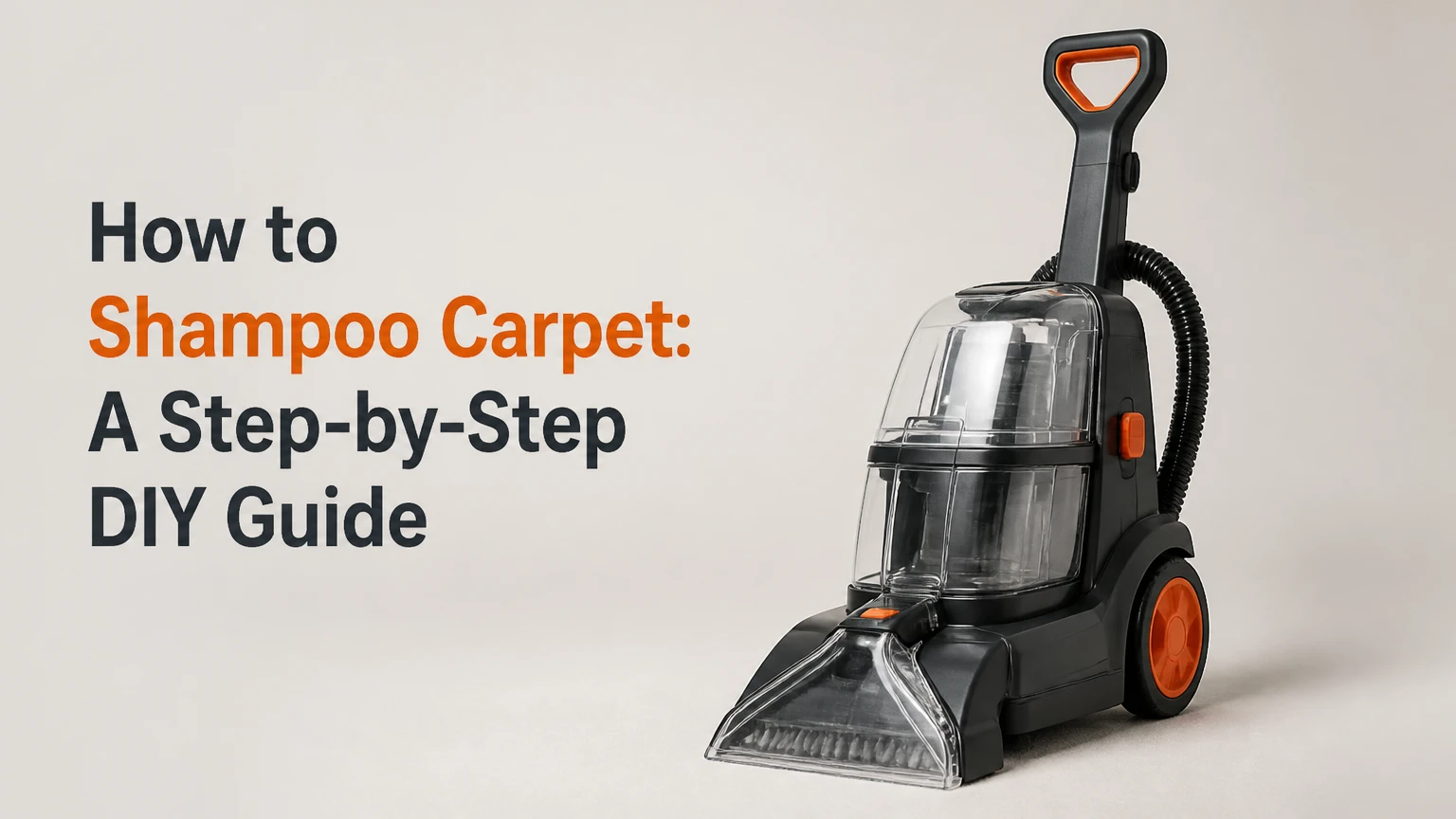
Shampooing a carpet transforms high-traffic, stained flooring into a clean surface by extracting deeply embedded grit and oils using a specialized machine. This complete process involves six precise steps, taking four to eight hours from setup to complete drying, with success depending entirely on proper water extraction and correct chemical dilution.
Before You Start
| Item | Quantity or Spec | Typical Cost | Purpose |
| Carpet Shampoo Machine | Rental or consumer unit | $30-50 per day rental / $150-300 purchase | Applies solution and extracts dirty water |
| Carpet Shampoo Solution | Formulated for machine brand | $15-25 | Breaks down oils and suspends dirt |
| Stain Pre-Treatment | Traffic lane spray | $10-15 | Softens heavy grease prior to extraction |
| Vacuum Cleaner | High-suction rotating brush | Household item | Removes loose dirt and hair |
| White Microfiber Cloths | Pack of 5 | $5 | Used for colorfast testing and blotting |
Ensure the room is completely clear of furniture and that you have access to hot tap water.
Step 1: Room Preparation and Colorfast Testing
Clear all furniture from the carpeted area and perform a colorfast test to prevent dye bleeding. Mix 1 teaspoon of carpet shampoo with 1 cup of warm water in a small container. Dampen a white microfiber cloth with the mixture and press it firmly onto a hidden corner of the carpet for 60 seconds. Lift the cloth and check for any color transfer.
You will know this step worked when the white cloth remains completely free of dye transfer after sixty seconds of pressure.
A common mistake is skipping the colorfast test on older or natural fiber rugs, which causes irreversible dye migration.
Step 2: Deep Directional Vacuuming
Vacuum the entire room twice using a high-suction vacuum cleaner with an active rotating brush roll. Run the first pass in a north-to-south direction across the room, and run the second pass in an east-to-west direction. This cross-pattern lifting action extracts buried pet hair, fine sand, and grit that would otherwise mix with water and turn into mud inside your shampoo machine.
You’ll know it worked when the vacuum canister or bag no longer collects visible debris on a third test pass.
Do not rush this step, because leaving dry particulate matter in the fibers will create a sludge slurry during the wet cleaning passes.
Step 3: Stain and Traffic Lane Pre-Treatment
Spray your traffic lane pre-treatment solution liberally onto high-traffic walking paths and noticeable spots until the fibers feel damp but not soaked. Let the solution dwell for exactly 15 minutes to allow the chemical enzymes to break down embedded body oils and ground-in dirt.
You’ll know this step worked when dark walking paths appear slightly loosened and lifted before the machine touches them.
Avoid letting the pre-treatment dry completely before extraction, or the residue will rebond to the carpet fibers.
Step 4: Machine Solution Mixing and Calibration
Fill the clean-water tank to the designated fill line using hot tap water, avoiding boiling water that can warp plastic components or melt synthetic carpet backing. Add exactly 2 ounces of carpet shampoo per gallon of water unless your specific machine manual instructs a different dilution ratio. Turn your machine dial to the deep clean or heavy traffic mode if your model features adjustable settings.
You’ll know this step worked when the solution tank is filled to the exact line and the soap-to-water ratio matches the manufacturer specification.
A common mistake is adding extra shampoo to boost cleaning power, which leaves a sticky residue that rapidly attracts new dirt.
Step 5: The Four-Pass Extraction Cleaning Method
Start cleaning in the corner furthest from the exit door to avoid stepping on freshly cleaned and wet sections. Execute the four-pass cleaning method by combining wet and dry strokes over every linear path.
- Wet Pass 1: Hold down the spray trigger and push the machine forward at a steady pace of 1 foot per second.
- Wet Pass 2: Keep holding the spray trigger and pull the machine backward over the exact same path at the same speed.
- Dry Pass 1: Release the spray trigger and push the machine forward over the wet path to extract the suspended dirty water.
- Dry Pass 2: Pull the machine backward over the path without spraying, watching the clear nozzle until dirty water stops rushing upward.
You’ll know this step worked when the clear nozzle on the machine shows very little to no dirty water rushing through during your final dry pass.
Avoid moving too quickly during the wet passes, as high speeds prevent the machine from applying enough solution to break down grime.
Step 6: Post-Cleaning Drying and Airflow Management
Turn on ceiling fans, position oscillating floor fans around the room, and crack windows open to establish cross-ventilation. Keep all foot traffic, pets, and shoes completely off the carpet until the fibers are completely dry, which typically takes between 4 and 6 hours.
You’ll know this step worked when the carpet feels room temperature and bone dry to the touch across the entire surface.
Walking on damp carpet with shoes immediately transfers outdoor dirt into the soft, absorbent fibers, ruining the cleaning results.
Common Mistakes and How to Fix Them
+-----------------------------------+-----------------------------------+-----------------------------------+
| Mistake                           | Root Cause                        | Recovery Solution                 |
+-----------------------------------+-----------------------------------+-----------------------------------+
| Over-wetting carpet               | Too many wet passes or slow speed | Run extra dry-only suction passes |
| Sticky residue left behind        | Too much detergent used           | Rinse with plain warm water       |
| Mildew odor after cleaning        | Trapped moisture in carpet pad    | Use dehumidifiers and fans        |
| Machine fails to spray            | Clogged spray tips or loose tank  | Clear tips with a pin, re-seat    |
+-----------------------------------+-----------------------------------+-----------------------------------+
Addressing Over-Saturated Carpets
Saturating the carpet backing and pad leads to prolonged drying times and potential mold growth under the flooring. Fix this immediately by running multiple dry-only suction passes across the area without pressing the trigger, followed by placing high-velocity floor fans directly facing the wet zone.
Removing Soap Residue Crunchiness
Dried soap residue makes carpet fibers feel stiff and crunchy underfoot while attracting new dust rapidly. Fill your machine clean tank with plain warm water only, omitting all detergent, and perform one wet rinse pass followed by two dry extraction passes to flush out the trapped soap.
Variations for Different Situations
Cleaning Commercial Loop Carpets
Commercial loop carpets, also known as Berber carpets, require extra caution because the looped fibers easily catch on aggressive brush rolls. Turn off the rotating brush feature on your machine if possible, or use a specialized upholstery attachment to clean the surface without pulling or fraying the loops.
Handling Severe Pet Stains and Odors
For carpets affected by pet urine, standard shampooing only cleans the surface fibers while leaving odors trapped in the carpet cushion. Apply an enzymatic pet odor neutralizer to the affected spots, let it dwell for 30 minutes before vacuuming, and then proceed with the standard shampooing process.
How Long Does It Take and What Does It Cost
The entire carpet shampooing process takes about 4 to 8 hours from initial setup to complete drying for a standard multi-room home. Active working time, including vacuuming, pre-treating, and machine extraction, takes roughly 1 to 2 hours for a 12×12 foot room, while the remaining time is dedicated to air drying.
Renting a professional-grade consumer machine costs between $30 and $50 for a 24-hour rental period. Purchasing dedicated carpet shampoo and traffic lane pre-treatment solutions adds another $25 to $40 to the total project cost.
Frequently Asked Questions
Can I use laundry detergent in my carpet shampoo machine?
Never use laundry detergent, dish soap, or all-purpose household cleaners in a carpet machine. These products create excessive foam that can overflow the recovery tank, damage the internal motor, and leave a heavy soapy film that ruins the carpet texture.
Is it necessary to vacuum before shampooing?
Vacuuming is a mandatory step that cannot be skipped because shampoo machines are designed to extract liquids and suspended dirt, not dry hair and grit. Leaving loose debris in the carpet turns into a thick mud paste inside the machine, clogging the spray nozzles.
How often should I shampoo my carpets?
Standard residential carpets should be thoroughly shampooed every 12 to 18 months to remove embedded allergens and grit. Homes with heavy foot traffic, multiple pets, or allergy sufferers benefit from deep shampooing every 6 to 9 months.
What causes a carpet to smell musty after cleaning?
A musty odor after cleaning indicates that moisture penetrated deep into the carpet pad and failed to dry quickly enough. To resolve this issue, set up high-velocity fans, run a dehumidifier in the room, and mist the surface lightly with a mixture of equal parts white vinegar and water.