
You finally have a free Sunday to catch up on laundry. The sheets are in the hamper, but the 20-pound blanket on the couch is a different story. It feels heavy before it even gets wet. Can your washer handle it, or is this a trip to the laundromat?
To wash a weighted blanket, first read the manufacturer’s care label and check its filling and dry weight. If machine washing is permitted and your washer is rated for the load, wash it alone on the approved gentle cycle with mild detergent. Otherwise, wash a removable cover separately, spot-clean the insert, or use an appropriately sized commercial machine if the label permits. Air-dry flat or tumble-dry only when the manufacturer specifically allows it.
Can you put a weighted blanket in the washing machine?

Not every weighted blanket is machine washable. The answer depends on the outer fabric, the filling, the stitching, the dry weight and the washer manufacturer’s stated capacity. A machine’s advertised drum volume in cubic feet does not automatically tell you how many pounds of weighted bedding it can safely handle.
The Whirlpool weighted blanket washing guide explains that a commercial machine may be suitable for certain glass, steel or plastic bead blankets when the care label permits. Sleep Foundation also recommends checking the specific manufacturer’s instructions because fill and cover construction differ.
| Blanket construction | Safer starting point |
|---|---|
| Glass or plastic beads | Machine wash only if the label and washer capacity permit |
| Steel beads | Confirm manufacturer-approved machine and cycle |
| Rice, beans or organic fill | Usually avoid immersion; follow the care label |
| Removable duvet-style cover | Wash cover separately as directed; check insert label |
| Knitted weighted blanket | Follow brand instructions; support wet fabric to prevent stretching |
| Missing label, loose seams or leaking beads | Do not machine wash until assessed |
Step-by-step: How to wash a weighted blanket in a washer
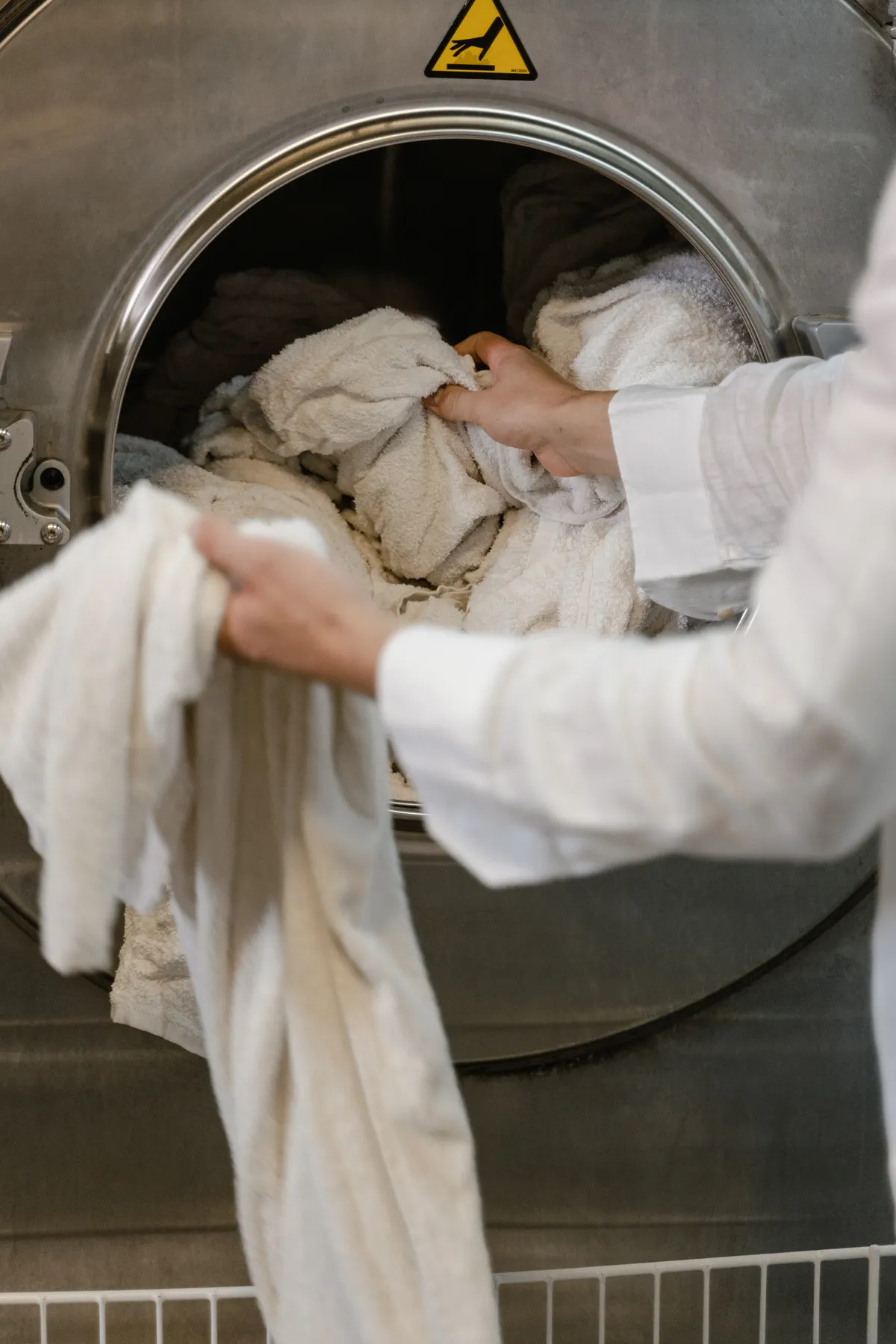
1. Check the label and weigh the blanket
Look for separate instructions for the cover and insert. If the blanket has a tag giving its dry weight, compare it with the appliance manual. If you cannot confirm the washer can accommodate the blanket, use a commercial laundromat machine approved for that bedding type or contact a professional. Do not rely on a universal 15- or 20-pound threshold.
2. Inspect the seams and remove the cover
Check the small stitched compartments for torn seams and escaping beads. Repair any damage before laundering. Unzip or untie a removable cover and clean it separately. This often solves everyday odors and surface dirt without washing the heavy insert.
3. Pretreat any spots
For a washable, colorfast shell, blot a food or drink spill with a damp white cloth and a small amount of suitable mild detergent. Rinse the spot gently with a fresh cloth. Avoid rubbing hard, particularly on fleece, velvet-like covers or delicate fabrics.
4. Use the correct cycle and a modest amount of detergent

Place the blanket in the drum by itself when the manufacturer permits. Use the specified cycle and temperature, commonly gentle and cool for washable bead-filled designs. Choose detergent suitable for your washer and fabric. Avoid softener or bleach unless the blanket maker specifically permits it.
If the blanket cannot move freely, the washer cannot balance the load, or the machine makes unusual noises, stop the cycle safely according to the appliance manual. Do not force a spin cycle to finish.
5. Dry it according to the label
A wet blanket is difficult to lift. Support its weight from underneath and avoid carrying it by one corner. A flat drying surface with good airflow can distribute the weight and reduce stretching. Use a low-temperature dryer only when expressly allowed and the dryer can safely accommodate the load.
How to hand wash a weighted blanket
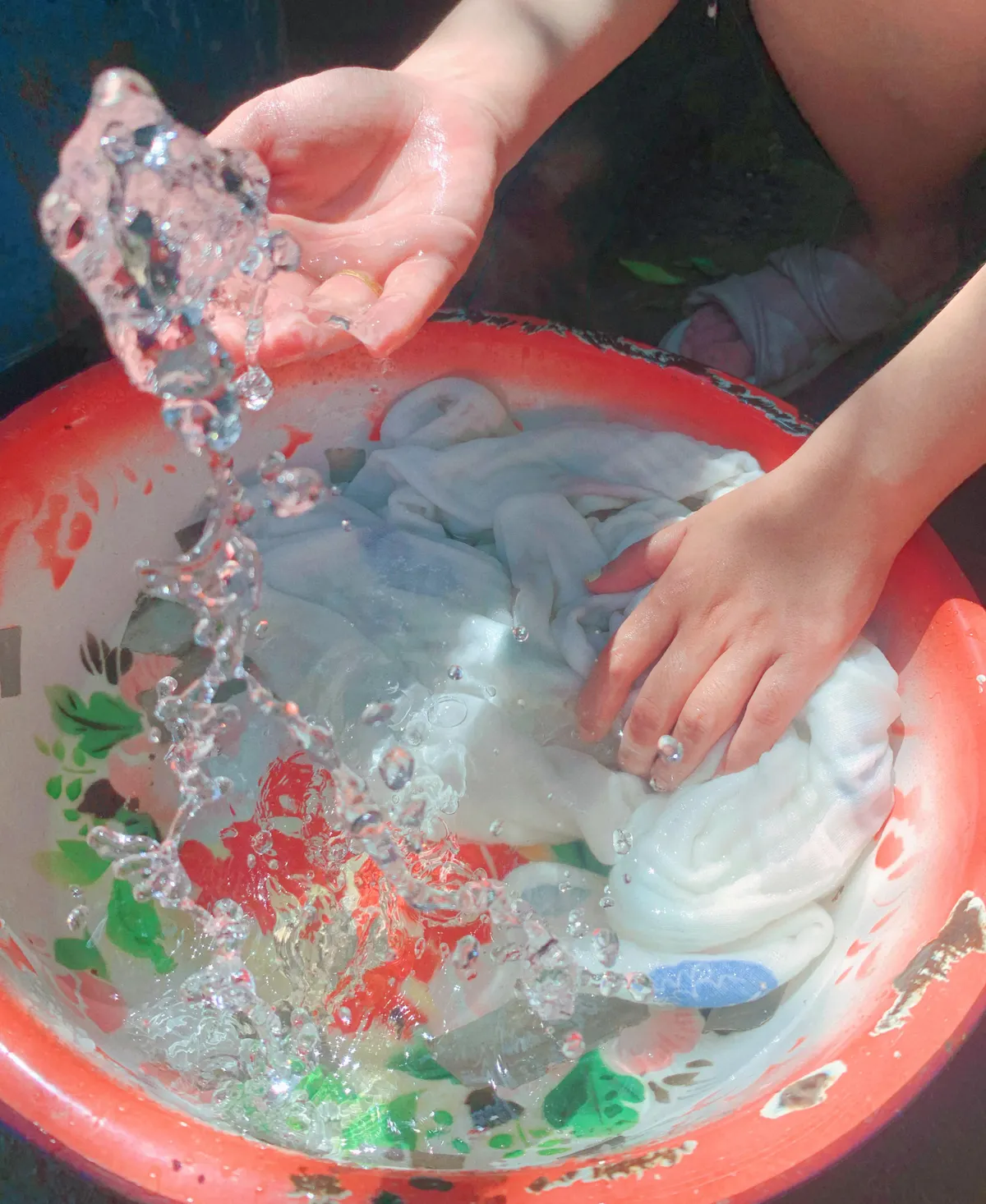
Hand washing is an option only if the maker allows the insert to be immersed and you can safely move it when wet. Fill a clean bathtub with cool water and a suitable small dose of detergent. Submerge the blanket gradually, gently press the water through it, then drain and rinse until detergent residue is gone. Never wring or twist the compartments. Let the water drain before supporting the blanket from underneath to move it to the drying area.
For a very heavy blanket or anyone who cannot safely lift wet bedding, spot cleaning or a professional assessment is more practical than attempting to lift it out of a tub.
How to dry a weighted blanket without damaging the filling

Lay the blanket flat over a clean, sturdy, ventilated surface if the label allows. Rotate it carefully to expose both sides and use a fan or dehumidifier if appropriate. Do not hang a heavy saturated blanket from a single corner, place it on an unstable rack, or fold it while the inner compartments are damp. In Sarasota’s humid weather, indoor airflow and dehumidification can help avoid a lingering musty smell.
Drying instructions differ even among glass-bead products. For example, Bare Home’s cotton weighted blanket care instructions specify cold machine washing and line or flat drying. Follow your model’s instructions rather than applying one product’s directions to all weighted blankets.
What other weighted blanket owners say
In a Reddit CleaningTips thread about a 20-pound blanket, a participant updated their post to say a laundromat wash worked for them. The thread discusses commercial washer capacity and references a U.S. commercial washer brand. In a separate laundry discussion, a blanket owner said hand washing was followed by a long drying period and a mildew odor.
These are individual experiences, not verified tests or testimonials for Bob’s. Commenter locations are not independently confirmed. The useful takeaway for U.S. households is to plan for both machine capacity and complete drying before getting the blanket wet.
How often should you wash a weighted blanket?
There is no universal schedule. Wash a removable cover according to use, spills and the manufacturer’s instructions. A cover used directly against skin or shared with pets may require more frequent cleaning. Clean the insert when it is soiled or when its care instructions recommend it, rather than washing it automatically every time you change your sheets.
See our blanket washing schedule and blanket dry-cleaning guide for more bedding-care decisions.
Frequently asked questions
Can you wash a 20-pound weighted blanket at home?
Only if the blanket is machine washable and your machine is approved for its dry weight, size and construction. If either is uncertain, do not attempt it in a standard home washer.
Can you wash a weighted blanket with glass beads?
Some glass-bead blankets can be washed. Others are spot-clean-only. The type of bead alone does not establish whether the shell, stitching and inner materials tolerate immersion.
Can weighted blankets go in the dryer?
Only when the care label permits machine drying and the dryer can accommodate the blanket. Some brands require air drying; high heat may damage fabrics or certain fillers.
Can you dry clean a weighted blanket?
Not all weighted blankets are suitable for dry cleaning. Confirm the care label and ask a cleaner about fill, stitching, size, weight and available equipment before drop-off.
Weighted blanket cleaning in Sarasota
If your blanket is too heavy for the home washer or has an unclear label, call Bob’s Laundry & Dry Cleaning at (941) 925-3875. Our bulky bedding care page explains what information to share before visiting 6503 Superior Ave, Sarasota, FL 34231. Ask whether your specific weighted blanket can be accepted; the decision depends on its condition, filling, weight and care requirements.