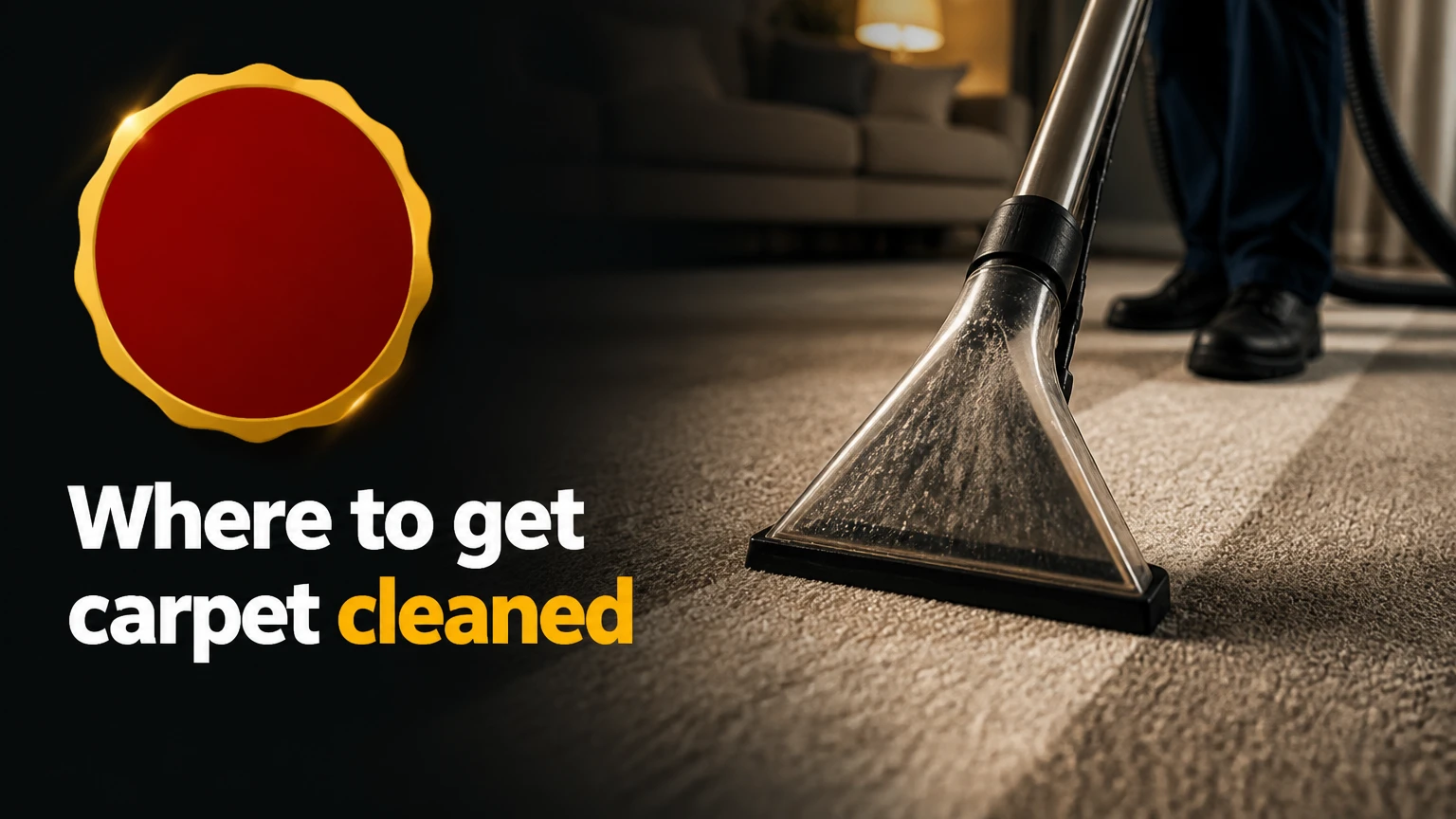
You can determine where to get carpet cleaned by evaluating your budget and the level of soil present in your home. Homeowners can hire local independent technicians, book national franchises like Stanley Steemer, or rent self-service extraction machines from regional hardware stores. Truck-mounted professional services provide the deepest structural sanitation, while rental machines offer a budget-friendly alternative for light surface maintenance.
At a Glance
- Professional extraction rates range from $0.20 to $0.50 per square foot for standard synthetic fibers.
- Self-service hardware store machines cost $30 to $40 per 24 hours to rent.
- Most major flooring manufacturers require professional hot water extraction every 18 to 24 months to maintain valid warranties.
- Standard truck-mounted steam cleaning requires 6 to 24 hours of drying time depending on home humidity.
- High-rise apartments above the third floor typically require portable extraction units instead of traditional truck-mounted hoses.
Should you hire a professional service or rent a DIY machine?
The choice between hiring a professional service and renting a machine depends entirely on the type of stain and your physical capacity. Professional carpet cleaners utilize truck-mounted systems that heat water to 230 degrees Fahrenheit and generate massive vacuum suction. These commercial systems extract soil from the bottom of the carpet pad. Renting a machine requires you to manually haul a heavy unit from a store, mix your own chemicals, and perform the manual labor yourself.
Consumer-grade rental units run on standard 110-volt household outlets. They simply cannot generate the heat or suction power of a gas-powered professional truck mount. If a floor only has light traffic dirt, a DIY machine effectively brightens the surface fibers. If a floor contains pet urine, deep oil stains, or heavy foot traffic patterns, you must hire a professional. DIY machines often leave excessive moisture behind, which creates secondary problems.
Where can you rent self-service carpet cleaning machines?
Consumers can rent self-service carpet cleaning machines at most major home improvement retailers, large supermarket chains, and local hardware stores. The Rug Doctor and Bissell Big Green are the two most common commercial rental units available nationwide. You will find these rental kiosks near the customer service desk or the tool rental department of your chosen retailer.
Home Depot and Lowe’s typically maintain dedicated tool rental centers with well-maintained commercial extractors. Grocery stores like Safeway, Publix, and Kroger frequently offer 24-hour rentals at their front registers. The base rental fee covers the machine itself, but stores sell the proprietary cleaning solutions separately. A standard 24-hour rental costs between $30 and $40. The required enzymatic cleaners and defoaming agents add another $15 to $25 per bottle to your final checkout price.
What are the top national professional carpet cleaning franchises?
The professional carpet cleaning industry features a mix of massive national franchises and small independent owner-operators. National franchises provide standardized pricing, consistent training protocols, and nationwide customer service support. Stanley Steemer remains the most recognized brand in the United States. They specialize in traditional hot water extraction and operate a massive fleet of recognizable yellow vans.
Chem-Dry represents the largest alternative franchise network. Chem-Dry uses a proprietary hot carbonating extraction process that relies on millions of microscopic bubbles to lift dirt, requiring significantly less water than traditional steam methods. Coit Cleaning and Restoration Services operates heavily in the premium market, handling high-end rugs alongside standard flooring. Servpro focuses primarily on severe disaster recovery and water damage, but local branches frequently accept standard residential cleaning contracts.
How much does professional carpet extraction cost?
Professional carpet extraction costs an average of $123 to $242 for a standard residential home. Companies calculate their final estimates using either square footage metrics or flat room rates. Per-square-foot pricing ranges from $0.20 to $0.50. Per-room pricing typically runs between $40 and $125 per room. Most professional services enforce strict size caps on flat rates, usually defining a single room as a maximum of 200 square feet.
Service providers also enforce minimum trip fees. A company will charge $75 to $125 just to drive a van to your property, cover fuel costs, and set up their hoses. Large open areas often qualify for bulk discounts. Staircases require intense hand-tool labor and bypass standard room metrics entirely.
| Pricing Metric | Average Cost Range | Important Condition or Note |
| Square Footage Rate | $0.20 to $0.50 | Large homes over 2,000 sq ft often receive lower tier pricing. |
| Flat Room Rate | $40 to $125 | L-shaped rooms or spaces over 200 sq ft count as two rooms. |
| Minimum Trip Fee | $75 to $125 | Replaces the room rate if the total job size is exceptionally small. |
| Staircase Surcharge | $3 to $5 per step | Technicians must use specialized hand wands for vertical risers. |
| Furniture Moving | $20 to $50 per room | Applied when technicians must relocate heavy beds or wardrobes. |
How often do residential carpets require professional cleaning?
Residential carpets require professional hot water extraction every 12 to 18 months under normal living conditions. The Institute of Inspection, Cleaning and Restoration Certification (IICRC) publishes formal guidelines for flooring maintenance. The IICRC states that vacuuming removes dry particulate soil, but only hot water extraction removes the sticky, oily residues that bind dirt to synthetic fibers.
Household demographics heavily influence this timeline. A single occupant in a pet-free home can safely extend the professional cleaning interval to 24 months. Homes with multiple children or large indoor pets require extraction every 6 to 9 months. Dirt acts like microscopic sandpaper against synthetic yarn. Every step taken on a dirty floor physically scratches the yarn, causing the carpet to look dull and gray over time. Regular extraction prevents this permanent structural abrasion.
What is the difference between hot water extraction and dry compound cleaning?
Hot water extraction and dry compound cleaning rely on completely different physical and chemical mechanisms to remove soil. Hot water extraction, commonly called steam cleaning, injects boiling water and alkaline detergents deep into the carpet pile under extreme pressure. A high-powered vacuum instantly sucks the dirty liquid back out. This method flushes the entire fiber structure and represents the golden standard for residential sanitation.
Dry compound cleaning uses specialized counter-rotating brushes to work dry chemical powders or low-moisture encapsulating foams into the carpet. These chemicals act like tiny sponges to absorb surface oils and dirt. The technician then vacuums the powder away. Dry cleaning leaves the floor dry within an hour. It works exceptionally well in commercial office buildings, but it struggles to flush out heavy mud or deep organic stains in residential settings.
| Feature | Hot Water Extraction (Steam) | Dry Compound Cleaning |
| Primary Mechanism | High-pressure liquid flushing | Chemical absorption and encapsulation |
| Average Drying Time | 6 to 24 hours | 30 to 60 minutes |
| Best Application | Heavily soiled residential homes | High-traffic commercial office buildings |
| Cost Per Room | $40 to $90 | $70 to $200 |
| Deep Stain Removal | Excellent capability | Poor to moderate capability |
How do you prepare a house for professional carpet cleaners?
Preparing your house before the technicians arrive ensures a faster process and a superior final result. You must begin by clearing the floors completely. Pick up all small items, including children’s toys, shoes, floor lamps, and trailing electrical cords. Technicians operate heavy equipment and cannot stop to organize clutter.
- Relocate all fragile or valuable items from the rooms receiving service.
- Pin up floor-length draperies or curtains at least six inches off the ground to prevent moisture transfer.
- Thoroughly vacuum the carpets right before the crew arrives. Removing dry, loose dirt allows the liquid extraction process to target embedded oily soils rather than turning surface dust into mud.
- Secure household pets in a bathroom or backyard. The cleaning process requires the front door to remain slightly open for hoses, creating an escape risk for cats and dogs.
Do technicians move heavy furniture during the process?
Carpet cleaning technicians generally do not move heavy furniture unless explicitly contracted to do so. Base price estimates assume the rooms are completely empty. The industry refers to hidden labor costs as the “moving furniture trap.” If a crew arrives and finds rooms packed with beds, heavy dressers, or sectional couches, they will apply an added labor charge of $20 to $50 per room.
Most crews willingly slide light items like dining chairs or small coffee tables out of the way at no charge. They will not touch electronics, grand pianos, china cabinets, or massive solid wood frames due to liability risks. If you decline the extra labor charges, the technicians will simply clean around the existing furniture. They place protective foil or plastic tabs under wooden or metal furniture legs to prevent rust or wood stain transfer to the damp carpet.
How do high-rise apartment locations affect carpet cleaning methods?
High-rise apartments severely restrict the equipment professional cleaners can utilize. Standard truck-mounted steam extraction hoses physically cannot reach beyond the third or fourth floor of a building. The vacuum motors inside the van lose suction power over extreme vertical distances. If your unit sits high in a tower, cleaners must abandon the truck mount and bring portable extraction machines directly into your apartment.
Portable extractors plug into standard wall outlets and require manual filling and dumping using your bathtub or sink. Because portable machines are heavier to transport and take longer to set up, companies frequently add a $50 to $100 high-rise difficulty fee. Some companies bypass wet extraction entirely in high-rise environments. They switch to low-moisture dry compound cleaning to avoid dealing with massive volumes of wastewater in an elevator-access building.
Does standard cleaning remove deep pet urine odors?
A basic carpet cleaning service will not remove pet urine odors. Animal urine poses a severe chemical challenge because it does not sit on the surface of the carpet. The liquid penetrates straight through the synthetic fibers, soaking into the sponge-like polyurethane pad and the wooden subfloor beneath. Running a steam wand over the top fibers only cleans the tip of the iceberg.
To destroy the odor, you must request a targeted Sub-Surface Extraction. Technicians flood the specific target zone with concentrated enzymatic chemicals. These enzymes require extended dwell time to literally digest the uric acid and salt crystals trapped in the pad. A specialized weighted extraction tool then pulls the liquid up from the subfloor. This specialized enzyme treatment adds $30 to $60 per zone on top of standard room rates.
Why do old stains reappear days after steam extraction?
Old stains reappear days after steam cleaning due to a physical process known as wicking. The industry often refers to this phenomenon as the “zombie stain.” Wicking occurs when a liquid spill deeply saturates the carpet backing or the pad beneath. The technician cleans the surface fibers, making the carpet look perfect upon completion.
As the surface fibers dry, capillary action pulls the remaining moisture up from the deep pad. The rising moisture carries the hidden dirt and sugars back to the visible tips of the yarn. If a dark spot returns three days later, general steam cleaning has failed. You cannot solve wicking by pouring more water onto the spot. You must hire a professional to perform a low-moisture encapsulation treatment, which traps the rising soil in a dry crystal that you simply vacuum away.
What are the risks of overwetting a floor with a rental machine?
Overwetting a carpet with a hardware store rental machine introduces severe structural and biological risks. Consumer rental units lack the extreme vacuum power of commercial truck mounts. If an amateur operator pulls the trigger too frequently, they pump gallons of water into the floor that the machine cannot recover.
The primary risk is delamination. Wall-to-wall carpet consists of a primary backing and a secondary backing glued together with a latex adhesive. Heavy, prolonged moisture dissolves this latex glue. The carpet will permanently buckle, warp, and ripple across the room. Delamination is irreversible, and the flooring must be completely replaced. Furthermore, saturated carpet pads create dark, warm environments perfect for mold and mildew growth within 48 hours.
Will DIY hardware store rentals void your manufacturer warranty?
Using a DIY hardware store rental machine will almost certainly void your manufacturer warranty. Major flooring manufacturers like Shaw and Mohawk enforce strict maintenance requirements to keep their structural wear warranties active. The fine print in these warranty documents explicitly mandates professional hot water extraction.
You must hire an IICRC-certified technician to perform the work every 18 to 24 months. DIY machines frequently leave behind heavy alkaline detergent residue. This sticky residue attracts new dirt faster than before, accelerating fiber degradation. If you file a warranty claim for premature wear or fiber crushing, the manufacturer will demand proof of professional maintenance. Without an invoice from a certified company, they will legally reject your claim.
Do rental machine receipts satisfy landlord lease agreements?
Submitting a receipt for a DIY rental machine will often fail to satisfy legal lease criteria when moving out of a rental property. Property management companies write specific cleaning clauses into their lease agreements to protect their assets. If you are cleaning an apartment to secure your security deposit return, you must read your specific contract language.
Many rental agreements stipulate that a “truck-mounted, professional receipt” must be submitted when returning the keys. Landlords know that amateur tenants frequently overwet carpets or leave soap residue behind. If you spend $40 renting a machine from a supermarket, the landlord can legally reject your effort. They will hire their preferred commercial vendor and deduct the $200 professional invoice directly from your security deposit.
How long does it take for wet floors to dry completely?
Professional steam cleaning requires 6 to 24 hours of drying time depending on indoor relative humidity and air movement. Dry compound cleaning requires only 30 to 60 minutes to cure completely. The speed at which a floor dries relies entirely on how efficiently moisture evaporates into the surrounding air.
Homeowners must actively manage the environment to accelerate this process. You should turn on all ceiling fans and lower the HVAC thermostat to 70 degrees Fahrenheit. Air conditioning systems naturally pull humidity out of the indoor air. Walking on damp carpets with dirty shoes can instantly re-soil the clean fibers. You must wear clean, white cotton socks or disposable plastic booties if you need to cross the room before the floor fully cures.
How is natural wool or silk carpet treated differently than synthetic fibers?
Natural fibers like wool or silk require highly delicate chemistry and low heat compared to standard synthetic nylon or polyester. Standard carpet cleaning methods will destroy natural fibers. Hot water extraction frequently exceeds 200 degrees Fahrenheit, which causes natural wool to shrink violently. Standard commercial detergents feature high alkaline pH levels designed to strip heavy grease. High alkalinity causes wool fibers to become brittle, shed excessively, and bleed expensive dyes.
Professionals must switch to neutral-pH chemistry and dramatically lower water temperatures when treating organic materials. Due to the slow, careful nature of this work and the expensive specialized chemicals required, natural fiber cleaning costs significantly more. It frequently drives prices up to $0.75 per square foot or doubles the standard flat room rate.
| Material Characteristic | Synthetic Fiber (Nylon/Polyester) | Natural Fiber (Wool/Silk) |
| Heat Tolerance | High (Can withstand 200°F+) | Low (High heat causes shrinkage) |
| Chemical pH Limit | High Alkaline (pH 9-11) | Neutral or slightly acidic (pH 5-7) |
| Average Cost | Standard baseline pricing | Premium pricing (Up to $0.75/sq ft) |
| Drying Requirements | Standard HVAC airflow | Highly controlled, rapid air movers |
| Colorfastness | Excellent (Solution-dyed) | Poor (Prone to dye bleeding) |
The Bottom Line
Deciding where to get carpet cleaned ultimately comes down to your budget constraints and the structural reality of your floors. If you need to satisfy a landlord lease agreement, maintain a manufacturer warranty, or eliminate deep pet urine odors, you must hire a professional truck-mounted extraction service. For homeowners looking to handle light, routine maintenance on synthetic rugs, hardware store rental machines provide a reasonable budget alternative. Always secure an exact quote based on square footage and disclose any high-rise constraints or severe stains before the technicians arrive at your property.