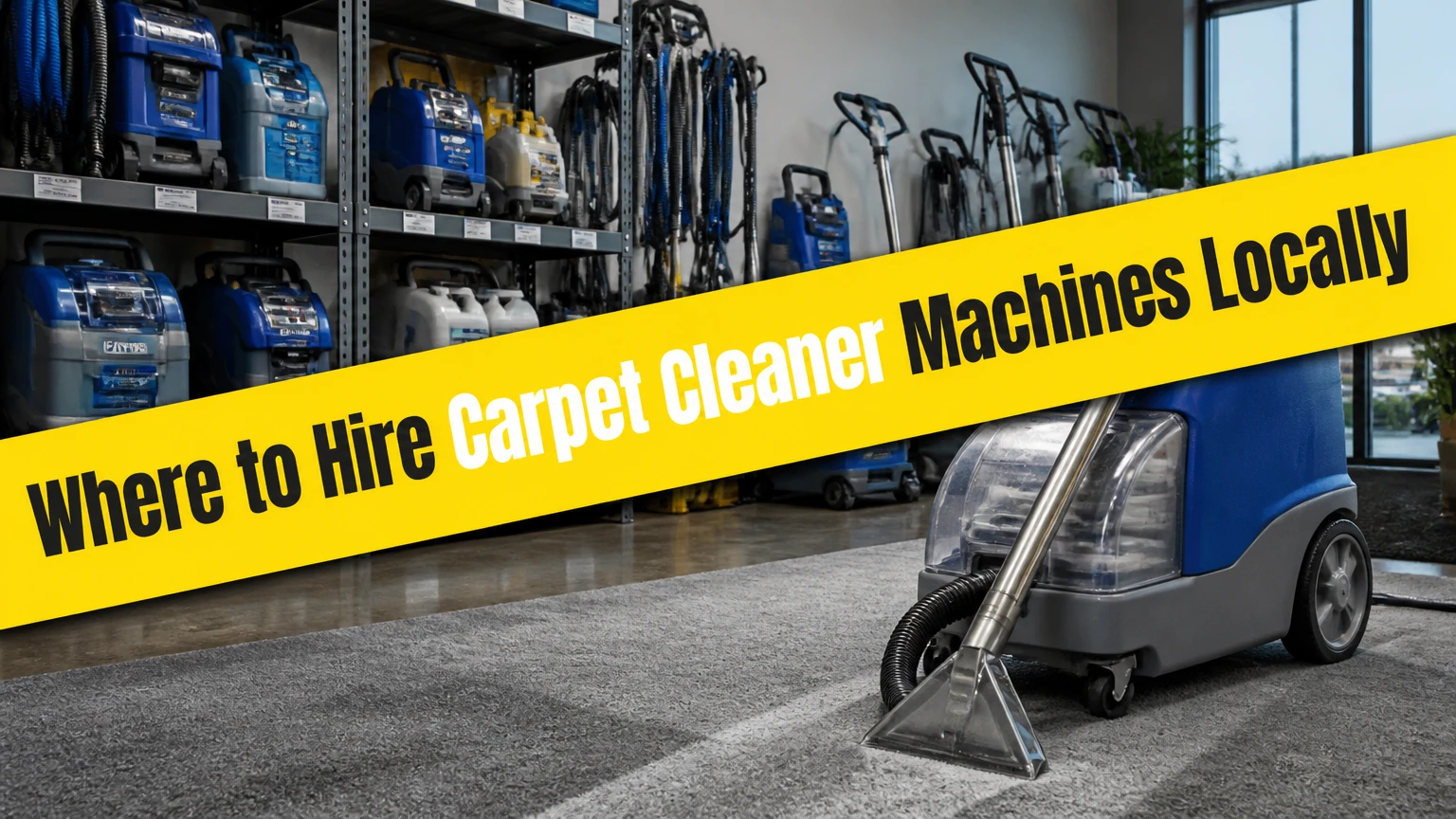
You can hire a commercial-grade carpet cleaner from national hardware chains, local grocery stores, and specialty tool rental centers. The primary providers are Rug Doctor and Bissell Big Green. These companies maintain automated kiosks or customer service desk rentals across thousands of retail locations for daily checkout.
At a Glance
- The Home Depot and Lowe’s offer 24-hour base rentals ranging from $28.00 to $39.99.
- Rental machines do not include detergent, which adds $15 to $35 to your total transaction cost.
- Hardware store rental centers strictly require a government-issued photo ID and a matching major credit card.
- Grocery store customer service desks operate on different hours than the main store, often causing accidental late return fees.
- Traditional rental extractors oversaturate natural fibers and will permanently damage jute, sisal, or 100 percent wool rugs.
What are the primary locations for where to hire carpet cleaner units?
The primary locations to rent carpet extraction machines are national home improvement chains, regional grocery supermarkets, and discount retail stores. National hardware chains typically run dedicated tool rental centers with large inventories of heavy equipment. These centers employ specialized staff who inspect the carpet extractors between each customer use.
Regional grocery stores handle tool hire differently. Stores like Kroger, Publix, and Food City host automated Rug Doctor kiosks or manage rentals directly through the front-end customer service desk. These grocery locations prioritize convenience for weekend shoppers. Discount stores like Dollar General also carry compact extraction units for smaller residential projects. Choosing between a hardware store and a grocery kiosk usually depends entirely on the size of the machine you need and the hours you plan to return it.
How much does a 24-hour carpet extractor rental cost?
A standard 24-hour commercial carpet cleaner rental costs between $28.00 and $39.99 depending on the retail location and machine model. This base rate covers the physical machine itself for a single day of use. If you need the equipment for a longer weekend project, most retailers offer a discounted 48-hour rate. The two-day rate usually caps at $49.99.
Retailers maintain relatively strict pricing tiers across different geographic regions. The table below outlines the standard base rental costs across major national providers.
| Provider / Location | 24-Hour Base Rate | 48-Hour Base Rate | Typical Machine Offered |
| The Home Depot | $28.00 to $39.99 | $49.99 | Rug Doctor Pro Deep |
| Lowe’s Home Improvement | $39.99 | $49.99 | Bissell Big Green |
| Grocery Stores (Kroger, Publix) | $29.99 to $39.99 | $49.99 | Rug Doctor standard upright |
| Discount Stores (Dollar General) | $35.00 | Not Available | Compact Rug Doctor models |
What hidden fees apply to rug cleaning machine rentals?
The most common hidden fees for carpet machine rentals are mandatory cleaning solutions, separate upholstery hose attachments, and refundable security deposits. Retailers advertise a low daily base rate to get customers in the door. You will never walk out paying only that base rate.
Rental machines do not come pre-loaded with cleaning detergent. You must purchase commercial formulas separately. These proprietary formulas cost $15 to $35 per bottle. Upholstery hoses represent another unadvertised expense. Stores frequently charge an extra $5.99 fee at check-out to include the stair and upholstery attachment. Finally, nearly all locations place a temporary authorization hold on your credit card.
| Hidden Cost Item | Typical Price Range | Is it Mandatory? | Financial Purpose |
| Brand-name Cleaning Solution | $15.00 to $35.00 | Yes (for cleaning) | Generates primary retail profit margin |
| Upholstery Hose Attachment | $5.99 to $9.99 | No (optional) | Cleans stairs and vehicle interiors |
| Refundable Security Deposit | $20.00 to $50.00 | Yes (required) | Ensures the machine is returned clean |
| Late Return Penalty Fee | $28.00 to $39.99 | No (situational) | Penalizes customers for missing deadlines |
Which rental machine is better: Rug Doctor or Bissell Big Green?
The Bissell Big Green generally outperforms standard Rug Doctor models because it cleans on both the forward and backward pass. Most professional users prefer the Bissell unit for large residential projects. It features a rotating dirt-lifter power brush that aggressively agitates carpet fibers.
Standard grocery-store Rug Doctor models rely on a single vibrating brush bar. These vibrating models only extract water when you pull the machine backward. This one-way extraction method doubles the physical effort required to clean a room. However, Rug Doctor recently introduced the “Pro Deep” model to hardware stores to compete with Bissell. The Pro Deep model offers a larger tank capacity and improved suction over the legacy grocery store units.
How heavy are commercial rental carpet cleaners?
An empty commercial rental carpet cleaner weighs between 35 and 45 pounds. Once filled with hot water and cleaning solution, these machines exceed 60 pounds. The weight of the water significantly alters the operational dynamics of the tool.
Moving a 60-pound machine across thick, saturated carpet pile requires substantial upper body strength. You must push and pull the extractor slowly to allow the vacuum motor enough time to recover the liquid. Carrying these units up a flight of stairs presents a genuine physical challenge. If you have physical limitations, you should rent the separate upholstery hose attachment. The long hose allows you to leave the heavy base unit at the bottom of the staircase while you clean the treads with the lightweight hand tool.
Can you transport a rental carpet cleaner in a standard car?
Yes, standard rental extractors fit in the trunk or backseat of a typical sedan if you fold the handle down. Manufacturers specifically engineer these retail units with collapsible or folding handle assemblies to accommodate consumer vehicles.
To load the machine safely, you must completely empty both the clean water reservoir and the dirty wastewater tank before placing it in your car. Residual water trapped in the recovery tank will spill out if you lay the machine on its side. Always place the unit on top of a thick plastic tarp or a heavy trash bag inside your trunk. The base brushes retain moisture and will leak dirty water onto your car upholstery during transit.
Will a rental machine remove severe pet urine stains?
No, DIY rental extractors lack the suction lift required to pull severe pet urine out of the underlying carpet pad. Standard rental units operate at roughly 28 to 32 PSI of pump pressure. Professional truck-mounted units exceed 300 PSI.
When a dog or cat urinates on a floor, the liquid immediately penetrates the top fibers, passes through the backing, and soaks into the porous foam pad underneath. A grocery store machine only cleans the top carpet layer. If you apply hot water to an old pet stain with a rental machine, you will reactivate the crystallized uric acid buried in the pad. The hot moisture causes the ammonia smell to bloom, permanently worsening the odor in the room.
Is it safe to clean wool or natural fiber rugs with a rental?
It is never safe to use standard rental water extractors on natural plant fibers or 100 percent wool rugs. Commercial rental units dispense massive volumes of liquid intended for synthetic nylon and polyester carpets.
Wool fibers absorb up to 30 percent of their weight in water. When a rental machine oversaturates a wool rug, the dense fibers trap the moisture deep inside the weave. This trapped moisture breeds mold and mildew within 48 hours. The hot water also strips the natural lanolin oils from the wool, leaving the rug stiff and brittle. Natural plant fibers like jute and sisal react even worse to liquid extraction. Jute fibers physically disintegrate and turn brown when exposed to heavy water pressure.
Do you need a credit card to rent a carpet shampooer?
Yes, major hardware retailers strictly require a government-issued photo ID and a matching major credit card to secure the tool. Home Depot and Lowe’s enforce this policy universally across their rental fleets to prevent equipment theft.
The name on your state-issued driver’s license must match the embossed name on your physical credit card. Retailers categorically reject cash deposits, prepaid debit cards, and digital wallets for tool rentals. Grocery store kiosks sometimes accept debit cards connected to standard checking accounts, but they will still place a $20 to $50 authorization hold on the available funds. This financial hold remains active until store employees verify the machine was returned in clean, working condition.
How do weekend store hours affect tool rental return fees?
Returning a rental machine to a closed customer service desk forces you to hold the equipment overnight, which triggers a full second-day rental charge. You must closely verify the exact operating hours of the specific desk handling the rental.
Grocery stores often stay open until 10:00 PM on Sundays. However, their internal customer service desks typically close by 6:00 PM. If you rent an extractor on Saturday afternoon for a 24-hour block, and you arrive at 7:00 PM on Sunday to return it, the desk will be unstaffed. The main cashiers cannot process tool rental returns. You will have to take the machine home and return it on Monday morning. The store system automatically penalizes your credit card with an additional late fee.
Must you vacuum the floor before using a rented extractor?
You must always thoroughly vacuum the carpet with a standard dry vacuum before running a liquid extractor over the fibers. Rented carpet cleaners are designed strictly to pull out dissolved liquids and deeply embedded mud. They cannot process loose debris.
Forgetting to vacuum beforehand guarantees equipment failure. Loose pet hair, paper scraps, and heavy dust bind together the moment hot water hits the floor. This wet sludge instantly clogs the narrow mechanical intake slots on the front floor nozzle. Once the intake nozzle clogs, the machine completely loses its suction power. It will continue spraying clean water onto the floor but will fail to recover the liquid, leaving your room dangerously flooded.
What is the correct water temperature for rental cleaning machines?
Rental cleaning machines require hot tap water usually measuring between 110 and 120 degrees Fahrenheit. You fill the clean water bladder directly from your kitchen or bathroom sink.
You must never pour boiling water into a commercial rental extractor. The plastic internal tanks and rubber seal configurations are rated strictly for standard domestic hot water temperatures. Boiling water will instantly warp the plastic housing and melt the internal gaskets. When the seals fail, the machine will leak water continuously out of the bottom chassis. Retailers inspect the tanks upon return. If they discover heat-warped plastic, you forfeit your security deposit and become liable for replacing the damaged unit.
Can you put standard laundry detergent in a rental extractor?
You absolutely cannot use standard laundry detergent or dish soap inside a commercial carpet extraction machine. Household soaps contain specific chemical foaming agents designed for washing machines and kitchen sinks.
When you inject dish soap into a high-powered extractor, it creates massive amounts of thick foam inside the recovery tank. The standard wastewater reservoir cannot contain this rapidly expanding volume of bubbles. The foam will quickly bypass the internal safety float valve. Once past the valve, the bubbles flood directly into the electrical housing and the primary vacuum motor. This causes an immediate short circuit, ruins the motor, and presents a severe electrical hazard to the operator.
Why does the rental machine suddenly stop picking up water?
The machine stops picking up dirty water when the internal safety float switch engages inside the wastewater tank. Every commercial extractor utilizes a mechanical float valve to prevent the dirty water from overflowing into the engine compartment.
When the recovery tank reaches its maximum fluid capacity, the plastic float rises to the top and physically blocks the vacuum intake hole. You will hear the motor suddenly pitch upward into a high, whining sound. This high-pitched noise indicates zero air movement. You must turn the machine off immediately, unlatch the dirty water bucket, and empty the dark wastewater down a toilet or utility sink. Once you lock the empty bucket back into place, full suction power will return.
How many hours does a carpet take to dry after extraction?
A freshly cleaned carpet typically requires 4 to 12 hours to dry completely. This drying window depends heavily on your application technique, ambient humidity, and indoor air circulation.
If you apply too much water during the cleaning process, the drying time can easily exceed 24 hours. Prolonged dampness creates an ideal environment for mold spores to germinate inside the carpet pad. To prevent mold growth, you must actively manipulate the room’s environment immediately after cleaning. Turn your central HVAC fan to the permanent “On” position, open multiple windows if the weather allows, and set up oscillating floor fans to push stagnant air out of the room.
| Environmental Condition | Ambient Temperature | Relative Humidity | Estimated Dry Time |
| Excellent Circulation | 72 Degrees | Under 45 Percent | 4 to 6 Hours |
| Standard Indoor Air | 68 Degrees | 50 to 60 Percent | 8 to 12 Hours |
| Poor Circulation (Basement) | 65 Degrees | Over 65 Percent | 18 to 24 Hours |
| Oversaturated Floor | Any Temperature | Any Humidity | 24+ Hours (Risk of Mold) |
Will a DIY rental satisfy a landlord security deposit clause?
A grocery store tool rental receipt rarely satisfies a lease agreement clause that demands professional carpet cleaning. Property management companies write specific language into residential leases to protect their real estate investments.
Many modern lease agreements explicitly state that carpets must be cleaned by a certified professional company using truck-mounted extraction equipment. The landlord requires a printed receipt from an insured business entity upon move-out. Presenting a $39.99 Home Depot tool rental receipt fails to meet the legal definition of “professional cleaning services” outlined in the contract. Management will simply hire their preferred vendor anyway and deduct the $200 professional invoice directly from your original security deposit.
How many wet and dry passes do professionals recommend?
The standard practitioner rule of thumb for DIY extraction is two dry vacuuming passes for every single wet solution pass. The Institute of Inspection, Cleaning and Restoration Certification (2023) guidelines emphasize maximum water recovery to ensure carpet health.
When operating the rental unit, you hold the trigger to spray the hot chemical solution while moving the machine slowly across the floor. This is a wet pass. Once you finish that single wet pass, you must release the trigger entirely. You then pull the machine over that exact same strip of carpet two more times very slowly. These dry passes force the vacuum motor to extract maximum moisture from the fibers. Failing to perform multiple dry passes guarantees a soaked floor and extended drying times.
The Bottom Line
Renting a commercial-grade carpet cleaner offers a highly effective solution for routine maintenance on standard synthetic carpets. You will secure the best results by picking up a Bissell Big Green or Rug Doctor Pro from a dedicated hardware rental center, ensuring you have a credit card ready for the deposit. Always prioritize thorough dry vacuuming before you begin and execute multiple dry extraction passes to prevent dangerous oversaturation. Avoid rental machines entirely if you are dealing with delicate wool rugs, severe pet urine trapped in the pad, or strict landlord lease requirements.