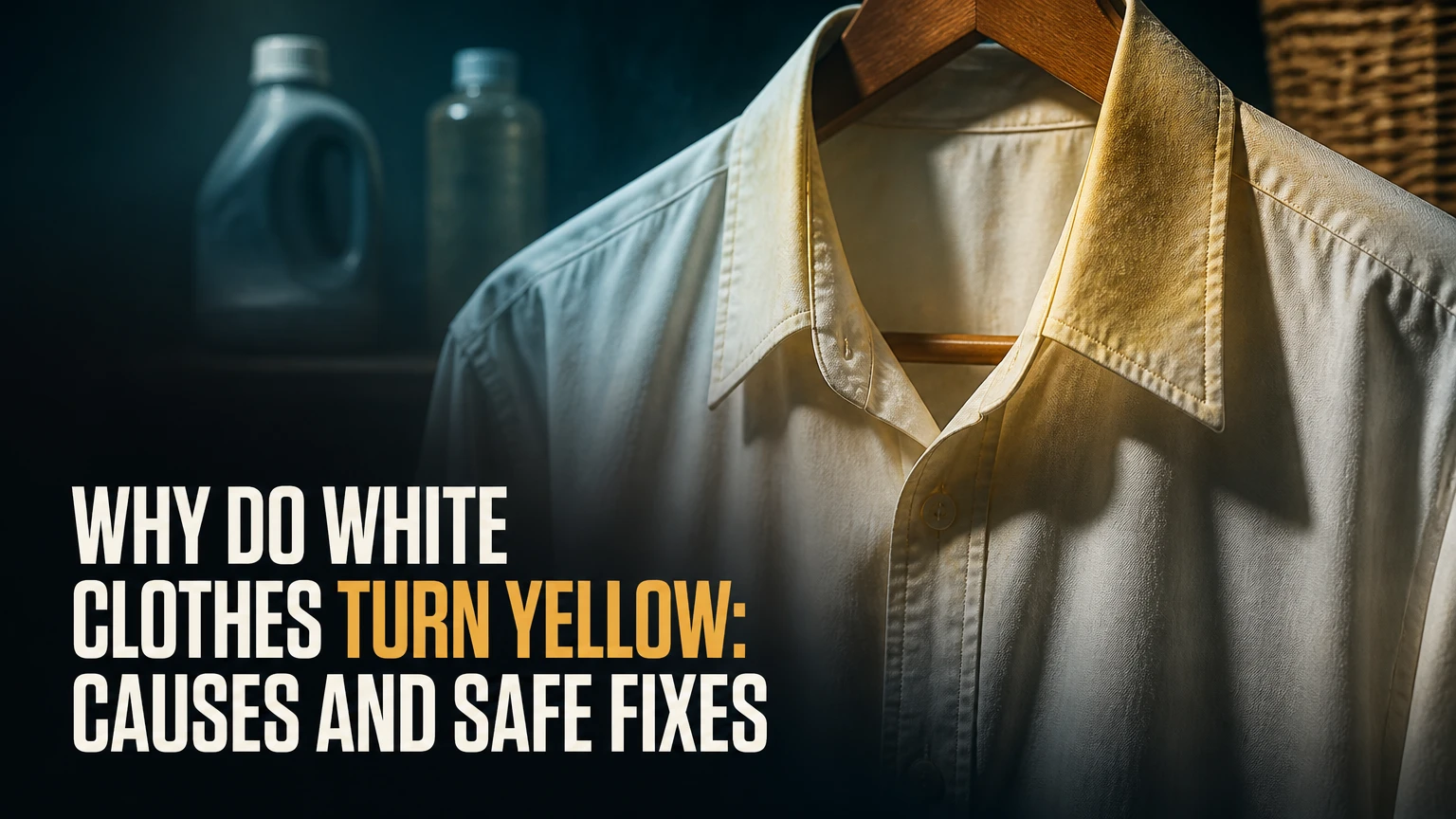
White clothes turn yellow when sweat, body oils, detergent residue, storage chemicals, or fiber oxidation create or reveal yellow light-absorbing compounds. Underarm yellowing usually comes from aged sebum and sweat mixed with antiperspirant residue, while all-over yellowing can result from optical brightener loss, chlorine damage, hard-water deposits, or phenolic storage yellowing.
Key Facts at a Glance
- Underarm yellowing is usually an organic residue problem, not simply a sweat-color problem.
- High dryer heat can oxidize and set body oils, making later removal less effective.
- Oxygen bleach is generally a better first whitening treatment for washable cotton than chlorine bleach.
- Chlorine bleach can yellow or weaken elastane, nylon, wool, silk, and some polyester finishes.
- Vinegar can help remove alkaline or mineral residue, but it does not reliably dissolve old oily underarm stains.
- Yellowing caused by permanent polymer damage cannot be fully washed out.
What Does Yellowing Mean in White Fabric?
Textile yellowing is a visible shift toward yellow or brown caused by chromophores, which are molecules or chemical groups that absorb parts of visible light. A white garment can therefore look yellow because a colored residue has accumulated, because the fiber itself has chemically changed, or because a brightening treatment has faded.
Raw cotton, linen, polyester, and nylon are not always the brilliant white seen in retail garments. Manufacturers may use optical brightening agents, or OBAs, that absorb ultraviolet energy and emit blue light. The blue emission visually offsets a warm or yellow undertone.
The distinction matters. A removable deposit responds to washing or controlled bleaching. A damaged fiber, degraded dye finish, or oxidized synthetic polymer may remain yellow after every safe cleaning method. Treating permanent damage with stronger bleach usually worsens the garment.
The American Cleaning Institute’s practical rule is simple: “Read and follow the care label instructions.” The label determines whether a garment can tolerate water, heat, oxygen bleach, or professional solvent cleaning.
How Does Yellowing Happen Chemically?
White clothing becomes yellow through oxidation, residue concentration, optical-brightener loss, or chemical migration from storage materials. Oxygen in air reacts slowly with oils and other organic residues, and heat accelerates those reactions by increasing the rate at which compounds break down and bind to fibers.
Sweat itself is mostly water, salts, and small organic compounds. Sebum contains lipids, waxes, and fatty acids. When washing leaves part of that material behind, repeated wear and drying convert a nearly invisible deposit into darker oxidation products.
Optical brightener loss creates a different appearance. The garment may become cream-colored or gray-white across the whole surface, without a concentrated stain. Chlorine, ultraviolet exposure, repeated hot washing, and fabric aging can reduce the visual effect of OBAs.
Why does heat make yellowing worse?
Heat can set oily residue and accelerate oxidation, especially when a shirt enters a dryer before the underarms are clean. A dryer does not chemically “bake” every stain permanently, but repeated high temperatures can make body-oil deposits more strongly attached and harder for detergent to remove.
Ironing has a similar risk. Direct heat on an untreated sweat mark can darken the residue and make localized restoration less successful. Inspect white garments after washing and before tumble drying.
Why Do Underarms and Collars Turn Yellow?
Underarms and collars turn yellow because those areas receive concentrated sebum, sweat proteins, skin cells, and antiperspirant residue. Friction presses the mixture into yarn spaces, and repeated washing leaves behind the portion that ordinary detergent does not fully emulsify.
Aluminum salts in antiperspirants can combine with sweat components and product residues, creating deposits that cling to fabric. Aluminum is associated with many underarm stains, but it is not the only cause. Clear deodorants, skin oils, sunscreen, hair products, and insufficient detergent rinsing can also discolor collars and armholes.
Collars often develop a gray-yellow ring because they collect facial oils, moisturizers, hair products, and dust. Tight necklines increase transfer. A yellow line that follows the collar edge usually indicates localized residue rather than whole-garment fiber aging.
| Yellowing pattern | Most likely source | First treatment | Permanence risk |
|---|---|---|---|
| Pale yellow underarms | Sebum, sweat, antiperspirant | Enzyme detergent, 30-40 minute soak | Low to moderate |
| Dark yellow underarms | Aged oil exposed to heat | Pretreat, oxygen bleach if label allows | Moderate |
| Yellow collar ring | Skin oil, lotion, hair product | Liquid detergent or enzyme pretreat | Low |
| Uniform cream color | OBA loss or overall aging | Oxygen bleach for washable fibers | Moderate |
| Brown-yellow after bleach | Chemical fiber damage | Stop bleaching, assess replacement | High |
Do Deodorants Cause Yellow Stains?
Antiperspirants can contribute to yellow underarm stains, but deodorant and antiperspirant are different products. Deodorant primarily controls odor with fragrance or antimicrobial ingredients; antiperspirant reduces wetness and commonly uses aluminum-based active ingredients.
The strongest practical predictor is residue plus time. A shirt worn repeatedly with product residue, washed inadequately, and dried hot is more likely to yellow than a shirt washed promptly at the same temperature.
Allowing antiperspirant to dry before dressing reduces wet transfer, but it does not prevent body oil from reaching the shirt. Washing the underarm area soon after wearing is more effective than relying on a product change alone.
Why Do White Clothes Turn Yellow in Storage?
Stored white clothes can turn yellow through phenolic yellowing, a reaction involving antioxidants such as BHT, nitrogen oxides, and textile materials. BHT can migrate from some polyethylene packaging, rubber products, adhesives, and paperboard; nitrogen oxides in indoor or outdoor air can then contribute to yellow discoloration.
The result may appear as broad yellowing on a garment that was clean when stored. Plastic dry-cleaning bags are unsuitable for long-term storage because they restrict ventilation and can place fabric near reactive packaging materials. Cardboard, wood acids, and untreated tissue paper can also contribute to discoloration over time.
Phenolic yellowing is not the same as an underarm stain. Enzyme detergent may have little effect because the yellow compound is not primarily protein or body oil. A textile conservator should assess valuable silk, wool, wedding garments, uniforms, and heirlooms before home treatment.
Use acid-free tissue and a breathable cotton garment bag for long-term storage. Avoid direct contact with wood, unsealed cardboard, rubber bands, and ordinary plastic film.
Can Washing and Detergent Create Yellowing?
Laundry can create yellow or dingy whites when detergent, fabric softener, body oil, and hard-water minerals remain on the textile. Excess detergent is not automatically more effective because surfactants require adequate rinsing, and a heavily dosed wash can leave a film when water volume is low.
Fabric softener can coat fibers with conditioning ingredients. That coating may trap oily soil and reduce the detergent’s ability to contact the fiber. Hard water contains calcium and magnesium ions that can interact with soap or poorly rinsed detergent, producing dull deposits.
A washing machine can also transfer residue. A greasy dispenser, clogged gasket, or buildup inside the drum may redeposit soil on white clothing. If multiple garments emerge yellow after one cycle, inspect the machine before treating each item individually.
Why are clothes yellow immediately after washing?
Clothes that become yellow immediately after washing usually have redeposited residue, hard-water deposits, product transfer, or a reaction with bleach. A single wash rarely creates deep fiber oxidation, so the timing points toward the machine, detergent dose, water chemistry, or a chemical incompatibility.
Run an empty maintenance cycle according to the washer manufacturer’s instructions. Clean the dispenser and door gasket, reduce detergent to the label’s load-specific amount, select an extra rinse, and avoid fabric softener while diagnosing the problem.
How Can You Remove Yellowing Safely?
The safest general sequence is to identify the fiber, pretreat organic residue, use oxygen bleach only when permitted, rinse thoroughly, and air-dry before judging the result. The method takes about 1-2 hours of active and soaking time, although severe stains may need 6-8 hours.
Step 1: Check the fiber and care label
Separate cotton, linen, polyester, nylon, elastane blends, wool, and silk. Do not use an oxygen-bleach soak automatically on wool, silk, leather, garments marked dry-clean-only, or items with unstable dyes and trims.
Test a hidden seam when the label permits washing. A garment that is already brittle, yellow-brown, or melting at elastic areas may have chemical damage rather than a removable stain.
Step 2: Pretreat sweat and oil
Wet the stained area with lukewarm water. Apply a liquid enzyme detergent or a stain product labeled for protein and grease, then work it gently into the fabric with fingers or a soft brush.
Leave the treatment for 15-30 minutes. For a large washable cotton item, a 30-40 minute soak in water around 30-40°C can improve contact without using damaging heat.
The checkpoint is simple: the underarm should feel less waxy and look less sharply outlined before the main wash. Do not scrub aggressively, because abrasion can raise fibers and create a permanently dull patch.
Step 3: Wash with the correct detergent dose
Wash according to the care label using the warmest permitted temperature. Use enough detergent for the actual load and water hardness, not a large unmeasured pour.
Add an extra rinse when the garment feels slippery, stiff, or heavily treated. Keep white and colored laundry separate, since dye transfer can look like gray or yellow dullness.
Step 4: Use oxygen bleach when the label allows
Sodium percarbonate products release hydrogen peroxide in water and can oxidize many organic stains. Follow the product label rather than copying a universal concentration, because formulations differ.
For sturdy white cotton or linen, a typical household soak is 1-6 hours at the product’s stated dilution. Polyester may tolerate oxygen bleach, but heat-sensitive finishes, prints, elastane, and blended trims require label and product checks.
Do not combine oxygen bleach with chlorine bleach, ammonia, or other cleaners. Rinse thoroughly after soaking.
Step 5: Inspect before drying
Lay the garment flat or hang it indoors and inspect the underarms, collar, and seams while damp. Repeat a suitable pretreatment if the yellow remains.
Do not tumble-dry or iron a visible stain. Heat is the most common avoidable reason a partly improved garment becomes harder to restore.
| Treatment | Best target | Typical time | Main limitation |
|---|---|---|---|
| Enzyme detergent | Sweat protein and body oil | 15-40 minutes | Limited effect on polymer damage |
| Oxygen bleach | Organic yellowing and dull cotton | 1-8 hours | Not suitable for every fiber |
| Vinegar rinse | Alkaline or mineral residue | 1 wash cycle | Does not replace stain treatment |
| Laundry bluing | Mild overall yellow cast | 5-15 minutes | Masks color; does not clean |
| Chlorine bleach | Some washable, bleach-safe whites | 5-15 minutes | Can yellow, weaken, or destroy fibers |
Is Oxygen Bleach Better Than Chlorine Bleach?
Oxygen bleach is usually the safer first choice for washable white cotton because it oxidizes stains more gradually and is less likely than sodium hypochlorite to weaken fibers. Chlorine bleach can work on specific bleach-safe garments, but it is a poor default for yellowed synthetics, elastane blends, wool, and silk.
Chlorine bleach may worsen yellowing when it damages nylon, spandex, finishes, or optical brighteners. The “more bleach equals whiter clothes” assumption fails when the yellow color comes from fiber degradation rather than organic soil.
| Option | Suitable example | Typical cost | Risk profile |
|---|---|---|---|
| Oxygen bleach powder | White cotton shirts | $8-$20 per container | Low to moderate when label-approved |
| Chlorine bleach | Bleach-safe cotton towels | $3-$8 per bottle | High with synthetics and elastane |
| Laundry bluing | Uniform cream cast | $4-$10 per bottle | Blue streaks from overdosing |
| Professional cleaning | Silk, wool, heirloom garment | $15-$45 per item | Lowest home-treatment risk |
| Detergent-only wash | Fresh, mild residue | About $0.15-$0.60 per load | Weak on aged yellowing |
Can Vinegar or Baking Soda Whiten Yellow Clothes?
Vinegar and baking soda are not reliable primary whiteners for old yellow stains. White vinegar can help remove some alkaline detergent residue or mineral scale during a rinse, while baking soda can support odor control and mild alkalinity, but neither substitutes for an appropriate detergent or oxygen bleach.
Never mix vinegar with chlorine bleach. The combination can release toxic chlorine gas. Do not pour concentrated acids directly onto delicate fibers, and follow the washer manufacturer’s instructions before adding any product to a dispenser.
A practical rule is to use one chemistry at a time. Pretreat with detergent, rinse, then use an approved whitening product. Acidic rinses belong at the residue-removal stage, not inside a chlorine-bleach treatment.
What Should You Do About Polyester and Delicate Fabrics?
Polyester yellowing may be removable when caused by body oil or residue, but yellow-brown discoloration from oxidation, heat, or chlorine exposure can be permanent. Polyester is synthetic and may tolerate some oxygen-bleach products, yet high heat and aggressive chemicals can damage finishes or elastane components.
Wool and silk require a different approach. Protein fibers can be harmed by alkaline detergents, peroxide products, chlorine, prolonged soaking, and friction. Use a pH-appropriate delicate detergent, cool water, minimal agitation, and professional advice for valuable pieces.
| Fiber or garment | Preferred approach | Avoid | Restoration outlook |
|---|---|---|---|
| White cotton | Enzyme detergent plus oxygen bleach | Repeated chlorine soaking | Often good |
| Linen | Label-approved oxygen bleach | High heat and harsh scrubbing | Often moderate to good |
| Polyester | Mild detergent, low heat | Chlorine and hot drying | Variable |
| Nylon | Gentle detergent, oxygen product only if approved | Chlorine bleach | Variable to poor |
| Wool or silk | Delicate detergent, professional care | Bleach and alkaline soak | Specialist assessment |
| Elastane blend | Short, cool wash | Chlorine, heat, long soaking | Often limited |
How Can You Prevent White Clothes From Turning Yellow?
Prevention depends on removing body oil before heat, controlling product residue, and storing textiles in breathable materials. Wash sweat-exposed garments promptly, avoid overloading the machine, measure detergent, and dry according to the care label.
Use these practices:
- Let antiperspirant dry before dressing.
- Wash shirts after heavy wear instead of leaving them compressed in a hamper for weeks.
- Keep the washer dispenser, gasket, and drum clean.
- Use an extra rinse for thick garments or hard water.
- Avoid fabric softener on white shirts with recurring underarm stains.
- Air-dry stained items until the discoloration is gone.
- Store clean whites in acid-free tissue and breathable cotton.
- Keep garments away from rubber, wood, cardboard, and plastic dry-cleaning bags.
- Use oxygen bleach periodically only when the care label permits it.
- Keep chlorine bleach for clearly approved applications.
A useful practitioner rule is to treat the garment before the dryer, not after repeated drying cycles. Another is to diagnose the location: concentrated yellowing indicates transfer and residue, while uniform yellowing suggests aging, storage, or brightener loss.
When Is Yellowing Permanent?
Yellowing is likely permanent when polyester or nylon has turned yellow-brown after chlorine exposure, when fibers feel brittle or rough, or when several approved treatments produce no change. Permanent damage can involve polymer oxidation, finish degradation, or loss of the original brightener effect.
Professional textile restoration is appropriate for wedding gowns, vintage linen, silk, wool, military textiles, and garments with sentimental or financial value. Typical cleaning or stabilization costs range from $15-$45 for a standard premium garment, with conservation work potentially costing more.
Do not keep escalating chemical strength. A failed treatment can reveal that the problem is structural rather than dirty, and additional bleach may destroy evidence needed by a conservator.
What Are the Most Common Treatment Mistakes?
The most common mistakes are drying before inspection, using chlorine bleach as a universal whitener, overdosing detergent, and treating delicate fibers like cotton. Each mistake either sets residue, damages the fiber, or leaves a film that attracts more soil.
- Drying a visible stain: Re-treat and air-dry instead.
- Using chlorine on spandex or nylon: Stop immediately, rinse thoroughly, and assess fabric damage.
- Overfilling the washer: Reduce the load so water and detergent can circulate.
- Adding too much detergent: Measure the product for load size and water hardness.
- Scrubbing underarms harshly: Use a soft brush and shorter contact time.
- Mixing cleaners: Rinse fully between products and never mix chlorine bleach with acids or ammonia.
FAQ
Will sunlight remove yellow stains from white clothes?
Sunlight can mildly brighten some washed cotton garments and help degrade certain organic residues, but it cannot reliably reverse chlorine damage, phenolic yellowing, or deeply oxidized oil. Strong ultraviolet exposure can also weaken fibers and fade trims, so use moderate air-drying rather than prolonged exposure.
Why do white clothes turn yellow after being stored clean?
Clean clothes can yellow in storage when residual body oil oxidizes or when packaging chemicals react with airborne pollutants. Polyethylene bags, rubber, acidic cardboard, and untreated wood are common risk factors. Breathable cotton covers, acid-free tissue, low humidity, and clean storage reduce the chance of recurrence.
Can hydrogen peroxide remove yellow underarm stains?
Hydrogen peroxide can oxidize some organic discoloration, especially in products formulated for laundry use, but concentration and fiber compatibility matter. Use a labeled laundry product, test an inconspicuous area, protect colored trims, and rinse thoroughly. Do not combine peroxide with chlorine bleach or unknown cleaners.
Should I wash yellowed clothes in hot water?
Use the warmest temperature allowed by the care label, not automatically the hottest available. Warm water can improve oil removal, but excessive heat can set residue, shrink cotton, damage elastane, and accelerate synthetic yellowing. Pretreatment at lukewarm temperature is safer for many stained shirts.
Why are my white towels yellow but my shirts are not?
Towels can yellow from body oils, skin products, detergent film, fabric softener, and repeated low-rinse loads. Their dense loops retain more residue than smooth shirt fabric. Wash towels separately, skip softener, measure detergent, select an extra rinse, and use an approved oxygen-bleach treatment when buildup persists.
Can a dry cleaner restore an old yellowed garment?
A dry cleaner can often improve residue, storage odor, and some surface discoloration, but professional cleaning cannot guarantee reversal of fiber oxidation or bleach damage. Tell the cleaner the garment’s fiber, age, storage conditions, and previous chemicals. Valuable textiles may need a conservator rather than routine dry cleaning.
The Bottom Line
Why do white clothes turn yellow? The immediate cause is usually oxidized body oil, sweat, product residue, hard-water buildup, storage chemistry, or damage to the fiber and optical brighteners. Diagnose the location and fiber first, pretreat organic stains with enzyme detergent, choose oxygen bleach only when the label permits it, avoid chlorine on vulnerable materials, and never dry a garment while yellowing remains.