How to Prepare Clothes for Dry Cleaning in 5 Steps
To prepare clothes for dry cleaning, read each care label, empty every pocket, remove detachable accessories, document stains and damage, and transport garments in a breathable bag. Do not scrub stains or apply home stain removers before delivery. The cleaner’s inspection depends on accurate garment history, fabric information, and clear instructions. Key Facts at a […]
Is Dry Cleaning Bad for Clothes? A Fabric-Safe Guide
Dry cleaning is not inherently bad for clothes. Professional dry cleaning often protects wool, silk, tailoring, and structured garments better than home washing, but repeated solvent exposure, aggressive stain treatment, high heat, or poor pressing can weaken fibers, fade dyes, distort trims, and create permanent shine. What Is Dry Cleaning? Dry cleaning is a textile-cleaning […]
How to Properly Care for Clothes: 7 Steps That Last
To properly care for clothes, follow the garment care label, reduce friction and heat, use the least aggressive effective cleaning method, dry each fabric correctly, and store clothing clean and fully dry. Sorting, accurate detergent dosing, prompt stain treatment, and careful folding or hanging preserve fabric strength, color, elasticity, and shape. Key Facts at a […]
Is Dry Cleaning Safe? How to Choose a Safer Cleaner
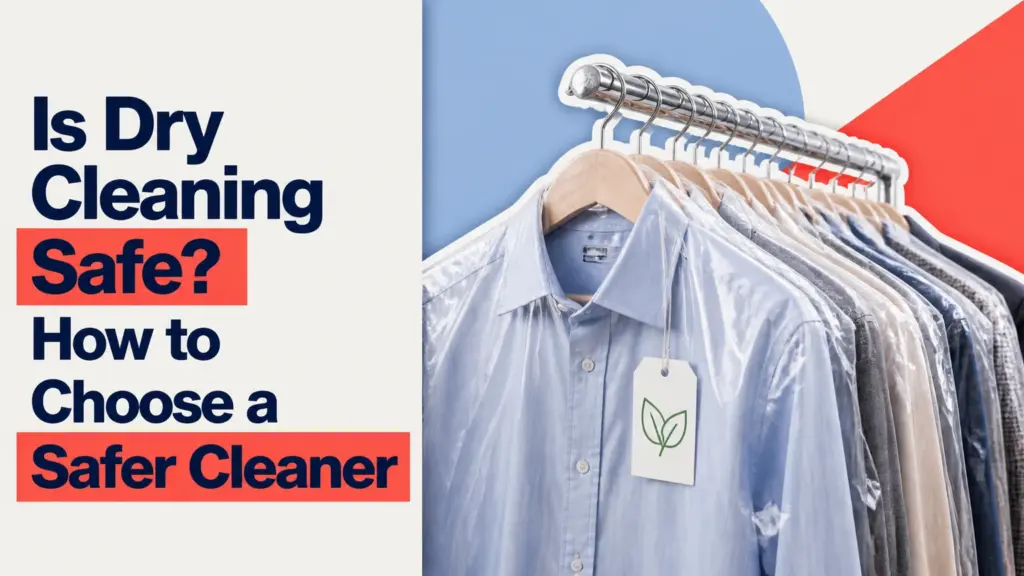
Dry cleaning is generally safe for garments when a trained professional uses the correct process, but human and environmental safety depend on the solvent, equipment, ventilation, and handling. PERC, also called perchloroethylene or PCE, presents more concern than professional wet cleaning or liquid carbon dioxide, so ask which method your cleaner uses before handing over […]
How Often Should You Dry Clean Curtains? A Safer Schedule

Curtains should generally be professionally cleaned every 3-5 years in a low-dust, nonsmoking home, provided they are vacuumed periodically and show no odor or staining. Clean them sooner, usually every 12-24 months, when smokers, pets, cooking fumes, heavy dust, children, or allergy concerns create greater soil exposure. The care label and fabric condition determine the […]
Is Dry Cleaning Safe for Clothes? Fabric-by-Fabric Guide
Dry cleaning is safe for most clothes when a trained cleaner follows the care label, selects a compatible solvent, and controls heat, moisture, and pressing. The process can reduce shrinking and distortion in wool, silk, and structured garments, but repeated cleaning, unsuitable trims, weak dyes, and poor finishing can still cause damage. Is Dry Cleaning […]
What Chemicals Are Used in Dry Cleaning? Solvents Explained

Dry cleaning uses liquid solvents instead of water, most commonly petroleum-based hydrocarbon blends, perchloroethylene (PERC), silicone solvent D5, or modified alcohol solvents. Professional cleaners also use water, detergents, surfactants, stain-removal agents, sizing products, and steam during treatment, finishing, and quality control. What Does Dry Cleaning Mean? Dry cleaning is textile cleaning performed with a liquid […]
Why Do Clothes Say Dry Clean Only? What the Label Really Means
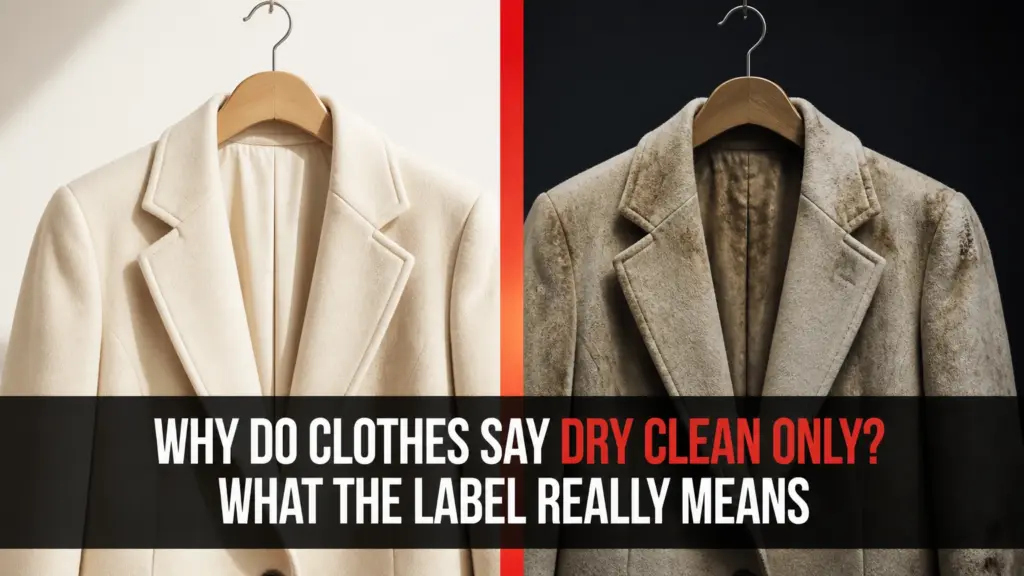
Clothes say “Dry Clean Only” because water, detergent, agitation, heat, or drying may damage the garment’s fibers, dyes, shape, lining, or bonded construction. The label is a manufacturer’s risk warning, not proof that every fiber is water-sensitive. It means the maker recommends professional solvent cleaning because the garment was designed and tested around that method. […]
How to Clean Dry Clean Only Clothes at Home Safely
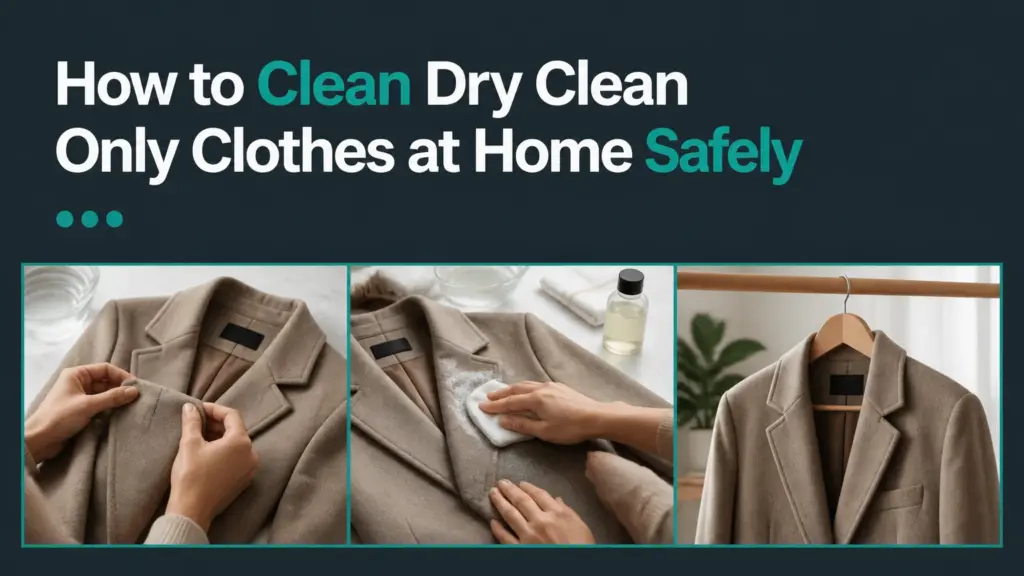
You can clean some dry-clean-only clothes at home, but the safest method depends on fiber, dye stability, garment construction, and stain type. Hand wash simple silk, wool, or cashmere pieces when testing passes; use a cold delicate cycle for suitable synthetics; send structured, unstable, or heavily stained garments to a professional. Can You Clean Dry-Clean-Only […]
How to Wash Dry Clean Only Clothes: Safe Home Steps
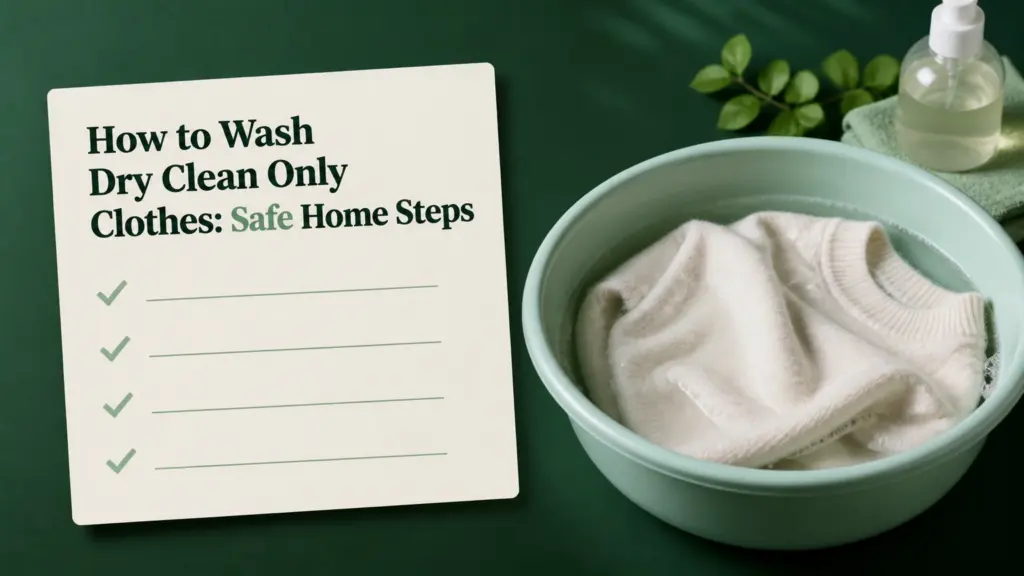
You can wash some dry-clean-only clothes at home, but only after checking the fiber, colorfastness, lining, trim, and garment structure. For low-risk, unstructured items, careful cold-water hand washing followed by towel pressing and flat drying is the safest home method; suits, leather, suede, rayon, pleats, and valuable embellished garments should go to a professional. Key […]